When Focal and Naim announced their union over a decade ago, many in the hi-fi community were left to wonder: could a partnership between two such distinct audio cultures—one from Saint-Étienne, France, and the other from Salisbury, England—truly flourish? For the better part of ten years, these two titans largely continued on their individual paths, releasing a stream of celebrated products under their respective banners. The one notable exception was the Mu-so series, their first true foray into a collaborative crossover. But it is with the arrival of the new Focal Diva Utopia, an active floor-standing loudspeaker, that we can finally witness the profound depth of this remarkable partnership.
The active floorstanding loudspeaker has always been a notoriously difficult challenge within the high-end market. While many brands have attempted to conquer this summit, few have truly succeeded. The challenge is immense: it demands a perfect marriage of sophisticated acoustic engineering with the seamless integration of a complex electronic architecture—encompassing amplification, power supply, and digital signal processing (DSP)—a feat that requires a holistic expertise few manufacturers possess. Compounding the issue is the traditional audiophile, long accustomed to the ritual of matching pre/power amplifiers with passive loudspeakers, who often views the active approach with a degree of skepticism, lamenting a perceived lack of "tweakability" and the inability to experiment with component synergy.
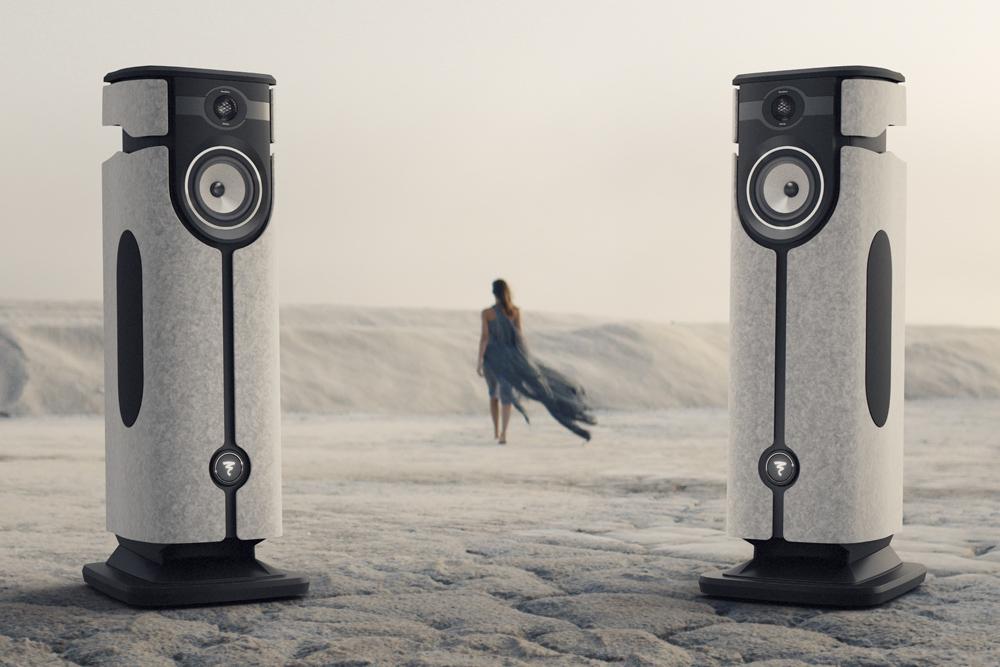
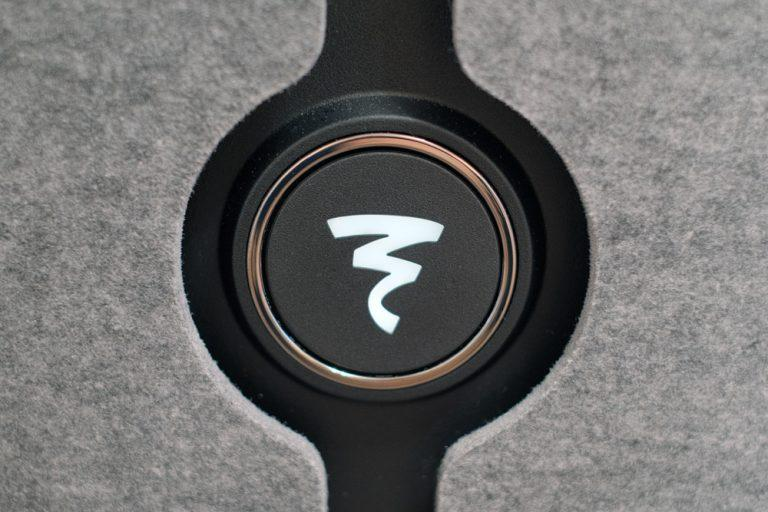
While the Diva Utopia proudly wears the Focal emblem, this emblem now subtly illuminates—a quiet nod to the Naim engineering prowess housed within. This is a fully active loudspeaker, a self-contained ecosystem that obviates the need for external amplifiers and DACs, designed to replace an entire hi-fi chain in one elegant stroke.
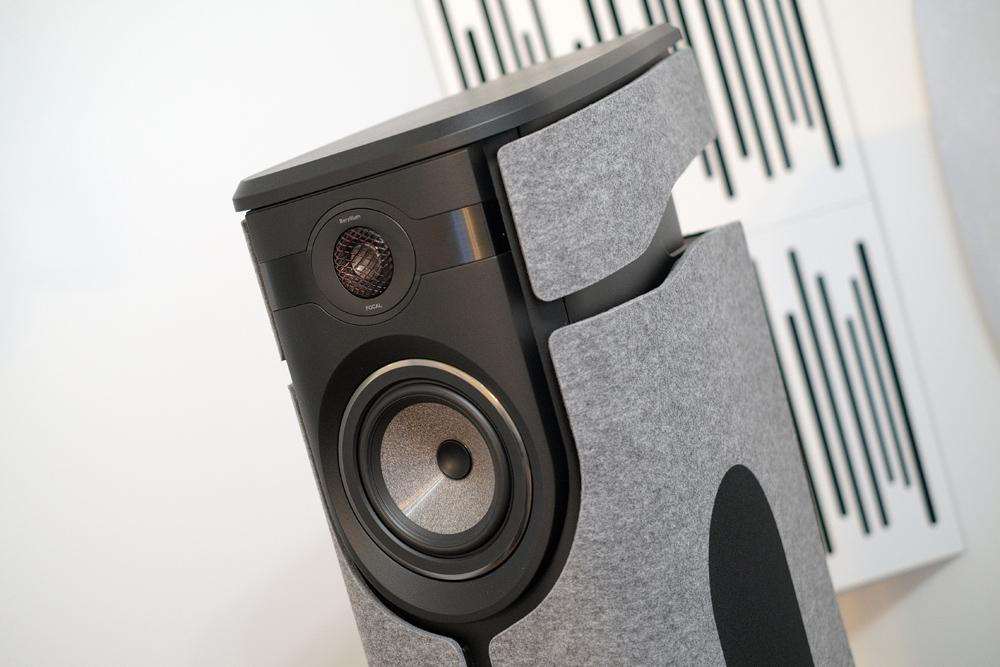
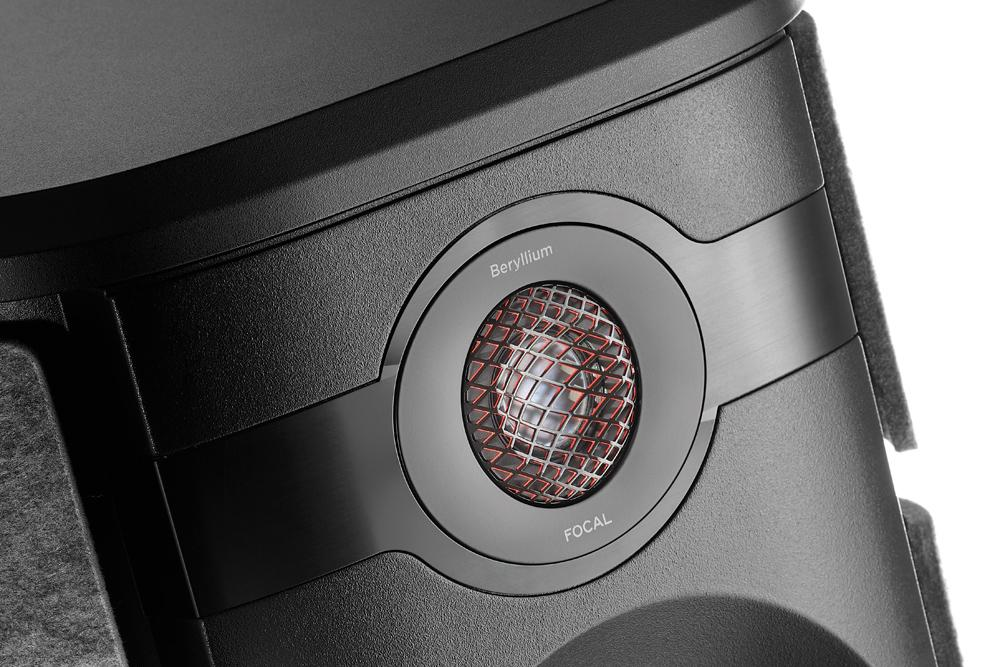
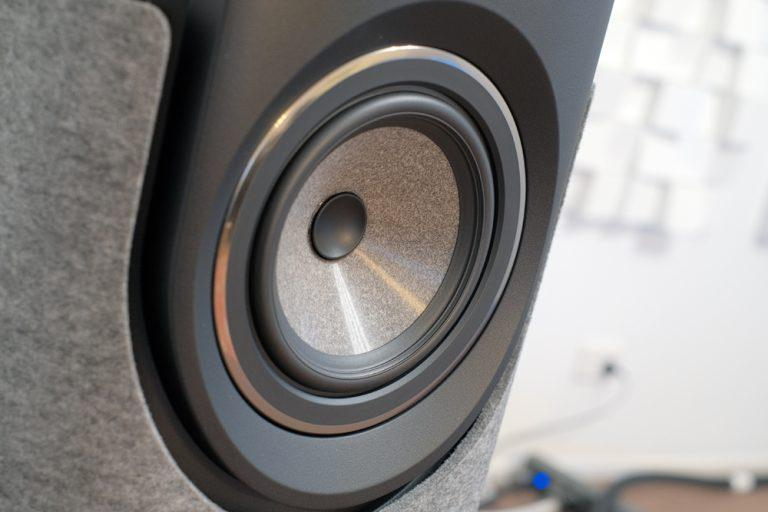
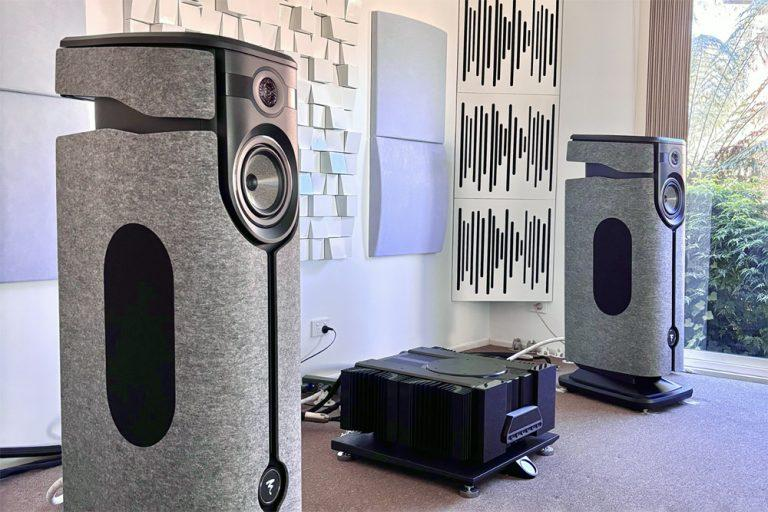
In terms of its driver array, the Diva Utopia carries forward the legacy of the series' iconic Beryllium tweeter, which for the first time employs an 'M'-shaped profile diaphragm to enhance rigidity. Positioned below this is a 6.5-inch composite midrange driver, both housed on the same front baffle.
The low-frequency arrangement, however, is particularly distinctive. Flanking the cabinet on either side is a pair of opposing 6.5-inch bass drivers in a force-canceling configuration, with their output augmented by a bottom-firing port. This architecture is not without precedent; it can be traced back to an earlier generation, as the original passive Diva Utopia was the first model in the family to pioneer the use of side-mounted drivers.
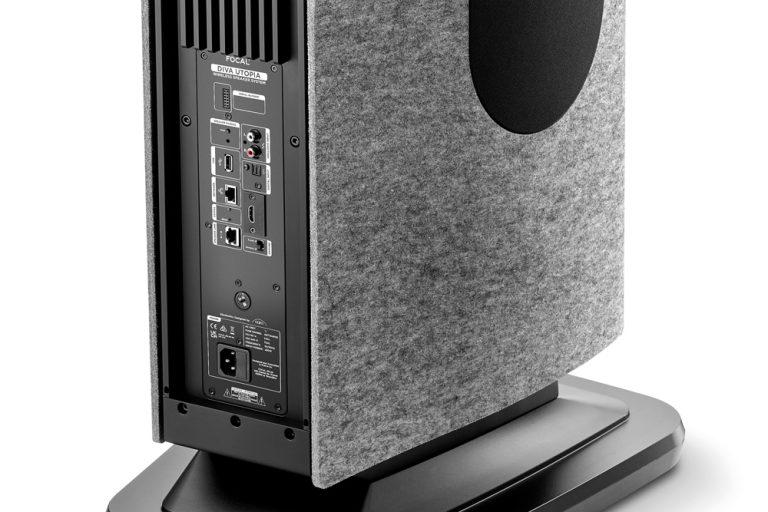
The rear "spine" of the Diva Utopia serves as its central nervous system, integrating the entire electronic architecture. At its heart, the amplification is derived from Naim's acclaimed New Classic series. Power is precisely allocated: 75 watts for the tweeter, another 75 for the midrange, and a robust 140 watts for the opposing pair of bass drivers. True to Naim's long-standing philosophy, the power supply is engineered for high-current delivery and substantial power reserves. Digital processing is handled by a SHARC DSP in concert with Burr-Brown DACs, debuting support for 64-bit calculations, with the high, mid, and low frequencies being decoded independently for each driver.
Communication between the two loudspeakers is established via the UWB (Ultra-Wideband) wireless protocol, ensuring both immense bandwidth and unerring stability. A comprehensive suite of external inputs—including HDMI eARC, optical, and analog RCA—provides versatile connectivity. Furthermore, full integration with the updated Naim/Focal application brings the world of streaming to your fingertips, with native support for services like Tidal, Qobuz, Spotify, AirPlay, and Chromecast. It is this masterfully integrated electronic architecture that elevates the Diva Utopia to the status of a true, reference-caliber, high-end active loudspeaker.
The Diva is more than a mere loudspeaker; it is a complete, self-contained audio system. At its core is support for high-resolution wireless transmission. The connection between the left and right channels is handled by the UWB (Ultra-Wideband) protocol, which guarantees the bandwidth and stability required for bit-perfect 24-bit/96kHz audio. For those seeking the utmost in resolution, such as 192kHz sample rates, a wired connection is also available.
In other words, it retains the minimalist convenience inherent to active loudspeakers while simultaneously satisfying the discerning enthusiast’s pursuit of uncompromising performance. Daily use is incredibly straightforward: all that is required are two power cords and a network connection to bring the system to life.
In my view, the Diva excels in two primary scenarios:
For the high-end home cinema or luxury media room: It eliminates the need for racks of separate components. Two Diva Utopia speakers can effortlessly anchor an entire world-class system on their own.
For the sophisticated daily listening space: The ritual of tweaking multiple devices vanishes. Simply open the companion app, and your music is ready to play, instantly. Where the majority of active floorstanding loudspeakers have faltered is in reconciling the delicate balance between their electronic and acoustic elements. The Diva Utopia forges a different path. It is conceived not as a compromised assembly of parts, but as a singular, holistic system where the loudspeaker, amplification, and DSP are fused from the ground up.
Ultimately, the Focal Diva Utopia stands as more than just a new product. It is the true culmination of a partnership more than a decade in the making—a testament to what is possible when two of audio's most revered houses work as one.For the traditionalist—the home cinema purist—the idea of a system without separate preamplifiers, power amplifiers, and DACs might feel like a departure from the true spirit of the hobby. From another perspective, however, the Diva Utopia represents a new paradigm. It champions the idea that ultimate performance can be achieved not through a complex chain of separates, but through holistic integration. Provide power and a network connection, and you are rewarded with a complete, high-fidelity audiovisual system where distortion is controlled to vanishingly low levels.
A decade ago, many questioned the ultimate purpose of the Focal and Naim union. Today, the Diva Utopia provides the definitive answer. The wait was indeed worthwhile.





Comments