
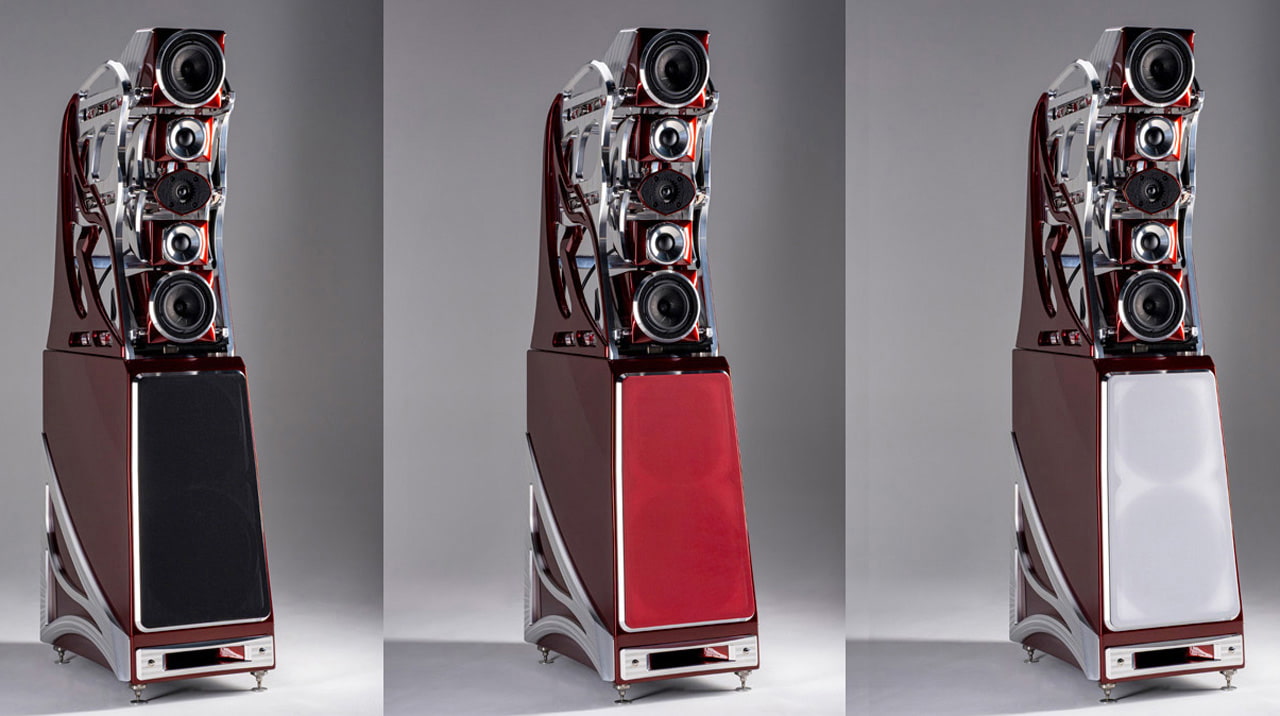
Writing the Future of Sound: The $788,000 Wilson Audio Autobiography

There is a peculiar moment in the life of every luxury market when the numbers stop meaning anything. You cross a threshold where the conversation drifts away from dollars and cents and drifts toward square footage, structural engineering, and whether your floor joists can handle the load. In the high-end loudspeaker world, 2026 has been that kind of year. One month Wilson Audio pulls the curtain back on something called the Autobiography. A few weeks later Børresen Acoustics raises the stakes again. And hovering in the background is YG Acoustics' Titan in its active-sub configuration, wearing a nickel finish and carrying a price tag north of nine hundred grand per pair. You begin to wonder if the industry has stopped making speakers and started making monuments.
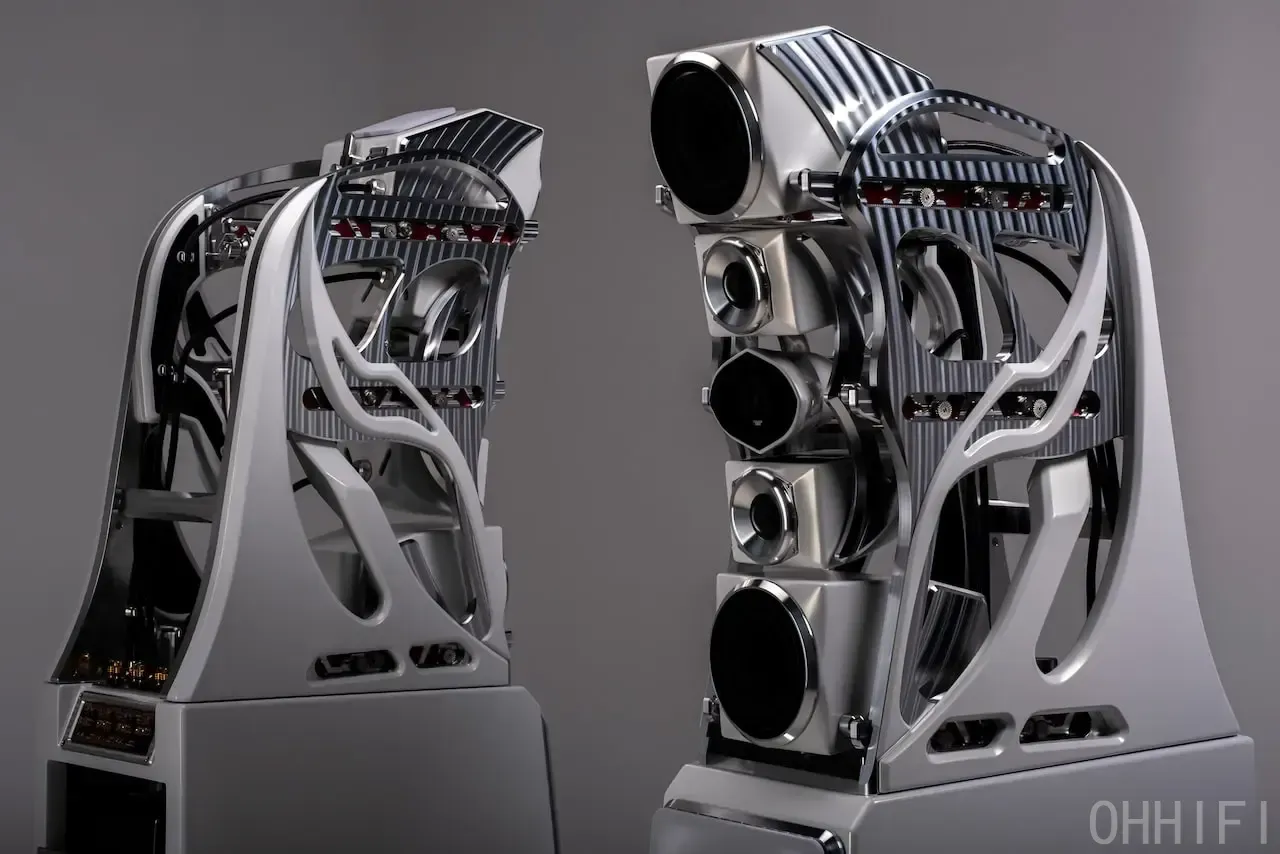
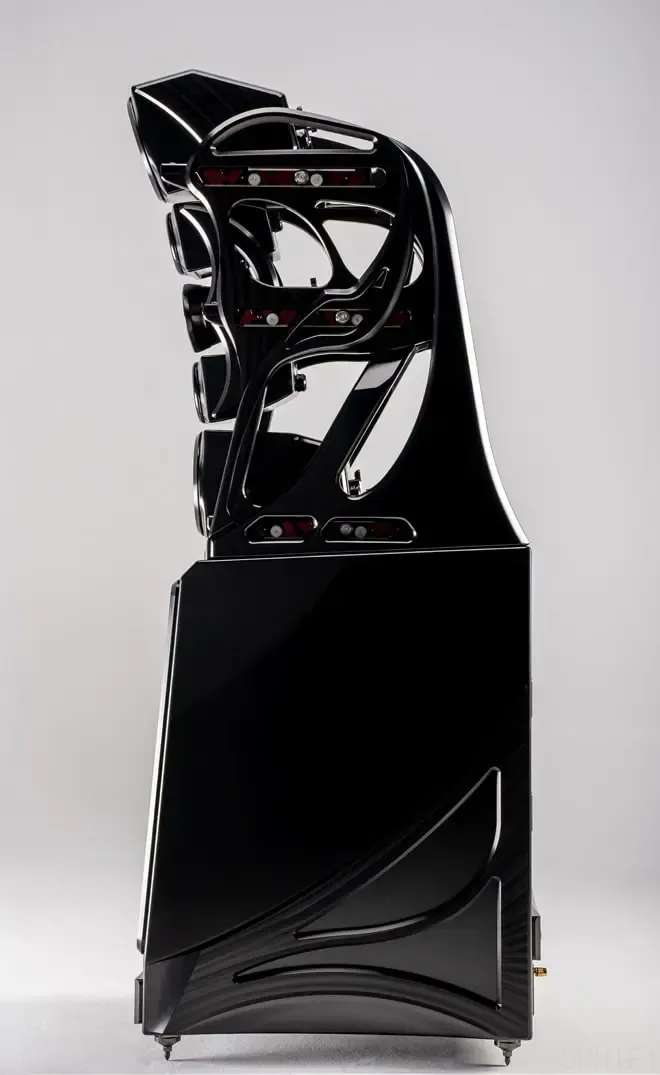
This is the strange country the Wilson Audio Autobiography lives in. Eighty-one inches of cabinet. Over eight hundred pounds on each side of the room. A price that reads like the cost of a decent house somewhere reasonable — $788,000 per pair. It does not whisper. It does not blend. It arrives with a thesis.
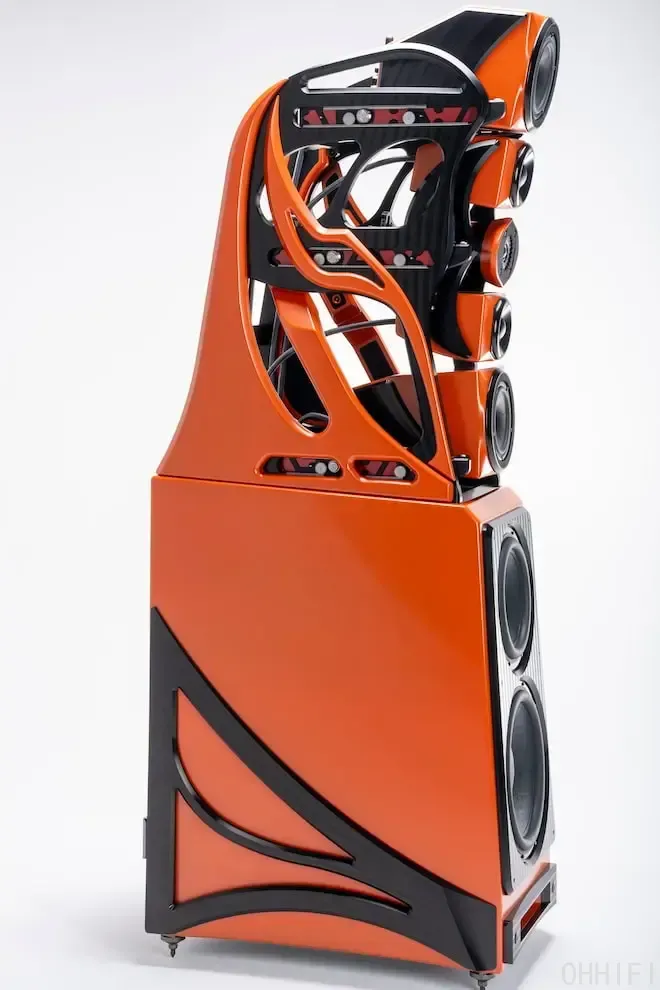
A Title That Isn't Marketing Fluff
The word autobiography usually suggests looking backward. Wilson Audio, to its credit, is using it differently. The company frames this speaker as a written record of where it stands at this particular moment — a document assembled from more than fifty years of tinkering, refining, and occasionally throwing things out that didn't quite work.
You can trace a line through the company's history: the late David A. Wilson's early obsession with time alignment, the long years spent poking at cabinet materials and resonance behavior, and the current team's insistence on tighter tolerances and better modeling. The Autobiography doesn't repackage any of that. It absorbs it. The original WAMM and WATT projects are ancestors, not templates. What the engineers seem to want is forward motion — figuring out why earlier ideas succeeded and asking what happens when you apply that understanding with newer composites and more precise tools.
It reads less like nostalgia and more like a progress report.
Five Ways to Move Air
Open up the Autobiography conceptually and you find a five-way loudspeaker built around an MTM array, populated entirely by drivers that exist nowhere else. Wilson did not go shopping. Every transducer in this cabinet was designed with the others in mind, on the premise that a loudspeaker isn't really a pile of parts — it's a single acoustic event wearing a disguise.
The arrangement has a logic to it. A seven-inch midrange anchors both the top and bottom of the structure, while the central section uses a symmetrical MTM crescent: two two-inch midrange drivers flanking Wilson's CSLS front-firing tweeter. That crescent lives in the frequency region where human hearing is most unforgiving, and the symmetry is there to keep dispersion and timing behaving themselves. Below, the low end is handled by a twelve-inch and a fifteen-inch woofer working as partners rather than dividing the territory. And tucked on the back sits an ambient tweeter, firing rearward, doing its quiet work on space and decay without elbowing anyone aside.
The Front Tweeter: CSLS
The Convergent Synergy Laser Sintered tweeter — CSLS for short — is the newest iteration of a platform Wilson has been nursing for years. This version introduces a redesigned rear wave chamber, and the purpose is unglamorous but important: managing the energy that travels backward off the diaphragm, so it doesn't come bouncing back and muddying up the high frequencies you actually want to hear. Less internal noise, less self-interference, more of the small information that makes recordings feel real. The engineering goal here isn't brightness or sparkle. It's restraint — extension without edge.
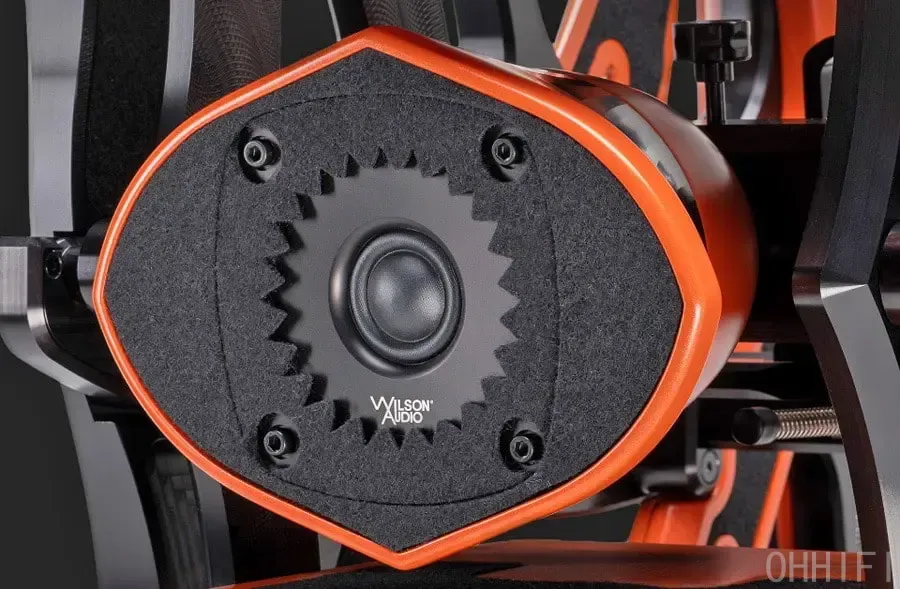
The 2-inch MID Drivers
Flanking the tweeter are two two-inch midrange drivers Wilson calls MIDs, short for Midband Integration Drivers. Their job is the hardest in any loudspeaker: bridging the gap between a fast, delicate tweeter and a pair of larger midrange units that carry more weight. Placed symmetrically, they work to keep timing and dispersion coherent through the region where the human ear is most suspicious of trickery. When these transitions are done badly, you hear individual drivers. When they're done well, you hear music.
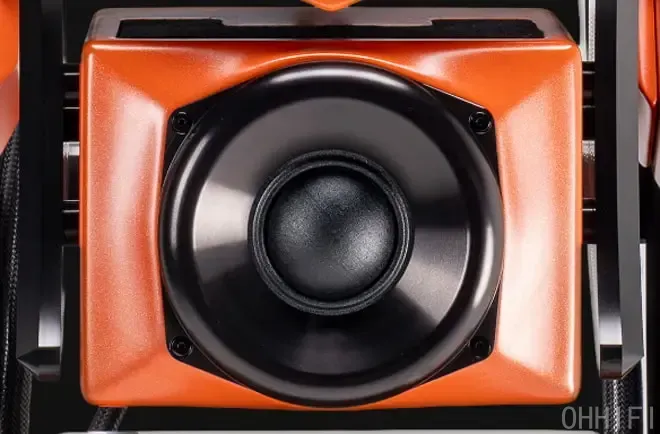
PentaMag 7-inch Midrange
The two seven-inch drivers above and below the central array are called PentaMags, an evolution of Wilson's earlier QuadraMag design. The number refers to five AlNiCo magnets — aluminum, nickel, cobalt — arranged to produce a stronger, more stable motor. The practical consequence is control. Under real listening volumes, where lesser midrange drivers begin to compress or harden, these are meant to hold their shape, keeping voices and instruments weighty without becoming congested.
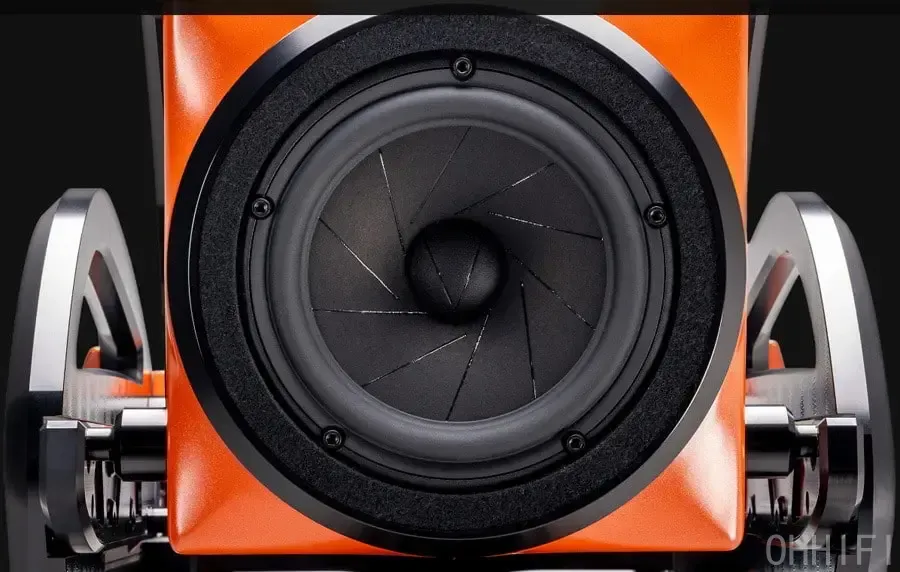
The Rear-Firing Tweeter
On the back of the cabinet sits an inverted-dome tweeter made from aerospace-grade unidirectional carbon fiber. Its diaphragm uses a variable-thickness profile — thicker where it needs stiffness, thinner where it needs to move freely. It covers 6 kHz to 22 kHz, not as a primary tonal contributor but as a painter of ambience and decay. Wilson provides an attenuation range from 0 dB down to –40 dB, with the highest setting calibrated to start roughly 7 dB below the front tweeter at 10 kHz at typical listening distances. The idea is that room acoustics differ, and listeners should have a way to dial in as much or as little spatial reinforcement as their space can tolerate.
Two Woofers, One Voice
The low-frequency section is where Wilson's patience shows. A twelve-inch and a fifteen-inch woofer sharing one enclosure sounds straightforward until you consider the physics. Different cone areas, different masses, different pressure behaviors — left uncoordinated, they would fight each other. Wilson addresses this through dedicated motor structures, tuned suspensions, and careful enclosure geometry, so the two woofers present themselves to the room as a single source. The aim is bass that moves quickly and stops cleanly, with scale but without overhang.
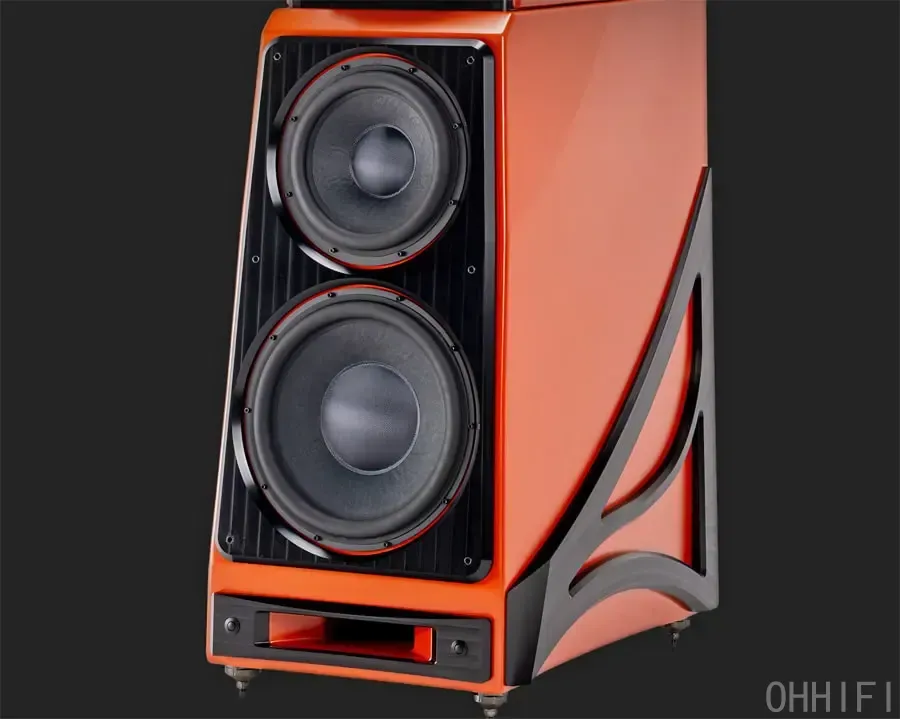
A Port That Thinks
Rather than committing to one low-frequency tuning, the Autobiography uses a slot-type bass reflex port that can be sealed without tools. The port cover and port ring can be adjusted by hand, letting the user change how the bass interacts with the room. Wilson calls this a cross-load flow porting system, and the published numbers tell the story plainly enough: in forward-firing mode, output between roughly 10 Hz and 75 Hz drops by about 1.0 to 1.5 dB while the 75 Hz to 130 Hz range lifts by 1.5 to 2.0 dB. Flip to rear-firing and the balance reverses. It is a deliberately small set of options, intended to let users account for wall proximity and room loading without dragging DSP into the equation.
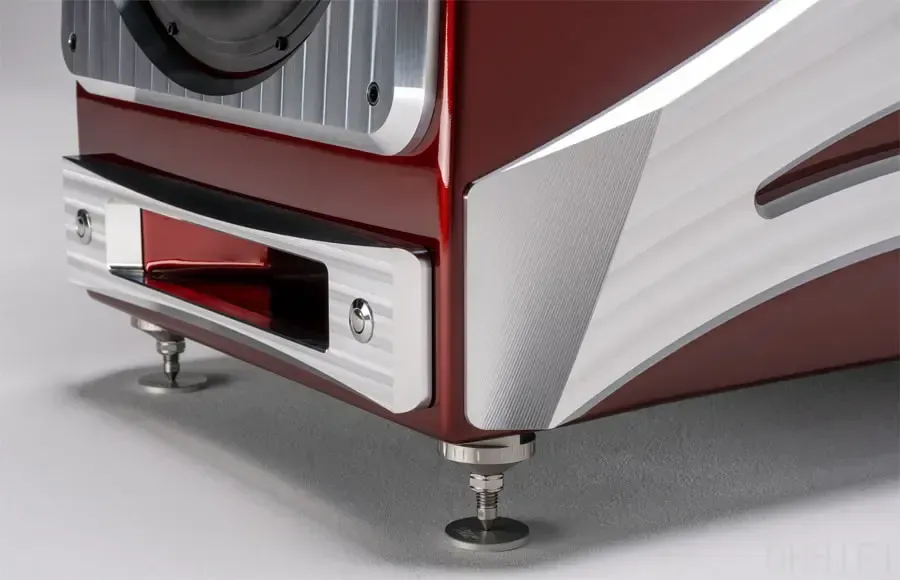
Aligning the Pieces
Wilson has spent decades arguing that time alignment matters. The Autobiography brings new mechanical hardware to that argument. Module alignment sleds and precision slide spikes are engineered to make each driver section adjustable with real accuracy and real repeatability — fiddly in concept, but straightforward in execution once you have it in your room.
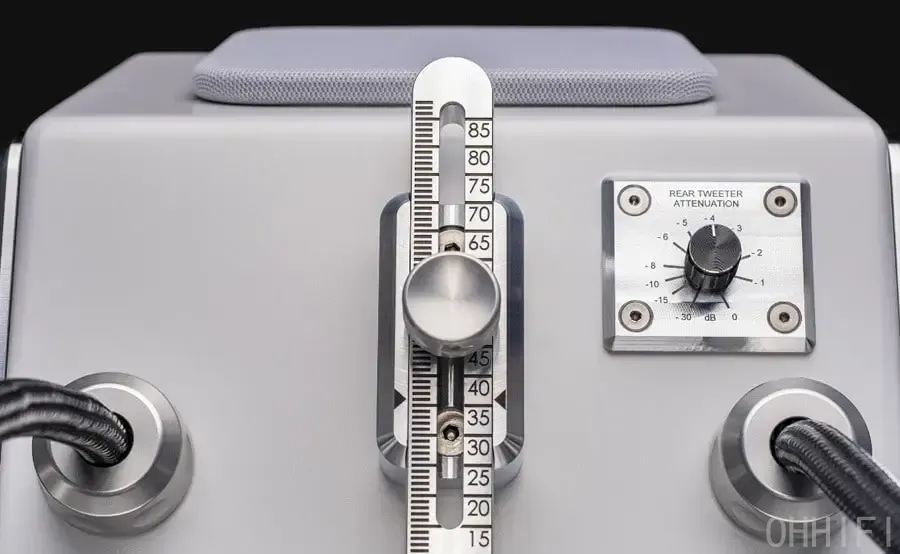
Both seven-inch PentaMag modules adjust independently through the sled system, with marked gears, reference scales, and a rotating cam grip that lets you change positions without breaking out a specialty toolkit. The MTM crescent follows similar logic. Compared to earlier flagships like the WAMM Master Chronosonic and the Chronosonic XVX, the Autobiography is meant to give more control with less frustration.
Connections and Housekeeping
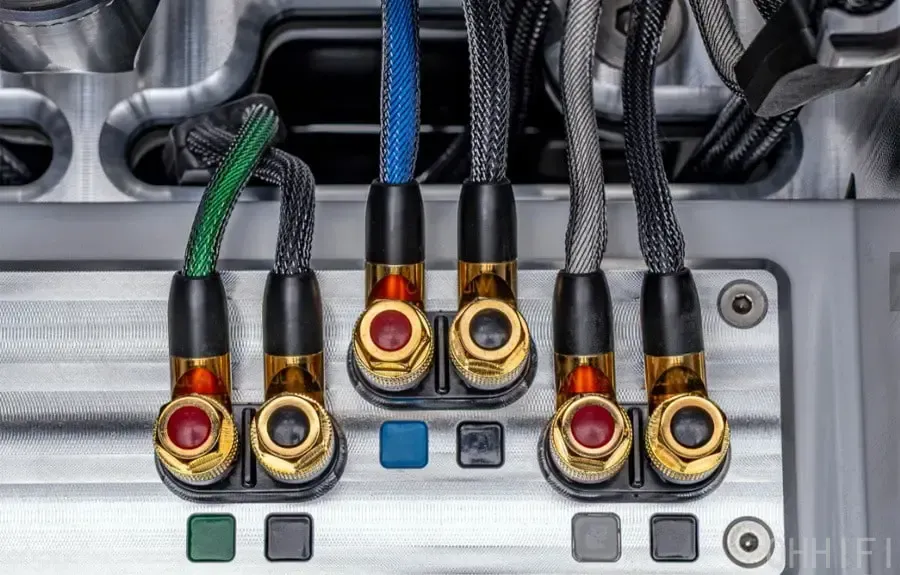
Custom spade connectors mate with Wilson's proprietary binding posts for secure, consistent electrical contact. Machined wire clasps integrated into the gantry manage cable routing and reduce strain at the terminals. Crossover resistors are mounted to pure copper heatsinks for better thermal behavior under load, and they're accessible through a framed resistor plate on the rear of the woofer enclosure — swap-friendly, no tools required.
The Numbers on Paper
| Specification | Detail |
|---|---|
| Configuration | 5-way floorstanding |
| Front tweeter | One 1-inch dome |
| Upper midrange | Two 2-inch |
| Lower midrange | Two 7-inch |
| Woofers | One 12-inch, one 15-inch |
| Rear tweeter | One 1-inch inverted dome |
| Sensitivity | 89.5 dB @ 1W @ 1m @ 1kHz |
| Nominal impedance | 4 ohms (2.1 ohms min @ 293 Hz) |
| Minimum amplifier power | 100 watts per channel |
| Frequency response | 18 Hz – 36 kHz, ±2 dB (RAR) |
| Height | 81 3/16 inches (206 cm), without spikes |
| Width | 21 1/2 inches (55 cm) |
| Depth | 34 7/8 inches (89 cm) |
| Weight per channel | 821 lbs (372.40 kg), uncrated |
| MSRP | $788,000 per pair |
Who This Is Actually For
The Autobiography is a statement product, and Wilson doesn't pretend otherwise. What makes it interesting isn't any single feature — it's the level of system control the company is exerting: proprietary cabinet composites, a bespoke driver array, and an alignment scheme more refined than anything Wilson has put into production before.
It belongs to a specific stratum of the industry, keeping company with things like the Børresen M8 Gold Signature and the Sonus faber Suprema. These are not upgrades to regular high-end speakers. They occupy a category where cost, scale, and engineering ambition have been pushed until the usual vocabulary stops applying. The discussion shifts from value to execution at any cost .
Which raises the obvious question: who buys this? Not someone on their first audiophile journey. Not even most long-time enthusiasts with well-sorted systems. The people who end up with Autobiographies already have the room, the budget, and the patience to build around them. And building around them is expensive. A system worthy of these speakers typically involves six figures' worth of amplification, sources, cabling, power conditioning, and acoustic treatment. Affordability isn't the barrier. The barrier is whether your physical environment can support this level of scale without compromise.
In the end, speakers like the Autobiography aren't really about chasing a sonic ideal. They're about removing constraints wherever possible and seeing what remains. Whether that translates into music that is actually more moving than what a well-executed system at one-tenth the price can produce depends less on the speakers themselves and more on the room they live in and the care with which they are set up.




Comments