









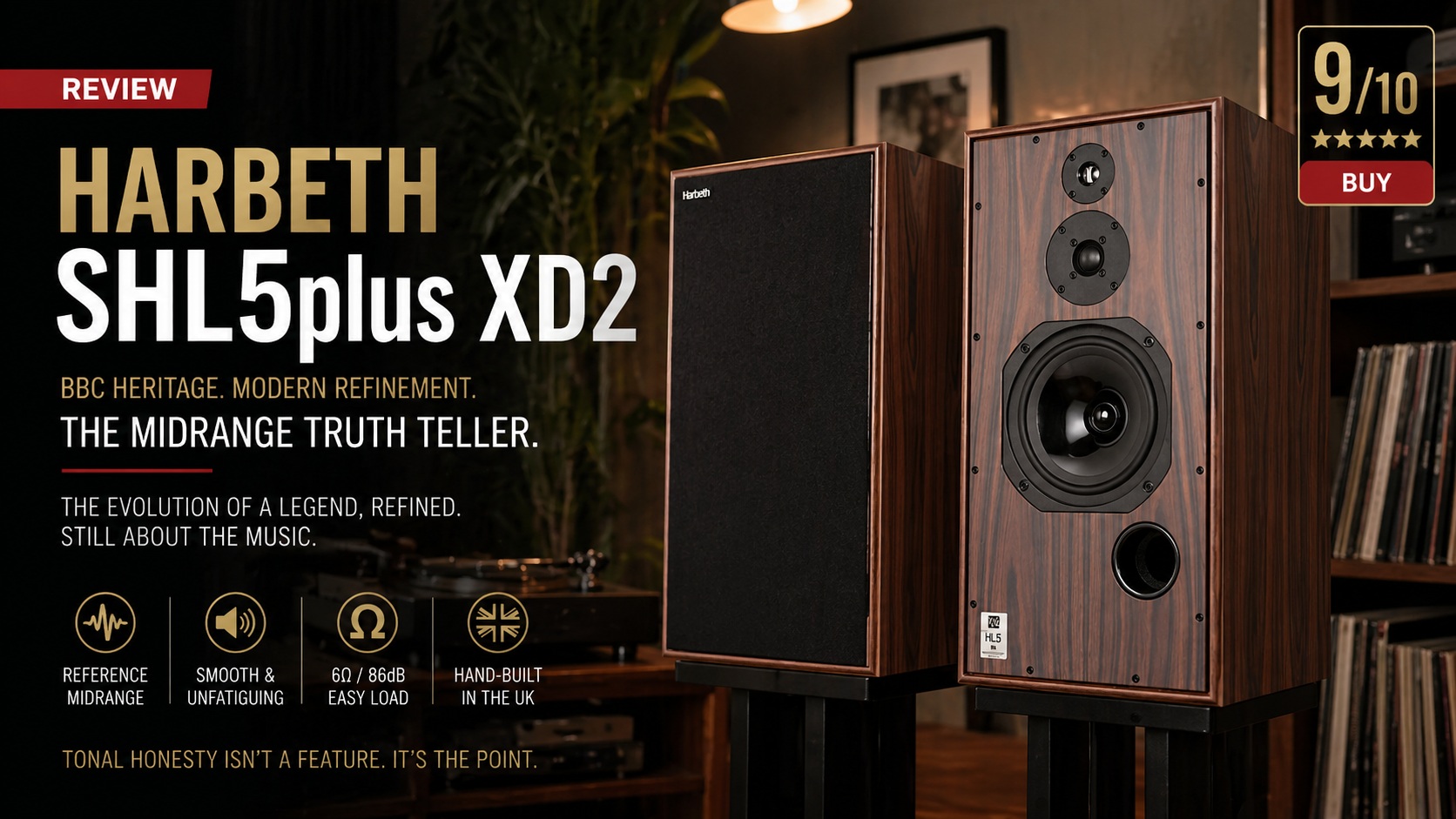
The SHL5plus has been Harbeth’s biggest seller for over a decade, the speaker that put a meaningful chunk of Alan Shaw’s design philosophy into rooms that couldn’t house the M40-series fridges. The XD2 is the latest evolution — same recipe, fresh ingredients. New RADIAL4 cone, retuned crossover, a price tag that’s nudged firmly past most people’s “bookshelf speaker” mental model, and a brief that hasn’t really shifted since 1977: tell the truth about midrange, do it in a thin-walled BBC-style box, and let the rest fall where it falls.
Whether that brief still makes sense at $7,990 a pair, in a market crawling with computer-optimised standmounts a third the price, is the actual question.
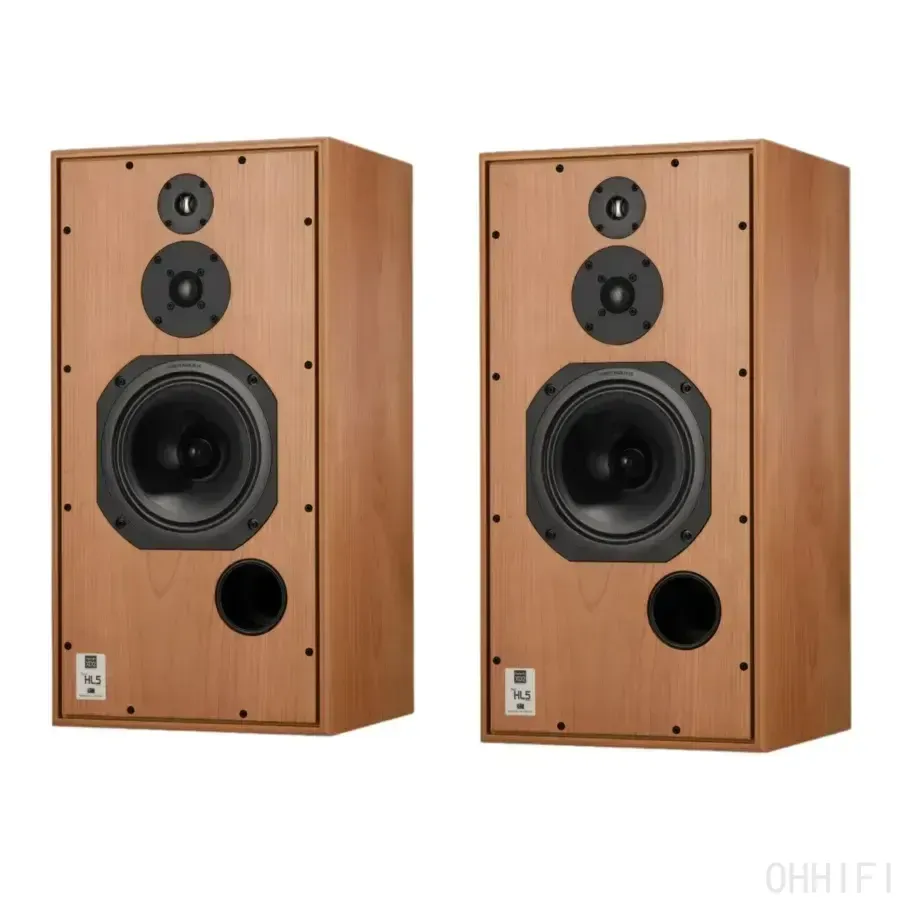
Quick Specs
| Specification | Details |
|---|---|
| Type | 3-way bass-reflex standmount |
| Drive units | 200mm RADIAL4 mid/bass; 25mm ferrofluid-cooled tweeter; 20mm SuperTweeter dome |
| Frequency response | 40Hz – 20kHz ±3dB (free space, grille on) |
| Sensitivity | 86dB / 2.83V / 1m |
| Impedance | 6 ohms (easy load) |
| Power handling | 150W programme; min 25W/ch recommended |
| Dimensions (HWD) | 635 × 322 × 300mm (+12mm grille/posts) |
| Weight | ~15.8 kg (34.8 lb) each |
| Finishes | Black Ash, Cherry, Oak, Walnut, Rosewood |
| Country of origin | United Kingdom (Lindfield, West Sussex) |
| MSRP | From $7,990/pair USD (Black Ash) |
Design, Build & Industrial Design
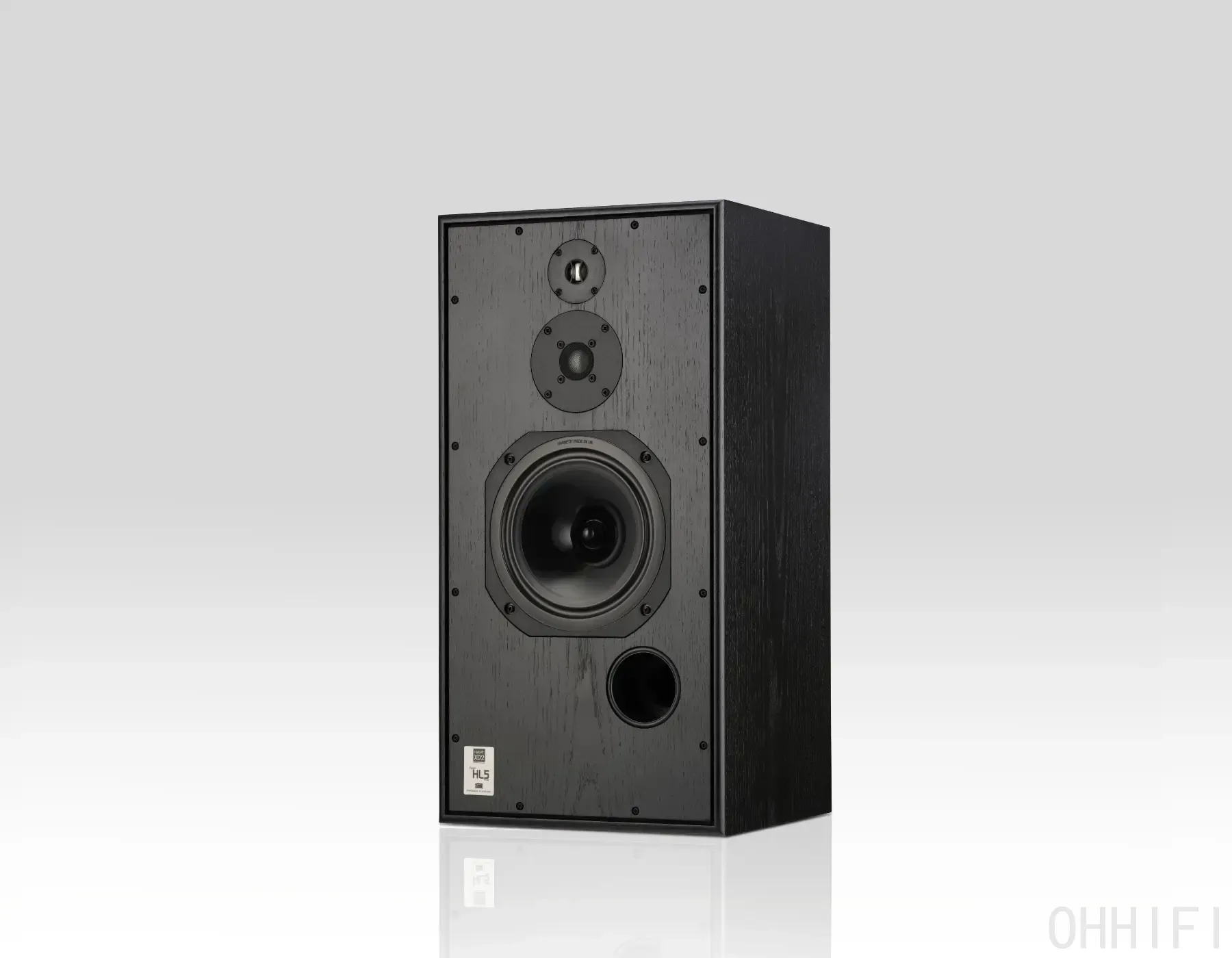
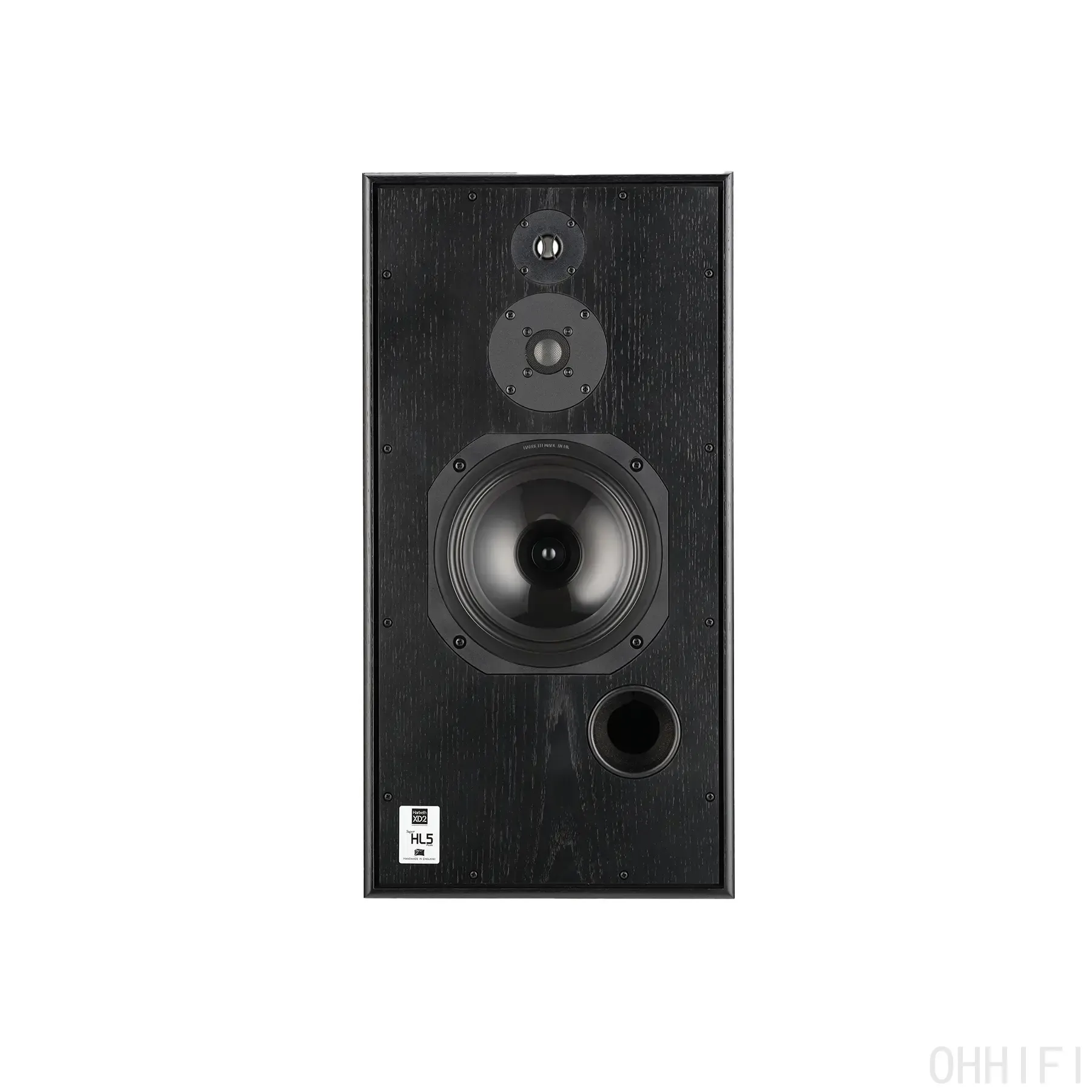
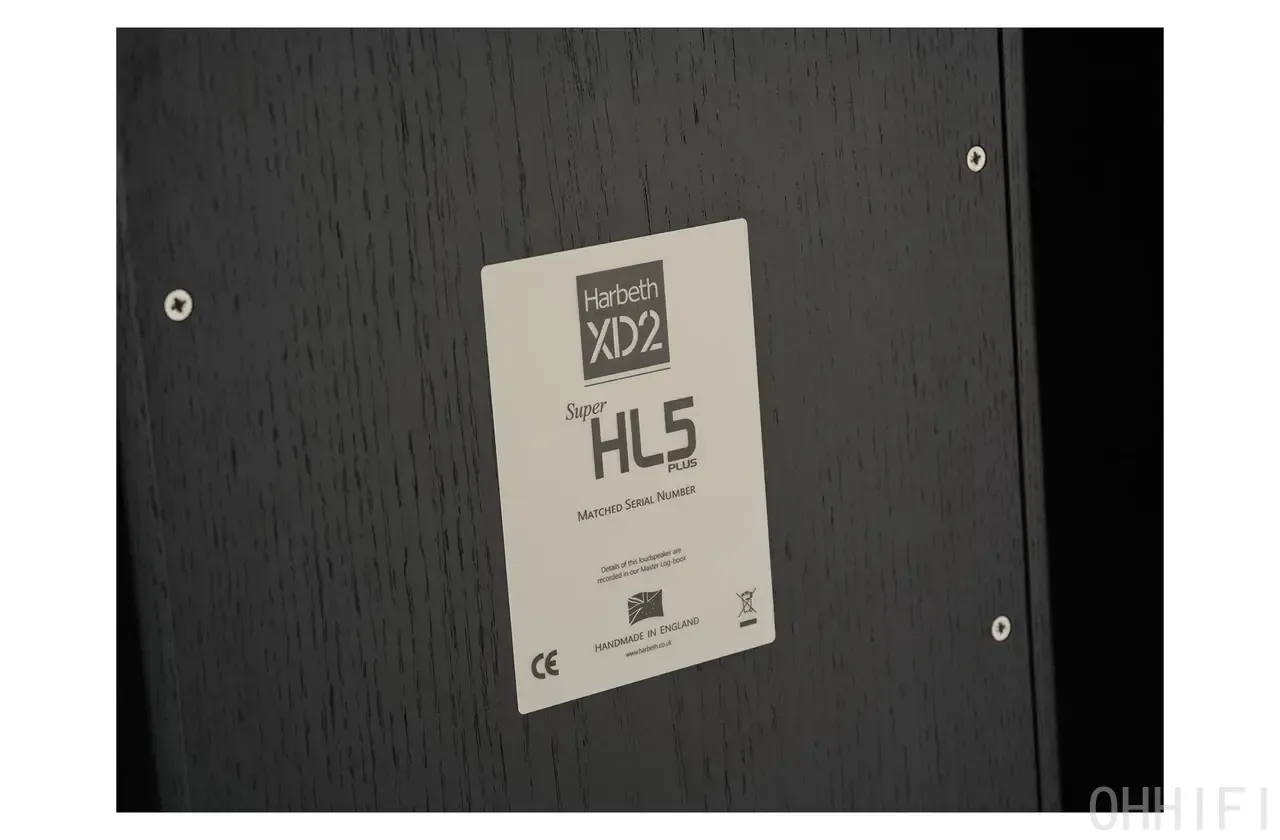
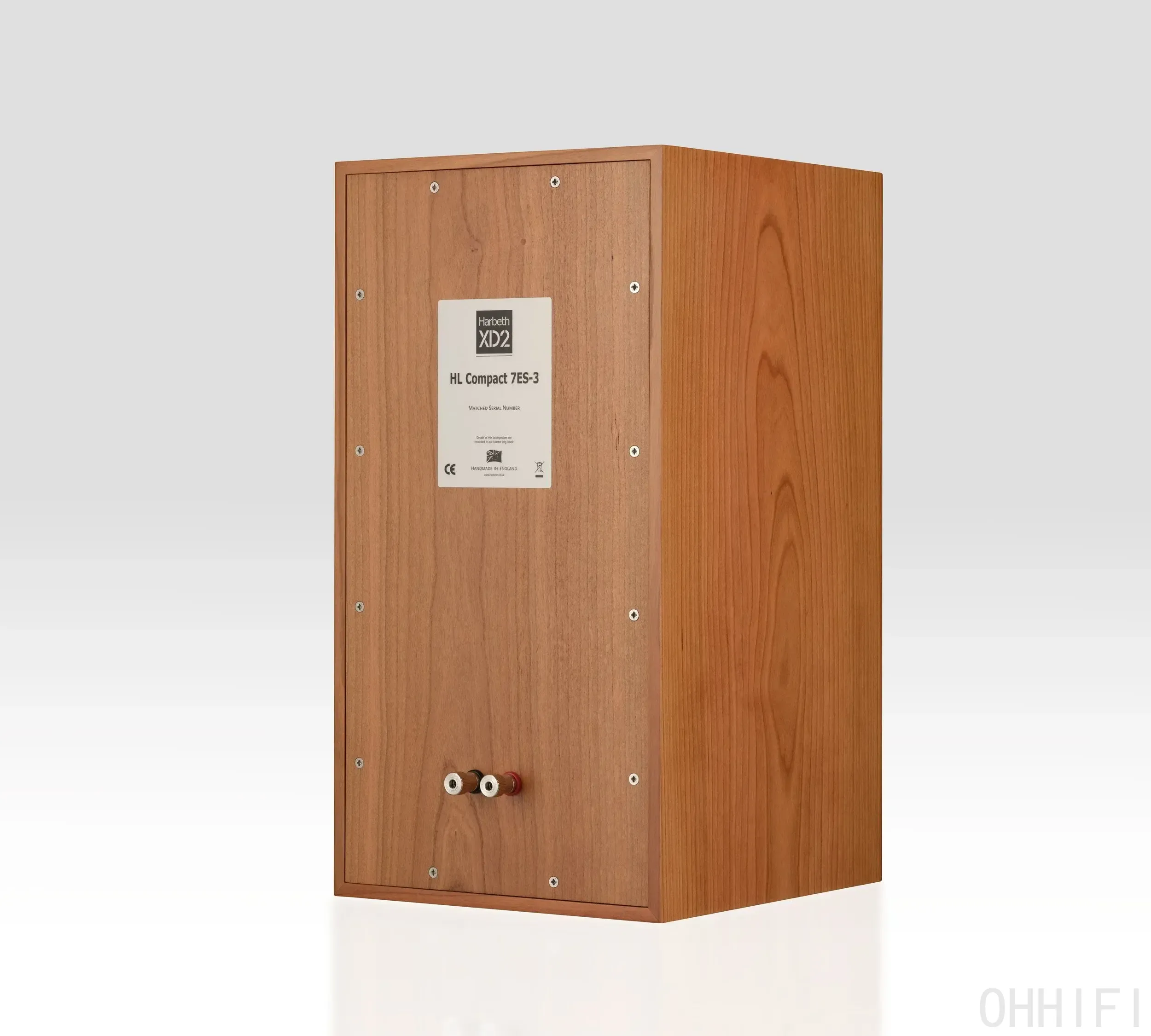
The SHL5plus XD2 looks, in 2026, almost defiantly square. Big front baffle, three drivers stacked vertically with the 200mm RADIAL4 on the bottom, the 25mm tweeter above, and the 20mm SuperTweeter perched at the top. A front-firing reflex port. Removable rear panel — a Harbeth signature, a service-friendly choice almost no other manufacturer at this price point bothers with. Four-millimetre Harbeth-branded binding posts. No fancy machined feet. No CNC-milled aluminium anything.
The cabinet is the point. Harbeth still uses the BBC thin-wall lossy panel principle — relatively thin MDF dampened with bitumen-style mats, designed to push cabinet resonances down and out of the audible problem range rather than try to suppress them with mass. Pick one up and the box feels surprisingly hollow compared to a Magico or KEF Blade. That isn’t a build flaw; it’s the design. The argument has been running since the 1970s and Harbeth has not changed its mind.
What’s improved with each generation is the veneer work. The factory selects matched panels for each pair, and the cherry, oak, and rosewood finishes look like proper furniture rather than the laminate-on-particleboard impression that some “luxury” speakers give off above $5k. The black ash is more workmanlike. Rosewood adds roughly $400 to the pair price and, frankly, if you’re spending eight grand, spend the extra $400.
The included grille is acoustically transparent and Alan Shaw voices the speaker with grilles on. Take them off if you must, but you’re listening to a slightly different speaker than the one Harbeth designed. I tend to leave them on.
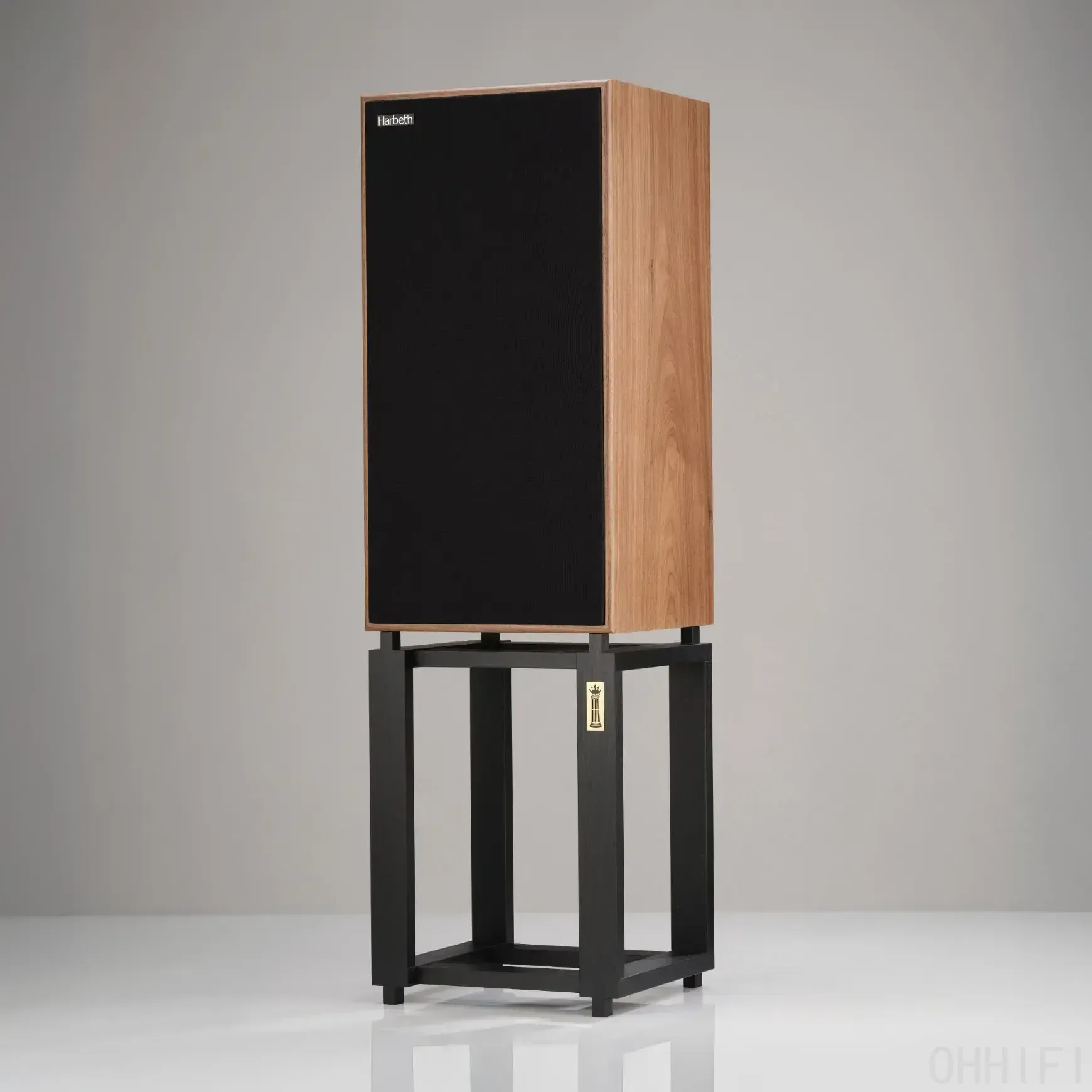
A note on stands: these need them. Harbeth doesn’t ship stands and is studiously neutral about which to use. The German-made TonTräger stands are popular at around $1,650/pair and put the tweeter at the right ear height. They’re well-made, sympathetic to the cabinet, and very expensive for what they are. Solid open-frame stands from Atacama, Skylan, or a custom build will get you 90% of the way there for a quarter of the cost.
The Sound: Where the Midrange Magic Still Lives
I evaluated the SHL5plus XD2 in a treated room of moderate size — about 20 square metres — with the speakers about 80cm from the front wall, slightly toed in, on 50cm stands.
Bass
40Hz, ±3dB. That’s the spec, and it’s roughly what you hear in a real room. This is not a bass-shy speaker, but it is a polite one. Put on Marvin Gaye’s “What’s Going On” and the upright bass walks with proper pitch and texture, never blooming or smearing. Move to something more demanding — Massive Attack’s “Angel” — and the SHL5plus XD2 does the lower-mid pressure well, but the absolute bottom octave starts to thin out. You can feel where the cabinet stops giving you more.
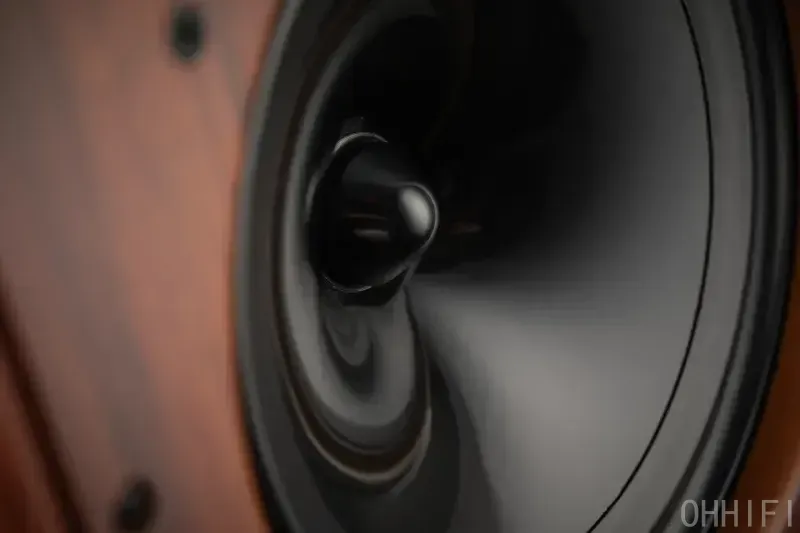
That’s the BBC compromise stated plainly. The thin-wall design and the bass-reflex tuning are optimised for tonal honesty in the upper- and mid-bass, not for sub-25Hz authority. Listeners coming from a pair of B&W 705 S3s will think the SHL5plus XD2 has more bass. Listeners coming from a sealed-box ATC SCM19 may think it’s looser. Both groups are kind of right.
There’s a more interesting truth about Harbeth bass at this level: it’s defined. The leading edge of a kick drum on Tool’s “Fear Inoculum” is precisely placed in the soundstage, not just present. That kind of micro-localisation is harder than reaching for sub-30Hz, and Harbeth has chosen the harder, less impressive-on-paper task.
Midrange
This is where the SHL5plus has earned 15 years of cult status, and the XD2 doesn’t squander it. The new RADIAL4 cone material is, if I’m reading the trajectory of Harbeth’s driver development correctly, a continued refinement rather than a reinvention — slightly lower self-resonance, slightly cleaner upper-mid behaviour. The audible effect is incremental but real.
Norah Jones on “Come Away with Me” — the breath, the chest tone, the room around her piano — comes through with that “she’s standing there” presence that BBC-derived speakers have specialised in for fifty years. Chet Baker’s voice on Chet Baker Sings sounds less recorded and more reproduced. There’s no upper-mid grain, no plastic edge to vocals, no shoutiness in the 1–3kHz band where so many price-competitive speakers betray their crossover designers’ compromises.
If you’ve heard a Spendor Classic 2/3, Graham LS5/9, or Falcon LS3/6, you know the family flavour — but the SHL5plus XD2 is more open and less rounded than the Spendor, more dynamically alive than the Falcon, and slightly more refined in the lower treble than the Graham. There’s a kind of grown-up composure here that the older Super HL5plus (non-XD) never quite had — the lower-treble has been let some air in without losing the warm, BBC-trained presentation.
Treble
The SuperTweeter is the easy headline and the easy red herring. It crosses in around 10kHz and is, in genuine listening terms, only obvious on properly recorded cymbals, sibilants, and the air around acoustic guitar harmonics. On Dire Straits’ “Private Investigations,” Knopfler’s strummed nylon strings have a defined upper-octave shimmer that’s slightly more present than on the same recording through a non-supertweetered competitor.
The main 25mm tweeter is the workhorse. It’s a SEAS-built unit made to Harbeth’s spec and treated with extreme care in the crossover. Cymbals sound metallic instead of plastic. Strings have rosin and weight, not hash. The tweeter isn’t the most resolving I’ve heard at this price — a Beryllium dome from Focal will dig out more recording-engineer detail — but it’s also never, in any track I tried, fatiguing. That trade is intentional. Eight-hour listening sessions don’t end in a headache.
Soundstage & Imaging
This is the other thing Harbeth has always done unreasonably well: getting out of its own way. With the speakers properly set up and the cabinets lightly toed in, they vanish. Patricia Barber’s Café Blue — the live-feel is preserved, the upright bass is locked to a specific spot, the brushwork is between and slightly behind the speakers, and the cymbal decay extends past the cabinet edges in both directions.
Width is excellent. Depth is very good. Image height is the slightly weaker dimension — you don’t get the floor-to-ceiling holographic sweep that some larger floorstanders produce, partly because the speakers themselves are about 60cm tall and only get you so much vertical scale. On a large symphonic track — Mahler’s 2nd, the Tilson Thomas / SF Symphony recording — the orchestra is laid out cleanly across a credible width but doesn’t quite scale to actual concert-hall proportions. That’s a physics limit of the box size, not a failure of voicing.
Measured Performance
Independent measurement databases for the XD2 are still thin on the ground at the time of writing — the speaker has only been shipping for several months. The XD generation it replaces measured cleanly: relatively flat on-axis with a mild presence-region depression, smooth off-axis behaviour out to 30°, and the expected mid-bass hump from the BBC reflex tuning. The XD2’s published specs (40Hz – 20kHz ±3dB free-space, smooth off-axis) suggest the engineering target hasn’t moved, only the components used to hit it.
I’d treat the XD2 as a known-quantity speaker family until comprehensive third-party measurements appear. The 86dB/6Ω rating is honest in my experience — this is a genuinely easy load, friendly to amps from 25W upward, with no impedance dips that punish lesser amplifiers.
Test Setup — Associated Equipment
Evaluated through my reference loudspeaker chain — a mid-fi solid-state integrated amp with a comfortable 100W into 6Ω, fed by a balanced solid-state DAC. Sources ranged from CD rips to 24/96 streams over a wired Roon endpoint. Test material: a deliberately wide spread covering small-ensemble jazz (Bill Evans Trio, Patricia Barber), vocal recordings (Norah Jones, Chet Baker), pop and rock (Dire Straits, Tool, Pink Floyd, Massive Attack), and large-scale classical (Mahler, Stravinsky’s Rite of Spring).
The SHL5plus XD2 is, despite being described as easy to drive, a speaker that scales meaningfully with amplifier quality. A 25W tube amp will play music. A 100W solid-state amp with proper damping factor will properly grip the woofer and reveal another half-octave of useful bass control. If you’re in this market, the 100W class is the right entry point.
The Competition
| Rival | Price (pair, USD approx.) | vs SHL5plus XD2 | Verdict |
|---|---|---|---|
| Spendor Classic 100 (floorstander) | ~$10,000 | More bass authority, slightly warmer/darker mid | Bigger room, bigger sound — but not a true peer in size or imaging |
| Graham Audio LS5/9f | ~$9,000 | True BBC LS5/9 lineage; slightly more old-school, less treble extension | The purest “BBC” choice; less modern openness |
| ProAc Response D2R | ~$7,500 | More dynamic, livelier treble, less midrange magic | The choice for rock and electronica listeners |
| Falcon Acoustics LS3/6 | ~$8,000–10,000 | Closer to BBC original brief, slightly more delicate | Niche, beautiful, less commercial polish |
| KEF Reference 1 Meta | ~$8,000 | Modern engineering, flatter measured response, less midrange “presence” | The measurement-first audiophile’s pick |
The interesting fight at this price isn’t really against modern computer-modelled boxes like the KEF — those serve a different listener. It’s against the rest of the BBC-derived family. Against the Graham LS5/9f I auditioned a couple of years ago, the SHL5plus XD2 is more open in the treble and a touch more dynamically alive; against a Spendor Classic 100, it’s smaller, more neutral, and less authoritative below 50Hz.
Verdict
Score: 9/10. Buy.
The SHL5plus XD2 isn’t trying to be the most resolving, the most dynamic, the most extended, or the most measurement-perfect speaker at $7,990. What it does — and continues to do better than most peers — is reproduce the upper-bass, midrange, and lower-treble bands with a tonal honesty that makes voices and acoustic instruments sound correct in a way that’s genuinely rare. It loses a half-point for absolute bass extension in larger rooms and for being a hard sell to anyone who primarily listens to dense electronic, modern metal, or large-scale orchestral material at concert volumes.
If your listening diet is heavy on jazz, vocal, classical chamber music, acoustic, blues, and well-recorded singer-songwriter material, this is one of maybe three speakers under $10,000 that I’d put on a serious recommendation list and keep there for years.
Pros
- Reference-class midrange tonality; vocals and acoustic instruments sound right
- Smooth, unfatiguing treble that holds up to long listening sessions
- Easy 6Ω/86dB load — works with tubes, low-power solid-state, the lot
- Hand-built in the UK; the rear panel is removable for service
- Wide soundstage and excellent disappearing act with proper setup
Cons
- Bass extension stops where the spec says it does; not for big rooms or sub-30Hz material
- Limited large-scale dynamic slam — won’t rock at headbanger volumes
- Stands not included, and the dedicated TonTräger pair adds another $1,650
- Aesthetic is “British furniture,” not modern-industrial — might not fit every room
- Marginal upgrade if you already own the previous-gen XD; the audible step is incremental
Who Should Buy / Who Should Skip
This is for you if you listen primarily to acoustic, vocal, jazz, chamber, and well-recorded singer-songwriter material; if you have a small-to-medium room (under 35 sq m); if you value tonal correctness over hi-fi spectacle; and if you’re prepared to budget for proper stands and at least a 70W-class amplifier with good damping.
Look elsewhere if you need genuine sub-30Hz extension. If your room is large enough to handle a ‘fridge-sized’ cabinet and your goal is the ultimate expression of the BBC house sound, our Harbeth M40.5 XD2 Review: Does the Classic BBC Design Still Reign Supreme? provides a comprehensive analysis of how the flagship model pushes the boundaries of transparency and low-end authority that the SHL5plus XD2 politely declines.
The SHL5plus has earned its cult status over fifteen years and three iterations. The XD2 doesn’t reinvent it. It refines it, charges accordingly, and continues to be one of the very few speakers in this price band that treats midrange honesty as the actual point of high-end audio rather than a marketing checkbox.