
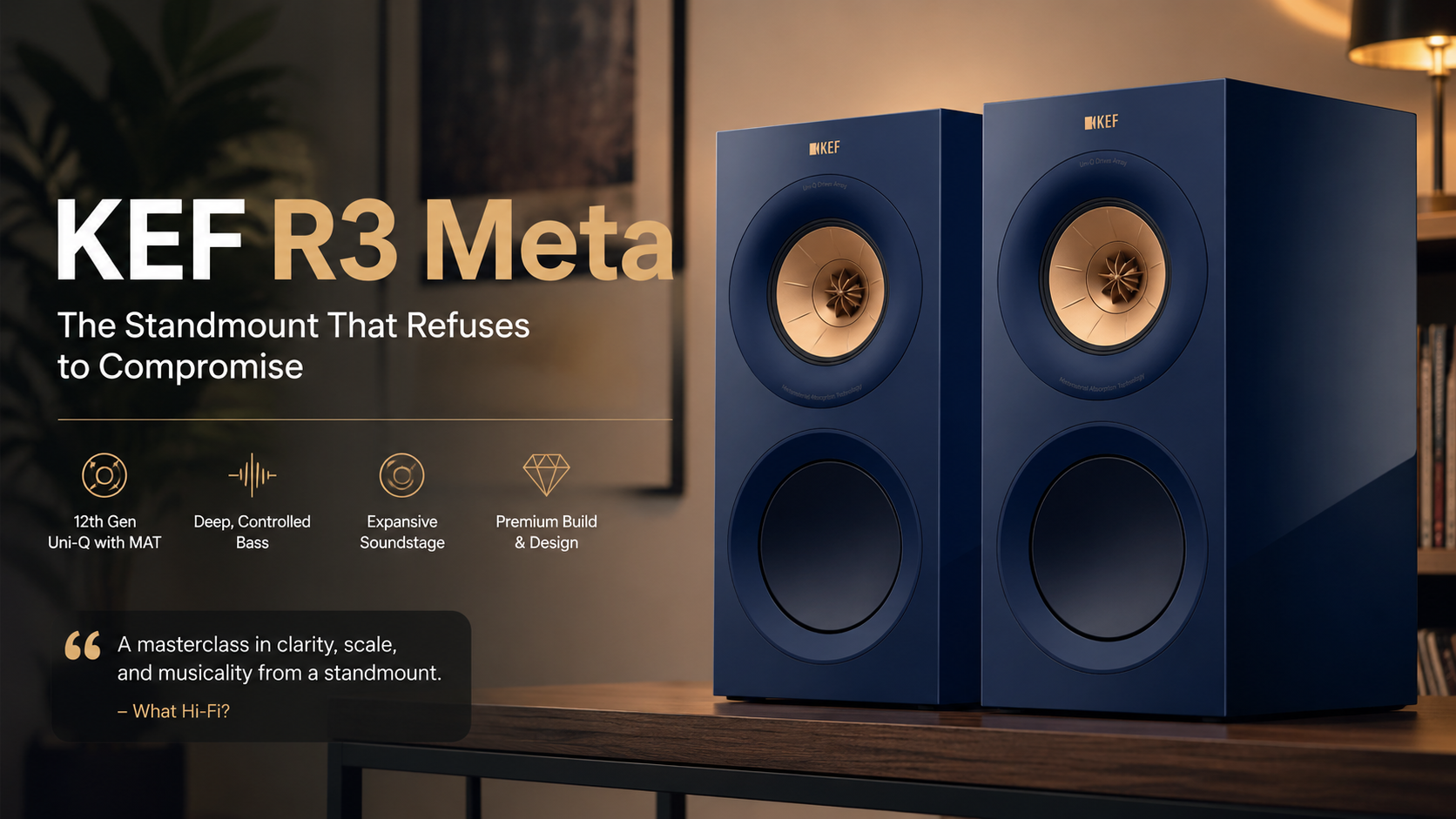
KEF R3 Meta Review: Still the Standmount to Beat at $2,200?

There's a specific kind of stubbornness in this hobby — the belief that a bookshelf speaker, no matter how well engineered, can't deliver real scale without a subwoofer bolted underneath it. The KEF R3 Meta exists specifically to argue with that belief, and after spending real time with it, I'm not sure the belief wins.
This isn't a new speaker anymore — it launched back in 2023 as part of KEF's revamped R Series — but it's aged into something more interesting: a standmount that's still being cross-shopped against newer, pricier rivals almost three years later. That's the kind of staying power worth digging into.
Quick Specs Table
| Specification | Details |
|---|---|
| Design | Three-way, bass reflex standmount |
| Drivers | 25mm vented aluminium dome tweeter, 125mm aluminium midrange, 165mm hybrid aluminium bass driver (12th-gen Uni-Q array with MAT) |
| Frequency Response (±3dB) | 58Hz - 28kHz |
| Frequency Range (-6dB) | 38Hz - 50kHz |
| Sensitivity | 87dB (2.83V/1m) |
| Nominal Impedance | 4Ω (min. 3.2Ω) |
| Amplifier Requirements | 15W - 180W |
| Dimensions (HWD) | 422 x 200 x 336mm |
| Weight | 12.4kg each |
| MSRP | $2,200 / pair |
Design, Build & Industrial Design
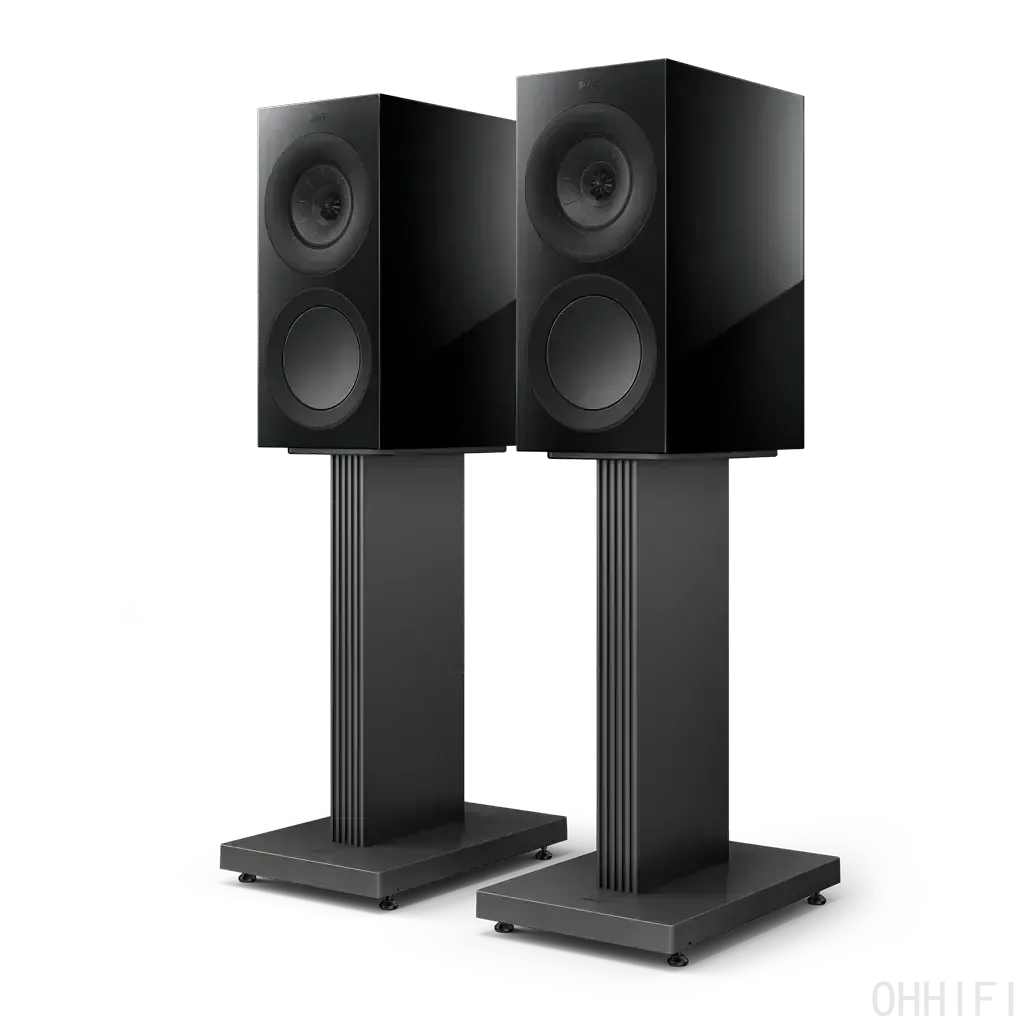
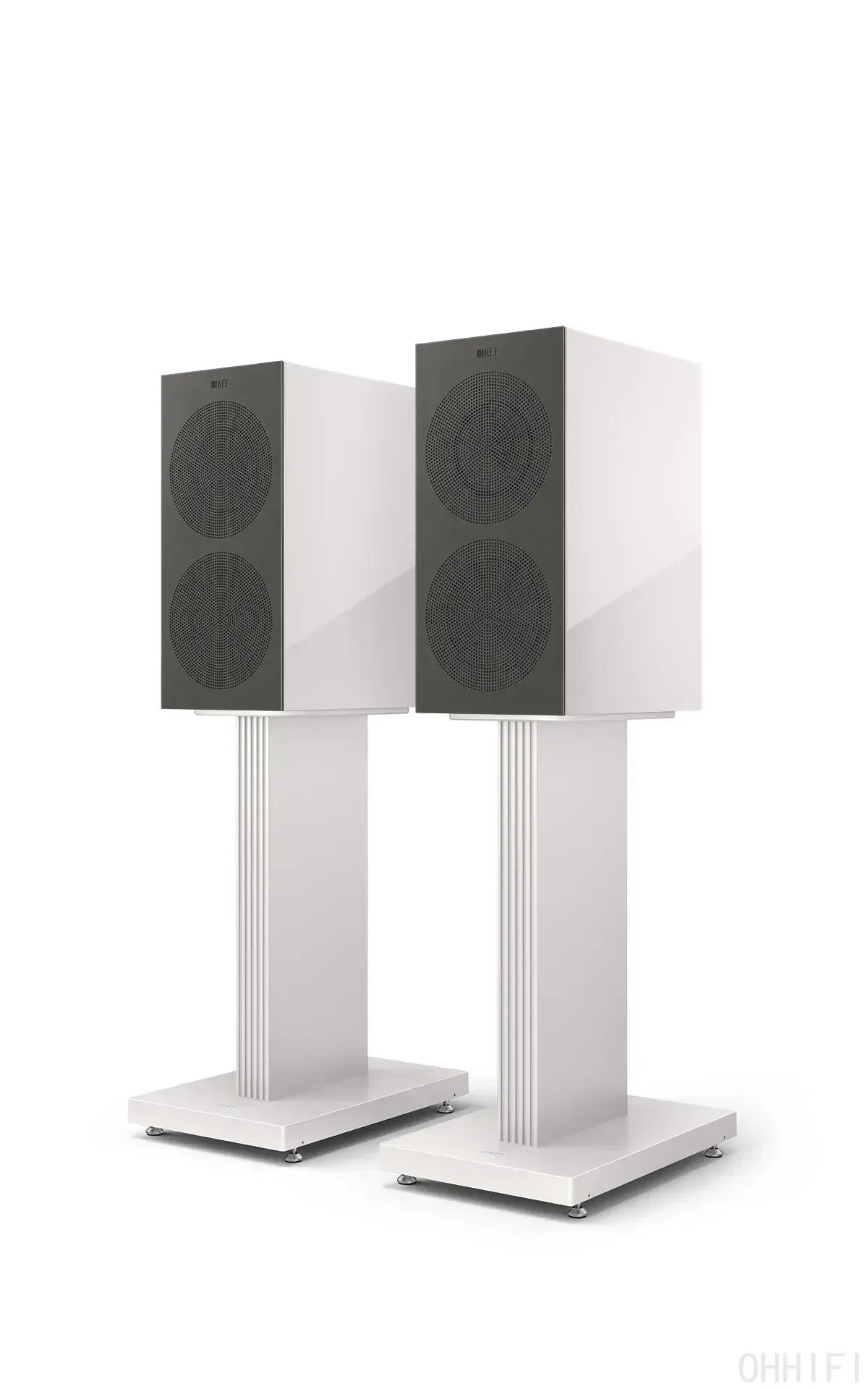
Pick one up and the heft tells you where the money went. At 12.4kg a piece, these aren't the kind of "bookshelf" speaker you're actually putting on a bookshelf — they want dedicated stands, and KEF's own S3 stands exist for exactly that reason.
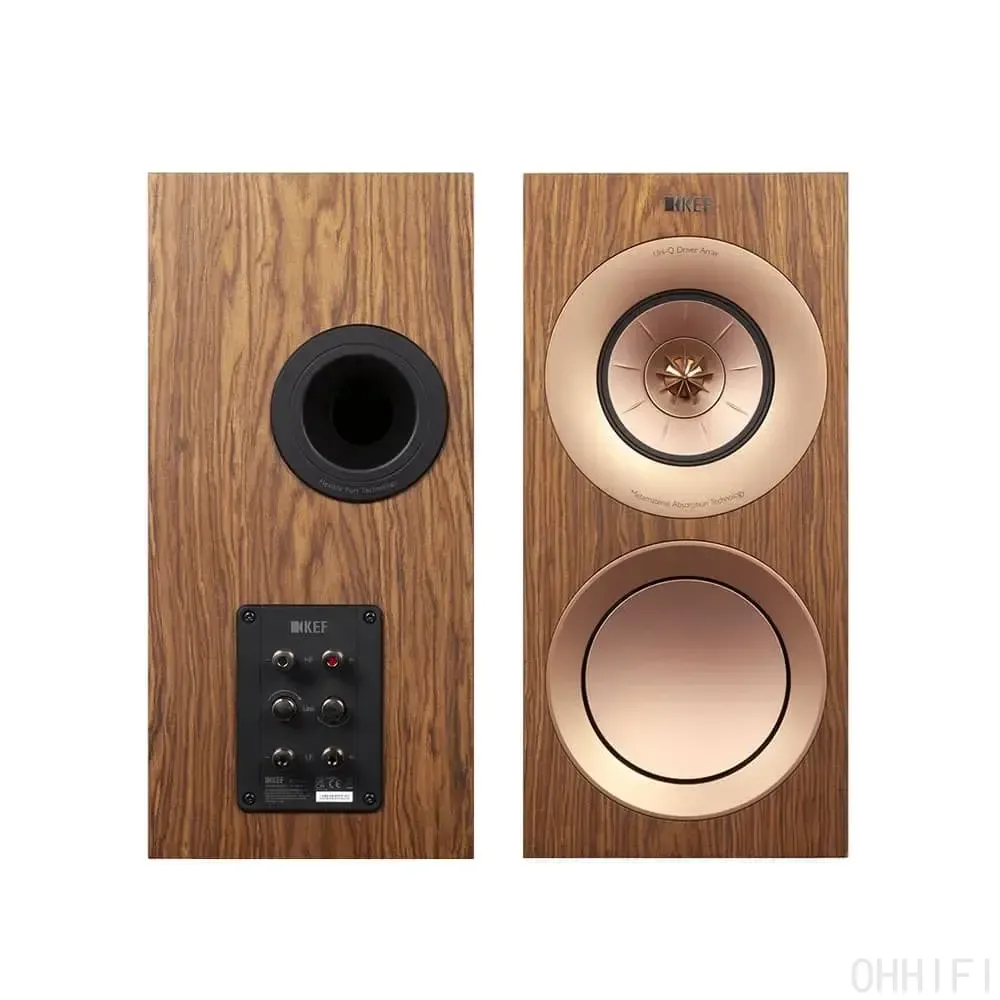
The star of the show, as with every serious KEF in the last decade, is the Uni-Q array — a 25mm aluminium dome tweeter sitting right in the middle of a 12.5cm midrange driver, now in its 12th generation and designed to improve dispersion while acting as a single source point for the highs and mids. What's new for this Meta revision is the addition of MAT — Metamaterial Absorption Technology — a maze-like structure sitting behind the tweeter. MAT is made up of 30 tubes, each tuned to absorb a particular high frequency, and KEF claims it absorbs 99% of the backward radiation that would otherwise muddy the treble. It's not just a bolt-on either — accommodating MAT required a refined tweeter gap damper, a more flexible decoupling chassis, an enhanced crossover, and a fine-tuned signal path.
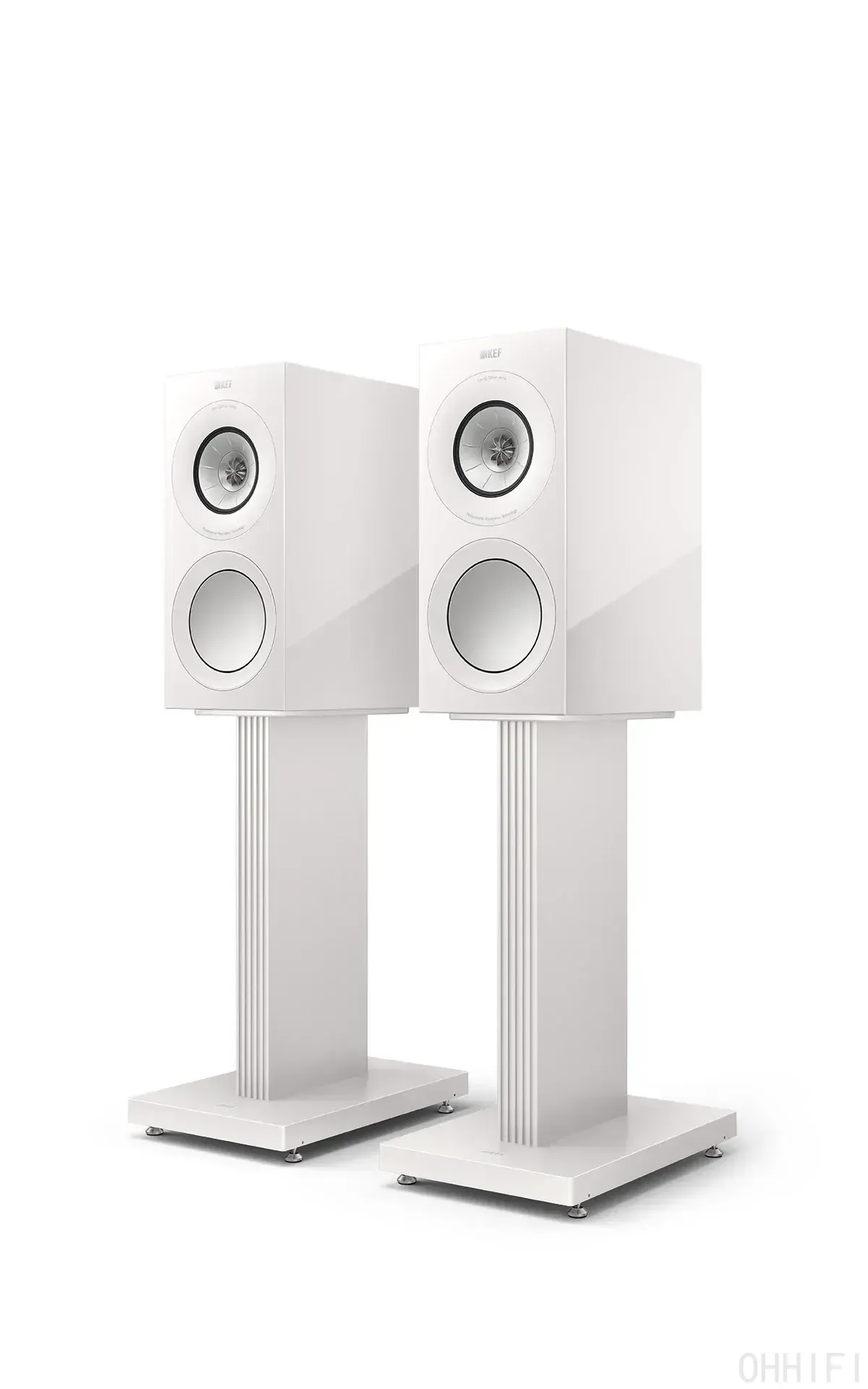
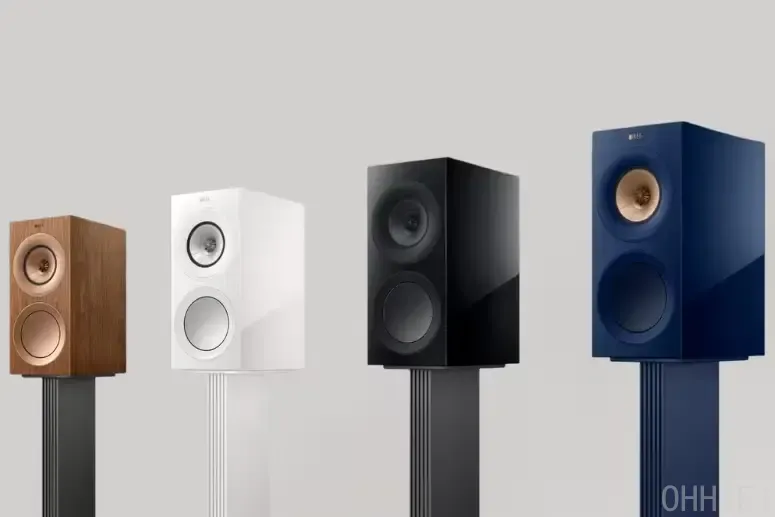
Finish quality is what you'd expect from KEF at this price tier — gloss black, gloss white, walnut, or the Indigo special edition — and the fit and finish reads as properly premium rather than merely competent.
The Sound: Where the Midrange Magic Lives
Bass
This is the party trick. Bass on the R3 Meta is tight, well controlled, and genuinely fun rather than just present. Put on Aphex Twin's "Syro" and there's real physical weight down low — enough that reviewers have reported the floor shaking during extended sessions, which for a stand-mounted three-way is not something you take for granted. It's not a bass-heavy monitor by design, but when a track calls for authority, it delivers grunt without turning to mush. KEF's Extended Bass Shelf design — a hybrid between sealed and ported — trades ultimate low-end extension for a more neutral, controlled roll-off rather than a boomy one-note hump.
Midrange
Here's where the R3 Meta separates itself from merely "good" speakers. Instruments and vocals sound open and airy without ever losing body. Run Norah Jones through it and the intimacy and breath detail stay fully intact — you get string-plucks and vocal depth rendered with a level of texture that punches well above the $2,200 asking price. There's a holographic quality to how singers are presented; vocals sound big, emotionally loaded, and three-dimensional rather than pinned flat between the cabinets.
Treble
Fast, agile, and extended — the MAT implementation is doing real work here. Play Jeff Buckley's "Mojo Pin" and the high-frequency detail around the 40-second mark has that "coming from nowhere" quality that good Uni-Q designs are known for — cymbals decay naturally instead of smearing into a metallic wash. The one caveat worth flagging: the tuning leans slightly forward on-axis, which can edge toward fatiguing if the speakers are aimed directly at the listening position. Toe them out 5-10 degrees, as KEF recommends, and that edge softens considerably.
Soundstage & Imaging
Wide, deep, and tall — a genuinely large-venue presentation for a standmount. Tool's "Fear Inoculum" is a good stress test here: you can pinpoint the depth and height of individual percussion hits with real precision, and the R3 Meta holds that imaging together even during dense, complex passages without losing composure. Directivity is excellent too — you're not locked into a narrow sweet spot the way you would be with electrostats or a Magnepan-style dipole.
Measured Performance
Independent lab data backs up what the ears pick up. Hi-Fi News' bench test found a very even, fractionally downtilted response with just ±1.6dB and ±1.5dB errors across 200Hz-20kHz, plus superb 0.3dB pair matching, with the MAT disc successfully quelling treble resonances after the 2.3kHz crossover. That said, the MAT absorber doesn't fully tame the tweeter's own breakup mode, which shows up as a roughly +10dB spike at 39.5kHz — well outside audible range, but worth noting for completeness. Distortion figures were genuinely impressive: THD from the midrange cone measured around 0.05% at 1m/90dB, with sensitivity landing almost exactly on KEF's 87dB spec. Erin's Audio Corner separately measured excellent on- and off-axis linearity and broad, consistent horizontal and vertical dispersion — the kind of measured behavior that predicts a speaker will sound good in a wide range of rooms, not just one perfectly treated listening chair.
Test Setup — Associated Equipment
I ran the R3 Meta through my desktop-adjacent evaluation setup, driven by a mid-fi integrated amplifier suited to standmounts in this class, in a treated space roughly matched to the speaker's recommended mid-size room footprint. Given the 4Ω nominal impedance dipping to 3.2Ω, I'd steer people away from underpowered AVRs here — this wants a proper integrated amp that isn't going to flinch at the load. Track selection ranged from dense electronic (Aphex Twin) to sparse acoustic jazz (Norah Jones) to full-scale prog metal (Tool), specifically to stress bass control, midrange intimacy, and imaging stability in the same sitting.
The Competition
| Rival | Price | vs R3 Meta | Verdict |
|---|---|---|---|
| DALI Rubikore 2 | ~$2,200/pair | Warmer, slightly more forgiving treble; less pinpoint imaging | Pick if your room or amp is already bright |
| KEF LS50 Meta | ~$1,600/pair | Calmer, more selective bass; smaller stage | Pick for tighter rooms or nearfield desktop use |
| Monitor Audio Studio 89 | ~$2,500/pair | More floorstander-like scale in a compact form | Worth auditioning if space allows a taller cabinet |
| Focal Aria 906 | ~$1,700/pair | Softer, more romantic tonal balance | Pick if you find the R3 Meta's treble too forward |
Against the LS50 Meta I've spent extended time with previously, the R3 Meta simply goes lower and hits harder — it's the more dynamic, more emphatic sibling, while the LS50 stays calmer and more polite by comparison. The Rubikore 2 has since edged the R3 Meta out of some "best standmount" lists, but that's largely a matter of house-sound preference rather than the R3 Meta falling behind.
Verdict: 9/10 — Buy
The KEF R3 Meta earns its reputation. This is a standmount that does the thing most standmounts promise and few actually deliver: full-range composure without a subwoofer being mandatory, imaging precision that holds up under complex material, and a midrange that makes vocals genuinely compelling rather than merely accurate. The only real tax is the 4Ω load demanding a real amplifier, and a treble tuning that rewards proper toe-out. Neither is a dealbreaker at this price.
Pros
- Exceptional midrange transparency and vocal presence
- Genuinely deep, controlled bass without needing a sub
- Excellent measured linearity and dispersion
- Wide, stable imaging that doesn't collapse under complex passages
- Premium build and finish options
Cons
- 4Ω impedance demands a capable amplifier
- Forward treble tuning can edge toward fatiguing if aimed directly on-axis
- Sensitivity of 87dB means it's not the easiest speaker to drive loud on modest power
- Cabinet size is large for a "bookshelf" — dedicated stands are basically mandatory
Who Should Buy / Who Should Skip
This is for you if you want floorstander-adjacent scale and bass authority in a standmount footprint, you already have (or plan to buy) a proper integrated amp that can handle a 4Ω load, and you listen to a mix of acoustic and electronic material where midrange detail and bass control both matter.
Look elsewhere if you're running a budget AVR that struggles below 6Ω, your room is already bright and reflective (the Rubikore 2's warmer tuning may suit better), or you need a genuinely compact desktop speaker — the LS50 Meta is the better fit there.


Comments