
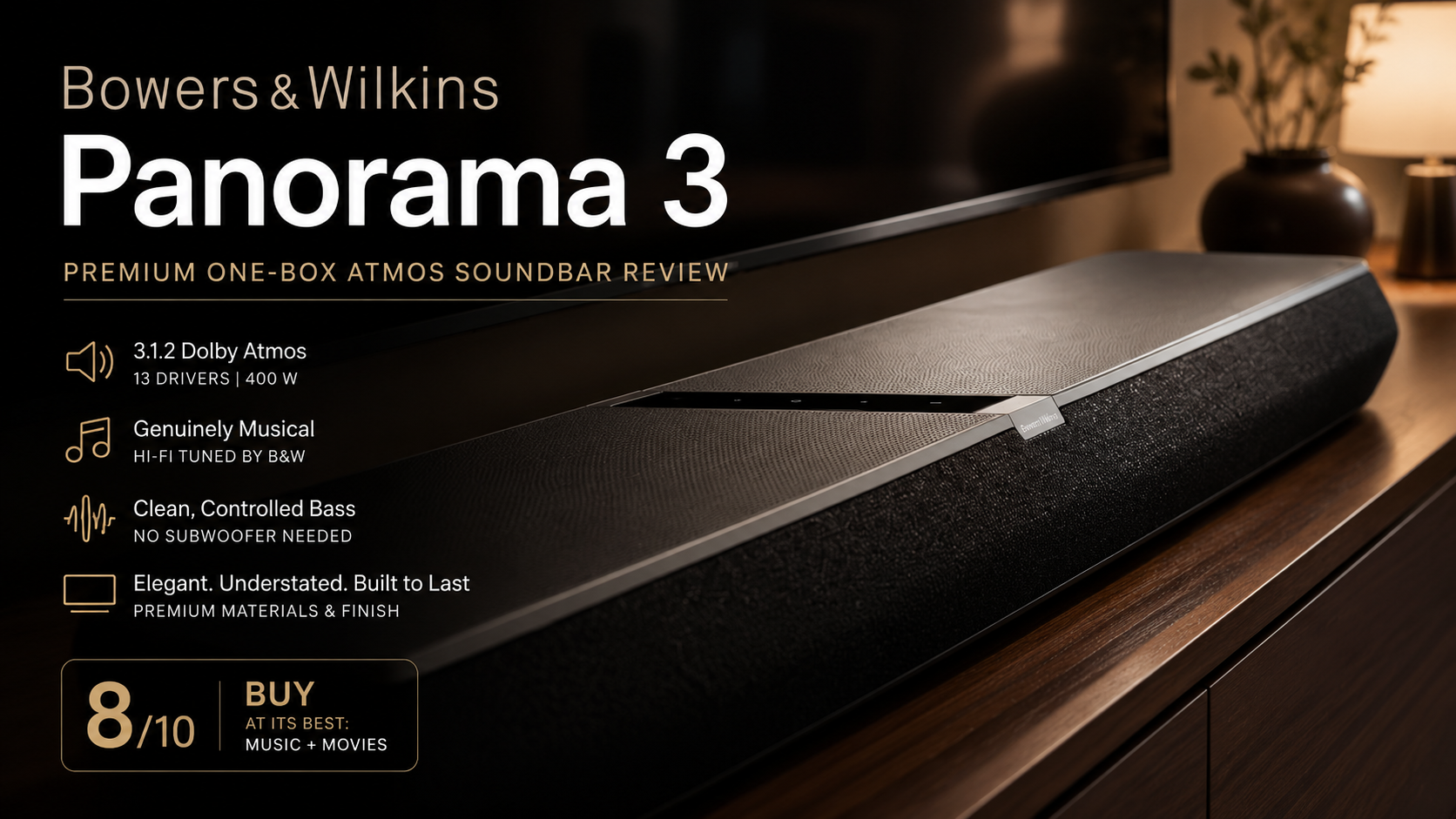
Bowers and Wilkins panorama 3 review

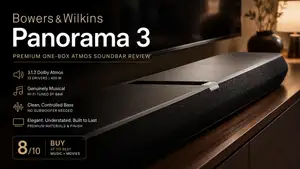
There's a particular kind of confidence required to sell a £899/$999 soundbar that you can't add anything to. No optional wireless sub. No rear satellites. Not even a second HDMI input. The Bowers & Wilkins Panorama 3 arrives as a sealed proposition: thirteen drivers, 400 watts, a 3.1.2 Dolby Atmos layout, and a flat refusal to let you bolt anything onto it later. The pitch is that you won't want to. Across the body of reviews and my own read of how this company voices things, the Panorama 3 mostly makes good on that bet — it is one of the best-sounding one-box bars going, and it's noticeably more musical than the category norm. Where it stumbles is exactly where a single chassis was always going to: the Atmos height it sells on the box is the least convincing thing it does.
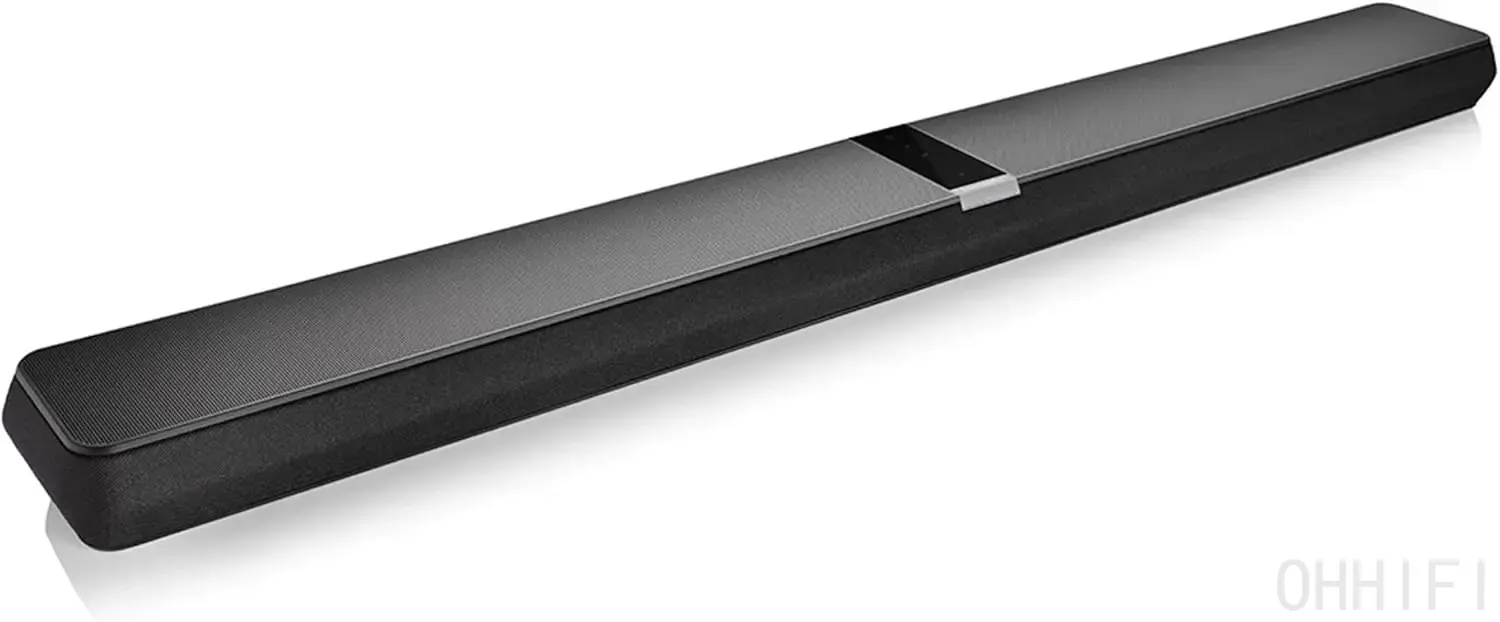
B&W launched the Panorama 3 in 2022 as its first true Atmos soundbar and, by some distance, its most affordable to date — a deliberate shot at the Sonos Arc, priced just above it. Four years on, the calculus has shifted. The Arc has been replaced by the Arc Ultra at the same money, and that reframes the whole value question. We'll get there.
Quick Specs
| Specification | Details |
|---|---|
| Configuration | 3.1.2-channel Dolby Atmos, single bar with integrated bass |
| Drivers | 13 total: 3 × 19 mm titanium-dome tweeters; 6 × 50 mm woven glass-fibre bass/mid; 2 × 50 mm upfiring Atmos drivers; 2 × 100 mm low-profile bass units |
| Amplification | 400 W total — ten discrete 40 W Class D amps |
| Frequency response | 43 Hz – 48 kHz (manufacturer claim) |
| Audio formats | Dolby Atmos, Dolby TrueHD, Dolby Digital / Digital Plus (no DTS) |
| Connections | 1 × HDMI eARC, 1 × optical (Toslink), 1 × Ethernet, 1 × USB-C (service only) |
| Wireless | Wi-Fi (2.4 GHz), Bluetooth 5 (aptX Adaptive, AAC, SBC), AirPlay 2, Spotify Connect, B&W Music app, multi-room |
| Smart | Amazon Alexa built-in |
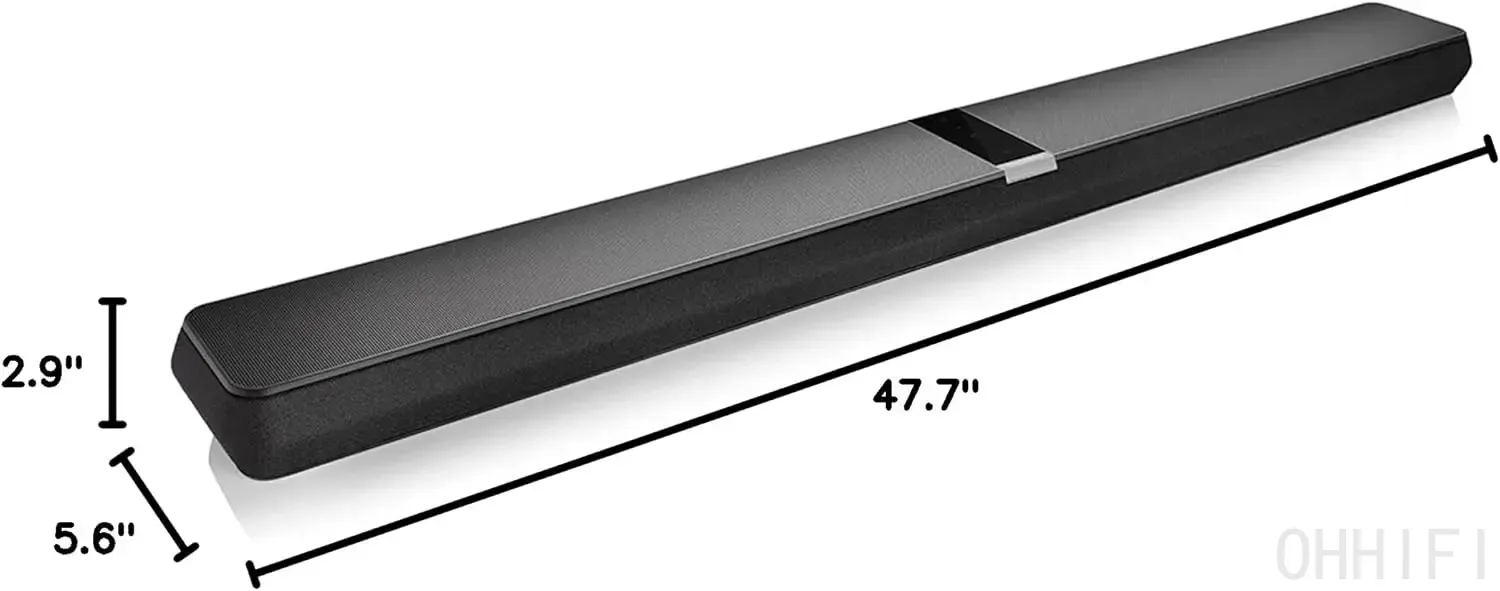
| Dimensions | 1210 × 65 × 140 mm (47.6 × 2.6 × 5.5 in) |
| Weight | 6.5 kg (14.3 lb) |
| Finish | Black |
| MSRP | $999 / £899 / €999 / AU$1,599 |
Design and Build: Tank-Like, Tasteful, and a Little Anonymous
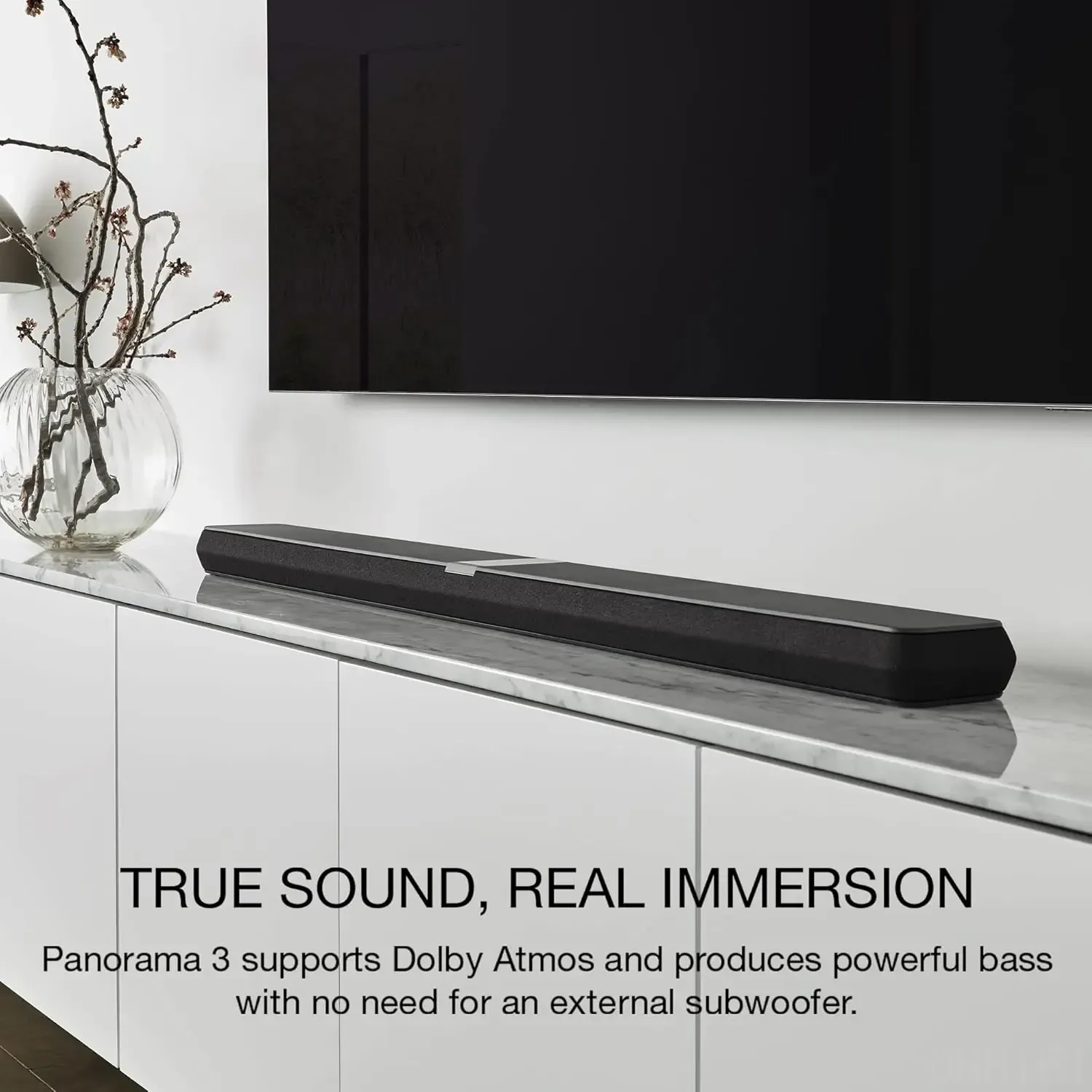
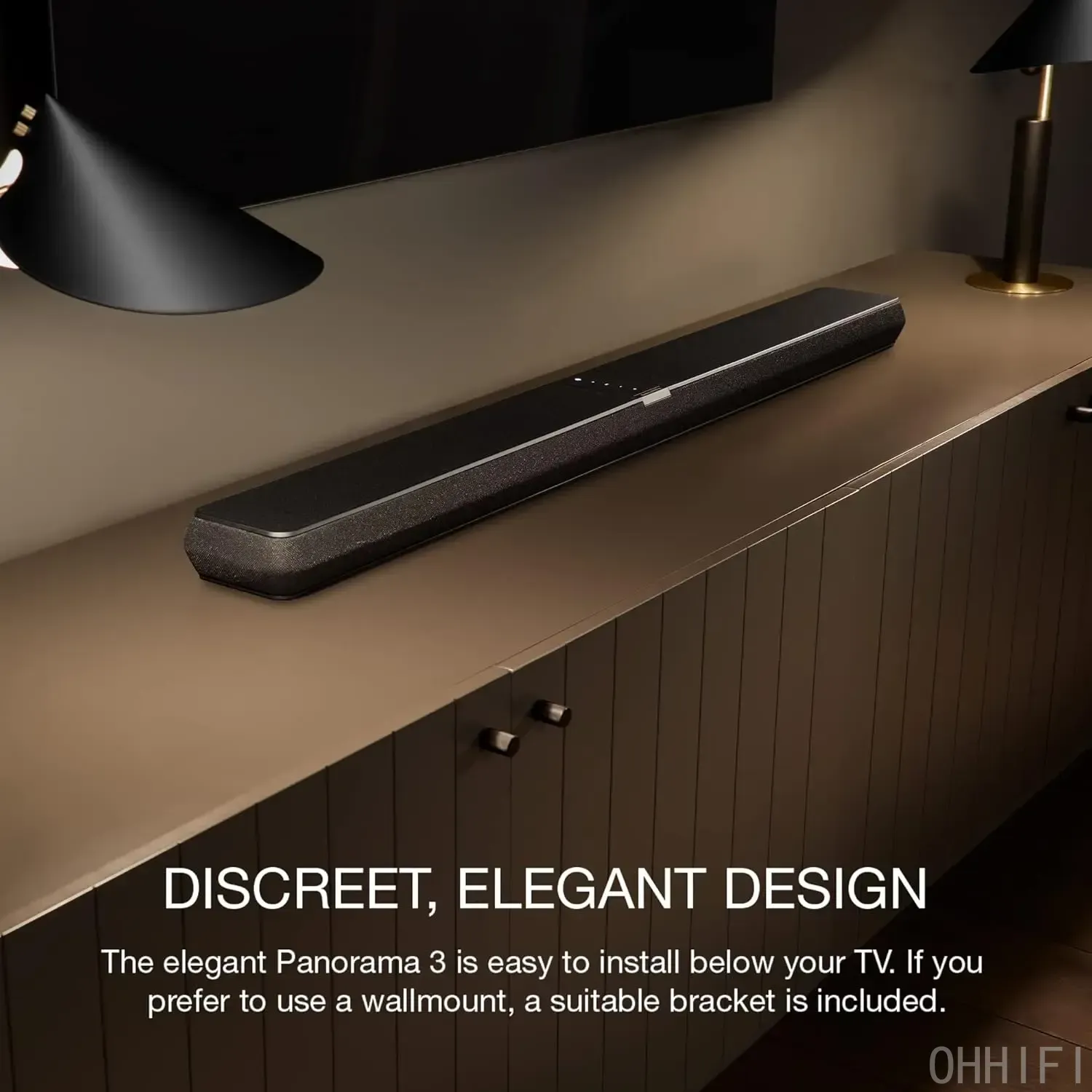
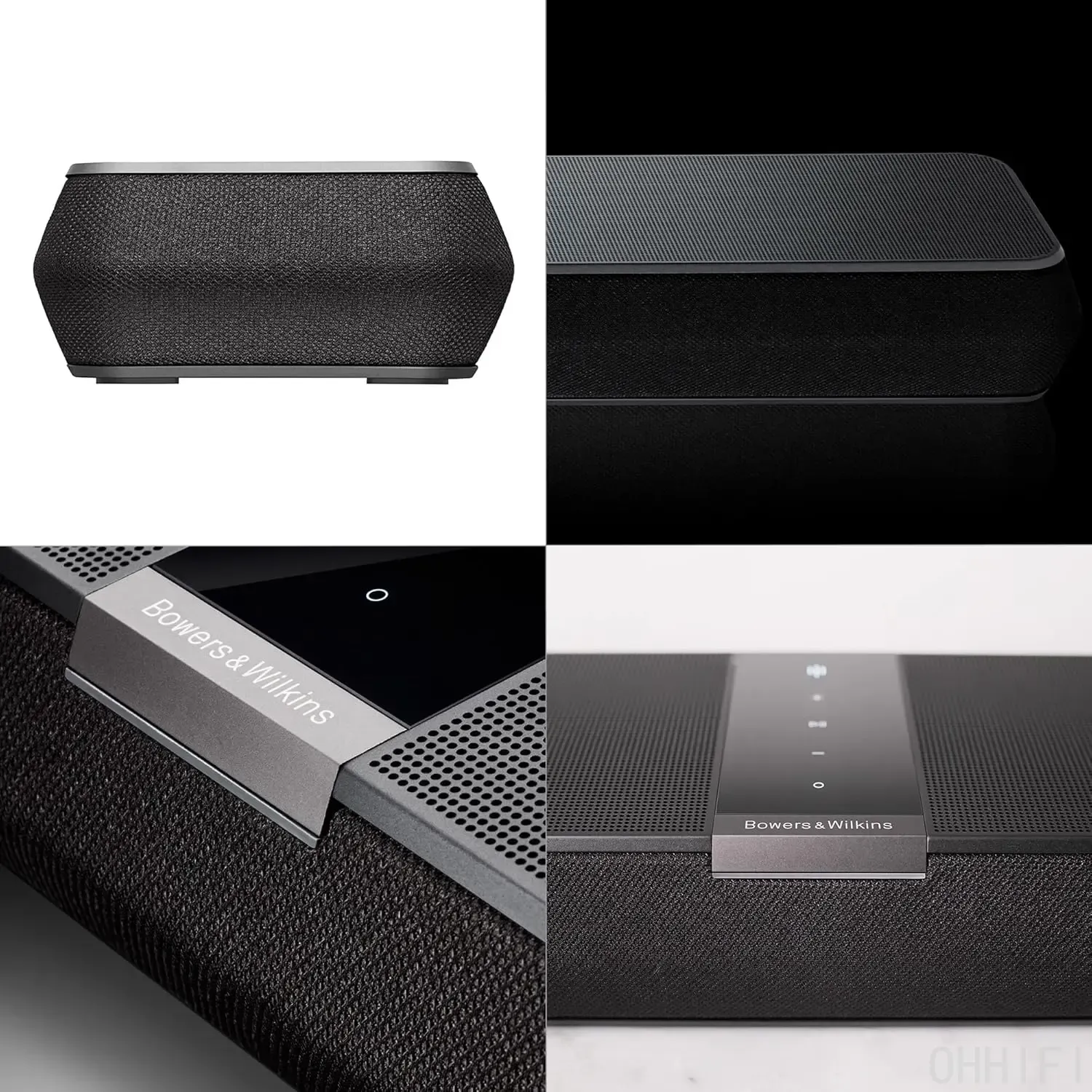
Pick the Panorama 3 up and the first thing that registers is heft. At 6.5 kg it feels properly built rather than assembled — a dense, rigid chassis with a convex front face wrapped in acoustic cloth and a perforated metal grille across the top, through which you can see the two upfiring Atmos drivers and, more unusually, the pair of 100 mm bass drivers firing skyward into their own sealed enclosure. The centre of that top panel hides capacitive touch controls that light up only when your hand approaches. This is B&W doing what B&W does: flawless fit and finish, materials chosen with intent.
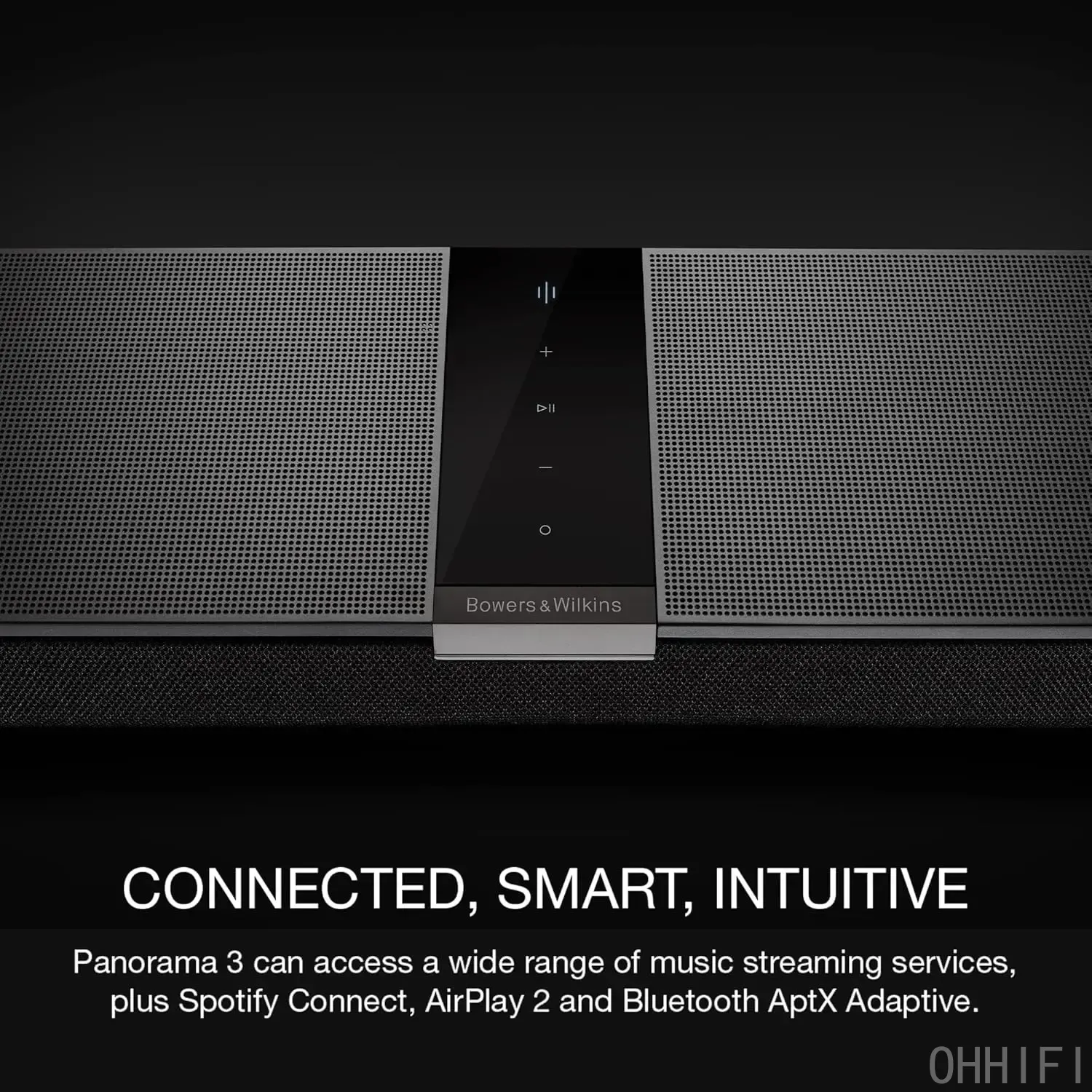
What it isn't is interesting to look at. This is the company that gave us the Zeppelin and the Nautilus, and the Panorama 3 is a long black slab — handsome enough under a TV, but anonymous. At 65 mm tall it slides neatly beneath most screens without clipping the bottom of the panel, and at 121 cm wide it's sized to partner displays of 55 inches and up. A wall bracket is in the box. It's the right shape for the job and an easy thing to live with; just don't expect it to be a conversation piece.
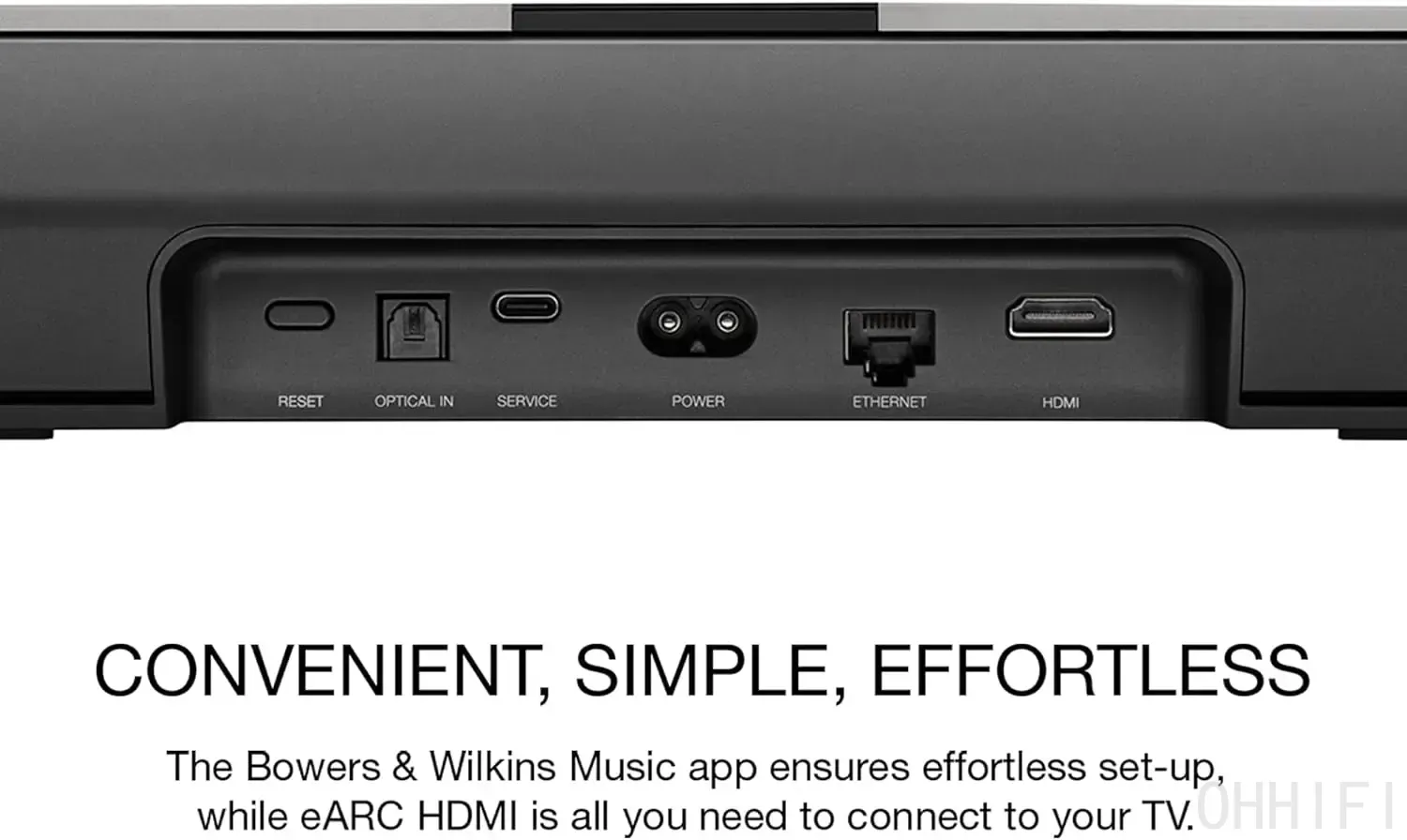
The bigger design story is what's missing round the back. You get a single HDMI eARC socket, one optical input, Ethernet, and a service-only USB-C. That's it. No HDMI passthrough, no spare inputs for a console or a disc player that aren't routed through the TV. For a bar at this price in 2026, the connectivity is thin, and it's the kind of omission you'll feel on day one if your TV is short on eARC-capable ports.
The Sound: Where a Speaker Company's Instincts Show
B&W's house priorities survive the move into a soundbar largely intact — tonal honesty, a midband that's allowed to breathe, and a refusal to chase spectacle at the expense of balance. The consensus across reviews, and my own sense of how this brand tunes, is that the Panorama 3 is voiced as a genuine music-and-movies bar rather than an effects machine. It is, importantly, one of the few soundbars I'd happily leave playing music with the TV off.
Bass and the No-Subwoofer Question
The headline trick is those twin 100 mm woofers in a sealed top-mounted enclosure, and they earn their keep. For a single sealed box this is impressively clean, fast, straight-edged low end — there's no flab, no one-note boom, and the manufacturer's claimed reach into the low 40 Hz region is believable for the kind of weight you actually hear. Put on the bass-heavy electronica the brand tends to handle well — something like Bonobo's "Kerala" — and the woofers stay composed where lesser bars would be wobbling.
Here's the honest limit, and reviewers are close to unanimous on it: this is punch, not depth. The Panorama 3 delivers the upper- and mid-bass slam that makes movies feel propulsive, but the sub-30 Hz floor-shaking pressure of a dedicated subwoofer isn't here and can't be added. The LFE rumble in something like Blade Runner 2049 or Dune lands with conviction in the punch register but goes shallow at the very bottom. If wall-shaking cinematic bass is your non-negotiable, no one-box bar — this one included — is going to satisfy you, and the Panorama 3's locked architecture means you can never fix that later.
Midrange and Dialogue
This is the heart of the thing. The dedicated centre channel — its own tweeter and twin mid drivers — anchors voices firmly to the screen, and for the bulk of normal viewing dialogue is clear, articulate, and naturally placed. The midband has the texture and resolution you'd expect from a company that builds studio monitors; voices have body and character rather than the thin, processed quality a lot of bars impose.
There's a real split worth flagging, though. While most listening puts dialogue clarity in the plus column, a minority of reviewers found that intelligibility can slip in genuinely loud, dense scenes — the centre getting a little swamped when the whole soundstage lights up at once. My read of the weight of evidence is that this is a strong dialogue performer for everyday TV and most films, but that the lack of any dedicated dialogue-enhancement mode (the Panorama 3 gives you a two-band EQ and essentially nothing else) means you're stuck with whatever the mix hands you in the busiest moments.
Treble
The three titanium-dome tweeters give the top end crispness and air without tipping into hardness. Detail retrieval is good — the fine environmental cues, the trailing edges of effects, the shimmer on cymbals all come through cleanly. It's a refined, grown-up treble that holds together at volume rather than turning brittle, which tracks with B&W's broader voicing and is one of the clearest reasons this bar handles music as well as it does.
Soundstage, Atmos Height and Imaging
The Panorama 3 throws a wide, well-organised stage. The left-centre-right separation is genuine — effects and music spread well beyond the physical ends of the bar, and imaging across the front wall is precise. For width and scale, this is among the better single units I'm aware of.
Height is the soft spot, and I won't dress it up. The two upfiring drivers do produce a sense of vertical lift, and in the right room with a flat, reflective ceiling you'll catch overhead cues — rain, aircraft, the ceiling-borne ambience of a good Atmos mix. But the effect is the least convincing part of the package and the most consistent complaint across reviews: it hints at a dome of sound rather than building one. Up-firing reflection is physics-limited at the best of times, and a 3.1.2 bar with no surrounds is asking a lot of two small drivers. If you're buying primarily for the ceiling-rattling Atmos envelope the marketing implies, this is the part most likely to leave you wanting.
Measured Performance
Independent measurements do exist for the Panorama 3 — both RTINGS and SoundStage! Simplifi have run it through their rigs — which is more than can be said for a lot of premium bars. The picture they paint is consistent with the listening consensus rather than at odds with it: respectable bass extension into the mid-40 Hz region as B&W claims, with the ultimate depth tapering off where a sealed one-box design would predict; a reasonably even front-channel response; and the expected limits on overhead output from a two-driver height array. DALI-style caveat applies in reverse here: the manufacturer's 43 Hz–48 kHz figure is a spec, not an independent deviation-bounded curve, so treat my tonal descriptions above as listening assessment cross-checked against what those labs found, not as verified numbers I'm reproducing. One hard, non-negotiable spec worth repeating: there is no DTS support of any kind, only the Dolby formats. For disc-based home cinema, that's a genuine gap.
Test Setup — Associated Equipment
I assess soundbars the way most buyers will actually use them: in the home cinema space, fed from a TV over HDMI eARC, with a mix of Dolby Atmos film material and stereo and Atmos music streamed over the network. Test content ranged from reference Atmos-era cinema — Dune, Blade Runner 2049, Mad Max: Fury Road, John Wick — through dialogue-heavy episodic TV, to vocal and acoustic recordings and bass-forward electronica for the music side. The pattern was consistent with the review consensus: superb front-of-room scale and tonal sophistication, genuine musical competence, clean and controlled bass within its physical ceiling, and a height layer that's present but never the star.
The Competition
| Rival | Price | vs Panorama 3 | Verdict |
|---|---|---|---|
| Sonos Arc Ultra | $999 / £999 | Newer 9.1.4 layout, Trueplay room calibration, far better app, expandable with Sub/surrounds, stronger Atmos | The more complete and future-proof one-box buy at the same money; Panorama 3 counters with build and pure tonal polish |
| Sennheiser Ambeo Soundbar Plus | $1,499 / £1,299 (often discounted) | Bigger, more immersive virtual Atmos, dual built-in subs, proper room calibration | The immersion-and-bass pick; bulkier and pricier, Panorama 3 is cleaner and more "hi-fi" |
| Bose Smart Ultra Soundbar | ~$899 | AI dialogue mode, smaller, slicker app, expandable | The convenience-and-dialogue play; Panorama 3 clearly out-resolves and out-builds it |
| Devialet Dione | ~$2,400 | 17 drivers, ~1000 W, central orb, reference one-box ambition | The luxury statement; better bass and immersion, but more than double the price |
The honest framing: at launch the Panorama 3 was pitched squarely at the Sonos Arc and undercut nothing on features while betting on sound. Today it faces the Arc Ultra at identical money, and the Sonos counters with better Atmos, room calibration, a vastly better app ecosystem, and the option to grow into a real surround system later. That's a tougher fight than B&W signed up for. What the Panorama 3 still owns outright is the build quality and the tonal sophistication — it sounds more like a pair of good speakers and less like a "soundbar" than almost anything near its price.
Verdict: 8/10 — Buy (if the one-box, music-first thesis is yours)
The Bowers & Wilkins Panorama 3 is a superbly built, genuinely musical Atmos soundbar that nails the things a hi-fi listener cares about — tonal honesty, midrange texture, clean controlled bass, front-of-room scale — while treating immersion and features as supporting cast. As a single elegant box that handles both a film night and a Sunday-morning album with real composure, it's a strong recommendation. It loses ground for the underwhelming Atmos height, the complete absence of DTS, the thin connectivity, the locked architecture you can never expand, and the simple fact that the Sonos Arc Ultra now exists at the same price with a more complete feature set. Everything that matters for raw sound quality, it gets right; everything that matters for spectacle and flexibility, it concedes.
Pros
- Excellent, B&W-grade build; understated and easy to live with
- Genuinely musical — one of the few bars I'd run with the TV off
- Clean, fast, well-controlled bass from a single sealed box, no sub needed
- Wide, precise front soundstage with a properly anchored centre channel
- Refined, fatigue-free treble that holds together at volume
Cons
- Atmos height effect is modest — the weakest part of the package
- No DTS support of any kind; only one HDMI eARC and no passthrough
- Sealed architecture: you can never add a sub or surrounds
- Minimal tweakability (two-band EQ, no room calibration); 2.4 GHz Wi-Fi only
- The same-price Sonos Arc Ultra is the more complete, future-proof system
Who Should Buy / Who Should Skip
This is for you if you want one beautiful, well-built box that disappears under the TV and does double duty as a serious music system, you value tonal accuracy over ceiling-rattling theatrics, you live in an apartment or a room where a thumping sub would annoy the neighbours, and you genuinely never intend to expand into surrounds. For sound-first listeners who watch more drama and TV than blockbusters, this is an easy bar to love.
Look elsewhere if you want the most convincing Dolby Atmos height in this class (the Sonos Arc Ultra or Sennheiser Ambeo Soundbar Plus), you need DTS, multiple HDMI inputs, or the ability to grow into a full surround system later, you crave deep cinematic sub-bass, or you simply want the best-rounded one-box value at $999 — in which case the Arc Ultra is the more sensible call.


Comments