
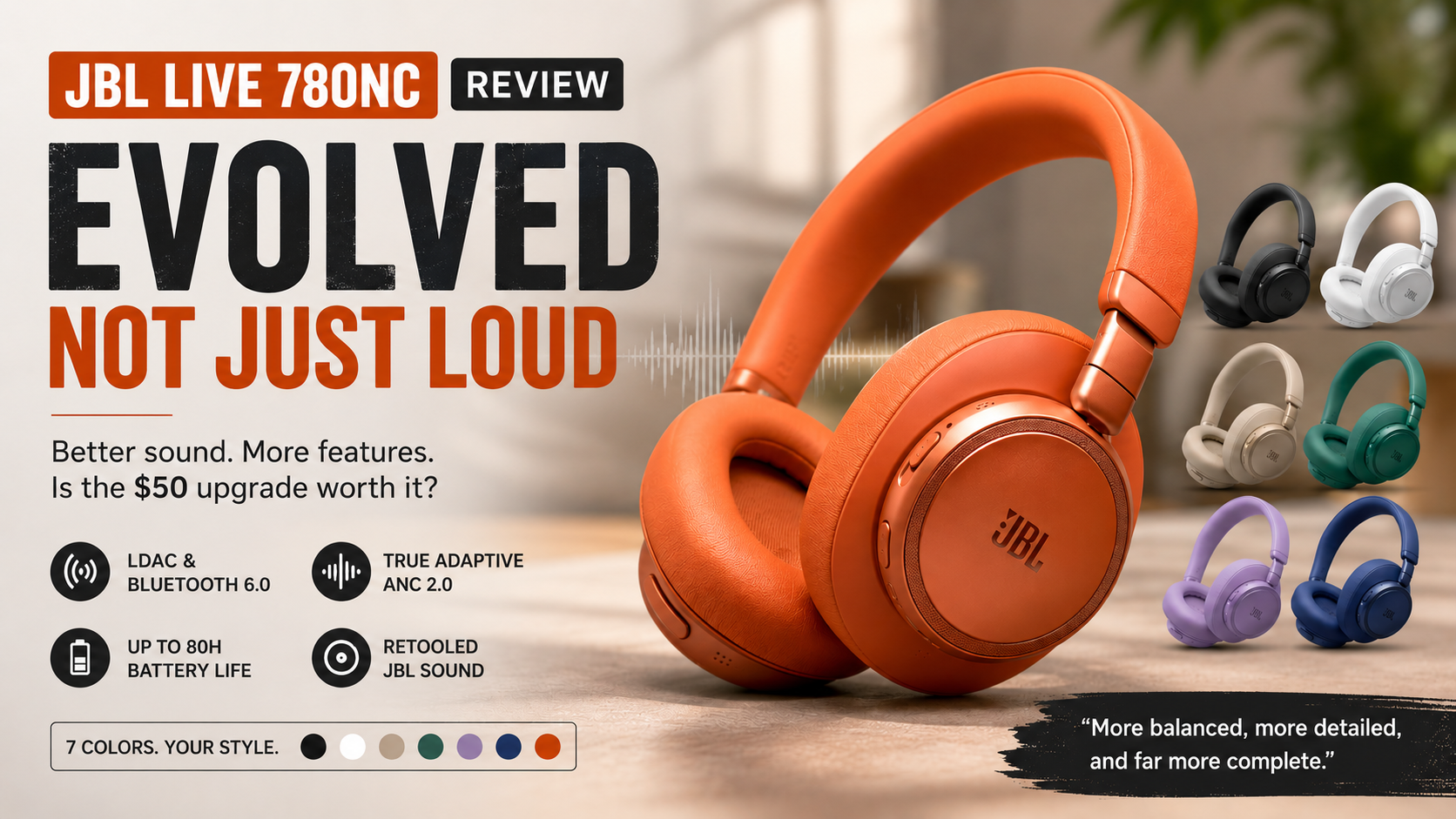
JBL Live 780NC Review: JBL Fixed the Bass, Then Raised the Price

JBL's 770NC was one of those headphones that sold in enormous numbers while audiophile circles quietly rolled their eyes. Affordable, comfortable, with battery life that embarrassed most of the competition — but sonically, a one-trick pony. That trick was bass. Lots of it. Sub-bass you could feel, mid-bass that coloured everything, a warm wall of low end that worked great for hip-hop playlists and airport lounges but fell apart the moment you asked it to handle anything nuanced. It also skipped LDAC, which even at that price felt like JBL hedging on a codec its own audience increasingly wanted.

Enter the JBL Live 780NC. JBL has clearly heard the feedback — Bluetooth 6.0, LDAC, a redesigned six-mic ANC array, a retooled tuning — all while bumping the MSRP from $199 to $249.95. On paper it reads like a proper generational upgrade, and in the most important way it is. The complication is the room it walked into. At $249 you're no longer just beating the 770NC's legacy; you're up against the Nothing Headphone (a) at $199, a Sony WH-1000XM5 that regularly sells for similar money, and a crowd of sub-$200 cans punching well above their weight. Does the 780NC justify the $50 hike?
Quick Specs
| Specification | Details |
|---|---|
| Driver | 40 mm dynamic, compound diaphragm, closed-back |
| Impedance | 32 Ω |
| Sensitivity | 98 dB SPL @ 1 kHz |
| Frequency response | 10 Hz – 40,000 Hz (manufacturer claim; Hi-Res Audio certified) |
| Bluetooth | 6.0, multipoint |
| Codecs | LDAC, AAC, SBC; LE Audio / Auracast |
| ANC | True Adaptive Noise Cancelling 2.0, six-mic array; Adaptive / Ambient / Off |
| Battery | 80 hrs (ANC off) / 50 hrs (ANC on); 5-min charge = 4 hrs; full ~2 hrs |
| Wired | USB-C to 3.5 mm cable in box; must be powered on (no passive mode) |
| Weight | 260 g |
| Colours | Black, White, Blue, Champagne, Green, Purple, Orange |
| IP Rating | None |
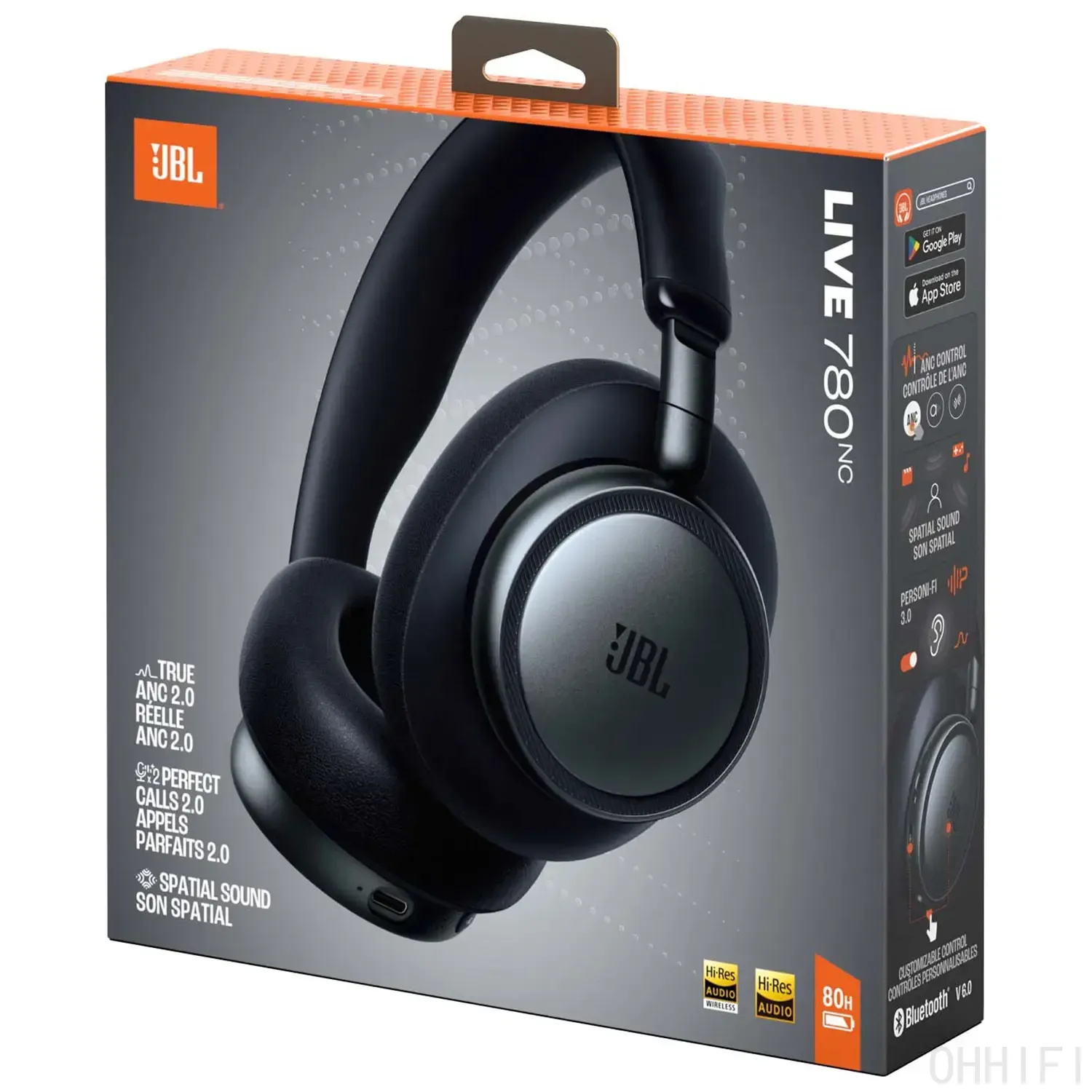
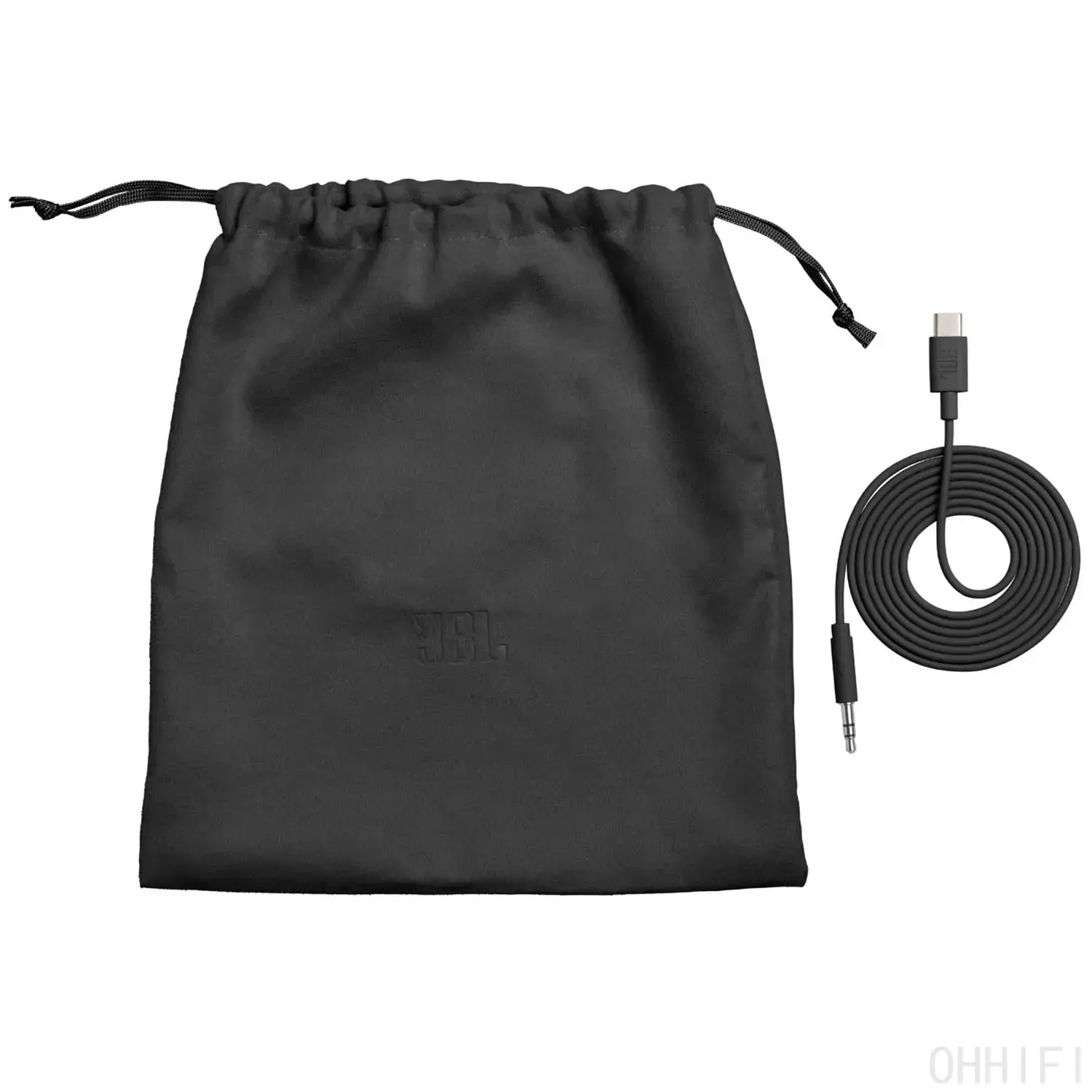
| In the Box | Headphones, USB-C to 3.5 mm cable, soft carry pouch (no charging cable) |
| MSRP | $249.95 / £169 / €179.99 / AU$300 |
Design, Build & Industrial Design
JBL's answer to seven colour options is essentially: pick your personality. The Live 780NC arrives in everything from conservative matte black to a green that actually holds up in daylight and a purple that reads better in person than in JBL's renders, plus a champagne, a blue and an unapologetic orange. It's an unabashedly consumer-facing design, and in a sea of monochrome black and greige there's nothing wrong with standing out.
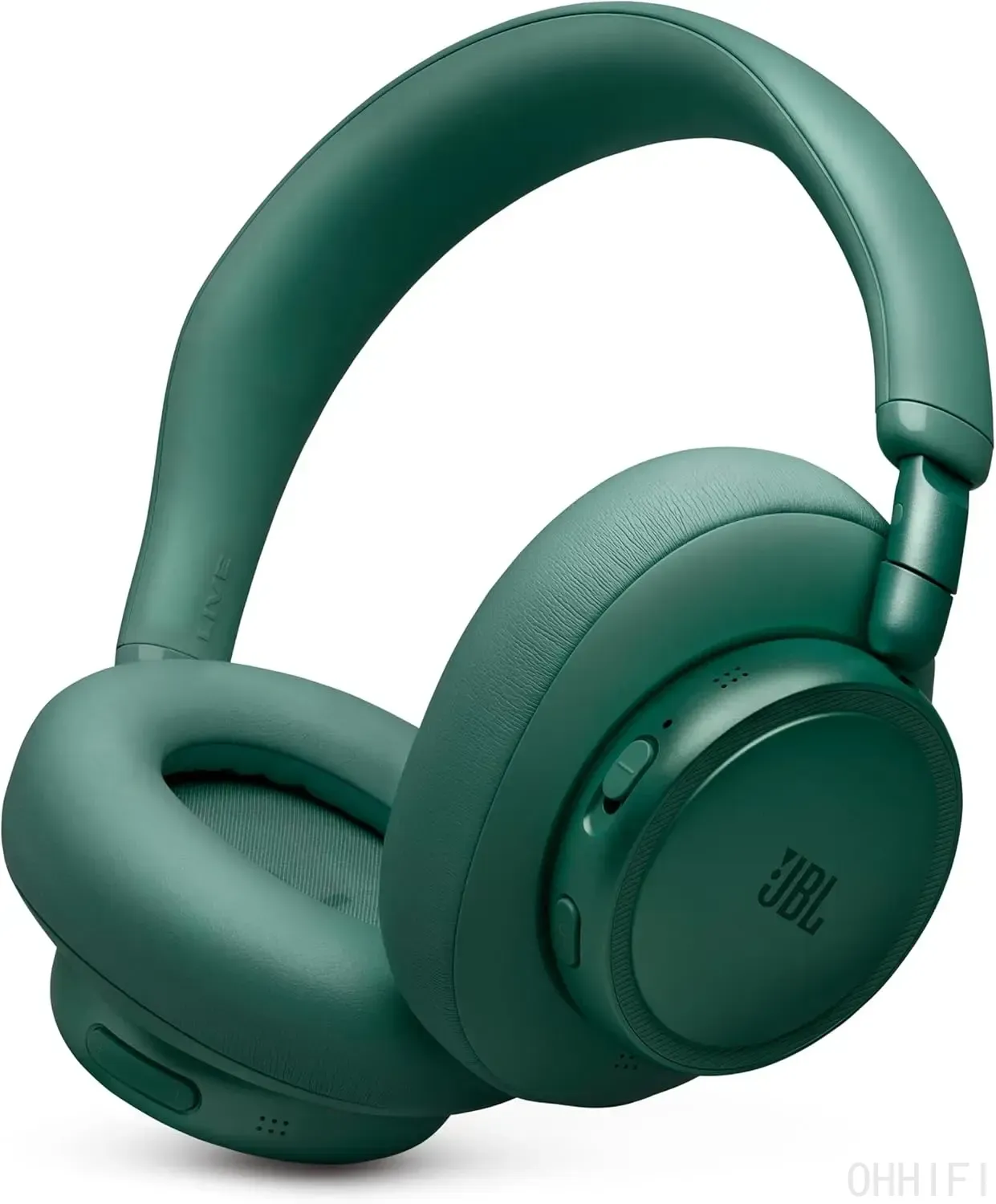
The shells are plastic, but well-finished plastic — tight panel gaps, no flex in the headband, and the genuinely nice detail of a knurled metal ring encircling each earcup that you don't usually see at this price. The hinges are aluminium and fold without the creak that plagues cheaper rivals; pick these up and there's a proper amount of engineering in the fold mechanism. At 260 g they're light for a full-size ANC over-ear, and the controls are refreshingly unambiguous: a volume rocker and tactile buttons rather than a capacitive panel that misfires in every bag pocket. After the industry's long detour into touch surfaces, the 780NC's physical layout feels like a correction.
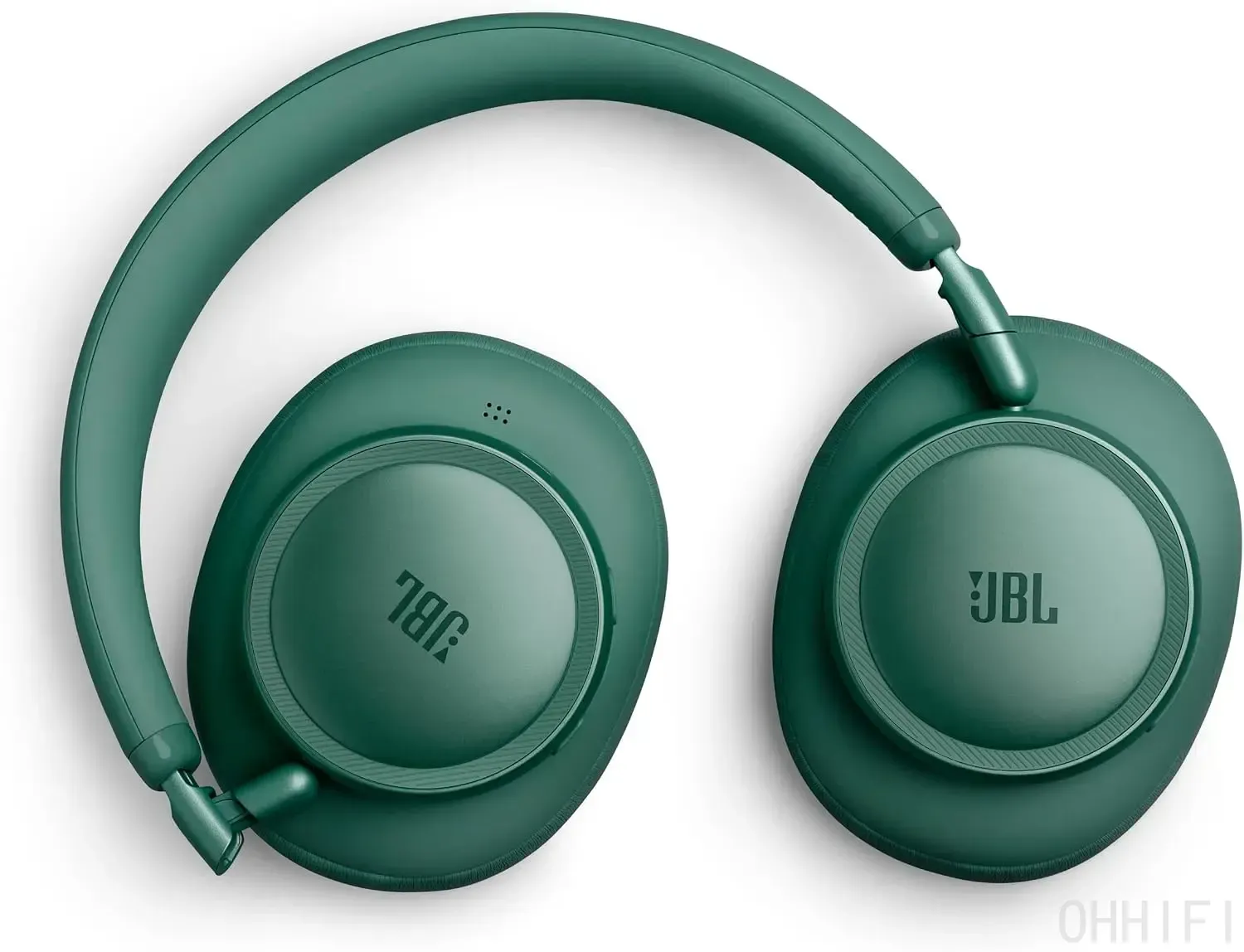
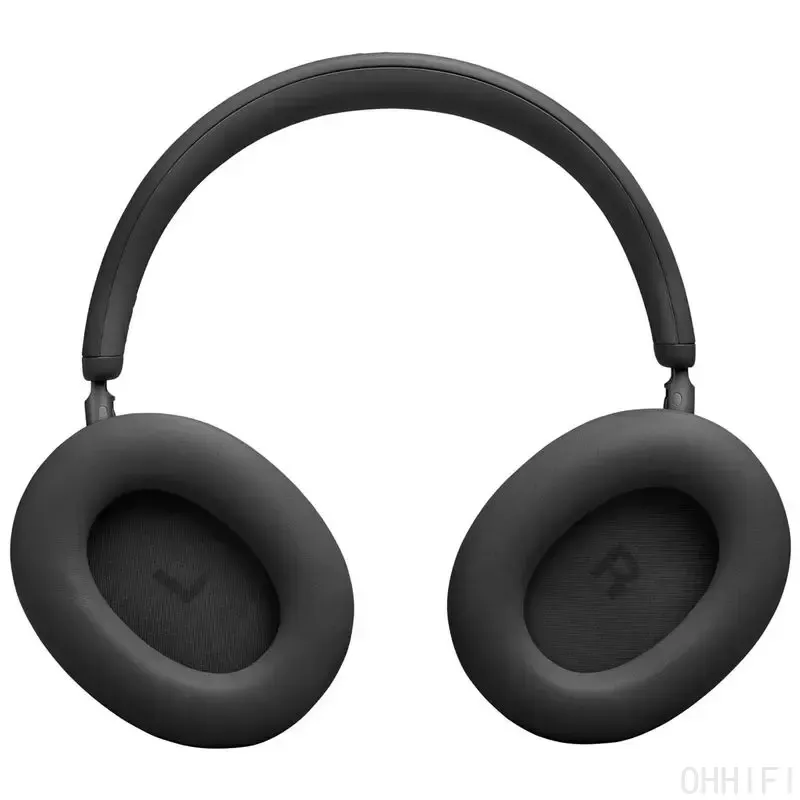
Comfort is where reviews genuinely split, so I won't pretend there's a clean verdict. Some testers find the clamp firm and the crown starts to register after a couple of hours — the old Live head-vice tendency, softened but not entirely gone. Others find the silicone headband and the deep, oval leatherette cups nicely judged and fatigue-free over long sessions. My read of the weight of opinion: the clamp sits on the firmer side of neutral, the cups are deep enough that most ears clear the drivers cleanly, and where you land depends on head size and how tight you like a seal. If you do multi-hour stretches, audition first.
The weak spots are real and have nothing to do with fit. There's no IP rating — the Nothing Headphone (a) ships with IP52 for $50 less, which makes the omission look like a tier decision rather than an engineering one. JBL still bundles a soft fabric pouch instead of a rigid case, several generations on, and at $249.95 that's past due. And while there's a USB-C-to-3.5 mm audio cable in the box, there's no charging cable — asking a $250 buyer to bring their own lead is cheap in the wrong way.

The Sound: Where Things Actually Changed
JBL's house tuning has told the same story for years — a forward low end, a slightly scooped lower midrange, a top end that knew its place. The 780NC follows that script but rebalances it. Out of the box it's still unmistakably a JBL, voiced for modern pop, hip-hop, electronic and rock rather than for forensic neutrality. The difference this time is that there's now detail and body sitting above the bass instead of being buried by it.
Bass
The low end still leans forward — that's JBL Signature Sound by design — but the control and definition have improved. Where the 770NC had a mid-bass bloom that smeared the entire midrange, the 780NC shows real articulation at the driver level. Kendrick Lamar's "LOYALTY." hits with authority and physical weight without washing out the upper register, and the sub-bass underpinning The Knife's "Silent Shout" is present and dramatic — the melody survives now, which on the 770NC it barely did.
That said, there's still a thickness in the 150–250 Hz region that softens definition on acoustic material. On Steely Dan's "Aja," the kick lands with thump where it should snap, and jazz double bass trades texture for warmth. The JBL Headphones app's Studio preset cuts most of it and brings the tuning to a far more credible place — but that shouldn't be a required step on a $250 headphone. It exists because the default, "Bass," and (unbelievably) "Extreme Bass" presets tell you exactly where JBL thinks the centre of gravity should be. Out of the box it's a fun headphone; five minutes in the app makes it a properly balanced one.
Midrange
This is where the revision earns its price difference over the 770NC. The midrange is warm, present, and genuinely resolving. Norah Jones's "Don't Know Why" places her vocal properly in the mix — breathy, textured, balanced against the piano in a way that communicates the recording's intimacy. Chet Baker's trumpet on "Almost Blue" has a smoky, airy presence that's nearly convincing. The resolution here doesn't feel manufactured by a mid-boost; the driver actually has the bandwidth for the material. The upper midrange sits back slightly, which makes these forgiving on harsh masters and keeps fatigue at bay over a commute, at the cost of a little directness and transient snap on acoustic guitar and strings. A/B'd against the Sennheiser Momentum 4 Wireless, the JBL's midrange is the warmer, less analytical of the two — fine if you value comfort over clinical accuracy.
Treble
Reined in up top, and there's no getting around it. The top octave never fully opens: cymbals lose some decay and shimmer, hi-hats don't quite breathe, and the air that defines good acoustic recordings isn't all there. On Dire Straits' "Sultans of Swing," Knopfler's string bite arrives slightly compressed against the recording's actual top end. This is a deliberate smooth-over-extended choice for a closed-back consumer headphone, and most of the target audience will take it happily. LDAC over Bluetooth recovers a useful amount of top-end resolution versus AAC — though in dense-RF environments it's the codec more prone to the occasional hiccup, and dropping to AAC trades a sliver of fine detail for rock-solid stability. Worth knowing if you live in crowded urban Wi-Fi.
Soundstage & Imaging
Closed-back, and it sounds like it: intimate rather than expansive, with clear left-right placement but limited depth in the z-axis. Imaging within that narrower stage is precise — you can place instruments under busy arrangements without ambiguity. The app's Spatial Sound modes use DSP to simulate width: Movie mode creates the most noticeable expansion and is genuinely useful for film and TV; Music mode adds modest perceived width while preserving stereo integrity. They're well-implemented for what they are — context-specific enhancements, not an attempt to fake an open-back — and cleaner than most spatial algorithms at this price. For critical music listening I left them off.
One expectation to set: the wired connection via the bundled cable still requires the headphones to be powered on. There's no battery-flat passive mode here, so don't buy these imagining a dead-battery analogue fallback. This is a wireless headphone first and last.
Measured Performance
RTINGS has run the Live 780NC through a full lab measurement suite, and I'd point readers there to cross-reference listening impressions with objective data. The measured picture is consistent with the subjective assessment above: an elevated bass shelf through the low-mids, a slightly relaxed upper midrange, and roll-off in the higher registers — unusually tidy agreement for a headphone whose tuning people otherwise argue about. I'm not reproducing specific numbers here to avoid misattribution.
JBL's own published figures — 10 Hz–40 kHz, 32-ohm impedance, 98 dB sensitivity — are manufacturer specs, not independent measurements, and in practice they describe an easy-to-drive transducer any phone or dongle will run to ear-splitting volume. One housekeeping note worth a glance before anyone quotes it: JBL's product page lists four microphones while its press materials and marketing describe a six-mic ANC array, and side-by-side use suggests the practical noise-cancelling difference between counts is small. Judge the result, not the headline number.
Test Setup — Associated Equipment
Wired performance was evaluated through my desktop chain — a solid-state DAC feeding an OTL tube amp — via the included USB-C-to-3.5 mm cable, mostly to confirm what kind of driver is under there. Wireless listening used an LDAC-capable Android device, switching directly between LDAC and AAC for comparison, plus a portable dongle for the on-the-go reality most buyers will live with. Reference tracks spanned vocal jazz (Norah Jones, Chet Baker), classic rock (Dire Straits), electronic and hip-hop (The Knife, Kendrick Lamar) and complex acoustic recordings, on the stock tuning, the Studio preset and a manual cut targeting the 150–250 Hz thickness. The pattern tracked the broad review consensus closely: a fun, bass-led signature that tightens up smartly with a little EQ, ANC that handles rumble well and chatter poorly, and battery life that genuinely shrugs off a week.
The Competition
| Rival | Price | vs Live 780NC | Verdict |
|---|---|---|---|
| Nothing Headphone (a) | $199 / £149 | IP52, longer battery (135h/75h), LDAC + multipoint, $50 cheaper; also bass-leaning, heavier at 310 g | The value benchmark at this price; pick the JBL for lighter weight, fresher Bluetooth spec, or its app and tuning |
| Sony WH-1000XM5 | ~$250 on sale | Class-leading ANC, more balanced and refined sound, proven platform; older, shorter battery | Better for ANC-first buyers; JBL wins on runtime and Bluetooth spec |
| Soundcore Space One Pro | $199 | Competitive ANC, more neutral tuning, comparable battery, $50 cheaper | Strong value; less feature-complete app, but punches hard for the money |
| Sennheiser Momentum 4 Wireless | ~$279 | More audiophile frequency response, better treble extension, excellent ANC, proper carry case | A clear sonic step up for ~$30 more if sound quality is the priority |
The honest framing: at £169 the 780NC has little to fear here — it's better-built, longer-lasting and more feature-complete than most of what sits near it. At $249 the room gets crowded fast. The Nothing Headphone (a) is the headphone that makes the value case hardest to win, undercutting it by $50 with an IP rating and even longer runtime. A discounted Sony WH-1000XM5 sits at similar money with better ANC and a more balanced tuning. The JBL's counter-arguments are real — class-best battery, the most flexible EQ here, LDAC, lighter weight, and a low end none of these quite match for fun — but in the US you're choosing it on personality, not because it's the obvious best buy.
Verdict: 7.5 / 10 — BUY (with conditions)
The JBL Live 780NC is a real generational upgrade, not a cosmetic refresh. The midrange is meaningfully improved, LDAC and Bluetooth 6.0 finally bring JBL's flagship Live headphone to current spec, and the 80-hour battery figure isn't marketing fiction — it's a genuine category outlier at this price. The app is feature-complete and the EQ is responsive enough that a motivated listener can shape the sound into something balanced and accurate.
The problem is value context. The Nothing Headphone (a) undercuts this by $50 with an IP rating and even longer battery life, and at $199 it's the harder headphone to argue against on pure value. A Sony WH-1000XM5 regularly dips to comparable money on sale with better noise cancelling and a more accurate tuning. There's no hard case at $249.95, no charging cable in the box, and the bass-forward default is a real liability for anyone who never opens the app.
So the recommendation is conditional, not enthusiastic. The 780NC earns it for frequent travellers who need days of runtime between charges — a use case with almost no competition at this price — and for listeners who like JBL's bass-forward house sound and will spend five minutes dialling it in. At £169 it's an easy yes. At $249, outside those two scenarios, the Nothing Headphone (a) is probably the smarter spend — and on either side of the Atlantic, waiting for a sale erases most of the hesitation.
Pros
- Class-leading battery: 80 hrs (ANC off) / 50 hrs (ANC on); 4 hrs from a 5-min charge
- Bluetooth 6.0 with LDAC, LE Audio / Auracast and multipoint
- Meaningfully improved midrange over the 770NC — the real reason to upgrade
- Feature-complete JBL Headphones app: EQ, Personi-Fi 3.0, spatial modes
- Reliable physical controls; no capacitive misfires
- Seven genuinely distinctive colourways; premium-feeling finish for the tier
Cons
- Default tuning is bass-heavy and needs EQ to balance
- No IP rating — the $199 Nothing Headphone (a) has IP52
- Top end is rolled off; lacks air and shimmer, and Spatial/Atmos is a gimmick for music
- Soft pouch and no charging cable in the box at $249.95
- ANC is good, not class-leading; weak on voices and high-frequency noise
- Comfort divides opinion — the firm clamp may fatigue some over long sessions
- Wired mode needs power; no battery-flat passive fallback
Who Should Buy / Who Should Skip
This is for you if you travel extensively and genuinely need three to four days of runtime between charges; you're upgrading from the 770NC and want real improvement at a familiar tier; you use an Android device with LDAC; you like JBL's bass-forward house sound and will fine-tune via the app; or design variety matters — the colour options are among the best in class.
Look elsewhere if balanced, accurate out-of-box tuning is non-negotiable (Nothing Headphone (a) at $199 or Sennheiser Momentum 4 Wireless at ~$279); ANC is your top priority (a discounted Sony WH-1000XM5); you need water or sweat resistance (the IP52 Nothing Headphone (a)); you wear headphones for many uninterrupted hours and run hot on clamp; or you're judging purely on value-per-dollar, in which case the $199 Nothing Headphone (a) is the honest answer.



Comments