
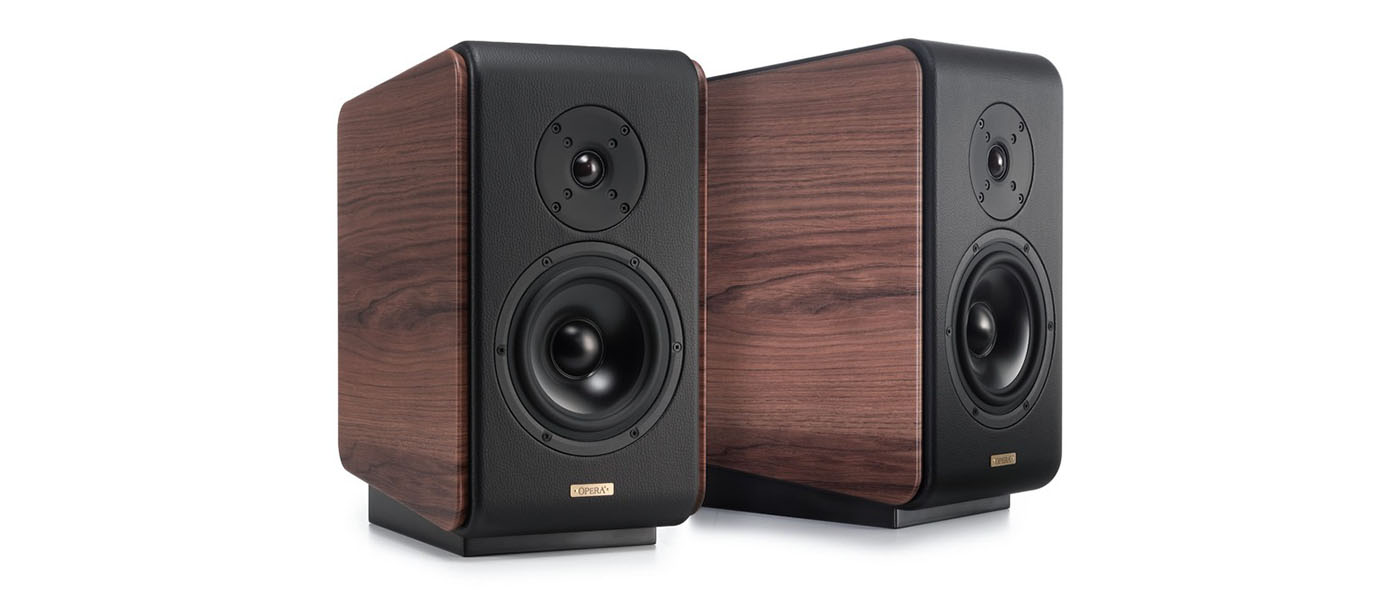
Opera Classica Prima v2: The Sophisticated Alternative to Sonus Faber

There's a particular kind of Italian audio company that operates without much in the way of marketing fireworks — no champagne launches at High End Munich, no glossy sponsorships, just thirty-seven years of building speakers in the same Treviso workshop and letting word spread. Opera Loudspeakers is one of those companies, and the Classica Prima v2 ($3,599/pair) is what happens when you give the engineers another decade of room to refine an already well-regarded standmount.
Most coverage of this speaker hangs on a single observation: it doesn't sound like a $3,599 bookshelf. That's a tired phrase in audio reviewing, and I'm normally allergic to it, but the Prima v2 keeps showing up next to speakers that cost two and three times more — and not in a way where the reviewer is being charitable. So the question I want to actually answer here is whether the Prima v2 is genuinely better than its more obvious rival in this space (Sonus Faber's Sonetto and Concertino lines), or whether Italian eco-leather has a way of softening critical judgment.
Quick Specs
| Specification | Details |
|---|---|
| Type | Two-way, bass-reflex, rear-ported standmount |
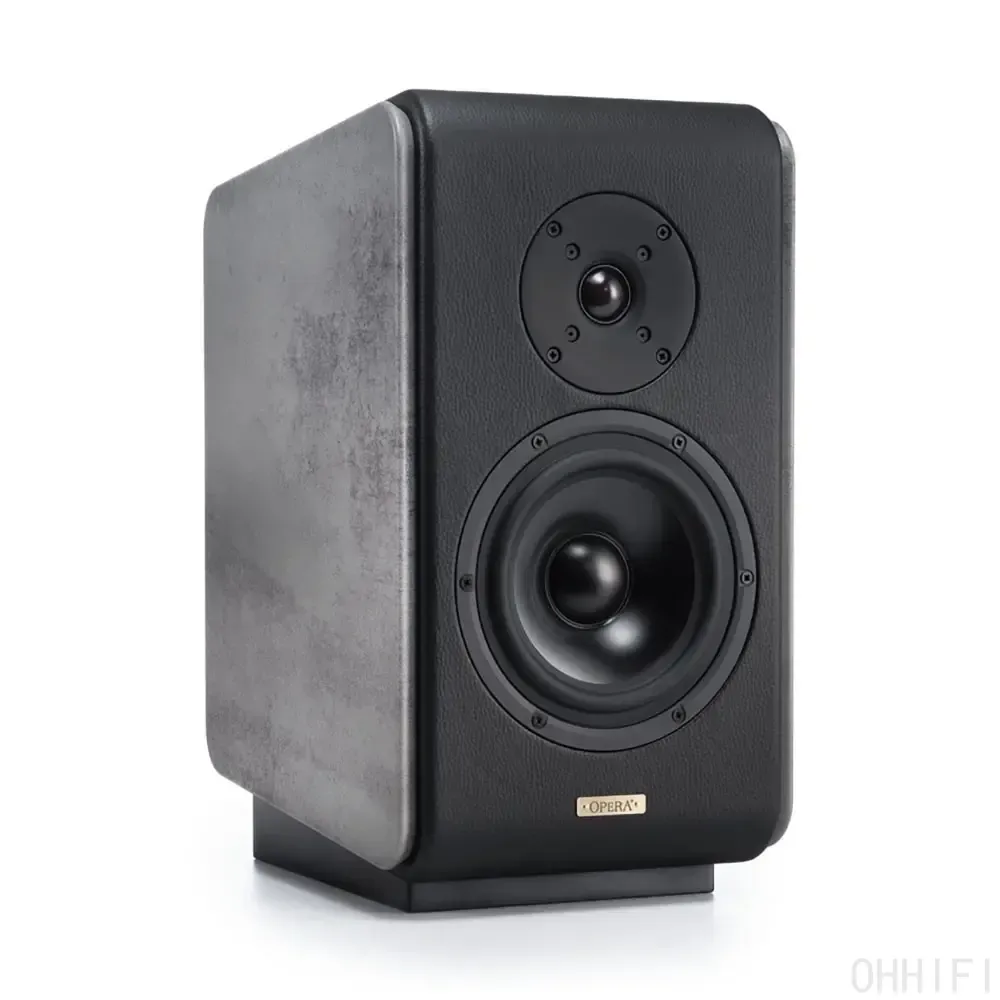
| Tweeter | Custom 26 mm Scan-Speak soft dome |
| Woofer | Custom 180 mm (7.1") Scan-Speak anodised aluminium cone |
| Crossover | 2,500 Hz, Vishay resistors + Mundorf capacitors |
| Sensitivity | 90 dB (2.83 V / 1 m) |
| Nominal Impedance | 6 Ω (3.8 Ω minimum) |
| Frequency Response | 50 Hz – 28 kHz |
| Recommended Power | 25 – 100 W |
| Dimensions (HxWxD) | 428 × 237 × 390 mm |
| Weight | ~14 kg / 30+ lbs each |
| Finishes | Rosewood, Concrete Grey |
| MSRP | $3,599/pair (US) |
Design, Build & Industrial Design
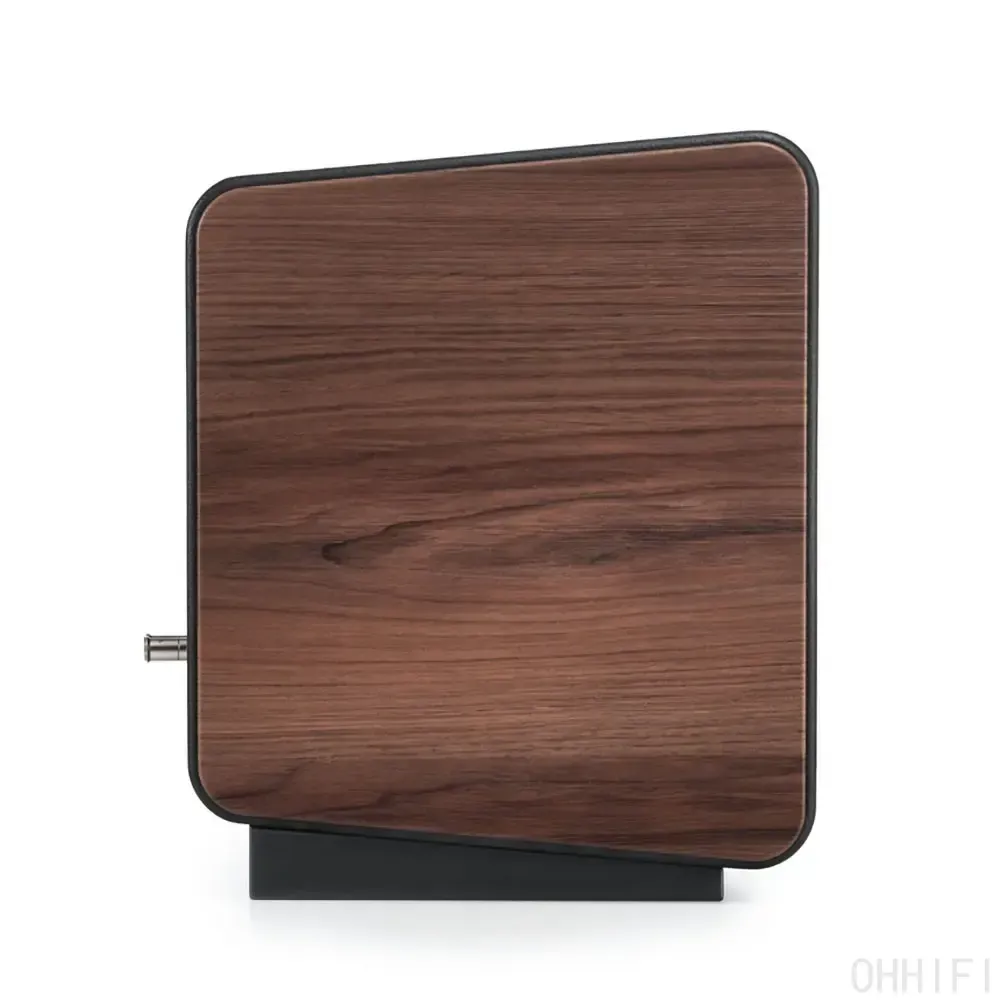
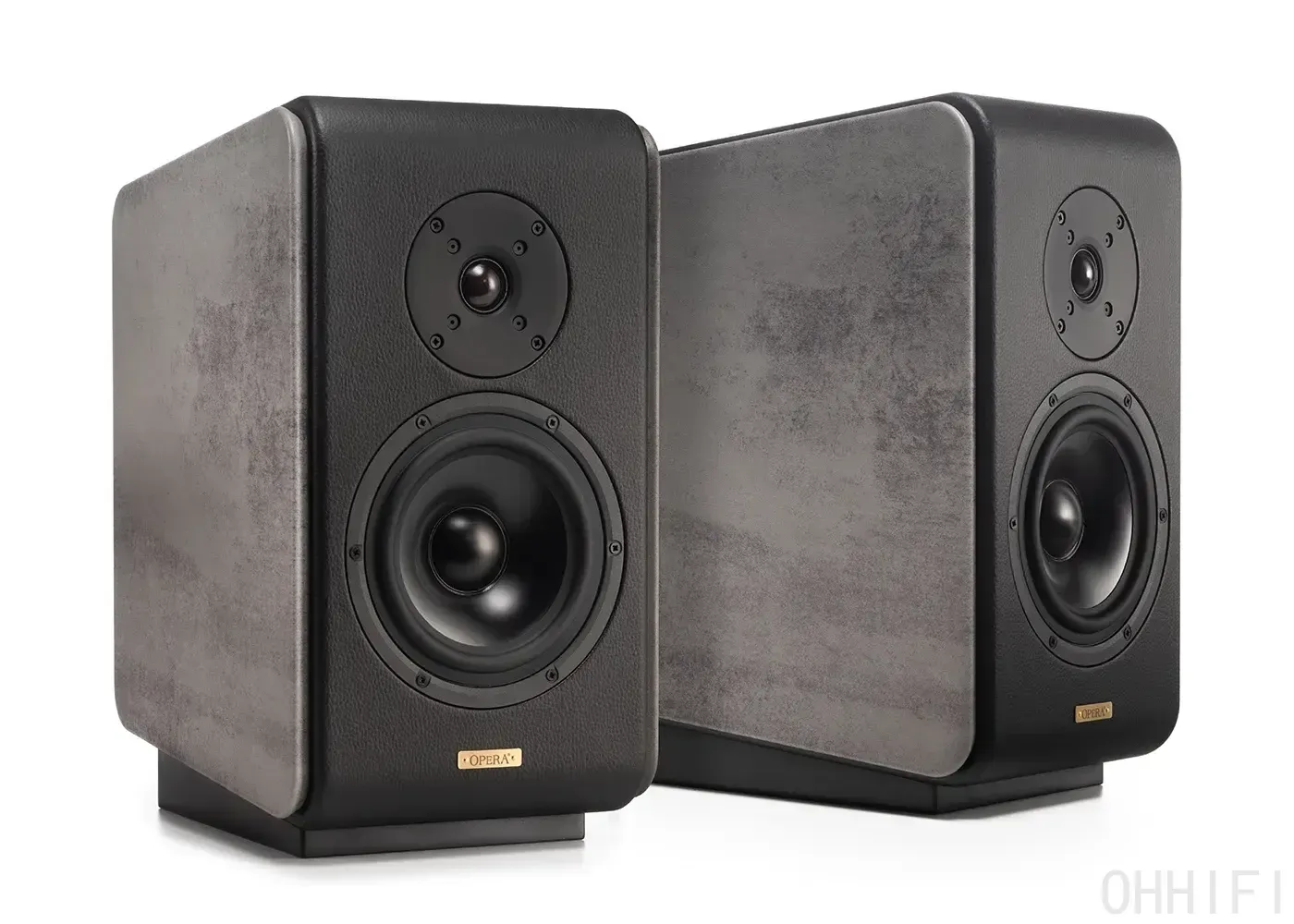
Pick up a Prima v2 and the first thing you register is the density. Fourteen kilos in a cabinet this size means the walls are thick, the bracing is doing real work, and the internal volume isn't being padded with foam to hide resonances. Opera builds the front, top and bottom panels as a single integrated structure wrapped in eco-leather, with the side panels constructed in a complementary finish that protrudes very slightly from the main cabinet — a small detail that catches the light and signals that someone with an industrial design background was actually involved here.
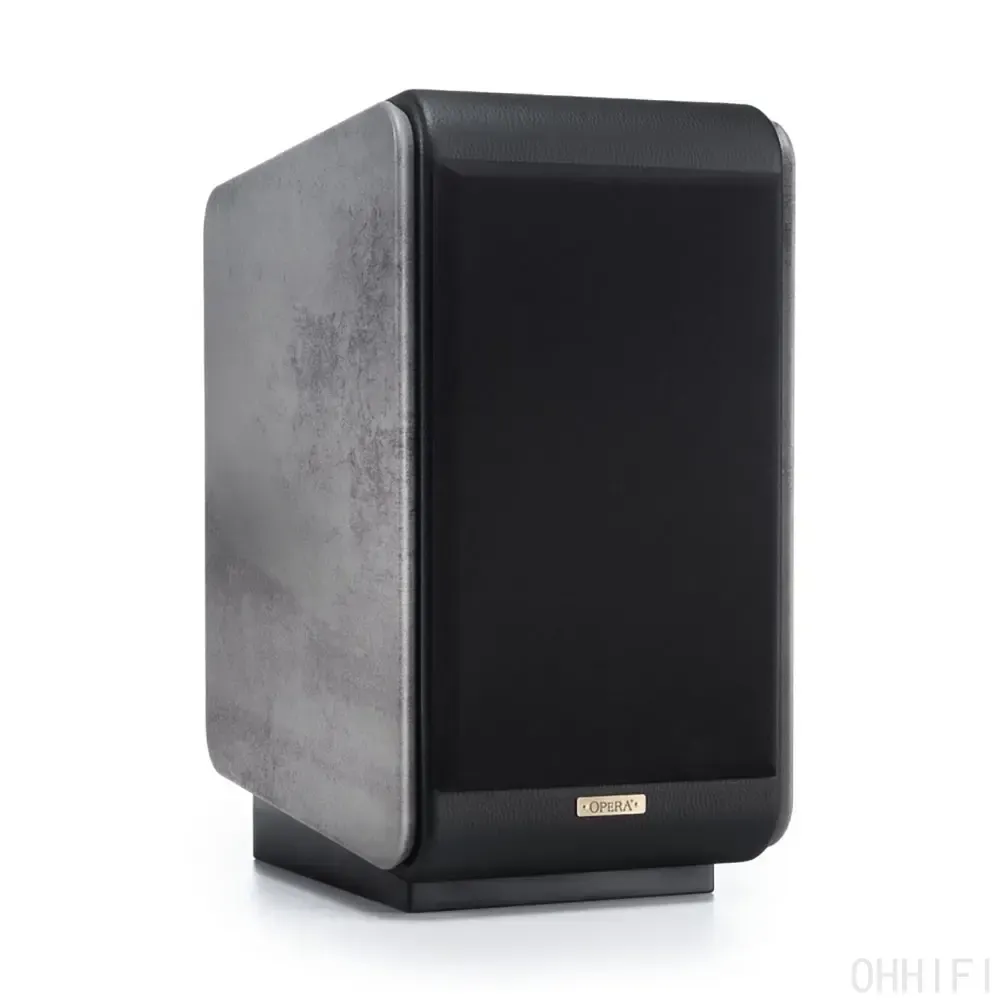
The two finishes split along a clear aesthetic line. The Rosewood is what most people will picture when they hear "Italian standmount" — warm, traditional, the speaker your tasteful uncle would buy. The Concrete Grey (sometimes called cement grey) is more interesting. It's a matte, almost architectural finish that pairs better with modern minimalist rooms, and in person it reads as deliberate rather than gimmicky. I'd call it the better-looking option for anyone whose listening space isn't full of walnut.
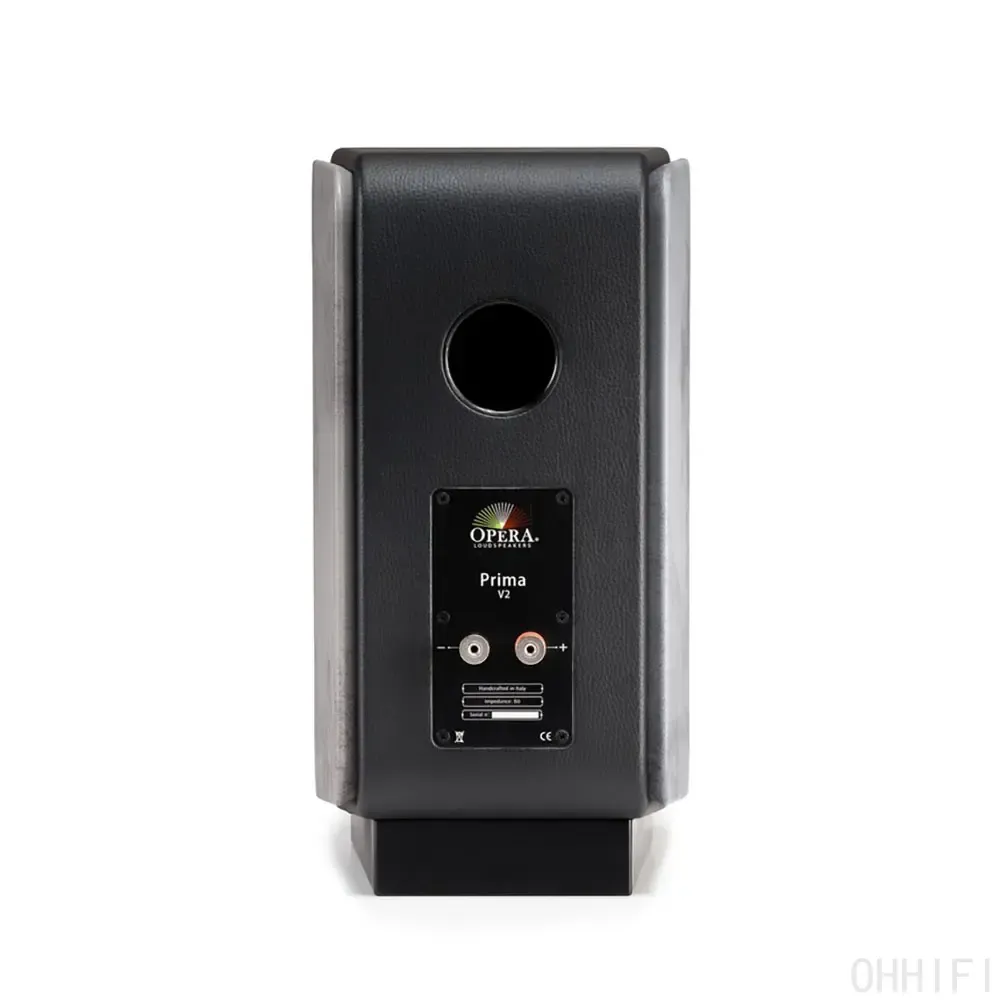
The eco-leather wrapping isn't just cosmetic. It serves as part of the cabinet sealing strategy and adds a layer of damping that you can feel when you knock on the panels — there's a duller, less ringy response than you get from a typical lacquered MDF box. The rear panel hosts a single pair of high-quality binding posts (no bi-wiring nonsense, which I appreciate) and the rear-firing reflex port that's tuned to extend response down to a claimed 50 Hz.
The grilles attach magnetically and disappear cleanly. I'd run them off — the front baffle is meant to be seen.
The Sound
Bass: Surprisingly Honest for a 7-Inch Reflex
Opera quotes 50 Hz on the low end, and that's a conservative number — there's usable output below that with proper placement. The character down low is the part that surprises you. This is not a one-note "audiophile bass" tuning where the 80–120 Hz region is goosed to manufacture body. It's actually flat-sounding, which means rock and electronic material won't sound bloated, but it also means you need to give the rear port real breathing room — a metre or more from the front wall in my book, depending on the room.
Put on Massive Attack's "Angel" and the sub-bass pulse has shape and decay rather than just a vague rumble. The aluminium cone is doing what aluminium cones do best: starting and stopping cleanly. Marcus Miller's "Power" showed off the woofer's transient handling — the slap on the bass strings has actual snap, not the polite "warmth" you sometimes get from European standmounts that have been voiced for chamber music exclusively.
If you want chest-thump and the visceral bottom octave below 40 Hz, you'll need a sub. That's the bookshelf-speaker tax and the Prima v2 doesn't try to cheat it.
Midrange: This Is the Whole Reason to Buy It
The midrange is where the Prima v2 separates itself from speakers in its bracket. There's a vocal density and a tonal honesty that I associate with much more expensive monitors — the kind that get described with phrases like "you can hear the singer's chest cavity." That's because the 2,500 Hz crossover point keeps the woofer doing critical vocal work without handing off to the tweeter too early, and the Scan-Speak driver was clearly voiced specifically for this duty.
Diana Krall's "Temptation" — her chest voice has weight and proper timbre, and the room ambience around her is fully resolved. Eva Cassidy's "Songbird" sits in the middle of the soundstage with proper body, and the tiny scrape of fingers on guitar strings is rendered with detail but not artificially highlighted.
What I keep coming back to is how composed the midrange remains as you push the volume. A lot of standmounts in this price range get a slight hardness or a forwardness in the upper mids when you turn them up — the Prima v2 doesn't. It scales without changing character. That's the cabinet damping doing its job, and it's the kind of engineering you usually start hearing at twice the price.
Treble: Italian Silk, Not French Glass
The 26 mm Scan-Speak tweeter is dialled in carefully. It's extended — Opera quotes 28 kHz — but it's not bright in the modern beryllium sense. It has the smoothness you'd expect from a high-quality silk dome with proper rear chamber damping, with enough air on top that cymbals and string harmonics don't sound truncated.
Patricia Barber's "Café Blue" — the brushwork on the cymbals has grain and texture without ever becoming sibilant on her vocals. Fleetwood Mac's "Dreams" — the high-hat sits properly behind Christine McVie's voice rather than being shoved forward by an over-eager top end.
If your previous reference was a Be-tweeter or AMT-equipped speaker, the Prima v2 will sound slightly polite on first listen. Give it a weekend. That polish is actually fine resolution dressed in a non-fatiguing tonal balance, and it's why you can listen for four hours without your ears tightening up.
Soundstage and Imaging: Where the Cabinet Earns Its Keep
This is, frankly, the most impressive part of the speaker. The Prima v2 throws a soundstage that's wide, deep, and crucially — stable . Images don't wander when you move your head a foot, and the lateral spread extends well outside the cabinets in a way that small speakers usually fake by adding upper-mid energy.
Pink Floyd's "Money" — the cash register sits in a defined acoustic space rather than smearing across the front wall. Jeff Beck's "Where Were You" from Guitar Shop — the sustained note has spatial bloom and decay you can follow as it dissipates into the recording's ambience.
The off-axis behaviour is what surprised me most. With reasonable toe-in (around 15 degrees), there's a generous sweet spot — you don't have to clamp your head in a vice to get the imaging to lock. That's a function of careful tweeter positioning and crossover phase work, and it's a quality-of-life feature that matters more than any spec sheet line.
Measured Performance Notes
Opera publishes more measurement detail than most boutique manufacturers. Per their own data, the impedance module stays above 3.8 Ω with a phase angle that doesn't drop below -45°, which is why the speaker runs happily on tube amps despite the 6 Ω nominal rating. Distortion is low and stable across the 85–95 dB output band — Opera's "articulation measurements" claim the speaker doesn't change character with level, which matches my listening impressions exactly.
There's no full ASR or Erin's Audio Corner spinorama on this speaker as of this writing. If a third-party CTA-2034 measurement appears, I'll update accordingly. For now, the published data and the listening evidence point in the same direction: this is a properly engineered design rather than a voiced-by-ear cabinet with marketing on top.
Test Setup — Associated Equipment
Evaluated through my main loudspeaker chain — a mid-fi integrated amp running into the Prima v2s on dedicated 24" stands, fed from a solid-state DAC with both Tidal/Qobuz streaming and CD playback. Listening room is moderately treated, around 4 metres deep with the speakers placed roughly 1.2 m from the front wall and 0.8 m from the side walls, slightly toed in toward the listening seat.
Test material ranged from large-scale orchestral (Mahler's Second under Solti, Stravinsky's Rite of Spring ) through small-group jazz (Diana Krall, Patricia Barber, Bill Evans Trio) into rock (Fleetwood Mac, Pink Floyd) and modern electronic (Bonobo, Massive Attack).
The Competition
| Rival | Price | vs Prima v2 | Verdict |
|---|---|---|---|
| Sonus Faber Sonetto II G2 | ~$3,000/pair | More overtly "house sound" — softer top end, slightly warmer mids | Sonus Faber if you want the brand and the polish; Prima v2 if you want more honest neutrality |
| Sonus Faber Concertino G4 | ~$3,500/pair (Maestro Edition) | Smaller cabinet, less bass authority, prettier finish | Concertino for furniture appeal; Prima v2 for sound-per-dollar |
| KEF R3 Meta | ~$2,500/pair | Brighter, more clinical, better off-axis from the Uni-Q | KEF for HT duty and detail; Prima v2 for tonal richness |
| Dynaudio Heritage Special | ~$8,000/pair | More resolution, more bass extension, much higher price | Dynaudio if budget allows; Prima v2 punches close enough to question the gap |
The most direct comparison is the Sonetto II G2 — both Italian, both two-way, similar driver complement, similar price. The Prima v2 is the more honest of the two. Sonus Faber's house sound is a sweetened, slightly mid-forward presentation that flatters certain material; Opera's voicing is closer to neutral with a beautiful midrange but no obvious euphonic overlay. Which you prefer is a matter of taste — but if you're spending $3,500 expecting accuracy rather than character, the Prima v2 is the more rigorous design.
Verdict: 8.5/10 — Buy
The Opera Classica Prima v2 is a properly serious bookshelf speaker that just happens to be priced where most people are still shopping the second-tier offerings from the marquee Italian brands. It's a buy for anyone in the $3,000–4,000 standmount bracket who values midrange honesty, soundstage stability, and the ability to listen for hours without fatigue. It loses half a point for the obvious thing — bass extension that a 7" two-way physically can't provide — and a quarter for the reality that Opera's distribution is thinner than its rivals, so audition opportunities depend heavily on where you live.
The half-point that might bother some buyers is what doesn't bother me at all: this is a grown-up sounding speaker. There's no party trick, no exaggerated detail to grab you in a five-minute showroom demo. It's the speaker you live with for a decade.
Pros
- Midrange honesty and vocal density that punches well above its price
- Excellent soundstage stability and generous off-axis sweet spot
- Composed at high volumes — minimal compression or hardening
- Tube-amp friendly impedance curve (90 dB / 3.8 Ω minimum)
- Genuinely beautiful Italian build, two finishes that both look the part
- Premium crossover components (Mundorf, Vishay) at this price is uncommon
Cons
- Bass extension realistically ends around 50 Hz — a sub completes the picture
- Rear port demands at least a metre of breathing room behind the speaker
- Distribution is sparse outside Europe and major US markets — auditioning can be a logistics problem
- The Concrete Grey finish is divisive (I love it; my wife asked if it was unfinished primer)
Who Should Buy / Who Should Skip
This is for you if you've outgrown your entry-level bookshelves and want a speaker that sounds adult — composed, neutral-leaning, with a midrange that makes vocal recordings feel intimate. It pairs beautifully with quality solid-state integrateds in the 50–100 W range, and it's tube-amp friendly if you're running 30+ watts of clean power. Best suited to small-to-medium rooms (up to about 25 m²) with proper stands and a metre of rear-wall clearance.
Look elsewhere if you're a bass-first listener who plays a lot of modern hip-hop or EDM and isn't planning to add a sub — the Prima v2 is honest about its limits and won't fake the bottom octave. Also skip if you need a speaker that delivers maximum impact in a five-minute showroom demo; the Prima v2's strengths reveal themselves over weeks, not minutes. If you're set on a marquee badge for resale value, the Sonus Faber name will hold price better in the secondhand market — Opera's recognition is narrower.


Comments