
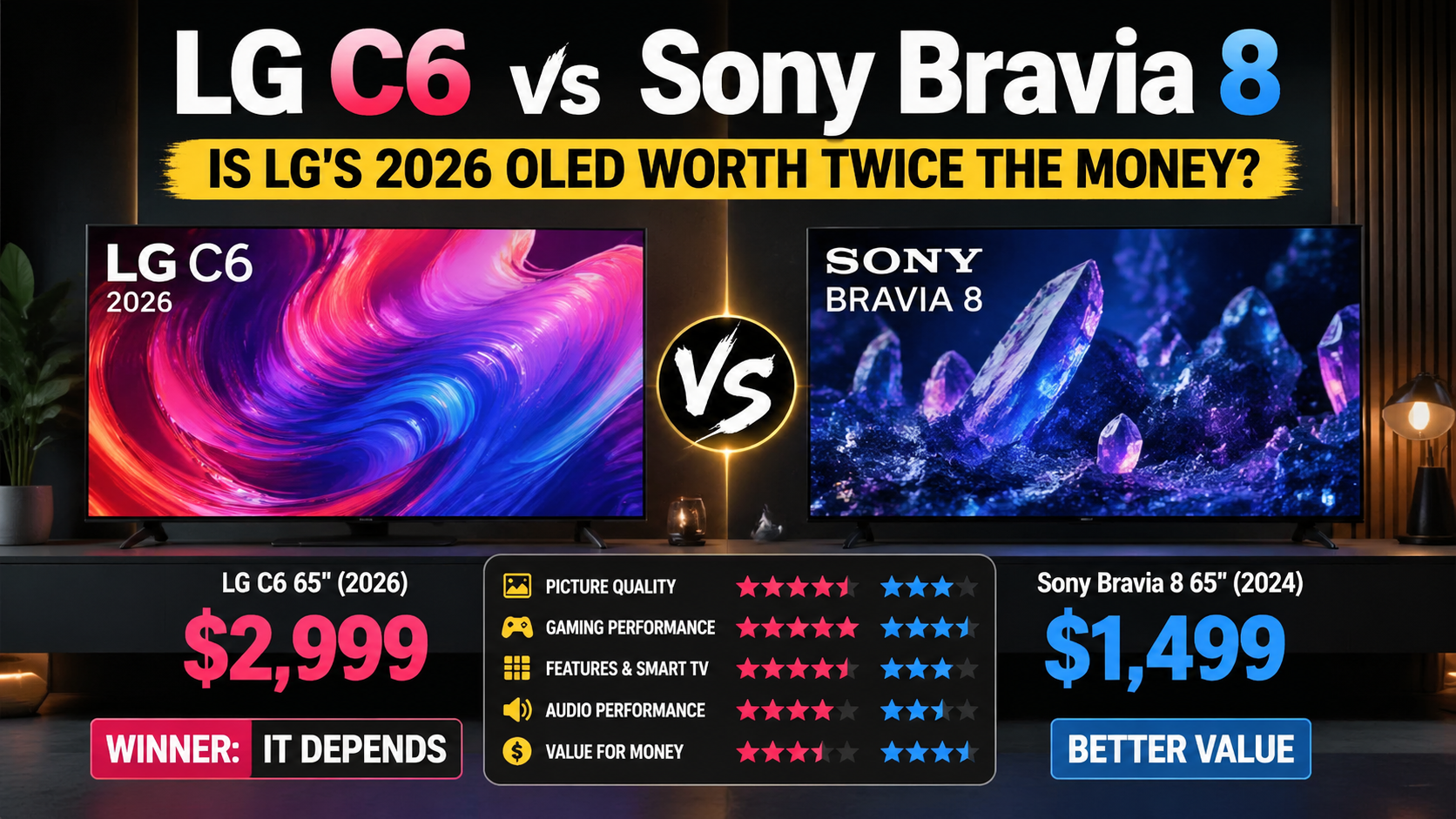
LG C6 vs Sony Bravia 8: Is LG's 2026 OLED Worth Twice the Money?

There's a moment, every spring, when the new TVs land and last year's winners go on clearance. We're in that moment right now, and it's making the LG C6 vs Sony Bravia 8 question harder than it has any right to be.
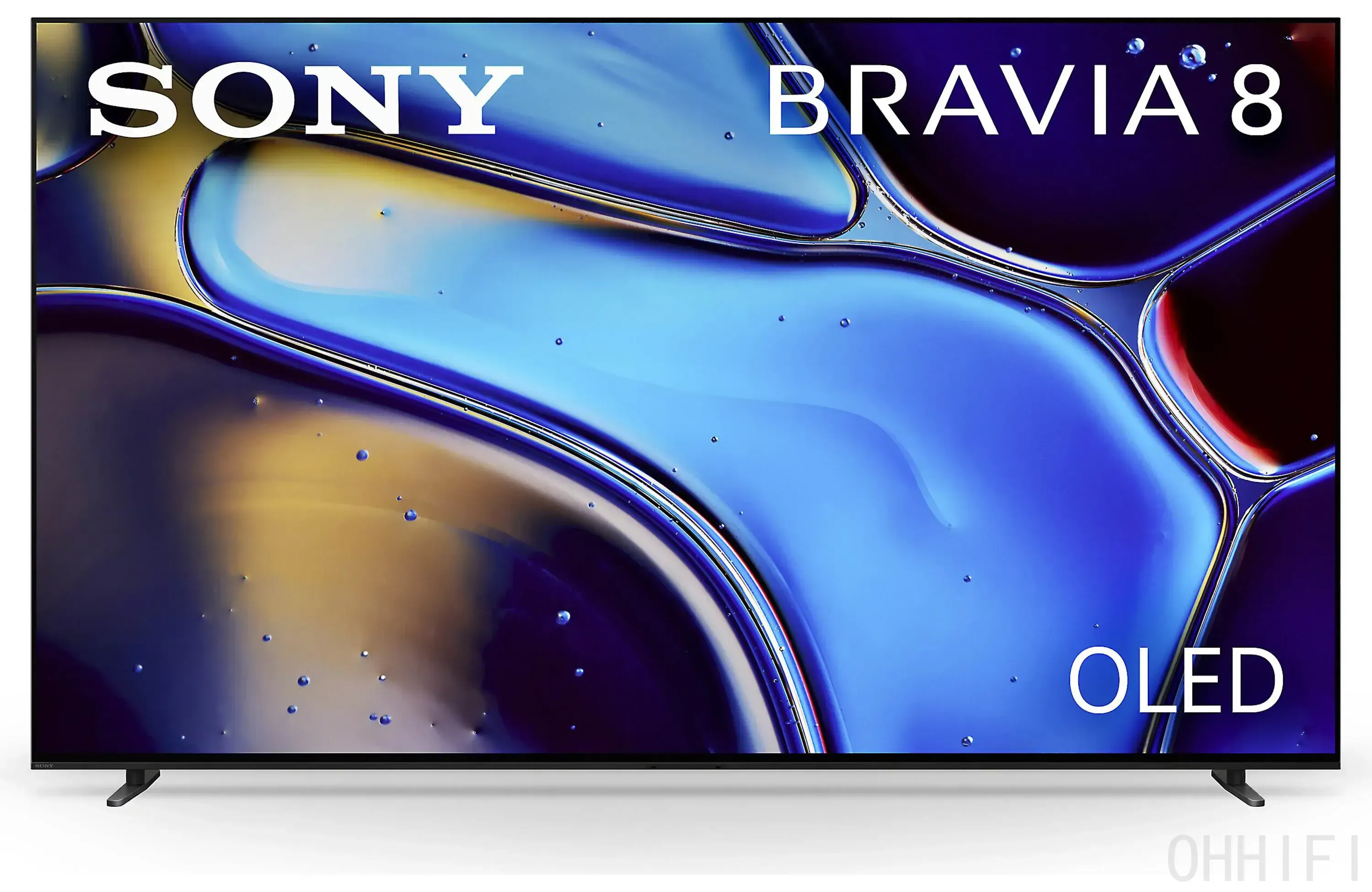
On paper, this should be straightforward. The C6 is the freshly minted 2026 step-down OLED, with a new processor, brighter panel tuning, and gaming specs that read like a PC builder's wishlist. The Bravia 8 is a one-year-old WOLED that won every "Award" sticker the press could throw at it before LG even shipped the C6. New tech versus mature tech. Should be a clean win for LG.
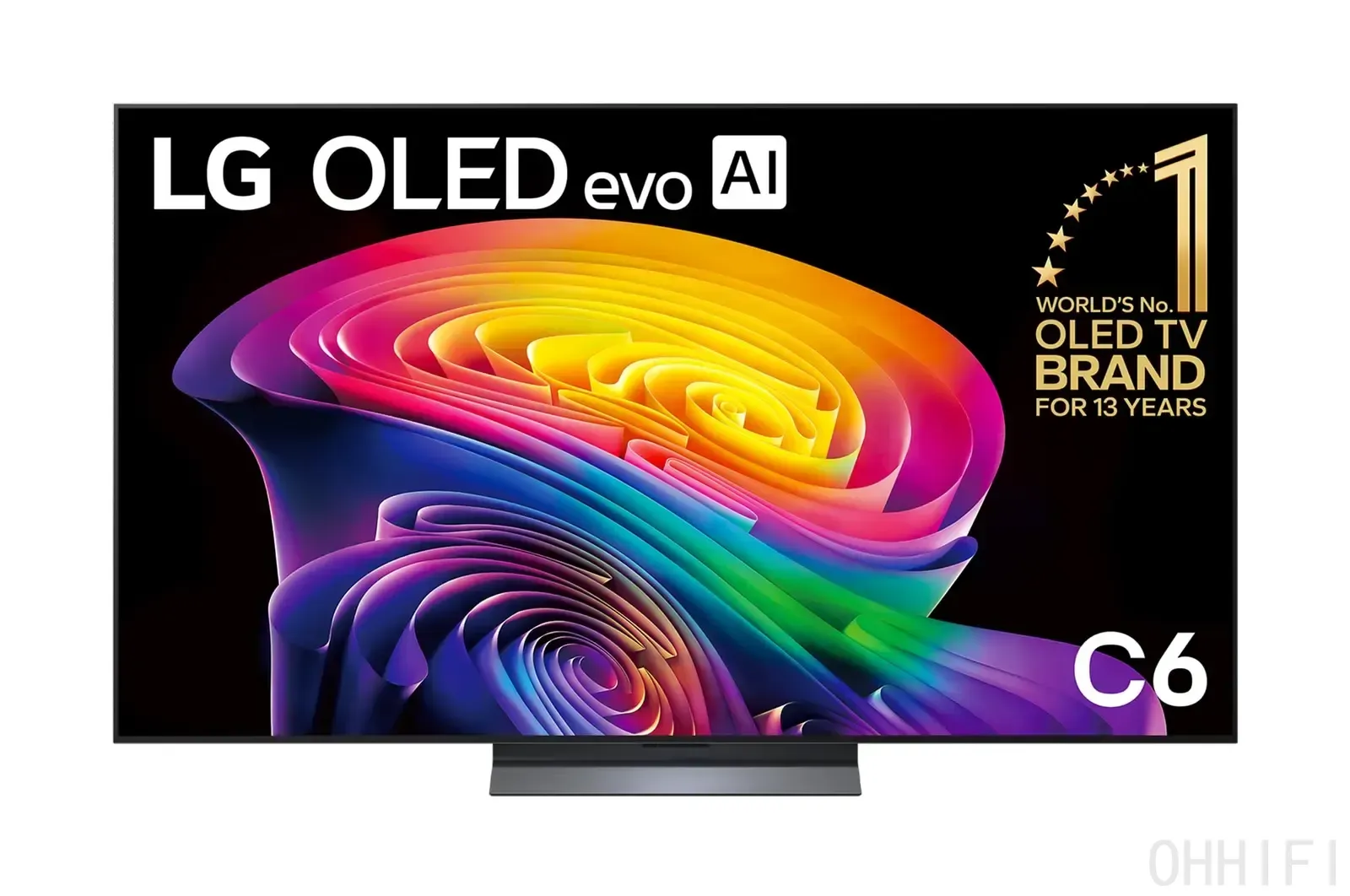
Then you check the prices. The 65-inch C6 is $2,699. The 65-inch Bravia 8, on the same shelf, is $1,398. That's not a discount — that's almost half off . And once you internalise that gap, every "the C6 is better" sentence in this article comes with an asterisk attached.
So let's get into what you're actually paying for, where the differences live, and which of the two should sit in your room.
Quick Specs at a Glance
| LG C6 (65-inch) | Sony Bravia 8 (65-inch) | |
|---|---|---|
| Panel | WOLED (LG Display EVO) | WOLED (LG Display WBE) |
| Processor | Alpha 11 Gen 3 | Sony XR |
| HDR formats | Dolby Vision, HDR10, HLG | Dolby Vision, HDR10, HLG |
| HDMI 2.1 ports | 4 × 48Gbps | 2 × 48Gbps (1 shared with eARC) |
| Max refresh | 4K/165Hz (PC), 4K/120Hz (console) | 4K/120Hz |
| Smart OS | webOS 26 (Gemini + Copilot) | Google TV |
| Built-in audio | 2.2-channel | Acoustic Surface Audio+ |
| Available sizes | 42, 48, 55, 65, 77, 83" | 55, 65, 77" |
| Current 65" price | $2,699 | $1,398 |
Two Different Philosophies, Same Underlying Glass
Here's the thing nobody likes to say in plain English: both of these TVs are built around panels from the same factory in Paju. The C6 uses a tweaked EVO WOLED stack with brightness-booster firmware, the Bravia 8 uses last year's WBE EVO WOLED. They're cousins, not strangers. Per the panel teardown work in the AVForums measurement set, the Bravia 8 is unambiguously a current-generation LGD OLED EVO panel — which is also what feeds the C5 and (essentially) the regular C6.
What makes them look different in your living room isn't the glass. It's the philosophy bolted on top.
LG's Alpha 11 Gen 3 leans into impact. More dynamic range pushed into highlights, more saturation in the midtones, faster motion handling. Sony's XR engine pulls the other direction — it tries to honour the master file. Skin tones the way a colourist intended them, motion that doesn't strip the texture out of 24p, no obvious grading shifts when content cuts between sources.
Neither approach is "wrong." They're just aimed at different rooms and different viewers.
Picture: The C6 Has Sparkle, the Bravia 8 Has Composure
I've watched a lot of OLEDs in the last 18 months — the C5 last spring, the G5, the Samsung S90F, Sony's own Bravia 8 II QD-OLED — and the gap I keep coming back to with these two specifically is brightness behaviour, not absolute brightness numbers.
Per Tom's Guide's lab work, the new C6 manages roughly 700 nits in SDR (10% window) and clears its predecessor by 200–300 nits across most patterns. Per AVForums, the Bravia 8 measures 747 nits HDR on a 10% window in Professional mode, with peaks around 830 nits in standard, and gets up to 1,231 nits if you switch to Vivid (per Trusted Reviews' measurements). On paper those aren't hugely different numbers — and in side-by-side mixed scenes, that bears out. The gap is meaningful but not chasm-deep.
Where the C6 feels noticeably better is specular highlights in HDR — sun glints, light through window blinds, the lightning bolts in Blade Runner 2049 's opening flight over LA. Those tiny bright pixels read with more punch on the LG. Watching the Wakanda final battle from Avengers: Infinity War , the C6 made the energy effects pop in a way the Bravia 8's Professional mode simply doesn't try to.
Run that same disc on the Bravia 8 and you get something different. Faces look right in a way that's hard to describe until you've A/B'd a few rooms. The XR processor isn't trying to wow you on the showroom floor. It's trying to make Timothée Chalamet's complexion in Dune Part Two read as actual human skin under desert sun, and at that, it's still the best WOLED I've reviewed at this price tier. Motion is the other Sony advantage. Mad Max: Fury Road on UHD Blu-ray, the long lateral pans across the convoy — the Bravia 8 keeps texture and edge integrity better than the C6 does in its default motion settings.
So which is the "better picture"? That's a setup question, not a verdict question. In a bright room watching mixed content, the C6 wins. In a dark room watching films, the Bravia 8 punches above its current price. Per RTINGS, both score in the 8.5–9.0 range overall, with the Bravia 8 trading peak performance for more accurate out-of-box tracking.
One asterisk worth noting: Sony's Professional mode out of the box runs very dim in SDR — Tom's Guide measured around 99 nits on a 10% window, which is the lowest they've ever logged. Most owners (myself included, after a week of fiddling) end up bumping panel luminance to High, which gets you back into normal viewing territory at the cost of slightly less accurate EOTF tracking. It's annoying. It's also a five-minute fix.
Sound: Sony Wins, and It Isn't Close
The C6's audio is fine. Cleaner than the C5, dialogue lock is reasonable, low-end is tight if a bit polite. By TV standards, it's a step forward. By living-room-minus-soundbar standards, it's still a TV speaker.
The Bravia 8 is on a different plane entirely. Sony's Acoustic Surface Audio+ uses actuators driving the entire panel as a diaphragm — the screen is the speaker. The result is dialogue that locates at the actor's mouth instead of below the chassis, and a soundstage that's wider and more cohesive than any pedestal-fired competitor I've heard.
Watching the Dune worm sequences with the lights off and no soundbar, the Bravia 8 gives you something approaching real spatial audio. The C6 gives you "this dialogue is intelligible, please go buy a soundbar."
For owners who genuinely run TV-only audio — second rooms, bedrooms, smaller apartments where a 5.1 system isn't happening — this matters more than any single picture metric.
Gaming: The C6 Walks the Floor
If you have a PS5 Pro, an Xbox Series X, and a gaming PC, the C6 is the only sensible choice between these two. Four full-bandwidth HDMI 2.1 ports versus the Bravia 8's two (and one of those Sony ports doubles as eARC, so it's effectively one for gaming if you run an external audio system). 4K/165Hz versus 4K/120Hz. NVIDIA G-Sync, AMD FreeSync Premium, Dolby Vision gaming, HGiG.
Per RTINGS, both have low input lag in game mode (sub-13ms), so the lag delta isn't the story. Connectivity and refresh ceiling are. The Bravia 8 is a film-watcher's TV that happens to game adequately. The C6 was clearly designed by people who play.
Test Setup
Both sets were viewed in my home cinema space, fed from a 4K Blu-ray source and a streaming stack across Netflix, Apple TV, and Prime Video, with HDMI 2.1 from a current-gen console for gaming material. Reference content included Blade Runner 2049 , Dune Part Two , Mad Max: Fury Road , Top Gun: Maverick , the Atmos Spears & Munsil demo disc, and a couple of episodes of Severance for skin-tone checking. Picture modes were Filmmaker Mode (LG) and Professional with panel luminance High (Sony) — the closest each comes to a calibrated baseline without a meter on the screen.
The Competition
| Rival | Comparison | Verdict |
|---|---|---|
| LG C5 (2025) | Same panel family, same ports, smaller brightness boost. About $1,000 cheaper than the C6 at current discount levels. | The honest budget pick. You give up some HDR pop and the new processor's upscaling tricks, and gain a thousand bucks. For most rooms, the C5 is the smarter buy of the LG lineup right now. |
| Samsung S90F (2025) | QD-OLED panel, ~1,000-nit HDR brightness on a 10% window per multiple measurements, ~89% Rec.2020 coverage. No Dolby Vision, but HDR10+ instead. | The colour-volume champion. If you can live without Dolby Vision and you watch a lot of streaming HDR10+, this beats both LG and Sony on raw saturation. Sound is nowhere near the Bravia 8. |
| Sony Bravia 8 II (2025) | Sony's QD-OLED move. ~1,800-nit calibrated peaks per multiple sources. Same Acoustic Surface audio system. | The Sony purist's choice if budget allows. Brighter, more saturated, same XR brain. Costs notably more than the regular Bravia 8 and limited to 55/65". |
| LG G6 / C6H (2026) | Tandem WOLED panel, projected ~3,000-nit peaks, premium screen coating. | The reference-tier OLEDs. If you want to feel the next generational jump rather than a refinement, this is where it lives. Pay accordingly. |
The Verdict
If both TVs cost the same money — and the moment LG starts discounting the C6, that day will come — the C6 is the better all-rounder. More gaming flexibility, slightly more impactful HDR, the latest processor, six screen sizes versus three. That's not even a hard call.
But they don't cost the same money. Right now the Bravia 8 is roughly half the C6's asking price, and at $1,398 for a 65-inch OLED that delivers genuinely cinematic image and the best built-in audio in its class, it's one of the most underpriced things in the AV market.
So my call is split:
- LG C6 — 8.5/10. Excellent step-down OLED. Worth the launch premium only if you specifically need the gaming chops, the extra HDMI 2.1 ports, or webOS over Google TV.
- Sony Bravia 8 — 9/10 at current prices. Was an 8/10 at launch. The discount has rewritten the math entirely. Pound-for-pound and dollar-for-dollar, it's the better buy in mid-2026.
Pros & Cons
LG C6
- Best-in-class gaming features (4× HDMI 2.1, 4K/165Hz, full VRR/G-Sync stack)
- Brighter, more dynamic HDR than its predecessor — meaningful improvement
- Alpha 11 Gen 3 upscaling cleans up sub-4K sources nicely
- webOS 26 is responsive; Gemini integration actually useful
- Six screen sizes, including 42" and 83" options
- Launch pricing makes sense only against an undiscounted Bravia 8
- Default sound still wants a soundbar
- Best picture requires diving into menus
- Glossy reflective coating in bright rooms
Sony Bravia 8
- Acoustic Surface Audio+ is the best built-in TV audio at this tier, full stop
- Reference-grade motion handling and skin tones via XR processor
- Currently priced like a steal — half the C6 in many markets
- Google TV is fast and well-supported
- Only two HDMI 2.1 ports, one doubled with eARC
- Caps at 4K/120Hz for gaming
- Professional mode SDR is dim out of the box (per Tom's Guide measurements)
- No HDR10+ support
- Limited to three screen sizes
Who Should Buy Which
Buy the LG C6 if you're a gamer with multiple current-gen consoles plus a PC, you want the latest panel-and-processor combo, you watch a lot of bright-room daytime TV, or you just want a 42-inch OLED for a desktop or bedroom (the Bravia 8 doesn't go that small).
Buy the Sony Bravia 8 if you watch films and prestige TV in a controlled-light room, you don't intend to add a soundbar, you want the most picture-per-dollar in OLED right now, and you're not chasing 4K/165Hz on a PC. At current discounts, this is one of the easiest recommendations in the category.
Skip both if the C6H or LG G6 with the Tandem panel is in budget — that's where the real generational picture jump lives in 2026, not in the standard C6.


Comments