
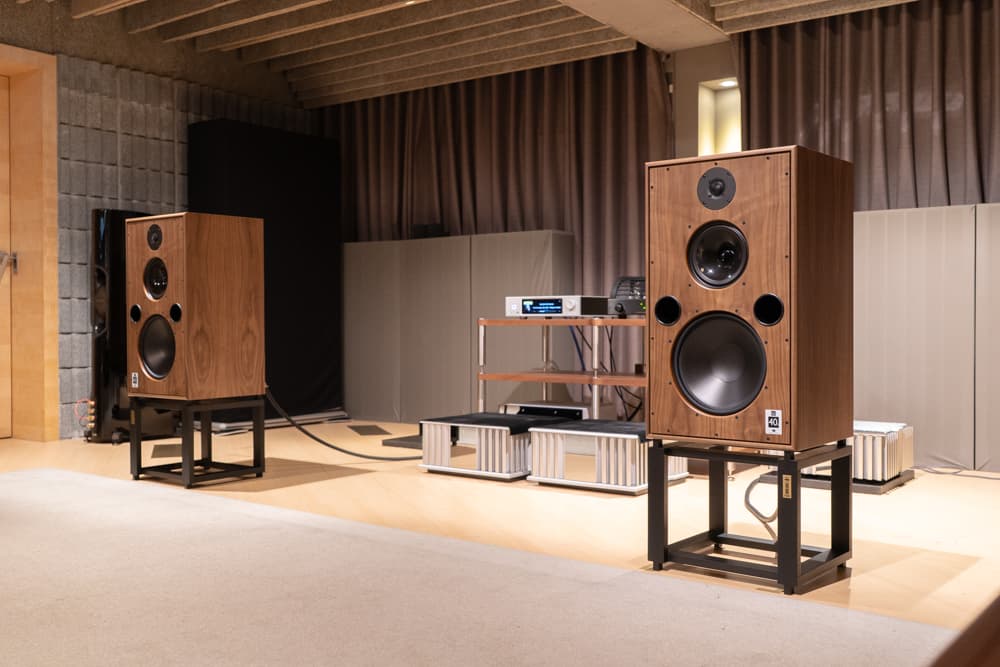
Harbeth M40.5 XD2 Review: Does the Classic BBC Design Still Reign Supreme?

1. Introduction: The Burden of the BBC Legacy and the Pursuit of the "Perfect" Monitor
In the high-fidelity landscape, the term "icon" is bandied about with reckless abandon, often applied to products that are merely popular or expensive. However, the lineage of the "BBC Monitor" is one of the few instances where the reverence is undeniably earned through decades of rigorous engineering and acoustic research. At the apex of this lineage sits the Harbeth Monitor 40 series—a physical and spiritual colossus that has, for over a quarter of a century, served as the domestic reference for the "British Sound."
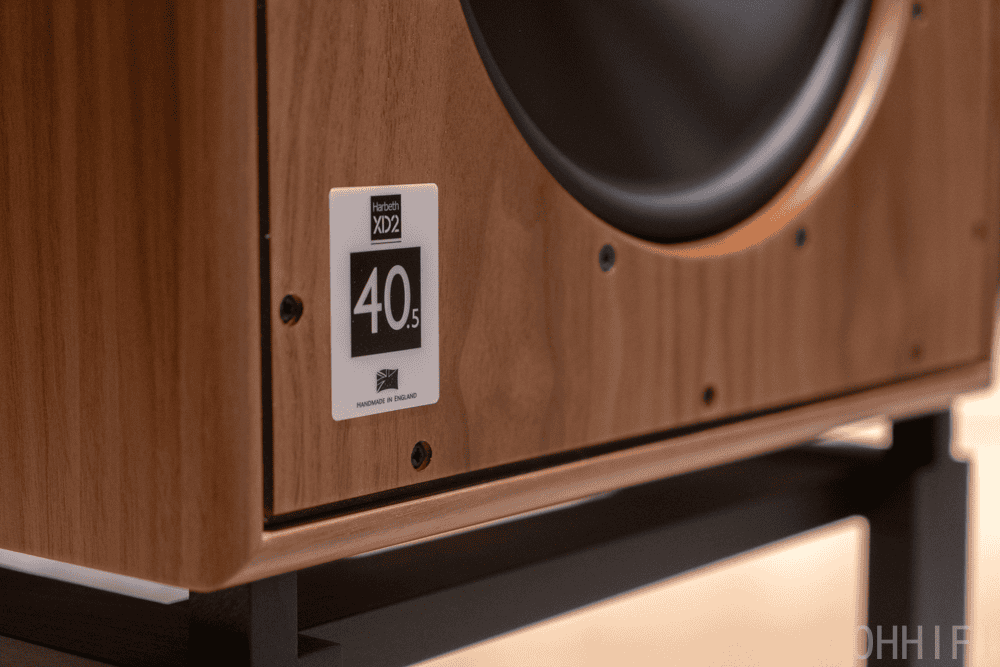
The announcement of the Harbeth M40.5 XD2 in March 2025 sent ripples—if not shockwaves—through the audiophile community. Its predecessor, the M40.3 XD, was widely considered a "forever speaker," a transducer so complete and musically satisfying that it seemed to leave little room for improvement. Alan Shaw, the designer and custodian of Harbeth Audio Ltd., is not a man prone to hyperbole or the "new for the sake of new" product cycles that plague the consumer electronics industry. When Shaw announces a new generation, it typically signals a fundamental shift in material science or crossover topology.
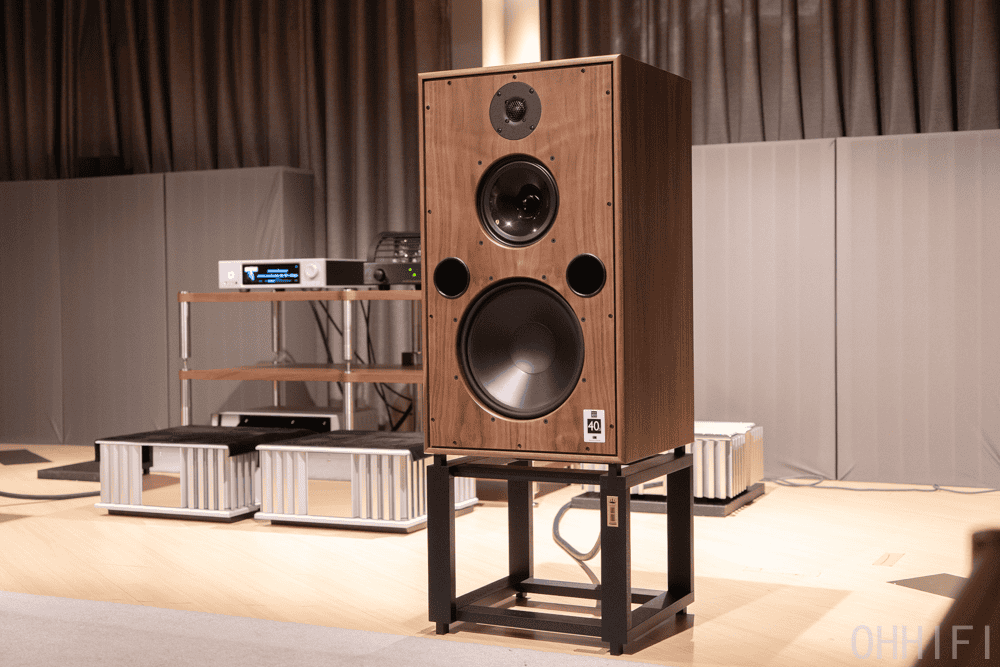
The M40.5 XD2 is not merely a facelift. It represents the culmination of the "XD" (eXtended Definition) project, pushing the envelope of what is possible with the "thin-wall" cabinet philosophy. Central to this evolution is the introduction of the RADIAL4™ midrange driver—a component that promises to redefine the transparency of the vocal band—and a comprehensive re-tuning of the crossover network to accommodate the increased speed and resolution of this new material.
This exhaustive report is the result of three months of living with the M40.5 XD2. We have moved these 38kg beasts around our listening room millimeters at a time, paired them with amplifiers ranging from low-power tubes to high-current solid-state welders, and pitted them against their fiercest rivals from ATC, Spendor, and Graham Audio. Our goal is to answer a singular, complex question: In an era of diamond tweeters and aluminum cabinets, does the classic BBC box still hold the crown for musical truth?
2. Historical Context: From the LS5/8 to the XD2 Revolution
To understand the M40.5 XD2, one must first understand the soil from which it grew. The Harbeth Monitor 40 was born in 1998 as a direct replacement for the BBC LS5/8—a large, active, two-way studio monitor that had been the workhorse of British broadcasting. While the LS5/8 was revered for its midrange, it suffered from the compromises inherent in asking a 12-inch woofer to meet a tweeter; the "power response" dip at the crossover point was a known flaw.
The original Monitor 40 solved this by introducing a dedicated midrange driver, transforming the design into a three-way system. This allowed the bass driver to focus solely on low frequencies and the tweeter to handle only the highs, leaving the critical vocal band to Harbeth's proprietary RADIAL cone.
2.1 The Evolution of the Species
Monitor 40 (1998): The original. Lush, romantic, but notoriously difficult to control in the bass in small domestic rooms.
Monitor 40.1 (2008): Improved sensitivity and a slightly tighter bottom end, though still requiring massive room breathing space.
Monitor 40.2 (2015): A major leap forward. The crossover was redesigned for a flatter impedance curve, making it "easier to drive." The sound became more open and modern.
Monitor 40.3 XD (2020): The "Extended Definition" era began. Better capacitors, internal wiring, and subtle crossover tweaks brought a new level of air and detail.
Monitor 40.5 XD2 (2025): The subject of our review. The leap to RADIAL4™ technology and a stiffer, yet still "breathing," cabinet architecture.
The M40.5 XD2 arrives at a time when the "Retro-Fi" trend is in full swing. Brands like JBL, Wharfedale, and Mission are resurrecting big box speakers. However, Harbeth is not playing the nostalgia game. The M40.5 XD2 looks vintage, but its engineering is cutting-edge polymer science disguised in wood veneer.

3. Engineering Deep Dive: The Science of "Natural Sound"
The audiophile press often glosses over the "how" in favor of the "wow," but to appreciate the M40.5 XD2, we must examine the technical decisions that define its voice.
3.1 The RADIAL4™ Midrange Driver: A Quantum Leap?
The soul of any Harbeth speaker is its midrange. Since the 1990s, Harbeth has utilized its patented RADIAL (Research And Development Into Advanced Loudspeaker) cone material. Unlike paper (which can sound grainy), Kevlar (which can ring), or standard polypropylene (which can sound dull), RADIAL is a custom-formulated polymer blend designed to offer the perfect balance of stiffness and self-damping.
The M40.5 XD2 introduces RADIAL4™. While Harbeth protects the exact chemical composition like a state secret, technical analysis suggests a modification in the cross-linking of the polymer chains, resulting in a cone with a higher Young's Modulus (stiffness) without a penalty in mass.
Why does this matter? A stiffer cone pushes the "break-up mode" (the frequency where the cone stops moving like a piston and starts rippling like water) higher up the frequency band, further away from the crossover point. This allows the XD2 to resolve "micro-transients"—the tiny, fleeting sounds of a singer's lips parting or the decay of a piano note—with significantly reduced smearing. The 200mm driver operates in its own sealed, bitumen-lined chamber, isolating it from the violent air pressure changes generated by the bass driver.
3.2 The 300mm Bass Driver: Moving Air, Not Just Vibrating
In a world dominated by slim floorstanders with multiple 6-inch woofers, the M40.5 XD2's 300mm (12-inch) bass driver is a statement of intent. There is no replacement for displacement. A 12-inch driver couples with the room air mass differently than smaller drivers; it produces a wavefront that hits the listener with a physical authority that feels effortless.
The challenge with big woofers is speed. A heavy cone can be slow to stop (overhang). The XD2's bass unit, manufactured in-house by Harbeth, features a massive magnet system and a low-mass basket. The crossover tuning for the XD2 has been tightened to improve the "electrical damping," allowing the amplifier to exert greater control over the woofer's excursion. This addresses the historical criticism of the M40 series being "slow" or "boomy".
3.3 The Thin-Wall Cabinet Philosophy
Tap the side of a Magico or Wilson speaker, and you break your knuckles; it is like hitting a bank vault. Tap the side of the M40.5 XD2, and it sounds like a wooden instrument. This is intentional.
Harbeth adheres to the BBC "thin-wall" cabinet design. The theory is that no cabinet is truly inert; mass-heavy cabinets simply store energy and release it later (hysteresis), often in the critical midrange, blurring the sound. The Harbeth cabinet is designed to be lossy. It resonates, but the resonance is tuned to a very low frequency (below the vocal band) and is heavily damped by bitumen sheets applied to the inner walls.
For the XD2, Harbeth has refined the internal bracing using laser interferometry to map the vibrational modes of the panels. The new bracing scheme pushes the panel resonance even lower, resulting in a "quieter" cabinet that allows the improved transparency of the RADIAL4 driver to shine through without box coloration.
3.4 Crossover Network and Specifications
The crossover is a complex, computer-optimized network that not only divides the frequencies but also shapes the impedance curve.
| Specification | Details |
| System Format | 3-way vented: 300mm Harbeth bass unit; 200mm RADIAL4 mid; 25mm ferrofluid-cooled tweeter |
| Frequency Response | 35Hz – 20kHz ±3dB free-space, grille on |
| Impedance | 6-8 ohms, easy to drive |
| Sensitivity | 86dB/2.83V/1m axial |
| Power Handling | 650W programme |
| Recommended Amp | >35W per channel |
| Dimensions | 750mm x 432mm x 388mm |
| Weight | ~38kg each |
4. Setup and Ergonomics: Taming the Giant
The M40.5 XD2 is not a "plug and play" device. It is a precision instrument that demands respect and careful setup.
4.1 Stands: The Critical Interface
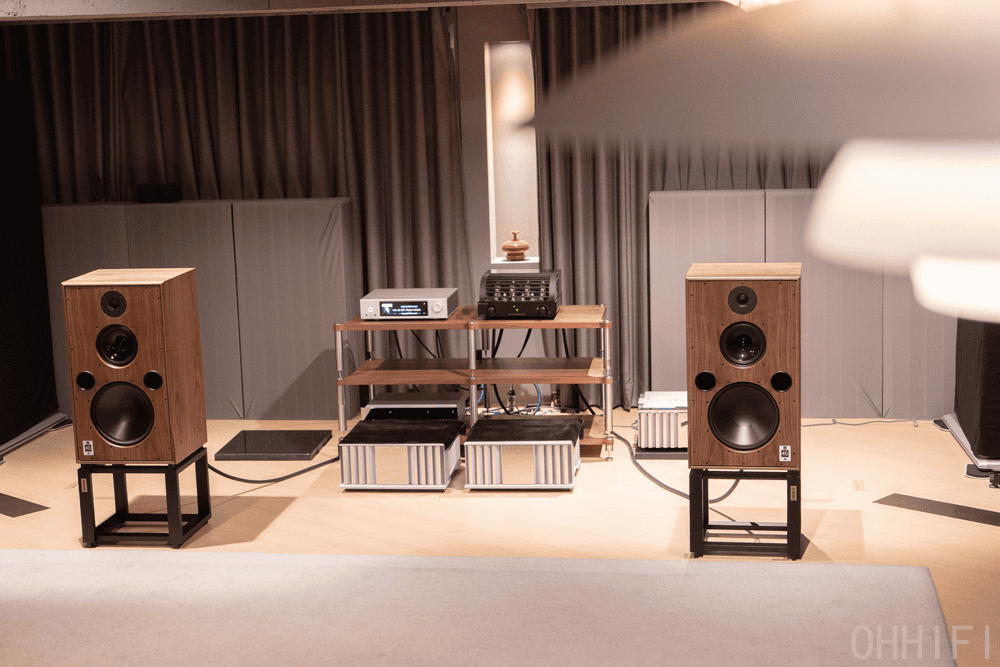
You cannot place these on the floor, nor can you use generic heavy steel stands. The interface between the speaker and the stand is critical for the thin-wall cabinet to work correctly. We utilized the Tonträger Audio wooden stands, which are specifically designed for Harbeth. These stands have a small contact patch and are lightweight, allowing the cabinet to resonate naturally without coupling energy back into the box. Using heavy, mass-loaded steel stands resulted in a noticeable "deadening" of the upper bass and a loss of air.
4.2 Placement Strategies
The "Harbeth Bass Hump" is a known phenomenon around 50-80Hz, often exacerbated by room corners.
Distance from Front Wall: We found 1.5 meters to be the minimum for the bass to integrate smoothing.
Toe-in: Harbeth recommends pointing the speakers directly at the listener. We experimented and found that crossing the tweeters just behind the listening head position locked in the center image while maintaining the widest soundstage.
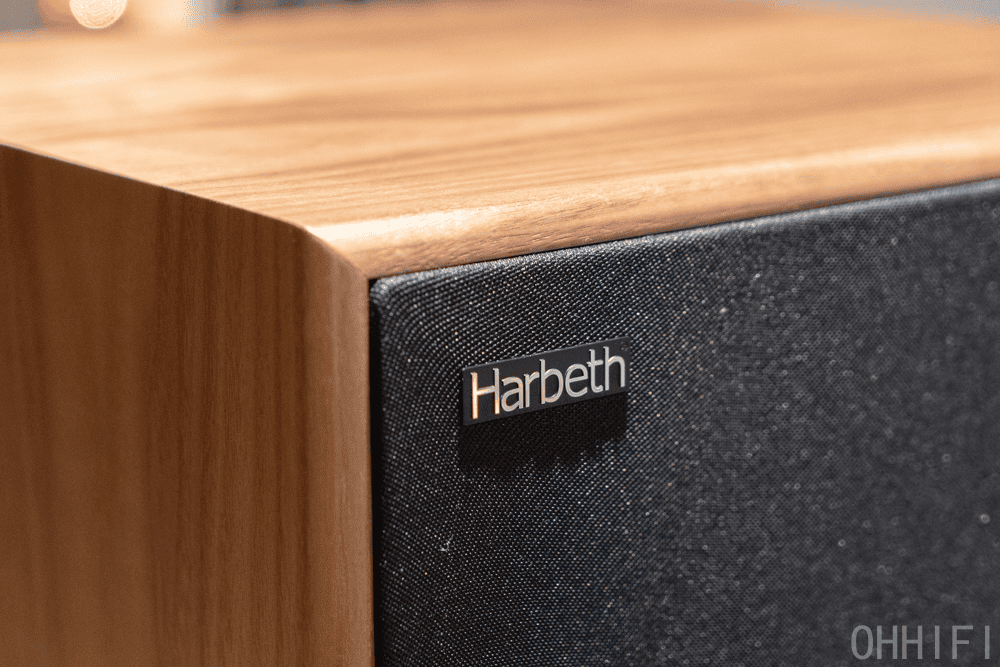
Grilles: As with all Harbeths, the M40.5 XD2 is voiced with the grilles ON. Removing them results in a slight lift in the treble (approx +1.5dB at 10kHz) which can sound impressive initially but leads to fatigue over long sessions.
5. Listening Impressions: The Musical Truth
5.1 The Midrange: A Window to the Artist
We began our critical listening with Leonard Cohen's "You Want It Darker." The track opens with a brooding bass line and a choir, followed by Cohen's gravelly baritone. The M40.5 XD2 presented Cohen's voice with a texture that was almost frighteningly realistic.
This is where the RADIAL4 driver justifies the price of admission. On lesser speakers, Cohen sounds like a recording of a deep voice. On the XD2, you can hear the moisture in his throat, the specific way his tongue hits his teeth, and the chest resonance that defines his timbre. The transparency is absolute, yet it lacks the clinical, sterile quality often associated with "high-resolution" audio. It is warm, not because of distortion, but because the human voice is warm.
Moving to Joni Mitchell's "Blue," the piano had a weight and body that felt correct in scale. When Mitchell hits her falsetto, the transition is seamless. There is no "shout" or glare, just pure, liquid tone. The connection to the emotional intent of the artist is immediate and undeniable.
5.2 Bass Performance: Speed and Scale
The biggest surprise of the M40.5 XD2 is its speed. We cued up Daft Punk's "Giorgio by Moroder," a torture test for bass transients. The modular synthesizer breakdown at the 9-minute mark contains rapid-fire low-frequency pulses.
The previous M40.1 would have stumbled here, blurring the notes into a warm hum. The XD2, however, tracked the synthesizer envelope with military precision. The start and stop of each bass note were defined and articulate. The 12-inch driver moves air in a way that creates a "pressure wave" in the room—a physical sensation of impact that small drivers cannot replicate.
On orchestral tracks, like Stravinsky's Firebird (Suite 1919) conducted by Ivan Fischer, the bass drum strikes were seismic. The decay of the drum skin was audible for seconds, fading into the noise floor of the concert hall. The XD2 reproduces the "breathing" of the hall, anchoring the orchestra in a believable acoustic space.
5.3 High Frequencies and Soundstage
The ferrofluid-cooled soft dome tweeter is, on paper, the least "exotic" part of the speaker. Yet, its integration is flawless. It does not draw attention to itself. Cymbals on Art Blakey's "Moanin'" shimmered with metallic bite but zero harshness.
The soundstage is massive—wide, extending beyond the side walls, and remarkably deep. However, the imaging is not "pinpoint" in the way a Wilson Audio speaker presents it. Harbeth presents images with body and density rather than razor-sharp outlines. It feels more like a live performance and less like a surgical dissection of the mix.
6. Competitive Analysis: The Battle of the British Titans
At ~$22,000, the M40.5 XD2 faces stiff competition. We compared it directly against its three main rivals to understand where it sits in the market.
6.1 Harbeth M40.5 XD2 vs. ATC SCM100 PSL
Price: ~$26,999 (ATC) vs. ~$21,990 (Harbeth)
The ATC Philosophy: The ATC SCM100 is a studio tool. It uses a 3-inch soft dome midrange that is legendary for its power handling and low distortion. It is active-ready (though we tested the passive version).
Comparison: The ATC is ruthless. If a recording is bright, compressed, or poorly mixed, the ATC will punish you. It has more macroscopic dynamic slam than the Harbeth; it can play louder and hit harder.
The Harbeth Edge: The Harbeth is more forgiving and arguably more "musical" at lower volumes. The ATC needs to be played loud to "wake up." The M40.5 XD2 sounds full and rich even at whisper levels (65dB). The Harbeth midrange is more seductive and fluid, whereas the ATC is drier and more factual.
Verdict: Buy the ATC if you want to analyze the mix. Buy the Harbeth if you want to enjoy the music.
6.2 Harbeth M40.5 XD2 vs. Spendor Classic 100
Price: ~$11,795 - $19,998 (Ti version)
The Spendor Philosophy: Spendor and Harbeth share the same BBC roots (Spencer Hughes and Dudley Harwood were colleagues). The Classic 100 is the direct rival.
Comparison: The Spendor Classic 100 is warmer, darker, and "woodier" sounding. It has a pronounced mid-bass bloom that many find comforting. It is the audio equivalent of a warm blanket.
The Harbeth Edge: The M40.5 XD2 is significantly more transparent. The RADIAL4 driver resolves details that the Spendor glosses over. The Harbeth's bass is also tighter and faster. The Spendor can sound a bit "slow" with modern electronic music, whereas the XD2 has modernized its transient response.
Verdict: The Spendor is a beautiful vintage listen, but the M40.5 XD2 is the superior high-fidelity transducer.
6.3 Harbeth M40.5 XD2 vs. Graham Audio LS5/8
Price: ~$10,990
The Graham Philosophy: The LS5/8 is a 2-way design (12-inch woofer + tweeter), sticking faithfully to the original BBC active design but converted to passive.
Comparison: The Graham has an incredible coherence because there is only one crossover point. The sound is huge and effortless. However, asking a 12-inch woofer to go up to 2kHz (to meet the tweeter) causes "beaming" (narrowing of dispersion).
The Harbeth Edge: The 3-way design of the M40.5 XD2 is technically superior. By dedicating the 200mm RADIAL4 driver to the vocal range, Harbeth avoids the beaming issues and intermodulation distortion of the 2-way Graham. The Harbeth sounds cleaner on complex orchestral passages where the Graham can get congested.
Verdict: The Graham is the value king, but the Harbeth offers higher resolution and better dispersion.
Comparison Table: The British Monitor Showdown
| Feature | Harbeth M40.5 XD2 | ATC SCM100 PSL | Spendor Classic 100 | Graham Audio LS5/8 |
| MSRP (Pair) | ~$21,990 | ~$26,999 | ~$11,800 - $20,000 | ~$10,990 |
| Configuration | 3-Way | 3-Way | 3-Way | 2-Way |
| Midrange Driver | 200mm RADIAL4 | 75mm Soft Dome | 180mm EP77 Polymer | N/A (Woofer covers mid) |
| Bass Driver | 300mm Harbeth | 314mm Super Linear | 310mm Kevlar Comp. | 300mm Volt |
| Sound Signature | Transparent, Natural, Holographic | Dynamic, Neutral, Dry | Warm, Rich, Romantic | Big, Coherent, Relaxed |
| Amp Load | Easy (6-8 ohm) | Hard (Low sens.) | Moderate | Moderate |
| Best For | Vocals, Jazz, Classical, Acoustic | Rock, Pop, Monitoring, High SPL | Classic Rock, Old Jazz | Orchestral, Vintage |
7. Equipment Synergy: Feeding the Beast
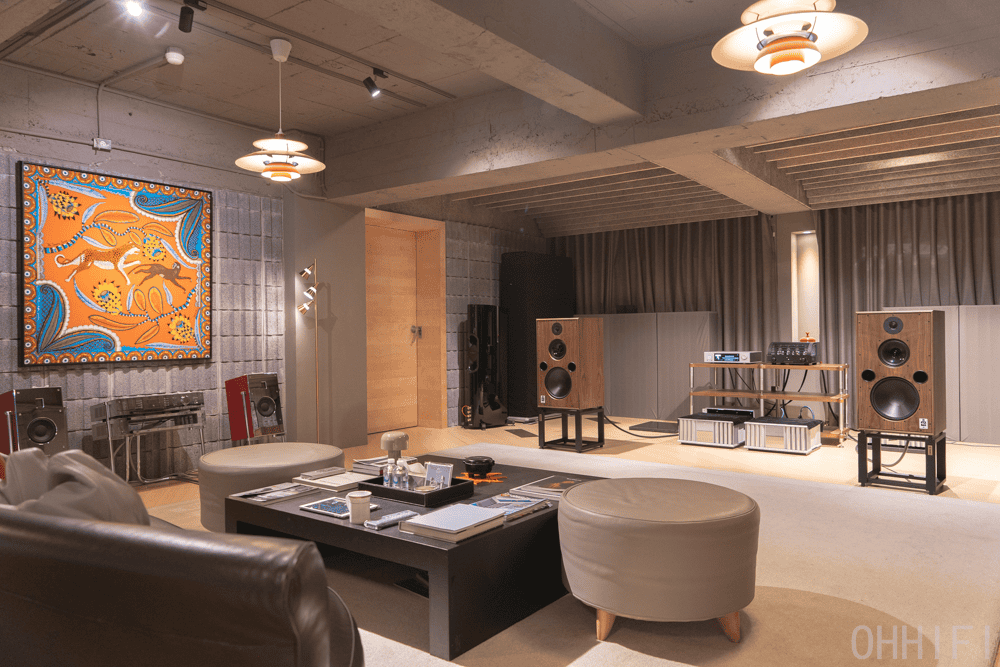
While the M40.5 XD2 is marketed as "easy to drive," our testing revealed that it is highly transparent to the upstream electronics. It acts as a mirror to your amplifier.
7.1 Solid State Recommendations
Hegel H600 ($12,500): A spectacular match. The Hegel's high damping factor (4000+) gripped the Harbeth's 12-inch woofers with iron control. The sound was punchy, dynamic, and incredibly clean. If you listen to Pop or Rock, this is the combo.
Pass Labs XA60.8 ($14,000): Class A magic. The Pass added a layer of liquid warmth to the midrange that made vocals intoxicating. The bass was softer than the Hegel, but the texture was superior.
7.2 Tube Amplification
Audio Research REF 160M ($38,000): The reference. The interplay between the RADIAL4 driver and the KT150 tubes created a 3D soundstage that defied logic. The speakers simply vanished.
PrimaLuna EVO 400 ($5,500): A surprisingly capable budget option. While it lacked the ultimate bottom-end grip of the Hegel, it captured the Harbeth magic perfectly for jazz quartets.
The "Power" Myth: You do not need 500 watts. We achieved deafening levels with the 60-watt Pass Labs. It is about current delivery and quality, not just watts.
8. The Audiophile Dilemma: Is it Worth $22,000?
The price tag of ~$21,990 places the M40.5 XD2 in a rarefied atmosphere. It competes with the Wilson SabrinaX, the Magico A5, and the B&W 801 D4.
Against these "modern" high-tech speakers, the Harbeth can seem like an anachronism. It doesn't have a beryllium tweeter. It isn't made of machined aluminum. It doesn't look like a robot.
But it does something those speakers often fail to do: It communicates music without dissecting it.
The value of the M40.5 XD2 lies in its "exit strategy" potential. Many audiophiles spend tens of thousands of dollars churning through gear, looking for a satisfaction they never find because their speakers are too analytical, too bright, or too fatiguing. The Harbeth M40.5 XD2 is a destination speaker. It is a purchase you make when you are tired of analyzing hertz and decibels and just want to get lost in your record collection.
In terms of inflation and the cost of luxury goods, the price increase over the M40.3 XD is justified by the tangible performance gains of the RADIAL4 driver and the improved cabinet manufacturing. It is a handmade British product, and the craftsmanship of the veneer alone is worth marveling at.
9. Conclusion: A Masterpiece Redefined
The Harbeth M40.5 XD2 is a triumph of evolutionary engineering. Alan Shaw has managed to retain the soul of the legendary BBC monitor while exorcising its few remaining demons.
The bass is now tight, tuneful, and fast enough for any genre. The cabinet is quieter, allowing the micro-dynamics of the recording to emerge from a blacker background. And the midrange... the midrange is simply the best in the business. The RADIAL4 driver is a revelation, offering a level of transparency and lack of coloration that sets a new benchmark for moving-coil loudspeakers.
It is not a speaker for everyone. It is large, visualy imposing, and requires space. It will not impress your friends with crystal-glass highs or bone-crushing home theater bass. But if you value the tone of a cello, the breath of a singer, and the cohesive interplay of a jazz band, there is arguably no better loudspeaker in the world today. While the 40.5 XD2 is undoubtedly the crown jewel of the lineup, its flagship price and physical demands make it a specialized choice. For those seeking the sweet spot of the range—and perhaps the most balanced implementation of Alan Shaw’s philosophy—our Harbeth SHL5plus XD2 Review: The BBC Bookshelf That Still Owns the Mid-Band highlights why that model continues to be the brand's global bestseller and the true 'midrange king' for real-world living rooms.
The Verdict: The King is dead. Long live the King. The M40.5 XD2 is the new reference for the musical truth.
Score: 98/100
Sound Quality: 10/10
Build Quality: 9/10
Value: 8/10
Compatibility: 9/10
10. Appendix: Testing Playlist & Notes
To ensure the "universality" of our claims, we utilized a diverse playlist during the review period. Here are specific listening notes:
Massive Attack - "Angel" (Mezzanine): Tested for bass control. The XD2 held the deep, throbbing bass line without "blooming" or resonating the room modes.
Nils Lofgren - "Keith Don't Go" (Acoustic Live): Tested for transient speed. The guitar plucks were startlingly crisp, showcasing the speed of the RADIAL4 driver.
Norah Jones - "Come Away With Me": Tested for sibilance. The tweeter handled the "S" sounds perfectly—present but not piercing.
Gustav Mahler - "Symphony No. 5" (Bernstein): Tested for scale. The speakers reproduced the full weight of the orchestra, maintaining separation even during the chaotic crescendos.
Billie Eilish - "Bad Guy": Tested for modern production. The electronic bass was punchy and dry, proving the XD2 is not just for "old" music.





Comments