
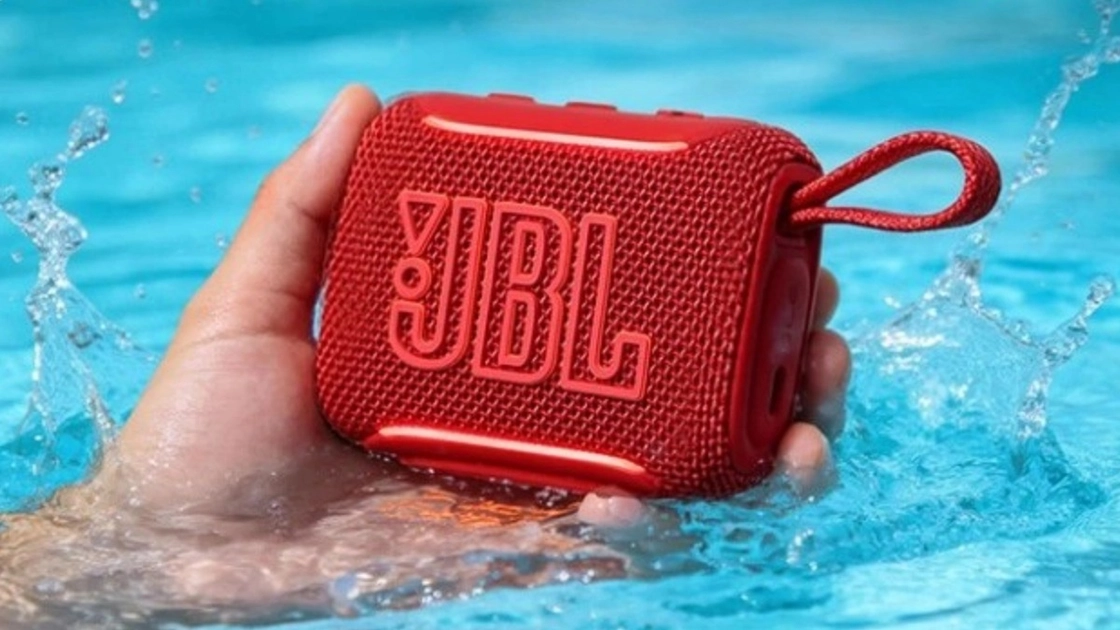
JBL Go 5 Review: The Pocket Speaker That Quietly Snuck a DAC In

There's a small moment of cognitive dissonance when you find yourself, fifteen years deep in this hobby, holding a $50 plastic cube and trying to take it seriously. The Go 5 is roughly the size of a deck of cards, weighs 230 grams, and lights up from the front like a gaming peripheral. None of that should be on my desk.

But the fifth-generation Go is the first one in the line to ship with a built-in USB-C DAC supporting 24-bit/96kHz lossless playback — and that's the bit that pulled me in. JBL has been refining this thing since 2018, and after a week of listening across phone Bluetooth, the desktop USB-C path, and (mostly) the actual contexts where these speakers live — kitchen counters, garden benches, hotel sinks — I think they've finally built a Go that earns the audiophile eye-roll-and-then-nod treatment.
Quick Specs
| Spec | JBL Go 5 |
|---|---|
| Price | $49.99 / £39.99 / AU$59 (street ≈ $55) |
| Driver | 45mm full-range, single mono |
| Output power | 4.8W RMS |
| Bluetooth | 6.0 (SBC, AAC, LC3 / LE Audio) |
| Wired audio | USB-C, 24-bit/96kHz lossless |
| Battery | 1000 mAh, 8 hours (10 with Playtime Boost) |
| Charge time | ~3 hours via USB-C |
| Ingress rating | IP68 (waterproof, dustproof, drop-resistant) |
| Dimensions (HWD) | 7.7 × 10.1 × 4.3 cm |
| Weight | 230 g |
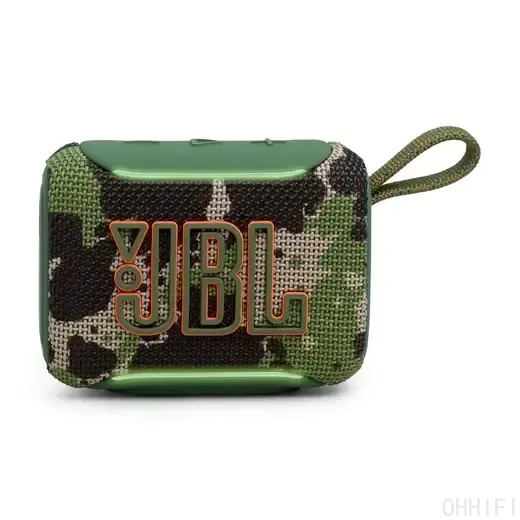
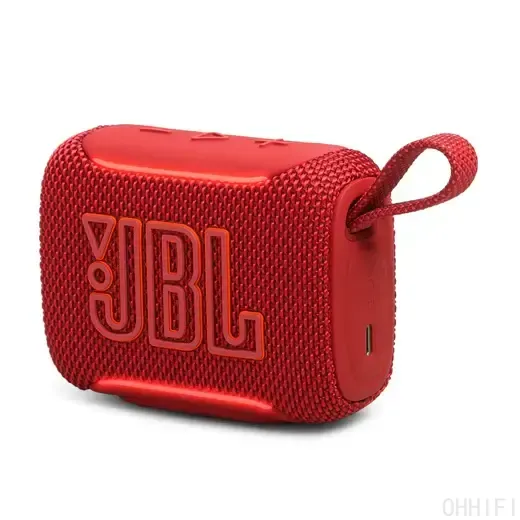
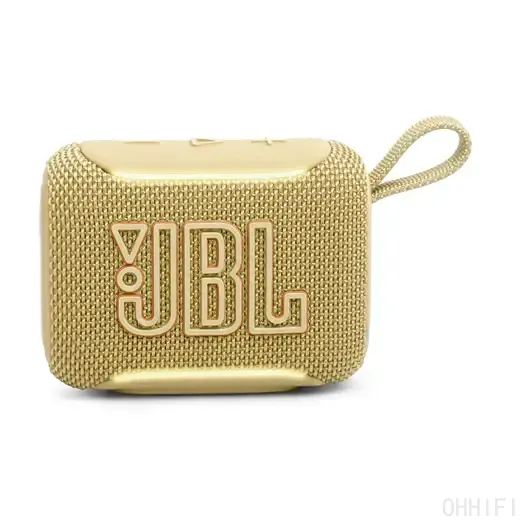
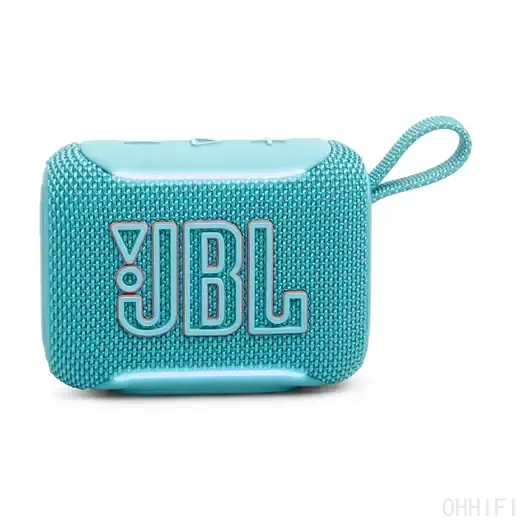
| Finishes | Black, white, blue, purple, pink, red, camo |
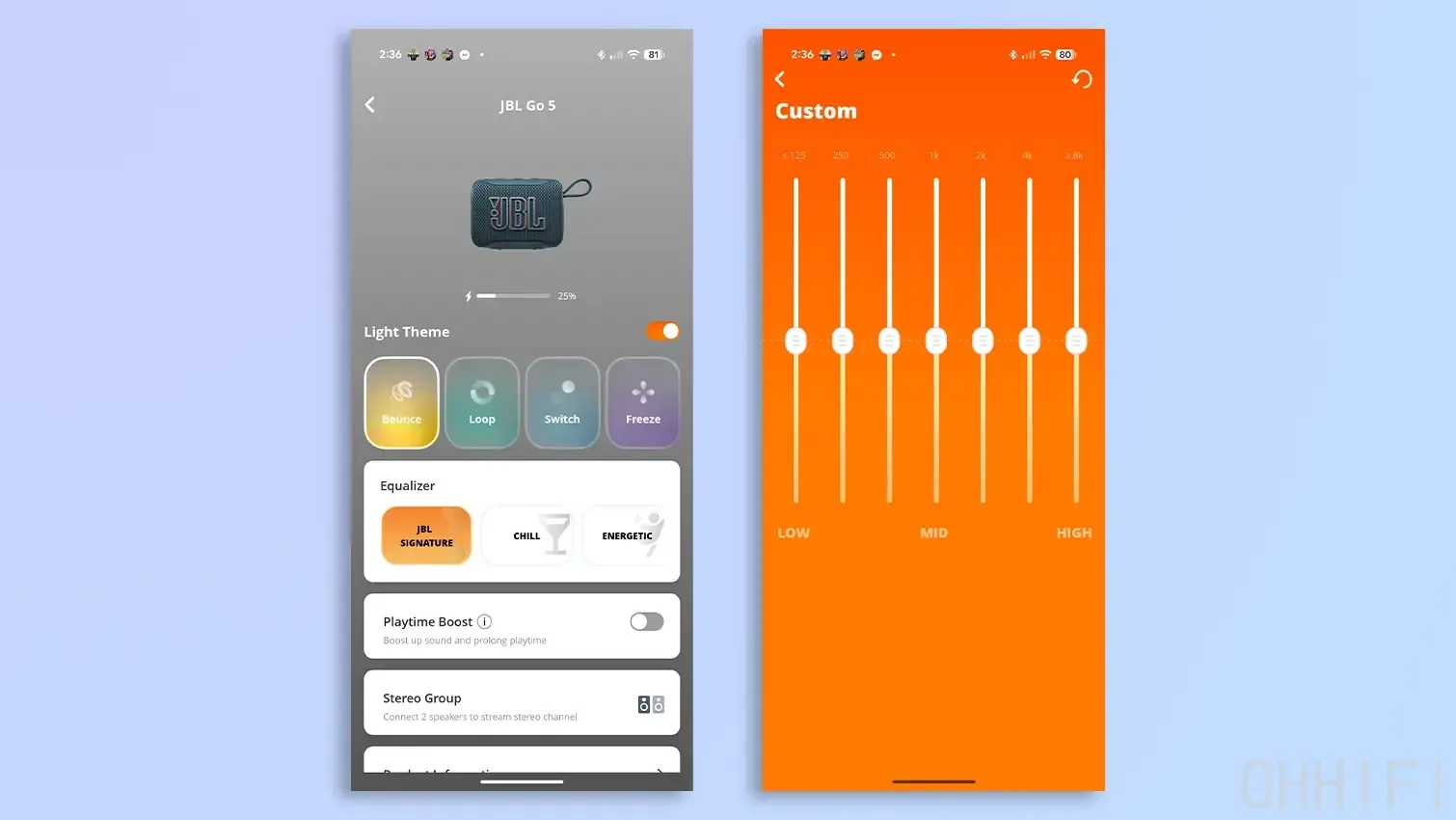
| App | JBL Portable (7-band EQ, lighting themes, Auracast) |
Design & Build
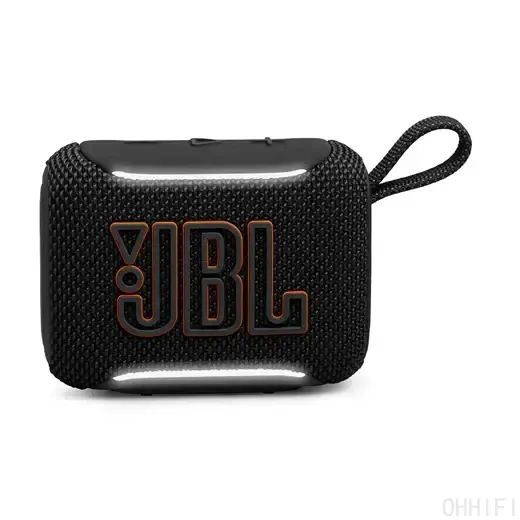
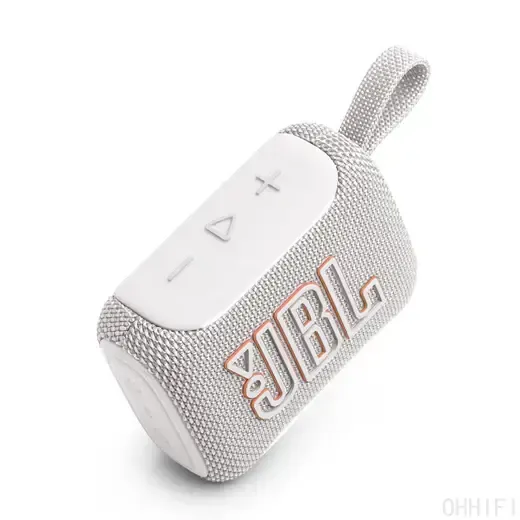
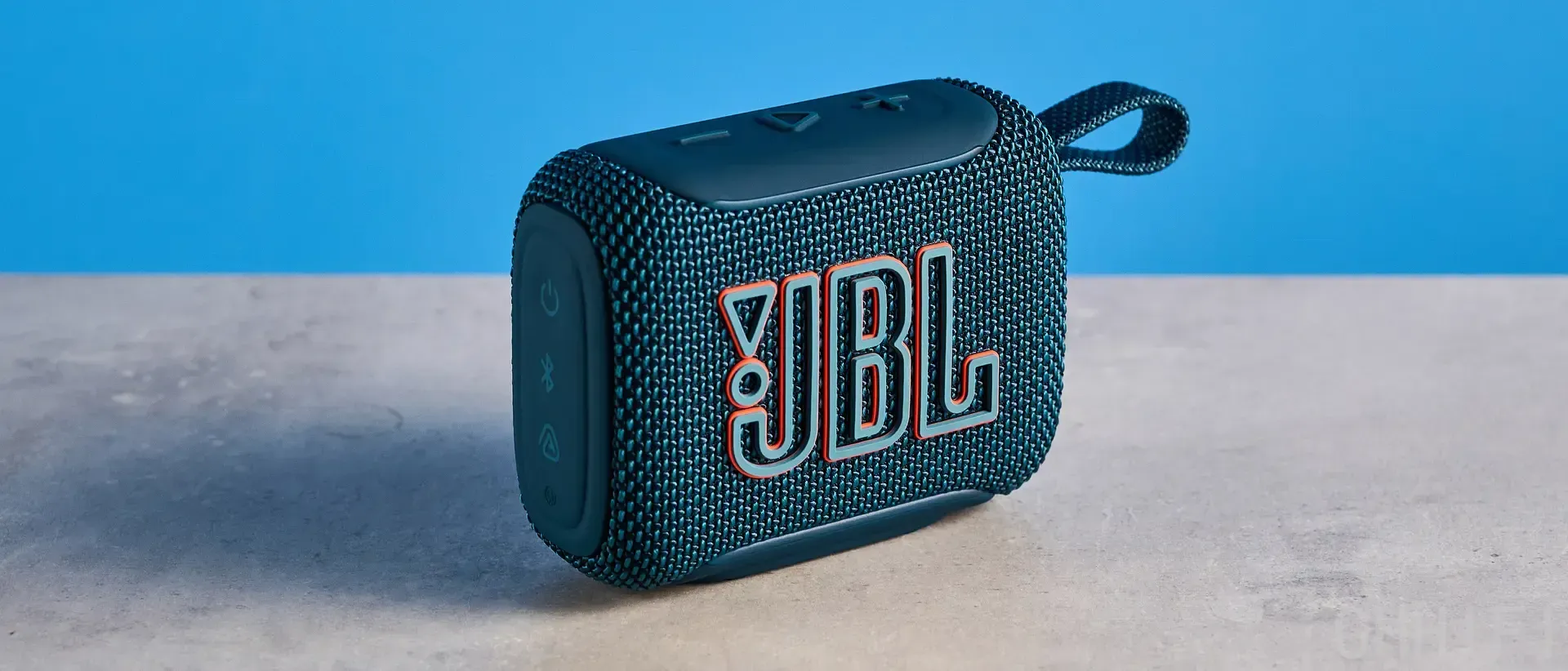
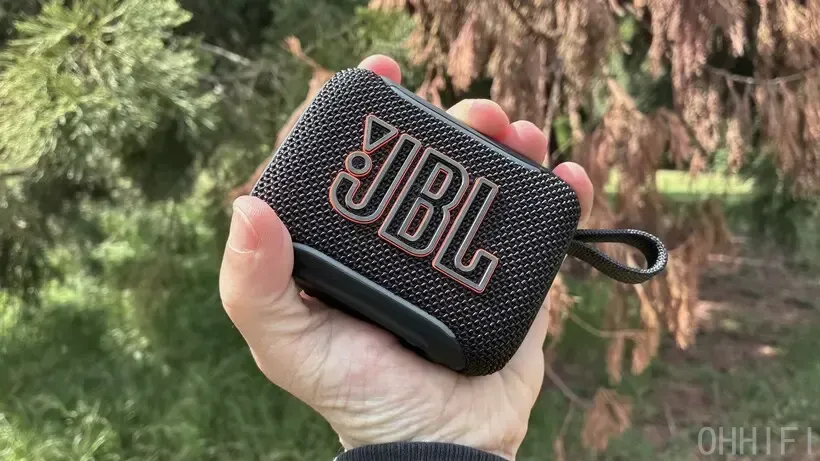
If you've held a Go 4, you've basically held a Go 5 — it's a hair larger, around 40 grams heavier, and the front face has been redrawn so the "JBL" logo is now hollowed out instead of printed flat. JBL claims this lets the driver breathe more freely; whether that's the bass improvement I'm hearing or just a tuning change is a fair question, but the visual update is welcome regardless.
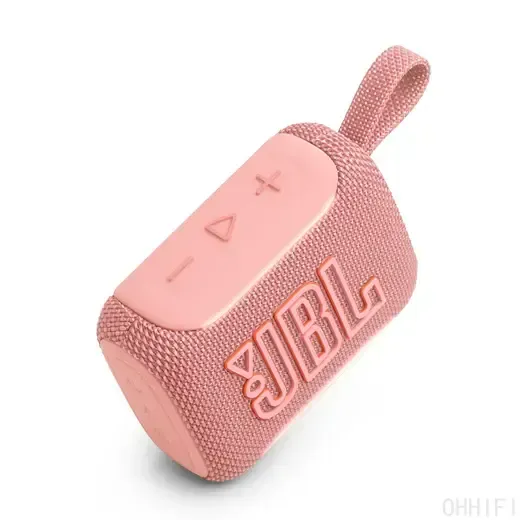
The new bit is the LED lighting. Two thin strips run along the top and bottom of the front face, with four preset themes — Bounce, Loop, Switch, Freeze — switchable through the JBL Portable app. You can't change the colour (it matches the speaker's body), and that's a minor gripe. If you bought the purple one, you get purple light. The Xtreme 5 lets you customise colour properly. The Go 5 doesn't. Fine. It's $50.
Build quality is honestly excellent for the price band. Rubberised silicone wraps the edges, the buttons up top have proper tactile feedback, and the carry loop at the corner is sewn-in rather than glued. The IP68 rating is a step up from the Go 4's IP67 — it'll handle full submersion plus a drop or two. I gave one a hose-down off the patio, dropped it twice from waist height onto pavers (not on purpose the second time), and it played through both events without complaint.
One legitimate annoyance: there's no USB-C cable in the box. JBL frames this as an e-waste reduction move, which is fine in 2026, but if you're someone who happens to be giving a Go 5 as a gift or buying for a relative who's still on the Lightning ecosystem, factor that in.
The Listening Experience
A 45mm driver pushing 4.8 watts is going to sound like a 45mm driver pushing 4.8 watts. The laws of physics still apply. What surprised me — and what every other independent review I read seems to agree on — is how much further JBL has pushed within those constraints.
Bass
I started with Massive Attack's Angel expecting comedy, and instead got something I genuinely didn't expect. The opening bassline doesn't go deep — anything below about 100 Hz is gone or heavily processed — but the mid-bass thump that drives the track has actual weight and timing. The 14% power bump over the Go 4 (4.2W to 4.8W RMS, per JBL's own spec sheet and confirmed by the MyChooz teardown) shows up most clearly here. Daft Punk's Get Lucky is similarly punchy without falling apart at the seams.
What it cannot do — and don't let any "deep bass" marketing tell you otherwise — is reproduce sub-bass with any conviction. The kick on a track like Bonobo's Cirrus loses its sense of scale entirely. SoundGuys made the same observation, calling the upgrade "not a night-and-day sound difference from the Go 4," and they're not wrong about the absolute floor. What's changed is the speaker's composure when it's working hard.
Midrange
This is where the Go 5 actually impressed me. Bill Withers' Ain't No Sunshine — a track I've used on every speaker I've reviewed since I started OHHIFI — comes through with the right kind of warmth and intimacy. Withers' voice has body, not just presence. Adele's Hello sits forward in the mix without sounding shouty until you push the volume past about 75%, at which point the upper mids start to get a bit pinched. Below that ceiling, this is the most honest midrange I've heard from a sub-$60 speaker.
A track like Steely Dan's Aja — densely produced, layered with detail — predictably loses a lot of texture. The hi-hats blur, the bass guitar smears into the kick, and Wayne Shorter's solo loses its top air. But the central vocal line and the rhythm section's groove come through cleanly. That's a remarkable trick at this size.
Treble
The top end is the Go 5's softest area. Cymbals on Paul Simon's Graceland sound politely rolled off rather than crisp, and there's a slight grainy quality to high-frequency transients when you push the volume. This isn't a complaint so much as an acknowledgment — there's no tweeter, just one driver covering everything, and the tuning prioritises midrange clarity and bass impact over treble sparkle. Reasonable tradeoff for a single-driver mono speaker.
Soundstage
It's a mono speaker. There is no soundstage. What it has is a coherent, focused point source that's easy to listen to in a small space. Pair two via the new AirTouch feature — tap two Go 5s together and they bond into a stereo pair almost instantly — and you get something that approaches actual stereo imaging across a desk or kitchen island. That's the recommendation if you're serious about this. Two of these for $100 is genuinely the right answer for a small-space stereo-portable setup.
The Lossless USB-C Story
The headline feature, and the one that audiophile readers will care about. Plugged into my desktop chain via USB-C — solid-state DAC bypassed, since the Go 5 is now its own DAC — the speaker reproduces 24-bit/96kHz files cleanly. Is the difference between Bluetooth (SBC/AAC/LC3) and lossless USB-C audible on this driver? Marginally. There's a small but consistent improvement in transient definition and a slight cleaning-up of the upper midrange. Whether that justifies the cable run depends on how you use the thing. If it lives on a kitchen counter, plug it in for the evening. If it's clipped to a backpack, who cares.
The point is that JBL has put a competent USB DAC in a $50 speaker, and that's a genuine capability bump for the category, not just a marketing line.
Test Setup
The bulk of evaluation was over Bluetooth from my phone — because that's how this speaker is actually used 95% of the time, and reviewing it through anything else would be missing the point. For the lossless USB-C testing, I ran it from my desktop chain via a USB-C cable, with the Go 5 acting as its own DAC and amp. I also did A/B comparisons against an iPhone's built-in speakers (the original sin the Go 5 is supposed to fix), and against a borrowed Go 4 for generational context.
Listening environments were where these things actually live: kitchen counter, bedside table, an outdoor garden bench, and one full pool-deck session that confirmed the IP68 rating is real.
Measured Performance
There's no Audio Science Review or Crinacle-style measurement suite I'd point you at for the Go 5 — these portable Bluetooth speakers don't get the same workup as headphones or DACs, and I'd be making things up if I cited specific frequency-response numbers. What's confirmed across multiple independent teardowns and JBL's own published specs:
- Driver: 45mm full-range, same physical size as the Go 4
- Output: 4.8W RMS, a 14% increase over the Go 4's 4.2W
- Battery: 1000 mAh (same capacity as Go 4 — JBL gained an hour of runtime through power-management improvements rather than a bigger cell)
- Charge time: roughly 3 hours from empty (5V/1A, per the MyChooz technical breakdown)
If you want measured frequency response data for ultraportable speakers, RTINGS is the most reliable English-language source I'm aware of, though as of this writing they haven't yet posted formal Go 5 measurements. I'll update this when they do.
The Competition
| Rival | How it stacks up | My call |
|---|---|---|
| JBL Go 4 ($30–40 street) | Same driver size, 4.2W vs 4.8W, IP67 vs IP68, 7hr battery, no lossless USB-C, no LED lighting | If you can find it under $35, it's the better value. Above that, get the Go 5. |
| JBL Clip 5 ($79) | Larger 1.75″ driver, 7W, 12hr battery, integrated carabiner, no lighting, no AirTouch | Better outright sound and battery; pay the extra if you actually clip it to things. |
| Tribit Stormbox Micro 2 ($46–59) | 10W output, IP67, 12hr battery, but 415g (nearly 2× heavier), no lossless USB-C, no app polish | Bigger sound, bigger weight. Better if it lives in one place; worse if you actually carry it. |
| Tribit Stormbox Micro 3 (~$65) | New successor, untested in my chain — early reports suggest similar tuning to Micro 2 with mild refinements | Worth watching. Reserve judgment until full testing. |
| Bose SoundLink Micro ($99) | Warmer, fuller bass via passive radiators; older Bluetooth 4.2; micro-USB charging; 6hr battery | Sounds better in some ways, but it's a 7+ year old design at twice the price. Hard to recommend in 2026. |
The Go 5's competitive position is clear: at the under-$60 ultraportable tier, it's the most polished package, mostly because of the lossless USB-C trick and the AirTouch stereo pairing. If you're willing to size up and pay more, the Clip 5 is the better speaker. If you want maximum bass-for-volume at the price, the Stormbox Micro 2 still wins on raw output.
The Verdict — 8.5/10
This is a small speaker doing small-speaker things very well. JBL hasn't done anything revolutionary — it can't, the form factor doesn't allow it — but every iterative upgrade is real: more power, better waterproofing, longer runtime, an actually-useful stereo-pairing trick, and a USB-C DAC that pulls the Go line into territory it didn't occupy before. After a week of listening, I find myself reaching for it as a kitchen and travel speaker, which is exactly what it's for.
The half-mark deduction is for the things that nag: no cable in the box at this price is petty, the lighting customisation is intentionally crippled to push you toward the Xtreme 5, and 3 hours to charge a 1000 mAh battery is genuinely slow. None of those are sound-quality issues, but they're the kind of finishing touches that would make this an unambiguous full-marks recommendation.
Pros
- Genuinely improved bass and midrange over the Go 4, especially in the mid-bass region
- Built-in 24-bit/96kHz USB-C DAC at this price is unprecedented
- AirTouch stereo pairing actually works — bump two Go 5s together and you have a stereo pair
- IP68 rating with drop resistance handles real-world abuse
- 7-band EQ in the JBL Portable app gives meaningful tonal control
- Excellent build quality and seven colour options
Cons
- Single-driver, single-channel mono — no stereo without a second unit
- Upper mids get pinched above ~75% volume
- Lighting can't be colour-customised in software
- No USB-C cable supplied in box
- 3-hour charge time is slow for a 1000 mAh cell
- Sub-bass is, predictably, absent
Who Should Buy
This is for you if you're upgrading from your phone speaker and want something credible for the kitchen, the bathroom, the patio, or a hotel room — and you don't want to think about it again for years. It's also a smart pick if you're buying two for stereo, which I'd actually recommend over a single Clip 5 at a similar total price. And if you've ever wanted a halfway-decent USB DAC on the go, the Go 5 is now quietly that, in addition to being a Bluetooth speaker.
Look elsewhere if you need real bass extension (sub-80 Hz is gone — a Stormbox Micro 2 or Bose SoundLink Micro will do better), if you need to clip it to things (get a Clip 5), or if you already own a Go 4 that you're happy with. The upgrade isn't dramatic enough to justify replacing a working Go 4.
For first-time buyers in this category, though? It's the one I'd point them at.

Comments