

Sony WF-1000XM6 Review: The King Is Back, But Not Without a Crack

Our Take
Here’s the TL;DR on Sony’s new flagship.
The Good
Best-in-Class ANC: The noise cancellation is simply unmatched. It has been upgraded to muffle not just low-end rumble but also higher-frequency, inconsistent sounds like human voices.
Stellar Call Quality: An AI-powered, multi-microphone system delivers "class-leading" voice clarity. It effectively isolates your voice, even in windy, noisy street conditions.
The Fold is Back: In a welcome course correction from the XM5, Sony has brought back the folding hinge, making the XM6 far more compact and travel-friendly.
Excellent Battery Life: With a tested battery life of approximately 37 hours with ANC on, it comfortably outlasts its direct rival from Bose.

The Bad
Shallow Earcups: This is a "clear weak point". The redesigned pads are shallow, causing many users' ears to press against the inner driver assembly, which can become painful during long sessions.
No USB-C Audio: A "glaring omission". While competitors are adopting USB-C for audio passthrough, the XM6’s port is for charging only. This is a baffling step backward for a premium 2025 headphone.
No IP/Water Resistance: Once again, Sony has skipped any official IP rating for water or sweat resistance, making them a risky choice for the gym or a rainy commute.
Premium Price: The $450 launch price represents a $50 increase over the XM5, placing it firmly at the top end of the market.
The Bottom Line
The Sony WF-1000XM6 is a technical marvel. It confidently reclaims the dual crowns of active noise cancellation and voice-call quality, making it a near-perfect tool for frequent flyers and remote professionals. However, this is a complicated recommendation. A divisive new fit, baffling feature omissions, and—most critically—deeply alarming reports of the same hinge failures that plagued its predecessor make this $450 purchase a potential gamble.

1. The Fold is Back: Design and (Shallow) Comfort
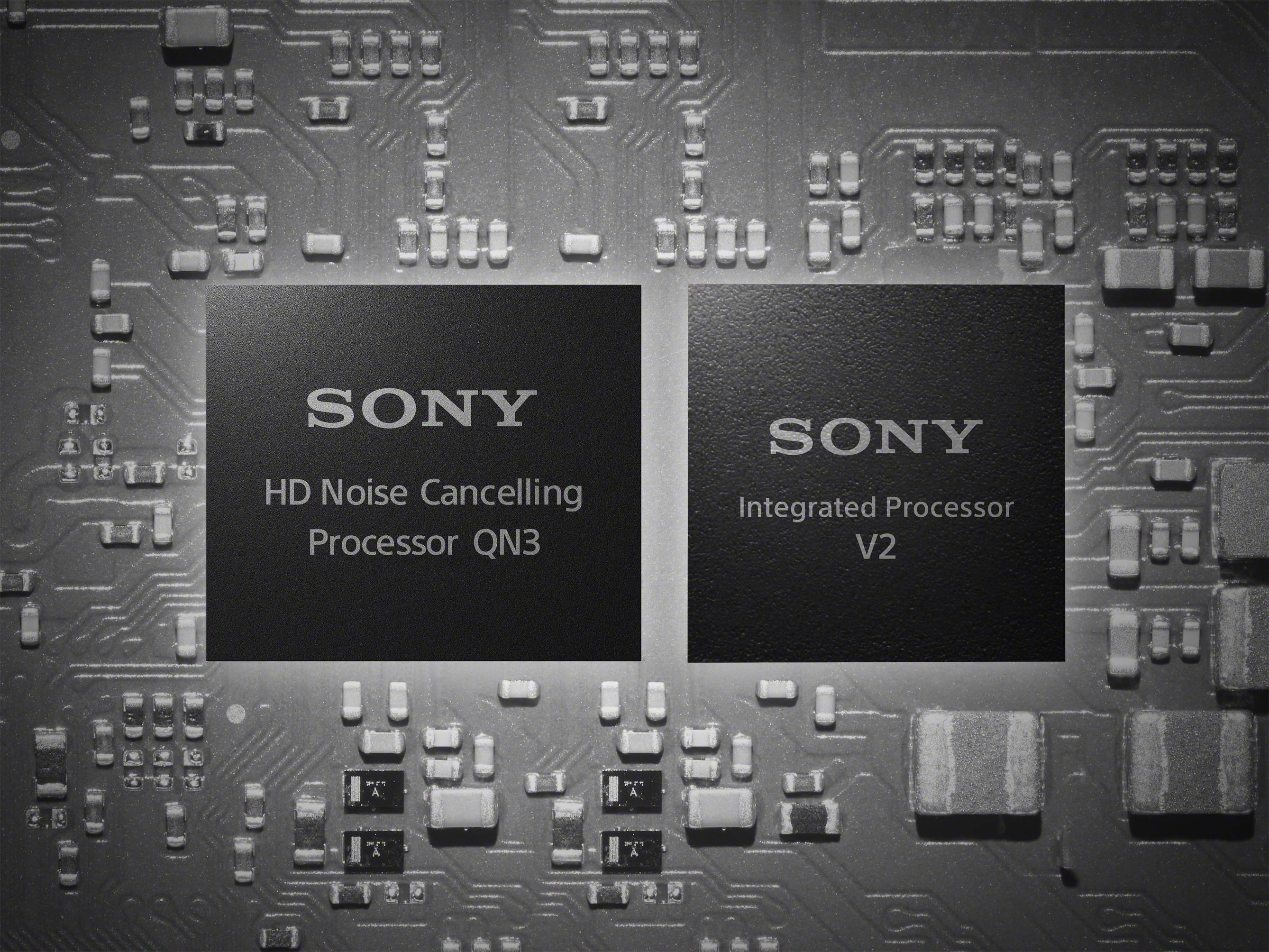
Sony listened. The single biggest complaint about the WF-1000XM5 was its "no-fold" design, which made its travel case bulky and impractical. The WF-1000XM6 fixes this, and then some. The beloved folding hinge is back, allowing the headphones to pack down into a much slimmer, more compact, and more functional carrying case.
This isn't just a simple return to the XM4 design. The new hinge system utilizes a metal component, presumably to enhance durability—a topic we'll return to. Sony also fixed other small but persistent user gripes from the XM5. The power button is now round and recessed, making it easily distinguishable by touch from the flat NC/Ambient button next to it. It’s a small tweak that has a real, positive effect on daily use.
But just as Sony fixed one major flaw, they may have introduced a new one: comfort. The XM5 was often criticized for having a loose fit. Sony clearly took this feedback, as the XM6 has a "snug fit" with a "substantially higher" clamping force. The upside? These headphones feel stable. One reviewer noted they could perform sit-ups without the XM6 falling off, something unthinkable with the XM5. This tighter clamp, combined with new pads, creates a "more stable 'seal'", which is critical for consistent ANC performance.
Here's the unintended consequence. This new "snug" design has a "clear weak point". Across multiple reviews and user forums, the earcup design is cited as "too shallow". This isn't a minor nitpick. Users report their ears "touch the inner part" or "chafe against the inner driver assembly", which can become "painful after about 20 minutes". This is compounded by what some describe as "minimal headband padding".
Sony has traded the legendary, universal, all-day comfort of the 1000X series for a more specific, secure fit. The XM6 may be more stable for active users, but it's now potentially less comfortable for anyone with larger or more prominent ears. For a headphone whose primary market is long-haul travelers, this is a very risky gamble.

2. The Sound: Big Bass, Small Room
Let’s get this out of the way: out of the box, the WF-1000XM6 is not tuned for audiophile neutrality. Like its predecessors, the factory setting can come across as "muffled", "veiled", and "bloated". The tone is "thick", and the bass, while powerful, "lack[s] definition".
But that’s what the app is for. The real audio potential is only unlocked after diving into the Sony Headphones Connect app, which now features a welcome 10-band equalizer (a big step up from the old 5-band). A few minutes of tweaking to clear the bloat reveals a "much improved" and highly capable sound signature.
The "star of the show is its massive bass response". For bass-heads, this is a gift. The XM6 delivers significant "slam" and "impact", with a punchy, powerful low end. Once EQ'd, this bass becomes "cleaner and controlled" while retaining all its satisfying rumble.
Where the XM6 truly steps up from the XM5, however, is in the mids and highs. The midrange is more "forward" and "rich", with a "natural" tone. Vocals are clearer and exhibit better "separation" from the mix. The new drivers retrieve "subtle details" and "texture" in a way the XM5’s recessed midrange simply could not. The treble is "smoothed" and "airy", avoiding any harsh sibilance.
But there is one major audiophile complaint: the soundstage. The perceived width and depth of the music (the "soundstage") is consistently described as "small", "narrow", "compressed", and "in your face".
This isn't a defect; it's a direct tradeoff for the design philosophy. The WF-1000XM6 is an ANC-first headphone. Its "stable seal" and closed-back architecture are engineered for one primary goal: maximum isolation. This goal is fundamentally at odds with the "open-back" feeling that creates a wide, spacious, and airy presentation. As one review noted when comparing the XM6 to the audiophile-grade Focal Bathys, the Sony "relies heavily on DSP tricks" to simulate spaciousness, and it "won't fool seasoned listeners". The XM6 can sound excellent, but it will never sound spacious.

3. Silence, Redefined: Active Noise Cancellation
This is Sony's home turf. For the past few years, the ANC crown has been traded back and forth, but the WF-1000XM6 is here to "reclaim the throne".
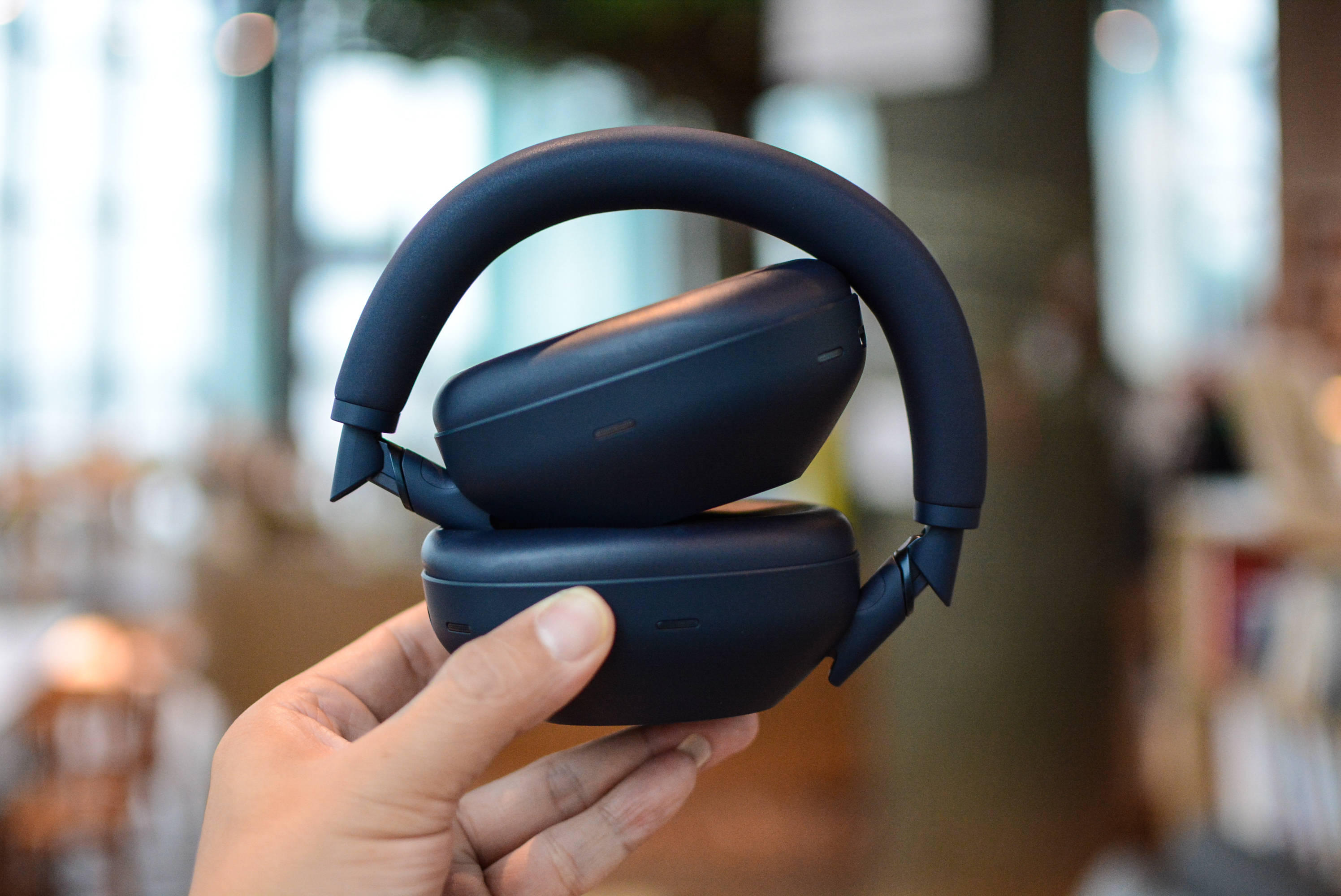
The performance leap is driven by two key hardware upgrades: the new HD Noise Canceling Processor QN3 and an increased microphone array, now totaling 12 mics (up from 8 on the XM5). The new QN3 chip is reportedly "seven times faster" than the QN1 found in the XM5.
This processing speed isn't just a marketing number; it's the key to the XM6's advantage. Older ANC was excellent at canceling predictable, low-frequency sounds like the rumble of a train or an airplane engine. But canceling unpredictable, higher-frequency sounds like human chatter requires a processor that can detect, analyze, and deploy an inverse sound wave in milliseconds.
This is precisely what reviewers are reporting. The XM6 does a "remarkably good job muffling sound across an even wider range of frequencies". It is significantly better at handling "inconsistent, random noises" and "higher frequencies". This means that in an office or a cafe, co-worker voices are "even more toned down". The new Adaptive NC Optimizer uses this speed to adapt the cancellation in real-time as you move through different environments.
But what about the main event: the showdown with Bose? In lab testing, the XM6 takes a slight but measurable lead, with one test showing it reduced average loudness by 87%, while the Bose QuietComfort Ultra achieved 85%. Realistically, this is "not a dramatic difference"; both are at the absolute top of the ANC game. However, some give the qualitative edge to Sony, calling its ANC "more natural, sophisticated or subtle" compared to the Bose.
The only "catch" is that Bose's deeper, plusher earcups might provide a "more consistent seal" for some users. But on pure technical capability, Sony has edged ahead. The king is back.
4. "Can You Hear Me Now?" (Yes, Perfectly): Call Quality
While the ANC improvement is an iterative win, the call quality is a total knockout. The WF-1000XM6 isn't just a headphone; it's a "class-leading" communications device.
Sony is using a "stellar" AI-powered, multi-mic beamforming system. This system uses its array of microphones to "home in on your voice" and create a filter that actively cancels out environmental noise.
And it works. This is where the XM6 "smokes" the competition. In standardized lab tests, the microphone array was a "standout," handling reverberant, echo-filled rooms with ease and performing "really good" in windy conditions, with only "a little bit" of struggle.
The real-world proof is even more impressive. One review, conducting calls from the "noisy streets of New York," reported that callers "thought I was inside" and could "barely hear any background noise". The consensus is that the call quality is a "solid step up" from the already-great XM5 and is demonstrably better than the Bose QuietComfort Ultra, Bowers & Wilkins Px7 S3, and even the Apple AirPods Max. For any remote worker or executive, this feature alone could justify the price.

5. The Good, The Bad, and The Missing: Features & Battery
A headphone's daily experience is defined by more than just sound and silence. Here, Sony's scorecard is mixed.
Battery Life: Solid, but Not Chart-Topping
In standardized tests (ANC on), the WF-1000XM6 clocks in at 37 hours and 14 minutes. This is a solid improvement over the XM5's ~32-hour runtime and a significant win over its main rival, the Bose QC Ultra, which logged only ~27.5 hours.
However, the XM6 is dwarfed by the battery champion, the Sennheiser MOMENTUM 4, which boasts a "ridiculous" 56+ hours of playback. This makes Sony's choice clear: it balanced performance and battery. The power-hungry QN3 chip and 12-mic array deliver a best-in-class experience, but at the cost of best-in-class endurance. Still, 37 hours is more than enough for the longest-haul flights.

The Big Omissions
This is where Sony fumbled the ball. For a $450 flagship, these omissions are baffling.
No IP/Water Resistance: For the sixth generation, Sony has still omitted an official IP rating for water or sweat resistance. This remains a "glaring omission". Despite the new "snug fit" that would seem to make them suitable for a light workout, you cannot safely use them in the rain or for a heavy gym session. It's an inexcusable miss.
No USB-C Audio Passthrough: This is perhaps the most frustrating decision. The USB-C port on the WF-1000XM6 is for charging only. You cannot use a USB-C cable for a wired digital audio connection. This is an unforced error. The market is standardizing on USB-C for audio; competitors from Apple, Beats, and Sennheiser are already on board. Sony has effectively knee-capped its product's future-proofing.
To be clear—and to resolve a point of confusion—you can "listen while charging". This simply means Sony fixed a major annoyance from the XM5: the headphones no longer shut down if you plug in the charging cable while listening via Bluetooth or the 3.5mm jack. But this is not the same as USB-C audio. Sony has given us future-proof wireless codecs like LC3 and LE Audio while omitting the future-proof wired standard.
6. The Elephant in the Room: A Crack in the Crown
This is the part of the review that is hardest to write, but it's the most important. The WH-1000XM5 was infamous for its "fragile hinge" and the widespread reports of durability failures. The WF-1000XM6, with its redesigned headband and new metal hinge component, was supposed to be Sony's "redemption".
It's happening again.
An investigative report from SoundGuys details that "Reddit is once again filling with photos of broken Sony headphones". Users are reporting cracked headbands and separated slider mechanisms, with failures sometimes occurring "within weeks" of purchase.
A user-submitted teardown (cited in the report) suggests this may not be a design flaw but a critical manufacturing one. The new mechanism's threaded nut was allegedly "insufficiently tightened" at the factory. This quality-control issue causes the hinge to work itself loose and fail, even with normal, careful use.
But here is the real kicker: Sony's alleged warranty response. It's not just that the headphones can break. It's that when they do, Sony is reportedly systematically denying warranty claims. Multiple users state that support classifies these failures as "physical damage," which is not covered by the warranty—even when there is no sign of misuse. Sony's "solution"? Offering a replacement for $390—a paltry discount off the $450 retail price.
This is a massive consumer risk. Sony is, in effect, transferring the financial liability of its own alleged quality-control failure onto its customers.
7. The XM6 vs. The World (Competitor Showdown)
How does the XM6 stack up against its main rivals? A $450 headphone doesn't exist in a vacuum.
Flagship ANC Showdown (2025)
| Feature | Sony WF-1000XM6 | Bose QuietComfort Ultra | Sennheiser Momentum 4 | Sony WH-1000XM5 (Discounted) |
| MSRP | ~$450 | ~$429 | ~$399 | ~$250 - $300 |
| ANC (Our Rating) | Best-in-Class | Excellent | Good | Excellent |
| Call Quality | Best-in-Class | Good | Good | Great |
| Tested Battery | ~37 Hours | ~27.5 Hours | ~56 Hours | ~32 Hours |
| Sound Profile | Bass-heavy; "narrow" stage | "More sub-bass rumble" | More neutral; wide stage | "Warmer" tuning |
| Portability | Folds | Folds | Folds | Does Not Fold |
| Key Flaw | Durability Concerns; Shallow Cups | Lower battery; ANC trails | ANC trails Sony/Bose | No fold; Hinge issues |

...vs. Bose QC Ultra: This is the classic battle. The XM6 wins on ANC (by a hair), call quality (by a lot), and battery life. Bose, however, likely wins on out-of-the-box comfort due to its deeper, plusher earcups. The choice: do you want the best mics (Sony) or potentially the most comfortable fit (Bose)?
...vs. Sennheiser Momentum 4: This is a different value proposition. The Momentum 4 destroys everything on battery life and is often preferred by audiophiles for its more neutral sound and wider stage. But its ANC and mics, while good, "fall short" of the Sony. The choice: best battery (Sennheiser) or best ANC (Sony)?
...vs. a discounted XM5 or XM4: This is the value play. A discounted XM5 offers 90% of the ANC performance, but it still doesn't fold. The classic WH-1000XM4 does fold, has a "friendly" sound, and can be found for "sub-$250 flashes". The XM6 is only worth the $200+ premium if you must have the absolute best-in-class ANC and mics and the folding design.
8. Final Verdict: Who Should Buy This?
The Sony WF-1000XM6 is a product of "excellence, not perfection". It is an aggressive, iterative update that successfully reclaims the "best-in-class" title in the two categories that matter most to its core audience: noise cancellation and call quality.
Who It Is FOR:
The Frequent Flyer: This is the prime customer. The combination of the new folding design, a stellar 37-hour battery, and world-beating ANC that now silences voices makes it the ultimate travel companion.
The C-Suite / Remote Worker: This is the person on back-to-back video calls. The "class-leading" microphone performance is a genuine productivity tool that "smokes" the competition. It's a professional-grade headset disguised as a luxury headphone.
Who It Is NOT FOR:
The Audiophile: The "small" and "compressed" soundstage will be a letdown. Look at the Focal Bathys or Sennheiser Momentum 4 instead.
The Gym-Goer: The lack of any IP rating makes this a $450 bet you will lose against sweat.
The Value-Conscious: The $450 price is incredibly steep when the WH-1000XM4 and XM5 are still "classic" options available for a fraction of the cost.
And that brings us to the Wary Consumer. Given the alarming and credible reports of hinge failures and Sony's alleged warranty denials, we cannot recommend this product without a strong caveat: If you buy the WF-1000XM6, buy a third-party extended warranty.



Comments