When audiophiles hear the name "ELAC," two very different images often come to mind. The first is the disruptor—the brand that, with designers like Andrew Jones, redefined what is possible in entry-level audio, making the Debut series a household name.
The second image is the one ELAC’s German engineering division, based in Kiel, has cultivated for nearly a century: the "other" ELAC. This is the ELAC of "cost-no-object" design, state-of-the-art technology, and audacious, benchmark-setting flagships. The Concentro series is the pinnacle of that philosophy, born from the company's 90th-anniversary statement piece.
The Concentro M 2.0 we're reviewing today is the "Medium Meets Magic" model. It’s an attempt to distill the essence of its gargantuan bigger brother into a slightly more compact (though, at 90 kg, "compact" is relative) floorstander. It’s a direct shot at the ultra-high-end landscape, designed to surpass the "most ambitious designs in today's audiophile landscape".
But does the M 2.0 deliver on this monumental promise? We dove in.
The Design: Form Follows Function (Mostly)
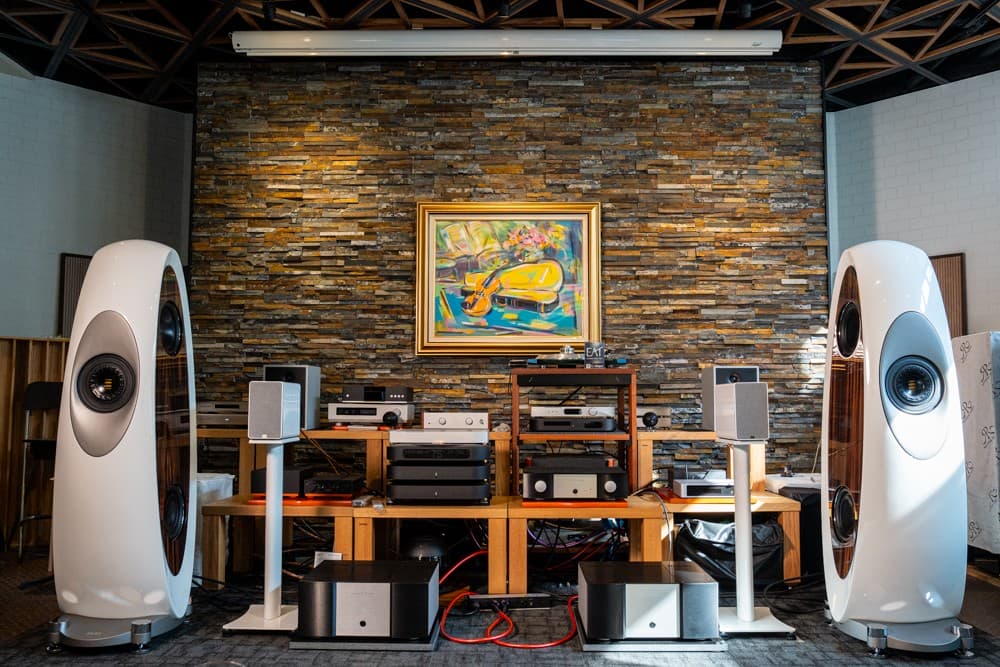
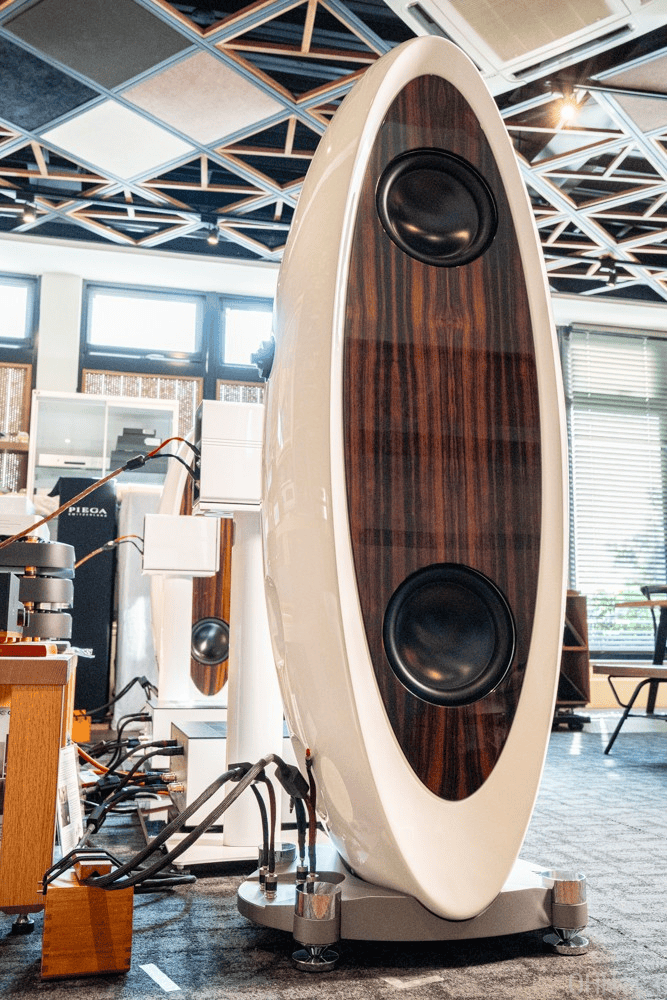
Unboxing the Concentro M 2.0 is an event. At 1.45 meters (57.1 inches) tall and weighing 90 kg (198.4 lbs) apiece, these are not speakers; they are sculptures.
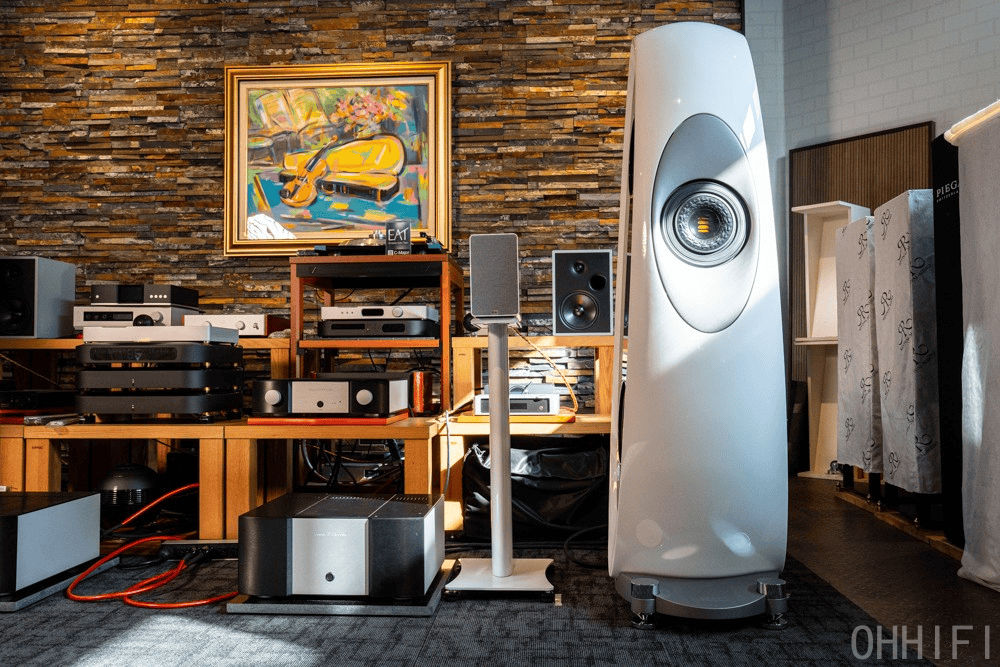
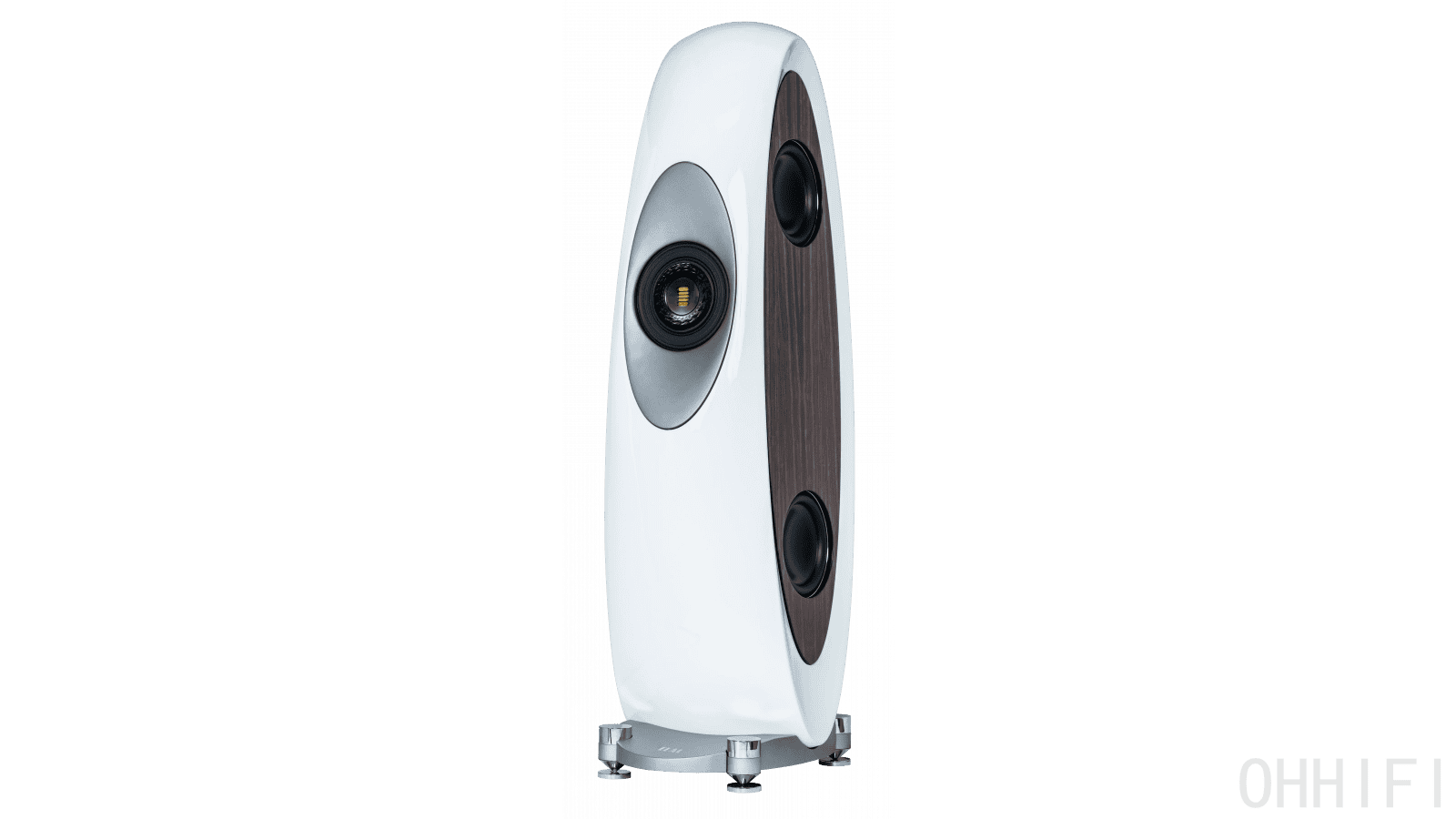
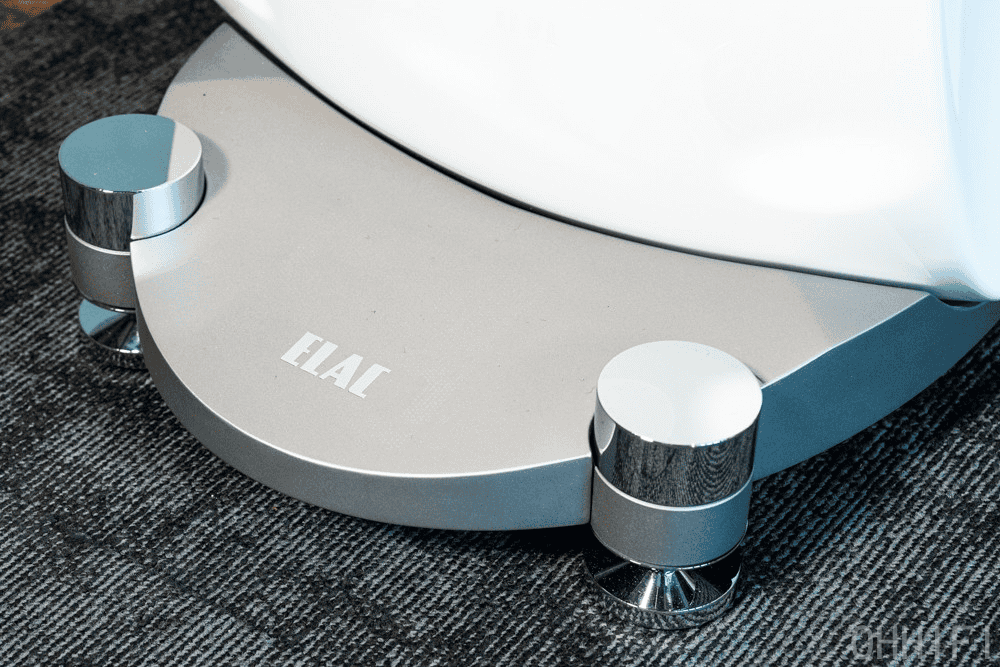
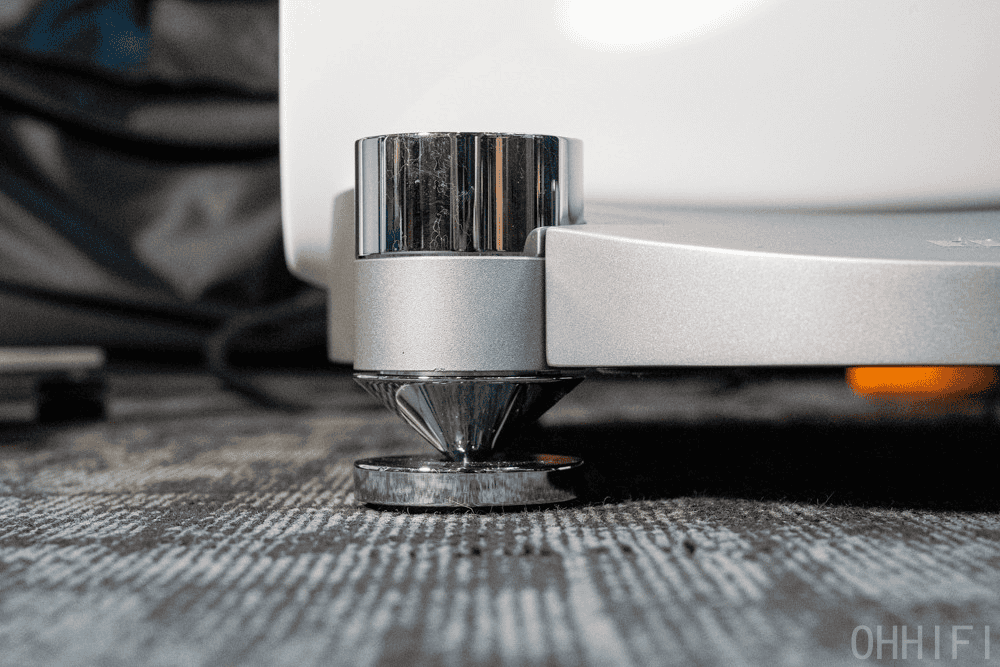
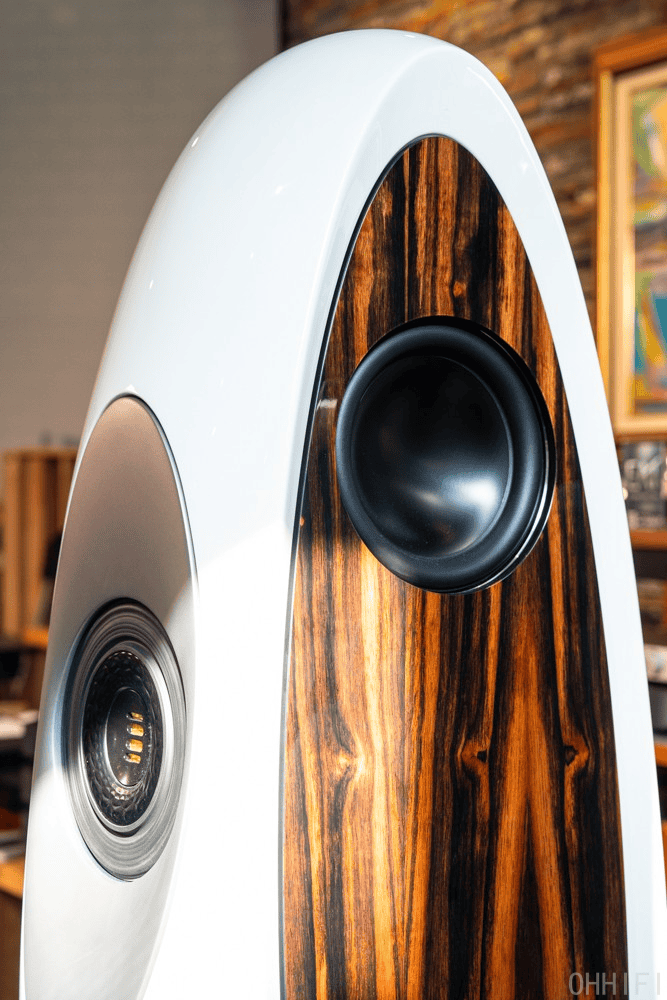
The aesthetic is "audacious". It’s a "bold oval shape" that looks less like a traditional box speaker and more like an "alien monolith". Finished in a deep, high-gloss lacquer (available in black or white) and accented with meticulously milled aluminum, the M 2.0 is undeniably a "masterpiece of form and function".
But this shape isn’t just for show. In high-end speaker design, a flat, parallel-surface box is the enemy. It creates internal standing waves and cabinet resonances that "color" the sound. The M 2.0’s "curvy cabinets" and "non-parallel surfaces" are precisely engineered to "mitigate internal standing waves" and "eliminate unwanted resonances". The cabinet is designed to be acoustically inert—to be invisible, leaving only the music.
The Technology: A Technical Tour-de-Force
This speaker is a 3-way, bass-reflex design, but that’s like calling a Formula 1 car a "4-wheeled vehicle". The real story is the trio of proprietary technologies ELAC has packed inside.
The Heart: A Concentric VX-JET
The core of the Concentro M 2.0’s sound is its concentric driver. This isn’t just a tweeter above a midrange; it’s a tweeter inside a midrange.
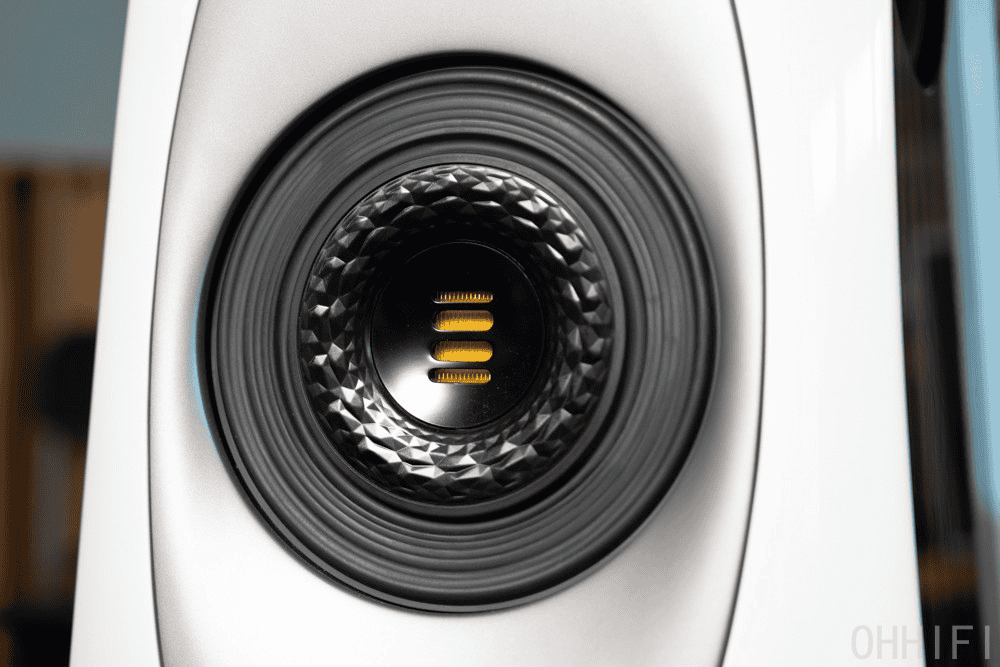
At the very center is ELAC’s legendary JET 5 tweeter. This is not a conventional dome. It is a "Folded Ribbon" tweeter, an Air Motion Transformer (AMT) that "squeezes" air rather than pushing it. It’s renowned for its "lightning-fast response," "wide dynamic range," and "minimal distortion," capable of extending to a sky-high 50 kHz.
This JET tweeter is mounted "concentrically" inside a 140mm (5.5-inch) "Aluminum/Paper" midrange driver, which itself functions as a "ring radiator". By placing both drivers on the "same acoustic plane", this coaxial design "approaches the ideal point source". In theory, this is the holy grail for creating a "flawless, pinpoint" soundstage where the sound originates from a single point in space.
The "Magic Knob": VX-JET Adjustability
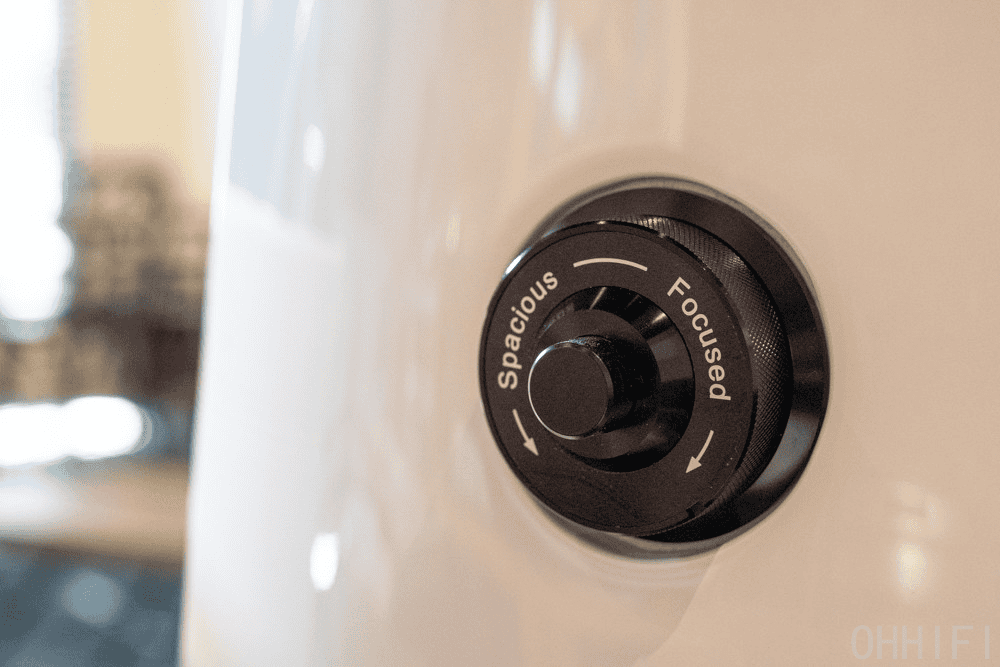
This is where it gets really clever. The entire concentric driver assembly is part of ELAC’s "VX Technology". A large knob on the rear of the speaker physically moves the entire VX-JET driver assembly forward or backward, in or out of the baffle.
Why? To tune the speaker to your room.
This is not a digital signal processor (DSP) or a simple tone control. This is a physical, acoustic adjustment of the speaker’s "dispersion characteristics".
In a "live" listening room (e.g., hardwood floors, lots of glass), you can recess the driver. This creates a more focused, direct sound, minimizing reflections from the side walls.
In a "dead" room (e.g., heavy carpets, thick drapes), you can push the driver forward. This increases the ratio of reflected sound, creating a more "spacious" and "airy" sound impression.
This is a level of manual, acoustic room-tuning that is almost unheard of in a passive loudspeaker, allowing the user to optimize the "balance between direct and diffuse sound".
The Bass Problem—Solved? The "Push-Push/Pull-Pull" Force-Canceling Woofers
For the low end, the M 2.0 employs four massive 220mm (8.7-inch) aluminum (AS) cone woofers. These drivers are side-firing, with two on each side of the cabinet.
They are arranged in an "innovative double push-push/pull-pull configuration". This is also known as "impulse compensation".
Translation: This is a direct application of Newton's third law. When a single large woofer "pushes" air, it exerts an equal and opposite force backward, causing the cabinet to vibrate. This vibration is distortion; it "colors" the sound, especially in the midrange.
ELAC’s solution is to have the woofers work in opposition. As the two cones on one side "push" out, the two on the other side "pull" in. The "forces exerted on the speaker by the two woofers cancel each other out".
The goal is to ensure that "resonances in the cabinet are completely eliminated". The drivers are working against the air, not the 90kg box. The intended result isn't just more bass; it's cleaner, more "unprecedented" dynamic bass reproduction.
The Specification Table (The Bill of Health)
Here are the vital statistics, verified from the technical data.
Feature
Specification
Design
3-Way, Bass-Reflex
Tweeter
1x JET 5 Folded Ribbon (Concentric)
Midrange
1x 140 mm (5.5") AS-XR Aluminum/Paper Ring Radiator
Woofer
4x 220 mm (8.7") AS Aluminum Cone (Side-firing, Push-Push/Pull-Pull)
Crossover Frequencies
180 Hz, 2.7 kHz
Frequency Range
24 Hz – 50,000 Hz
Sensitivity
88 dB (2.83V/m)
Nominal Impedance
4 $\Omega$
Minimal Impedance
2.8 $\Omega$ @ 380 Hz
Rec. Amplifier Power
80 – 600 W per channel
Power Handling (RMS/Peak)
300 W / 400 W
Dimensions (H x W x D)
1450 x 460 x 535 mm (with base, with spikes)
Weight
90.0 kg (198.4 lb)
Setup, Power, and Finding the Sweet Spot
A word of warning: these speakers are "demanding".
First, at 90 kg each, this is a two-person (preferably three-person) job. Wear the included gloves. Placement is also critical. With side-firing woofers and a bass-reflex design, they "definitely... need some space around, not close to walls".
Now, let's talk power. Let's be blunt. That 88 dB sensitivity and 4 $\Omega$ nominal impedance don't tell the whole story. The real story is the minimum impedance: 2.8 $\Omega$ at 380 Hz.
This is a warning label. It's German for "do not hook me up to your uncle's vintage receiver."
This speaker is a current-guzzling monster. It's "not easy to drive". It "Requires a bit of power" and a "strong, solid-state amplifier". The recommended 80-600W is no joke, and that amplifier must be stable into brutally low-impedance loads. If you underpower it, the amplifier will fail to control the drivers, resulting in "bloated" bass and "harsh" treble. You won't be reviewing the speaker; you'll be reviewing your amplifier's failure.
The Listening Sessions: Objective Analysis
Driven by an appropriate high-current amplifier (in the class of Burmester or EAR, which have been paired with Concentros at shows), the M 2.0’s true character emerges.
Overall Tonality and Timbre
The Concentro M 2.0 is "uncolored" and "neutral". This is an "analytical" tool, a "transparent" window into the recording. It does not "color" the sound or add "warmth". The "timbre"—the recognizable characteristic of an instrument—is reproduced with uncanny realism, free of the "nasal" or "congested" artifacts that plague lesser cabinet designs.
Highs: The ELAC Signature
The "legendary" JET 5 tweeter is the star of the high frequencies. Its "lightning-fast response" delivers "transients"—a cymbal crash, a high-hat's tssk—with startling speed and "clarity". With extension to 50 kHz, the sense of "air" and "brilliance" is boundless. It's simply "effortless". Yet, for all its "high-definition" detail, it is never "harsh" or sibilant. It is "smooth" and "sweet", a testament to its "minimal distortion" design.
Midrange: The Coherent Core
This is where the concentric driver pays its dividends. Vocals are "palpable". They are "focused" and "present," with zero "veiling". The transition from the midrange driver to the JET tweeter (at a 2.7 kHz crossover) is "seamless". This "coherence" is the M 2.0's superpower. It doesn't sound like a separate tweeter and a separate midrange; it sounds like a single, flawless source.
Bass: The Iron Fist
With four 8.7-inch woofers and a 24 Hz extension, you expect "slam". You get it. But that's not the story. The story is the quality of the bass.
The push-push/pull-pull design works. It is the very definition of "tight." There is absolutely zero "bloat", "boom", or cabinet "resonance". This is true "audiophile bass." It's not the "one-note" thud of a home theater sub. It's "textured", "fast," and "dynamic". You don't just hear the bass guitar; you hear the bassist's fingers on the strings. When a kick drum hits, it has "weight" and "impact" that you feel, but it starts and stops on a dime.
This is the clean, "linear bass where no note is sticking out" that sealed-box advocates dream of. The M 2.0 achieves the deep extension of a ported design (24 Hz) but with the control of a sealed one—the best of both worlds.
The Soundstage: The Point-Source Payoff
This is the "disappearing act". This is the cliché we all chase, and the Concentro M 2.0 delivers it.
Close your eyes, and the two 90kg "monoliths" vanish. In their place is a "flawless, pinpoint" 3D map of the recording. The "imaging" is "spectacular" and "razor-sharp." This is the "point-source" at work. It's "world-class."
The "soundstage" is "vast". It is exceptionally "wide" and "deep". But here's the magic trick: the VX-JET. Feeling like the stage is too "focused" for a large orchestral piece? Dial the knob forward. We were able to audibly "widen" the soundstage, making it more "spacious" and "enveloping". This is not a gimmick. It's a genuine tool for "optimizing the balance between direct and diffuse sound".
Market Context &Competitors (The Shootout)
A speaker at this price point (approx. $52,000 - $60,000 USD/CAD) doesn't exist in a vacuum. This is a brutal price bracket, and the M 2.0 competes directly with industry titans.
Magico M2 (~$63,600 w/ MPod base): This is a direct philosophical competitor. The M2 is also an "engineering-first" speaker, prioritizing "superbly uncolored" sound and "linear bass" through a high-tech, sealed, carbon-fiber enclosure.
Wilson Audio Alexia Series 2 (~$58,000): This is the dominant market benchmark, famous for its modular, time-aligned design and its powerful, "American" sound.
Other contenders in this "cost-no-object" territory include the Vandersteen Audio Model 7 Mk II and Sonus faber Lilium.
Against these, the ELAC M 2.0 and Magico M2 represent a specific "German school" of accuracy and low-distortion engineering. The M 2.0's key differentiator in this head-to-head fight is its adjustability. The Magico M2 is a static, sealed design. The Concentro M 2.0, via the VX-JET, adapts to the room—a significant practical advantage.
Conclusion: A Monument of Engineering
The ELAC Concentro M 2.0 is a "technical tour-de-force". It is an audacious, 90kg "statement" from a company that proves it can build a "benchmark" to rival any in the world.
Its three-part technological core—the pinpoint-imaging VX-JET concentric, the room-tuning variable dispersion, and the vibration-canceling push-pull woofers—are not gimmicks. They are engineering solutions that deliver audible, "spectacular" results.
It delivers on its promises: "world-class" imaging, "unprecedented" bass clarity, and a "transparent" window into the music.
It is, however, a "demanding" speaker. It demands space. It demands high-current, high-power amplification. And it demands a significant financial investment.
Is it for everyone? No. But for the serious audiophile who values engineering over coloration, who wants to hear their music without the "bloat" or "resonance" of a lesser design, and who relishes the ability to tune their system to perfection, the ELAC Concentro M 2.0 is a true "end-game" contender. It is, in every sense, a monument.





Comments