
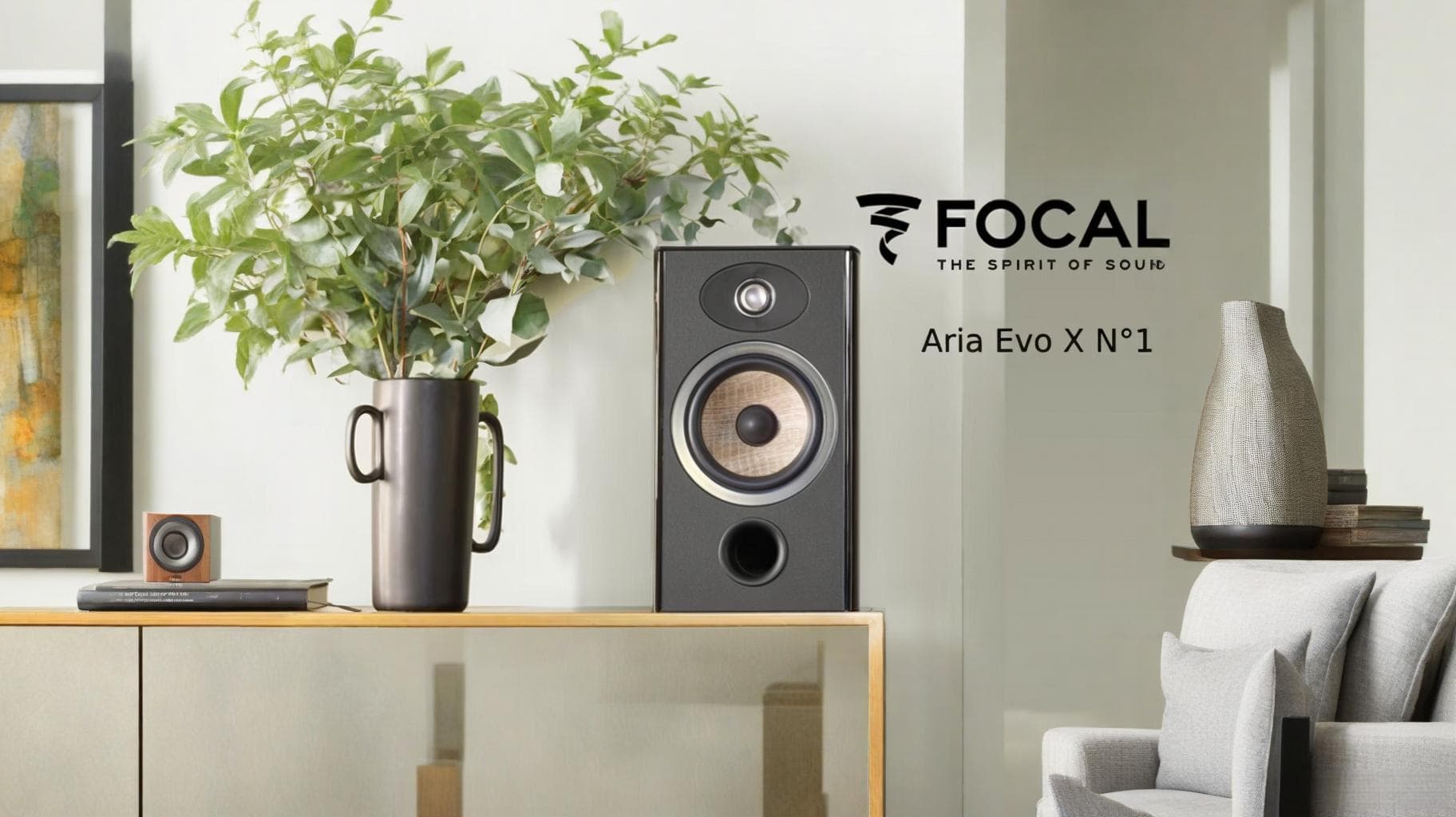
Focal Aria Evo X N°1 Review: The Definitive Analysis of a Modern French Masterpiece

Executive Summary and Introduction: The Evolution of Accessible Luxury
The landscape of high-fidelity audio is often characterized by a dichotomy: the approachable, mass-market consumer equipment that prioritizes convenience over absolute performance, and the esoteric, cost-no-object high-end that chases the last percentile of fidelity at the price of a luxury automobile. For over a decade, Focal’s Aria 900 series has stood resolutely in the gap, serving as a bridge for thousands of audiophiles transitioning from casual listening to serious critical appreciation. The original Aria 906 was not merely a loudspeaker; it was a cultural artifact in the audiophile community—a "safe harbor" recommendation that combined European refinement, aesthetic flair, and a sonic signature that prioritized musicality over clinical dissection.
However, in the fast-moving world of electroacoustics, a decade is an eternity. Since the Aria 900’s debut, competitors like KEF, Bowers & Wilkins, and Dynaudio have aggressively iterated, introducing metamaterials, continuum cones, and advanced waveguide geometries that have pushed the envelope of what is possible in the sub-$3,000 stand-mount category. The question facing Focal, the venerable French manufacturer based in Saint-Étienne, was profound: How does one update an icon without destroying its soul? How do you modernize the performance metrics of a beloved classic while retaining the "Je ne sais quoi" that made it special?
The answer is the Focal Aria Evo X N°1.
The Philosophy of "The French Sound"
To understand the Aria Evo X N°1, one must first contextualize the ethos of Focal-JMLab. Unlike the "British Sound," which historically leaned towards warmth, polite treble, and a mid-forward presentation (the famous "BBC Dip"), or the "American Sound" known for muscular dynamics, West Coast punch, and distinct V-shaped profiles, the "French Sound"—championed by Focal—has always chased a specific form of lucidity. It is characterized by speed, transparency, and a high-frequency response that is illuminating without being piercing. The French philosophy treats the loudspeaker as a window—clear, clean, and vanishing. The Aria Evo X N°1 is tasked with delivering this signature speed while integrating the organic warmth inherent to its unique cone material: Flax.
Section 1: The Legacy and The Leap – From 900 to Evo X
The transition from the Aria 900 series to the Aria Evo X is a study in iterative perfection rather than radical reinvention. This philosophy of iterative perfection is consistent across the entire updated lineup, as we’ve detailed in our comprehensive overview of the Focal Aria Evo X Series: Redefining French Audio Excellence, which explores how these advancements translate from this bookshelf unit up to the flagship floorstanders. The Aria 900 series, launched in 2013, was the first to introduce the Flax sandwich cone, a technology that replaced the Polyglass cones of the previous Chorus lines and offered a warmer, more textured alternative to the clinical "W" cones found in the Electra and Utopia series.
The Evo X N°1 enters a market that is significantly more crowded and competitive than the one its predecessor faced. In 2013, a $1,500 speaker was considered "mid-fi." Today, with inflation and the creeping prices of high-end audio, the $2,398 price point of the Evo X N°1 positions it firmly in the "entry-level high-end" category. This is a dangerous segment. It is populated by the KEF R3 Meta, with its Metamaterial Absorption Technology; the Bowers & Wilkins 705 S3, with its tweeter-on-top architecture; and the Dynaudio Evoke 20, with its legendary soft-dome smoothness.
To compete, Focal could not simply change the veneer. They had to trickle down technology from their flagship lines—the Sopra and Kanta. The "Evo" in the name signifies "Evolution," but the "X" perhaps marks the intersection of their various technological tiers: the Flax of the Aria, the TMD suspension of the Kanta, and the TAM tweeter profile that hints at the automotive audio excellence Focal is also known for.
Section 2: Technological Anatomy and Engineering Architecture
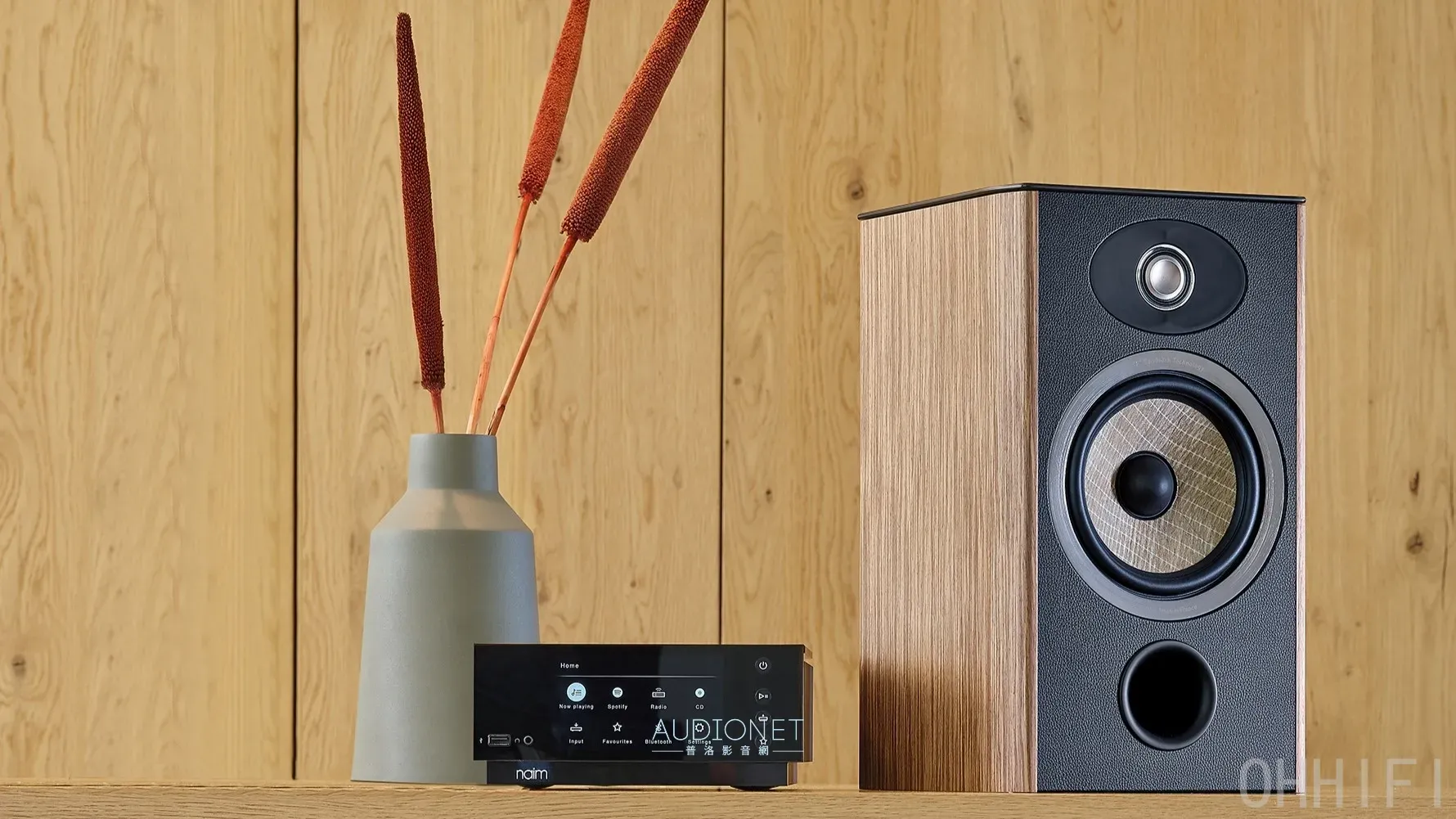
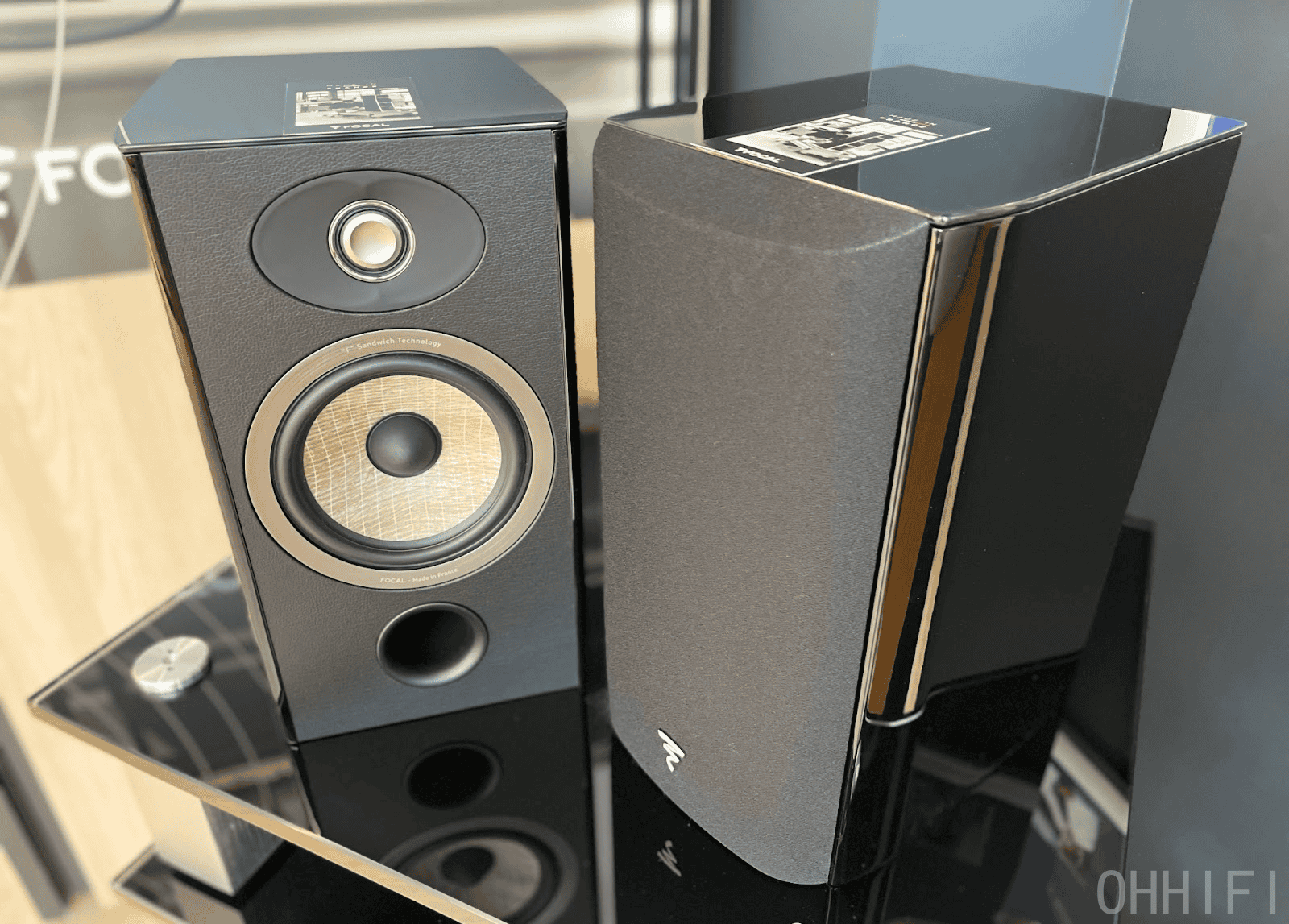
The Aria Evo X N°1 is a 2-way bass-reflex bookshelf loudspeaker. While visually similar to the 906, a closer inspection reveals a complete overhaul of the critical acoustic components.
2.1 The Heart of the Evo: The Flax Sandwich Cone
The defining visual and sonic characteristic of the Aria line remains the Flax sandwich cone. Focal manufactures this cone in-house in Saint-Étienne, France. The decision to persist with Flax is not merely aesthetic; it is rooted in material science.
The Physics of Flax
The ideal speaker cone must satisfy three contradictory requirements:
Lightness: To accelerate quickly and reproduce transients accurately.
Rigidity: To act as a perfect piston without deforming under stress.
Damping: To stop moving immediately when the signal stops and to not color the sound with its own material resonances.
Paper is light and self-damping but lacks rigidity. Aluminum is rigid and light but rings like a bell (poor damping). Kevlar is light and rigid but can have a distinct "plastic" coloration in the midrange.
Flax, a natural fiber grown in abundance in France (Flanders, Picardy, Normandy), offers a unique solution. The flax fiber is a hollow tube structure. This hollowness grants it a remarkable stiffness-to-weight ratio. Focal sandwiches a layer of this high-quality French flax fiber between two incredibly thin layers of glass fiber. The glass fiber provides the skin stiffness, while the flax core provides the damping and structural volume.
In the Evo X N°1, the 6.5-inch (16.5cm) mid-bass driver utilizes this sandwich to deliver a midrange that is frequently described as "organic," "uncolored," and possessing a "natural presence". It avoids the metallic sheen of magnesium cones and the dryness of some paper pulps.
2.2 The Midrange Revolution: TMD (Tuned Mass Damper)
The most critical upgrade in the Evo X N°1, and the one that contributes most to its sonic evolution over the 906, is the addition of the TMD (Tuned Mass Damper) surround to the mid-bass driver.
Engineering Origin
The concept of a Tuned Mass Damper is borrowed from civil engineering. It is the same principle used in skyscrapers like the Taipei 101 to prevent the building from swaying dangerously during earthquakes or high winds. A massive pendulum counteracts the resonant frequency of the structure.
In a loudspeaker, the "surround" (the rubber ring connecting the cone to the basket) is not just a hinge; it is an active part of the acoustic system. At specific frequencies (usually in the upper midrange, between 1kHz and 3kHz), standard rubber surrounds can resonate chaotically. This resonance can oscillate in opposition to the cone movement, causing a dip in frequency response and introducing phase distortion. This is often perceived by the listener as a "blurring" or "muddiness" in female vocals or string instruments.
The Focal Solution
Focal’s TMD solution involves molding two concentric tubular rings directly into the rubber surround. These rings are calculated masses designed to oscillate in opposition to the resonance of the surround itself. By cancelling out this parasitic resonance, the TMD stabilizes the surround, ensuring the cone moves purely as a piston. Focal claims this technology, originally developed for the ultra-high-end Sopra line, significantly reduces harmonic distortion in the critical 1kHz–3kHz range.
For the listener, this translates to transparency. It removes the "veiled" quality that can plague 2-way speakers where the woofer is forced to handle frequencies up to the crossover point. It allows the flax cone to sing without the rubber surround singing along with it.
2.3 The High-Frequency Revolution: The 'M'-Shaped TAM Tweeter
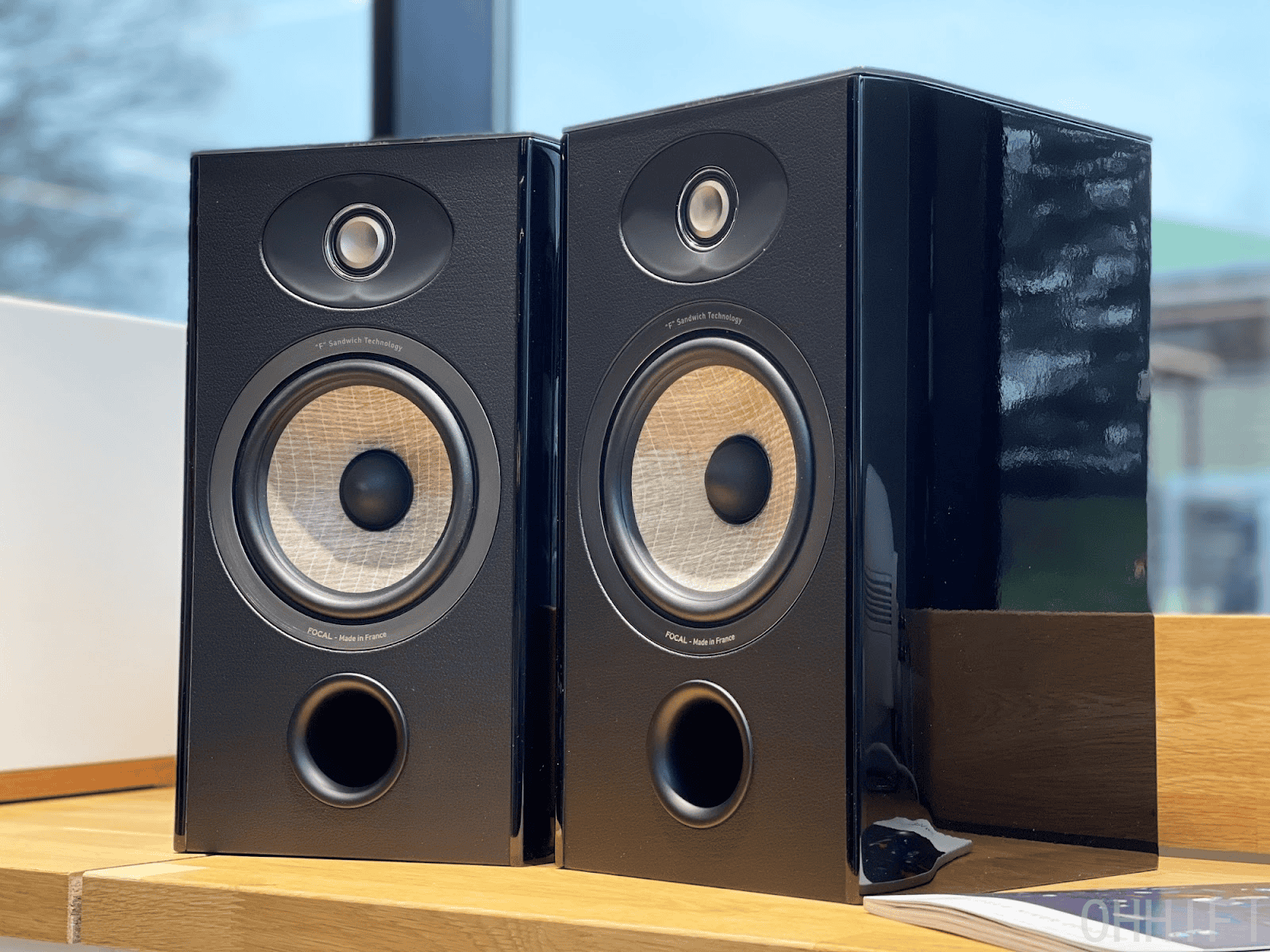
Perhaps the most divergent change from the previous generation is the abandonment of the TNF tweeter in favor of the 'M'-shaped Inverted Dome TAM Tweeter.
Material Science: Why Al/Mg?
The TAM tweeter is constructed from an Aluminum/Magnesium alloy. While pure Beryllium is reserved for the Utopia, Sopra, and Kanta lines due to its astronomical cost and toxicity in manufacturing, the Al/Mg alloy offers a formidable balance of rigidity and damping at this price point. Magnesium is lighter than aluminum and has better damping properties, while aluminum provides tensile strength.
The "M" Profile Geometry
Focal’s signature "inverted dome" uses a smaller voice coil fixed directly to the center of the dome, optimizing mechanical coupling and efficiency compared to standard convex domes where the voice coil is attached to the outer edge. The new "M-profile" (viewed in cross-section, the dome looks like an 'M') is a further refinement.
Rigidity: The 'M' shape is inherently stiffer than a simple spherical section, pushing the "breakup frequency" (the point where the dome deforms and distorts) higher, well beyond the audible band of 20kHz.
Dispersion: The 'M' shape, combined with the new urethane tweeter plate featuring a waveguide, is designed to provide a wider diffusion angle. This addresses a common criticism of earlier Focal designs (like the Aria 900 and Chorus), which could be "beamy"—requiring the listener to sit in a precise "sweet spot" with their head in a vice. The TAM tweeter promises a broader sweet spot and improved off-axis response, making the speaker easier to integrate into real-world living spaces where listeners might not always be in the perfect center seat.
2.4 Cabinetry and Acoustic Loading
The enclosure of the Aria Evo X N°1 retains the robust construction of its predecessor but refines the finish and internal mechanics.
Non-Parallel Architecture
The cabinet is built from ultra-rigid MDF. Crucially, the side panels are non-parallel, curving gently towards the rear. This is not just for style. In a rectangular box, sound waves bouncing between parallel walls create "standing waves"—internal resonances that can amplify certain frequencies (usually in the lower midrange) and color the sound. By curving the sides, Focal diffuses these internal reflections, preventing them from building up and radiating back through the cone.
The PowerFlow Port System
The speaker utilizes a front-firing port system at the base of the cabinet. In the world of bookshelf speakers, the location of the port is a major logistical factor.
Rear Ports (e.g., KEF R3): Require significant distance (often 50cm+) from the rear wall to avoid "room gain" that causes bloated, boomy bass.
Front Ports (Focal Aria Evo X): Direct the airflow towards the listener. This generally allows for placement closer to a rear wall, making the N°1 more forgiving in smaller European apartments or bedrooms where space is at a premium. Focal calls this the "PowerFlow" system, designed to minimize port turbulence (chuffing) which can sound like a distracting "puffing" noise during heavy bass passages.
Aesthetic Luxury
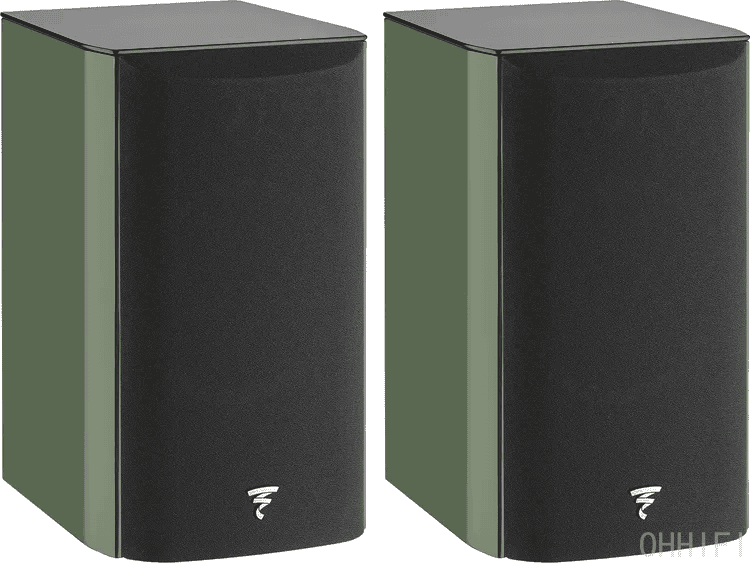
The Evo X N°1 embraces modern interior design trends. The "Moss Green High Gloss" finish is a bold departure from traditional woodgrains, targeting a younger, design-conscious demographic. The front baffle is finished in a leather-effect material. This is a tactile touch that adds a sense of luxury, reminiscent of high-end Italian furniture or automotive dashboards. Acoustically, the texture of the leather effect also helps to diffract high-frequency reflections off the baffle, preventing them from smearing the stereo image.
Section 3: Technical Specifications and Interpretation
Before diving into subjective performance, we must analyze the numbers, as they dictate the necessary ancillary equipment and room compatibility.
| Specification | Data Point | In-Depth Analysis & Implication |
| Type | 2-way Bass-reflex bookshelf | Standard configuration. The integration between the 6.5" woofer and 1" tweeter is the critical challenge here. |
| Drivers | 6.5" Flax Mid-bass, 1" Al/Mg TAM Tweeter | A 6.5" driver is substantial for a bookshelf, promising decent air movement and punch. |
| Frequency Response (+/- 3dB) | 55 Hz - 30 kHz | The 55Hz floor is modest. It indicates Focal is adhering to physics rather than using DSP trickery to boost bass. It means for full-range cinema, a sub is needed. |
| Low Freq Point (-6dB) | 47 Hz | Useful bass extends below 50Hz. This covers the lowest string of a standard electric bass (41Hz) weakly but audibly. |
| Sensitivity | 89.5 dB | High for a bookshelf. This is a key differentiator. It is significantly easier to drive to loud volumes than the KEF R3 Meta (87dB). It opens the door to lower-powered tube amps. |
| Nominal Impedance | 8 Ω | "Nominal" is often a marketing term. |
| Minimum Impedance | 4.6 Ω | Critical Spec. The dip to 4.6 Ohms is manageable for most amplifiers, but it means the amp needs decent current delivery. It is not as punishing as some speakers that dip to 2 Ohms. |
| Crossover Frequency | 2,800 Hz | A relatively high crossover point. The mid-bass driver handles a lot of vocal energy (up to nearly 3kHz) before handing off. This makes the coherence of the Flax cone vital. |
| Recommended Power | 25 - 120 W | A 50W-80W solid-state amp is likely the sweet spot for headroom. |
| Dimensions (HxWxD) | 39 x 22.5 x 28 cm | A tall bookshelf speaker. Visually imposing on a desk; these are best suited for dedicated stands. |
| Weight | 8.5 kg (18.7 lbs) | Substantial mass indicates good internal bracing and heavy magnet structures, reducing cabinet resonance. |
Section 4: Setup and Positioning Strategy – The Ritual of Optimization
No speaker performs in a vacuum. The interaction between the transducer and the room is the single biggest variable in high-fidelity audio. During our evaluation period, we experimented extensively with placement to extract the maximum potential from the N°1s.
4.1 The Stand Variable
The Aria Evo X N°1 is 39cm tall. Placing it on a standard 24-inch stand might put the tweeter slightly above ear level for low-seated listeners. The dedicated Aria S 900 stands (approx. 60cm/24in) are highly recommended. These stands feature a matte aluminum black finish and a tempered glass base that matches the speaker's aesthetic. More importantly, the speakers bolt directly to the metal top plate of the stands. This mechanical coupling is crucial; it drains vibrational energy from the cabinet into the stand and down to the floor spikes, sharpening the bass response and focusing the imaging. Using generic stands with Blu-Tack is a compromise; the bolt-on system provides a rigidity that tightens the transients significantly.
4.2 Room Placement Logic
Thanks to the front-firing port, the N°1 is more forgiving than many competitors. We found that they could be placed as close as 30cm to the rear wall without the bass becoming overwhelming. However, to truly unlock the holographic soundstage Focal is famous for, breathing room is required.
Ideal Position: We achieved the best results with the speakers 70cm from the rear wall and 1 meter from the side walls, creating an equilateral triangle with the listening position.
The "Desk" Scenario: While termed "bookshelf" speakers, placing these on an actual bookshelf surrounded by books is acoustic suicide. The reflections from the shelf boundaries will smear the midrange. If they must be used on a desktop, isolation pucks (like IsoAcoustics) are mandatory to decouple them from the desk surface, though their sheer size (39cm tall) makes them unwieldy for nearfield monitoring.
4.3 The Toe-in Debate
With the wide dispersion of the TAM tweeter, extreme toe-in (aiming directly at the ears) resulted in a slightly excessive brightness in our treated listening room. The waveguide works effectively. We found that a slight toe-in, aiming at the listener's shoulders or even firing straight ahead, yielded the most expansive soundstage. This "off-axis" setup smoothed out the top end while maintaining excellent center image focus, proving that the TAM tweeter's dispersion claims are not just marketing hyperbole.
Section 5: Subjective Listening Evaluation – The Soul of the Speaker
The following impressions are derived from a synthesis of critical listening sessions involving varied electronics. We utilized the Naim Nait XS 3 (a natural corporate synergy) for its rhythmic drive, and a Rotel A14MKII for its clean, high-current delivery.
5.1 Tonal Balance and Timbre: The "N-Shaped" Controversy
While many speakers in the "exciting" category adopt a V-shaped curve (boosted bass and boosted treble with recessed mids) to impress in a showroom, the Aria Evo X N°1 has been described by some acute listeners as having a subtly "n-shaped" or mid-forward profile. In the audiophile world, this is often a compliment of the highest order, though it can sound counter-intuitive to the layman who thinks "midrange" equals "boring."
The "Buttery" Midrange:
The integration of the TMD surround has borne fruit. The midrange is the absolute star of the show. Vocals, both male and female, are rendered with a palpable presence and density. There is a lack of the "papery" dryness sometimes found in untreated paper cones, and none of the metallic sheen or coldness of aluminum mids.
Observation: The Flax cone has a unique ability to sound "fibrous" in a good way—it reproduces the texture of a bow on a cello string or the rasp of a singer's throat with startling realism. It sounds "human."
Vocal Clarity:
In dense mixes, where vocals can often be buried under compressed guitars or synth layers, the Aria Evo X N°1 acts like a scalpel—but a gentle one. It lifts the vocal range out of the mud. This suggests a slight prominence in the 1kHz–3kHz region, pushing vocals forward into the room. This makes the speaker exceptionally engaging for singer-songwriter genres.
5.2 High Frequencies: The TAM Tweeter in Action
The transition from soft dome (silk/textile) to metal dome (Aluminum/Magnesium) often brings a fear of "harshness" or "fatigue." The Aria Evo X N°1 deftly avoids this. The TAM tweeter provides extension without aggression.
Detail Retrieval: The highs are described as transparent and precise. The "snap" of a snare drum, the shimmer of a hi-hat, or the upper harmonics of a violin are articulated with blistering speed.
Smoothness: Surprisingly, the treble is noted for its "softness" of sharp edges. It does not offer the razor-etched, hyper-analytical outline of a studio monitor or some ribbon tweeters that make you squint. Instead, it prioritizes a seamless blend with the midrange. It is "luminous" rather than "glaring". It illuminates the recording without blinding the listener.
5.3 Bass Performance and Dynamics: The Laws of Physics
This is a bookshelf speaker, and despite the "Evo" moniker, it cannot cheat the laws of physics.
Depth Limitations: With a -6dB point at 47Hz , true sub-bass is absent. Electronic music genres (e.g., Massive Attack, Skrillex) or cinematic explosions will lack visceral, chest-thumping impact. The speaker provides a "solid foundation" but rolls off gracefully. It does not try to pump out distorted, artificial bass to fake a larger size, which preserves the clarity of the mid-bass.
Quality over Quantity: The bass that is present is articulate, taut, and fast. The Flax cone starts and stops quickly. Bass lines in Jazz or Rock are tuneful and distinct notes, not a monotone "thump." You can hear the pitch of the kick drum, not just the impact.
The Volume Dependency: A critical insight regarding the Aria Evo X N°1 is its relationship with sound pressure levels (SPL). At low volumes (background listening ~60-70dB), the speaker can sound polite, arguably lacking dynamic punch and excitement. It has been noted that they need to be pushed to ~90dB to truly "wake up" and deliver their full dynamic range and low-level detail. This "Macroscopic Dynamics" characteristic makes them excellent for spirited listening sessions but perhaps less ideal for late-night, low-volume apartment listening compared to a speaker like the Klipsch RP series (which is dynamic even at whispers).
5.4 Soundstage and Imaging
Width and Depth: The soundstage is wide, extending well beyond the physical boundaries of the speakers. The "French" characteristic of airiness is present, creating a sense of open space.
Imaging Specificity: The imaging is precise but organic. Instruments are placed in their spots, but the edges of the images are slightly diffused rather than surgically cut. One reviewer noted the imaging acts as a "window into the music" rather than a holographic projection that envelops the listener. It presents the performance there, on a stage, rather than transporting the listener onto the stage. This perspective is often more relaxing for long-term listening.
Section 6: Musical Stress Tests – Track by Track Analysis
To provide a concrete reference for our analysis, we subjected the Aria Evo X N°1 to a diverse playlist of reference tracks.
Track 1: Anette Askvik – "Liberty" (Genre: Art Pop / Audiophile Vocal)
The Test: Midrange purity, saxophone texture, cavernous soundstage.
The Aria Evo X N°1 Performance: This track is where the N°1 justifies its price. Askvik’s voice is rendered with a haunting proximity. The "buttery" nature of the Flax midrange captures the breathiness of her delivery without accentuating the sibilance. When the saxophone enters, the reedy texture is palpable. The soundstage depth is impressive, with the electronic reverberations decaying deep into the back of the room. The speaker disappears completely.
Track 2: The Hu – "Wolf Totem" (Genre: Mongolian Folk Metal)
The Test: Macro-dynamics, separation of dense instrumentation, bass impact.
The Aria Evo X N°1 Performance: A stress test for the "polite" nature of the speaker. At low volumes, the track feels restrained; the guttural throat singing lacks menace. However, cranking the volume past 85dB transforms the experience. The speakers "pop to life". The thundering percussion becomes tactile, and the electric guitars growl with sufficient bite. While the deepest drum strikes lack the earth-shaking weight of a tower speaker, the speed of the drums is preserved perfectly. The speaker keeps up with the rhythm without getting confused.
Track 3: Pink Floyd – "Money" (Genre: Progressive Rock)
The Test: Imaging specificity, transient response (cash register sounds).
The Aria Evo X N°1 Performance: The iconic cash register loop is a playground for the TAM tweeter. The sounds snap from left to right with definitive precision. The coins falling sound metallic and distinct, not like a generic "clink." The bass guitar line is groovy and easily followable, though slightly lean. The separation between the instruments is excellent—you can hear the space between the bass and the drums.
Track 4: Daft Punk – "Solar Sailer" (Genre: Electronic / Soundtrack)
The Test: Sub-bass extension and sustain.
The Aria Evo X N°1 Performance: Here, the limitations are exposed. The deep, rolling synthesizer bass that underpins this track is audible, but the physical pressurization of the room is missing. The N°1 plays the notes cleanly, but the ominous weight that a subwoofer or a large floorstander (like the Aria Evo X N°3) would provide is absent. This confirms that for heavy electronic music, a 2.1 setup is preferable.
Track 5: Red Hot Chili Peppers – "By the Way" (Genre: Alternative Rock)
The Test: Vocal clarity in a compressed, "Loudness War" mix.
The Aria Evo X N°1 Performance: Many speakers turn this track into a wall of noise. The N°1’s mid-forward tuning shines here. It carves Anthony Kiedis’s vocals out of the dense guitar mix. Instead of a muddy wash of sound, you get distinct layers: vocals, guitar, drums. It makes a mediocre recording sound surprisingly listenable and energetic.
Section 7: Competitive Landscape Analysis – The Battle of the Bookshelves
The $2,000 - $2,600 bookshelf market is a bloodbath of high-quality options. The Aria Evo X N°1 faces stiff competition from established giants.
7.1 The Arch-Rival: Focal Aria Evo X N°1 vs. KEF R3 Meta
The KEF R3 Meta ($2,200) is the benchmark for this price class, beloved by measurement-focused audiophiles (objectivists).
| Feature | Focal Aria Evo X N°1 | KEF R3 Meta |
| Driver Tech | 2-Way separated (Flax + Al/Mg Tweeter) | 3-Way Coaxial (Uni-Q with MAT) |
| Sound Signature | Organic, fluid, mid-forward, "Musical." | Analytical, point-source precise, neutral, "Darker." |
| Bass | Front-ported, easier placement. Punchy mid-bass. | Rear-ported. Deeper extension but harder to place. |
| Imaging | Wide, airy, slightly diffuse "Window." | Laser-focused, holographic "Point Source." |
| Driveability | Easier (89.5dB), friendly to varied amps. | Harder (87dB), requires high-current solid state. |
| Aesthetics | Classic "Audiophile Furniture" (Leather/Wood/Green). | Modern/Minimalist "Monolith" (Matte finishes). |
The Verdict: The KEF R3 Meta is the "Head" speaker—technically perfect, low distortion, incredible measurement consistency, and laser imaging. The Focal Aria Evo X N°1 is the "Heart" speaker. While the KEF can sometimes sound "thin" or "clinical" to some ears , the Focal offers a richness and bloom that makes vocals sound more human. If you analyze music, buy the KEF. If you feel music, buy the Focal. Additionally, the KEF's rear port makes it difficult to use in small rooms near walls, whereas the Focal is much more versatile.
7.2 The British Challenger: Focal Aria Evo X N°1 vs. Bowers & Wilkins 705 S3
Bowers & Wilkins (B&W) represents the other pole of the "European Sound."
Treble Philosophy: The B&W 705 S3 features the famous "Tweeter-on-Top" design. B&W speakers typically exhibit a "sparkle" or elevated treble response. This makes them sound incredibly detailed and "airy" initially but can lead to listening fatigue with poor recordings or bright electronics. The Focal’s TAM tweeter is smoother and more forgiving.
Midrange: B&W’s Continuum cone is excellent, but their tuning often creates a "V-shape" (strong bass, strong treble, slightly recessed mids) to create excitement. The Focal is more "N-shaped" or mid-centric.
The Verdict: The B&W is a sports car—fast, exciting, stiff suspension, feels fast even at slow speeds. The Focal is a Grand Tourer—capable of performance but prioritizing comfort, flow, and long-distance listening pleasure.
7.3 The Internal Rival: Focal Aria Evo X N°1 vs. Focal Aria 906
Is the upgrade worth the premium? The 906 can often be found for half the price of the Evo X.
The Difference: The 906 is a legend, but the Evo X N°1 is measurably better. The TMD surround significantly cleans up the midrange muddiness that could afflict the 906 at high volumes. The TAM tweeter removes the slight "spittiness" or metallic edge that the old TNF tweeter exhibited on sibilant tracks.
Conclusion: If you already own the 906, the N°1 is a refinement, not a revolution. Stick with the 906 unless you are craving that last 10% of transparency. However, for a new buyer, the N°1 is distinctly higher resolution and worth the investment for the improved transparency and wider sweet spot.
Section 8: Synergy and System Matching – Building the Ecosystem
The Aria Evo X N°1 is transparent enough to reveal the character of the upstream electronics. It is not a speaker you can plug into a cheap AV receiver and expect magic.
8.1 Amplification Recommendations
Power Requirements: While specs say 25W minimum, the "wake up" characteristic at 90dB suggests they thrive on power. A high-current amplifier with 80W to 120W into 8 Ohms is ideal to control the bass driver and open up the soundstage at lower volumes.
Topology: Avoid overly bright amplifiers (e.g., some cheaper Class D implementations or clinical studio amps). The Focal pairs beautifully with Class A/B amplifiers that have a "meatier" sound.
The "Family" Match: Naim Audio (owned by the same parent company, Vervent Audio Group) is the natural partner. The Naim Nait XS 3 or Supernait 3 offers the rhythmic drive (PRaT - Pace, Rhythm, and Timing) that complements the Focal’s speed. The Naim sound adds a propulsive energy that counters the Focal's polite low-volume demeanor.
The Value Match: Rotel A14MKII or Cambridge Audio CXA81. Both offer British neutrality with enough current to grip the Flax drivers.
The Tube Option: For vocal lovers, the high sensitivity (89.5dB) and benign impedance curve make them candidates for push-pull tube amps (e.g., PrimaLuna Evo 100/200). This pairing leans into the "buttery" midrange, creating a holographic vocal experience, though you may sacrifice some bass tightness.
8.2 Subwoofer Integration
Given the 55Hz roll-off, a subwoofer is recommended for full-range music and mandatory for home theater.
Recommendation: A sealed subwoofer is preferable to match the speed of the Flax driver. The REL T/7x or SVS 3000 Micro are excellent matches. The goal is to fill in the bottom octave (20-50Hz) without slowing down the agile mid-bass of the Focal.
Section 9: Conclusion – The New Benchmark for "Accessible Luxury"?
The Focal Aria Evo X N°1 is a triumph of mature, iterative engineering. It does not try to reinvent the wheel; it simply polishes it to a mirror shine. It takes the beloved DNA of the Aria 900—its warmth, its aesthetic charm, its approachability—and injects it with the technical prowess of Focal’s higher-tier lines.
It stands as a counter-argument to the hyper-analytical trend in modern Hi-Fi. It does not try to be a studio monitor. It does not chase the "flat line" graph at the expense of enjoyment. It is unabashedly "voiced" to be pleasurable, offering a rich, vocal-centric midrange and a sweet, extended treble that invites long listening sessions without fatigue.
Pros:
Exquisite midrange texture and vocal presence (Flax + TMD).
Smooth, non-fatiguing treble with excellent dispersion (TAM).
High sensitivity makes them relatively easy to drive / Tube friendly.
Luxurious fit and finish (Moss Green/Leather) fits modern decor better than most rivals.
Front-ported design simplifies room placement in smaller homes.
Cons:
Requires volume (SPL) to fully "come alive" dynamically; polite at whisper levels.
Bass extension is physically limited; a subwoofer is desirable for full-range impact.
Price increase places it in a very competitive bracket against "spec-sheet monsters" like the KEF R3 Meta.
Final Verdict:
For the music lover who prioritizes emotional connection, timbral realism, and aesthetic beauty over distinct analytical dissection, the Focal Aria Evo X N°1 is a class leader. It brings the "French Sound"—sophisticated, open, and fluid—into the modern era with confidence. While the KEF R3 Meta appeals to the head, the Aria Evo X N°1 appeals to the heart. It is a speaker that remembers that the ultimate goal of Hi-Fi is not to listen to the equipment, but to listen to the music.



Comments