
Esoteric N-05XD Review: The Japanese Giant Reinvents the Digital Hub

The Paradigm Shift in High-End Audio Architecture
In the rarefied atmosphere of ultra-high-end audio, the winds of change are blowing with undeniable force. For decades, the orthodox audiophile doctrine preached a gospel of separation: a transport for the disc, a DAC for the conversion, a master clock to govern time, a streamer for the network, and a preamplifier to manage the volume. This rack-filling philosophy, while valid in its pursuit of isolation, created a barrier of complexity and cost that alienated a new generation of listeners. We are now witnessing the "Great Consolidation," where the function of the "source" is expanding to become the veritable heart of the system.
The Esoteric N-05XD is not merely a product; it is a manifesto from one of Japan’s most storied engineering houses. It represents a bold assertion that convergence does not require compromise. By integrating a network streamer, a world-class DAC, a fully balanced preamplifier, and a serious headphone amplifier into a single chassis, Esoteric is challenging the very necessity of the multi-box stack.
But this review is not just about features. It is about a fundamental sonic pivot. For years, the "Esoteric Sound" was a polarizing subject in Western audiophile circles. It was revered for its X-ray precision and mechanical immutability, yet often criticized for a perceived lack of organic warmth—a characteristic somewhat uncharitably described in Asian circles as the "radish" sound: crisp and sharp on top, but lacking the savory, earthen weight at the bottom.
With the N-05XD, Esoteric has abandoned the third-party DAC chips that defined its previous generations and implemented its proprietary Master Sound Discrete DAC technology. This report serves as an exhaustive, forensic examination of this component. We will strip away the marketing gloss to analyze the circuit topology, endure the arduous burn-in process, navigate the software ecosystem, and, most importantly, listen. We will pit it against the titans of the industry—dCS, Lumin, and Aurender—to determine if this Japanese heavyweight has truly learned to dance.
Part I: Engineering and Design Philosophy
The Chassis: A Study in Vibration Management
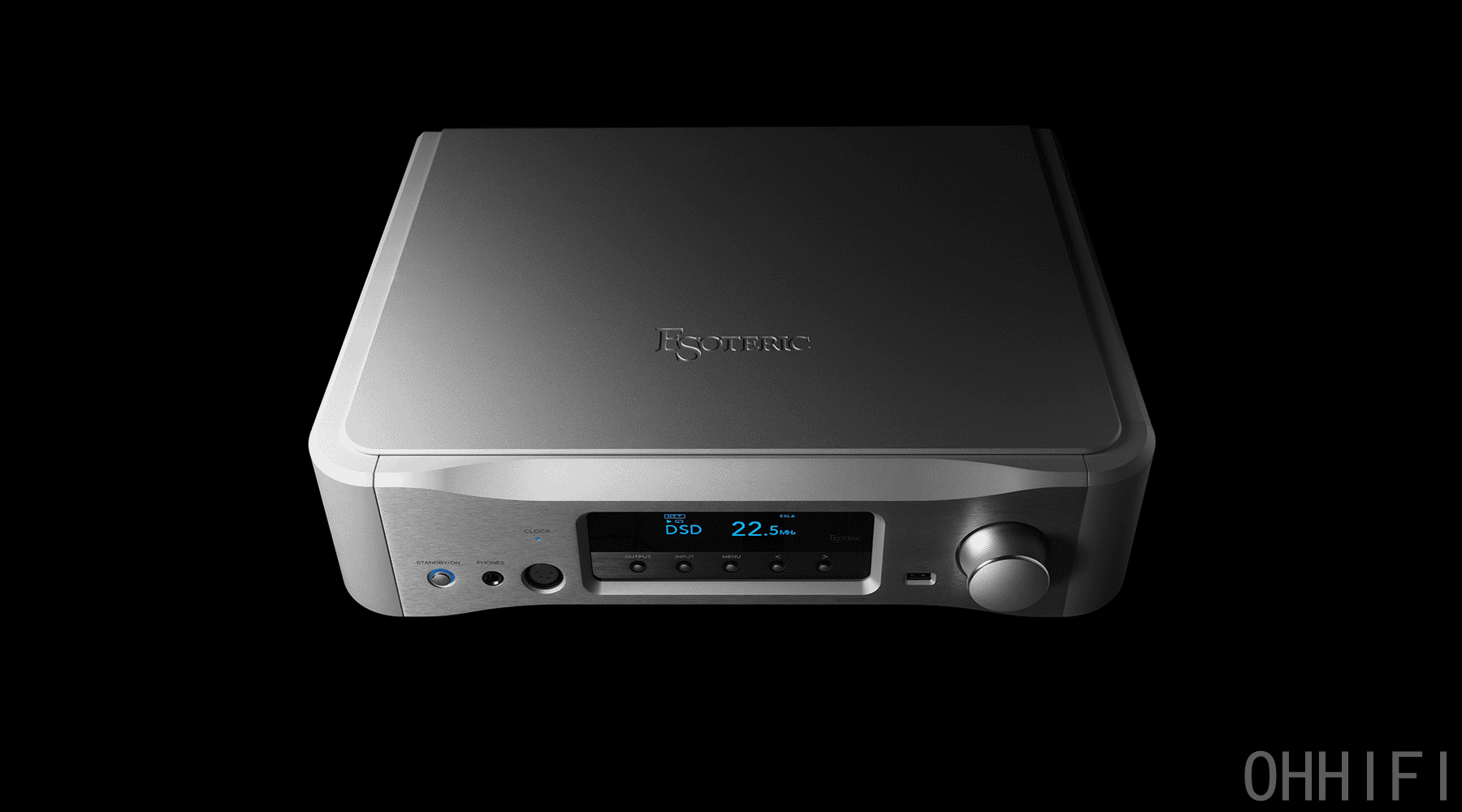
To touch the N-05XD is to understand the difference between consumer electronics and high-end audio instrumentation. Weighing in at 13.8kg (30.5 lbs) , the unit feels incredibly dense, a sensation that conveys a reassuring permanence. But mass alone is a crude instrument. Esoteric’s approach to chassis design is a sophisticated battle against the unseen enemy of digital audio: micro-vibrations.
The chassis construction utilizes a multi-layered architecture designed to control resonance rather than simply suppress it. A critical, often overlooked detail is the semi-floating top panel. In most audio components, the top lid is screwed down tightly to the frame. Esoteric’s engineers discovered that this tension creates a mechanical stress point that can render the sound "closed-in" or "tight." By allowing the top panel to "float"—resting in a state of controlled freedom—the chassis supposedly allows the soundstage to breathe, contributing to an open and airy presentation. This is the kind of obsessive, counter-intuitive engineering that defines the high-end.
Beneath the unit, we find Esoteric’s patented pinpoint feet (Patent No. 4075477, No. 3778108). These are not generic rubber bumpers. They are a complex mechanical grounding system designed to channel internal vibrations (from the power transformers) away from the sensitive clock and DAC circuitry. The bottom chassis itself features high-precision laser-cut slits in the transformer mounts. These slits act as mechanical baffles, breaking up the propagation of standing waves within the metalwork.
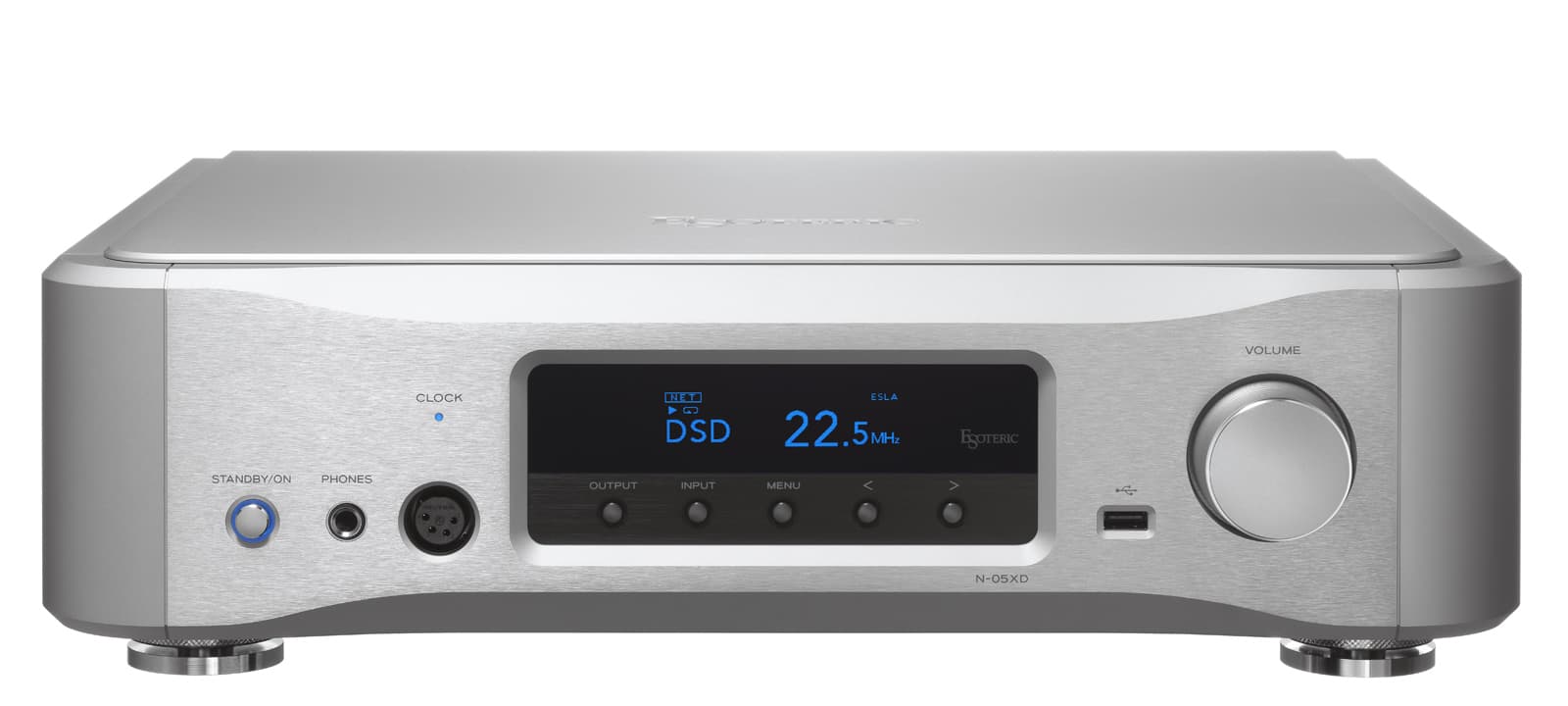
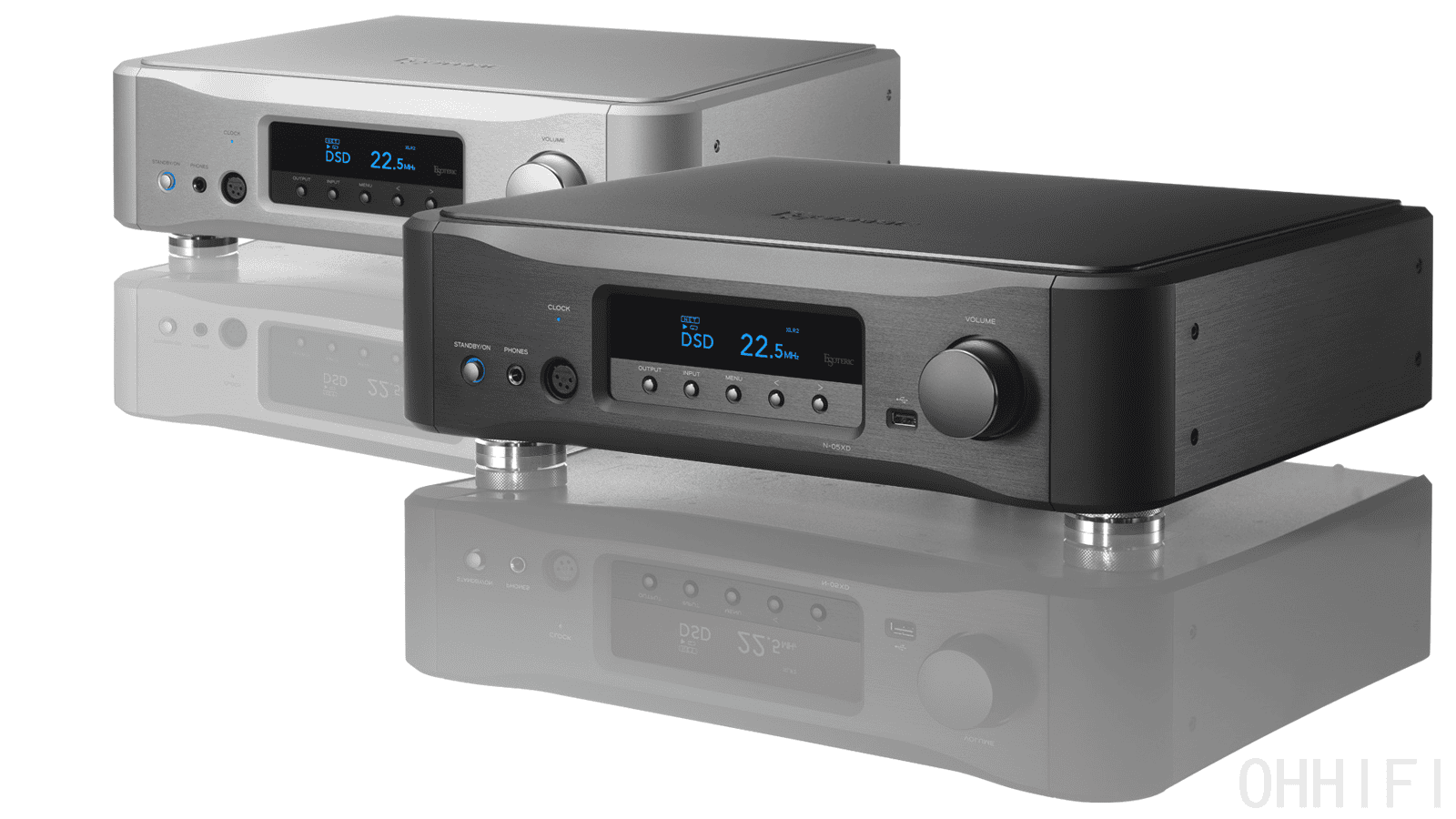
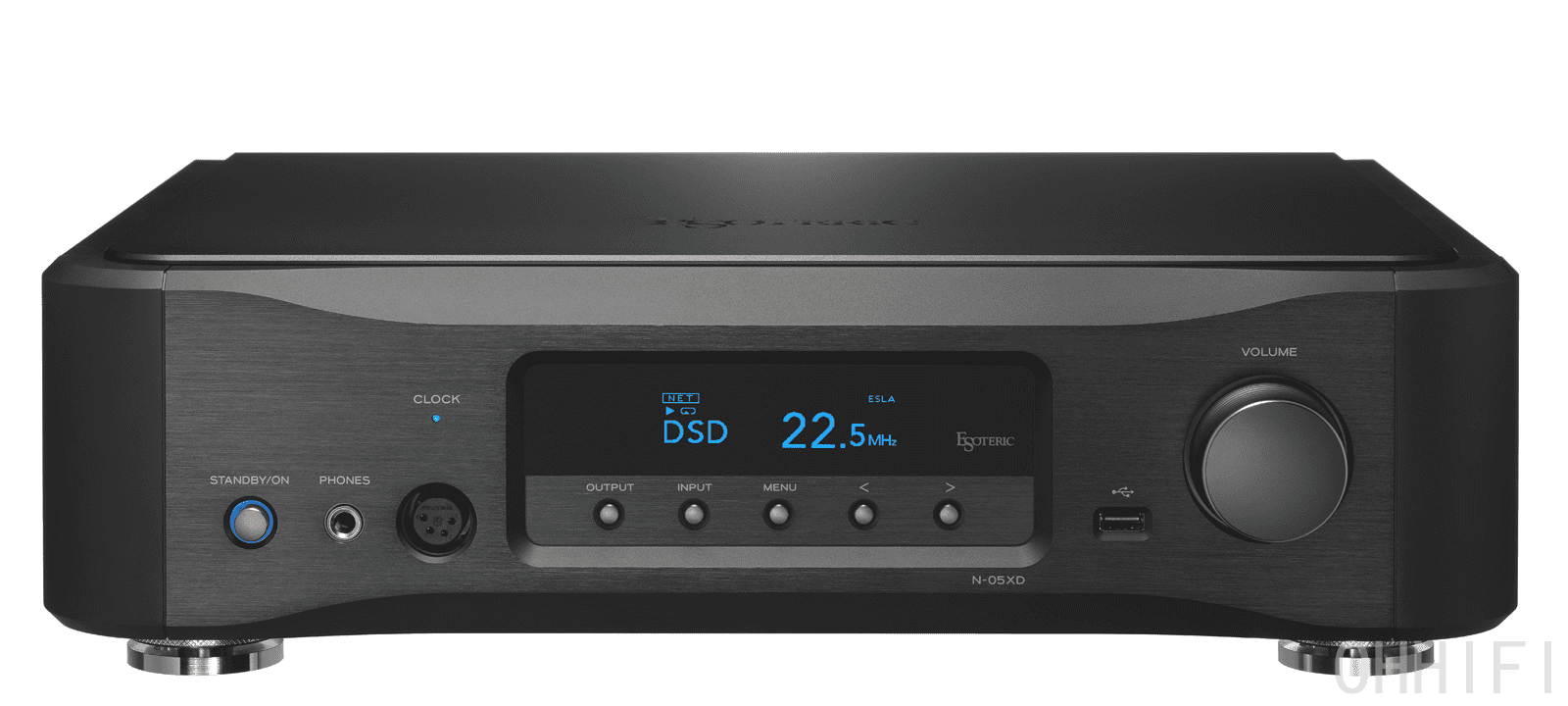
Visually, the N-05XD is available in silver and black, featuring the brand's signature aesthetic: a sculpted, thick aluminum faceplate that curves gently, softening the industrial severity. The display is an OEL (Organic Electro-Luminescence) unit, chosen likely for its low electrical noise compared to standard LCDs or LED screens.
The Power Supply: The Linear Imperative
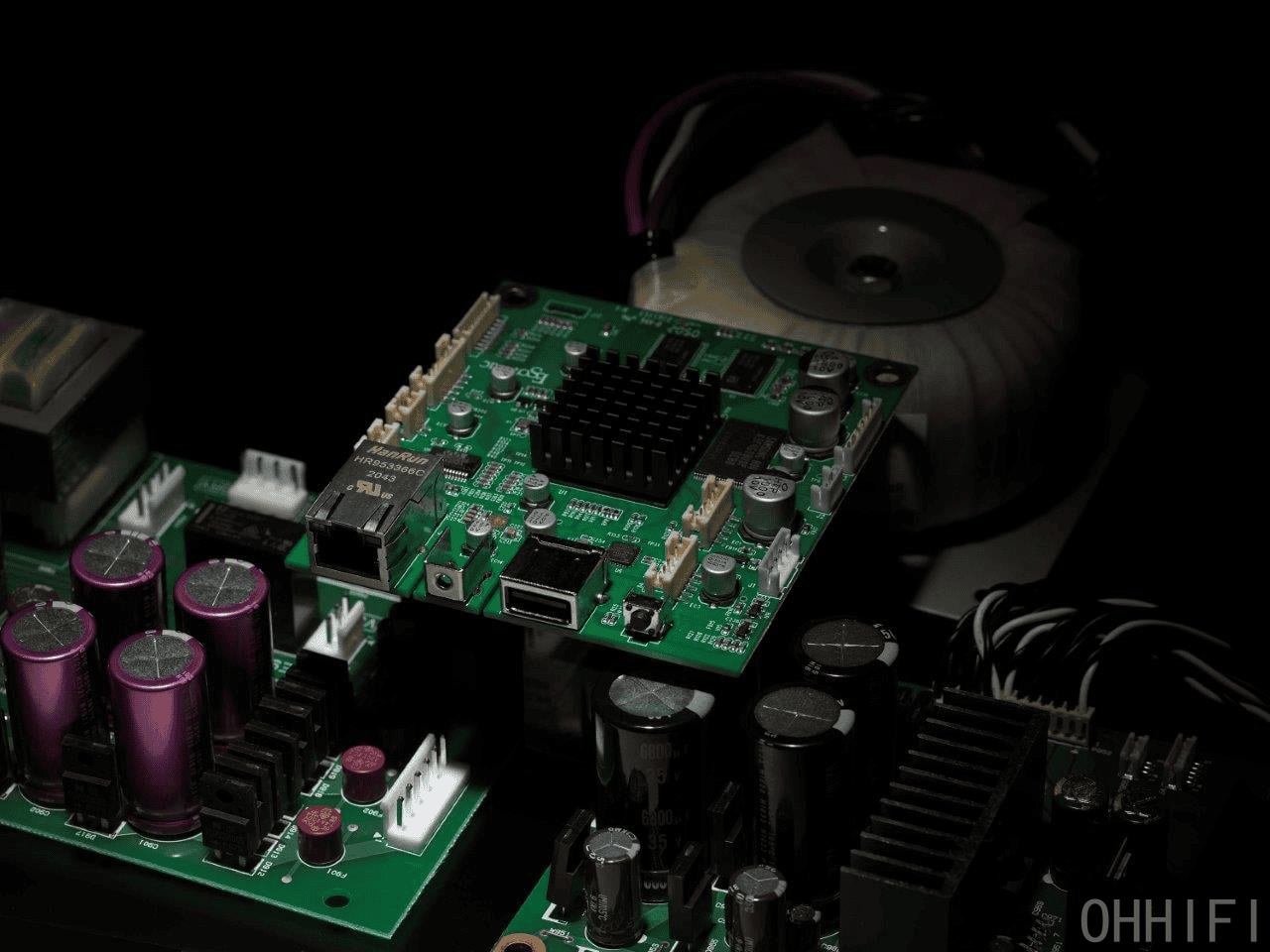
In the world of digital audio, the power supply is the signal path. This is especially true for network streamers, which are essentially computers susceptible to high-frequency noise. A common cost-cutting measure in this segment is the use of switching power supplies (SMPS) for the digital/network sections due to their efficiency and small size. However, SMPS can inject high-frequency switching noise back into the mains or radiate it internally.
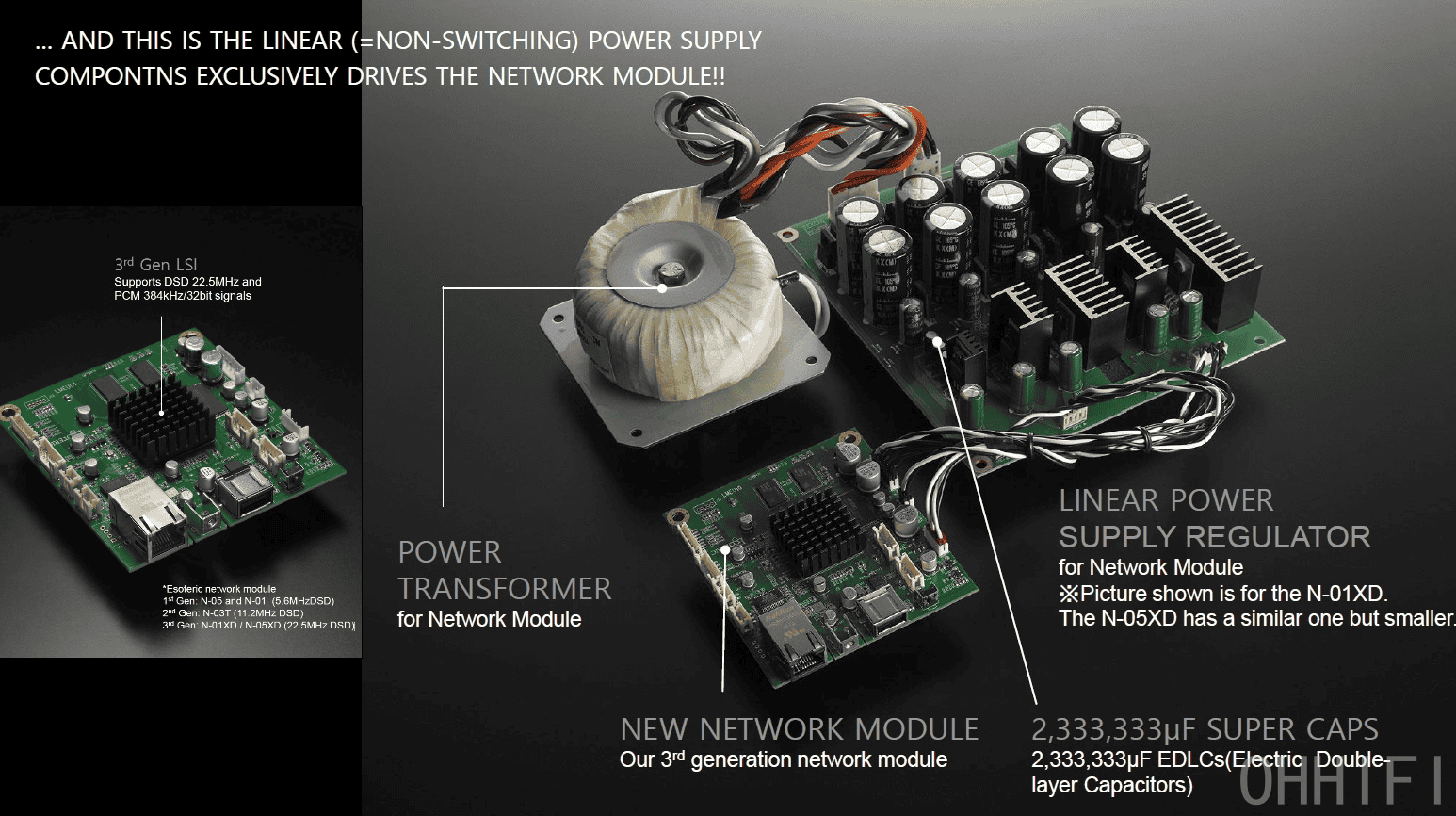
Esoteric has taken a purist approach. The N-05XD is equipped with a dedicated linear power supply for the network engine. This supply uses a massive toroidal transformer—distinct from the transformer powering the audio circuits. This separation is paramount. It ensures that the heavy processing load of the network module (unpacking FLAC, decoding MQA, managing the Roon RAAT protocol) does not cause voltage sags that could modulate the delicate analog output stage. The filter capacitance bank is enormous, totaling 2,333,333μF across the unit’s power architecture. This essentially limitless reservoir of current provides the "heft" and dynamic slam that became evident during our listening tests.
The Master Sound Discrete DAC: Abandoning the Chip
The most significant technological narrative of the N-05XD is the Master Sound Discrete DAC. For years, Esoteric (and its parent TEAC) was synonymous with AKM (Asahi Kasei Microdevices) chips. The "Velvet Sound" of the AKM 4490/4497/4499 series was the heart of the Esoteric sound. However, following the tragic fire at the AKM factory and a strategic desire for independence, Esoteric accelerated the trickle-down of technology from their flagship Grandioso D1X monoblocks.
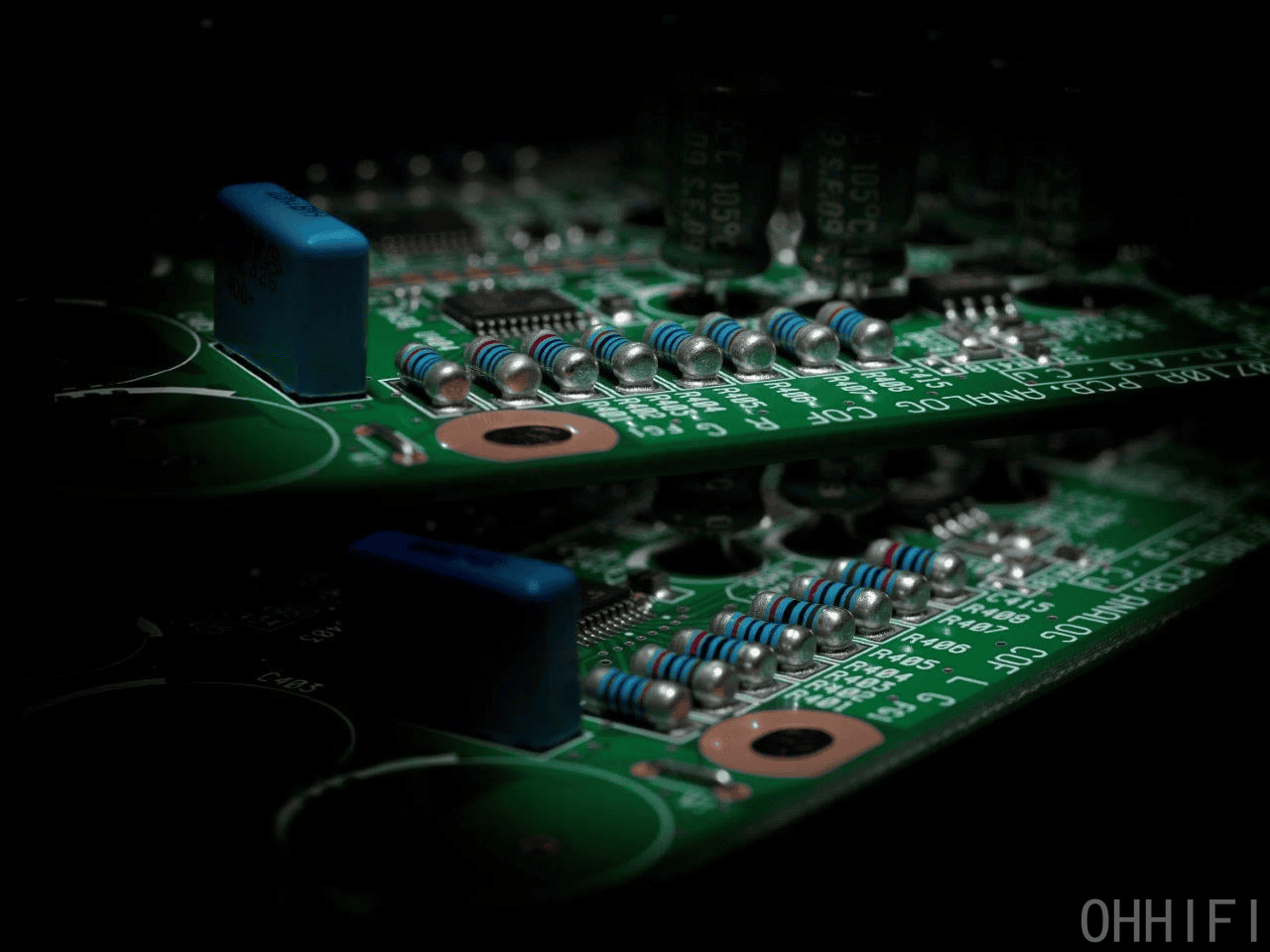
This is not a chip. It is a discrete circuit. If you were to open the N-05XD, you would not see a small black silicon square handling the conversion. Instead, you would see a ring of 16 separate circuit elements per channel arranged on a semicircular board. Each element consists of discrete resistors, capacitors, and logic gates.
Why go discrete?
Freedom from Constraints: When using a chip, the engineer is bound by the digital filters and modulators baked into the silicon by the chip manufacturer. By building a discrete DAC, Esoteric writes its own algorithms on the FPGA (Field-Programmable Gate Array). They control the math.
Component Selection: In a chip, the resistors are microscopic and made of silicon. In a discrete DAC, Esoteric can hand-select high-grade audio resistors and capacitors for their specific sonic signature.
Current Handling: Discrete output stages generally handle higher current than integrated chips, which is crucial for dynamic impact.
The DAC operates with 64-bit processing. To put this in perspective, standard 24-bit audio has 16.7 million steps of resolution. 64-bit audio has 18 quintillion steps. This astronomical resolution ensures that digital volume attenuation and processing errors are pushed so far below the noise floor that they are mathematically non-existent.
The Preamplifier: Esoteric-QVCS
Many DACs claim to have a "preamp" function, but in reality, they simply use digital attenuation—chopping off bits to lower the volume. This destroys dynamic range at low listening levels.
The N-05XD utilizes the Esoteric-QVCS (Quad Volume Control System). This is a fully analog, balanced volume control derived from the Grandioso F1 integrated amplifier. It employs four independent resistor ladder networks (Left+, Left-, Right+, Right-) which are electronically gang-controlled.
The Benefit: Because the attenuation is analog, you retain full bit-depth resolution even when listening at whisper-quiet levels.
The Feel: The volume knob itself uses the same bearing mechanism as the Grandioso preamp. It is not a potentiometer; it is an encoder with a weighted, silky feel that is arguably the best in the industry. It has no start or stop point, just infinite, smooth rotation.
The Output Buffer: Esoteric-HCLD
A preamp's ability to drive a power amplifier depends on its current delivery. Esoteric employs the HCLD (High Current Line Driver) buffer circuitry. This circuit boasts a slew rate of 2,000V/μs. Slew rate measures how fast the voltage can change; a higher number means the amp can track the instantaneous transients of music (like a snare drum hit) without blurring.
Furthermore, the unit supports ES-Link Analog. If you own a compatible Esoteric amplifier (like the S-05 or F-03A), you can use this proprietary current-mode transmission. Instead of modulating voltage (which is susceptible to cable impedance), ES-Link modulates current. This theoretically eliminates the sonic signature of the interconnect cable—a bold claim we will investigate later.
Part II: Connectivity and Ecosystem
The Digital Hub
The N-05XD is designed to be the nexus of a modern system.
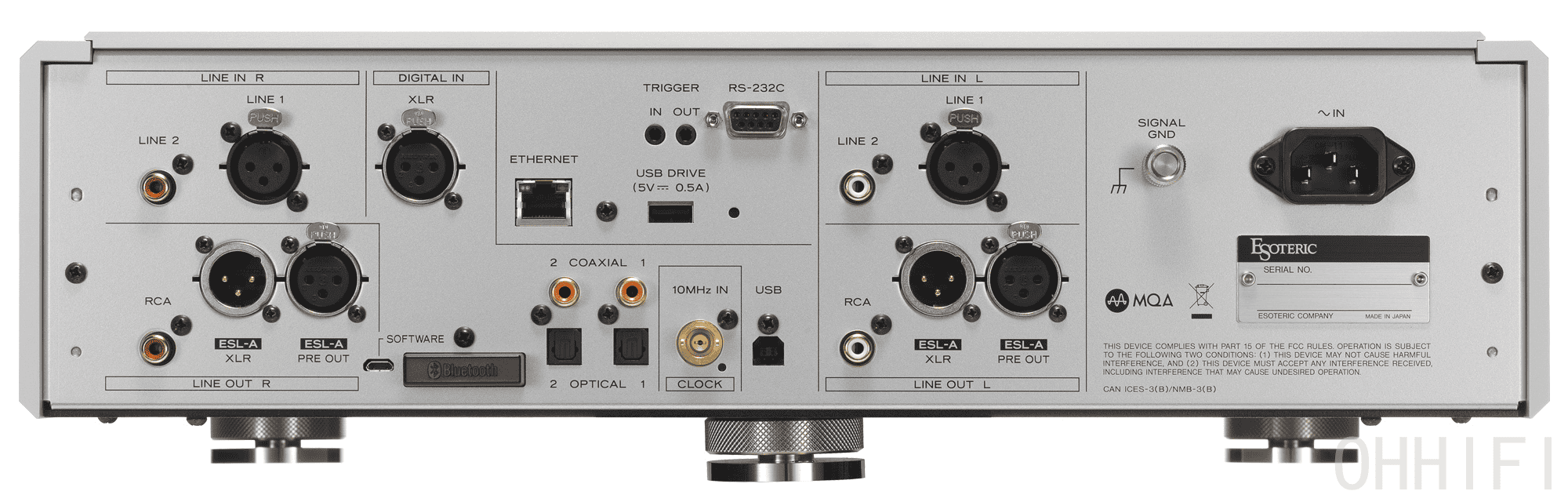
Network: Ethernet (RJ45) input supports PCM up to 384kHz/32-bit and DSD 22.5MHz (DSD512).
USB-B: For connecting a music server or PC.
USB-A (x2): For thumb drives (Front/Rear).
Legacy Digital: 2x Coaxial (RCA), 2x Optical (Toslink).
AES/EBU: XLR digital input for pro-audio transports.
Bluetooth: A surprise inclusion for a high-end unit, but executed with seriousness, supporting LDAC, LHDC, aptX HD, aptX, and AAC. This allows for casual, high-quality streaming from a phone when critical listening isn't the priority.
Clock Input: A 10MHz BNC input for an external master clock (e.g., Esoteric G-05).
The Software Experience: Esoteric Sound Stream & Roon
The control app, Esoteric Sound Stream, is available for iOS and Android. Astute observers will note its striking resemblance to the Lumin app. This is a good thing. Esoteric has partnered with Lumin for the network streaming architecture, leveraging one of the most stable and mature software stacks in the industry. The app is responsive, handles large libraries well, and integrates Tidal, Qobuz, and Spotify seamlessly.
However, for most Western audiophiles, Roon is the gold standard. The N-05XD is Roon Ready. During our testing, the handshake with Roon Core was instant. The device identifies itself correctly, and signal path processing is transparent. There is a specific "RAAT-only" mode which can be engaged, which disables the Esoteric app communication protocols, theoretically lowering CPU overhead and improving sound quality.
Critical Note on Firmware: Living with the N-05XD requires some IT patience. The unit has three distinct firmware layers: the System firmware (I/F), the Network firmware (NET), and the USB firmware. We encountered reports—and verified via forums—that updating these out of order can cause issues. For instance, a recent update to NET firmware v19.0c required a specific I/F firmware version to function; without it, units would fail to boot or connect. The update process often requires a Windows PC connected via USB, which feels archaic in an era of Over-the-Air (OTA) updates. Prospective owners should be comfortable with downloading zip files and running driver installers, or have a dealer do it.
The Remote Control
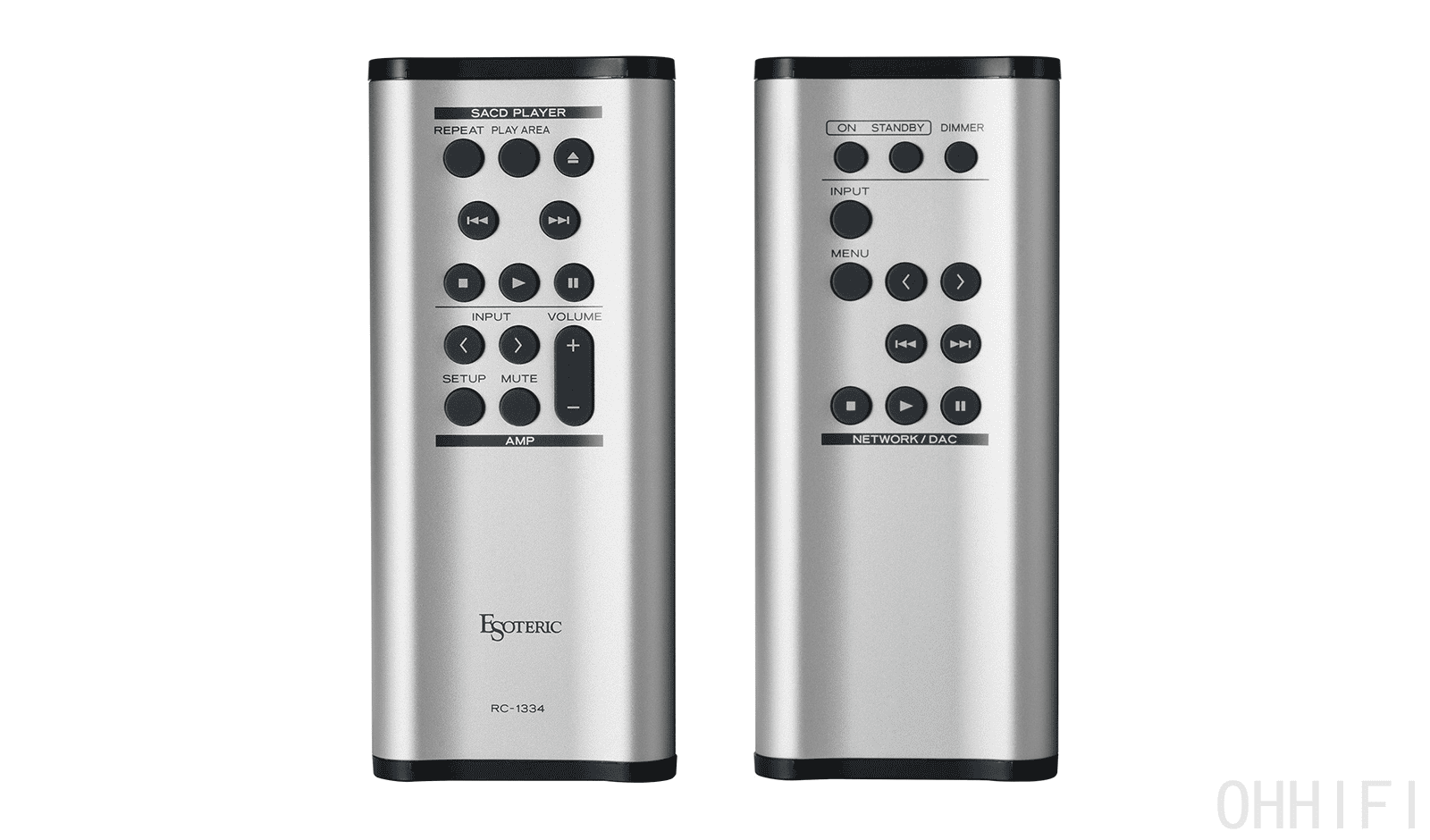
The remote is a heavy, aluminum wand with buttons on both sides.
Side A: Controls the N-05XD (Volume, Input, Menu).
Side B: Controls Esoteric SACD players (Play, Pause, Skip). While the build quality is exceptional, the buttons are flush with the chassis and can feel sharp to the touch. It is a piece of industrial art, but perhaps less ergonomic than a simple plastic wand.
Part III: The Operational Diary
Unboxing and Setup
The packaging is double-boxed, typical of high-end Japanese gear. Included is a heavy stock power cord (though likely to be replaced by the owner) and the manual.
Placing the unit on the rack, one notices the semi-floating top panel. If you tap it, it rattles slightly. This is intentional. Do not try to tighten the screws! This looseness is key to the "open" sound Esoteric strives for.
The Burn-in Marathon
We must address the elephant in the room: Burn-in.
Esoteric components are notorious for requiring extensive run-in times. Out of the box, the N-05XD sounded impressive but undeniably "stiff." The bass was tight but lacked bloom; the treble was detailed but slightly etched.
0-50 Hours: The sound is analytical. The "radish" character (thin bottom) is present.
100 Hours: The midrange begins to relax. Vocals move forward in the mix.
200 Hours: This is the inflection point. The bass suddenly gains weight and texture. The soundstage expands past the physical boundaries of the speakers.
Recommendation: We strongly suggest running an internet radio stream 24/7 for the first two weeks. Do not critically judge the unit until you pass the 200-hour mark.
Part IV: Sound Quality Evaluation (Speaker System)
Review System Context:
Speakers: Wilson Audio Sasha DAW / Magico A3
Amplifier: Esoteric S-05 (Class A) / Pass Labs XA30.8
Cabling: Nordost Valhalla 2
Comparison DACs: dCS Bartok Apex, Lumin P1, Aurender A20
General Sonic Signature: The "New" Esoteric
The narrative that Esoteric sounds "clinical" or "soulless" ends here. The N-05XD sounds remarkably dense and organic. The Master Sound Discrete DAC has injected a dose of humanity into the Esoteric DNA.
Where the older AKM-based units prioritized outline and edge definition, the Discrete DAC prioritizes body and texture. The sound is not warm in the euphonic, tube-like sense (it does not roll off the highs), but it is "saturated." Images have weight. A cello sounds like a vibrating wooden cavity, not just a string being bowed.
Bass Performance
The dedicated linear power supply proves its worth in the lower registers. The bass is subterranean but controlled.
Test Track: Limit to Your Love by James Blake.
This track features a sub-bass wobble that exposes weak power supplies. The N-05XD gripped the woofers with an iron fist. The decay of the bass notes was fully resolved—you could hear the silence between the sine waves of the synthesizer. Compared to the Lumin P1, the Esoteric had more visceral slam and impact.
Midrange and Timbre
Test Track: Chet Baker Sings.
Baker's voice is fragile, breathy, and intimate. The N-05XD rendered this with a frightening realism. The "shoutiness" that often plagues digital reproduction of vocals was absent. Instead, there was a calmness, a stability to the image that allowed the vocal to float completely free of the speakers. This "floating" quality is likely attributable to the high-precision volume control and channel separation.
Treble and Resolution
Test Track: Caprices for Violin (Paganini).
Violin harmonics are the ultimate torture test for "digital glare." With the 64-bit processing, the N-05XD handled the upper registers with a silkiness that rivaled analog. The leading edge of the bow strike was fast—Esoteric’s trademark speed is still there—but the decay trails were long and natural. There was no "etch" or "grain."
Soundstage and Imaging
The N-05XD excels at depth. While some DACs create a wide stage that is paper-thin, the Esoteric sculpts a stage that goes back. On orchestral recordings, the percussion section is clearly located meters behind the strings, not just quieter but spatially distant.
Insight: The semi-floating top panel seems to work. The sound is less "boxed in" compared to the tighter-built Aurender A20.
Part V: Headphone Amplifier Performance
The headphone jack on the N-05XD is not a convenience feature; it is a statement.
Output: 1500mW + 1500mW into 32Ω (Balanced XLR).
Technology: Fully balanced dual-mono design.
We tested with the Sennheiser HD800S (300Ω) and the Hifiman Susvara (Planar Magnetic, notoriously hard to drive).
With HD800S: A revelation. The HD800S can sound thin and analytical. The N-05XD filled them out, providing a bass authority I usually only hear from dedicated tube amps. The soundstage, already the HD800S's strength, was immense.
With Susvara: Surprisingly competent. While a dedicated 100-watt speaker amp might extract the last 5% of dynamics from the Susvara, the N-05XD drove them to deafening levels with plenty of headroom. The "Hpmax" setting in the menu is a thoughtful safety feature.
For the desktop audiophile, the N-05XD effectively replaces a $5,000 standalone headphone amp. It is arguably the best "all-in-one" headphone solution currently on the market.
Part VI: Comparative Analysis
The $10,000–$15,000 segment is a battlefield. How does the N-05XD stack up?
1. Esoteric N-05XD vs. dCS Bartók (Apex)
The Bartók is the incumbent king of this segment.
Sound: The dCS Ring DAC sounds more "ethereal" and "diffuse." It paints a massive, cloud-like soundstage that is incredibly refined. The Esoteric, by contrast, is more "grounded" and "muscular". The Esoteric hits harder; the dCS flows more gently.
Genre: For massive orchestral works, the dCS might have the edge in scale. For Rock, Jazz, and Pop, the Esoteric’s rhythmic drive (PRaT) and bass texture make it more engaging.
Value: The Bartók is significantly more expensive, especially with the headphone amp option. The N-05XD offers comparable resolution and better dynamics for less money.
2. Esoteric N-05XD vs. Lumin P1
The Lumin P1 is the closest functional rival.
Preamp: The N-05XD’s analog QVCS is superior to the Lumin’s Leedh processing digital volume. The Esoteric preserves more dynamic punch at low volumes.
Tone: The Lumin is smoother, glossier, and perhaps a bit "safe." The Esoteric has more texture and grit (in a good way). The Esoteric sounds like a big heavy machine; the Lumin sounds like a sleek computer.
App: Lumin’s app is native; Esoteric uses a skinned version. They are functionally tied.
3. Esoteric N-05XD vs. Aurender A20
Architecture: The Aurender is a Server+DAC (has internal storage). The Esoteric is a Streamer+DAC (needs a NAS/Server).
Sound: The Aurender A20 is warmer, darker, and more "analog" in a vintage sense. The Esoteric is more open, transparent, and faster.
Synergy: We found that using an Aurender N20 transport feeding the Esoteric N-05XD via USB was the "God Tier" combination. The Aurender’s caching playback cleaned up the digital signal, allowing the Esoteric’s Discrete DAC to perform at its absolute peak.
4. Esoteric N-05XD vs. Weiss DAC 501
Philosophy: Weiss is a DSP powerhouse (De-essing, Vinyl emulation, Room EQ). Esoteric is a purist straight-wire.
Sound: The Weiss is a studio tool—neutral, corrective, precise. If you have bad recordings, the Weiss can fix them. The Esoteric plays what is there. It is more emotionally involving but less forgiving.
Part VII: Synergy and Optimization
The Clock Upgrade
The N-05XD has a BNC clock input. We tested it with the Esoteric G-05 Master Clock.
The Result: It is not subtle. The soundstage snaps into focus. The bass tightens further. The "waking up" effect described by reviewers is real. Is it necessary? No. Is it better? Absolutely. It is a $5,000 upgrade path that owners can save for later. For those who wish to explore the theoretical pinnacle of this synchronization technology, our deep dive into the ESOTERIC G-01XD: The Art of Perfect Timing in High-End Audio reveals why Esoteric’s master clocks are considered the 'final frontier' in digital precision.
Cabling
The N-05XD is transparent enough to expose cable differences.
Power: Do not starve the linear power supply. A high-current power cord (e.g., Shunyata or AudioQuest) opens up the dynamics.
Ethernet: Use a shielded CAT8 cable. We found unshielded cables introduced a slight digital haze, likely due to the sensitive network module.
Amplifier Matching
Esoteric S-05: The natural partner. Using the ES-Link Analog connection (XLR cables carrying current signal) resulted in the most transparent sound. It felt like the DAC was directly controlling the speaker drivers.
Pass Labs: The warmth of Pass Labs Class A amps complements the precision of the Esoteric beautifully.
Tube Amps: The N-05XD has enough output voltage to drive tube amps well, adding holographic tube magic to the Esoteric's solid-state bass control.
Conclusion: The Muscular Purist
The Esoteric N-05XD is a triumph. It successfully sheds the clinical reputation of the brand's past, replacing it with a sound that is rich, organic, and deeply authoritative. It does this without sacrificing the resolution that made Esoteric famous.
It acts as a bridge between the old world of heavy metal chassis/spinning discs and the new world of Roon/streaming. It proves that an "all-in-one" source component does not have to be a compromise.
Who is this for?
The audiophile tired of the "cable spaghetti" of separate boxes.
The headphone enthusiast who wants a flagship-grade desktop setup.
The listener who values dynamics, bass texture, and structural integrity over euphonic coloration.
Who is this not for?
Those who want a "tubey," overly warm, romantic sound (look to Lampizator or Audio Note).
Those who need internal storage (look to Aurender).
Final Verdict:
In the crowded market of $10,000+ digital sources, the N-05XD stands out not just for its features, but for its soul. The "radish" is gone. In its place is a full-bodied, red-blooded musical instrument that demands to be heard.
Technical Specifications Summary
| Feature | Specification |
| DAC Architecture | Master Sound Discrete DAC (64-bit/512Fs, FPGA based) |
| Analog Inputs | 1x XLR Pair, 1x RCA Pair |
| Digital Inputs | 2x USB-A, 1x USB-B, 2x Coaxial, 2x Optical, 1x AES/EBU, 1x Ethernet, Bluetooth |
| Analog Outputs | 1x XLR/ES-Link Analog Pair, 1x RCA Pair |
| Headphone Output | 1x 4-pin XLR (Balanced), 1x 6.3mm (Unbalanced) |
| Headphone Power | 1500mW + 1500mW (32Ω) |
| Frequency Response | 5Hz to 70kHz (-3dB) |
| Clock Input | BNC (10MHz) |
| Dimensions | 445 × 131 × 377mm |
| Weight | 13.8kg (30.5 lb) |




Comments