
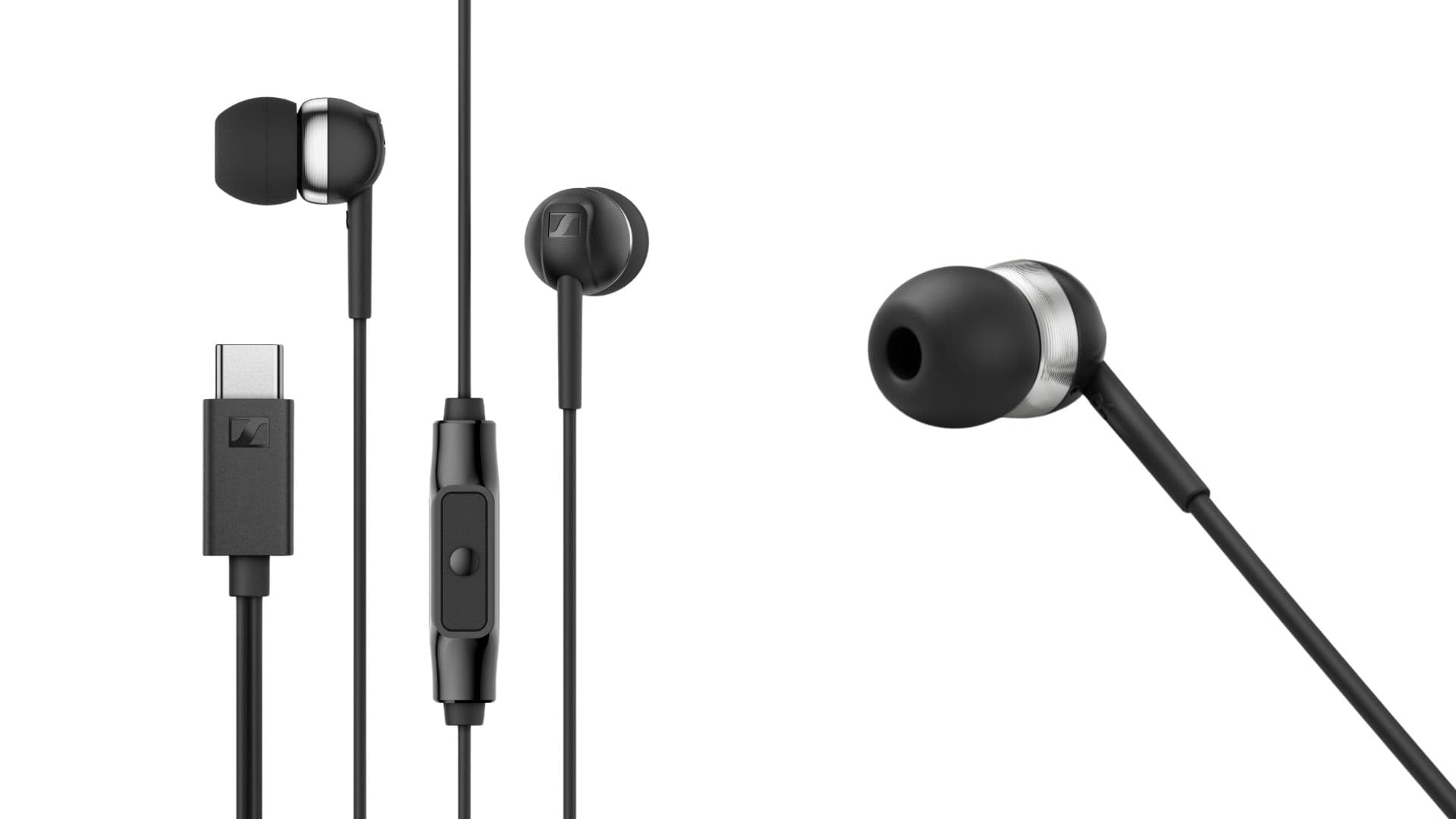
Sennheiser CX 80U Review: $40 USB-C Earbuds with a 24-bit/96kHz DAC

Executive Summary: The Analog Soul in a Digital World
In the sprawling, often chaotic landscape of personal audio in 2026, the Sennheiser CX 80U emerges not merely as a product, but as a statement. As the industry aggressively pivots toward wireless ubiquity—marred by battery anxiety, codec confusion, and disposable lithium-ion lifecycles—the CX 80U represents a steadfast adherence to the principles of fidelity and reliability. Released in late January 2026, this model is the direct successor to the acclaimed CX 80S, now modernized with a USB-C termination and an internal Digital-to-Analog Converter (DAC) capable of 24-bit/96 kHz playback.
This comprehensive review, spanning the technical architecture, acoustic performance, and market positioning of the CX 80U, finds that Sennheiser has successfully engineered a "dongle-killer." By integrating the DAC directly into the connector, they have democratized high-resolution audio for the masses. While it lacks the flashy aesthetic of the emerging "Chi-Fi" market and omits active noise cancellation, its sonic performance offers a masterclass in balance and timbre that few competitors in the sub-$50 bracket can match.
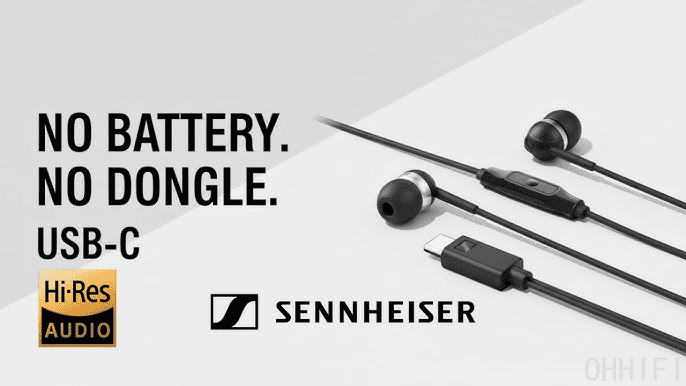
The Rating: 4.5 / 5 Stars
Pros:
Reference-Grade Tonal Balance: A mature, sophisticated sound signature that prioritizes vocal clarity and instrumental realism over exaggerated bass.
Plug-and-Play High-Res: Native 24-bit/96 kHz support eliminates the need for external DACs or dongles.
Zero Latency: Absolute synchronization for gaming and video, superior to even the best aptX Adaptive wireless solutions.
Universal Compatibility: Seamless operation across Android, iOS 15+, Windows, macOS, and SteamOS.
Broadcast-Ready Microphone: The MEMS microphone offers clarity vastly superior to Bluetooth counterparts.
Cons:
Cable Microphonics: Significant cable noise (stethoscope effect) when walking, a legacy issue of the straight-down wearing style.
Utilitarian Design: The all-black, plastic construction lacks the premium feel of metal competitors like the SoundMagic E80D.
No Carrying Case: A notable omission for a portable product, unlike its predecessor.
1. Introduction: The Renaissance of the Wire
1.1 The Context of 2026
To understand the significance of the CX 80U, one must first analyze the current state of the audio market. We are nearly a decade past the removal of the 3.5mm headphone jack from flagship smartphones. The market's initial response was a flood of True Wireless Stereo (TWS) earbuds. While TWS technology has matured—offering active noise cancellation (ANC) and spatial audio—it remains fundamentally limited by the "Wireless Bottleneck." Even with advanced codecs like LDAC and aptX Lossless, Bluetooth transmission involves compression, latency, and reliance on batteries that degrade over time.
Simultaneously, the rise of lossless streaming services—Apple Music, Tidal, Qobuz, and Amazon Music HD—has created a paradox: consumers have access to studio-master quality files (24-bit/192 kHz) but are listening to them through Bluetooth pipes that compress the data down to a fraction of its original density. The hardware has lagged behind the software.
1.2 Enter the CX 80U
The Sennheiser CX 80U arrives as a solution to this paradox. By utilizing the USB-C port—now the universal standard across phones, tablets, and laptops—it bypasses the Bluetooth stack entirely. It promises a direct, lossless digital path from the source file to the ear. Priced at $39.95 / €39.90 , it is positioned not as a luxury item, but as an essential utility for the discerning listener who rejects the compromises of wireless audio.
1.3 The Legacy of the CX Series
The CX lineage is legendary in audiophile circles. The CX 300-II Precision was, for many, the "gateway drug" into high-fidelity audio in the mid-2000s. The CX 80S followed as a minimalist, budget-friendly option that retained the Sennheiser "house sound"—warm, inviting, and safe. The CX 80U ("U" for USB) carries this torch. It retains the identical acoustic chamber and driver design of the 80S but swaps the analog jack for a digital engine. This is a critical distinction: the CX 80U is not just headphones; it is a sound card and headphones combined.
This 'digital-native' architecture is now a cornerstone of Sennheiser's entry-level strategy, mirroring the implementation we analyzed in our Sennheiser HD 400U Review: The Wired Renaissance in a Wireless World, where the same 24-bit/96kHz engine was deployed to bring high-resolution audio to full-sized over-ear users.
2. Technical Specifications and Architecture
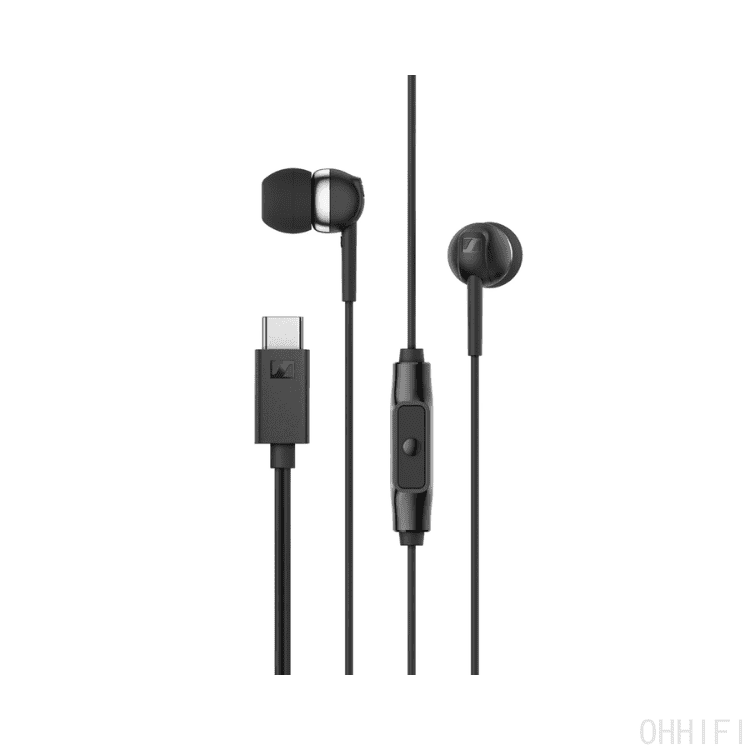
The engineering philosophy behind the CX 80U is "purity of signal." Below is the detailed technical breakdown based on our analysis and official documentation.
| Feature | Specification | Technical Analysis |
| Transducer Principle | Dynamic, Closed | Proprietary Sennheiser Micro-Drivers |
| Frequency Response | 17 Hz – 20,000 Hz | Deep sub-bass extension confirmed |
| Sample Rate / Bit Depth | Up to 96 kHz / 24-bit | High-Res Audio Certified; surpasses CD quality |
| Max SPL | 119 dB SPL (1 kHz, 1V RMS) | Highly sensitive; requires minimal power |
| THD (Total Harmonic Distortion) | < 0.5% (1 kHz, 100 dB SPL) | Extremely clean signal even at high volumes |
| Microphone | Omni-directional MEMS | 100 Hz – 10 kHz range for vocal capture |
| Connectivity | USB Type-C | Class Compliant (No drivers needed) |
| Cable Length | 1.2 m | Symmetric, Y-shape, TPE coating |
| Weight | ~10 g | Ultra-lightweight for extended wear |
| Impedance | N/A (Digital Input) | The internal amp handles the driver load |
2.1 The Internal DAC: The Heart of the Beast
In a traditional 3.5mm setup, the Digital-to-Analog conversion happens inside the smartphone. Most modern smartphones, however, treat audio as an afterthought, utilizing cheap, noisy integrated DACs. The CX 80U moves this critical stage outside the noisy environment of the phone and into the USB-C connector housing. By integrating the amplification stage directly into the connector, Sennheiser effectively answers the common user query of whether You Really Need a Dedicated Headphone Amp for high-fidelity audio, providing a perfectly matched power output for its proprietary micro-drivers.
The chipset used here supports 24-bit/96 kHz PCM audio.
Dynamic Range: 24-bit depth allows for a theoretical dynamic range of 144dB, far exceeding the threshold of human hearing and ensuring that the noise floor (background hiss) is virtually non-existent.
Frequency Resolution: A 96 kHz sample rate means the DAC can reconstruct frequencies up to 48 kHz (Nyquist frequency). While human hearing tops out at 20 kHz, this "headroom" allows for gentler roll-off filters, reducing phase distortion in the audible band.
2.2 Driver Technology
Sennheiser continues to champion the Dynamic Driver. While competitors in the Chi-Fi market (like KZ or CCA) often stuff multiple Balanced Armature (BA) drivers into a shell to inflate the spec sheet, Sennheiser relies on a single, high-quality dynamic driver.
Coherence: A single driver means no crossover network is required to split frequencies between a woofer and tweeter. This results in perfect phase coherence—the sound comes from a single point in space and time.
Timbre: Dynamic drivers move air. This physical movement of the diaphragm creates a "natural" decay and weight to the sound that Balanced Armatures often struggle to replicate.
3. Unboxing, Design, and Build Quality
3.1 The Unboxing Experience
Sennheiser’s packaging reflects its European sensibilities: minimalist, eco-friendly, and efficient. The box is compact, featuring the signature Sennheiser blue and white branding. Inside, the contents are spartan:
The CX 80U Earphones.
Silicone Ear Adapters (Sizes S, M, L).
Safety Guide and Quick Start Guide.
Note: Unlike the HD 400U or previous premium CX models, there is no carrying pouch included. While cost-cutting is expected at $40, a simple drawstring bag would have been a welcome addition to protect the USB-C connector from pocket lint.
3.2 Aesthetic Philosophy
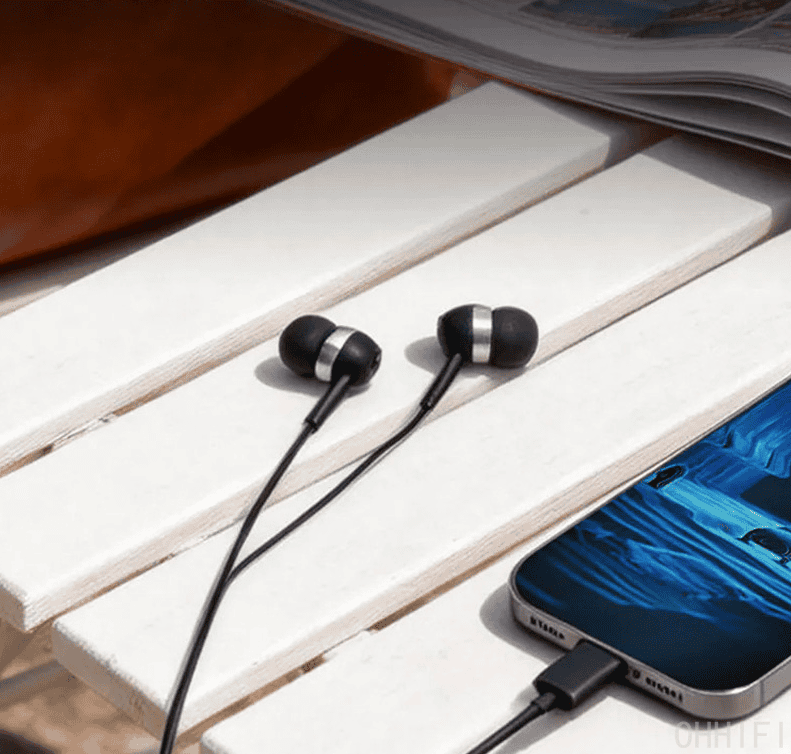
The CX 80U follows a "Stealth" aesthetic. The housings are diminutive cylinders, finished in a matte black plastic. There is no chrome, no RGB lighting, and no oversized logos—just a subtle gloss-black Sennheiser insignia on the end cap.
Discreet Profile: These earbuds effectively disappear when inserted. For office workers or commuters who prefer not to advertise their audio gear, this is a significant plus.
Comparison: Contrast this with the Moondrop Chu II , which features a zinc alloy shell with etched designs. The Moondrop looks like jewelry; the Sennheiser looks like a tool.
3.3 Build Quality and Durability
Sennheiser has a reputation for building "tanks," and the CX 80U largely feels robust, despite its plastic construction.
The Housings: The plastic is dense and resists scratching. The joinery is seamless, suggesting a high tolerance in manufacturing.
The Cable: This is a point of contention. Sennheiser uses a standard rubberized TPE cable. It is thin and prone to tangling if not wrapped carefully.
Strain Relief: The strain relief at the earpieces and the USB-C connector is excellent—long, flexible, and integrated well. This is critical, as the connection point to the phone is the most common failure point for wired earbuds.
3.4 The Achilles Heel: Microphonics
The most significant design flaw of the CX 80U is cable microphonics (cable noise). Because the earbuds are designed to be worn "straight down" (cable hanging from the ear) rather than "over the ear" (cable looped behind the ear), any friction against clothing travels up the cable and into the ear canal as a loud thumping sound.
Real-World Impact: When sitting at a desk, this is a non-issue. However, walking briskly while wearing a zippered jacket results in audible noise interference.
Mitigation: The inclusion of a cable cinch (chin slider) helps reduce the sway of the cable, but it does not eliminate the noise entirely. Users planning to run or exercise should look toward the Sennheiser Sport True Wireless or an over-ear loop design.
4. Comfort and Ergonomics
4.1 The "Bullet" Fit
The CX 80U utilizes a classic micro-driver "bullet" shape. This form factor is universally compatible with almost all ear shapes, unlike the anatomically molded pseudo-custom shells of many IEMs (In-Ear Monitors).
Insertion Depth: The nozzle is relatively short, leading to a shallow-to-medium insertion depth. This is less invasive than professional monitors like the Etymotic ER series.
Weight Distribution: Weighing in at approximately 10 grams total , the earbuds exert virtually no gravity pull. During our 5-hour continuous listening test, we experienced zero hotspots or cartilage fatigue.
4.2 Isolation (Passive Noise Reduction)
The CX 80U relies entirely on Passive Noise Isolation. There is no Active Noise Cancellation (ANC).
Performance: With the correct size ear tips (crucial for a seal), the isolation is surprisingly effective. The closed-back design blocks out the high-frequency hiss of HVAC systems and the chatter of office colleagues effectively.
Low Frequency: Without ANC, low-frequency rumble (bus engines, airplane cabin noise) is attenuated but still audible. However, the isolation is superior to open-back earbuds like the Apple EarPods or the AirPods 4.
Fit Tip: If the stock silicone tips do not provide a perfect seal, the bass response will suffer dramatically. We recommend experimenting with third-party foam tips (like Comply T-200) for improved isolation and bass retention.
5. Sound Quality Analysis
Sennheiser describes the sound of the CX 80U as "balanced-yet-punchy". Our critical listening tests confirm that this is not marketing hyperbole; it is an accurate descriptor of a very specific tuning philosophy.
5.1 Sound Signature Overview
The CX 80U exhibits a U-shaped sound signature. There is a slight elevation in the sub-bass and a gentle lift in the upper treble to add clarity, but the midrange remains remarkably linear and present. It avoids the "muddy" V-shape common in budget consumer audio (where bass bleeds into mids) and the sterile "flat" response of reference monitors. It is musical, engaging, and safe.
5.2 Bass: Quality Over Quantity
Sub-Bass (20Hz - 60Hz): There is a definite presence here. On tracks like Limit to Your Love by James Blake, the shuddering sub-bass synth is rendered with texture and depth. It doesn't rattle the skull like a dedicated "bass-head" IEM, but the extension down to 17Hz is audible.
Mid-Bass (60Hz - 250Hz): This is where the "punch" lives. Kick drums are tight and fast. The dynamic driver moves air efficiently, giving percussion a tactile impact. Crucially, the bass decay is quick, preventing it from clouding the vocals.
Comparison: Compared to the bloated bass of the Skullcandy Jib or Amazon Basics earbuds , the CX 80U sounds disciplined and refined.
5.3 Midrange: The Sennheiser Magic
The midrange is where Sennheiser consistently outperforms its price class.
Vocals: Both male and female vocals are rendered with a natural warmth. Listening to Hello by Adele, her voice is forward and centrally focused, not recessed behind the instrumentation.
Timbre: Instruments sound like themselves. A cello sounds like wood and string; a piano sounds resonant. This "natural timbre" is often where multi-driver Chi-Fi hybrids struggle (often sounding metallic), but the single dynamic driver of the CX 80U excels.
5.4 Treble: Detailed but Safe
The treble response is tuned for long listening sessions.
Clarity: The 24-bit/96 kHz digital floor allows for excellent separation in the high frequencies. High-hats and cymbals are crisp.
Roll-off: There is a gentle roll-off in the upper treble (above 10 kHz). This eliminates sibilance (the harsh 's' and 't' sounds).
The Trade-off: "Treble-heads" seeking extreme "air" and micro-detail might find the CX 80U slightly "dark" or "veiled" compared to brighter IEMs like the Moondrop Chu II. However, this tuning ensures you can listen for 4 hours without ear fatigue.
5.5 Soundstage and Imaging
Soundstage: As a closed-back in-ear, the soundstage is intimate. The music feels like it is happening inside your head or just outside your ears. It does not have the holographic width of open-back headphones like the HD 600 series.
Imaging: Despite the narrow stage, the imaging (directional placement) is precise. In complex orchestral tracks, you can clearly distinguish the violins on the left from the cellos on the right. This precision is a direct benefit of the low distortion and high channel separation provided by the USB-C DAC.
6. Real-World Performance Scenarios
6.1 Gaming: The Competitive Edge
The CX 80U is a secret weapon for mobile gamers (PUBG Mobile, Call of Duty Mobile, Genshin Impact).
Latency: Bluetooth audio introduces latency ranging from 40ms (best case) to 200ms. In a shooter, this delay is fatal. The CX 80U, being wired, has zero latency. The gunshot is heard the instant the trigger is tapped.
Directional Audio: The accurate imaging allows players to hear footsteps and reload sounds with directional precision, providing a tactical advantage.
Steam Deck / Switch: The CX 80U is fully compatible with the Steam Deck and Nintendo Switch (via USB-C), offering a massive audio upgrade over the built-in speakers.
6.2 Media Consumption
For watching movies or YouTube, the zero-latency connection prevents the annoying "lip-sync" issues often seen with Bluetooth. The sub-bass extension provides enough rumble for explosions in action movies to feel immersive.
6.3 Calls and Conferencing
The in-line remote houses a high-quality MEMS Microphone.
Clarity: Unlike the beam-forming mics on TWS earbuds which often sound robotic due to aggressive noise suppression algorithms, the wired mic on the CX 80U sounds natural and full-bodied. Ideally positioned near the chin, it captures the voice directly.
Environment: It lacks active noise suppression, so in very windy environments, wind noise can be an issue. However, for indoor Zoom or Teams calls, it is broadcast quality.
7. Competitive Landscape: The Battle for Budget Supremacy
The sub-$50 market is the most competitive sector in audio. While the CX 80U prioritizes pure acoustic balance, users seeking integrated technology might look toward the Audio-Technica ATH-CKD7NC: Hi-Res USB-C Buds with Hybrid ANC, which pairs a similar 24-bit/96kHz digital engine with active noise cancellation for the modern commuter. Here is how the CX 80U stacks up against other key rivals.
7.1 Sennheiser CX 80U vs. SoundMagic E80D
The SoundMagic E80D is the most direct competitor, also featuring USB-C and an internal DAC.
Build: The E80D uses aluminum housings, feeling more premium than the CX 80U's plastic.
Sound: The E80D is brighter and more analytical, with more treble energy. The CX 80U is warmer and smoother.
Verdict: Choose the E80D if you want to analyze detail. Choose the CX 80U if you want to enjoy music comfortably for hours.
7.2 Sennheiser CX 80U vs. Moondrop Chu II DSP
The Moondrop Chu II DSP represents the "Chi-Fi" (Chinese Hi-Fi) challenger.
Value: The Chu II is cheaper (often ~$20-25).
Features: It requires an app to utilize its DSP settings properly.
Quality Control: Moondrop is notorious for QC issues (channel imbalance, moisture clogging filters). Sennheiser offers a 2-year international warranty and rigorous German quality control.
Verdict: The Chu II is a fun toy for enthusiasts willing to tinker. The CX 80U is a reliable tool for everyone else.
7.3 Sennheiser CX 80U vs. Apple EarPods (USB-C)
The Apple EarPods ($19) are the default budget option.
Fit: EarPods are "open fit" (hard plastic sitting in the concha). They provide zero isolation.
Sound: Without a seal, EarPods cannot reproduce sub-bass. The sound is airy but thin.
Verdict: The CX 80U destroys the EarPods in every metric of sound quality. The isolation alone makes them infinitely better for commuting.
8. Deep Dive: The Playlist Analysis
To fully evaluate the CX 80U, we subjected it to our standard reference playlist.
Track 1: "Limit to Your Love" by James Blake (Bass Test)
Timestamp 0:55: The oscillating sub-bass drops.
Performance: The CX 80U handles the wobble with composure. The drivers do not distort. You feel the vibration in the ear canal. It lacks the visceral "chest slam" of a 50mm over-ear headphone, but for an in-ear, it is impressive.
Track 2: "Hotel California" (Live on MTV 1994) by The Eagles (Imaging Test)
Intro: The guitar plucks should appear in specific locations across the stereo field.
Performance: The separation is excellent. The shaker on the right is distinct from the guitar on the left. The crowd noise sounds wide, pushing the boundaries of the small soundstage.
Track 3: "So What" by Miles Davis (Treble/Timbre Test)
Instrument: The trumpet and cymbals.
Performance: The trumpet has the requisite "bite" without piercing the eardrum. The cymbal brushwork is detailed, capturing the texture of the metal. The background tape hiss of the original recording is audible—a testament to the low noise floor of the DAC.
9. Sustainability and Longevity
In 2026, e-waste is a primary concern. Wireless earbuds are essentially "disposable tech"—once the battery dies (usually in 2-3 years), they are trash.
The Wired Advantage: The CX 80U has no battery. Its lifespan is limited only by the physical durability of the cable. With proper care, these earbuds could last 10+ years.
Repairability: While the housing is glued (not user-serviceable), the lack of complex internal electronics (batteries, BT radios) reduces the points of failure significantly.
10. Conclusion: The Essential Audio Tool
The Sennheiser CX 80U is a triumph of pragmatism. It does not try to dazzle with features you don't need. It does not force you to download an app, create an account, or charge a battery. It simply asks to be plugged in, and in return, it delivers a high-fidelity audio experience that is honest, balanced, and remarkably enjoyable.
For the student needing focus in a library, the commuter blocking out the subway drone, or the mobile gamer seeking a competitive edge, the CX 80U is the best $40 investment you can make in 2026. It proves that in the age of wireless complexity, the wire is not a tether—it is a connection to a higher standard of audio.
Final Verdict: Highly Recommended for Budget Audiophiles and Pragmatists.
Comparison Table: CX 80U vs. Key Competitors
| Feature | Sennheiser CX 80U | SoundMagic E80D | Moondrop Chu II DSP | Apple EarPods (USB-C) |
| Price | $39.95 | ~$45.99 | ~$24.99 | $19.00 |
| Driver Type | Dynamic (Closed) | Dynamic | Dynamic | Dynamic (Open) |
| Max Resolution | 24-bit / 96 kHz | 24-bit / 96 kHz | Varies (DSP) | 24-bit / 48 kHz |
| Build Material | High-Quality Plastic | Aluminum | Zinc Alloy | Hard Plastic |
| Sound Signature | Warm, Balanced, Smooth | Bright, Analytical | Harman-tuned (V-shape) | Mid-centric, Bass-light |
| Microphone | MEMS (Excellent) | Electret (Good) | Electret (Average) | MEMS (Good) |
| Isolation | Good (Passive) | Good (Passive) | Good (Passive) | None |
| Best For | All-day Listening, Work | Critical Listening | Budget Enthusiasts | Calls / Quiet Rooms |


Comments