1. The Renaissance of the Hardline: Why Wired Audio Refuses to Die
In an era where the audio industry has relentlessly pursued the "death of the wire," pushing consumers toward a wireless hegemony defined by lithium-ion batteries and Bluetooth codecs, a counter-narrative has quietly taken root. It is a narrative driven not by nostalgia, but by utility. For the high-performance athlete, the competitive gamer, and the pragmatic audiophile, the wireless revolution brought with it a host of new anxieties: connection latency, compression artifacts, and the inevitable battery decay. Into this polarized landscape, JBL has launched its latest offensive in the wired sector: the JBL Endurance Run 3 and the JBL Endurance Run 3C.
This report serves as an exhaustive analysis of these two new distinct, yet genetically linked, transducers. While the consumer electronics market fixates on the latest Active Noise Cancelling (ANC) True Wireless Stereo (TWS) earbuds, JBL’s Harman division has recognized a critical gap in the market for high-reliability, zero-latency, and infinite-runtime sports equipment. The Endurance Run 3 series does not merely represent a budget-friendly alternative to the flagship Endurance Peak 3; it represents a philosophical divergence in how we consume audio during periods of intense physical exertion.
The launch of the Endurance Run 3 and 3C marks a significant evolution in the "Endurance" lineage. Moving beyond the IPX5 rating of their predecessors, these new units introduce an IP65 dust-and-waterproof architecture, ensuring longevity in environments that would destroy lesser hardware. Furthermore, the bifurcation of the line into a 3.5mm analog model (Run 3) and a USB-C digital model (Run 3C) acknowledges the fragmented state of modern source devices, catering simultaneously to the legacy user and the modern smartphone owner.
1.1 The Battery Fatigue Phenomenon
To understand the necessity of the Endurance Run 3, one must first analyze the limitations of the current wireless dominant paradigm. TWS earbuds, such as the JBL Endurance Peak 3, offer up to 50 hours of total playback (10 in the bud, 40 in the case). While impressive, this finite energy storage introduces "battery anxiety" for ultra-endurance athletes—marathon runners, thru-hikers, and triathletes—who cannot afford a power failure at mile 20. Moreover, the lifespan of TWS products is inextricably linked to the chemical degradation of their internal batteries, often rendering them e-waste within three years.
The Endurance Run 3 series eliminates this variable entirely. By drawing negligible power directly from the source device (in the case of the 3C) or operating as a passive analog load (in the case of the 3), these headphones offer a theoretical "infinite" runtime, limited only by the source device itself. This reliability is the cornerstone of their value proposition in the 2025 market.
1.2 Latency and the Gaming Intersection
Beyond athletics, the Endurance Run 3 series inadvertently targets the mobile gaming sector. Bluetooth 5.4, utilized in modern wireless buds like the Endurance Peak 3, has reduced latency significantly, but it has not eliminated it. For rhythm games or competitive shooters where millisecond reactions determine the outcome, the physics of wireless transmission remain a bottleneck. The wired connection of the Run 3 and 3C offers zero-latency audio transmission, a feature that has seen a resurgence in demand among younger demographics playing on USB-C handhelds and Nintendo Switch consoles.
2. Shared Architectural DNA: Engineering for Biomechanics
The Endurance Run 3 and Endurance Run 3C share a common chassis design, born from Harman’s extensive research into human ear anatomy and the biomechanics of movement. The engineering challenges for a sports headphone are distinct from those of a critical listening monitor; the device must withstand sweat (a corrosive electrolyte), shock (from running impact), and torsional strain, all while maintaining an acoustic seal.
2.1 The FlipHook™ Mechanism: A Study in Cable Management
A defining feature of the Endurance Run series is the FlipHook™ technology, a bidirectional design that allows the user to wear the headphones in two distinct configurations.
In-Ear Mode (Cable Down): This is the traditional orientation, where the cable exits the ear canal and hangs vertically. This configuration is optimal for casual listening, office environments, or low-impact activities like stationary cycling, where cable bounce is minimal.
Behind-the-Ear Mode (Cable Up): In this configuration, the user inverts the driver housing. The cable is routed up and over the helix of the ear, running behind the pinna. This mode is critical for high-impact activities like running or plyometrics.
The "Cable Up" configuration serves two primary engineering functions:
Mechanical Stability: The cable acts as a secondary retention hook, distributing the weight of the earbud across the top of the ear rather than relying solely on the friction of the ear tip within the canal. This prevents the "pendulum effect" where the weight of a bouncing cable pulls the earbud out of the ear.
Microphonics Mitigation: "Microphonics" refers to the mechanical noise transmitted through the cable shielding when it strikes clothing or skin. By routing the cable behind the ear, the point of impact is isolated from the driver housing, and the ear itself acts as a dampener, significantly reducing the "thumping" sound that plagues wired sports headphones.
2.2 TwistLock™ and FlexSoft™: Solving the Fit Paradox
The two most common complaints regarding in-ear sports headphones are pain (pressure points) and instability (falling out). JBL addresses these via TwistLock™ and FlexSoft™ technologies.
TwistLock™ Mechanics: Unlike standard silicone tips that rely on radial pressure against the ear canal wall to stay in place, TwistLock™ utilizes a cam-locking action. The housing is shaped to key into the concha (the bowl of the ear). The user inserts the bud and performs a quarter-turn twist. This rotates the ergonomic fin into the cymba conchae, mechanically locking the unit between the tragus and the anti-tragus. This provides a secure fit that does not require the aggressive, deep-insertion seal that many users find intrusive.
FlexSoft™ Materials: The contact points of the headphone are coated in medical-grade, ultra-soft silicone. This material choice is deliberate to prevent cartilage fatigue. Hard plastic ridges, common in budget earbuds, can cause significant pain on the tragus after 30 to 45 minutes of wear. FlexSoft™ ensures that the Endurance Run 3 can be worn for marathon-length sessions without inducing "hot spots" or pressure soreness.
2.3 IP65: The New Standard for Durability
Perhaps the most significant upgrade in the third generation is the elevation of the Ingress Protection (IP) rating to IP65. To understand the magnitude of this upgrade, one must parse the rating code:
The "6" (Dust Protection): The previous generation (Endurance Run 2) was rated IPX5, where the "X" indicated it was not tested for solids. The "6" in the Endurance Run 3 denotes that the unit is "Dust Tight." No ingress of dust is permitted. This is a critical advancement for trail runners, climbers, and beach runners. Fine particulate matter—silica dust, chalk in the gym, or dried mud—can clog the fine mesh of a headphone driver, leading to frequency imbalance or driver failure. The IP66 sealing ensures the internal acoustic chamber remains pristine regardless of the environment.
The "5" (Water Protection): The "5" indicates protection against water jets projected by a nozzle (6.3mm) against the enclosure from any direction. While not rated for submersion (IPX7/IPX8) like the Endurance Peak 3, IPX5 is often more relevant for runners. Submersion ratings test for static pressure underwater, but runners face high-velocity sweat and rain. The "Water Jet" rating ensures that heavy rain or rinsing the buds under a tap after a workout will not compromise the internal circuitry.
This move to IP65 positions the Endurance Run 3 and 3C as "all-weather" instruments, far more robust than the standard IPX4 ratings found on many competitor products in the sub-$50 price bracket.
3. The JBL Endurance Run 3C: The Digital Evolution
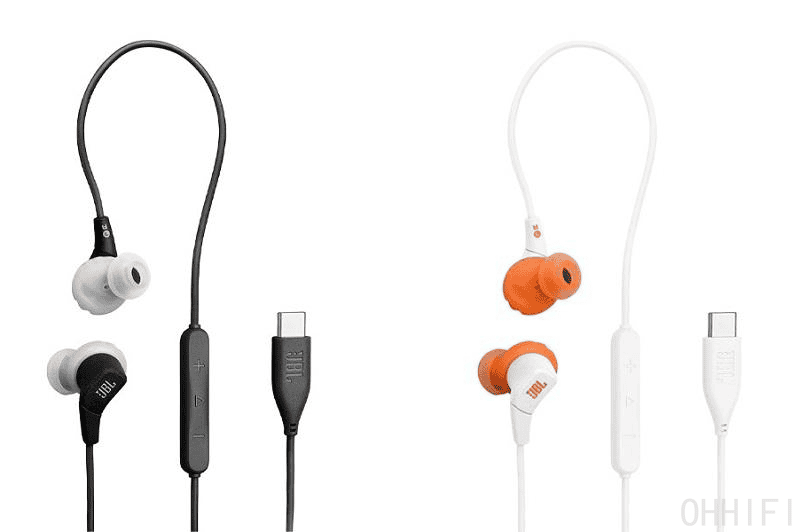
The JBL Endurance Run 3C represents the modern flagship of the wired line, designed specifically for the "post-jack" world. With the removal of 3.5mm ports from flagship devices by Apple, Samsung, and Google, the USB-C port has become the universal interface for power and data. The Run 3C is not merely a headphone with a different plug; it is a fully integrated digital audio system.
3.1 USB-C Audio Architecture and the Internal DAC
Unlike a 3.5mm headphone which receives an analog electrical signal directly from the phone's internal amplifier, the Endurance Run 3C receives a digital data stream (zeros and ones). This necessitates the inclusion of an internal Digital-to-Analog Converter (DAC) and a headphone amplifier inside the USB-C connector housing of the headphone itself.
This architecture offers several distinct advantages:
Source Independence: The audio quality is no longer held hostage by the cheap DAC chips often found in budget smartphones or laptops. The Run 3C relies on its own tuned components, ensuring a consistent sound signature regardless of the source device.
Noise Floor Reduction: By keeping the signal digital until it reaches the headphone connector, the Run 3C minimizes the potential for electromagnetic interference (EMI) that can plague analog cables running inside a noisy PC case or near a phone's cellular antenna.
3.2 Hi-Res Audio Certification: Beyond the Audible Spectrum
The Endurance Run 3C bears the Hi-Res Audio certification logo, a distinction absent from the standard Run 3. Technical specifications reveal a dynamic frequency response range of 20 Hz – 40 kHz.
While the human limit of hearing caps out at 20 kHz (and often lower for adults), the extension to 40 kHz is significant for two reasons:
Transient Response: Drivers capable of reproducing ultrasonic frequencies are typically lighter and more rigid, allowing them to start and stop more quickly. This translates to better "transient response" in the audible range—snappier snare drums, sharper cymbal attacks, and more defined pluck on guitar strings.
Harmonic Integrity: Instruments produce overtones that extend well into the upper frequencies. While we may not hear the fundamental tone at 30 kHz, the interaction of these ultrasonic harmonics affects the timbre of the sound we do hear. The Hi-Res certification ensures that the Endurance Run 3C preserves the harmonic complexity of high-fidelity recordings.
3.3 Hardware EQ Presets: Active Sound Shaping
A unique feature enabled by the digital nature of the Run 3C is the inclusion of active EQ Presets. Because the headphone contains a DSP (Digital Signal Processor), JBL has programmed three distinct sound profiles directly into the firmware, accessible via the remote:
Default Mode: Likely tuned to the Harman Target Curve, this mode offers a balanced presentation with elevated sub-bass and smooth treble, suitable for a wide range of genres from Pop to Rock.
Bass Mode: This preset engages a DSP shelf filter to boost low frequencies (20-100Hz). Psychoacoustically, bass perception diminishes during high-intensity exercise due to the masking effect of blood flow noise in the ears. The Bass Mode compensates for this, providing the rhythmic drive needed for cadence-based running or weightlifting.
Vocal Mode: This preset attenuates the bass and elevates the vocal presence region (1kHz – 4kHz). This is optimized for podcasts, audiobooks, and voice calls, ensuring intelligibility in noisy environments like gyms or public transit.
The ability to switch these modes via the hardware remote—without needing to unlock the phone or open an app—is a major usability win for athletes in the zone.
4. The JBL Endurance Run 3: The Analog Workhorse
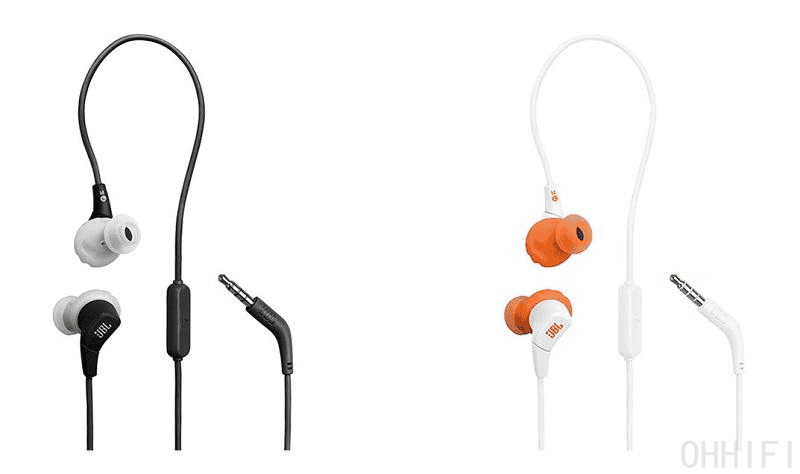
While the 3C embraces the digital future, the standard JBL Endurance Run 3 adheres to the legacy 3.5mm TRRS standard. This model is targeted at a different, though overlapping, demographic: the traditionalist, the retro-gamer, and the user of specialized legacy hardware.
4.1 The Case for 3.5mm in 2025
Why does Harman continue to invest in a connector standard that dates back to the 19th century?
Universal Compatibility with Infrastructure: Treadmills at commercial gyms, airplane seatback entertainment systems, and older desktop computers still rely exclusively on 3.5mm jacks. The Endurance Run 3 is the "dongle-free" solution for these environments.
The Switch & Steam Deck Crowd: While handheld gaming consoles support Bluetooth, the latency is often unacceptable for competitive play. The 3.5mm jack remains the gold standard for zero-latency gaming audio on platforms like the Nintendo Switch and Valve Steam Deck.
Audiophile Scalability: For users who own high-end portable DAC/Amps (like those from FiiO, iFi, or Astell&Kern), the Endurance Run 3 acts as a capable transducer. These users prefer to bypass the internal DAC of a USB-C headphone in favor of their superior outboard gear.
4.2 Technical Distinction: 20Hz – 20kHz
Notably, the analog Endurance Run 3 is listed with a frequency response of 20 Hz – 20 kHz, compared to the 40 kHz of the 3C. This suggests that while they likely share the same 8mm driver architecture, the "Hi-Res" tuning is either dependent on the 3C's internal DSP correction or the analog model is simply rated more conservatively. However, for the vast majority of Spotify or Apple Music streams, 20-20kHz covers the entire audible spectrum.
With an impedance of 16 ohms and a sensitivity of 98 dB SPL @ 1 kHz, the Run 3 is extremely efficient. It requires very little voltage to reach dangerous volume levels, making it compatible with even the weakest output jacks found on older MP3 players or budget airplane adapters.
5. Acoustic Performance: The "JBL Pure Bass" Signature
Both the Run 3 and Run 3C feature an 8mm Dynamic Driver. This driver size is a strategic compromise in the world of In-Ear Monitors (IEMs).
vs. 6mm Micro-Drivers: 8mm drivers have a larger surface area, allowing them to displace more air. This is crucial for reproducing the physical sensation of "slam" in the sub-bass frequencies, a hallmark of the "JBL Pure Bass" sound.
vs. 10-12mm Drivers: Larger drivers often require bulkier housings that can protrude from the ear, causing instability during running. The 8mm driver allows the Endurance Run chassis to remain flush with the ear, reducing wind noise and improving fit stability.
5.1 The Sound Signature
"JBL Pure Bass" is not merely a marketing slogan; it describes a specific house tuning. Based on the provided data and JBL’s historical target curves, we can infer the sonic character:
Low Frequency: Elevated sub-bass extension. This provides the "thump" of a kick drum or the rumble of a synthesizer, which is vital for maintaining motivation during workouts.
Mid Frequency: The midrange is likely tuned to be neutral but slightly recessed (V-shaped) to prevent the bass from "bleeding" into the vocals, maintaining clarity.
High Frequency: The treble is engineered to be crisp but safe. Harsh treble peaks can become fatiguing at high volumes, especially when an athlete's heart rate is up. The roll-off in the upper treble ensures the sound remains non-fatiguing over long sessions.
6. Comparison: Endurance Run 3 Series vs. Endurance Peak 3
To fully understand the market placement of the Run 3, we must compare it to its wireless sibling, the JBL Endurance Peak 3.
Feature
JBL Endurance Run 3 / 3C
JBL Endurance Peak 3 (Wireless)
Connection
Wired (3.5mm or USB-C)
Bluetooth 5.2 (True Wireless)
Power Source
External (Phone/PC)
Internal Li-Ion Battery
Playtime
Infinite
10 Hours (Buds) + 40 Hours (Case)
IP Rating
IP65 (Dust/Water Jet)
IP68 (Dust/Submersion)
Fit Style
FlipHook™ (In/Behind Ear)
PowerHook™ (Over-ear Loop)
Drivers
8mm Dynamic
10mm Dynamic
Ambient Mode
No (Passive Isolation Only)
Yes (Ambient Aware / TalkThru)
Price (Approx)
$19.95 - $49.90
$99.95
Weight
~17g - 21g
~25g (per bud)
Latency
Zero
Standard Bluetooth Latency
6.1 The Verdict on Wireless vs. Wired
The Endurance Peak 3 is a superior device for users who demand absolute freedom of movement and features like Ambient Aware (electronic pass-through of outside noise). Its IP68 rating also makes it suitable for surfing or complete submersion.
However, the Endurance Run 3 wins on reliability and simplicity. There is no pairing process, no firmware updates (for the analog version), no battery to charge, and no risk of a single earbud desynchronizing. For the runner who simply wants to plug in and go, the Run 3 offers a friction-less experience that the Peak 3 cannot match. Furthermore, at roughly one-third the price, the Run 3 is a far more palpable loss if left behind in a locker room.
7. Market Analysis and Pricing Strategy
7.1 Pricing Tiers
The pricing strategy for the Endurance Run 3 series is aggressive, targeting the "impulse buy" or "essential replacement" segment.
Endurance Run 3 (Wired): Approximately $19.95 - $29.90 USD.
Endurance Run 3C (USB-C): Approximately $39.98 - $49.90 USD.
This pricing structure is strategic. The $20 price point for the Run 3 makes it an easy upsell at checkout counters or a low-risk purchase for travelers who forgot their main headphones. The $40-$50 price point for the Run 3C positions it as a "Premium Wired" product, justifying the cost with the inclusion of the DAC, Hi-Res certification, and EQ features.
7.2 The "Disposable" Durability Paradox
In the sports audio market, there is a consumer segment that views headphones as semi-consumable items. Sweat, gym bag debris, and rough handling take a toll on any device. Many consumers are hesitant to subject expensive $250 TWS earbuds to this abuse. The Endurance Run 3, with its IP65 rating and low entry price, occupies the niche of the "Sacrificial Workhorse"—a high-quality durable headphone that saves the user's expensive gear from the daily grind of the gym.
8. Conclusion: The Verdict
The JBL Endurance Run 3 and Endurance Run 3C are not technological steps backward; they are specialized tools refined for a specific purpose. In a world of fragile batteries and connection dropouts, the wire is not a tether—it is a lifeline.
The Endurance Run 3 (Analog) stands as a testament to the longevity of the 3.5mm jack, offering a rugged, high-fidelity option for gamers and legacy hardware users. It is the ultimate "backup" headphone that requires no maintenance and never dies.
The Endurance Run 3C (Digital) is the star of the release. It successfully modernizes the wired headphone for the USB-C era. By integrating a high-quality DAC, Hi-Res capabilities, and active EQ functionality into a sweat-proof IP65 package, it offers a compelling alternative to Bluetooth earbuds. It delivers better sound quality, zero latency, and zero battery anxiety for less than half the price of a decent wireless pair.
For the readers of this publication—whether you are an audiophile seeking a gym monitor that won't compromise on resolution, or a runner tired of charging cases—the Endurance Run 3 series proves that some of the best audio technologies are the ones we thought we had left behind.
Editor’s Choice: The JBL Endurance Run 3C is the standout winner. Its combination of USB-C convenience, hardware EQ, and Hi-Res certification makes it the most versatile and high-value sports headphone on the market in 2025.
Key Takeaways for the Consumer
Choose the Run 3 (3.5mm) if you game on Switch/Steam Deck, use gym treadmills, or have a high-quality external DAC.
Choose the Run 3C (USB-C) if you use a modern smartphone (iPhone 15+, Android), want hardware EQ presets for podcasts/music, and value Hi-Res Audio certification.
Choose neither (and go for Endurance Peak 3) only if you absolutely cannot tolerate a cable touching your neck or need Ambient Aware mode for city running safety.









Comments