In the rarefied atmosphere of ultra-high-end audio, where components often cost more than luxury automobiles and weigh as much as their engines, the word "legendary" is tossed around with careless abandon. It has become a marketing cliché, a hollow adjective used to prop up products that are merely expensive rather than truly significant. Yet, in the quiet, industrial town of Ry, Denmark, amidst the brooding, minimalist design ethos of Gryphon Audio Designs, legends are not written in marketing copy. They are forged in aluminium, copper, and the relentless pursuit of Class A perfection.
For over three decades, the Antileon stereo power amplifier has been the beating heart of Gryphon’s formidable lineup. It is the spine of the brand, the "real world" flagship that sits just below the stratosphere occupied by the colossal Mephisto and the recently launched, earth-shaking Apex. To tamper with such a lineage is a dangerous game. When a product achieves icon status—when it becomes the benchmark against which other high-current amplifiers are measured—changing it risks breaking the spell. The audiophile community is conservative; we like our heroes to stay heroic in the way we remember them.
So, when Gryphon Audio Designs announced the Antileon Revelation at High End Munich in May 2025, celebrating the company’s 40th anniversary and the Antileon’s 30th year of dominance, the audio world held its collective breath. Was this merely a cosmetic facelift? A cynical "Anniversary Edition" with a new badge and a higher price tag? Or was it, as the audacious name suggested, a genuine revelation?
The stakes could not be higher. The Antileon EVO, the Revelation's immediate predecessor, was widely regarded as one of the finest solid-state amplifiers ever built—a masterclass in "iron fist in a velvet glove" power delivery. Replacing it requires not just engineering prowess, but a philosophical vision of where high-end audio is heading in the mid-21st century.
This report is the result of three months of intensive evaluation. The Antileon Revelation Stereo has anchored our reference system, heating the listening room to tropical temperatures, spinning the electric meter like a centrifuge, and fundamentally rearranging our understanding of what a solid-state amplifier can achieve. It is a story of heavy metal, extreme heat, and a sound so dense it feels like it has gravitational pull.
The Lineage: Forty Years of the Black Knight
To truly understand the Antileon Revelation, one must first understand the bloodline from which it descends. This is not a product born in a vacuum; it is the latest chapter in a saga that began when founder Flemming E. Rasmussen decided that the audio market lacked products that met his uncompromising standards.
The DNA: DM-100 to Antileon
The story begins in 1991 with the Gryphon DM-100. This amplifier established the genetic code for every Gryphon power amplifier that would follow: true Dual Mono design, pure Class A circuit topology, massive power supplies, and a steadfast refusal to use global negative feedback. Rasmussen believed that while negative feedback could yield pretty measurements on an oscilloscope, it sucked the life and immediacy out of the music.
The original Antileon followed, refining this brute-force approach. Then came the Antileon Signature, a product that many audiophiles still hoard today. It brought a level of refinement and "dark" silence that was unheard of at the time.
The Reign of the EVO
Approximately a decade ago, the Antileon EVO was unleashed. It was a triumph. The EVO took the Gryphon "house sound"—rich, dense, slightly dark, and incredibly authoritative—and polished it. It was the amplifier for those who found Boulder too clinical, Soulution too dry, or D'Agostino too colorful. It had soul. It was a dreadnought that could drive any speaker load, no matter how reactive or dip-prone, with absolute stability.
The Apex Shift
However, the landscape of high-end audio is not static. Recently, Gryphon launched the Apex, a flagship amplifier that redefined the limits of transparency and speed. The Apex signaled a subtle but significant shift in the Gryphon voicing. It moved away from the romantic "darkness" of the past toward a sound that was faster, more illuminated, and ruthlessly honest.
This created a gap in the lineup. The EVO, for all its glory, suddenly sounded a bit "slow" compared to the lightning-fast Apex. The challenge for the Revelation was massive: bridge the gap. It needed to retain the Antileon’s famous richness—that "meat on the bones" texture that fans adore—but inject the transparency, air, and transient snap of the Apex. It had to be a "Baby Apex" while remaining a true Antileon.
Anatomy of a Titan: Design and Engineering
Let’s be real for a moment. The Antileon Revelation is physically intimidating. Unboxing it is not a task; it is a construction project.
The Chassis: Industrial Sculpture
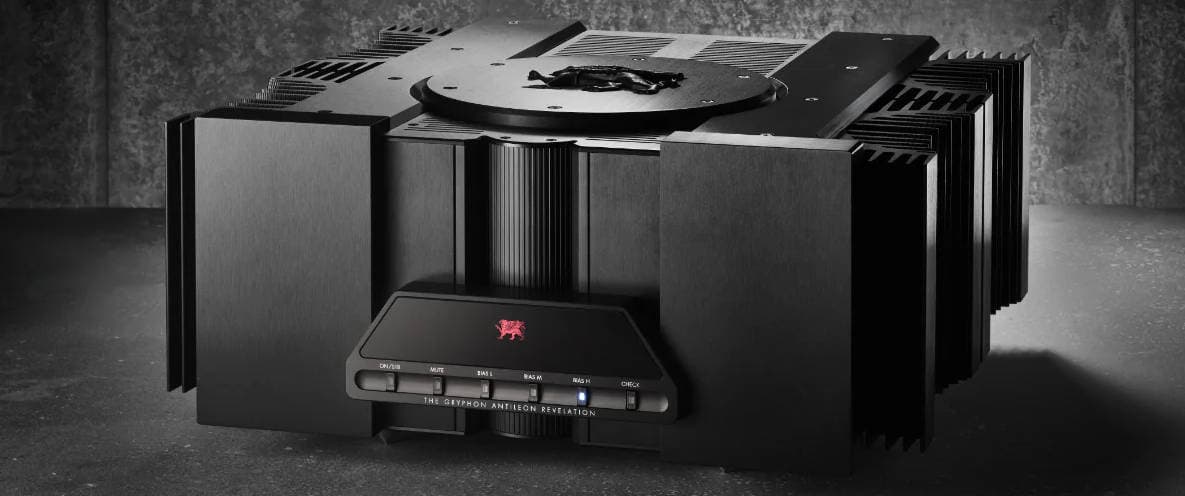
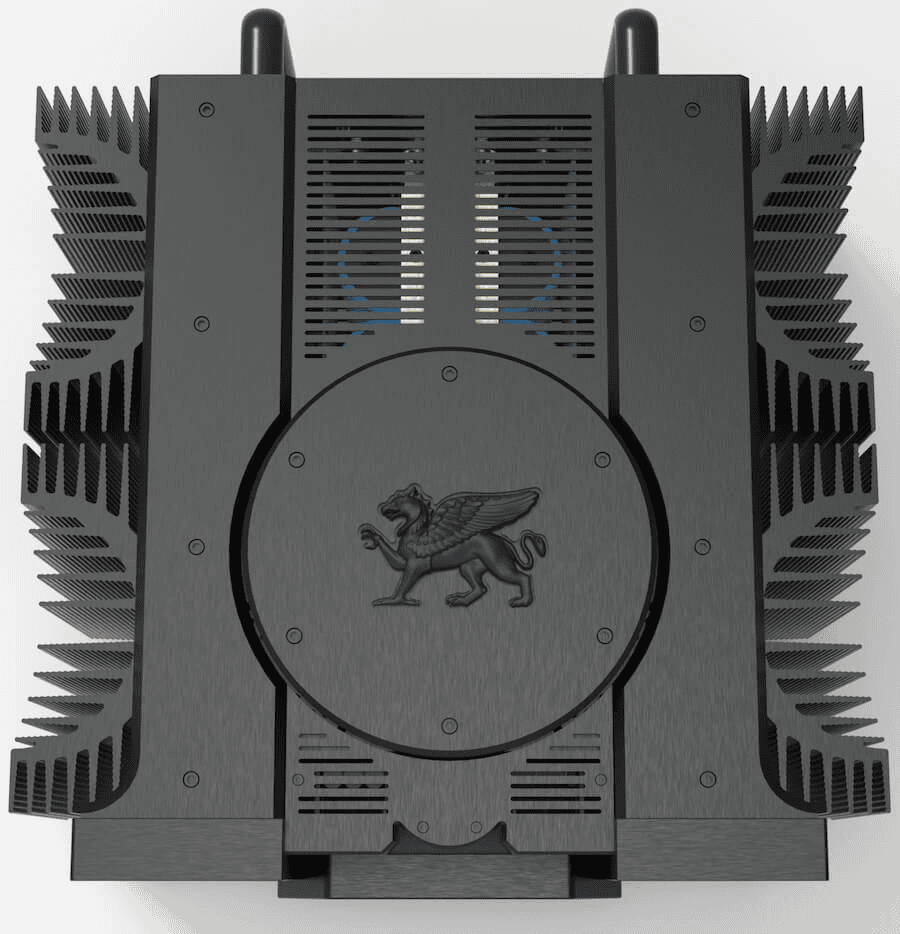
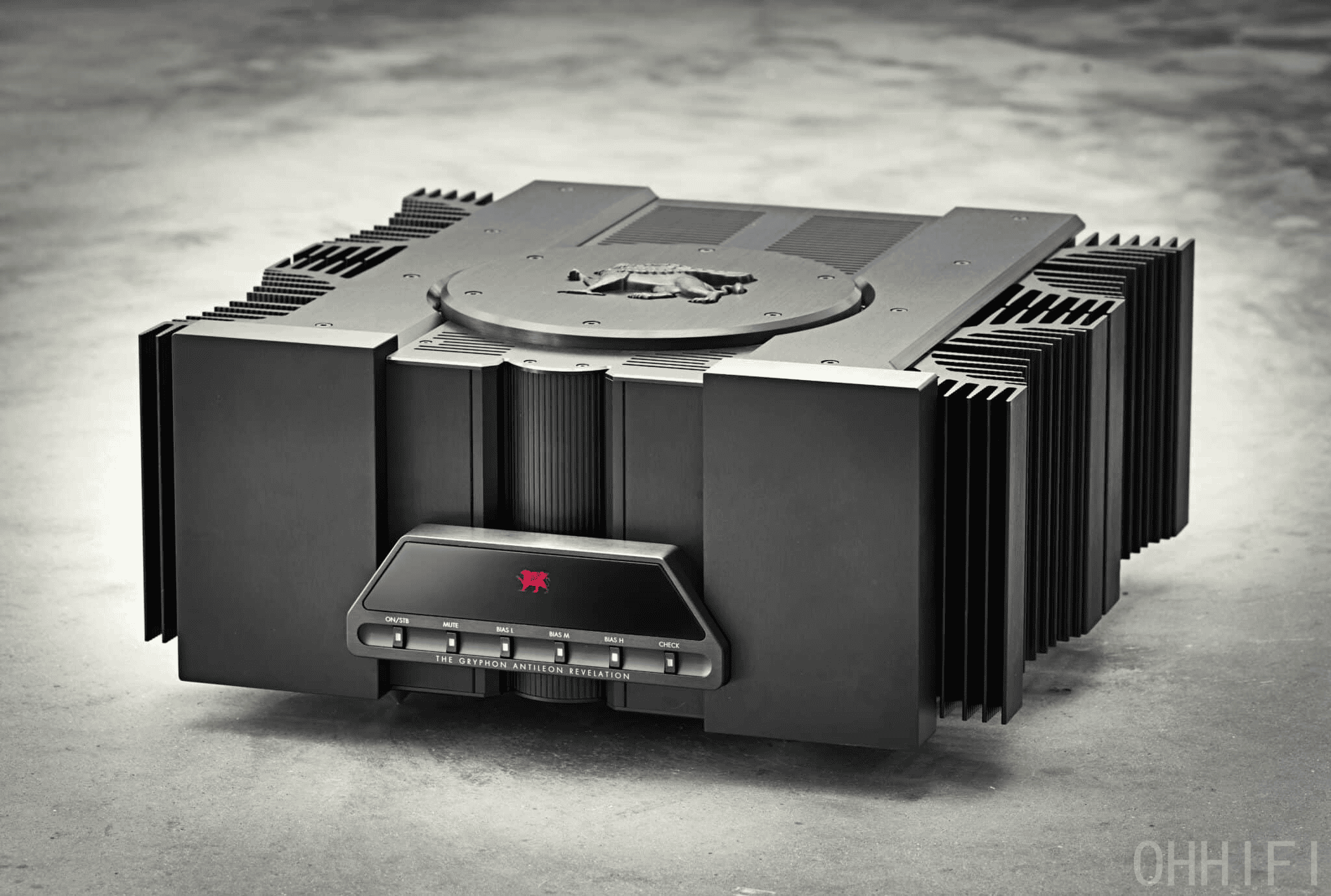
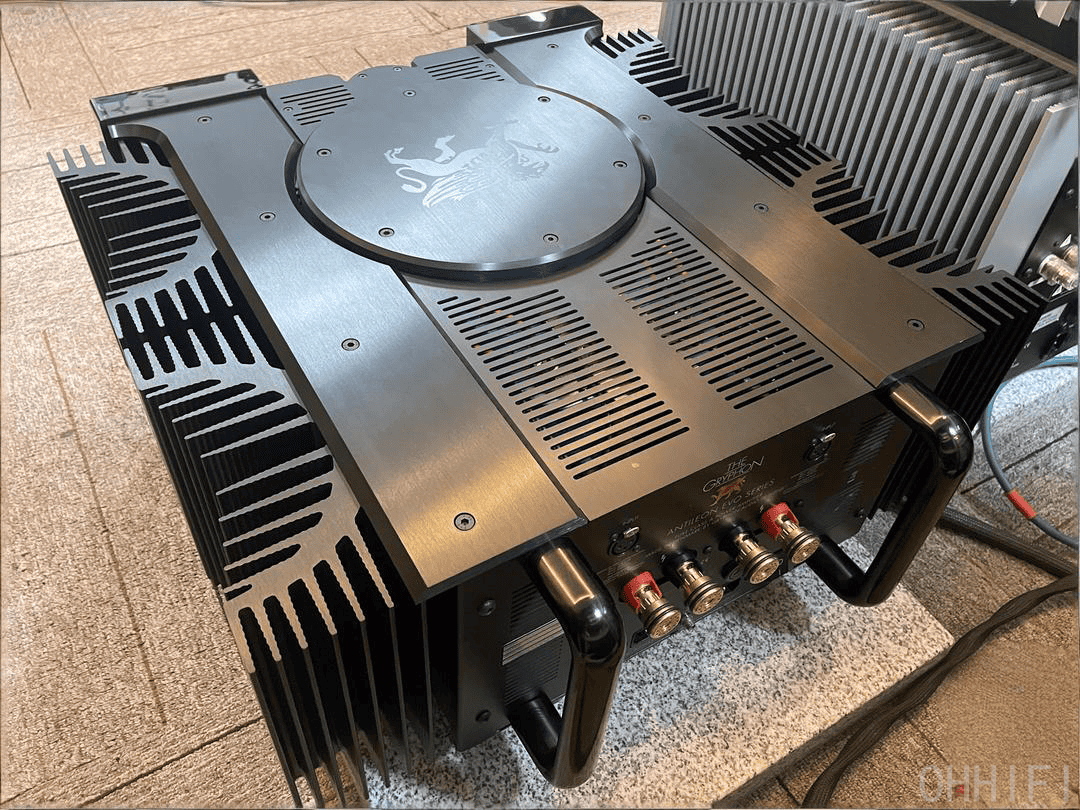
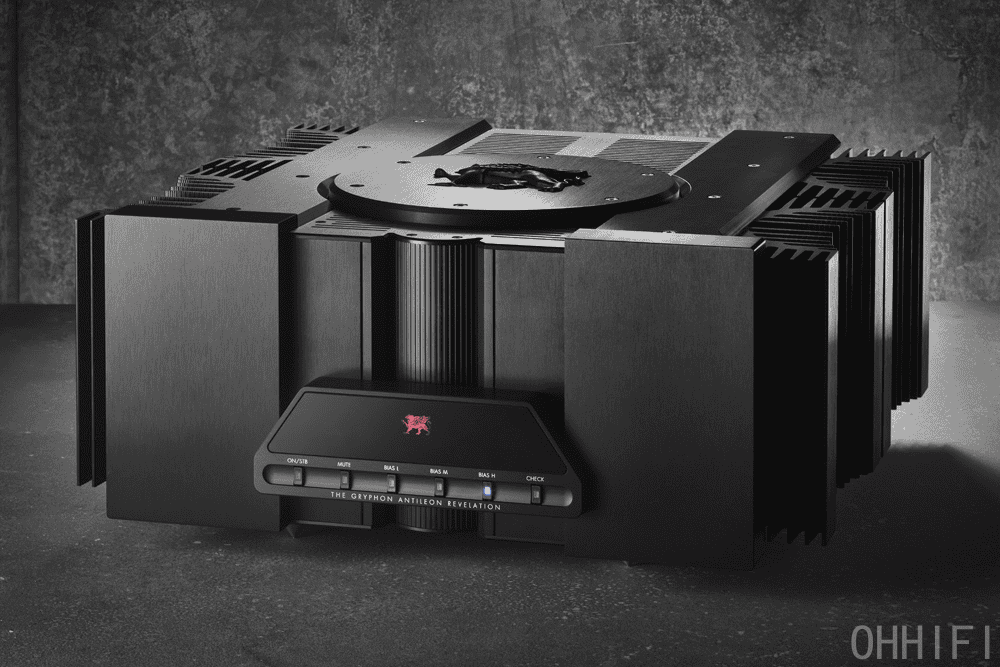
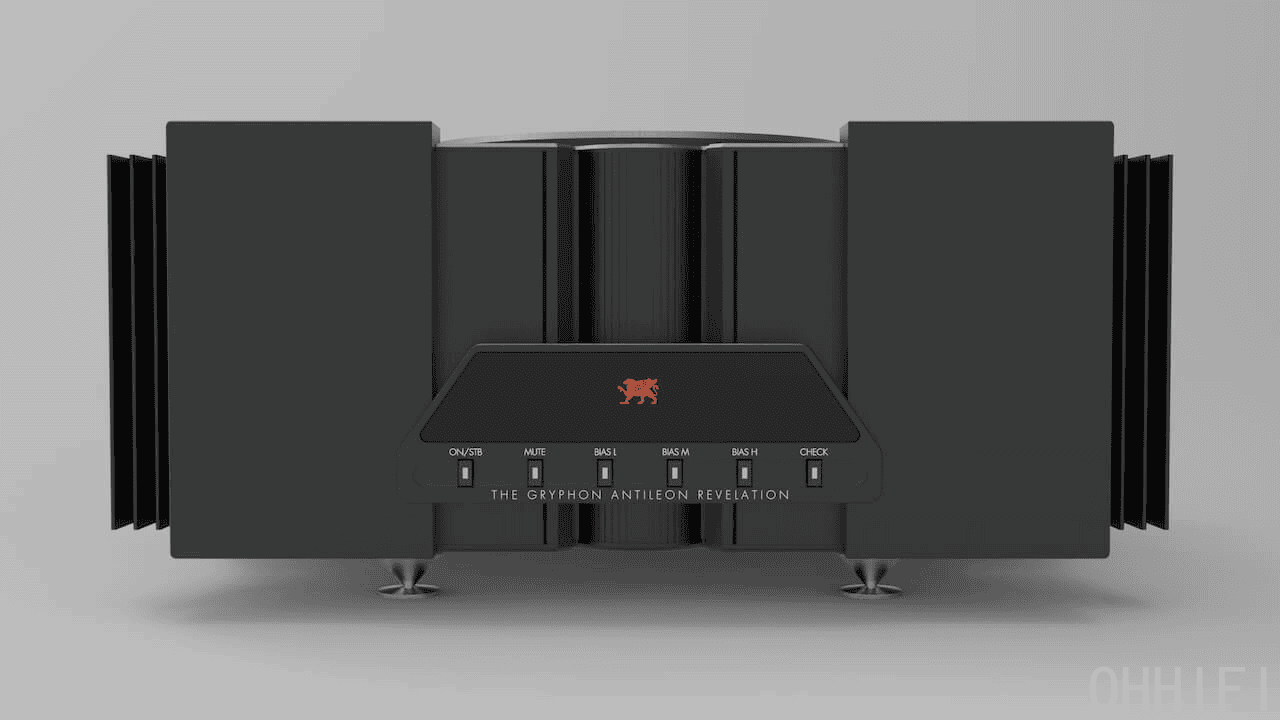
Weighing in at a crushing 90 kg (198 lbs) for the stereo chassis, this is a two-person lift, minimum. If you value your lumbar discs, hire professional movers. The chassis is a masterclass in functional industrial art. The aesthetics are classic Gryphon: brooding black acrylic, massive heatsinks that look capable of shredding a phone book, and a build quality that feels military-grade.
Visually, the most striking departure from the EVO is the top plate. Where the EVO was relatively understated, the Revelation features a massive, bas-relief Gryphon sculpture crowning the transformer cover. It is bold. It is aggressive. Some minimalists might call it ostentatious, but in a world of nondescript silver boxes, the Revelation demands attention. It does not want to hide in a cabinet; it demands floor space, preferably reinforced.
The Power Supply: A Reservoir of Energy
The technical specifications read like the inventory of a small power station.
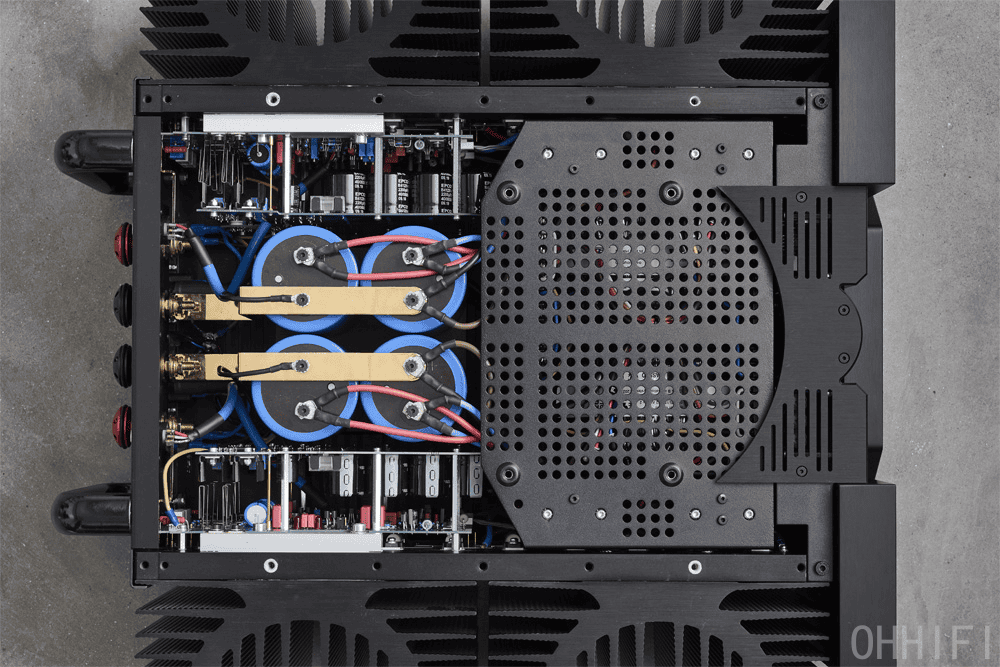
Capacitance: The Revelation boasts 335,000 µF of power supply capacitance per channel. That is 670,000 µF total per chassis. To put that in perspective, many high-end amplifiers hover around 80,000 to 100,000 µF. Why this excess? Stiffness. A stiff power supply acts like an unmovable object. When a musical transient—a kick drum, an orchestral crescendo—demands instantaneous current, the voltage rails do not sag. The energy is there, stored in that massive capacitor bank, ready to be dumped into the speaker terminals in nanoseconds.
Transformers: Twin 1,500 VA custom toroidal transformers anchor the chassis. These are not off-the-shelf components. They are custom-wound, suspended, and epoxy-damped to eliminate mechanical hum. In our testing, even with ears pressed against the chassis, the unit was dead silent—a remarkable feat for such a massive magnetic field.
Power Output: The amplifier is rated at 2 x 160 Watts (8Ω), doubling to 2 x 320 Watts (4Ω), and 2 x 620 Watts (2Ω). It remains stable even into 1-ohm loads. Do not be fooled by the "160 Watts" figure. In the world of Gryphon Class A, these are "high-current" watts. The subjective power feels limitless.
The Heart of the Beast: BJT vs. JFET
Here lies the most critical engineering shift, the detail that explains the sonic evolution. The Antileon EVO utilized a JFET (Junction Field Effect Transistor) input buffer. JFETs are beloved in the audio world for their tube-like warmth, high input impedance, and "soft" clipping characteristics. They contributed significantly to the EVO's romantic, darker character.
The Revelation, however, abandons the JFET input for a high-current-gain input buffer using Bipolar Junction Transistors (BJTs) from Zetex. Furthermore, the output stage uses 40 high-current bipolar Toshiba output transistors—the exact same devices found in the flagship Apex.
Why does this matter?
BJTs are generally faster. They offer lower noise and, crucially, a tighter "grip" on the signal. They are less euphonic than JFETs but more accurate. This circuit change is the smoking gun behind the sonic shift reported by early listeners: a move toward greater neutrality, extended treble, and dynamic snap. It is a deliberate move away from the "soft" warmth of the past toward a modern, high-resolution presentation that aligns with the Apex philosophy.
Connectivity and Protection
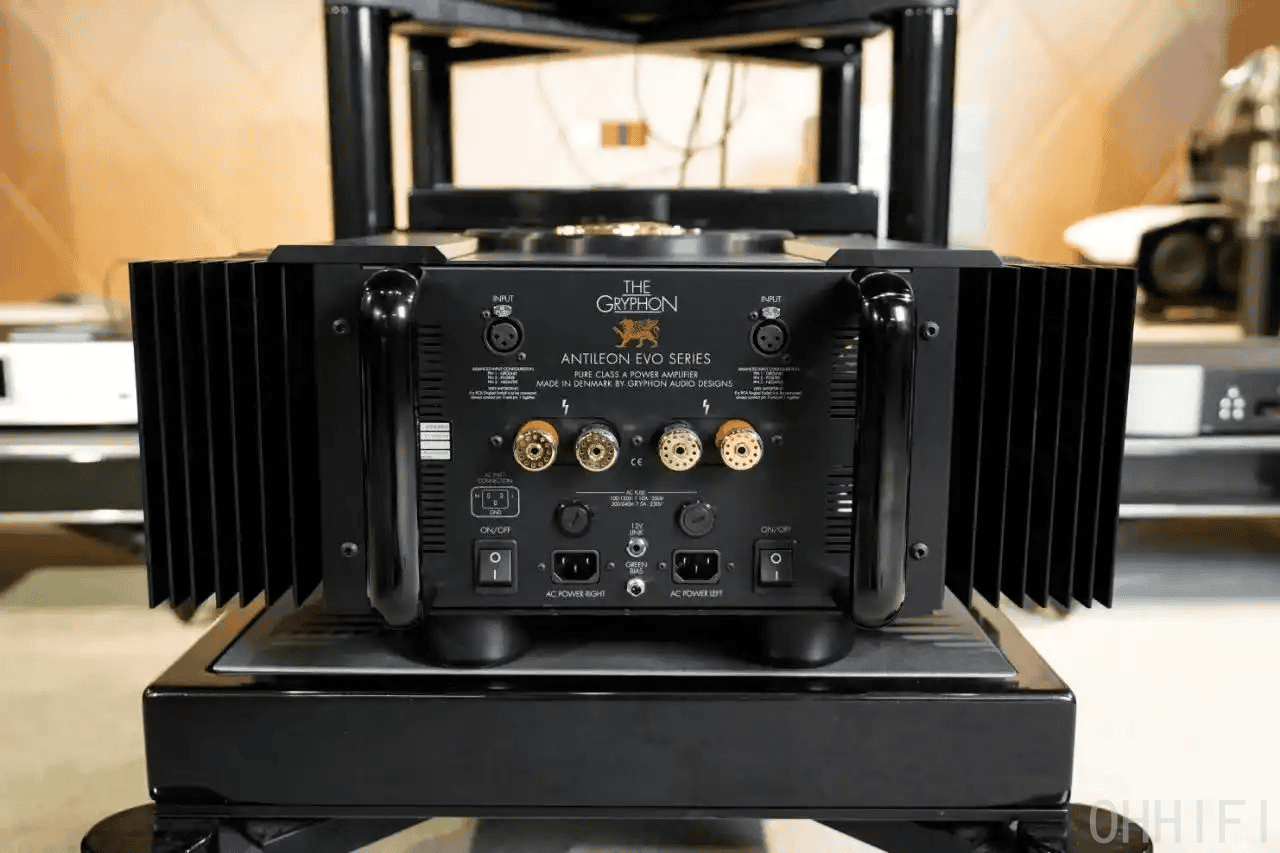
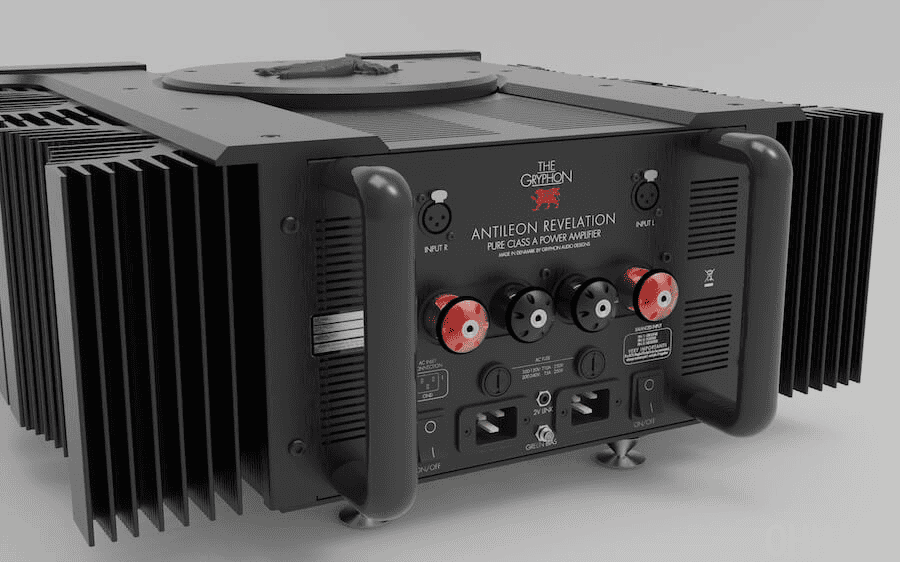
The rear panel has been cleaned up and modernized. The Revelation sports Gryphon’s new bespoke gold-plated binding posts. These are massive, easy to grip, and allow for a torque-wrench tight connection with spade lugs.
Crucially, the amplifier uses dual 20-amp AC connectors. Standard 15-amp IEC cords (the ones shaped like a house) will not fit. You need the rectangular C19 connectors. This is necessary to handle the current draw during startup and peak Class A operation.
The amplifier also features Gryphon's non-invasive protection system. Unlike output relays, which put a contact point directly in the signal path (and thus degrade the sound), Gryphon’s protection circuitry monitors the rail voltages and current without ever touching the audio signal. If a fault is detected, it shuts down the power supply, saving your speakers without compromising sonic purity.
Green Bias: A Concession to Reality
Class A amplification is inherently inefficient. It runs full throttle all the time, dissipating the unused energy as heat. The Revelation gets hot. Very hot.
Gryphon includes a feature called "Green Bias." When connected to a Gryphon preamplifier via a control link, the amplifier automatically adjusts its bias level based on the volume setting.
Low Volume: The amp drops to "Low Bias" (Class AB or deeply slid Class A). It runs cooler and uses less electricity.
High Volume: As you turn the volume knob past a certain threshold (e.g., -40dB), the amp automatically ramps up to "High Bias," engaging full Class A operation.
This feature is seamless and brilliant. It allows the owner to leave the system on for background listening without heating the entire house or incurring a massive electric bill, yet ensures that full performance is instantly available when serious listening begins.
Feature
Specification
Model
Gryphon Antileon Revelation Stereo
Price
~$45,500 USD (per chassis)
Class
Pure Class A
Output Power (8Ω)
2 x 160 Watts RMS
Output Power (4Ω)
2 x 320 Watts RMS
Output Power (2Ω)
2 x 620 Watts RMS
Output Power (1Ω)
Stable (approx. 1100W+)
Frequency Response
0.3 Hz – 350 kHz (-3 dB)
Power Supply Capacitance
2 x 335,000 µF (Total 670,000 µF)
Output Impedance
0.04Ω
Input Impedance
20 kΩ (Balanced)
Gain
+31 dB
Dimensions (WxHxD)
57 x 26 x 60 cm
Weight
90 kg (198 lbs)
Output Devices
40 x High-current Bipolar Toshiba Transistors
Power Consumption
<0.5W (Standby), ~500W (Idle High Bias), 2500W (Max)
Setup and Installation: Taming the Dragon
Installing the Antileon Revelation is a ritual that demands respect.
Our review sample arrived in a massive wooden crate. Moving it into the listening room required a appliance dolly and nerves of steel. Once positioned on our reference CMS Maxxum rack (on the bottom shelf, naturally), it dominated the room.
System Context
To evaluate the Revelation fairly, we placed it in a system of impeccable pedigree:
Speakers: Wilson Audio Alexx V and Marten Mingus Quintet 2. The Martens, with their ceramic drivers, are ruthless revealers of amplifier speed and grain. The Wilsons test bass authority and dynamic slam.
Preamplifier: Gryphon Commander. Synergy is real. The Commander is known for being "dead neutral," allowing the amplifier's character to be the sole variable. We also rotated in a dartZeel NHB-18NS for a contrasting perspective.
Source: dCS Vivaldi Apex Stack and TechDAS Air Force One turntable with a SAT tonearm.
Cabling: A full loom of Gryphon Vanta cables, ensuring that the "house sound" was maintained from source to speaker.
The Thermal Reality
Let’s discuss the heat. This is not a Class D amplifier that you can stuff in a cupboard. It is a space heater. In our roughly 400-square-foot listening room, the temperature rose by about 4 degrees Fahrenheit after two hours of listening in High Bias mode. Ventilation is mandatory. Do not place this amp in an enclosed cabinet unless it has active fan cooling.
However, there is something psychologically reassuring about the heat. It feels like the amp is working. It feels like power.
Warm-Up Time
Like all high-bias Class A designs, the Revelation needs time to wake up. Cold, right out of standby, it sounds impressive but slightly constricted—the soundstage is flat, and the treble has a hint of grain.
After 45 minutes, a transformation occurs. The heatsinks reach their operating temperature (too hot to touch for more than a few seconds), and the sound "blooms." The grain vanishes. The bass deepens. The soundstage expands in all three dimensions. Serious listening should only be undertaken after this thermal equilibrium is reached.
The Listening Experience: A "Flesh and Bone" Revelation
So, does the "Revelation" live up to the name?
In a word: Yes.
The first thing that hits you is the density of the presentation.
Many modern solid-state super-amps—think Soulution, CH Precision, or the newer Boulders—chase an "ethereal" transparency. They sound light, fast, and incredibly detailed, like looking through pristine, invisible glass.
The Gryphon sound is different. It doesn't just show you the image; it materializes it. It creates a physical presence in the room.
The Bass: Subterranean Authority
Gryphon has always been the undisputed king of bass. The Antileon EVO was famous for it. The Revelation somehow improves on perfection.
We aren't just talking about "slam." We are talking about grip.
We queued up Massive Attack’s "Angel." The opening bass line is a torture test for control. On lesser amps, it blooms and wobbles, blurring the rhythm. On the Revelation, it felt like the concrete foundation of the listening room was being pressurized. The start-stop capability is terrifying. The notes don't "fade" out; they are strangled into silence the moment the signal stops. This is the 670,000 µF capacitance laughing at the speaker's back-EMF.
But it’s not just electronic bass. On Brian Bromberg’s acoustic bass rendition of "Come Together," the texture was palpable. You don't just hear the string vibrating; you hear the wood of the body, the friction of the finger on the fretboard. It has weight. It has mass. The Revelation reproduces the "growl" of the instrument with a ferocity that makes you sit up and pay attention.
The Midrange: The "Baby Apex" Effect
This is where the BJT input stage and the Apex transistors show their hand.
The old Antileon Signature and EVO were famously "dark." They had a "chocolatey" midrange that was seductive but occasionally obscured the finest micro-details.
The Revelation wipes the window clean.
Listening to Joyce DiDonato, the voice was, as Stereophile noted in their preview, "drop-dead gorgeous". But it wasn't overly romanticized. It was honest. I could hear the wetness of the lips, the intake of breath, the tiny modulations of vibrato that lesser amps smooth over.
The "grainless" quality mentioned in the press materials is real. Class A eliminates crossover distortion, and the result is a midrange that flows like liquid. It’s not "tube-like"—it’s better. Tubes often add even-order harmonics (distortion) to create warmth. The Revelation provides warmth by removing the electronic grit of Class AB switching.
There is a "flesh and bone" quality here. Instruments sound solid. A piano doesn't sound like a recording of a piano; it sounds like a large wooden percussion instrument sitting in the room.
The Treble: Air and Extension
If the EVO had a weakness, it was a slightly rolled-off top end. It was polite.
The Revelation is extended. It sparkles.
On Prince’s "Muse 2 The Pharaoh" (a track I revisit often for its production), the high-hats and shakers had a snap and airiness that the EVO never quite managed. The transient attack of percussion is lightning fast.
However, it is not bright. Let me be clear. If you are coming from a spectral, hyper-analytical amp, the Gryphon might still sound "dark" to you. But compared to its lineage, it has opened the sunroof. The "Nordic sunrise" description is poetic but accurate. It’s a clear, cool light, not a blinding glare.
Dynamics: The Heavyweight Boxer vs. The Ballerina
A popular YouTube reviewer once compared the D'Agostino Momentum to a "ballerina" and the Gryphon to a "heavyweight boxer". This analogy holds up perfectly with the Revelation.
The D'Agostino dances; it is light on its feet, nimble, and graceful.
The Gryphon Revelation plants its feet and throws haymakers. It moves air with violence when required.
We played the finale of Mahler’s 2nd Symphony. The dynamic swing from the whisper-quiet choir to the full orchestral explosion is one of the hardest things for an amp to track. Most amps compress; the soundstage collapses as the power supply runs out of gas.
The Revelation didn't blink. It didn't compress. It just got louder. And louder. The soundstage didn't collapse; it expanded. You feel the physical thrust of the music in your chest. It is an exhilarating, visceral experience that goes beyond mere listening.
Soundstaging: Holography with Density
The soundstage projected by the Revelation is vast, particularly in depth. It doesn't push the sound forward into your lap; it starts at the speaker plane and extends backward through the wall.
What distinguishes it from competitors like Boulder is the density of the images within that stage. With some amps, the images are like ghosts—transparent and ethereal. With the Revelation, the images are solid. You feel like you could walk into the soundstage and bump into the cellist.
Musical Deep Dives: Track by Track Analysis
To fully understand the nuance of the Revelation, we must look at specific musical examples across various genres.
1. Electronic/Bass: James Blake - "Limit to Your Love"
This track is famous for its wobbling sub-bass that stops and starts rapidly.
Performance: The Revelation handled this with disdainful ease. The silence between the bass notes was absolute "black." There was no hangover, no muddying of the piano that plays over the top. The sheer pressurization of the room was frightening. It proved that the amp’s damping factor and current delivery are world-class.
A standard audiophile test for speed and transient decay.
Performance: The initial pluck of the strings had a startling snap. The BJT input stage showed its worth here—the speed was "Apex-like." But unlike some hyper-fast amps that make the guitar sound like steel strings floating in a vacuum, the Revelation preserved the resonance of the wooden body. You could hear the size of the guitar. The harmonic decay hung in the air, illuminating the acoustics of the venue.
3. Jazz Vocals: Cécile McLorin Salvant - "You Bring Out The Savage In Me"
Performance: The texture of Salvant’s voice was hyper-realistic. The amp captured the subtle growls and whispers in her delivery without adding any artificial sibilance. The double bass in the background remained distinct and woody, never getting lost behind the piano. The presentation was intimate, "flesh and bone," making it feel as though the performance was happening just for us.
4. Rock: The Rolling Stones - "Sympathy for the Devil"
Performance: This track relies on rhythm and the separation of complex percussion layers (bongos, shakers, kit).
Performance: The Revelation kept everything separated in 3D space. The "heaviness" sometimes associated with Gryphon was gone, replaced by a driving, infectious rhythm. The amp boogies. It has shed the "slow" feeling that some attributed to older Class A designs. The grip on the rhythm section gave the track a propulsive energy that was impossible to ignore.
5. Classical: Stravinsky - "The Firebird" (Infernal Dance)
Performance: The orchestral hits were explosive. The brass section had "bite" without being harsh. The most impressive aspect was the stability of the soundstage during the most chaotic passages. Every instrument group stayed locked in its position, regardless of the volume.
Comparisons: The Battle of the Super-Amps
No product exists in a vacuum. At $45,000+ per chassis, the competition is fierce. How does the Revelation stack up against the heavyweights?
Gryphon Antileon Revelation vs. Gryphon Antileon EVO
The EVO is a classic, and many owners will be asking: "Is it worth the upgrade?"
Tonality: The EVO is warmer, darker, and thicker. The Revelation is more neutral, faster, and significantly more open in the treble.
Resolution: The Revelation digs deeper into the mix. The "veil" is lifted. Micro-details that were buried on the EVO are audible on the Revelation.
Bass: The EVO has massive bass, but the Revelation’s bass is tighter and more articulated. The EVO is a sledgehammer; the Revelation is a sledgehammer with a laser sight.
Verdict: If you love the "syrupy," dark Gryphon sound of old, you might actually prefer the EVO. But if you want that density combined with modern resolution and speed, the Revelation is a significant upgrade.
Gryphon Antileon Revelation vs. Gryphon Apex Stereo
The Apex is the flagship ($100k+). Is the Revelation just a "Baby Apex"?
Yes. And that makes it a bargain.
The Apex is even more transparent, even more limitless in power, and has a larger soundstage. It is effortless on a scale that defies physics. But the Revelation gets you 85-90% of the way there for half the price. The Apex is for the person who needs to drive a stadium or has the absolute hardest-to-drive speakers on the planet. For most domestic environments, the Revelation provides a similar sonic flavor—that blend of grip and ease—at a more accessible (though still high) price point.
Gryphon Antileon Revelation vs. Boulder 1160
The Boulder 1160 is the American contender.
Character: Boulder is famously "cool," "holographic," and "see-through". It prioritizes absolute transparency and a 3D soundstage that sits behind the speakers. It is intellectually satisfying.
Gryphon: The Revelation is "denser," "warmer" (though less than before), and projects into the room. It is emotionally satisfying.
Choice: If you want to analyze the recording and hear exactly what the microphone heard, buy the Boulder. If you want to feel the musicians and have a physical connection to the performance, buy the Gryphon. The Gryphon has more "boogie factor."
Gryphon Antileon Revelation vs. Pilium Achilles
The Greek Pilium amps are the new darlings of the ultra-high-end, challenging Gryphon's dominance in Europe.
Character: Pilium is known for extreme neutrality and a very "live" vocal presence. It is exceptionally transparent.
Comparison: The Pilium Achilles is perhaps even more neutral than the Revelation. The Revelation still has a touch of that Class A golden glow—a slight richness in the mid-bass that gives it that "Gryphon hug." The Gryphon feels heavier in the bass; the Pilium feels slightly faster in the mids. It’s a toss-up, but the Gryphon’s dealer network, resale value, and 40-year heritage might tip the scales for conservative buyers.
Gryphon Antileon Revelation vs. D'Agostino Momentum S250
Character: The Momentum is beautiful, jewel-like, and sounds "sweet" and fluid. It is the "ballerina."
Comparison: The Gryphon sounds significantly larger and more powerful. The D'Agostino has a magical, lit-from-within midrange that is hard to beat, but the Gryphon crushes it in terms of bass dynamics and sheer scale. If you listen to chamber music, the D'Agostino is seductive. If you listen to Mahler or Metallica, the Gryphon is the only choice.
Synergy: The Matching Game
Building a system at this level is about synergy. You cannot just throw random expensive components together.
Preamplifiers
Gryphon amplifiers are designed to work best with Gryphon preamplifiers. It’s an impedance matching thing, and a voicing thing.
Gryphon Commander: We tested it primarily with the Commander ($69,800). The synergy is flawless. The Commander is "dead neutral," allowing the Revelation’s character to shine without adding its own color. This combo is the "Apex-light" system.
Gryphon Essence: The Essence preamp ($21,500) is also a great match if the Commander is out of budget. It is slightly warmer but has the necessary drive.
Non-Gryphon: We tried an Audio Research Ref 6SE tube preamp. It was a lovely combination, adding more bloom and air, but we felt we lost some of that legendary bass grip and silence. For the full "Gryphon experience," stick to solid-state, preferably from the same stable.
Speakers
The Revelation loves difficult loads. It thrives on them.
Magico: A great match. The Gryphon adds necessary body and "meat" to the Magico’s analytical and sometimes lean nature. The M-series or S-series would sing with this amp.
Wilson Audio: A classic pairing. The bass slam of a Wilson speaker driven by a Gryphon is visceral. The Alexx V sounded authoritative and controlled.
Marten: The ceramic drivers love the speed of the new BJT input stage. In the past, Gryphon/Marten could be a bit "thick," but the Revelation has the speed to keep up with the diamond tweeters and ceramic mids.
Pros and Cons
Pros
The "Grip": Unmatched control over bass frequencies. Will drive any speaker on earth with total authority.
The Tone: A perfect balance of Class A warmth and modern solid-state resolution. The "flesh and bone" texture is addictive and rare.
Build Quality: It is built like a tank. The finish is flawless. It will likely outlive its owner.
Green Bias: Makes owning a Class A amp socially responsible (almost) and cooler in summer.
Silence: Incredible signal-to-noise ratio for such a high-power design. The "black background" is real.
Heritage: High resale value and a company with a 40-year track record of support.
Cons
Heat: Even with Green Bias, it is a space heater. In High Bias, it is formidable. You need a dedicated HVAC plan.
Weight: 90kg is a back-breaker. Moving it is a logistical operation that requires planning.
Size: It is huge (57cm wide, 60cm deep). It will not fit on standard racks. You need a specialized amp stand (Gryphon makes one, naturally).
Price: $45,500 is a significant investment. However, in the context of the Apex ($100k) and competitors like the Boulder 2160 or Relentless, it presents a compelling value proposition.
Warm-up: It requires patience. Critical listening is off the table for the first hour.
Conclusion: The King Retains His Throne
The fear with any update to a classic is that the magic will be lost in the pursuit of better specs. We worry that the soul will be engineered out in favor of "perfect" measurements.
Gryphon has navigated this trap with the skill of a master. The Antileon Revelation is not just an EVO with a new faceplate and a price hike. It is a thorough, thoughtful modernization of the Antileon sound.
It bridges the gap between the "old" Gryphon sound—warm, dark, heavy, romantic—and the "new" Gryphon sound pioneered by the Apex—fast, neutral, revealing, and dynamic.
It is a "Goldilocks" amplifier. It has the resolution to satisfy the detail freaks who count the chairs in the orchestra, and the soul to satisfy the music lovers who just want to cry when they hear a cello.
Is it expensive? Yes.
Is it heavy? Absurdly so.
Does it run hot? You could fry an egg on it in High Bias.
But when the lights are dimmed, the tubes in your source have warmed up, and you drop the needle on your favorite record, none of that matters. The Antileon Revelation doesn't just amplify the signal; it amplifies the emotion. It grabs your speakers by the throat and demands that they perform. And they do.
For those who have admired the Apex but found the size or price prohibitive, the Revelation is the answer. It is the Titan reborn, leaner, faster, but just as powerful. If you have the means, the space, and the back strength, this might be the last amplifier you ever need to buy.







Comments