

Harman Kardon SoundSticks 5 Review

1. Introduction: The Burden of Iconography
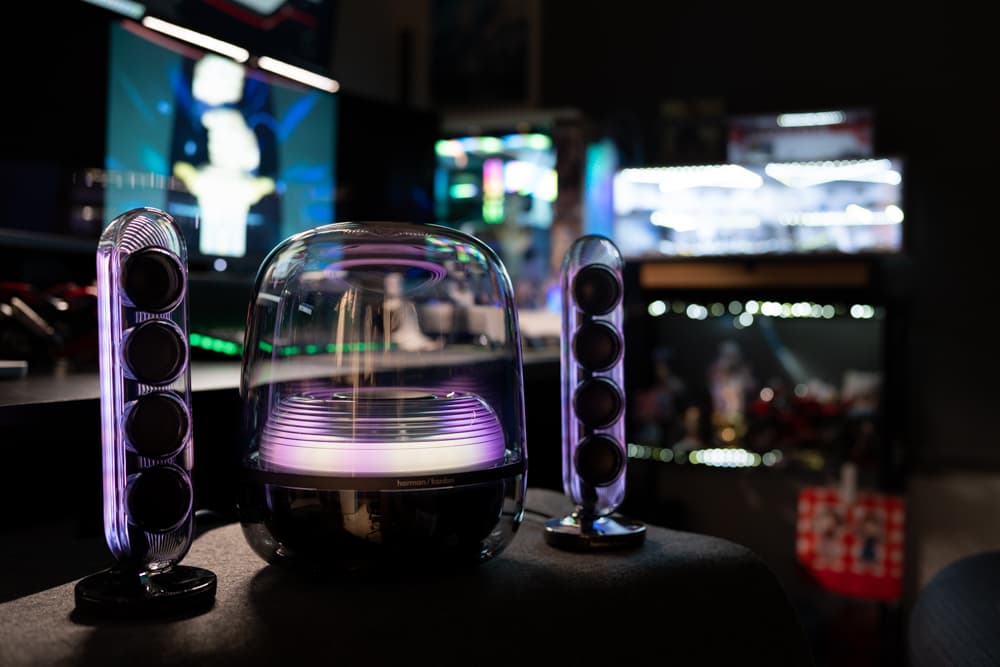
In the world of desktop and lifestyle audio, few silhouettes are as instantly recognizable as the Harman Kardon SoundSticks. Born from a design collaboration that involved Apple's Jony Ive and famous enough to earn a place in the Museum of Modern Art's permanent collection, these translucent speakers have always carried a particular tension: balancing high-concept industrial art with real acoustic performance. For over two decades they were the "cool" choice, the aesthete's desktop companion. Among committed audiophiles, though, they often wore the label of "style over substance" — a beautiful object that sounded "good enough" but never quite matched the rigor of a traditional wooden-box monitor.
The Harman Kardon SoundSticks 5 sets out to rewrite that narrative. This is not a cosmetic refresh or a simple Bluetooth bump. Harman Kardon has re-engineered the acoustic architecture, moving from a full-range satellite design to a genuine three-way configuration. Combined with a much larger power reserve — 190W RMS versus the modest output of earlier models — and the addition of HDMI ARC, the SoundSticks 5 positions itself not just as a desktop ornament, but as a serious option in the affordable hi-fi space.
This review pulls together the picture that has formed since the speaker's launch, alongside the published specifications, to answer one question: has the SoundSticks finally graduated from design icon to a system an audiophile can take seriously? The short answer is nuanced, but it points to a real shift in the lineage of transparent audio.
1.1 A Legacy of Clarity
To understand the SoundSticks 5, it helps to appreciate the lineage. The original iSub and SoundSticks arrived in an era of beige computer towers and introduced a radical idea: electronics didn't have to hide their internals, they could celebrate them. Transparency became a metaphor for the sound itself — open, uncolored, revealing. But early versions were limited by the technology of the day. Small drivers struggled with bass extension, and single-driver satellites tended to beam high frequencies, creating a narrow sweet spot.
The SoundSticks III and Wireless iterations added Bluetooth while leaving the acoustic formula largely intact. The SoundSticks 4 softened the design language, trading the early "jellyfish" look for something more domed and ethereal, and raised the power. The SoundSticks 5 arrives as the most mature version yet, acknowledging that the way we listen has changed: we now stream to living rooms, connect to 4K TVs, and expect multi-speaker flexibility.
1.2 The "Audiophile" Skepticism
Plenty of listeners approach a system like this with the skepticism that comes from years around wooden cabinets and heavy transformers. Can a plastic enclosure deliver the damping needed for genuinely high-end sound? Can a 2.1 system that also runs a light show be taken seriously? The spec sheet suggests the engineering intent is real. The move to a three-way crossover is the clearest signal: by splitting frequency bands across dedicated drivers, Harman Kardon is trying to remove the intermodulation distortion that limited the earlier full-range approach. The rest of this review looks at whether that gamble pays off in practice.
2. Design and Build: Crystallized Modernity
2.1 The Evolution of Transparency
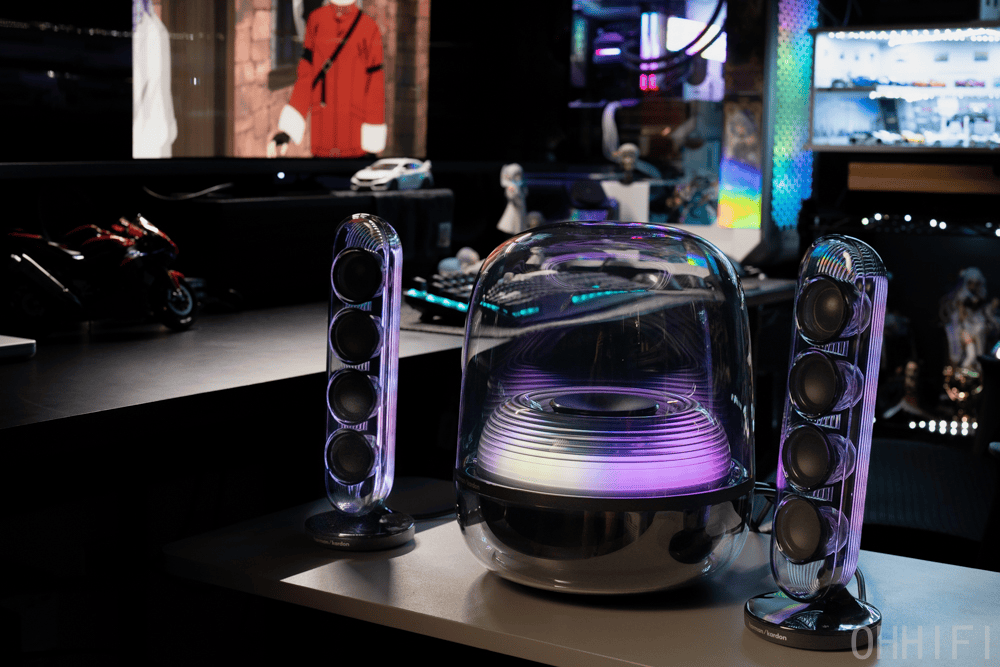
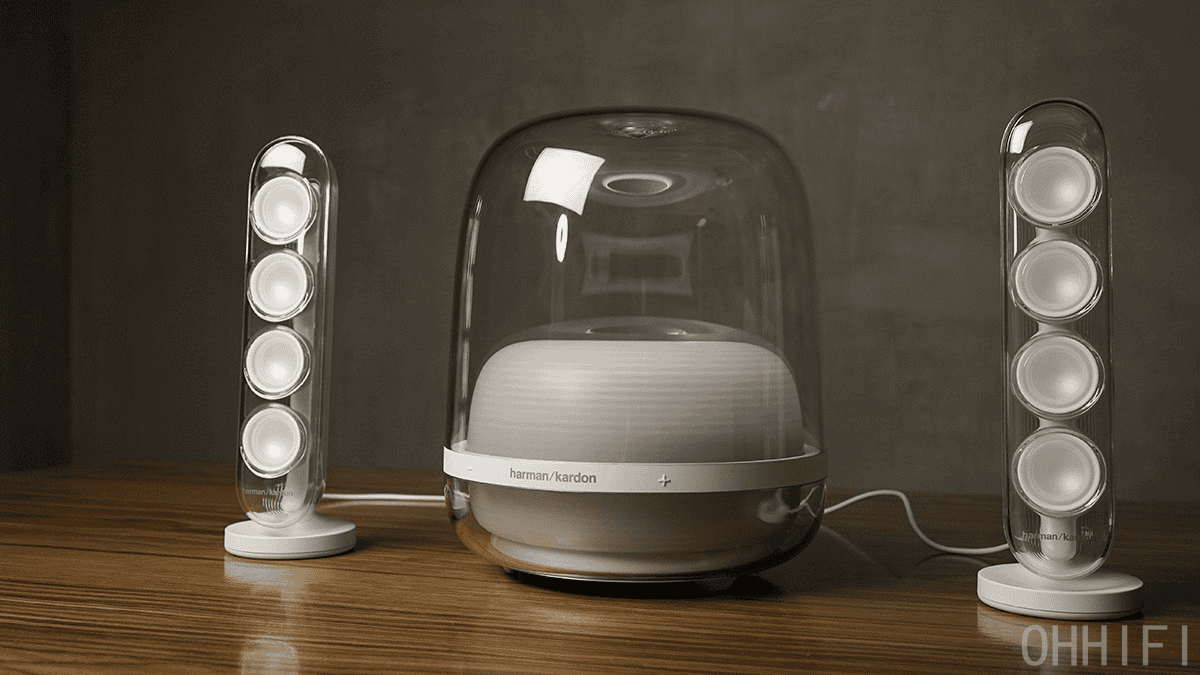
The SoundSticks 5 keeps the DNA of the original system but refines it for a 2025 context. Where the SoundSticks 4 smoothed out the edges in favor of a softer, domed look, the 5 leans into a "crystalline" philosophy with a layer of sophistication that reads less like an Apple accessory and more like a design object. It is offered in a transparent white finish and a smoked, glass-effect black, both highlighted with metallic accents.
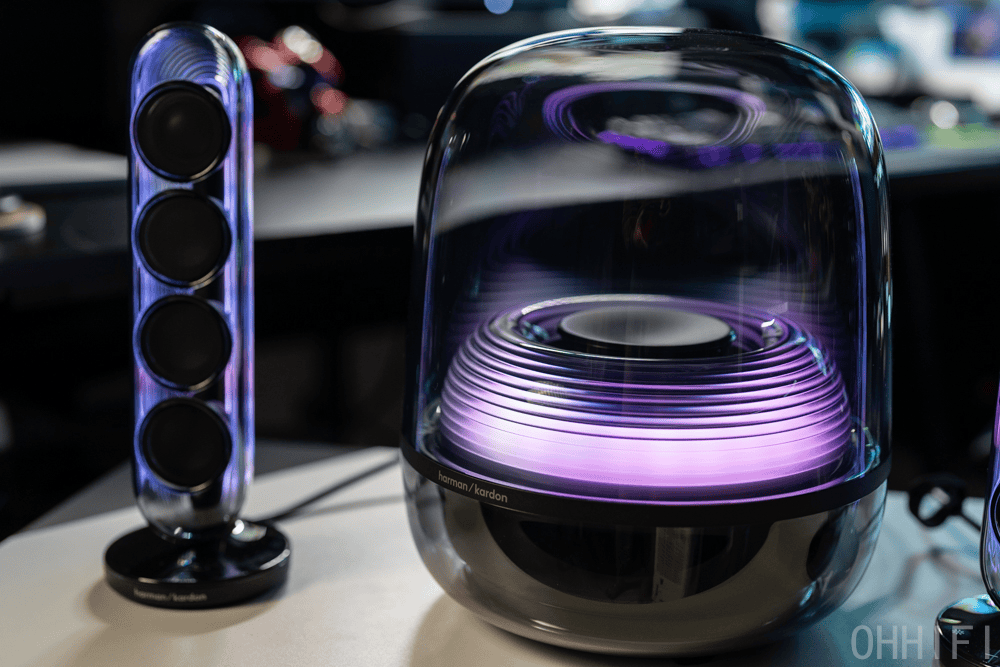
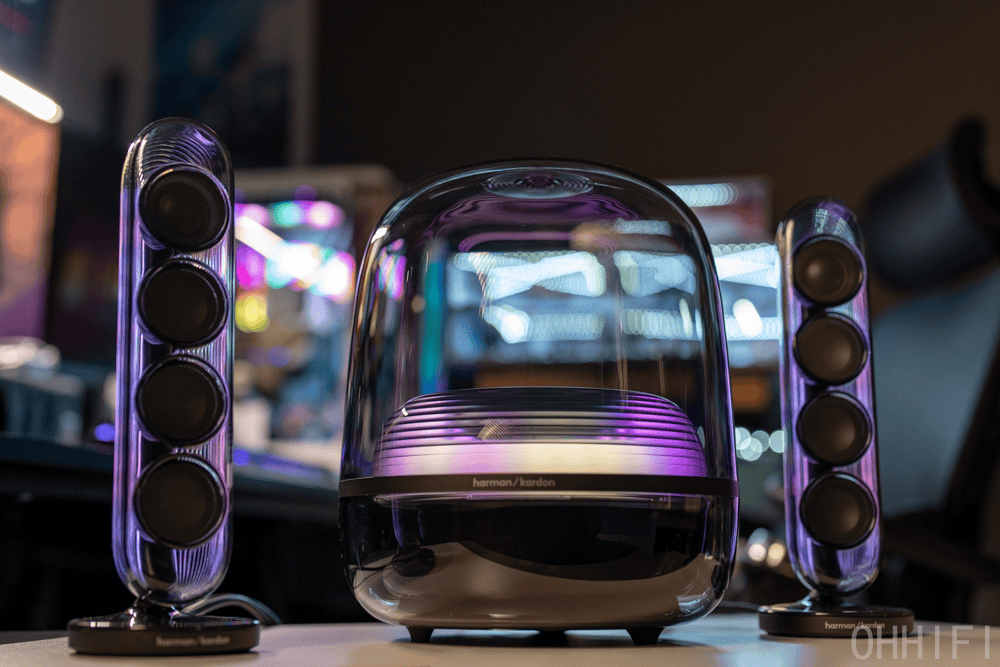
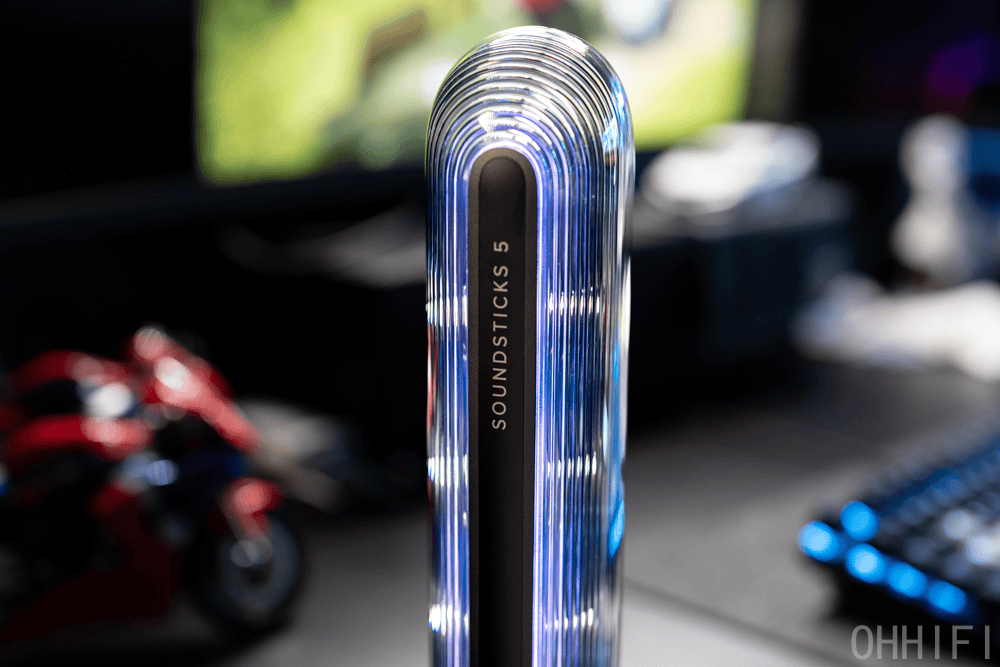
The subwoofer unit is the heart of the system, and its transparent dome is the centerpiece. The clear enclosure is built to refract the internal lighting attractively while also breaking up internal standing waves — a neat case of form following function, since standing waves are the enemy of clean, defined bass. The satellites stand upright at a fixed, optimized angle. Some listeners will miss the adjustable tilt of the very early models, but a rigid, fixed cabinet reduces sympathetic resonance. The cables remain hardwired to the satellites, which is a limitation for anyone who likes custom cable runs, though they are part of the deliberately exposed aesthetic.
2.2 Illuminating the Sound
A signature addition to the fifth generation is its ambient lighting. This is not the garish RGB found on gaming gear; the consistent impression from owners and reviewers is that the effect is subtle and tasteful. The light is housed within the subwoofer and the bases of the satellites, diffusing gently through the textured internal surfaces. Harman Kardon offers a handful of presets, accessible through the companion app, that shift color slowly to set a mood rather than demand attention.
Crucially, the lighting can be dimmed or switched off entirely. For focused, critical listening in a darkened room, "off" is the natural choice; for casual evening listening, the soft glow adds an atmospheric quality that a plain black box simply cannot offer. It is one of the features most often singled out as genuinely pleasant rather than gimmicky.
2.3 The Touch Interface and Usability
The right satellite acts as the control center, with capacitive touch controls for volume and standby on the base. They are responsive, though as with most capacitive panels there is no tactile feedback, so finding the volume control by touch alone takes a moment of familiarity. The subwoofer's light ring doubles as visual feedback, expanding or contracting with the volume level — an intuitive and elegant touch.
One commonly noted quirk is the "dust magnet" factor. Clear plastic and static electricity go hand in hand, so the transparent surfaces tend to show dust and fingerprints readily. Harman Kardon does not include a cleaning cloth in the box, which feels like a small oversight for a product so focused on looking pristine. Owners will want to keep a microfiber cloth nearby.
3. Technical Architecture: The Three-Way Revolution
3.1 Breaking the Full-Range Compromise
The headline change for any audiophile is the shift to a three-way speaker design. Previous SoundSticks relied on an array of small full-range drivers per satellite to handle everything from upper bass to the highest treble. That line-array approach gave decent vocal clarity but suffered from beaming and high-frequency roll-off, because a tiny full-range driver cannot reproduce midrange body and treble shimmer at the same time without measurable intermodulation distortion.
The SoundSticks 5 splits the work across dedicated drivers:
High frequencies: Two 25mm silk dome tweeters, one per satellite. This is the most significant upgrade. Silk domes are known for a smooth, non-fatiguing character, and offloading the highs to a dedicated tweeter lets the system reach a level of air and detail the older design could not.
Mid frequencies: A total of six 40mm midrange drivers (three per satellite) handle the midrange exclusively, letting them work within their comfortable operating range for cleaner vocals and reduced breakup.
Low frequencies: A 133mm (5.25-inch) down-firing subwoofer in the separate center unit handles the bottom end.
Harman Kardon does not officially publish the exact crossover frequencies. What matters in practice is that the handover between the subwoofer and the satellites sits in the typical low-hundreds-of-Hz region, which keeps the critical vocal range largely free of crossover phase shift — consistent with the clean, well-defined vocal reproduction the system is known for.

3.2 Power and Headroom
The move to 190W RMS, driven by a Class D amplifier, is a meaningful jump over earlier generations. Headroom in audio is not only about playing loud; it is about dynamic capability. It means that when an orchestral crescendo lands or a kick drum hits, the amplifier has the reserve to drive the woofer without clipping or compressing the signal. The widely shared impression is that the SoundSticks 5 stays composed and full-bodied as the volume rises rather than sounding strained.
Frequency response is rated at 40Hz – 20kHz. While 40Hz is not deep "sub-bass" in the home-theater sense, it is respectable for a 5.25-inch driver, and the rating sits within the range buyers can realistically expect for music and film. The reported signal-to-noise ratio is around 80dB, which helps explain why the speakers stay quiet and free of audible hum or hiss in silent passages.
3.3 Connectivity Suite: Embracing the Living Room
Harman Kardon has finally acknowledged that the SoundSticks are no longer just computer speakers.
HDMI ARC: The real game-changer. You can connect the SoundSticks 5 directly to a TV with a single cable, and CEC support means your TV remote controls the speaker volume. This elevates the system to a legitimate alternative to a mid-range soundbar.
Bluetooth 5.4: The current standard, offering improved stability and the ability to connect to two mobile devices at once, which is handy when guests want to share music.
Auracast: This allows multi-speaker pairing, so you can link two sets of SoundSticks or other compatible Harman Kardon speakers for synchronized, room-filling sound — a nice bonus for anyone invested in the ecosystem.
Note that this generation of the standard SoundSticks 5 focuses on Bluetooth and HDMI ARC; a separate Wi-Fi variant with network streaming arrived later in the lineup, so buyers should choose the version that matches how they intend to use the system.
3.4 Table: SoundSticks Generation Comparison
| Feature | SoundSticks III | SoundSticks 4 | SoundSticks 5 |
| Driver topology | 2.1 (full-range satellites) | 2.1 (full-range satellites) | 2.1, three-way (dedicated tweeter + midrange) |
| Total power (RMS) | 40W | 140W | 190W |
| Connectivity | Wired analog | Bluetooth, analog | HDMI ARC, Bluetooth 5.4, Auracast |
| Subwoofer | Dome subwoofer | Dome subwoofer | 133mm (5.25-inch) down-firing |
| Lighting | White LED (static) | White LED (glow) | Dynamic multicolor ambient lighting |
| Multi-room | No | No | Auracast |
4. Setup and User Experience
4.1 Unboxing
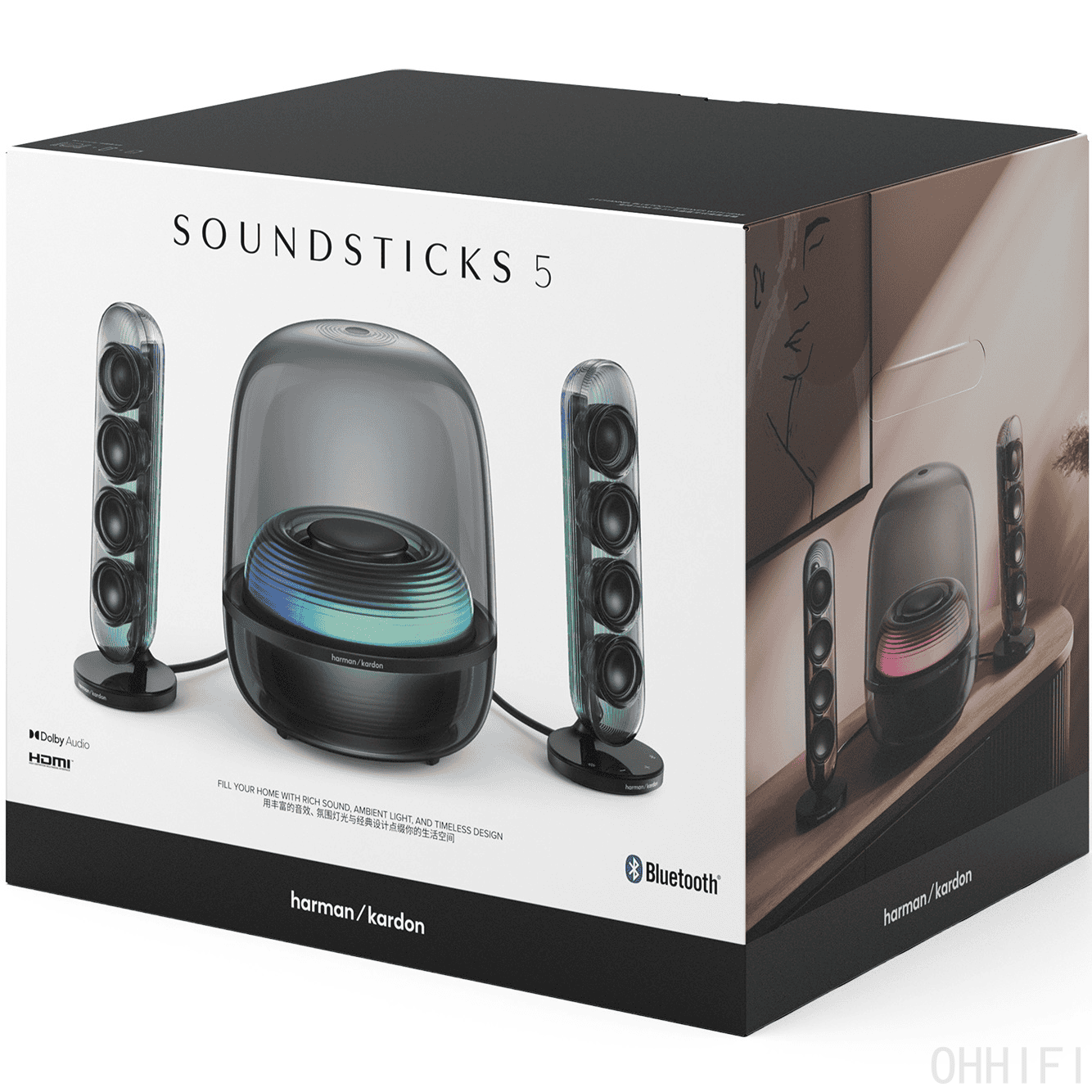
The packaging reflects current sustainability trends, using molded pulp rather than Styrofoam, and the system itself incorporates recycled plastic and aluminum. It arrives in three main pieces: the subwoofer and the two satellites. Setup is essentially plug-and-play, but cable management takes a little foresight. The cables linking the satellites to the sub are thick and use proprietary connectors, which is a downside — if one is damaged, you cannot simply swap in standard speaker wire. They are long enough for a typical desk or TV console but may be tight for a very wide living-room layout.
4.2 The App: Harman Kardon One
Companion apps for speakers are often the weak link, but the Harman Kardon One app is generally regarded as polished and easy to use. Pairing is quick, and the app provides a simple but effective EQ for tailoring the sound. This is particularly useful for room correction: if the subwoofer sits in a corner and the bass becomes overwhelming, trimming the bass slider tightens things up noticeably. The app also handles lighting control — brightness and effect speed — and pushes firmware updates over time.
4.3 Placement Considerations
Because the system is transparent, it is meant to be seen, so you cannot simply tuck the subwoofer out of sight — it is a display piece. Acoustically, the down-firing subwoofer is fairly forgiving, but placement still matters: resonant wooden or tiled floors can exaggerate the low end, so a carpet or a more considered position keeps the bass tight and controlled. The fixed-angle satellites work best roughly arm's length away on a desk, or spaced several feet apart for a living-room TV setup to maximize stereo separation.

5. Sound Quality Analysis
Across the impressions that have emerged since launch, a consistent picture forms. The SoundSticks 5 is voiced for enjoyment — clean, balanced and lively rather than clinically neutral — and the three-way design pays clear dividends in separation and composure. The sections below break the performance down by frequency band.
5.1 Treble and Detail: The Silk Dome Difference
The new silk dome tweeters are the most frequently praised aspect of the system. The treble comes across as detailed and open without tipping into harshness or sibilance — the characteristic strength of a good silk dome. On earlier SoundSticks, this region could sound sizzly or rolled off because a midrange driver was being asked to reproduce frequencies far above its comfort zone. Here there is genuine air and shimmer, with a smoothness that makes long listening sessions comfortable rather than fatiguing. It is the kind of top end you can live with through a full workday.
5.2 Midrange and Vocals: Forward and Full
The midrange is where the SoundSticks character lives. With dedicated midrange drivers per satellite, vocals are projected forward, sitting clearly in the mix and well separated from the bass. Voices come across as rich and full-bodied, locked centrally in the stereo image.
There is a mild coloration to be aware of: the plastic enclosures contribute a touch of warmth in the lower mids, which falls slightly short of the absolute neutrality of an MDF cabinet like the KEF LSX. For many listeners this works in the system's favor — male vocals in particular can sound large and authoritative. It is best described as a "fun" tuning rather than a strict "reference" one.

5.3 Bass Performance: Quality Over Quantity
The down-firing subwoofer is the powerhouse of the system, and the common verdict is that it moves serious air while staying controlled. The bass is punchy and fast, and it integrates well with the satellites — there is no obvious "hole" where the sub hands off to the mids, a frequent failing of cheaper 2.1 systems. It is tuneful and rhythmically engaging rather than one-note or boomy.
The trade-off is depth: the low end rolls off below its rated figure, so it delivers the impact and weight of electronic basslines and film soundtracks without rattling windows like a large dedicated home-theater subwoofer. Control is the recurring theme — strong, defined bass rather than sheer quantity — and, as noted above, getting that control depends on sensible placement.

5.4 Soundstage and Imaging
Because the satellites are physically separate from the subwoofer, you can position them for a proper stereo triangle — and this is one of the system's genuine advantages over the wave of single-box wireless speakers. The imaging is precise, instruments and effects are easy to place across the stage, and the soundstage extends comfortably beyond the physical speakers. Depth is good for a near-field design, even if it is naturally bounded by the format. The long satellite cables that allow real spacing are a large part of why the stereo image feels as convincing as it does.
5.5 The "Party" Factor
Pushed to high volume, the 190W amplifier keeps the system composed, with the bass staying tight and no obvious clipping. Digital signal processing engages a limiter to protect the drivers, slightly reining in bass relative to the mids at the very top of the dial, but this is what keeps distortion at bay. In practice the SoundSticks 5 can comfortably fill a medium-sized living room, making it a credible choice for everything short of a full-scale party.

6. Use Case Scenarios: Beyond the Desk
6.1 The Desktop Audiophile
As a near-field desktop system, the SoundSticks 5 is in its element. The angled satellites fire toward ear level, and the low noise floor is a real asset when the speakers sit a couple of feet from your face. The small satellite footprint preserves desk space — the sub needs a bit more room — and the transparent design helps the speakers visually recede into the environment rather than cluttering the desk.
6.2 The Living-Room Soundbar Alternative
Connected to a TV over HDMI ARC, the SoundSticks 5 transforms the viewing experience. Dialogue stays clear thanks to the dedicated midrange drivers, and action scenes carry satisfying weight. Compared with a typical mid-range soundbar, the big advantage is real stereo separation: soundbars lean on psychoacoustic trickery to widen the sound, whereas two physically separated satellites deliver a genuinely wider, more cinematic stage. The trade-off is the lack of a dedicated center channel — dialogue is a "phantom center," so it images best from a reasonably centered seating position. For that listener, it outperforms most soundbars in its class.
6.3 Gaming
For gaming, the balanced, detailed presentation pays off: directional cues are easy to place and ambient detail is enveloping, which suits immersive single-player titles far better than the thin, harsh sound of many "gaming" speakers. There is no dedicated virtual-surround game mode, so competitive FPS players who want 360-degree positional awareness may miss it. Bluetooth latency is fine for casual play, but a wired HDMI connection is the better choice for fast, reaction-driven games.

7. Competitive Analysis
To place the SoundSticks 5 in context, it helps to compare it with the established players around its price point.
7.1 vs. Klipsch ProMedia Heritage 2.1
The Klipsch is the muscular, vintage-styled alternative to the SoundSticks' futuristic look — that contrast is purely down to taste. Sonically, the Klipsch is more aggressive, using a horn-loaded tweeter that is dynamic and exciting but can become fatiguing over time, whereas the SoundSticks 5's silk dome is smoother and more refined. The larger Klipsch subwoofer digs deeper and plays louder, so it wins for sheer bass impact. The Klipsch, however, lacks HDMI ARC and app control, making it less versatile for a TV setup. In short: choose Klipsch for volume and rock or hip-hop impact, and the SoundSticks 5 for clarity, refinement and versatility.
7.2 vs. Edifier S360DB
The Edifier is a favorite in the budget-audiophile world. It uses fast, detailed planar-magnetic tweeters and a wireless subwoofer that simplifies placement, and its overall voicing is flatter and more neutral — closer to a studio monitor. The SoundSticks 5, by contrast, is tuned for enjoyment, with a livelier, more "exciting" balance. The Edifier is the better pick for analytical or mixing-oriented listening; the SoundSticks 5 offers the more cohesive lifestyle experience and the convenience of HDMI integration.
7.3 vs. Harman Kardon SoundSticks 4
Is it worth upgrading from the previous generation? On sound, yes — the move from full-range to three-way is audible, especially in the highs. The jump from 140W to 190W adds dynamic punch at higher volumes. And HDMI ARC alone justifies the upgrade for anyone who wants to use the system with a TV. Next to the 5, the SoundSticks 4 sounds slightly veiled. It is a meaningful, not merely cosmetic, step forward.
8. Shortcomings and Criticisms
No product is perfect, and the SoundSticks 5 has a handful of recurring complaints:
Visible cabling: In a transparent system you cannot hide the wire — you see it running up the tube. It is part of the design language, but it does not solve the "I hate visible cables" problem.
No physical remote: The app is good and HDMI CEC handles TV volume, but a small remote for input switching or quick adjustments would be welcome, rather than reaching for the sub or your phone.
Dust and fingerprints: The transparent surfaces show dust readily and need regular cleaning to stay looking their best.
Proprietary cables: A damaged satellite cable cannot be replaced with standard speaker wire, which complicates repairs.
Codec support: The absence of higher-resolution Bluetooth codecs such as LDAC or aptX Adaptive is a missed opportunity on a system with hi-fi ambitions, particularly for Android users.
9. Conclusion: The Crystal-Clear Verdict
The Harman Kardon SoundSticks 5 is a triumph of iterative engineering. Harman Kardon could have added some lights to the SoundSticks 4 and called it a day. Instead they did the harder work: redesigning the driver topology, increasing the power and adding modern connectivity that genuinely expands what the system can do.
By moving to a three-way architecture with silk dome tweeters, the SoundSticks have largely shed the "style over substance" criticism. They now offer a level of detail, imaging and tonal balance that holds its own against traditional bookshelf speakers in the same price class — they are no longer just pretty objects, but capable speakers.
The addition of HDMI ARC is the masterstroke, positioning the SoundSticks 5 as an all-rounder for the modern apartment: a system that looks like art, serves as a high-end desktop setup by day and turns into a capable TV and movie system by night. For the listener who values aesthetics as much as acoustics, there is little else quite like it. There are speakers that sound a touch more accurate for the money, and others that simply play louder, but none combine visual magic and sonic ability in this particular way.
Highly recommended — with the caveats above kept in mind.
Scorecard
Audio quality: 8.5/10 — clear, controlled bass and smooth, detailed highs
Design: 10/10 — still the king of desktop aesthetics
Features: 9/10 — HDMI ARC, Auracast and app support are top-tier
Value: 8/10 — premium pricing, but premium build and performance
The bottom line: the SoundSticks 5 proves you can have transparency in both the chassis and the sound. A modern classic, refined.

10. Specifications and What to Expect
For readers who want the key numbers in one place, here are the published specifications along with general performance notes.
10.1 Published Specifications
System: 2.1-channel, three-way
Tweeters: 2 × 25mm silk dome
Midrange: 6 × 40mm (three per satellite)
Subwoofer: 133mm (5.25-inch), down-firing
Amplification: 190W RMS, Class D
Frequency response: 40Hz – 20kHz
Signal-to-noise ratio: approximately 80dB
Connectivity: HDMI ARC, Bluetooth 5.4, Auracast
App: Harman Kardon One (EQ, lighting, firmware updates)
10.2 Performance Notes
Low end: Solid output down toward the rated 40Hz, with a roll-off below that. Expect to feel the harmonics of deep electronic or organ bass rather than the lowest fundamentals.
Midrange: Clear and well-projected, with the multiple midrange drivers giving good horizontal spread; sitting near ear level gives the most consistent result.
Treble: Smooth and extended, avoiding the harshness sometimes associated with metal-dome tweeters.
Latency: HDMI ARC is effectively lag-free and well suited to video, while Bluetooth carries the small delay inherent to the protocol — fine for streaming and casual gaming, but a wired connection is preferable for competitive play.
11. Extended Comparisons
11.1 The "Lifestyle" Competitors
Sonos Era 100 (pair) — Sonos leans heavily on room-correction DSP, while the SoundSticks 5 sounds more naturally stereo out of the box and includes a dedicated subwoofer the single Sonos units cannot match for low-end weight. A pair of Era 100s improves matters but costs more and still lacks dedicated sub-bass. Sonos is the better choice for multi-room background listening; the SoundSticks 5 is better for focused listening at a desk or TV.
Razer Nommo V2 Pro — A gaming-focused system with brighter, more aggressive RGB and virtual-surround processing that can sound synthetic next to the more natural SoundSticks. The Razer's wireless subwoofer is a practical plus, but its build feels more plasticky. Razer suits the gaming den; the SoundSticks 5 suits the adult office or living room.
11.2 The "Audiophile" Competitors
Audioengine A5+ Wireless — A traditional powered bookshelf pair with a warm, thick presentation. Without a dedicated subwoofer it does not hit as hard in the deepest bass, but its mid-bass is rich and full. Its tweeters are broadly comparable to the SoundSticks 5, which is high praise. If you have the desk space for full-size bookshelf speakers, the A5+ is excellent; the SoundSticks 5 satellites have a far smaller footprint and a more distinctive look.

12. Final Thoughts on "The Glow"
It is worth returning to the lighting, because it captures the philosophical shift in this product. For years, audio brands bolted lights onto speakers to chase the gamer market, and the result was usually a gimmick. The SoundSticks 5 lighting feels considered: the way the light refracts through the central column of the subwoofer creates a soft, volumetric effect, like captured smoke or liquid light. Paired with a slow, gentle preset, it enhances the mood without demanding attention — a reminder that listening to music is an emotional experience, not just an auditory one.
In a market full of black rectangles and fabric-covered blobs, the Harman Kardon SoundSticks 5 stands unapologetically as a piece of sculpture. That it now sounds as good as it looks is the headline the series has spent twenty years working toward.





Comments