
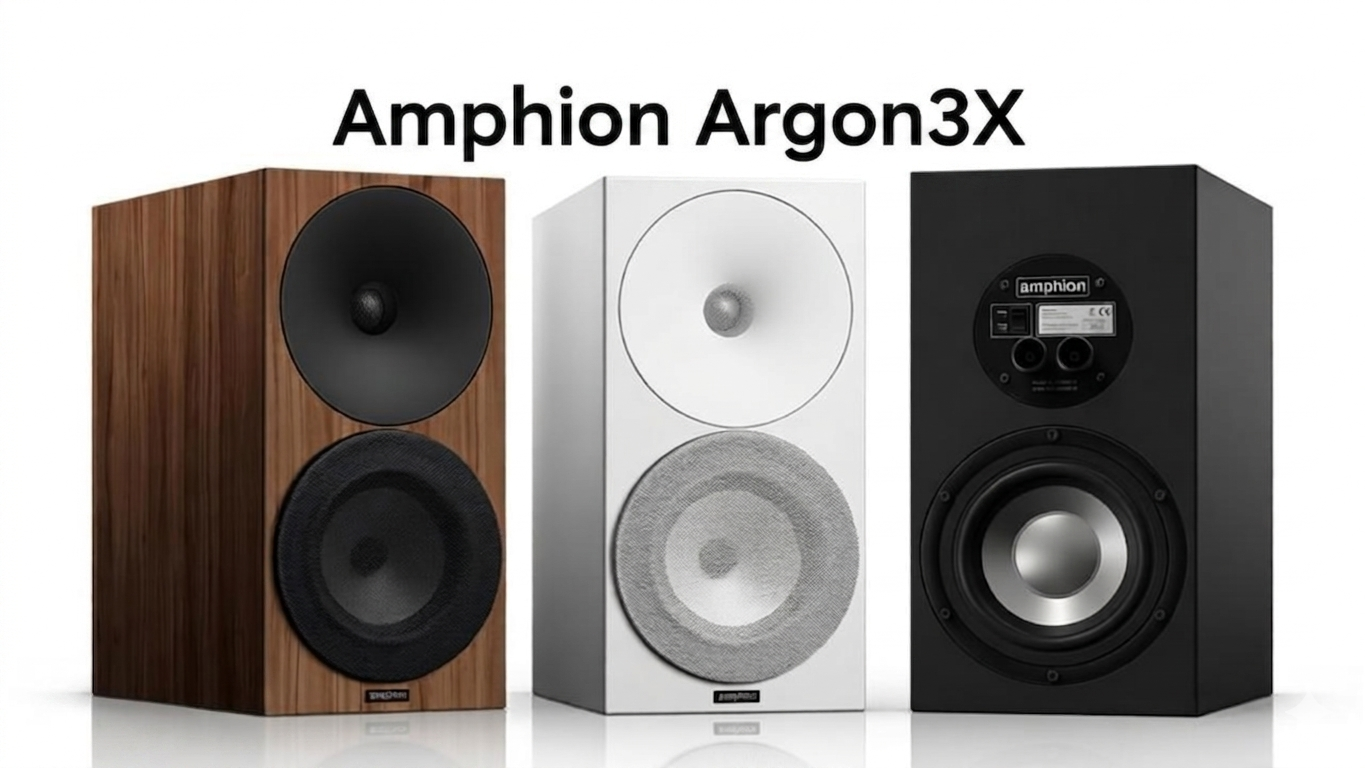
Amphion Argon3X Review: The Finnish Stand-Mount That Plays Above Its Weight Class

Opening Hook
There's a thing Finnish speakers do that English speakers don't, and that Italian speakers definitely don't. They refuse to flatter you. Plug a pair of Amphions into a rough recording and you'll hear every seam in the mix, every compression artifact, every over-baked cymbal. Plug them into something good and they vanish — wholesale, curtain-down vanish — leaving only the music in the air between the stands.
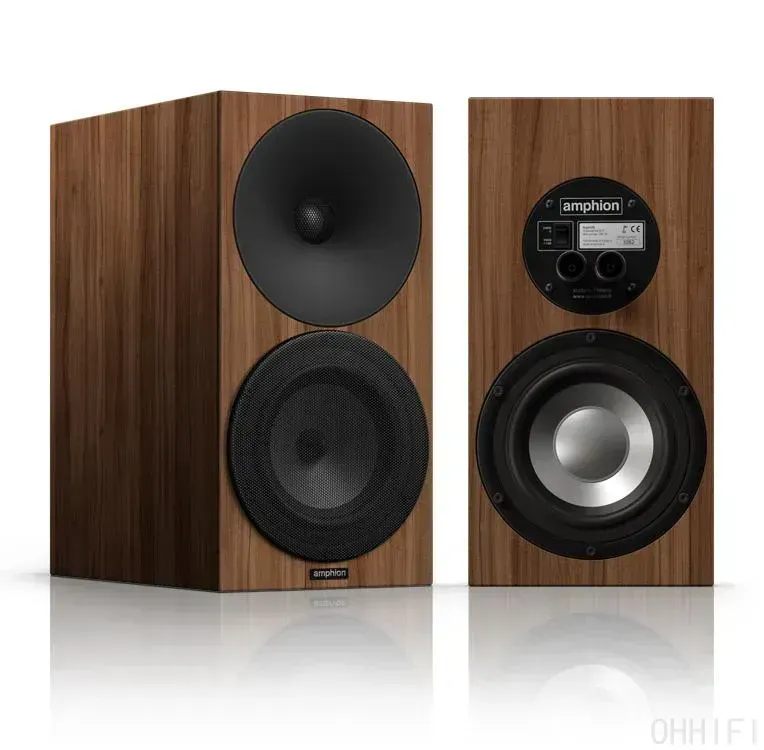
The Argon3X is the successor to the Argon3S, a speaker that built a near-religious following among people who mix records and people who listen to records mixed by those people. Amphion raised the price £600 over the outgoing model, swapped in a new titanium tweeter borrowed from the £18,000 Krypton3X, and then waited for the forums to yell. The forums duly yelled. I spent a month with a pair and concluded the forums should stop yelling.
Quick Specs
| Spec | Value |
|---|---|
| Type | 2-way stand-mount, passive radiator |
| Drivers | 6.5" aluminium woofer, 1" titanium dome tweeter in 5th-gen waveguide |
| Frequency Response | 38Hz – 55kHz (-6dB) |
| Crossover | 1,600Hz |
| Sensitivity | 87dB |
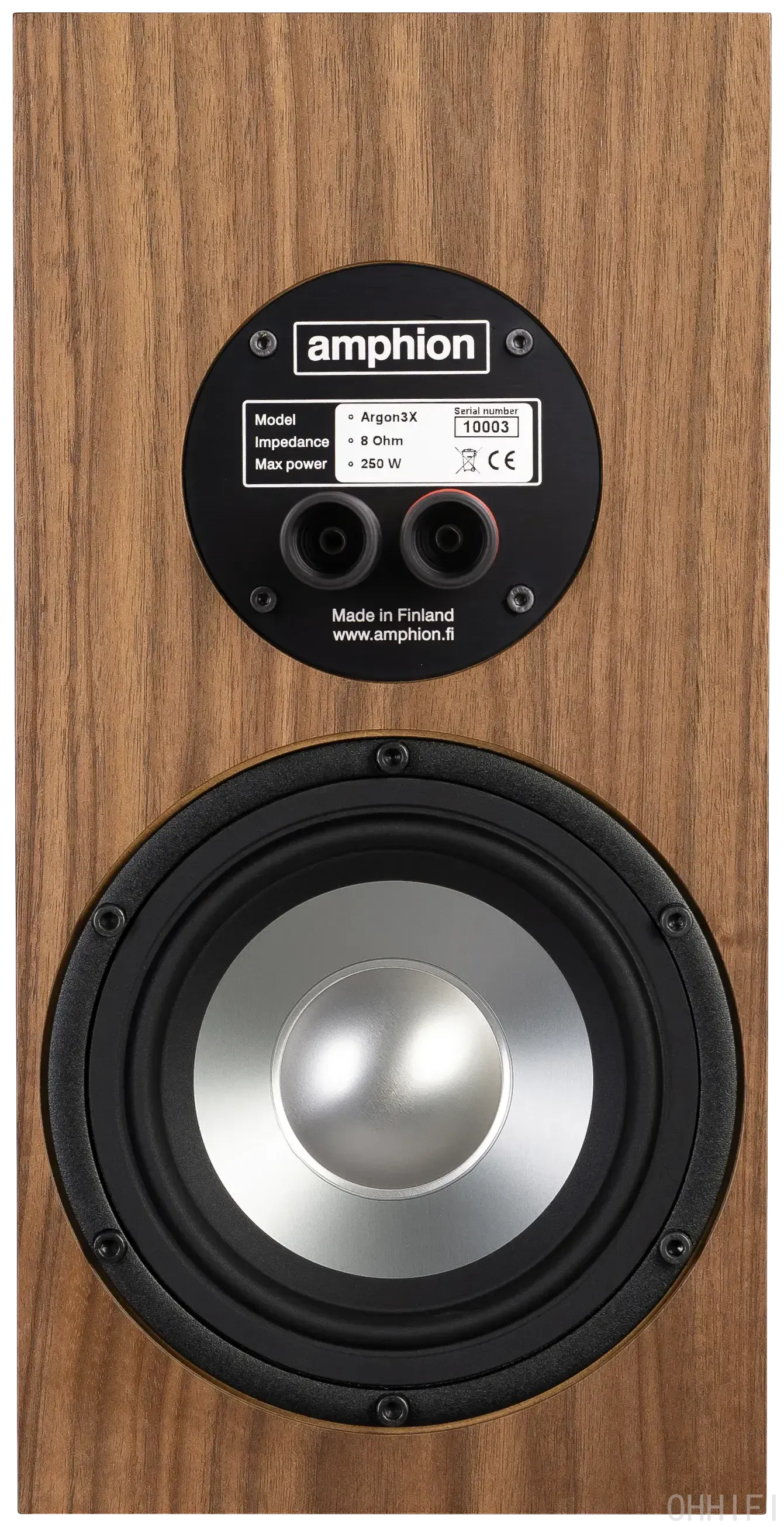
| Impedance | 8 ohms |
| Recommended Amp Power | 50–250W |
| Dimensions | 380 × 190 × 305mm |
| Finishes | Black, White, Full White, Walnut (swappable grille colours) |
| Price | £3,400 / $5,398 per pair |
Design & Build
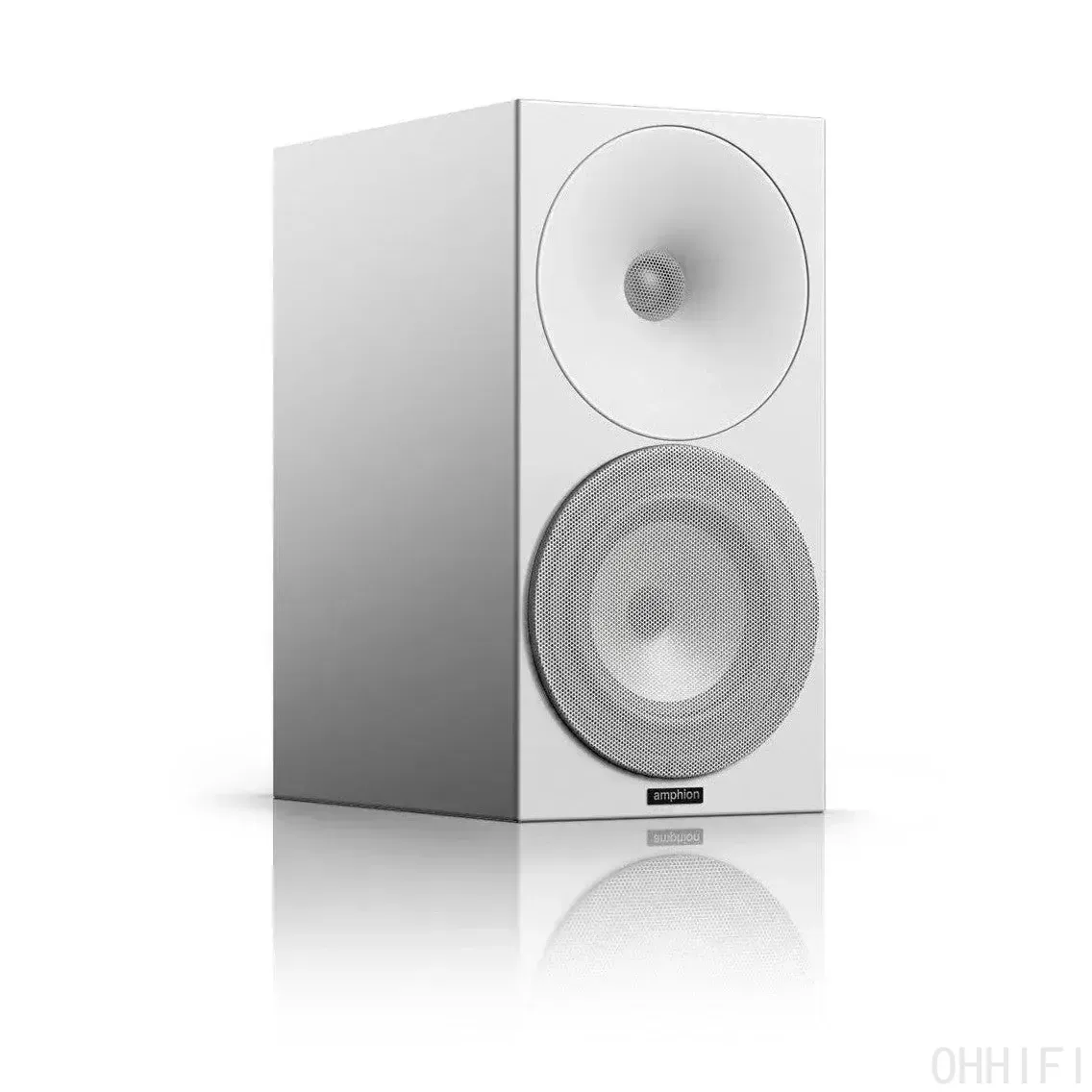
The cabinet is the same size as the 3S, which is to say smaller than you expect and heavier than you expect. Knuckle-rap the side panel and you get a dull thud rather than a resonant knock — Amphion put serious damping where it matters. The Scandinavian restraint is the whole point: no fake chamfers, no gloss piano black that shows every fingerprint, no metal badge screaming at you from the baffle. Just a satin cabinet, two protective driver grilles (which you can actually leave on without hurting the sound), and the signature round waveguide swallowing the tweeter like a small black sun.
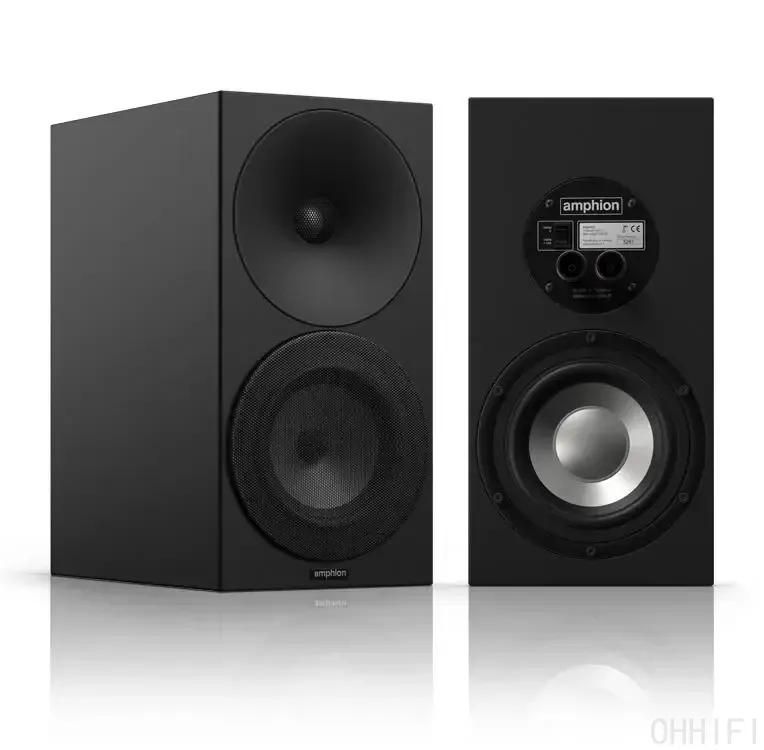
The grille inserts come in swappable colours, which sounds like a gimmick until you live with the speakers for a week and realise your partner has opinions about your listening room. The passive radiator sits on the back, which has placement implications I'll come to.
Binding posts are single-wire only — no bi-wire theatre, which is fine. The whole thing feels like a piece of kit designed by people who mix records for a living and then asked themselves what they'd actually want at home. Which, as it happens, is exactly Amphion's story.
The Listening Experience
Bass
The Argon3X is a 6.5" two-way with a rear passive radiator, so you already know the rules: it doesn't do 25Hz pipe-organ stuff, and it will punish you if you shove it against the back wall. Give it 40cm of breathing room and you get bass that's tight, fast, and tuneful rather than deep. Playing Massive Attack's "Angel" from Mezzanine, the opening bassline has proper muscle and outline — you can hear the texture of the synth rather than just a low rumble. Push it hard and it does eventually hit its excursion ceiling, but unlike a lot of bookshelves it warns you politely before it gives up.
On the acoustic side, the upright bass on Ray Brown Trio's Soular Energy has the kind of pitch definition that makes you hear fingerings and string slap as separate events. Not the weight of a big floorstander — you'd be lying if you claimed otherwise — but enormously more information per note.
Midrange
This is the speaker's spine. The 1.6kHz crossover sits well below where the ear gets fussy, which means the woofer does everything from the bass through the presence region without a driver handoff interrupting voices. Patricia Barber's "Regular Pleasures" from Modern Cool — one of my go-to tests — comes through with the tonal weight of her chest voice intact and a realistic sense of the piano sustaining through the mix. Nothing is spotlit. Nothing is pushed forward to sell you the speaker.
String tone is where I'd expect a metal-cone driver to get caught out, and it doesn't. The Tetzlaff Quartet's Haydn Op. 20 sounds like varnish and rosin rather than aluminium, which is quite a trick.
Treble
This is the part everyone wants to hear about, because the tweeter is the headline change. The new titanium unit extended to 55kHz is obviously specsmanship (you can't hear above 18kHz, and probably not above 15), but the audible effect is that the top end feels properly open and unforced rather than etched. Cymbal work on Brad Mehldau's Ode has air and shimmer that trails off into the room instead of terminating at the speaker grille. On Radiohead's "Nude" from In Rainbows, the high strings and Jonny Greenwood's ondes Martenot-style textures float cleanly above Thom Yorke's voice without ever fusing into hash.
It is not a warm tweeter. If your system leans bright, the Argon3X will not rescue you — but it also won't add glass on top. It tells the truth. That's the Amphion bargain and it has not changed.
Soundstage & Imaging
This is where the compact cabinet earns its keep. Small boxes disappear more completely than large ones when everything else is right, and the Argon3X does the disappearing act with discipline. Listening to Bernstein's 1987 Mahler 2 with the New York Phil, the staging has believable front-to-back depth and the brass has room to breathe behind the strings. The waveguide does a serious job on dispersion, so off-axis listeners hear substantially the same balance as the sweet-spot seat — this matters if your listening room doubles as a living room and you have a sofa rather than a single mastering chair.
Imaging is precise without being forensic. Voices lock into place. Things that are supposed to be behind the speakers sound behind the speakers. You sense the recording venue, not just the individual instruments.
Test Setup
Evaluated in my treated listening space, driven by my usual mid-fi integrated amp, with both digital and analogue sources running through my main rack. Speakers set up on 24" metal stands, toed in about 10 degrees, 45cm clear of the rear wall and about 60cm in from the side walls. I deliberately did not run room correction below the bass region — I wanted to hear what the passive radiator was doing in the room, not what DSP could mask.
The Competition
| Rival | Comparison | Verdict |
|---|---|---|
| KEF Reference 1 Meta | Uni-Q driver, similar studio-monitor lineage, £7,500+. More bass authority and a more resolved treble, but substantially more expensive and more demanding of placement. | Reference 1 is the bigger speaker. Argon3X is the more adaptable one. |
| ProAc Response D2R | Ribbon tweeter, ~£4,500, warmer bottom-to-top balance. Softer, more "musical" in the British sense. | Two different philosophies. ProAc flatters, Amphion reveals. Choose your religion. |
| Dynaudio Heritage Special | Silk dome, richer and more romantic, £7,000+. Less neutral, more seductive on vocals. | Amphion is truer to the recording, Dynaudio is more fun at a dinner party. |
| Harbeth P3ESR XD | Smaller, cheaper (~£2,800), legendary BBC midrange but rolled-off top and limited dynamics. | Harbeth still owns small-room intimate jazz. Argon3X beats it on scale, extension and dynamic range. |
The Verdict
8.5/10
The Argon3X does what the 3S did, except better in every measurable way that matters — treble extension, driver integration, dynamic headroom — and the £600 premium buys tweeter technology from a speaker that costs five times as much. The only reason it doesn't score higher is that physics still applies: it's a 6.5" two-way, and no amount of Finnish cleverness will make it fill a 40m² room with Mahler at concert levels. If you understand that going in, this is one of the most honest stand-mounts you can buy at any price south of ten grand.
Pros
- Exceptional driver integration thanks to the low 1.6kHz crossover and waveguide
- New tweeter is properly resolving without ever turning edgy
- Broad, forgiving sweet spot — works in real rooms, not just anechoic chambers
- Discreet Scandinavian looks, with swappable grille colours that partners actually approve of
- Scales down gracefully at low volume without losing engagement
Cons
- Price jump over the 3S has teeth, even if it's justified
- Bass runs out of road in large rooms or on big orchestral climaxes
- Won't flatter bright electronics or poor recordings — this is a feature, but know yourself
- No bi-wire option for the people who care about that
- Stands not included, and you really do need good ones
Who Should Buy
Buy these if you want a studio-monitor-grade stand-mount that also happens to look at home in a living room, if you value neutrality over euphony, and if your room is small-to-medium. They reward good source and amplification without demanding exotic gear — a solid mid-powered integrated in the 60-100W range will have them singing.
Who Should Skip
Skip them if you want warm, syrupy, forgiving sound that papers over thin-sounding recordings. Skip them if your room is large enough that a floorstander is the correct answer — you'd be better served by the Argon3LX or Argon7LX from the same family. And skip them if you can't give the rear passive radiator breathing room from the back wall, because against the wall they go boomy and lose the thing that makes them special.



Comments