
HzProject HzCORE Music Server: South Korea's $8,300 Bid for the Roon Core Throne

Lead
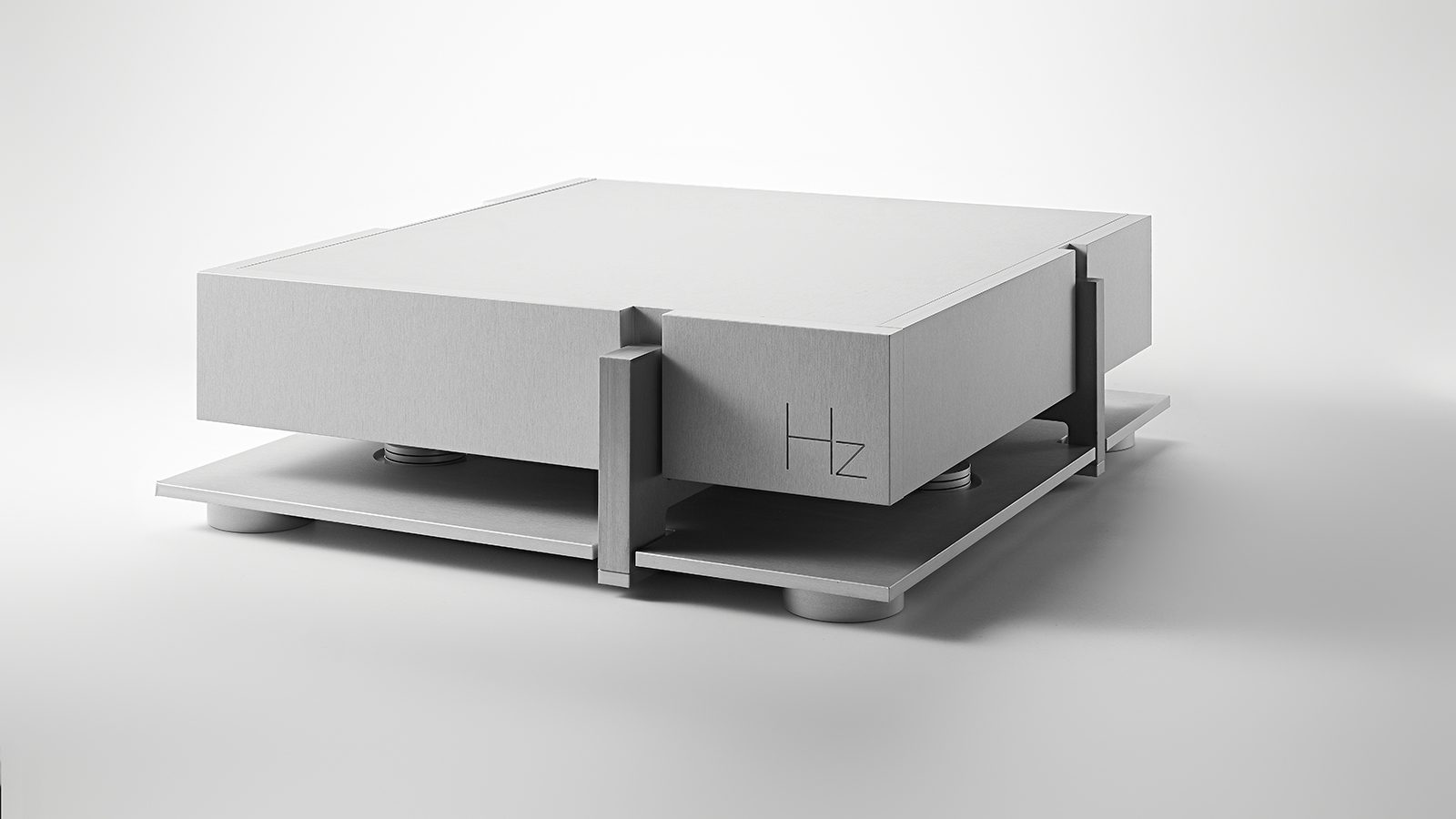
South Korean firm HzProject has dropped its HzCORE music server onto Western distributor shelves at £6,900 / $8,300 / €8,400 for the 4TB model — with a matching aluminum isolation platform adding another £790 / $870 / €880 on top. It's a Roon Core / Roon Streamer box built like a piece of architectural brutalism, aimed squarely at the dCS, Innuos, Grimm, and Melco crowd who've already decided that yes, the server actually does matter.
What's New
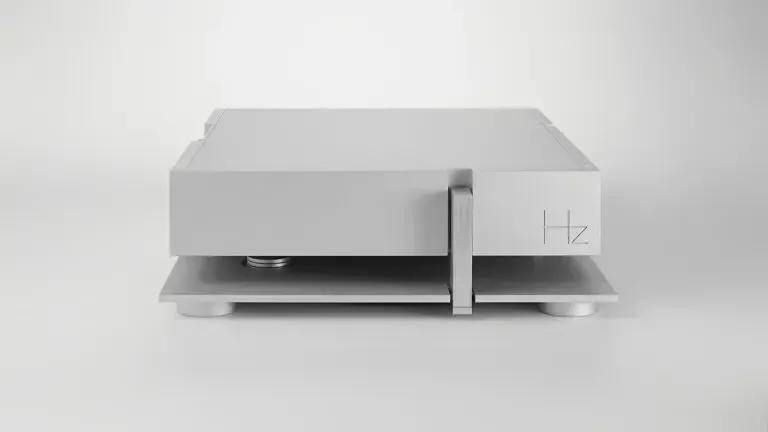
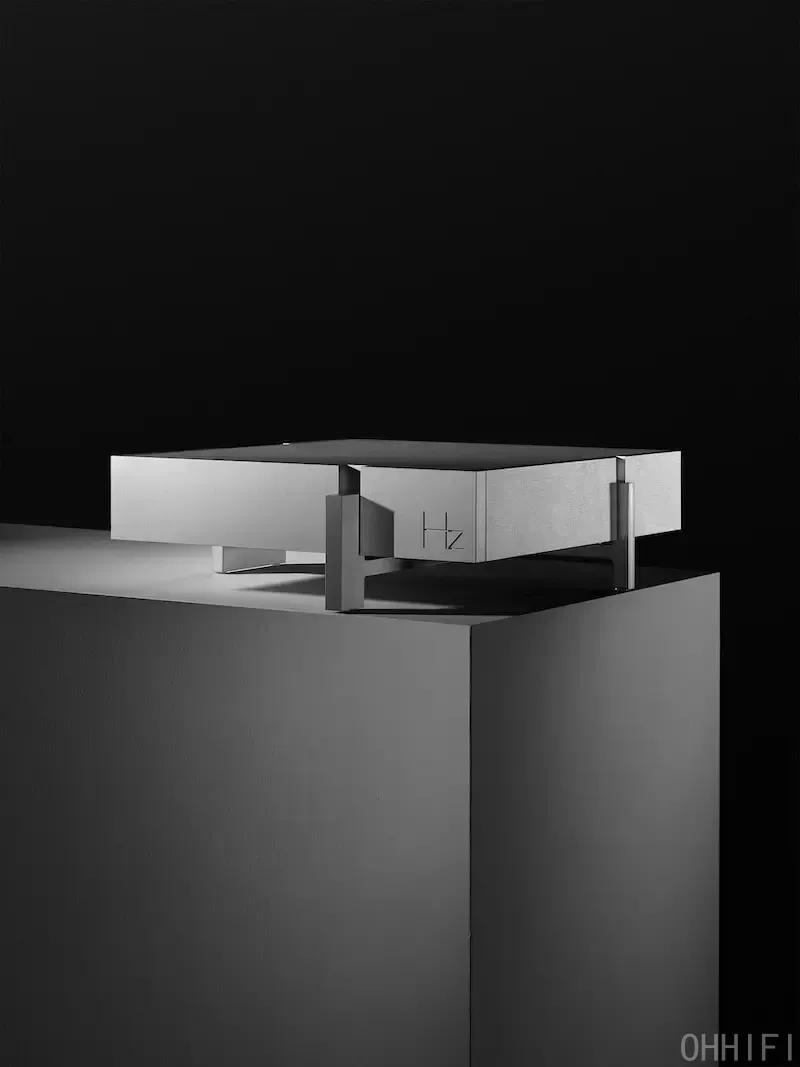
Strip away the marketing copy and what HzProject has actually done is assemble a no-expense-spared Roon Core in a 15mm-thick CNC-machined aluminum chassis that weighs 10.5 kg on its own, 14.5 kg once you add the dedicated platform.
The engineering brief is the usual high-end music server checklist, executed with more commitment than most:
- Dual linear power supply with two toroidal transformers and five independently regulated rails — one each for the mainboard, ethernet, CPU clock, OCXO, and SSD storage. No wall-wart, no SMPS. The rear termination is a standard IEC inlet.
- Oven-controlled crystal oscillator rated at ±10ppb accuracy, with dual outputs feeding the motherboard and the ethernet section separately. The clock board sits inside its own layered aluminum-and-wood enclosure.
- Transformer shielding using aluminum-and-copper jackets, apparently for the kind of EMI paranoia usually reserved for much pricier DACs.
- 64GB DDR4-3200 memory, a 256GB MLC SSD for the OS, and either 1TB, 4TB, or 8TB of 2.5" SATA storage for the music library. The library SSD sits in its own CNC-machined aluminum cage, isolated from the rest of the board.
- Fanless thermal design — the HzCORE is physically silent.
- Claimed noise floor below 10 μVrms across 10 Hz–100 kHz.
- Stillpoints isolators on three partially decoupled feet, with the optional platform providing a second stage of decoupling.
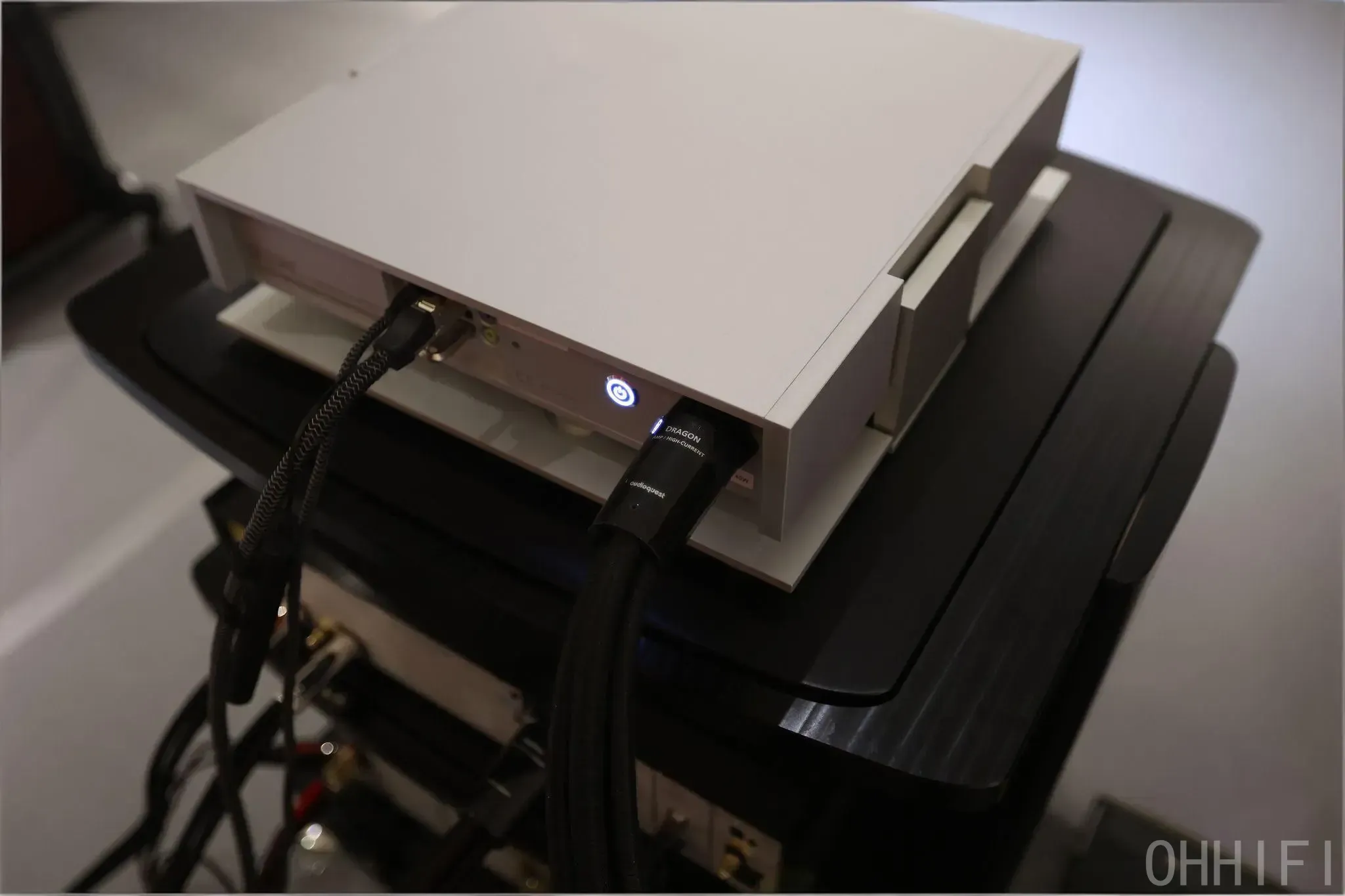
The OS is an audio-optimized Linux build running Roon Core and Roon Streamer duties. An Audirvana Core Player version is reportedly in the pipeline. I/O is simple: one gigabit ethernet, one USB audio out. That's the whole rear panel.
Context
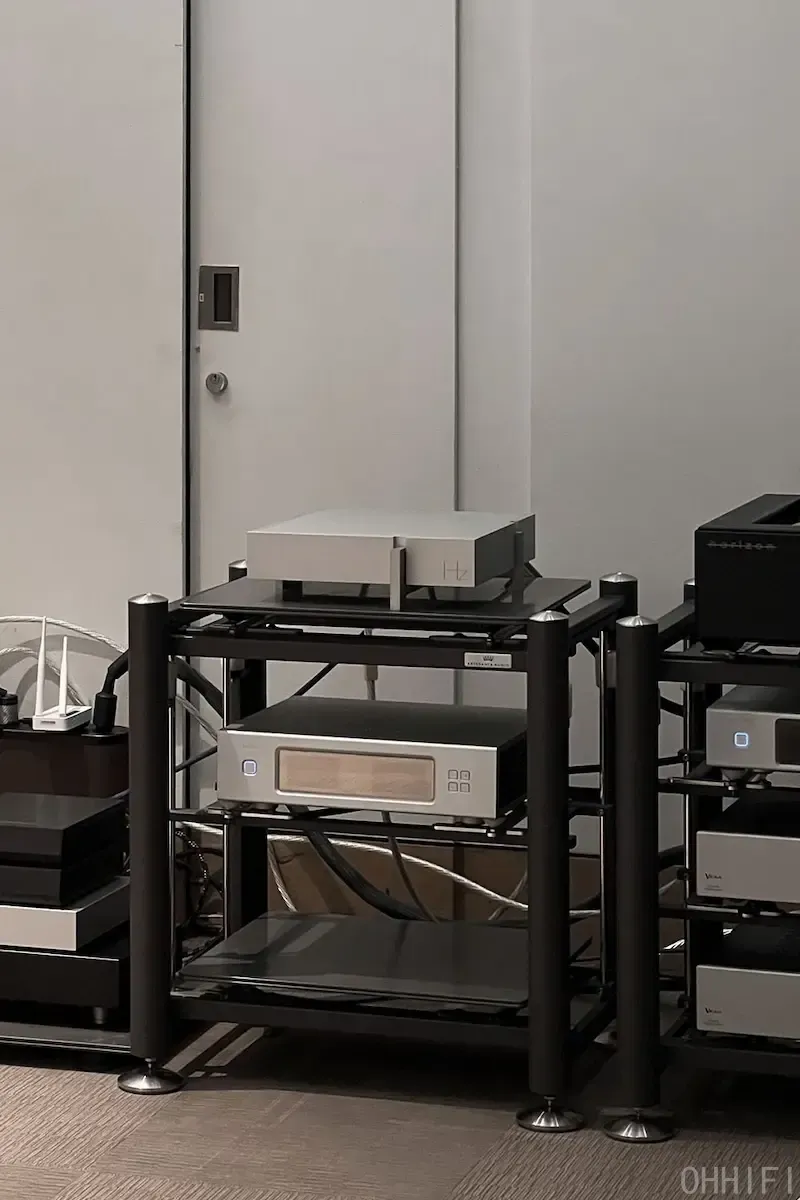
HzProject is a new Korean brand with an explicit focus on the digital chain — servers, streamers, and network isolators. Their pitch is a familiar one: ethernet and USB connections carry noise that degrades what an otherwise capable DAC does, so you eliminate the noise at the source. The HzCORE is their flagship effort to demonstrate the thesis.
The wider context matters. Music servers priced between $5,000 and $15,000 have become their own parallel universe to the "a Mac Mini running Roon sounds fine" camp, with both sides mostly shouting past each other. Brands like Innuos, Antipodes, Grimm Audio, CAD, Melco, and Taiko have carved out real businesses selling the proposition that a server designed from the ground up for audio does sound different. Measurements on this question remain contentious. Subjective reports at this price point are generally positive but hard to audit.
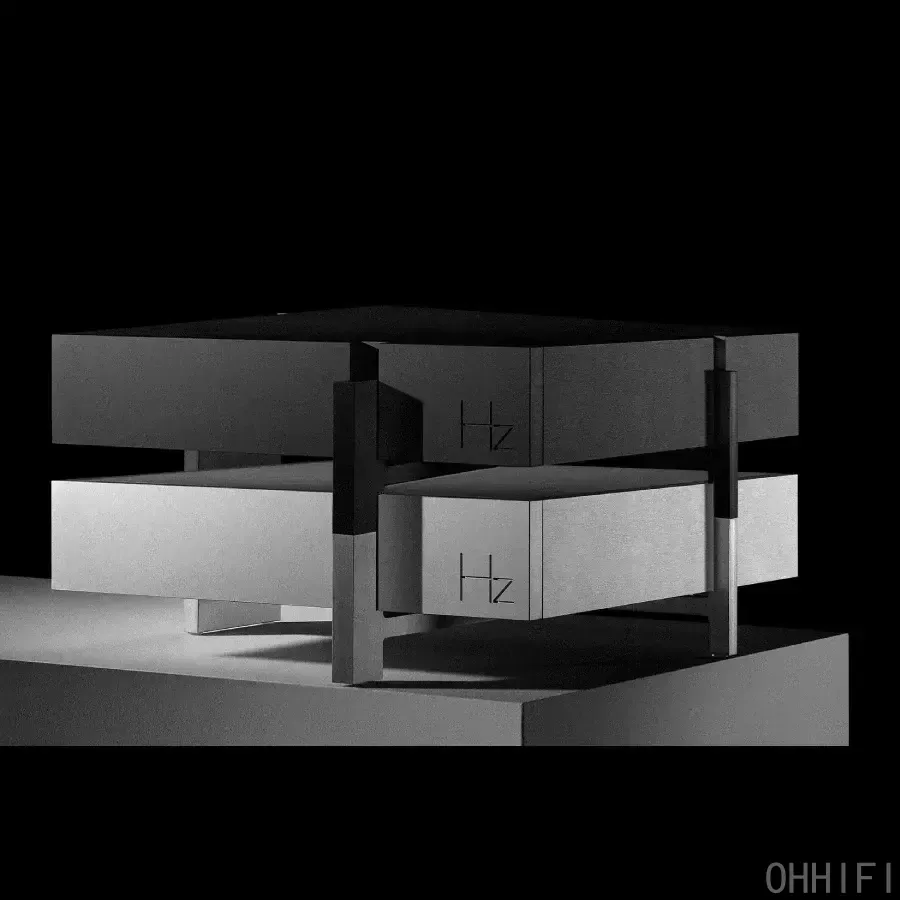
HzProject is entering that market cold, with showings at AXPONA Chicago, High End Munich, and Capital Audiofest through 2024–2025, a handful of European dealers, and Alma Music & Audio handling North American distribution.
Compared to the Competition
| Rival | Price (approx, 4TB-equivalent) | Comparison | Verdict on paper |
|---|---|---|---|
| Roon Nucleus Titan | ~$4,000 | Official Roon hardware, factory-supported | Cheaper, simpler, the sensible choice if the engineering claims don't move you |
| Innuos Zenith Mk3 | ~$8,500 | Similar price, custom Linux OS, proprietary Sense UI + Roon | A known quantity with a vocal fanbase and a stronger ecosystem |
| Melco N1-S38 | ~$7,500 | Library-focused NAS/server, not a Roon Core | Pick this if your streamer handles playback and you want a serious library box |
| Grimm Audio MU1 | ~$10,500 | Streamer-first design with upsampling, well-reviewed | The incumbent heavyweight in this bracket — the one HzCORE really has to unseat |
The HzCORE's closest direct rival is the Innuos Zenith Mk3 on price, though they pitch differently: Innuos leans on its Sense app and Zenith lineage, HzProject leans on chassis engineering and clock pedigree.
My Take (On Paper)
Some of this is straightforward to evaluate from the spec sheet. The power supply architecture, the clock specification, the isolation strategy, the fanless thermal design — these are all genuinely expensive things to get right, and HzProject has evidently spent real money getting them right. You don't get a dual-toroidal linear PSU with five isolated rails and a ±10ppb OCXO by accident. The 15mm aluminum chassis alone is the kind of construction you usually see on amplifiers at twice the price.
What concerns me is the gap between what this hardware can objectively do and what that actually gets you in a real listening session. The debate about whether a music server's power supply and clock audibly affect what a downstream USB or ethernet-fed DAC produces is not settled. Some of the best-measuring DACs on the market are specifically designed to reject the input-side noise that HzProject has engineered the HzCORE never to introduce. If your DAC does its job properly, the incremental benefit of a server this carefully built is, at best, narrow. At worst, imaginary.
The other thing worth flagging: at $8,300 without the platform, and $9,200 with it, you're in territory where the used market starts to matter. A used Grimm MU1 or a well-kept Innuos Zenith sits at or below HzCORE's new price, with the advantage of a proven sonic signature and a support infrastructure that's been around for years. HzProject's UK and EU distribution looks reasonable; North American service response is the unknown.
On the upside, brands this committed to build quality rarely coast on the first product. If HzCORE establishes itself, a second-generation platform or a streamer-only companion unit is the obvious next move, and the ceiling on this kind of engineering work is high.
Who Should Watch This
This is not the first music server anyone should buy. At $8,300, it's a considered upgrade for someone already running a capable DAC chain — something in the $5k-plus bracket — who's convinced that their current server (a NUC, a Mac Mini, an older Innuos, a Nucleus) is the limiting factor. If you haven't yet heard what a well-built server does in a proper system, borrow one from a dealer before spending money on this scale.
The HzCORE is also worth watching if you're the kind of audiophile who finds engineering transparency persuasive. HzProject publishes a detailed parts rundown, isolated-rail diagrams, and clock specs — that's not universal at this price. Whether the execution translates into audible improvement over a Zenith or a Nucleus Titan is the question specs alone can't settle. A proper A/B would need the unit on a review rack with the competition sitting right next to it, and I'll reserve judgment until that happens.



Comments