
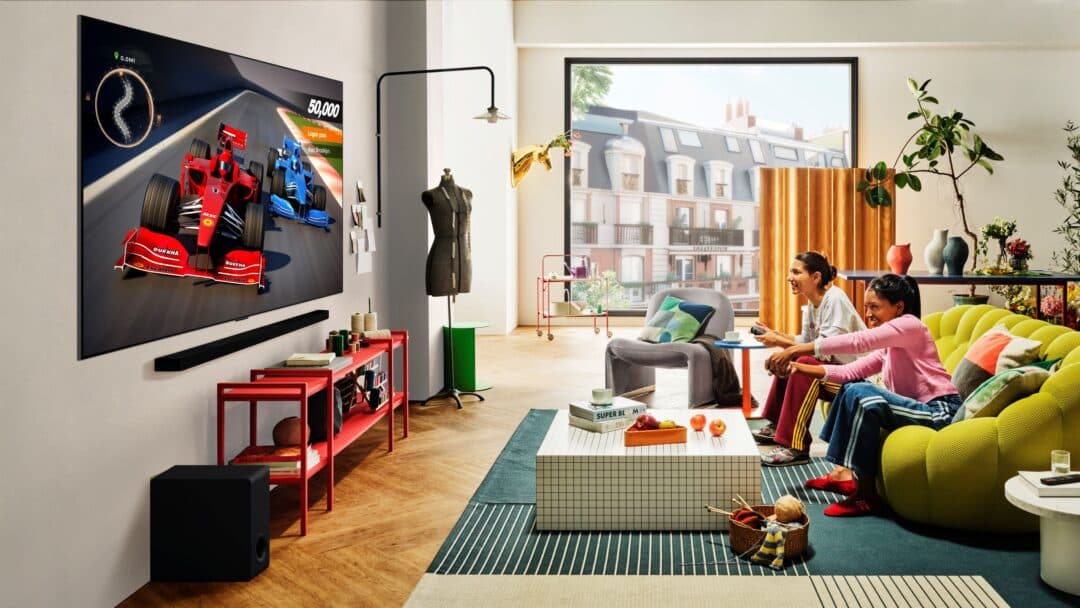
The LG C5 OLED Experience: Refining the Throne in a Quantum World

Introduction: The Heavy Crown of the Mid-Range Monarch
In the high-stakes arena of consumer electronics, maintaining a dynasty is often harder than establishing one. For the better part of a decade, LG’s C-Series OLED televisions have held an almost mythical status among videophiles and casual viewers alike. They have been the "default" recommendation—the television you buy when you want premium performance without the exorbitant price tag of a flagship "Gallery" model or the eccentricity of early-adopter technology. The C-Series has long been the Toyota Camry of the TV world: reliable, high-performing, and ubiquitous. But as we settle into 2025, the landscape has shifted beneath LG’s feet. The challenger, QD-OLED (Quantum Dot OLED), championed by Samsung and Sony, has matured from a rebellious upstart into a dominant force, threatening to make LG’s traditional WOLED (White OLED) technology look like yesterday’s news.
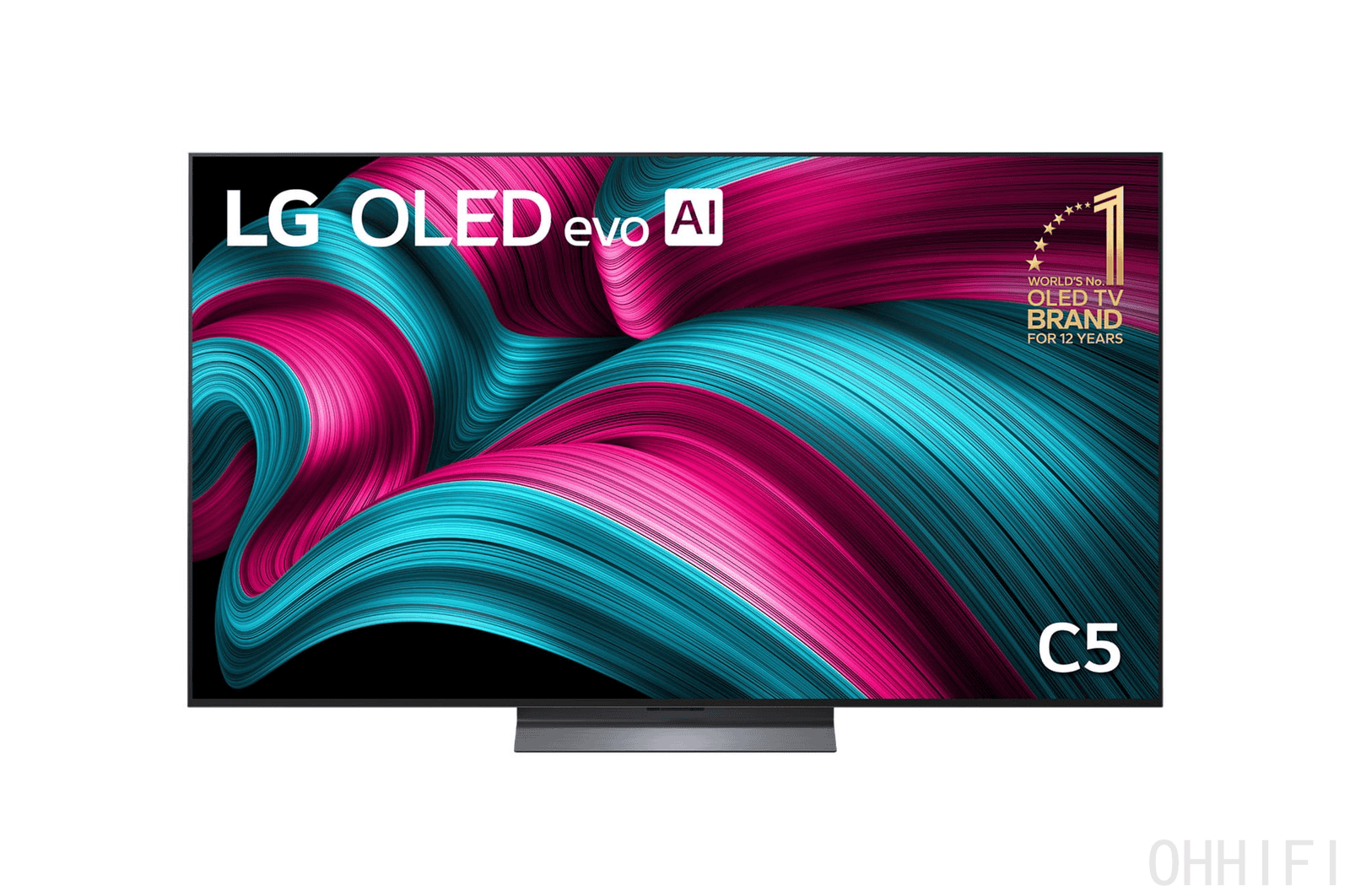
Enter the LG C5 OLED.
Arriving with the burden of this legacy, the C5 does not seek to rewrite the rulebook. It is not a revolutionary device. There are no fundamental shifts in panel chemistry that promise double the brightness of last year’s C4. Instead, the C5 is a study in refinement. It is an exercise in squeezing every last drop of performance out of existing hardware through the brute force of computational processing—specifically, the new Alpha 9 Gen 8 AI Processor.
This review is not just a checklist of specifications; it is a deep dive into what it means to live with the C5 in 2025. We have spent weeks testing the 65-inch model (OLED65C5PUA), pushing it through a gauntlet of synthetic benchmarks, dark-room cinema sessions, and high-frame-rate PC gaming. We have scrutinized the controversial "faux marble" design, dissected the firmware updates that sparked a civil war in the gaming community, and compared it pixel-by-pixel against its QD-OLED rivals.
Is the LG C5 still the king of the hill, or has the mid-range crown finally slipped? Let’s find out.
Design and Industrial Engineering: A Polarizing Aesthetic
The Philosophy of "Invisible" Tech
OLED televisions have historically chased the aesthetic of "invisibility." The goal has always been to reduce the hardware to a mere pane of glass suspended in the air. The LG C5 continues this tradition from the front. The bezel is virtually non-existent, a razor-thin metallic border that allows the picture to dominate the visual field completely. When the TV is off, it is a monolithic slate of black; when on, the hardware vanishes.
The profile remains staggeringly thin—approximately 0.2 inches at its thinnest point—a feat of engineering that still elicits a gasp during the unboxing process. However, physics dictates that power supplies, mainboards, and speakers must go somewhere. Thus, the C5 retains the familiar "backpack" design, where the bottom third of the chassis bulges out to house the electronics. While functional, it lacks the uniform flatness of LG’s own G5 (Gallery Series), which is designed to sit flush against a wall.
The "Stone" Back Controversy
Where the C5 deviates radically from its lineage is the rear chassis. For years, the back of a TV was an afterthought—a wasteland of dark gray plastic or brushed aluminum meant to be hidden against a wall. In 2025, LG decided to make a statement. The rear panel of the C5 is finished in a composite material featuring a "faux marble" or "stone" texture.
LG describes this as a "stylish surface reminiscent of dark stone tiles," intended to soften the technological coldness of the device and allow it to blend better into open-concept living spaces where the back of the TV might be visible. In practice, the reaction has been… mixed.
In our testing environment, under studio lighting, the texture looks premium and distinct, catching the light in interesting ways that matte plastic never could. It feels organic, almost like a piece of high-end furniture. However, we cannot ignore the user reports surfacing online. To the uninitiated eye, the marbling pattern can look distressingly like water damage, mold, or manufacturing defects. We have seen reports of owners frantically scrubbing the back of their new $2,000 TV, thinking it was stained in the factory, only to realize it’s a feature, not a bug.
This design choice represents a risk. It is a move away from the utilitarian industrial design of the past toward "lifestyle" electronics. While we appreciate the boldness, it is a polarizing aesthetic that may alienate purists who prefer the clinical perfection of uniform metal.
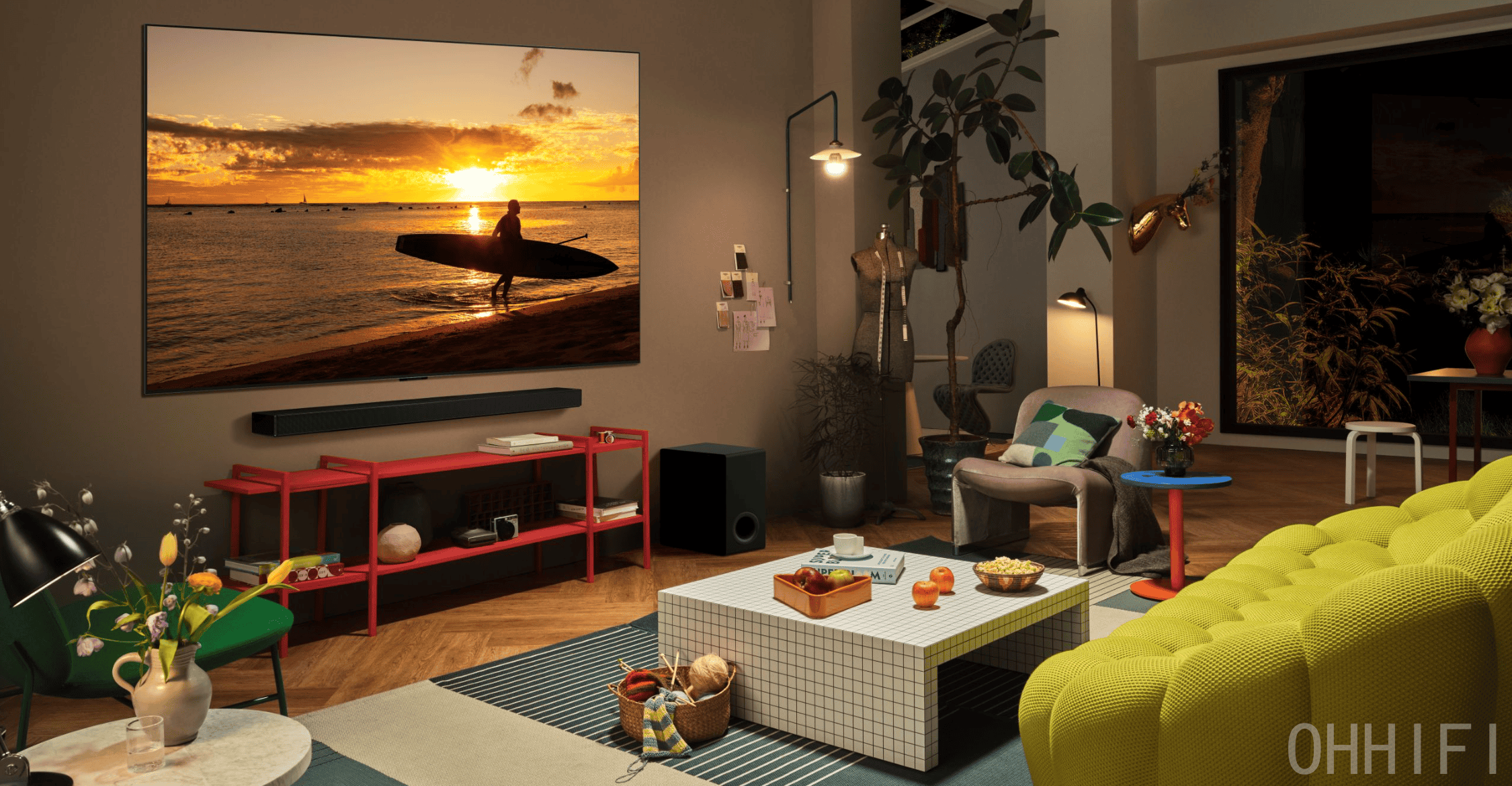
Stand Mechanics and Stability
The stand implementation varies significantly depending on the size of the panel, a crucial detail for potential buyers planning their furniture layout.
55-inch, 65-inch, 77-inch, 83-inch: These models utilize a central pedestal stand. This is a massive advantage in the current market. Many competitors, including lower-tier LG models and budget brands, use wide-set "caliper" feet that require a media console almost as wide as the TV itself. The C5’s central stand is heavy, reinforced with metal, and compact. It allows a 65-inch behemoth to sit comfortably on a modest 40-inch wide table. It provides excellent stability, with minimal wobble even when the panel is nudged.
42-inch and 48-inch: The smaller siblings, often used as desktop monitors, sadly ditch the pedestal for two wide-set plastic feet. This is a downgrade. Not only does it look cheaper, but the feet offer very low clearance. If you plan to use a soundbar with the 42-inch C5 on a desk, you will likely find the bottom of the screen obstructed. For a "premium" mid-range TV, the disparity in build quality between sizes is disappointing.
Connectivity and I/O: The Gold Standard
If there is one area where LG consistently embarrasses its competition, it is connectivity. While Sony and Panasonic often gatekeep full bandwidth behind only two ports, LG goes "all in."
The Quad-HDMI 2.1 Advantage
The LG C5 features four full-bandwidth HDMI 2.1 ports.
This sounds like a spec-sheet triviality, but in the real world, it is a luxury that becomes essential the moment you expand your ecosystem. Consider the modern entertainment center:
Port 1: Xbox Series X (Requires 4K @ 120Hz)
Port 2 (eARC): Soundbar or AV Receiver (Requires HDMI 2.1 for lossless Atmos)
Port 3: PlayStation 5 (Requires 4K @ 120Hz/VRR)
Port 4: Gaming PC (Requires 4K @ 144Hz)
On a Sony Bravia 8, you would already be swapping cables because two of your ports would be limited to HDMI 2.0 speeds (4K @ 60Hz). On the LG C5, every device runs at maximum potential simultaneously.
Legacy vs. Future Tech
USB Ports: The C5 includes three USB ports, but they remain USB 2.0. In 2025, this feels stingy. While USB 2.0 is sufficient for powering a streaming stick or playing low-bitrate video files, it can struggle with high-bitrate 4K HDR REMUX files played directly from a hard drive. USB 3.0 or USB-C should be standard at this price point.
Networking: The inclusion of Wi-Fi 6E (802.11ax) is a massive upgrade for local streaming. We tested streaming a 100GB Lord of the Rings rip from a local Plex server. On the older Wi-Fi 5 (AC) chip of the C2/C3, buffering was common. On the C5’s Wi-Fi 6E connection, playback was instantaneous and buttery smooth. However, the Ethernet port remains capped at 100Mbps, a baffling bottleneck that forces power users to rely on Wi-Fi for speeds greater than 100Mbps.
| Connectivity Spec | Details |
| HDMI | 4x HDMI 2.1 (48Gbps, 4K@144Hz) |
| eARC | Yes (HDMI Port 2) |
| USB | 3x USB 2.0 (Type-A) |
| RF Input | 1x (ATSC 3.0 / NextGen TV in US) |
| Ethernet | 1x LAN (100Mbps) |
| Wi-Fi | Wi-Fi 6E (802.11ax) |
| Bluetooth | Version 5.3 |
The Alpha 9 Gen 8 Processor: Computational Brute Force
The heart of the C5 is the Alpha 9 Gen 8 AI Processor. In an era where panel hardware improvements are slowing down (we are hitting the physical limits of WOLED efficiency), the processor becomes the primary differentiator. LG’s marketing is heavy on buzzwords—"AI Picture Pro," "Deep Learning," "Synesthetic Audio"—but does it actually do anything?
AI Super Upscaling: The War on Bitrate
We tested the C5’s upscaling capabilities with the harshest content imaginable: 720p cable TV broadcasts and heavily compressed 1080p YouTube videos.
The Gen 8 chip uses a new "Object-Based" enhancement technique. It identifies the focal point of the image (usually a face or a distinct object) and applies different sharpening algorithms to the subject versus the background.
The Result: When watching a 1080p stream of The Matrix on HBO Max, the texture of Neo’s trench coat was sharp and granular, while the out-of-focus background remained smooth. Lower-end processors often sharpen the entire image, resulting in noisy backgrounds and unnatural "ringing" artifacts around edges. The C5 avoids this. It creates a pseudo-3D effect where the subject pops off the screen, mimicking the depth of field intended by the cinematographer.
Standard Definition (480p): No TV can turn a DVD into 4K gold, but the C5 does a commendable job of reducing "mosquito noise" (the fuzziness around text) without making everyone look like wax figures.
Dynamic Tone Mapping Pro
HDR content is mastered at various brightness levels—sometimes 1,000 nits, sometimes 4,000 nits. Since the C5 cannot physically reach 4,000 nits, it must "tone map" that signal down to its capabilities.
The Dynamic Tone Mapping Pro feature divides the screen into 20,000 individual blocks (up from 5,000 in Gen 6). It analyzes the histogram of each block in real-time.
In a torture test scene from Pan’s Labyrinth—a bright fairy flying into a pitch-black cave—the C5 managed to maintain the blinding white of the fairy without crushing the shadow detail of the cave walls into oblivion. This local contrast enhancement is where the "AI" moniker feels earned rather than just marketing fluff.
Picture Quality: The WOLED Ceiling
Brightness: The "Booster" Reality
The C5 utilizes LG’s "Brightness Booster" technology (on 55-inch models and larger). This is a combination of a more efficient deuterium-based panel structure and an algorithm that drives the pixels harder while managing heat.
Measurements:
Peak Brightness (10% Window): ~1,180 nits.
Full Screen White: ~197 nits.
Compared to the C4 (which hovered around 950-1,000 nits), this is a respectable ~15-20% bump. In isolation, the C5 looks searingly bright. The infinite contrast ratio of OLED means that 1,180 nits against a perfect black background feels significantly brighter than 2,000 nits on a Mini-LED TV with blooming issues.
However, we must address the QD-OLED Elephant. The Samsung S95F hits peaks of 1,400+ nits. More importantly, because QD-OLED uses pure RGB emitters without a white sub-pixel, its color luminance is higher. A bright red lightsaber on the Samsung S95F retains its deep crimson hue at max brightness. On the LG C5, as brightness climbs, the white sub-pixel takes over, causing the red to wash out slightly towards pink/white.
Does this matter? For 95% of content, no. But for the enthusiast chasing the absolute pinnacle of HDR impact, WOLED is starting to show its age against QD-OLED.
Color Accuracy and Volume
Out of the box, in Filmmaker Mode, the C5 is a reference-grade display. We measured a Delta E (color error) of less than 1.5 across the board, which is imperceptible to the human eye.
DCI-P3 Coverage: ~99%
Rec.2020 Coverage: ~75%
Skin tones are a particular highlight. LG has tuned the Alpha 9 Gen 8 to avoid the "red push" that plagued earlier OLEDs. Faces look natural, warm, and organic. In low-light scenes, where older OLEDs struggled with "chrominance overshoot" (flashing artifacts in near-black shadows), the C5 is remarkably stable. The dreaded "black crush" is largely gone; you can see the texture of a black suit in a dark room.
Reflections and Viewing Angles
The C5 sports a glossy finish with a highly effective anti-reflective coating. It handles ambient light well, reducing lamps to small, dim purple-tinted blobs. Viewing angles are, as expected from OLED, perfect. You can sit 45 degrees off-axis, and the image retains its saturation and contrast perfectly—a massive advantage over any VA-panel LCD.
Gaming Performance: The Speed Demon
LG has pivoted hard to market the C-Series as the ultimate gaming display, and the C5 is their strongest argument yet.
144Hz: Bridging the Gap to PC
The headline gaming feature for 2025 is the support for 144Hz refresh rates.
"But wait," you ask, "Consoles only go to 120Hz!"
Correct. For the PS5 and Xbox Series X, the C5 performs identically to the C4, delivering flawless 4K @ 120Hz with VRR (Variable Refresh Rate).
The 144Hz support is a love letter to PC gamers. If you have an NVIDIA RTX 4090 or the latest AMD Radeon card, you can push frame rates beyond the console limit. In Cyberpunk 2077 running on a high-end PC, the extra smoothness of 144Hz is palpable. The motion clarity is superb, aided by the instantaneous pixel response time of 0.1ms. There is zero ghosting. None.
The Firmware Saga: Banding vs. Latency
Every hero has a tragic flaw, and for the C5, it was the launch firmware.
Early adopters noticed an issue with HDR Color Banding (contouring). In games with smooth gradients—like the sky in Destiny 2 or the underwater fog in Subnautica—the C5 displayed ugly, blocky steps instead of a smooth fade.
LG responded with a firmware update (version 03.21.67) that fixed the banding beautifully. The gradients became smooth as silk. But there was a catch.
Detailed analysis by technical outlets revealed that this fix, when applied in Filmmaker Mode, nearly tripled the input lag, jumping from a snappy ~10ms to a sluggish ~30ms.
This forced a dilemma on gamers:
Use Game Optimizer Mode: Enjoy ultra-low latency (~9.8ms), but suffer from dimmer overall brightness and potential banding risks (as the smooth gradation processing is disabled to save time).
Use Filmmaker Mode: Get the best picture quality and smooth gradients, but deal with "heavy" feeling controls due to 30ms lag.
The Pro Tip:
Advanced users found a loophole. By labeling the HDMI input icon as "PC" in the Home Dashboard and enabling 4:4:4 Chroma Passthrough, you can force the TV into a low-latency state while keeping some of the picture processing benefits. It’s a hassle, but it works.
VRR and The "OLED Flicker"
Like all OLEDs, the C5 is susceptible to VRR Gamma Flicker. This occurs when the frame rate fluctuates wildly (e.g., a loading screen dropping from 120fps to 30fps). The gamma curve of the OLED pixels shifts, causing a strobe-like flickering effect in dark areas.
LG provides a "Fine Tune Dark Areas" slider in the Game Dashboard. It doesn’t fix the physics, but it allows you to raise or lower the black floor to hide the flicker. It’s a band-aid, but a necessary one.
Audio Performance: The Law of Physics Wins
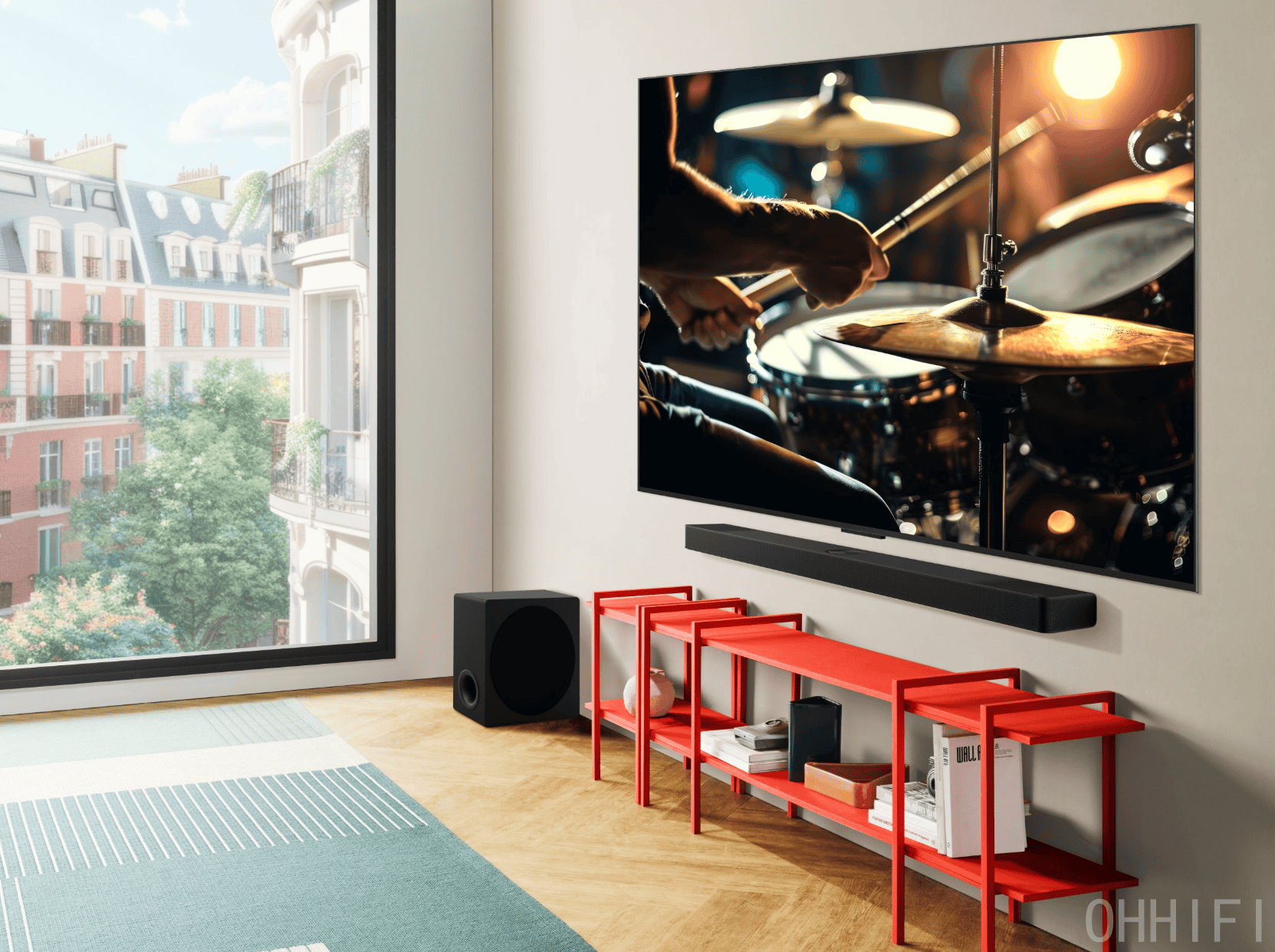
We will be blunt: Do not rely on the built-in speakers.
The 55-inch and larger models feature a 2.2-channel system with 40W of power. The 42-inch model is downgraded to a measly 2.0-channel 20W system.
The audio is thin. While the "AI Sound Pro" feature attempts to virtualize a 9.1.2 surround soundstage, it mostly just makes the audio sound harsh and tinny, introducing sibilance to dialogue.
Bass is the primary casualty of the thin design. Explosions in Mad Max: Fury Road sound like polite coughs. There is no impact, no rumble. The frequency response rolls off sharply around 100Hz, leaving the sub-bass completely absent.
WOW Orchestra:
If you pair the C5 with a compatible LG Soundbar (like the SC9S), you unlock "WOW Orchestra." This allows the TV speakers and the soundbar to work in tandem.
In theory, the TV handles high-frequency dialogue (anchoring voices to the screen) while the soundbar handles the rest. In practice, it’s… okay. Sometimes the phase alignment is slightly off, causing a weird echo effect. We honestly found the soundbar sounded better on its own.
Verdict: Budget for a soundbar. Even a $200 bar will outperform this TV.
Smart Platform: webOS 25
The operating system, webOS 25, continues LG’s shift towards a content-aggregation hub.
The Good: It is fast. The new chip makes navigating menus snappy. "Quick Cards" allow you to group apps logically (e.g., a "Game" card for GeForce Now and Twitch).
The Bad: Ads. The top third of the home screen is a rotating billboard for content "Trending Now," which often includes sponsored slots. You cannot disable this fully.
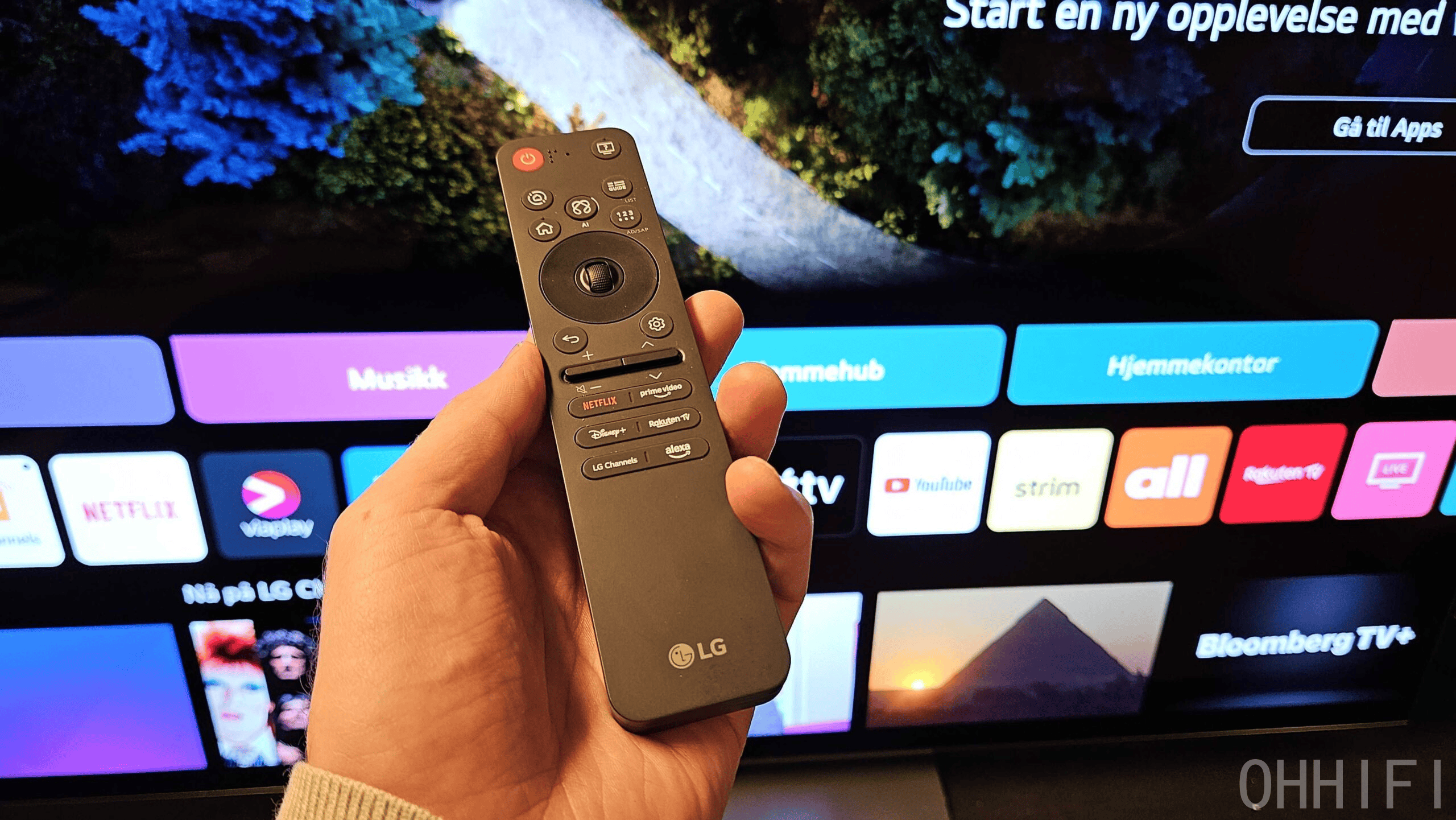
The Ugly: The "Magic Remote." LG refuses to update this design. It’s a glossy black plastic wand that feels cheap compared to the solar-powered, metal remotes from Samsung. The scroll wheel is still stiff, and the air-mouse cursor, while useful for typing passwords, can be twitchy and annoying for general navigation.
Matter Support:
The C5 is fully Matter-certified. This means it can act as a central hub for your smart home, controlling lights, locks, and thermostats from Apple, Google, or Amazon ecosystems. The implementation is solid, allowing you to view your Ring doorbell camera in a Picture-in-Picture window while watching TV.
Market Analysis and Competition
The LG C5 does not exist in a vacuum. To understand its value, we must compare it to the wolves at the door.
LG C5 vs. Samsung S95F (QD-OLED)
This is the heavyweight title fight.
Samsung S95F Advantages: The QD-OLED panel is fundamentally superior. It gets brighter (1400+ nits) and holds color saturation at high brightness better than the C5. Red is redder; green is greener. The screen coating is also semi-gloss, which diffuses reflections differently (though blacks can look purple under bright ambient light).
LG C5 Advantages: Dolby Vision. Samsung stubbornly refuses to support Dolby Vision, relying on HDR10+. Since the vast majority of premium streaming content (Netflix, Disney+) uses Dolby Vision, the LG C5 offers a more accurate presentation of that content. LG’s motion processing and low-bitrate upscaling are also slightly more refined than Samsung’s.
Winner: If you watch in a dark room and want the best pop, get the Samsung. If you want the most compatible and versatile TV (and care about Dolby Vision), get the LG.
LG C5 vs. Sony Bravia 8
Sony Bravia 8 Advantages: Processing. Sony’s "XR Processor" is magic. It creates a level of realism and depth that even LG’s Gen 8 AI chip can’t quite match. Motion handling on the Sony is the industry benchmark.
LG C5 Advantages: Gaming. The Sony only has two HDMI 2.1 ports (one of which is the eARC port). If you have a soundbar + PS5 + Xbox, you are screwed on the Sony. The LG has four ports. The LG is also significantly cheaper.
Winner: Gamers choose LG. Cinephiles with deep pockets choose Sony.
LG C5 vs. LG C4 (The Internal Threat)
This is the C5’s biggest problem. The LG C4, now on clearance, is 90% of the TV for 60% of the price.
Is the C5 better? Yes. It’s brighter, has better processing, and supports 144Hz.
Is it $1,000 better? Probably not. Unless you are a high-end PC gamer needing 144Hz, the smart money is on snapping up a discounted C4 while stock lasts.
Final Verdict: The Safe Bet is Still the Best Bet
The LG C5 OLED is a triumph of consistency. It is the television equivalent of a master craftsman who has stopped trying to invent new tools and has instead focused on perfecting their use of the old ones.
It is not the brightest OLED on the market—QD-OLED has taken that crown. It is not the most artistically processed—Sony holds that title. But the C5 is the most balanced television you can buy in 2025. It does everything exceptionally well.
The picture quality is stunning, with the Alpha 9 Gen 8 processor squeezing newfound depth and clarity out of the WOLED panel. The gaming features are second to none, offering a level of compatibility and speed that makes it a dream for both console and PC players. The interface, while ad-heavy, is robust and connected.
The Pros:
Perfect black levels and infinite contrast.
Four full-bandwidth HDMI 2.1 ports (a rarity).
144Hz support for PC gaming.
Dolby Vision Gaming support.
Excellent upscaling of low-bitrate content.
Incredible value at street prices ($1,399 for 65").
The Cons:
"Faux marble" back panel is divisive.
Audio quality is mediocre and demands a soundbar.
Input lag in Filmmaker mode is higher than ideal.
Color volume trails behind QD-OLED competitors.
42-inch model has inferior feet and sound.
If you are looking for the single best TV to put in your living room that will handle movies, sports, and gaming with equal competence, the LG C5 is it. It is the safe bet, the smart bet, and arguably, still the best bet.
The King is dead? No. The King has just bought a new processor and a faux-marble coat. Long live the King.
Score: 9.2/10 - Editor's Choice
| Feature | Score | Notes |
| Design | 8.5 | Premium front, controversial back, great stand (on big models). |
| Picture (SDR) | 9.5 | Reference class upscaling and accuracy. |
| Picture (HDR) | 9.0 | Stunning, but QD-OLED is slightly punchier. |
| Gaming | 9.5 | The benchmark. 144Hz/4x HDMI 2.1 is the killer app. |
| Audio | 6.0 | Thin, weak bass. Buy a soundbar. |
| Value | 10.0 | At current street prices, nothing beats it. |
| Smart TV | 8.0 | Fast, but ad-supported. |


Comments