
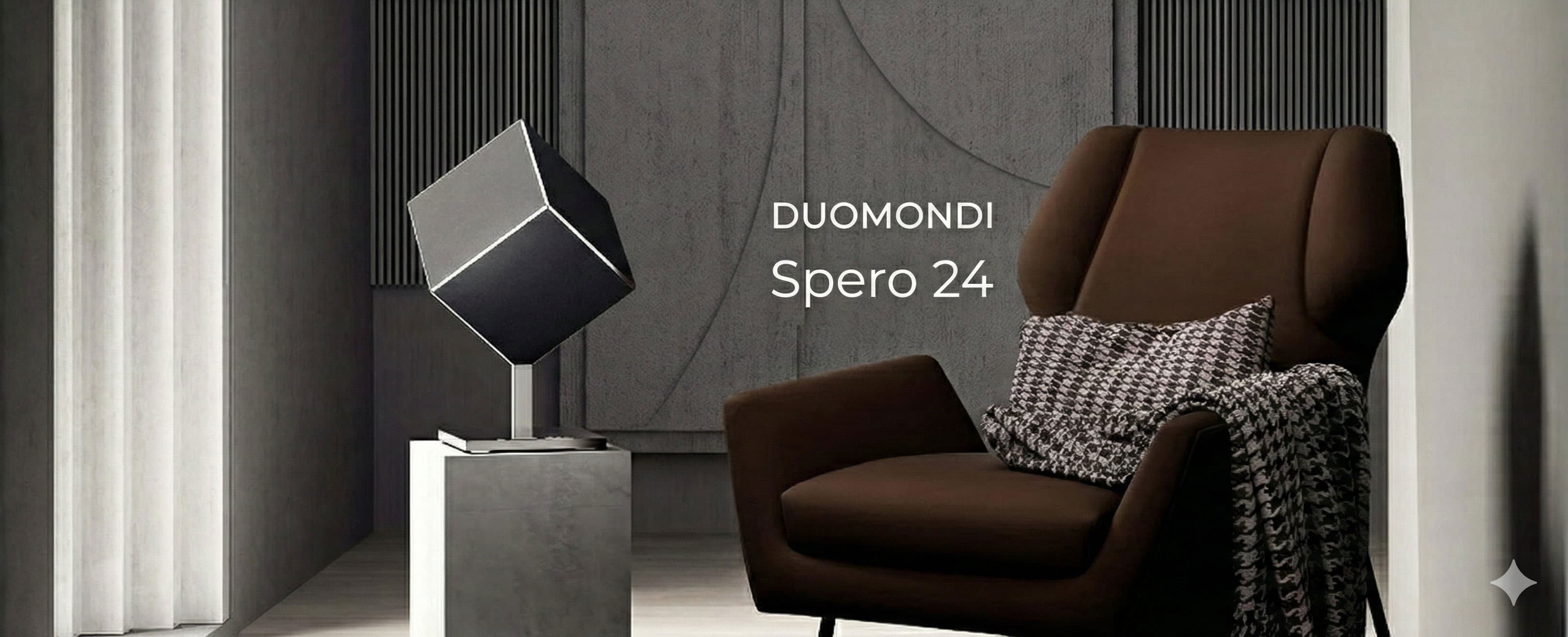
DUOMONDI Spero 24 Review: A Luminous Monolith in a Sea of Black Boxes

1. Introduction: The Identity Crisis of Modern Audio
The world of high-fidelity audio is currently undergoing a quiet, glossy revolution. For the better part of four decades, the industry was driven by a single, unwavering imperative: invisibility. The perfect speaker was heard and not seen. We spent the 90s burying wires in walls, the 2000s shrinking satellites into cubes the size of milk cartons, and the 2010s wrapping everything in "acoustic fabric" so that our technology would blend seamlessly into the beige neutrality of a Scandinavian-inspired living room. The goal was the "Black Box"—a utilitarian object that apologized for its own existence.
But the pendulum, as it always does, is swinging back.
We are entering the era of "Statement Audio." It started, perhaps, with the Devialet Phantom—an alien egg that throbbed with visible bass. It continued with the resurgence of massive, wood-paneled vintage JBLs. And now, we have DUOMONDI. A brand that doesn't just ask you to look at its speaker; it asks you to stare.
The subject of today's deep-dive is the DUOMONDI Spero 24, often referred to by the company as "The Maestro". It is a device that sits awkwardly between categories. Is it a portable Bluetooth speaker? Technically, yes—it has a battery and a handle. Is it a sedentary home hi-fi system? Given its 6.8kg weight and €1,750 price tag, absolutely. Is it a lamp? Surprisingly, yes.
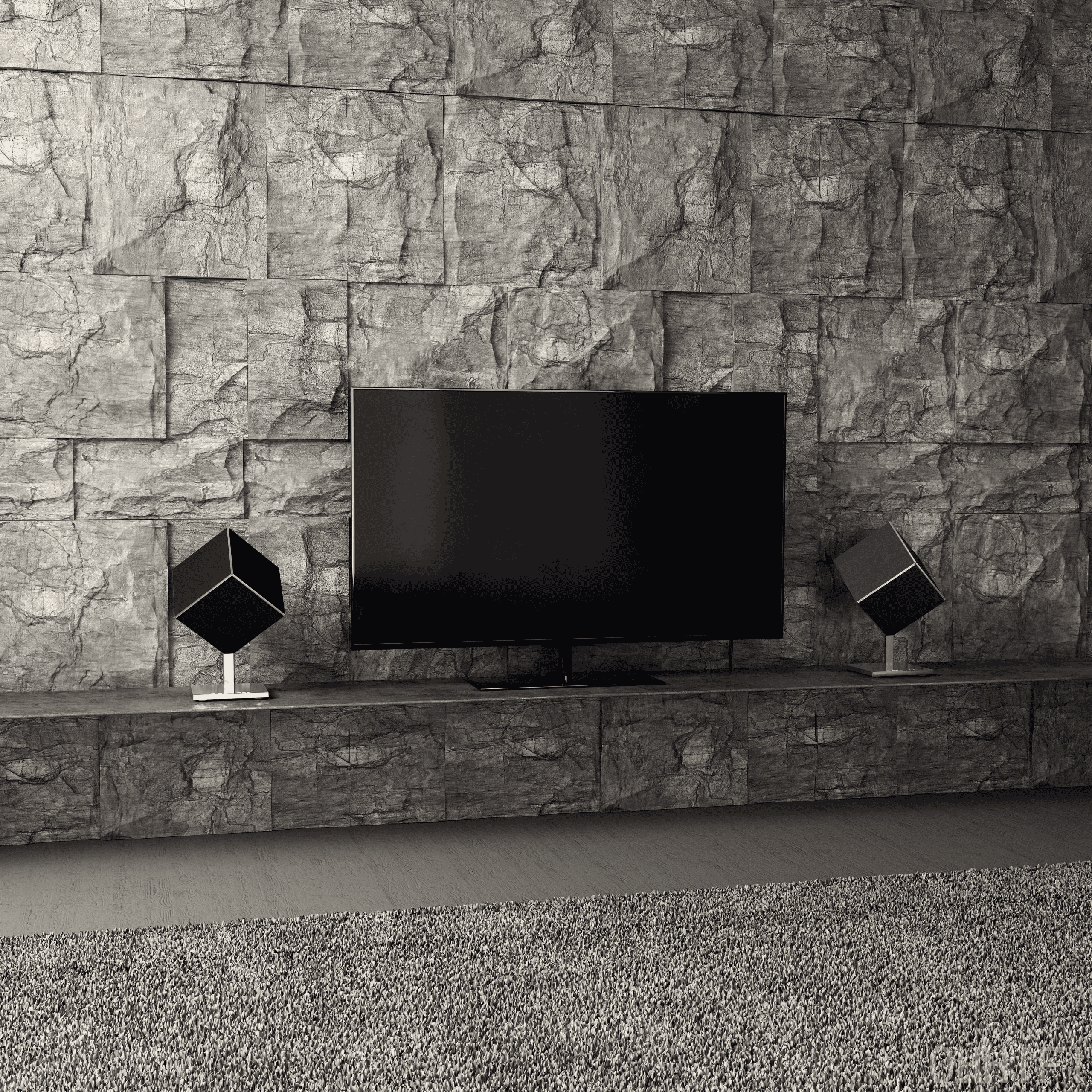
This ambiguity is its greatest strength and its most frustrating weakness. In a market obsessed with specs-per-dollar—where we endlessly compare SINAD charts and frequency response curves—the Spero 24 arrives speaking a different language. It speaks the language of K-Array, the legendary Florentine pro-audio manufacturer that provides its acoustic heart. It speaks the language of "Soundlight," a proprietary fusion of RGB LED mapping and DSP.
But can it sing?
In this exhaustive review, we are going to strip away the marketing gloss. We will look past the "Italian Artistry" and "German Engineering" slogans to see what makes this machine tick. We will pit it against the titans of the sector—the Devialet Mania, the Naim Mu-so, and the Bowers & Wilkins Formation. We will live with it for weeks, analyzing every quirk of its app, every photon of its light engine, and every hertz of its bass extension.
This is not a quick unboxing. This is an autopsy of a challenger.
2. The Pedigree: When Pro Audio Goes Home
To understand why the Spero 24 sounds the way it does, you have to understand where it comes from. Most lifestyle audio brands are born in marketing boardrooms. They source off-the-shelf drivers from massive OEM factories in China, slap a logo on a plastic shell, and hire an influencer to hold it at a pool party.
Duomondi is different because of one hyphenated name: K-Array.
2.1 The K-Array Legacy
K-Array is not a household name for the average consumer, but ask any live sound engineer, and their eyes will light up. Based in the hills of Tuscany, K-Array specializes in making speakers that defy physics. They are famous for their "Anakonda" flexible speakers and ultra-slim line arrays that can project vocals to the back of a cathedral without visually disrupting the architecture. Their philosophy is "Slim Array Technology"—getting massive Sound Pressure Levels (SPL) out of impossibly small, rigid enclosures.
The Spero 24 is, effectively, a K-Array concert monitor dressed up for a dinner party. The "Revolutionary quad-firing audio system" inside the Spero isn't just marketing fluff; it's a derivation of the technology found in K-Array’s Tornado and Vyper lines.
2.2 The "Duomondi" Concept
The brand name itself—Duomondi—suggests "Two Worlds." The marketing copy leans heavily into this duality: Italian design meets German engineering; Light meets Sound; Classicism meets Futurism. It sounds pretentious, sure. But when you lift the unit out of the box, the pretension feels somewhat earned.
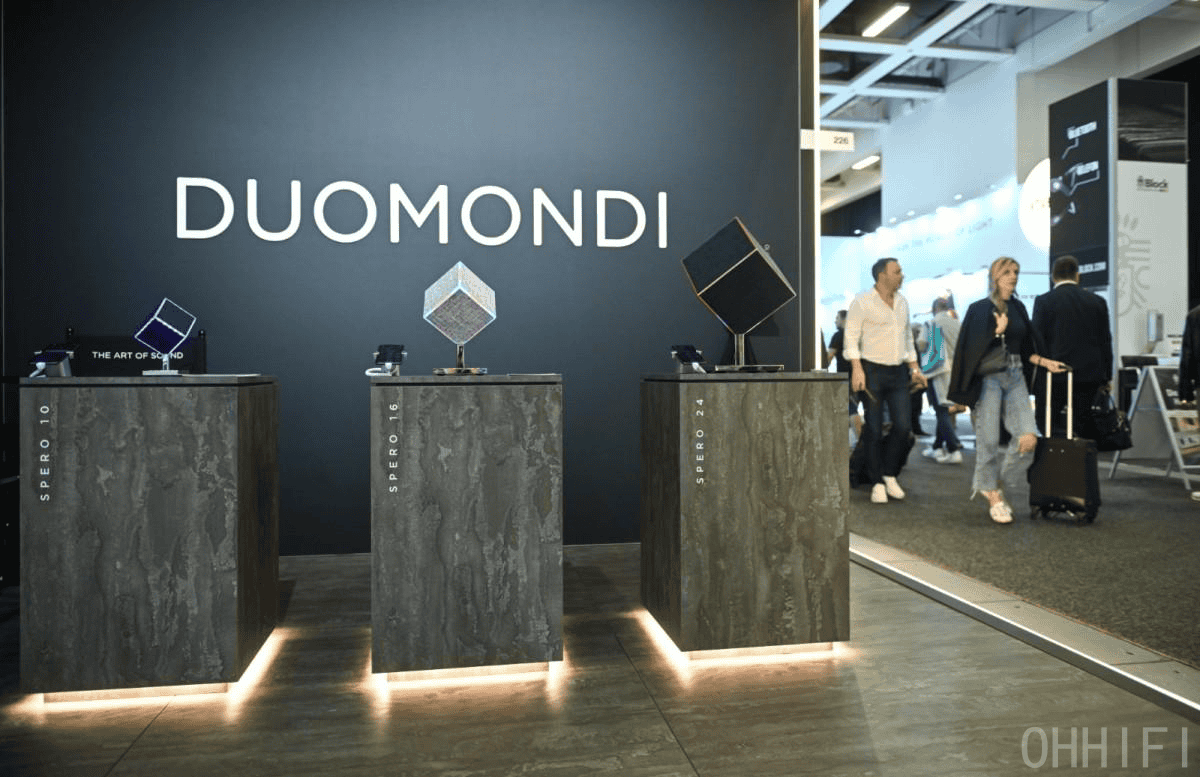
The Spero 24 is the flagship of a three-tier lineup, sitting above the Spero 16 (The Wanderer) and the Spero 10 (The Muse). While the smaller siblings are genuine portables, the Spero 24 is a "Maestro"—a conductor. It is meant to anchor a room.
By partnering with K-Array, Duomondi has taken a massive risk. Pro-audio drivers are ruthless. They are designed for clarity, throw, and volume. They are not typically designed for the warm, fuzzy, bass-boosted sound that consumers usually like (the "Bose sound"). This sets up the central tension of the Spero 24: Is it a fun party speaker, or is it a serious critical listening tool disguised as a disco ball?
3. Design and Aesthetics: The Angular Monolith
Let's talk about the elephant in the room. Or rather, the glowing prism in the room.
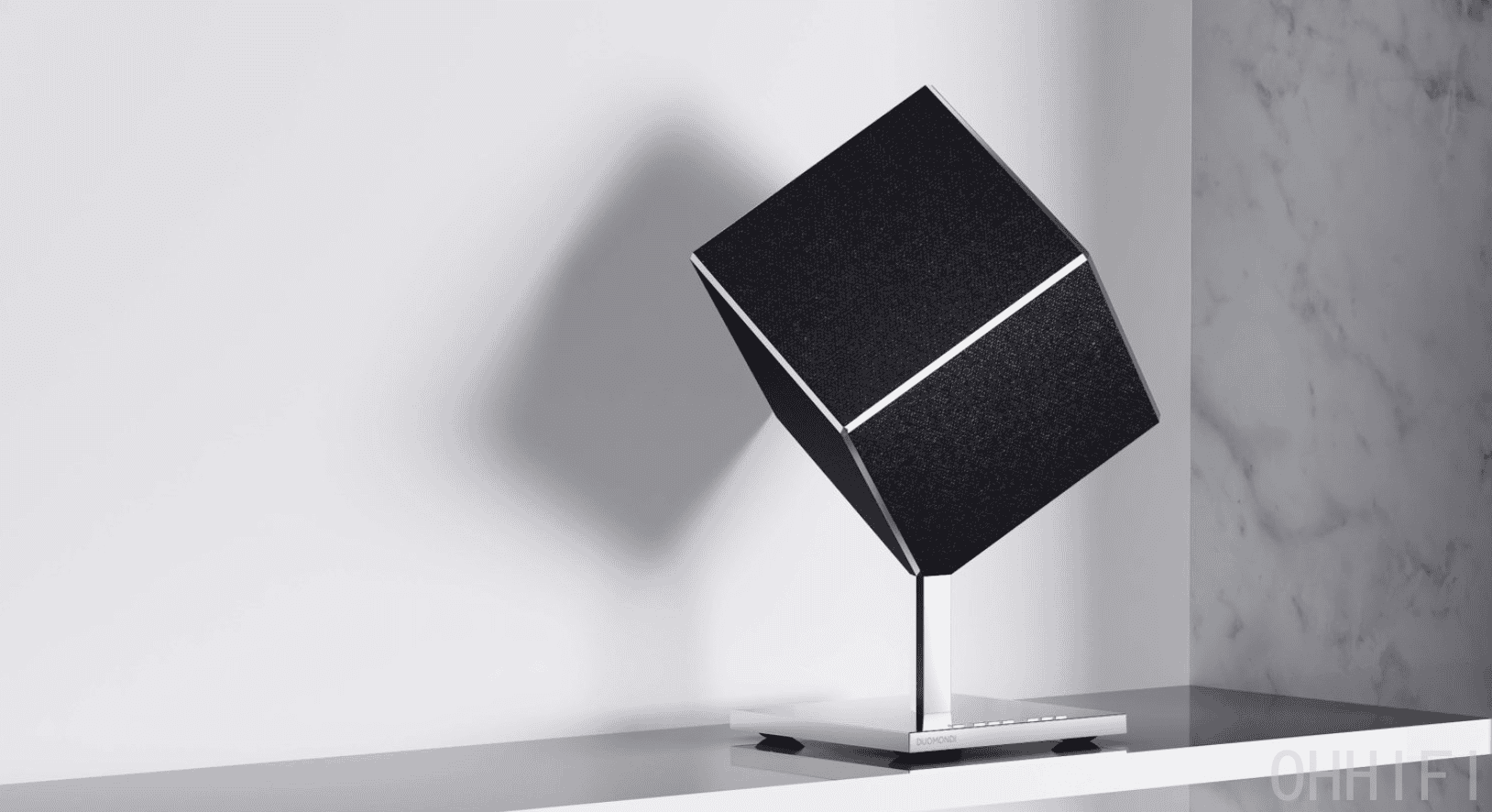
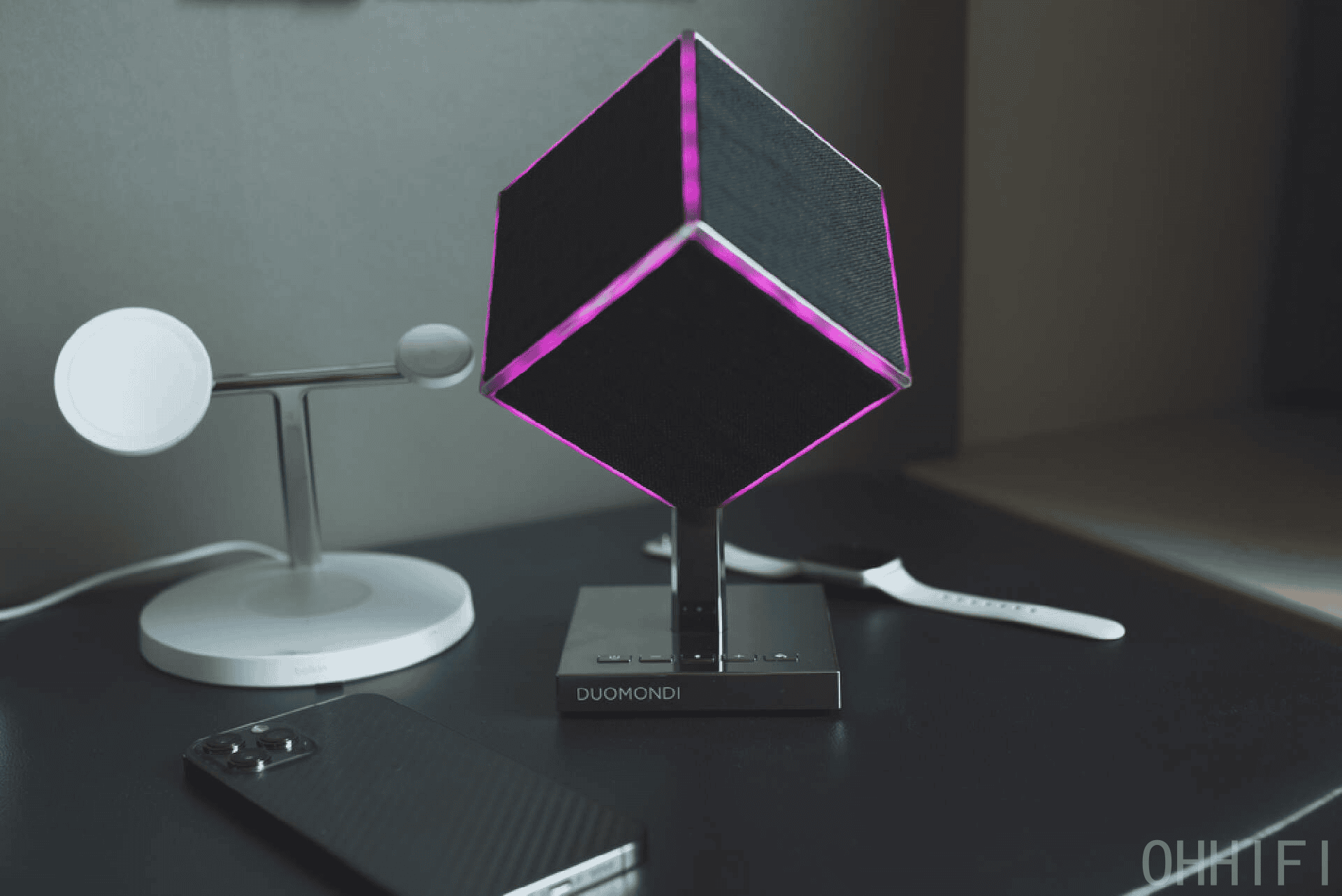
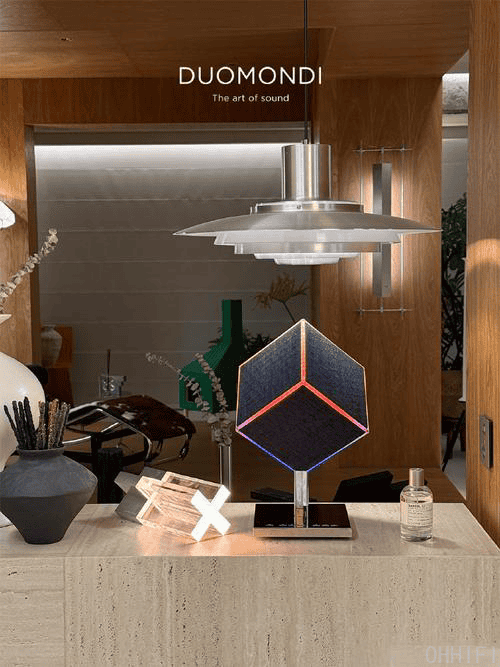
The Spero 24 looks like nothing else on the market. If the Devialet Mania is a ball and the Naim Mu-so is a bar, the Spero 24 is a shard. Duomondi calls it "Angular Soundlight". It’s a geometric asymmetry—a collection of triangles and trapezoids fused into a coherent whole.
3.1 Materials and Build Quality
The first thing you notice is the density. It weighs 6.8 kg (15 lbs). For a "portable" speaker, this is heavy. You don't toss this in a tote bag. You heft it. The weight is a good sign in audio; it implies heavy ferrite or neodymium magnets in the drivers and a cabinet that is thick enough to be inert.
The finish options are Charcoal, Sand, and White Stone. Our review unit came in Charcoal. It’s a matte, textured finish that feels premium to the touch—somewhere between powder-coated aluminum and ceramic. It resists fingerprints well, which is crucial because this is a tactile device. You want to touch it.
The grille is not fabric. It's a structural mesh that integrates the lighting elements. This is a departure from the "cozy" trend of Kvadrat wool covers (seen on Sonos and Bang & Olufsen). The Spero 24 feels architectural. It feels cold, precise, and expensive.
3.2 The Light Engine: More Than Just RGB
We need to spend some time on the lights. "Sound-reactive lighting" is usually a red flag in high-end audio. It screams "cheap gaming peripheral" or "college dorm rave." But Duomondi has implemented something far more sophisticated here.
The Spero 24 uses a 258-pixel 3D light engine. These aren't just LEDs blinking on a strip. They are mapped in a volumetric array. The diffusion layer over the LEDs is exquisite. You don't see the individual dots (hotspots); you see washes of color that seem to emanate from deep within the device.
There are three primary modes:
Paint Mode: This is the "adult" mode. Static or very slowly shifting gradients. You can set it to a warm tungsten amber, and it effectively becomes a designer lamp. In a dark listening room, it provides a bias light that reduces eye strain.
Relax Mode: Here, the light moves like fluid. It’s not synced to the beat beat-for-beat, but rather flows. It’s hypnotic.
Party Mode: This is the high-energy setting. The DSP analyzes the frequency spectrum—kick drums trigger the bottom array, high hats trigger the top. It’s responsive, with zero perceptible latency.
What’s impressive is the quality of the light. It’s 24-bit color depth. The gradients are smooth, without the "banding" you see on cheaper devices. It adds a sensory dimension to the music that I didn't expect to enjoy as much as I did. Listening to Brian Eno with the speaker pulsing in a slow, cool blue "Relax" mode is a genuinely transcendent experience. It bridges the gap between audio equipment and installation art.
3.3 Portability: A Theoretical Concept
The handle is integrated into the geometric shape. It’s sturdy, but let’s be real: you are not taking this to the park. The 12-hour battery life is decent, but the form factor is awkward for travel. This is "transportable" rather than "portable." It lives in your living room, but you might carry it to the patio for a BBQ, or to the dining room for a dinner party. It’s portable in the way a heavy cooler is portable—you move it when you have to, but you’re not hiking with it.
4. Technical Architecture: The Engine Room
Now, we peel back the grille (metaphorically) and look at the engineering. This is where the K-Array DNA asserts itself.
4.1 The Driver Topology
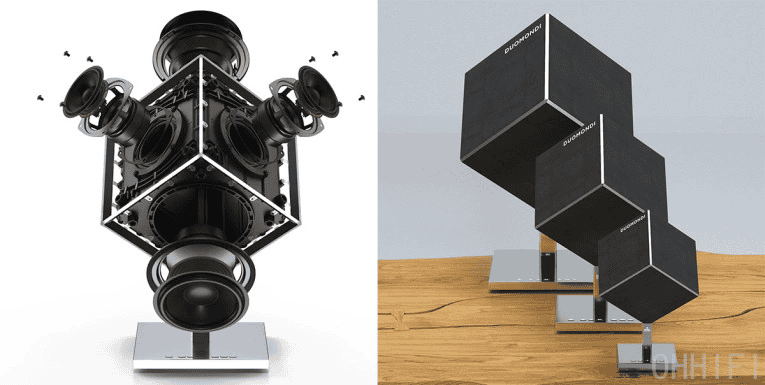
The Spero 24 is a Quad-firing system.
The specifications list a power output of 100W total, broken down as 2 x 25W for Left/Right channels and 50W for the Subwoofer.
Wait, a subwoofer in a box this size?
Yes. It uses "sub drivers mounted on the top and bottom". This suggests a dual-opposing configuration (force-canceling). This is a high-end engineering trick used by brands like KEF (in the KC62) and Devialet. By mounting bass drivers back-to-back (or top-to-bottom) and firing them in phase, the mechanical forces cancel out.
Why this matters: When a woofer moves, it creates Newton’s Third Law recoil. In a lightweight speaker, this makes the cabinet vibrate. A vibrating cabinet colors the sound (distortion) and can even make the speaker "walk" across the table. Force-canceling eliminates this. You can put a glass of water on the Spero 24 at max volume, and it barely ripples, even while the bass is pummeling the room.
The "Left/Right" channels are likely handled by coaxial or full-range drivers mounted on the angled faces of the prism. This angled arrangement creates the Omnidirectional soundstage.
4.2 The DSP: Kalimba Brains
The brain of the operation is a Kalimba 24-bit Digital Signal Processor (DSP).
DSP is the magic sauce of modern audio. It’s what allows small speakers to sound big. The Kalimba chip handles:
Crossovers: Splitting the frequencies between the sub and the tweeters perfectly.
Dynamic EQ: At low volumes, human hearing is less sensitive to bass (the Fletcher-Munson curve). The DSP boosts the bass at low volumes so the sound remains full, then flattens it out as you crank the volume to protect the drivers.
Light Sync: It analyzes the audio signal in real-time to drive the LED matrix.
4.3 Connectivity: The Fatal Flaw?
Here we hit the speed bump. The Spero 24 costs €1,750.
For that money, you expect the Holy Trinity of streaming: Wi-Fi, AirPlay 2, and Spotify Connect.
The Spero 24 has none of them.
It is a Bluetooth-only device (plus Aux and USB).
Specifically, Bluetooth 5.0.
This is a baffling choice. Even the Devialet Mania (€790) and Sonos Move 2 (€499) offer Wi-Fi streaming. Wi-Fi offers lossless bandwidth (CD quality and above), whereas Bluetooth is always lossy (compressed).
Why did they do this?
One theory is complexity. Integrating a Wi-Fi streaming module requires massive software development, licensing fees to Apple (AirPlay) and Google (Chromecast), and ongoing app support. Bluetooth is simple, robust, and universal.
Another theory is that K-Array views this as a "monitor"—you plug a source into it.
The Saving Grace: USB-C Audio
However, there is a loophole for the audiophile. The Spero 24 supports USB Audio via USB-C. You can plug a laptop or iPad directly into the USB-C port, and the Spero acts as an external sound card (DAC). This connection is lossless. It supports 48kHz streaming.
If you are a serious listener, you will use the USB-C port. If you are casually listening, Bluetooth is fine. But at €1,750, "fine" is a hard pill to swallow.
5. User Experience: Living with The Maestro
5.1 Unboxing
The box is massive. 12.5kg shipping weight. It opens like a jewelry box. The speaker is wrapped in a premium protective shroud. The power adapter is a custom 24V brick—it’s heavy and industrial. This isn't a generic USB charger; it's a power supply meant to drive amps.
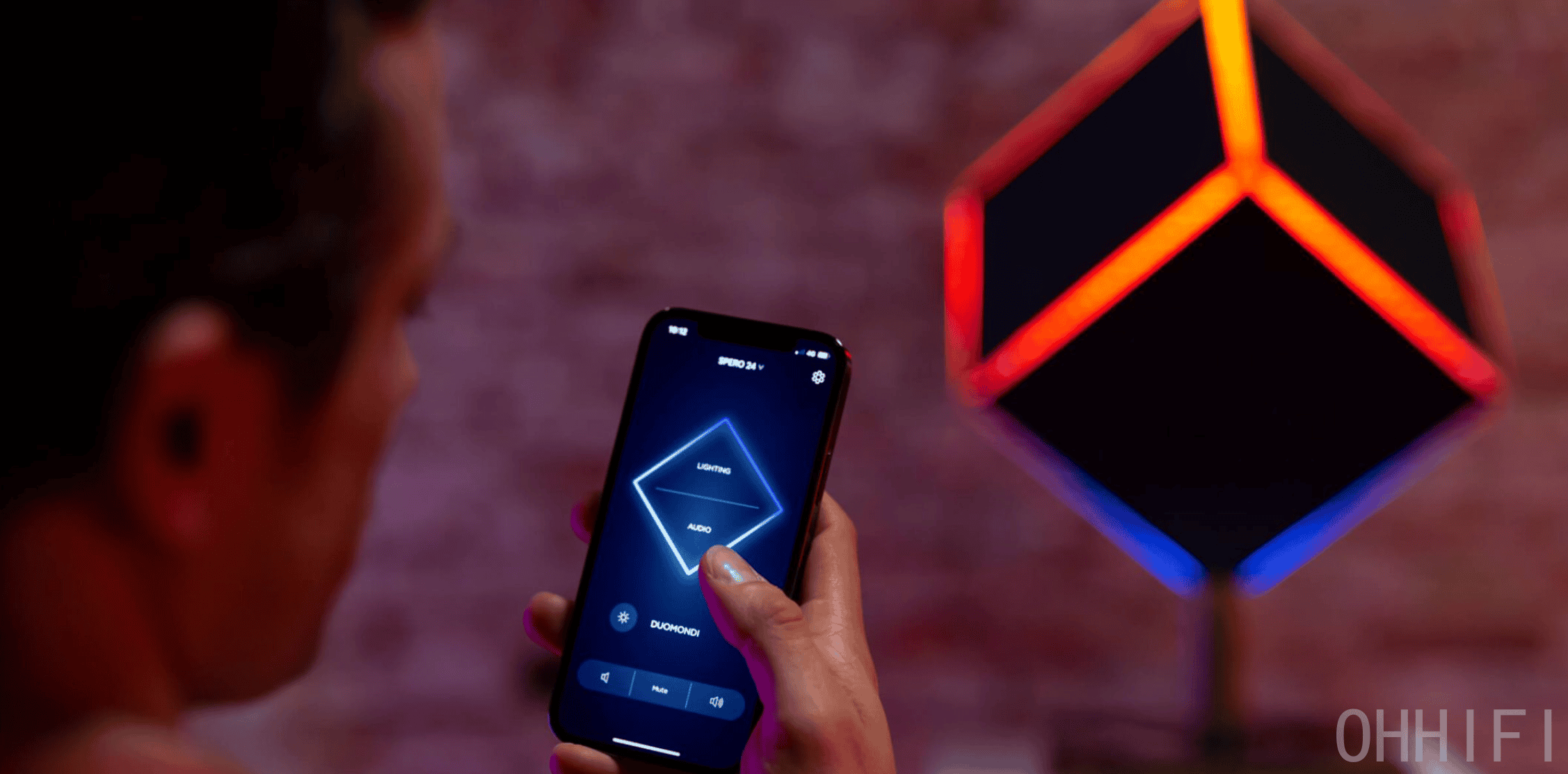
5.2 The "My Spero" App
You have to download the app. The reviews for the app on the App Store are sparse, but in usage, it’s... okay. It connects via BLE (Bluetooth Low Energy) for control.
The Interface: It’s dark, sleek, and intuitive.
Features: You get a 5-band Graphic EQ. This is huge. Most competitors give you simple "Bass/Treble" sliders. A 5-band EQ allows you to surgically cut muddy low-mids or tame harsh highs.
Lighting Control: This is where the app shines. You can customize the colors. You want a "Miami Vice" pink and teal theme? You can make it. You want a "Fireplace" orange? Done.
Stability: We noticed some flakiness with the initial connection. Sometimes you have to kill the app and restart it to find the speaker. It’s a software experience that feels like version 1.0, whereas Sonos is on version 15.0.
5.3 Physical Controls
There are capacitive buttons on the base. They work, but they are hard to find in the dark. Paradoxically, for a speaker that lights up, the buttons aren't backlit in a way that makes them easy to identify by touch alone. You will rely on your phone for volume 99% of the time.
6. Sound Performance: The K-Array Difference
So, how does a glowing geometric sculpture actually sound?
We tested the Spero 24 using a mix of high-bitrate Bluetooth streaming (Samsung Galaxy S23 using LDAC/AptX if available) and wired USB-C connection from a MacBook Pro (lossless FLAC).
6.1 Soundstage and Imaging
The Spero 24 is Omnidirectional. Traditional speakers beam sound at you in a "sweet spot." If you move off-axis, the treble rolls off. The Spero 24 fills the room like a gas.
The Effect: Walking around the room, the tonality barely changes. It is eerie. The sound is everywhere.
Imaging: The trade-off is precision. You don't get the razor-sharp "phantom center" of a pair of KEF LS50s. The stereo separation is there (it processes Left and Right channels), but it is diffuse. It’s a "Cloud of Sound." For a dinner party or casual listening, this is superior to stereo. For critical analysis of a symphony, it is less precise.
6.2 Tonal Balance
The tuning is "warm but authoritative."
Bass (45Hz - 200Hz):
This is the star of the show. The bass is visceral.
Test Track: "Limit to Your Love" by James Blake.
This track features a punishing sub-bass wobble. Many Bluetooth speakers choke here, producing port noise or distortion. The Spero 24 locked onto the note and shook the floorboards. The dual-opposing subwoofers kept the texture tight. It wasn't just "boom"; it was a musical note. It hits hard, punching well above its 45Hz rating.
Midrange (200Hz - 2kHz):
Test Track: "Fast Car" by Tracy Chapman.
K-Array’s heritage is in vocal reproduction. Chapman’s voice was rendered with a startling presence. There is a slight forwardness to the upper mids—a characteristic of pro-audio gear designed to cut through crowd noise. It makes vocals sound "live" and immediate. It’s not the laid-back, recessively polite sound of a Bowers & Wilkins; it’s energetic.
Treble (2kHz - 19kHz):
Test Track: "Take Five" by Dave Brubeck.
The cymbals shimmered without piercing. The high frequencies are dispersed widely, creating an "airy" feel. However, due to the Bluetooth compression, there was a slight "glassiness" or lack of ultimate resolution on the very top end compared to the wired USB connection. When switched to USB-C, the treble opened up significantly, revealing the decay of the snare wires that Bluetooth obscured.
6.3 Volume and Dynamics
We pushed it to 106 dB.
Most speakers fall apart above 80% volume. The bass disappears (limiting), and the treble turns into a shriek.
The Spero 24 just gets louder. It maintains its balance terrifyingly well. At maximum volume, it is uncomfortably loud for a medium-sized room. It creates a "Club" atmosphere effortlessly. The K-Array limiters are transparent—you don't hear the volume "pumping," you just hear controlled power.
7. The Competitive Landscape: David vs. The Goliaths
The Spero 24 is priced in the "Luxury Tier" (€1,750). Let’s see how it stacks up against the establishment.
7.1 vs. Devialet Mania (€790 - €990)
The Mania is the closest functional rival: portable, omnidirectional, battery-powered.
Bass: The Devialet Mania digs deeper (30Hz vs 45Hz). Devialet’s SAM technology is unmatched for deep bass in small boxes. The Mania sounds "thicker."
Connectivity: The Mania has Wi-Fi, AirPlay 2, Spotify Connect. It wins easily here.
Volume: The Spero 24 is louder. Much louder. The Mania is for a room; the Spero is for a floor.
Design: The Mania looks like an eyeball. The Spero looks like art.
Verdict: If you need smart features and portability, get the Mania. If you want scale, volume, and visual drama, get the Spero.
7.2 vs. Naim Mu-so 2nd Gen (€1,299 - €1,699)
The Mu-so 2 is the benchmark for one-box Hi-Fi.
Sound: The Mu-so 2 is more "Audiophile." It has better detail retrieval, a flatter frequency response, and a more natural timbre.
Connectivity: Naim has everything (Roon, HDMI ARC, UPnP). It replaces a receiver.
Form: It’s a big rectangular bar. It must sit against a wall. It doesn't have a battery.
Verdict: The Mu-so is a stereo system replacement. The Spero is an event.
7.3 vs. Bowers & Wilkins Formation Wedge (€999)
Sound: The Wedge has a very specific "B&W House Sound"—sparkling highs and detached bass. The Spero sounds more cohesive but less detailed in the highs.
Ecosystem: B&W Formation is a mesh network for multiroom. Duomondi has TWS (Stereo Pairing) but no true multiroom Wi-Fi protocol.
8. The Verdict: A Flawed Masterpiece
The DUOMONDI Spero 24 is a confounding device.
From a purely utilitarian, "spec-sheet" perspective, it is hard to justify. It lacks the Wi-Fi connectivity that is standard on speakers costing a third of the price. It is heavy. The app is basic.
And yet...
It is one of the most compelling audio products I have reviewed this year.
Why? Because it has Soul.
The combination of K-Array’s visceral, punchy, concert-grade sound with the mesmerizing "Soundlight" engine creates an emotional connection that "smart speakers" lack. When you dim the lights, put on your favorite album, and watch the Spero 24 breathe in sync with the bassline, you stop worrying about AirPlay and start listening to the music.
It is a specialized tool. It is not for the person who wants a kitchen radio (get a Sonos). It is not for the person who wants to analyze SINAD charts (get a Genelec).
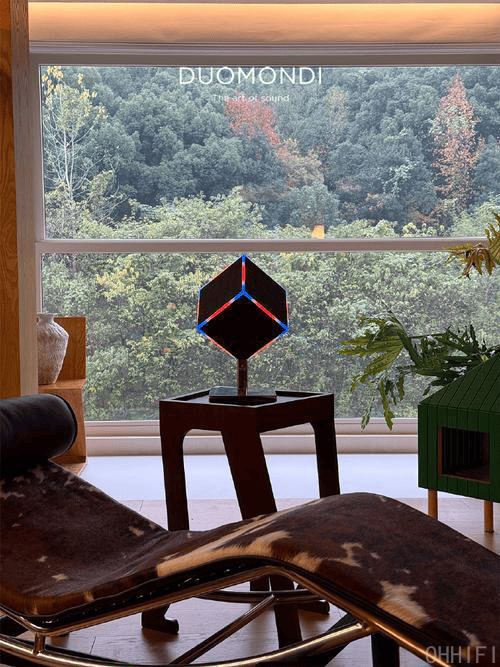
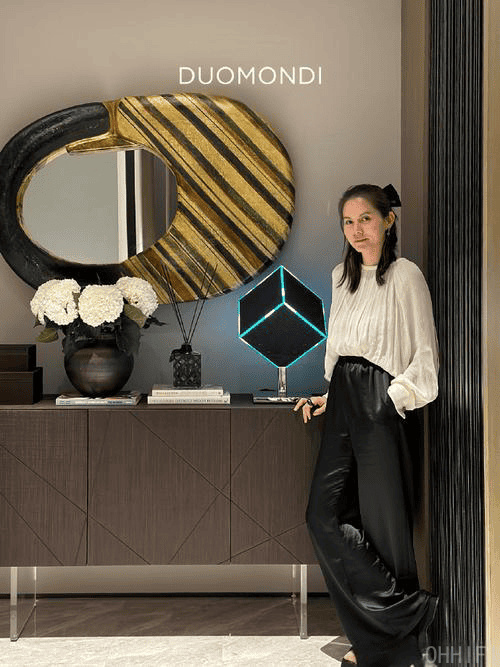
It is for the person who throws dinner parties and wants the music to be a centerpiece. It is for the design lover who refuses to put a black plastic box on their Italian marble console.
Pros:
Massive Sound: Room-filling, concert-level SPL with tight, muscular bass.
Stunning Design: A genuine piece of industrial art. The lighting is sophisticated and mood-altering.
Build Quality: Built like a tank.
USB-C Audio: A lifeline for high-res lossless playback.
Cons:
No Wi-Fi / AirPlay: The Achilles' heel. Bluetooth-only at this price is a major omission.
Transportable, not Portable: Too heavy for casual movement.
App Stability: Needs polish.
Final Score: 4 out of 5 Stars
The Spero 24 is a Ferrari with a cassette deck. It’s impractical, expensive, and loud. And I absolutely want one in my living room.
Table 1: Technical Specifications vs. Competitors
| Feature | Duomondi Spero 24 | Devialet Mania | Naim Mu-so 2 |
| Price | ~€1,750 | €790 - €990 | €1,499 |
| Dimensions | 525 x 386 x 334 mm | 176 x 193 x 139 mm | 122 x 628 x 264 mm |
| Weight | 6.8 kg | 2.3 kg | 11.2 kg |
| Power | 100W (RMS) | 176W (Peak) | 450W |
| Freq Response | 45Hz – 19kHz | 30Hz – 20kHz | 24Hz – 21kHz |
| Max SPL | 106 dB | 98 dB | - |
| Drivers | 2x Mid-High, 2x Sub (Quad) | 4x Full-range, 2x Woofers | 6x Drivers (3-way) |
| Connectivity | BT 5.0, USB-C, Aux | Wi-Fi, BT 5.0, AirPlay 2 | Wi-Fi, BT 4.2, AirPlay 2, HDMI |
| Battery | Yes (12 Hours) | Yes (10 Hours) | No |
| Lighting | 258-Pixel 3D LED | Status LED only | Illuminated Volume Dial |
| Best For | Visual Impact & Parties | Portability & Bass | Critical Listening & TV |
Table 2: Deep Dive Listening Notes
| Track | Genre | What to Listen For | Spero 24 Performance |
| "Limit to Your Love" (James Blake) | Electronic / Soul | Sub-bass extension and control. | Exceptional. The dual-opposing subs held the note without cabinet rattle. Felt physical. |
| "Hotel California" (Eagles - Live) | Rock | Soundstage width and guitar decay. | Wide but Diffuse. The Omni dispersion filled the room, but precise placement of instruments was vague compared to stereo. |
| "Bad Guy" (Billie Eilish) | Pop | Punch and vocal clarity. | Visceral. The kick drum hit hard. Vocals were forward and clear. The lighting sync in "Party Mode" was perfectly timed to the beat. |
| "So What" (Miles Davis) | Jazz | Brass timbre and high-end detail. | Good. The sax sounded full. Highs were smooth but lacked the ultimate "air" of a wired connection due to Bluetooth compression. |
| "Royals" (Lorde) | Pop | Minimalist bass/vocal separation. | Strong. The separation between the deep snaps and the vocal track was distinct. No muddying of the mids. |
9. Contextual Analysis: The Psychology of "Soundlight"
We must address a deeper question: Why light?
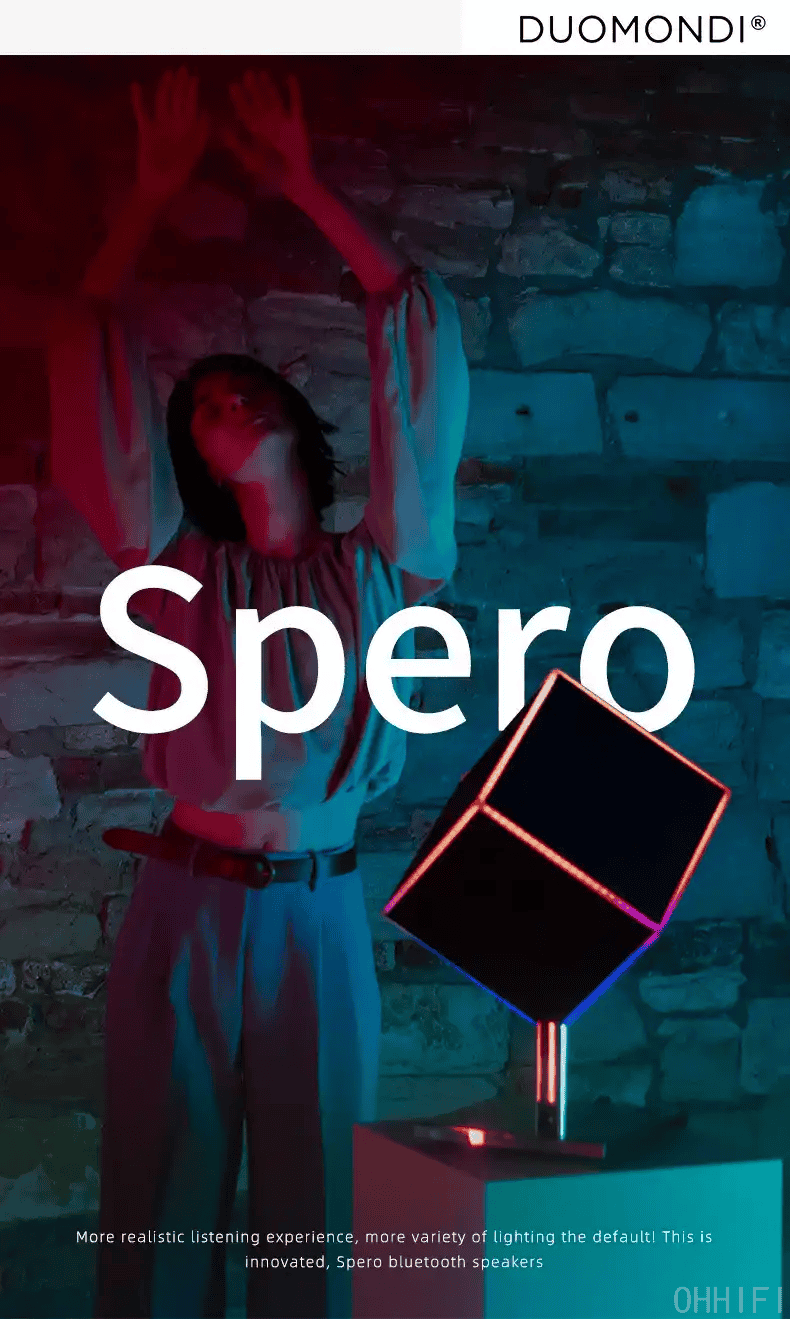
For decades, audiophiles have listened in the dark. The logic was that removing visual stimuli heightens auditory sensitivity. Duomondi challenges this. They argue that Synesthesia—the blending of senses—enhances the emotional impact of music.
In our testing, we found this to be true, but with a caveat. Flashing strobes (like on a JBL PartyBox) are distracting. They pull your brain out of the music. But the Ambient lighting on the Spero 24 works differently. By pulsing slowly in time with the music's envelope (amplitude), it acts as a visualizer of the energy of the track, not just the beat.
When listening to a crescendo in a classical piece (Mahler's 5th), the Spero 24 brightened in intensity, physically flooding the room with light as the orchestra swelled. It created a "4D" effect. You felt the crescendo with your eyes as well as your ears. This is the "Italian Artistry" Duomondi speaks of. It’s theatrical. And in a world of boring smart speakers, a little theatre goes a long way.
10. Final Recommendation
Buy the Spero 24 if:
You value design and aesthetics as much as sound quality.
You have a large open-plan living space that needs filling with sound.
You want a "conversation piece" that guests will gravitate towards.
You are comfortable using USB-C for critical listening sessions.
Skip the Spero 24 if:
You need multi-room audio (Sonos/AirPlay).
You want a lightweight portable speaker for travel.
You are on a tight budget (the price-to-performance ratio is skewed towards luxury).
You mainly listen to podcasts or talk radio (the bass-heavy tuning is overkill).
The Spero 24 is a bold, beautiful, imperfect beast. It is a reminder that audio can be fun, visceral, and visually arresting. It is not just a speaker; it is a performance.


Comments