Let's be honest: the G5 had a problem. Despite earning five stars and looking spectacular in isolation, it came dead last in last year's flagship OLED shootout — fourth out of four. The culprit? A heavy-handed approach to brightness that crushed image finesse. HDR highlights bled where they shouldn't. The panel went loud when it needed to go precise.
What's Actually New Under the Hood
The G6 keeps LG's Primary RGB Tandem OLED panel — the four-stack architecture that separates it from traditional WOLED tech, layering dedicated red, green, and dual blue layers for dramatically improved luminance without the colour washout that plagued older MLA panels. This isn't the same panel as the G5, though. The second-gen version pushes peak brightness to over 2,500 nits in a 10% window — roughly a third higher than its predecessor — and the improvement isn't just on paper.
More importantly, the new Alpha 11 Gen 3 processor brings 50% faster CPU performance, 70% GPU gains, and a 5.6x faster NPU. That extra headroom goes straight into picture processing: 12-bit colour processing, 13-bit luma channel handling, and a dynamic tone-mapping system that divides the frame into 48 segments. The result? Near-flawless gradients where the G5 showed visible banding in smooth skies and dark interiors. That alone is a meaningful fix.
The panel also gains a new Reflection Free Premium coating — sub-0.5% reflectivity — which means the G6 genuinely holds up in bright living rooms. The old "keep your OLED in a dark room" advice? Increasingly irrelevant here.
Sitting Down With It: Picture Performance
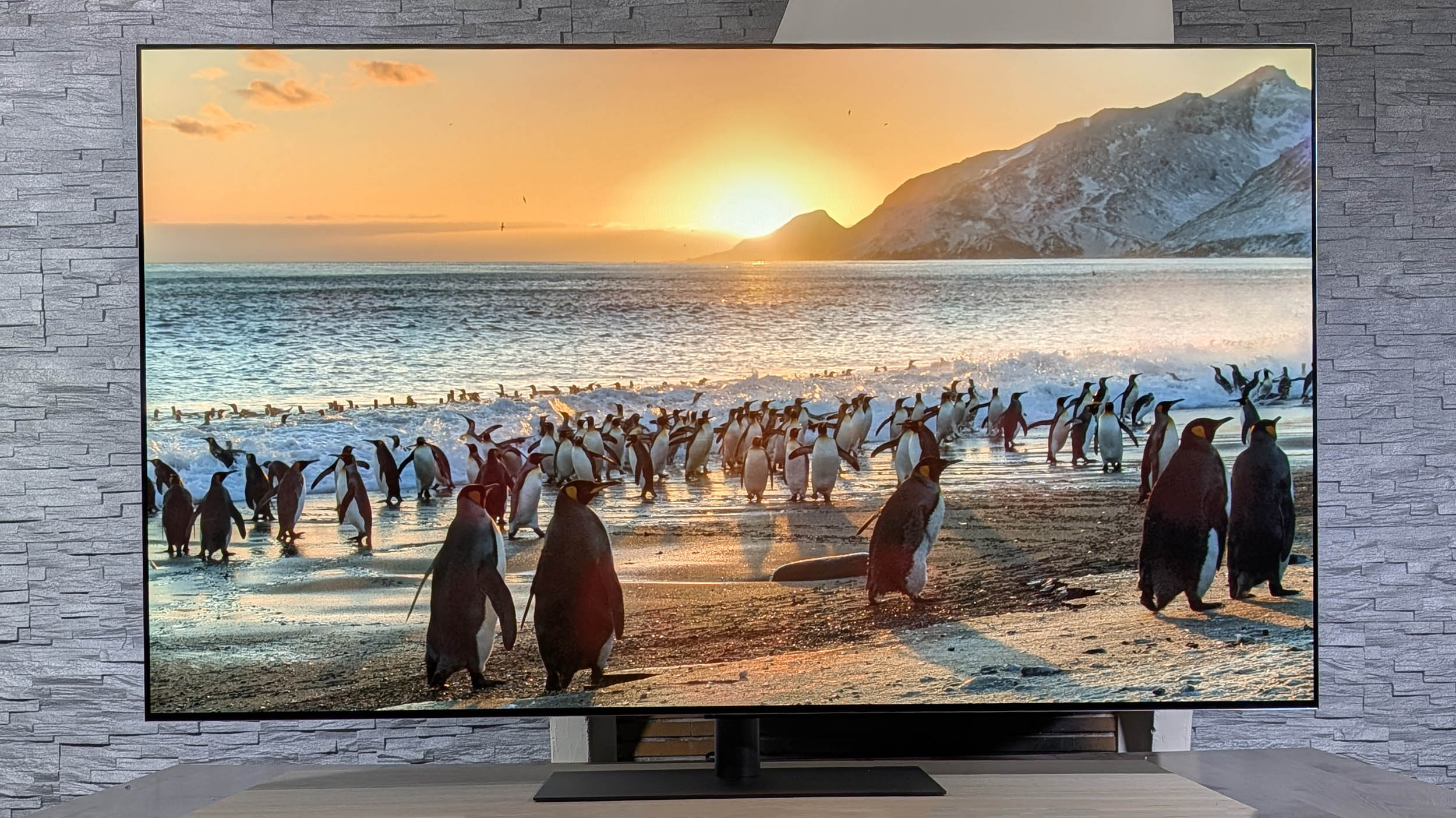
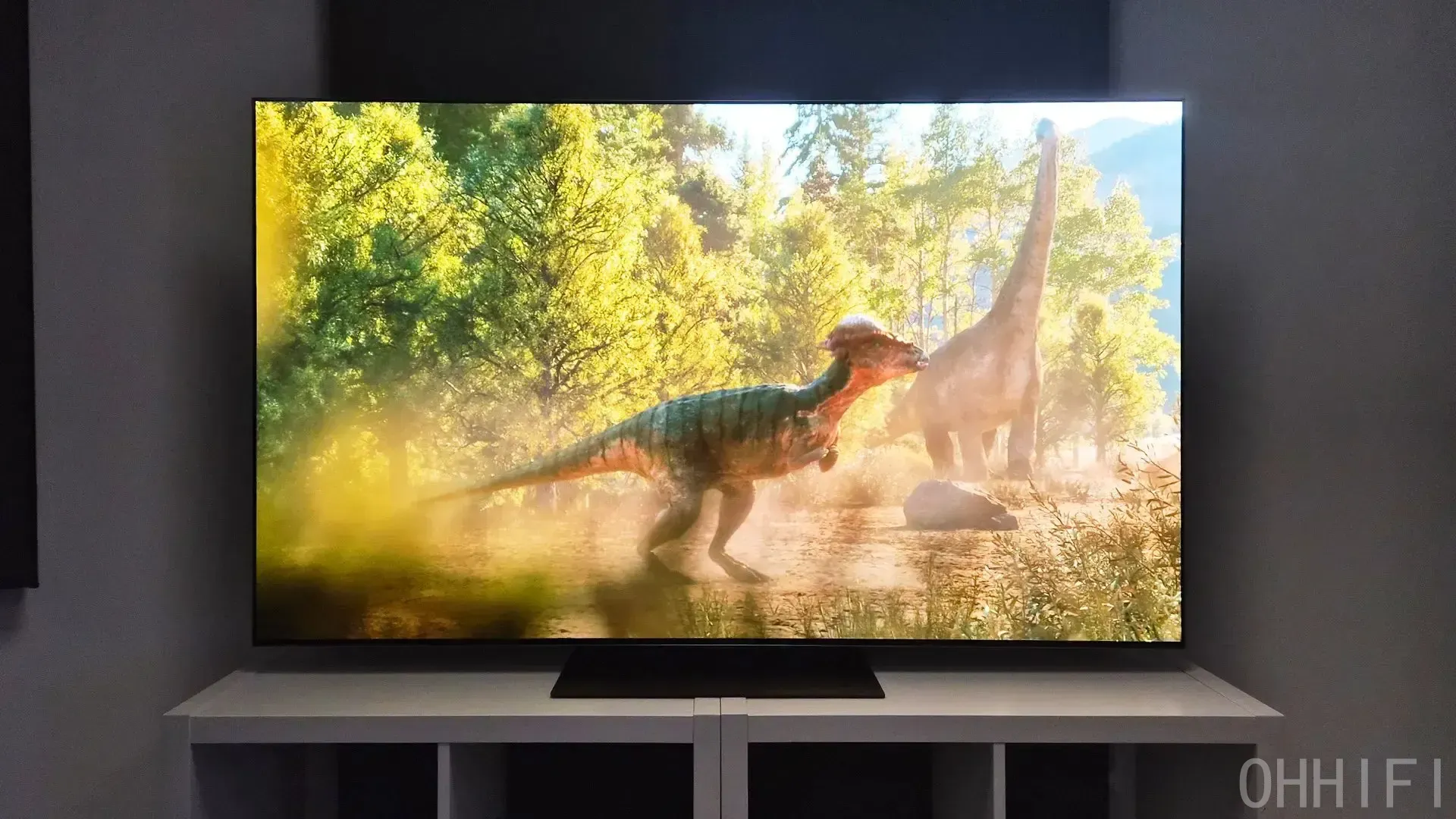
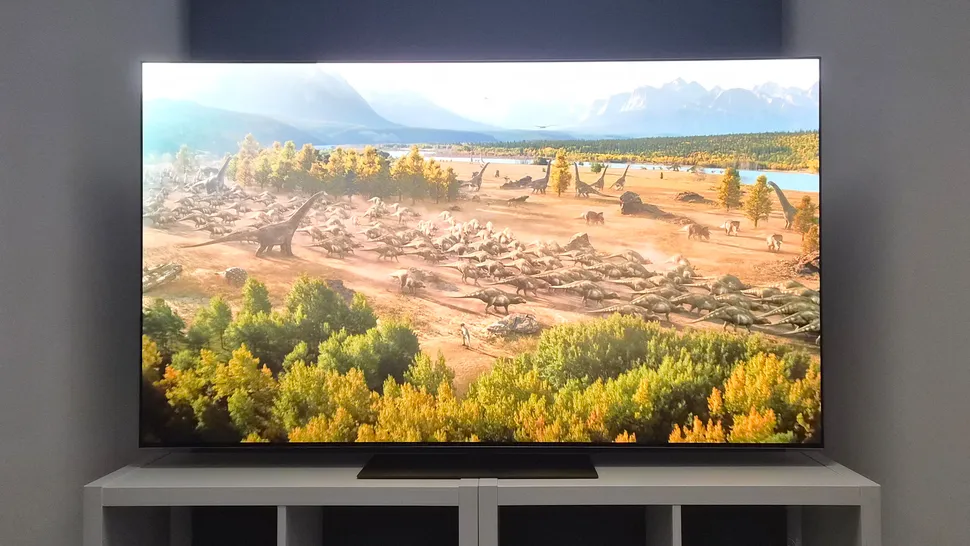
In Filmmaker Mode — which LG has retuned this year to more closely track professional reference monitors — the G6 is a genuinely different beast from its predecessor. The image is more controlled. HDR highlights still punch hard: specular glints off metal, sun-drenched desert sand, backlit hair — all rendered with the kind of pixel-level precision that only self-emissive displays can manage. But the surrounding image no longer gets dragged up with them. Blends are now more or less flawless, and the LG G6 outperforms every other OLED tested when it comes to gradation and posterisation.
Colour volume is excellent across the board. DCI-P3 coverage sits at around 98% XY and 99% UV, with BT.2020 at 80% XY — numbers that translate to rich, life-like skin tones in both SDR and HDR content. SDR material, often the forgotten stepchild of flagship OLED demos, benefits visibly from the uprated processing. A standard broadcast drama looks noticeably more refined than it has any right to.
Against the Sony Bravia 8 II — the current award holder in this category — the G6 goes brighter and resolves more in high-APL scenes. Sony still edges it on tonal subtlety and motion rendering in complex pans, but the gap has tightened. Side by side with the Samsung S95F and Sony Bravia 8 II at launch events, the G6 delivered brighter highlights with better definition, though it's not a night-and-day difference for casual viewers.
The Philips OLED910 remains a strong alternative for purists who prioritise colour accuracy and processing refinement over raw brightness. It's also cheaper now that 2025 models have dropped in price. The G6 beats it on luminance headroom; the Philips fights back on image composure and — notably — Dolby Vision 2 readiness.
The Dolby Vision 2 Problem
Here's the elephant in the room: the G6 doesn't support Dolby Vision 2 — and it seems fairly unlikely that it ever will. For now, with no content yet mastered in the format, it won't affect your viewing. But if you're keeping this TV for five-plus years, it's worth noting that Philips has confirmed its 2026 flagships will support the standard, as will several non-OLED sets from TCL and Hisense. LG has vaguely suggested a potential over-the-air update, but that vagueness is frustrating at this price point.
There's also still no HDR10+. LG's long-standing alliance with Dolby means Dolby Vision is excellent here — but with some streaming services expanding their HDR10+ catalogue, it's a limitation worth knowing about.
Sound: The Usual OLED Compromise
The AI Sound Pro mode creates a virtual 11.1.2 mix that places effects around and within the screen with reasonable conviction, and the soundstage is wider than most built-in TV speakers manage. Dialogue is clear, midrange warmth is there. Bass performance and soundstage width show improvements over previous G-series models.
But push it with something that demands real low-end extension — a Zimmer score, a war film's artillery, sustained bass drone — and the cracks appear. Deep, protracted bass causes the output to become too dense, with slight crackling and forced-sounding low frequencies. It's the same story as every premium flat TV: the built-in audio is fine for news and sport, but anyone serious about home cinema will want a soundbar or AV receiver alongside it.
Design & Gaming
The Gallery design is unchanged. Identical to the G5, in fact — you'd need to check the serial number to tell them apart. It still looks clean and premium wall-mounted, but next to Samsung's latest flagships, it's starting to feel a little static. The Zero Gap wall bracket is included across all sizes (55, 65, 77, 83, 97-inch).
Gaming credentials remain strong: four full-bandwidth HDMI 2.1 ports, 4K at up to 165Hz for PC gaming, and a new Bluetooth Ultra Low Latency mode for game controllers that LG claims is a world first. Whether that last feature meaningfully reduces input lag in cloud gaming scenarios remains to be tested properly, but the fundamentals are solid.
Verdict
The G6 is a course correction. The banding is fixed, the Filmmaker Mode is more disciplined, and the brightness gains are real without the brute-force clumsiness of the G5. HDR performance is by far the best LG has delivered, and the reflection-free coating genuinely extends its usability into brighter rooms. It's a better television than its predecessor in the ways that mattered most.
But it's an iterative upgrade at a premium price — and the lack of Dolby Vision 2 support, in a year when even budget brands are adding it, leaves a mark. Against the still-available discounted Bravia 8 II and Philips OLED910, the G6 has to justify its launch premium purely on picture punch and panel tech. It largely does. Just don't go in expecting a revolution.




Comments