
The Vestlyd V12C Experience: A Manifesto for the "Live Louder" Revolution

1. Introduction: The Return of the "Fun" Loudspeaker
For the better part of two decades, the high-fidelity audio industry has been locked in a cold war of clinically sterile precision. The prevailing dogma—driven by the pursuit of vanishingly low Total Harmonic Distortion (THD) and ruler-flat frequency response curves—has often resulted in loudspeakers that are technically flawless yet emotionally frigid. We, the audiophiles, have been sold a bill of goods that prioritizes "insight" over "impact." We sit in our treated rooms, chin-stroking to Diana Krall, analyzing the decay of a cymbal while forgetting the visceral, chest-thumping joy of a live concert.
But the winds are changing. A retro-renaissance is sweeping through the industry, spearheaded by the revival of the JBL Classic series and the enduring cult of the Klipsch Heritage line. It seems the market has remembered that music is supposed to be fun. Into this fray steps a new challenger from Denmark, a brand that wears its intentions not just on its sleeve, but in its very name. Vestlyd.
Derived from the Danish words for "West" (Vest) and "Sound" (Lyd), the brand pays homage to the raw, untamed acoustic character of Denmark’s West Coast. But more importantly, Vestlyd has kicked down the door with a slogan that serves as both a marketing tagline and a mission statement: "Live Louder".
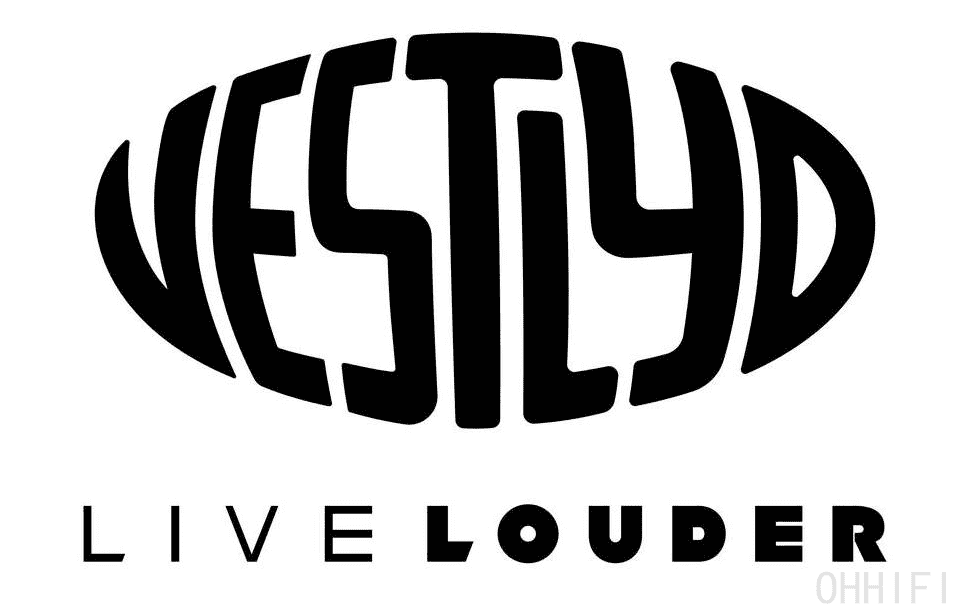
In this exhaustive review, we are tackling the Vestlyd V12C. (Note: While some whispers in the forums have queried about an "M8C" model—likely a conflation with other 8-inch monitors or the Micca M-8C—Vestlyd’s current "Power Monitor" lineup is anchored by the formidable 12-inch V12C and the refrigerator-sized 15-inch V15C. For the sake of this review, we focus on the V12C, the model that hits the "sweet spot" for most domestic listening environments).
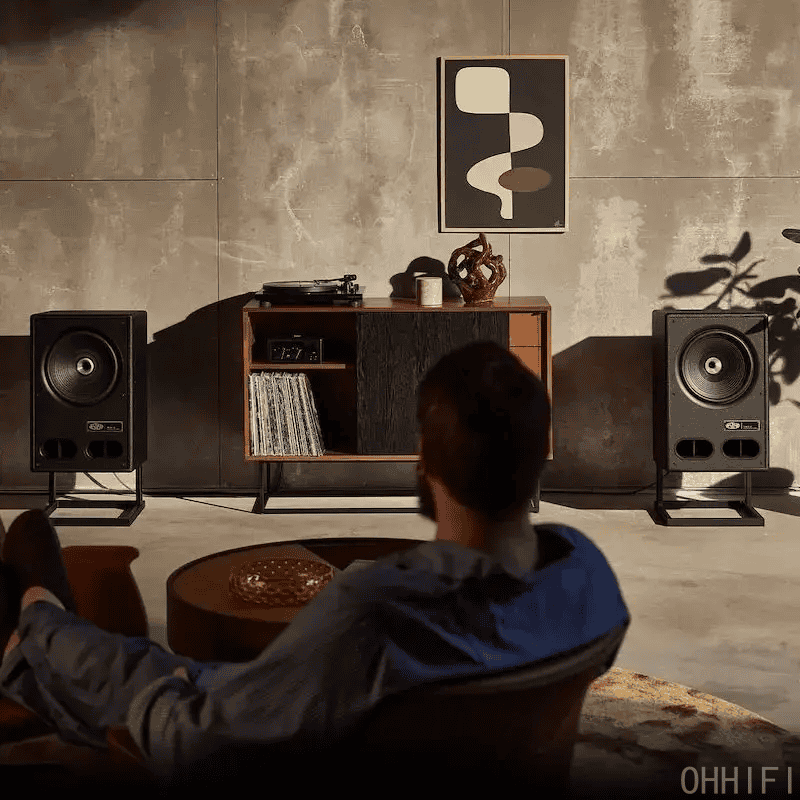
The V12C promises to bridge the cavernous divide between the refinement of a studio monitor and the dynamic capabilities of a PA (Public Address) system. It is a "Power Monitor" designed to be played loud, to withstand the abuse of a house party, and yet—crucially—to retain the audiophile sensibilities we demand when the guests leave and the lights go down.
Is it a brute? A blunt instrument? or is it the missing link between the polite Hi-Fi of the 2020s and the raw energy of the 1970s? We spent a month with these Danish beasts, driving them with everything from flea-watt tube amps to kilowatt Class D monoblocks, to find out.
2. The Brand & Philosophy: Nordic Cool Meets West Coast Muscle
2.1 The Origins of Vestlyd
Vestlyd is not a garage startup cobbled together by hobbyists. It operates under the umbrella of Nordic Hi-Fi, a subsidiary deeply entwined with the massive Scandinavian retailer HiFi Klubben. This pedigree is significant. It means Vestlyd has access to significant R&D resources, supply chains, and manufacturing capabilities that boutique brands often lack.
The philosophy behind Vestlyd is a direct reaction to the "lifestyle" audio trend, where speakers have become slim, discreet, and largely incapable of moving significant air. Vestlyd’s engineers looked back to the golden age of audio—the 1970s—when speakers were furniture-sized and physics wasn't compromised by the "Wife Acceptance Factor" (WAF).
2.2 The "Power Monitor" Concept
Vestlyd classifies the V12C as a "Power Monitor." This terminology is deliberate.
"Monitor": Implies accuracy, detail, and a direct connection to the source material.
"Power": Implies high sensitivity, high SPL (Sound Pressure Level) capability, and low dynamic compression.
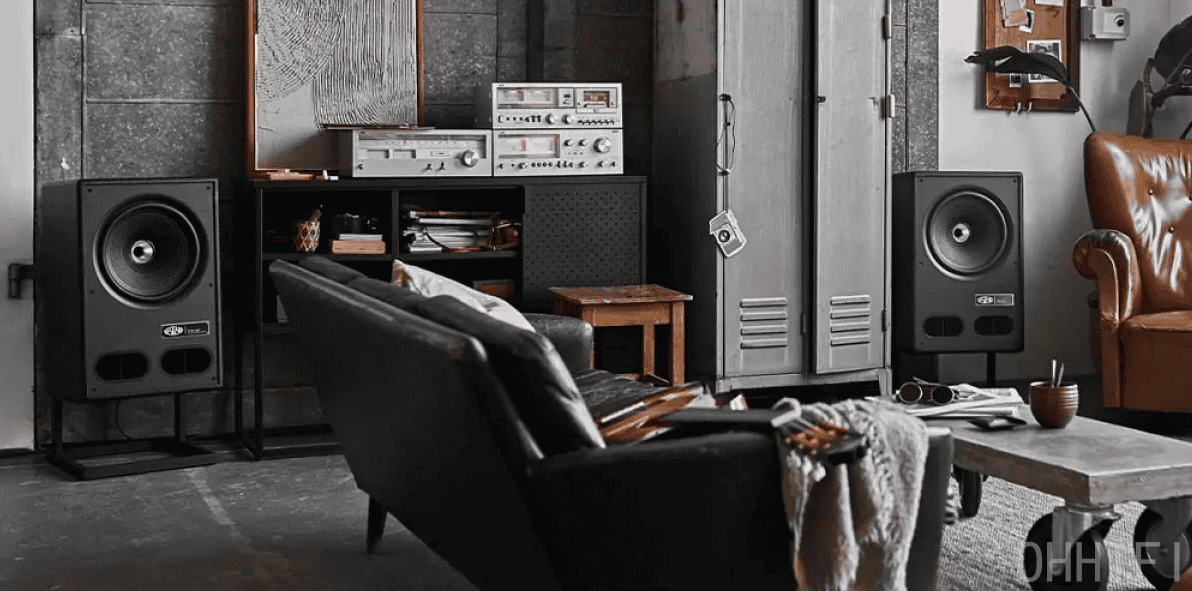
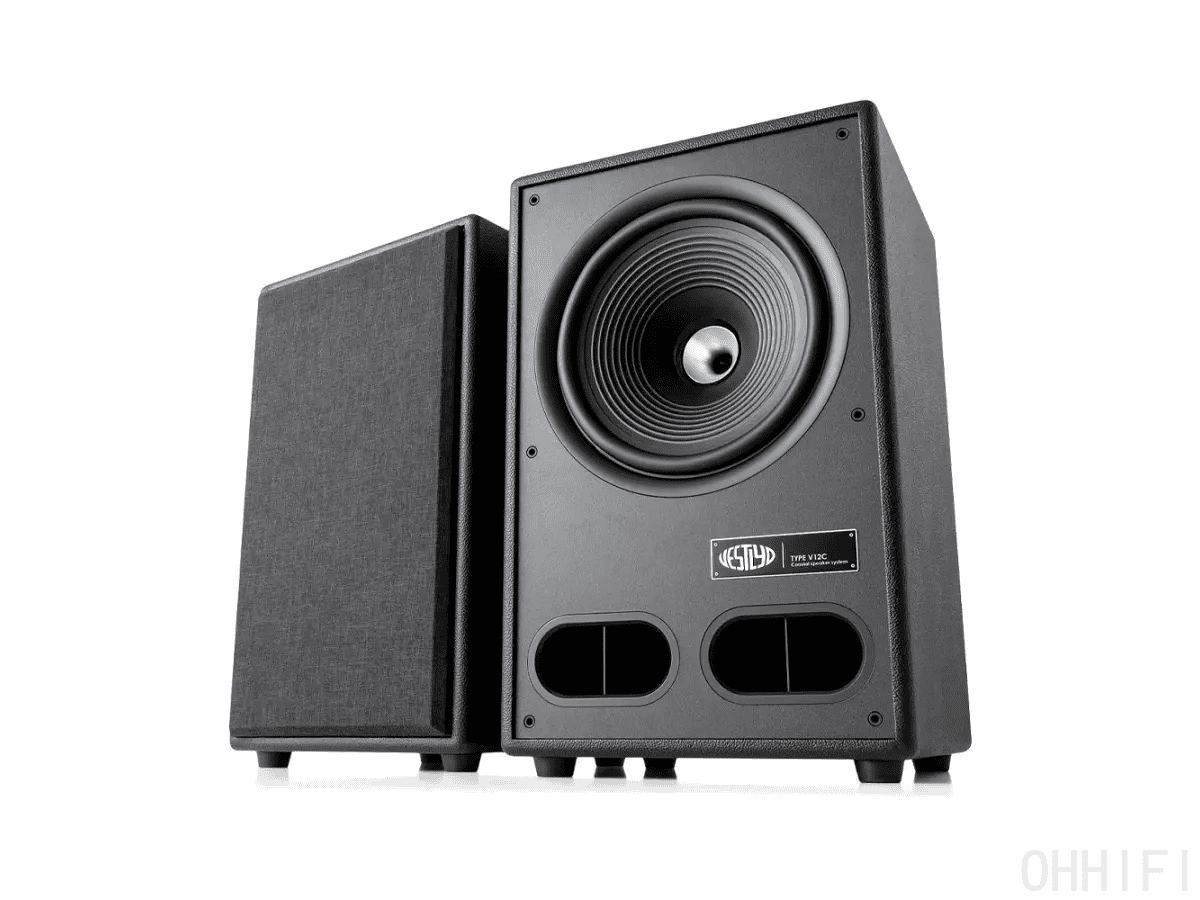
In traditional audio taxonomy, you usually have to pick one. High-sensitivity PA speakers (like a JBL JRX series) play loud but often sound harsh and lack resolution. Studio monitors (like a Genelec or Neumann) offer incredible resolution but often lack the displacement to hit 110dB+ without limiting. The V12C attempts to fuse these worlds. It uses pro-audio style drivers—specifically a coaxial compression driver topology—housed in a domestic-friendly(ish) cabinet.
2.3 The "Live Louder" Ethos
The brand’s marketing is unapologetically aggressive. "Great times are loud times," they claim. This taps into the psychoacoustic reality of the Fletcher-Munson curves, which dictate that the human ear perceives bass and treble much better at higher volumes. By designing a speaker that thrives at high SPL, Vestlyd is effectively engineering "fun" into the product. They are targeting the listener who wants to recreate the "goosebumps" of a live concert—the physical slam of a kick drum and the searing energy of an electric guitar.
3. Engineering & Design: Under the Hood of the V12C
3.1 The Coaxial Advantage
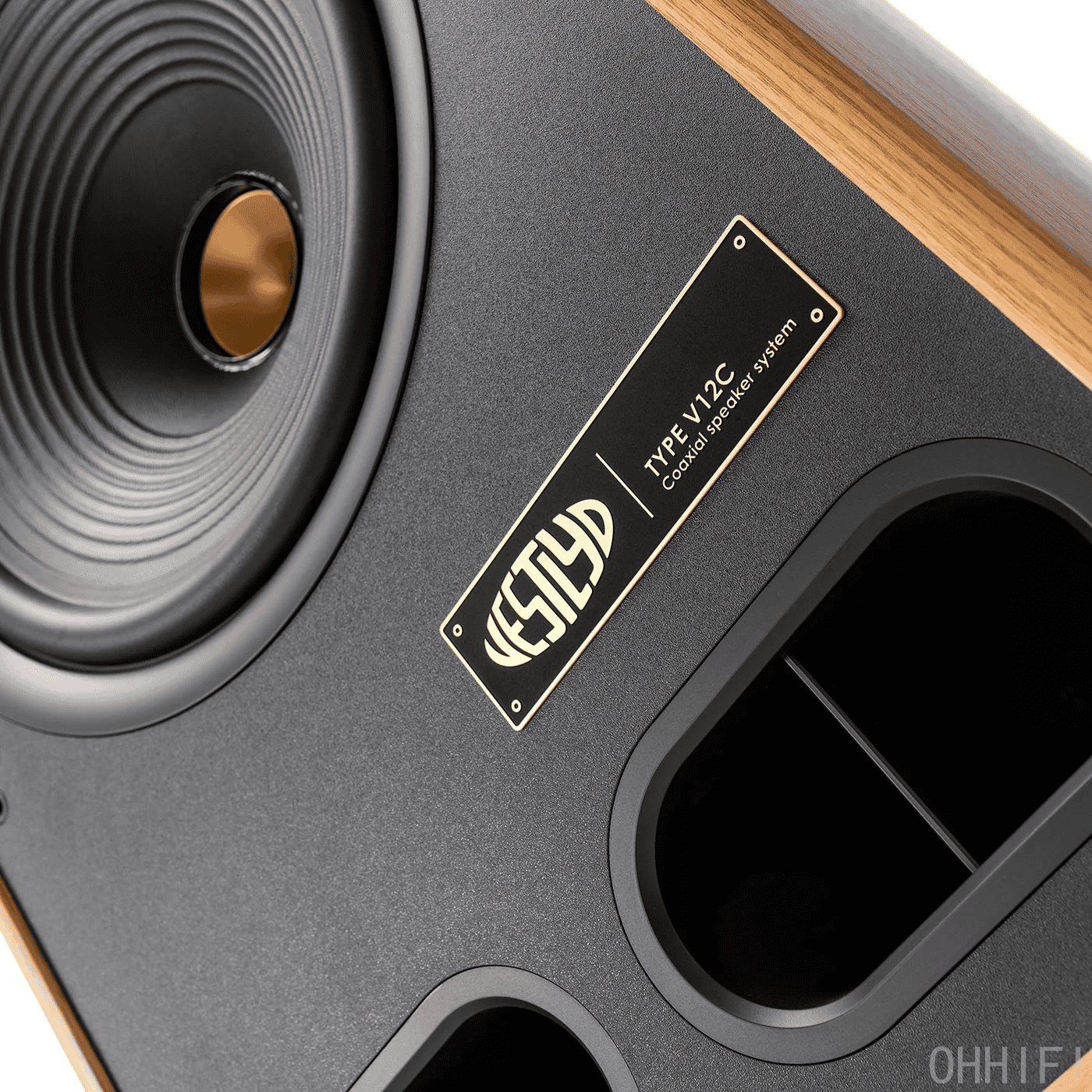
The heart of the V12C is its 12-inch coaxial driver. For the uninitiated, a coaxial driver places the tweeter (high-frequency driver) directly in the center of the woofer (low-frequency driver).
3.1.1 Time Alignment and Point Source Acoustics
The primary benefit of this arrangement is Time Alignment. In a standard "tower" speaker with a tweeter on top and a woofer on the bottom, the sound from the two drivers arrives at your ear at slightly different times depending on your vertical position (standing vs. sitting). This causes phase cancellation—dips and peaks in the frequency response—known as "lobing."
With the V12C’s coaxial design, the sound originates from a single point in space. The highs and lows remain in phase regardless of whether you are sitting, standing, or slouching. This is crucial for "imaging"—the ability to pinpoint exactly where the singer is standing on the virtual stage.
3.1.2 The Woofer as a Waveguide
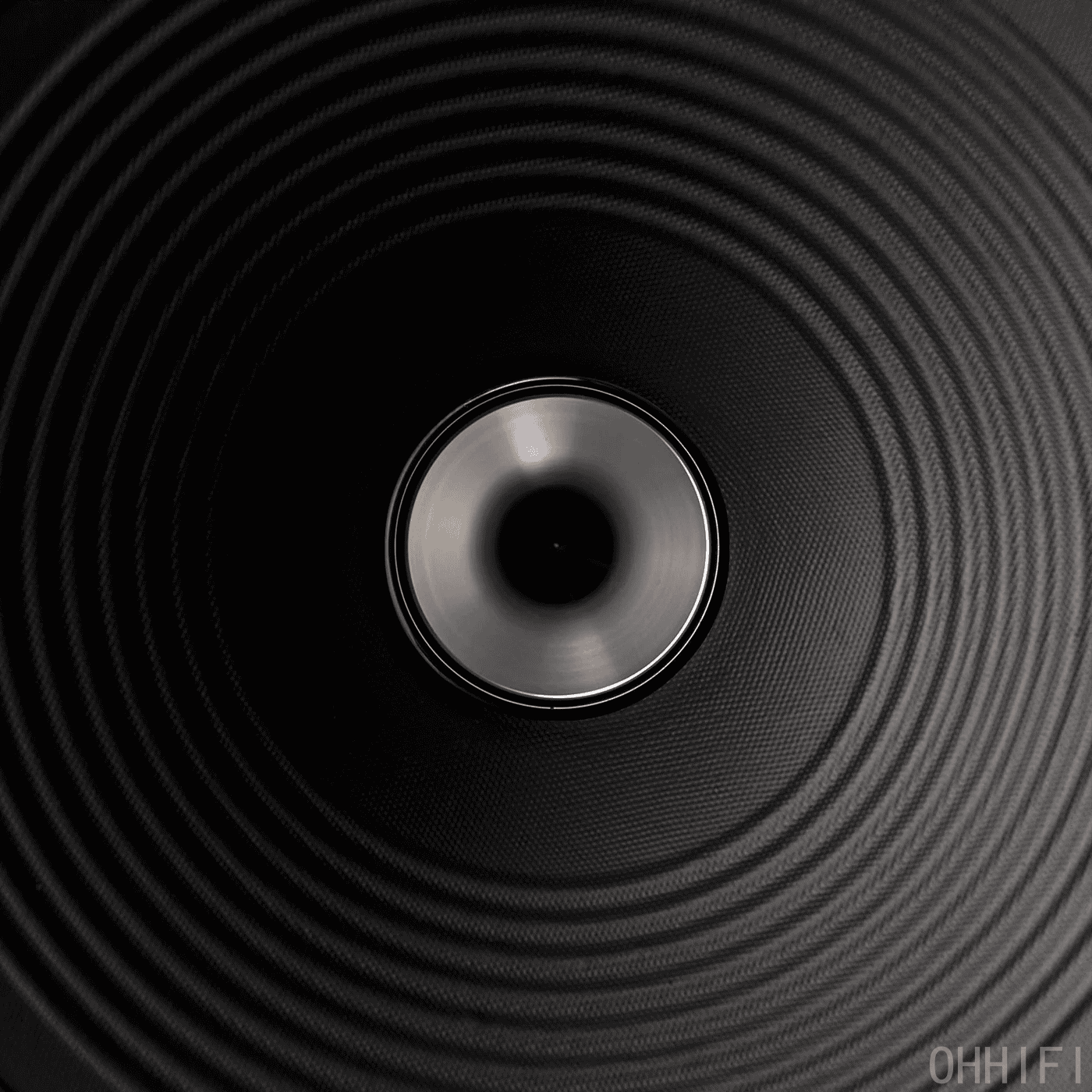
Here is where Vestlyd gets clever. The 1-inch compression tweeter is mounted behind the magnet of the 12-inch woofer and fires through the center. The cone of the woofer itself acts as a horn (or waveguide) for the tweeter.
Benefit: This horn-loading boosts the efficiency of the tweeter, allowing it to keep up with the massive woofer without needing excessive power. It also controls the "directivity" (dispersion) of the treble, matching it to the dispersion of the woofer at the crossover point.
Challenge: The risk in this design is Intermodulation Distortion (IMD). Since the "waveguide" (the woofer cone) is moving back and forth to produce bass, it can theoretically modulate the treble frequencies (the Doppler effect). Vestlyd claims to mitigate this through careful crossover design (set at 1,100 Hz) and driver optimization.
3.2 The Drivers: Pro DNA
The Woofer: A 12-inch paper cone with a ferrite motor system. Paper is the material of choice for "classic" sound. It is light, stiff, and has excellent self-damping properties. It doesn't ring like metal cones or sound plastic-y like polypropylene. It is built for speed and transient attack.
The Tweeter: A 1-inch laminated titanium dome compression driver with a high-power neodymium motor. Titanium is chosen for its stiffness and ability to play cleanly at high volumes, though it has a reputation for being "sharp" if not tuned correctly (more on this in the Listening section).
3.3 The Cabinet: Built Like a Tank
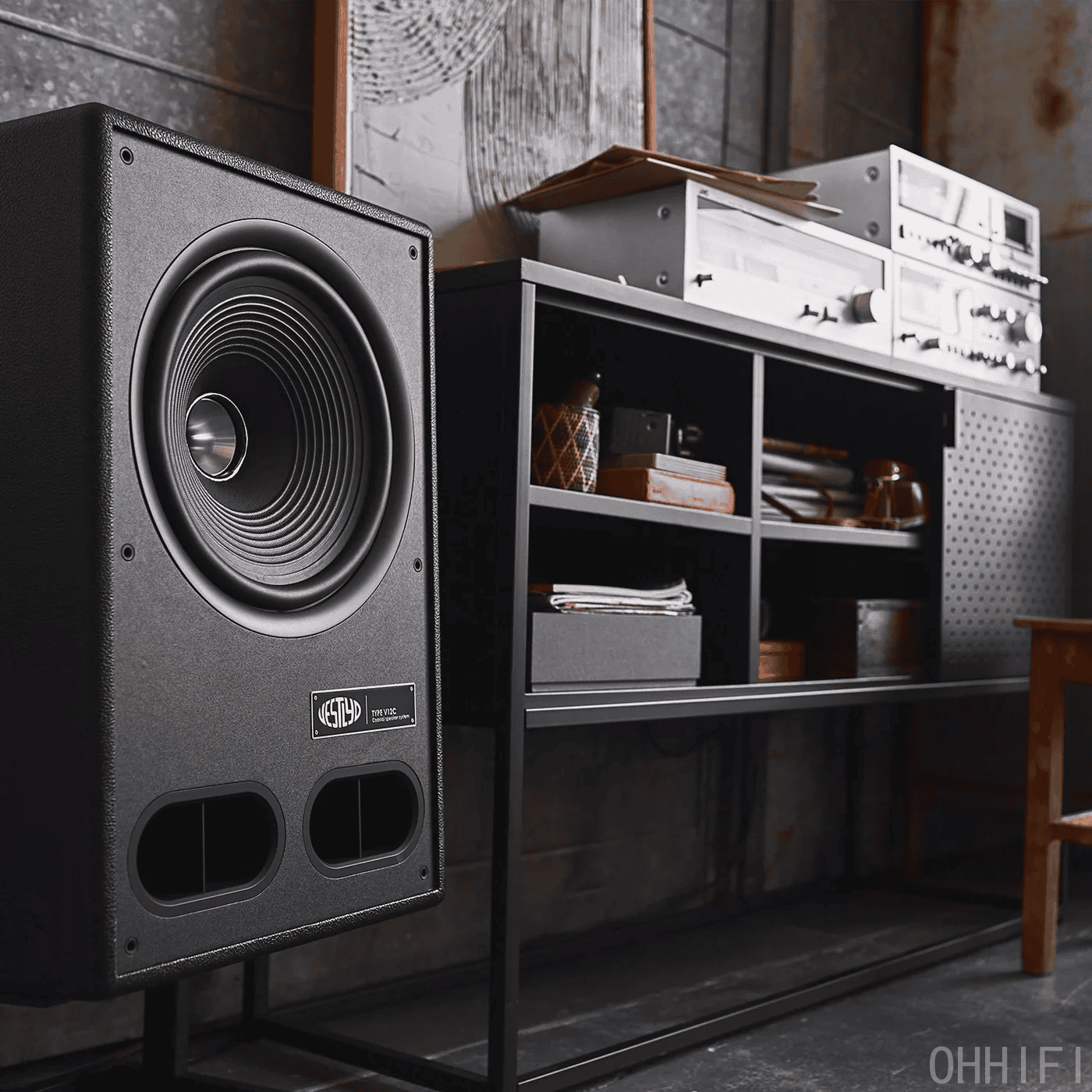
Weighing in at 24 kg (53 lbs) each, the V12C is no lightweight. The cabinet is constructed from heavy MDF with a 31mm thick front baffle. This mass is critical. A 12-inch driver moving at high excursions generates massive mechanical energy. If the cabinet were thin, it would vibrate, turning the box itself into a muddy-sounding speaker. The V12C feels inert and solid—the "knuckle test" results in a dull thud rather than a hollow ring.
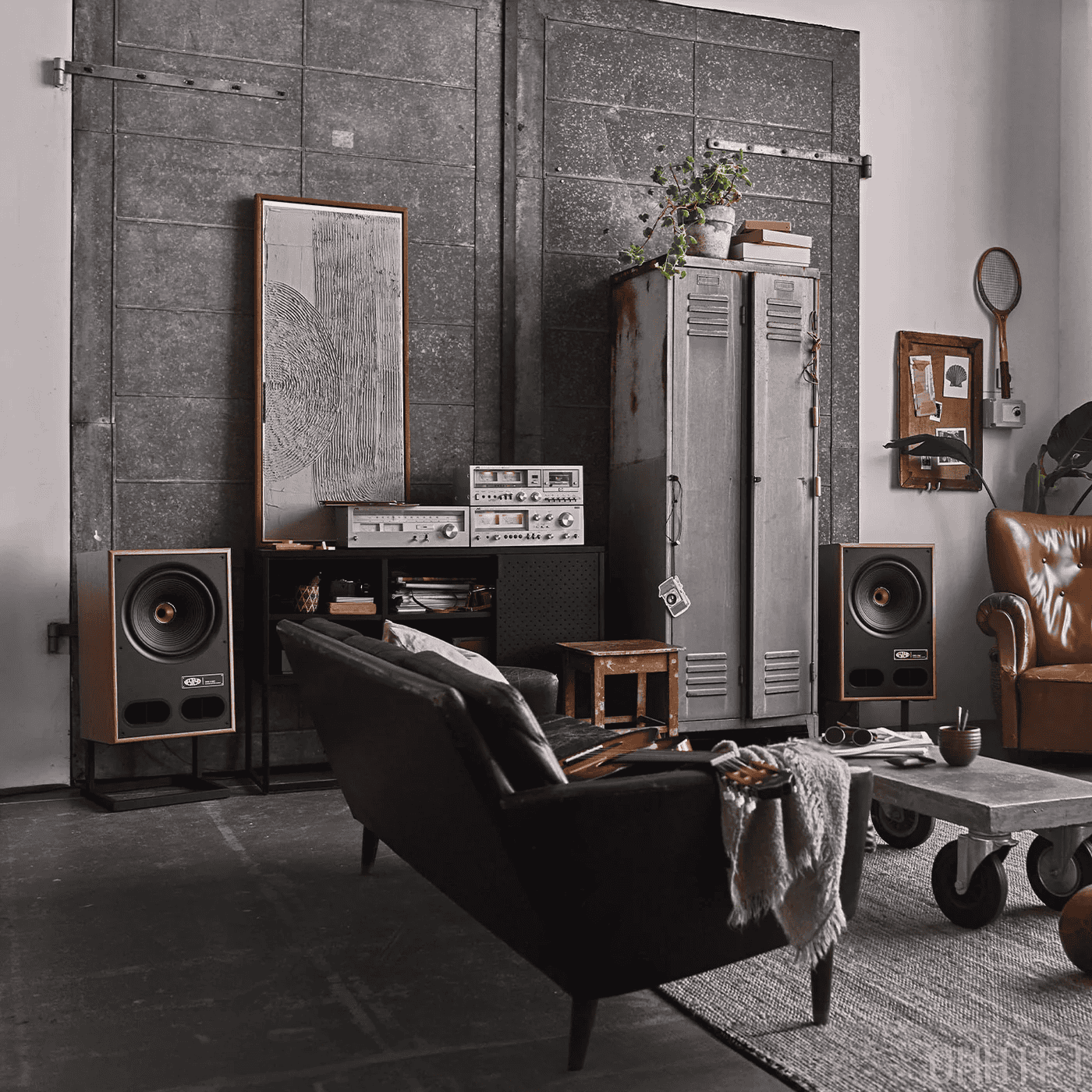
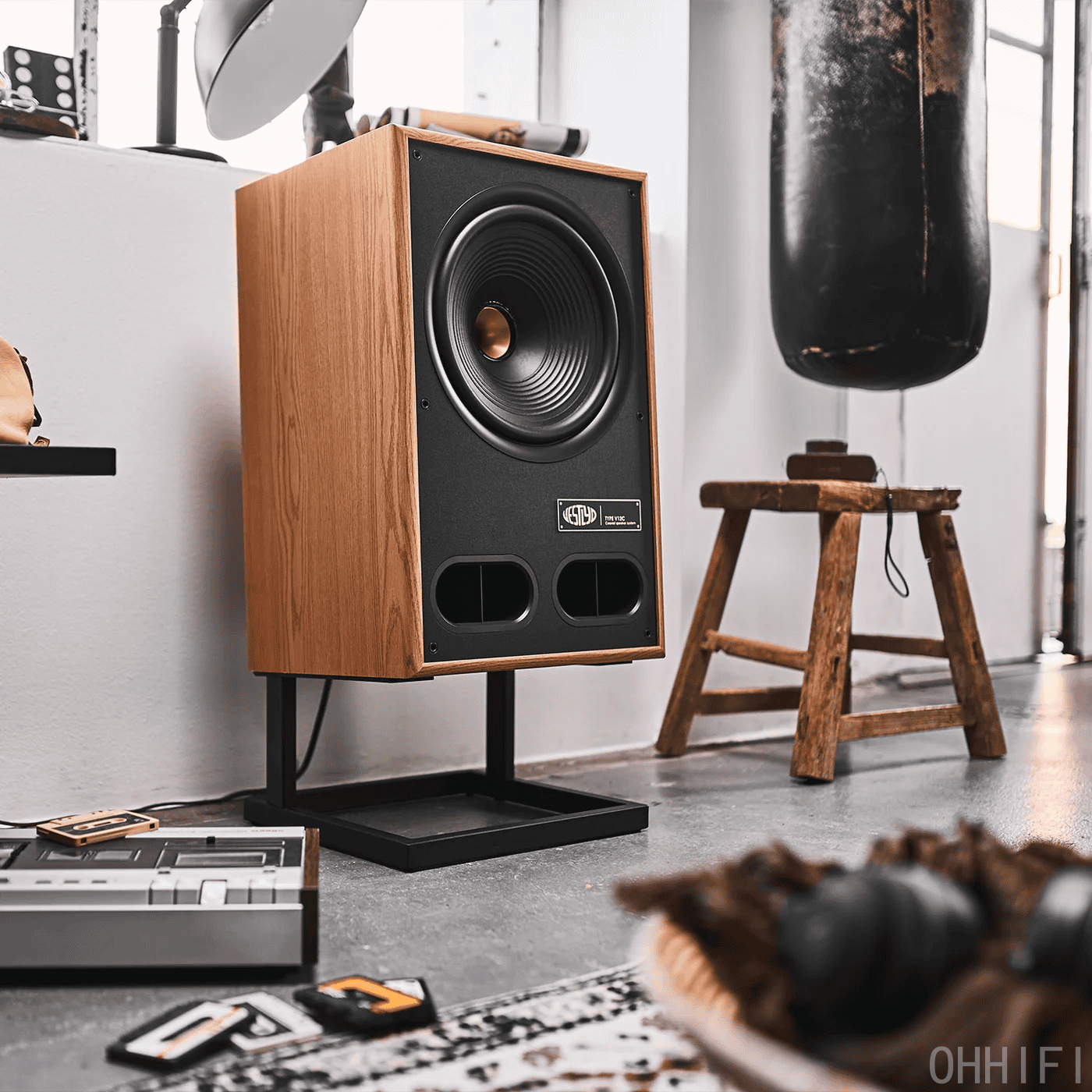
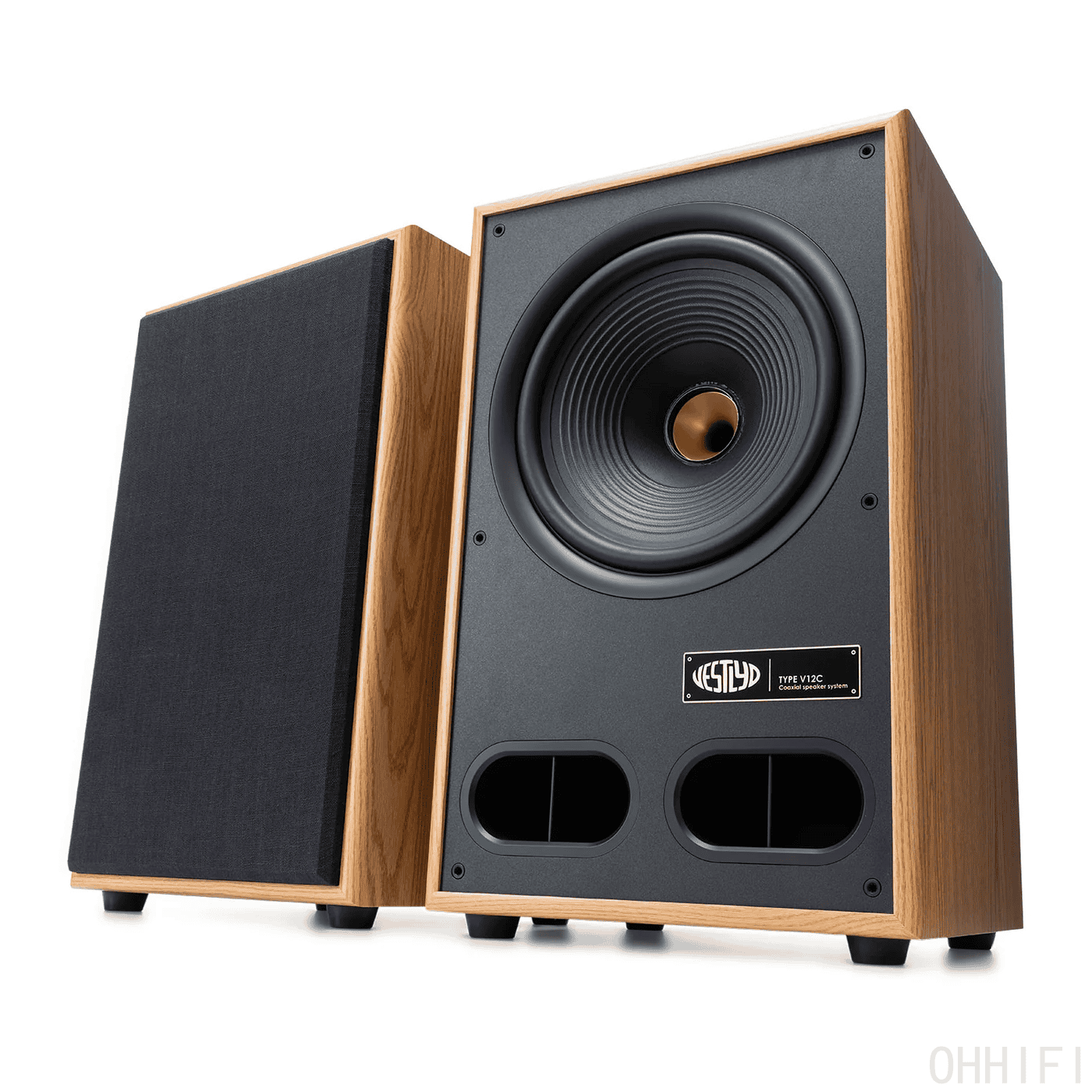
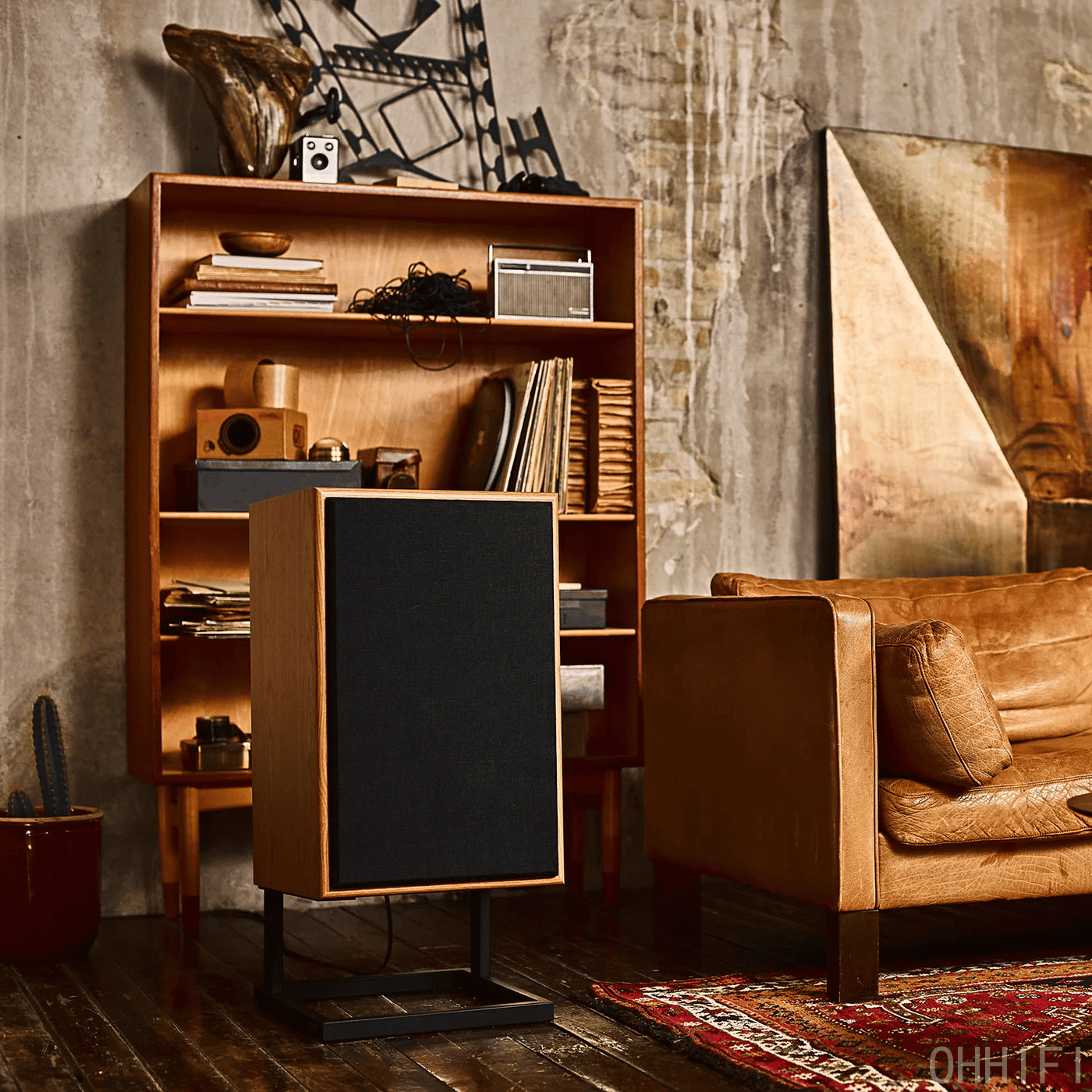
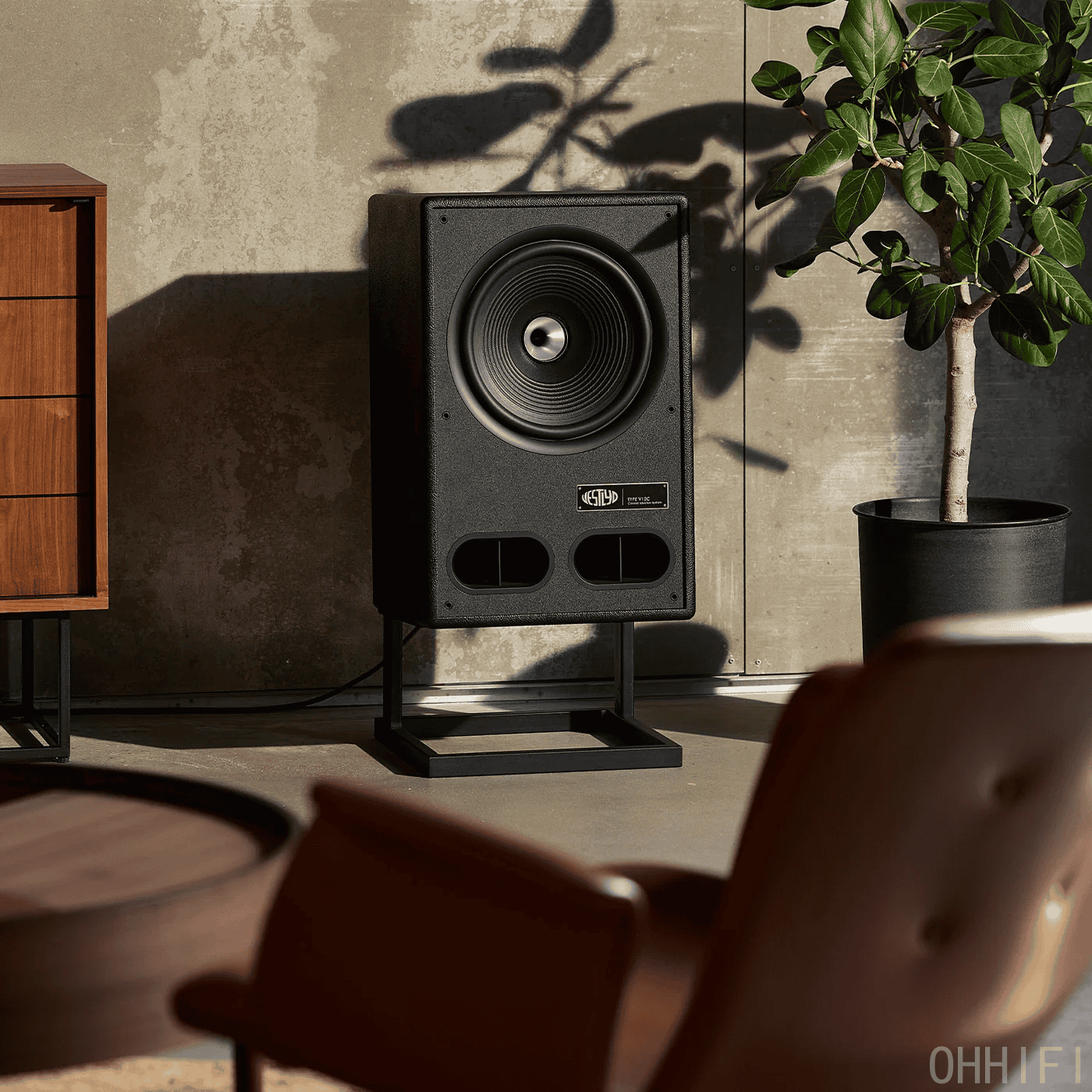
The aesthetics are decidedly industrial-retro. You can choose between a black synthetic leather finish (giving it a Marshall amp vibe) or a PVC Oak finish. It’s a look that says "gear," not "furniture."
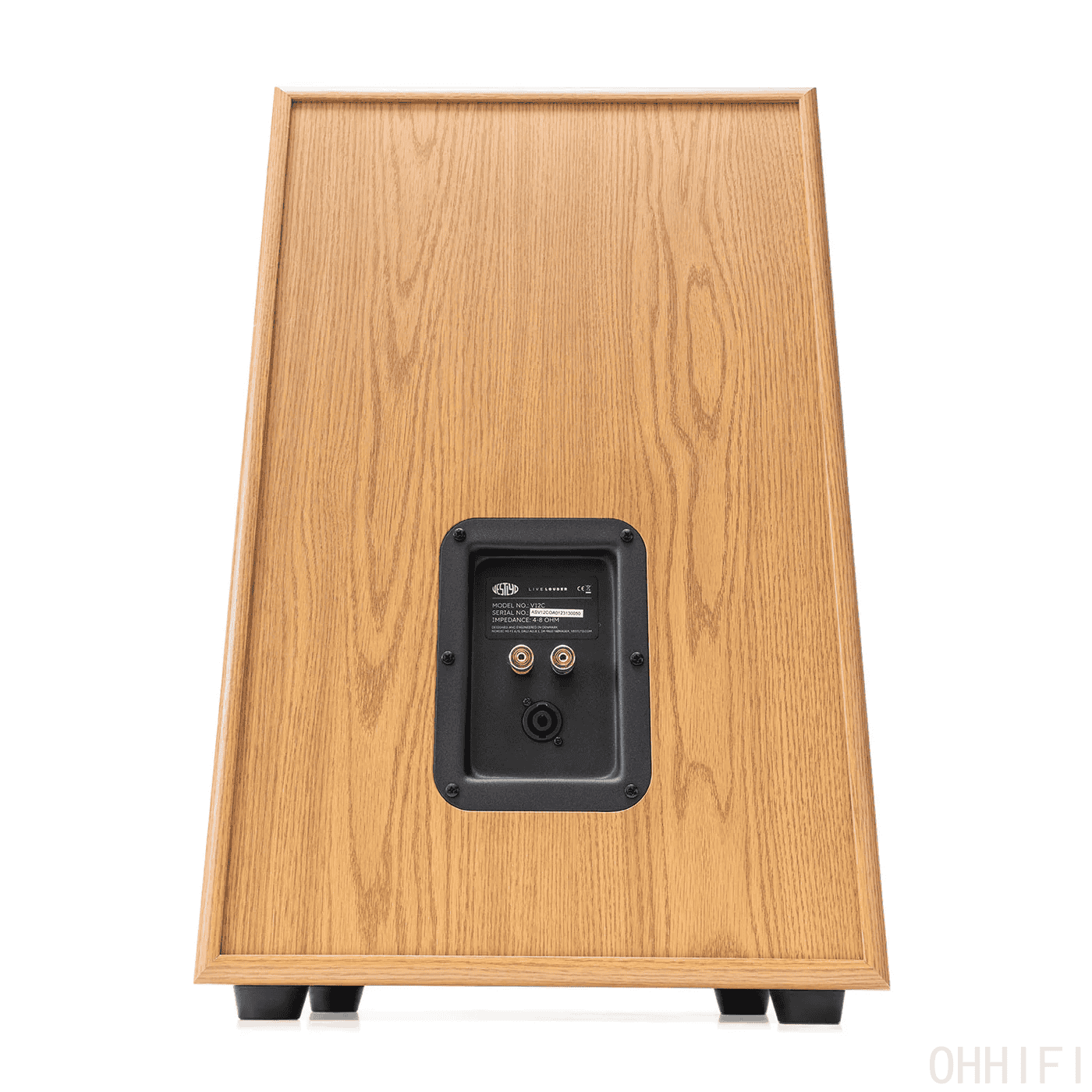
3.4 Specifications Breakdown
| Specification | Vestlyd V12C Data | Significance |
| System Type | 2-Way Coaxial Bass Reflex | Point source imaging, extended bass. |
| Frequency Response | 39 Hz – 22,000 Hz (-6 dB) | Covers mostly full range; 39Hz is deep enough for most rock/jazz. |
| Sensitivity | 93 dB (2.83V/1m) | Very High. Easy to drive loud with modest power. |
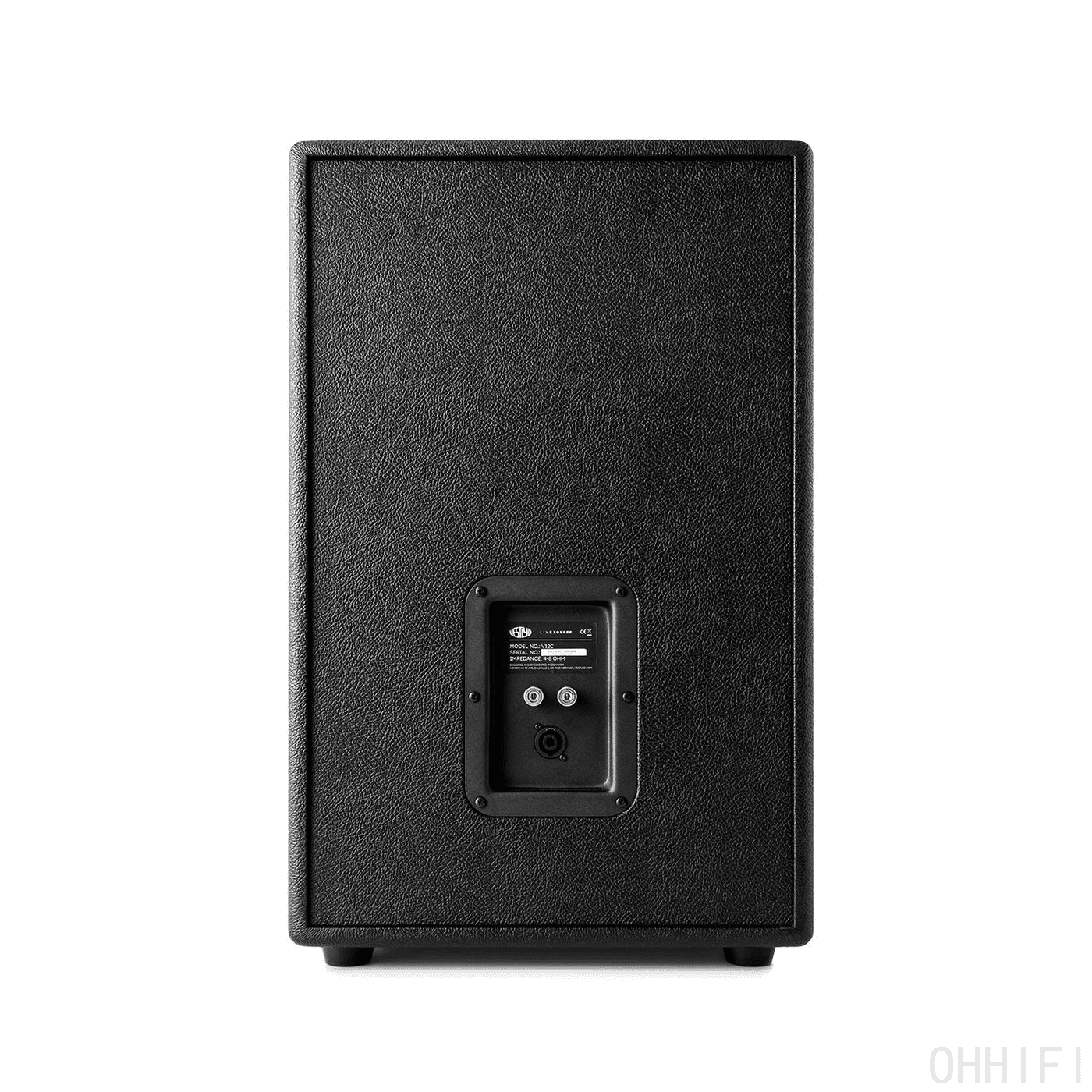
| Impedance | 4 Ohms | Requires an amp with good current delivery. |
| Crossover | 1,100 Hz | Low crossover point; tweeter handles a lot of midrange. |
| Max SPL | > 130 dB | Concert levels. Dangerous for hearing if abused. |
| Dimensions | 62.2 x 39.2 x 36.7 cm | Large stand-mount / floor-sitter. |
| Weight | 24 kg / 53 lbs | Heavy, requires sturdy stands. |
4. Setup and System Synergy: Taming the Beast
4.1 Unboxing and First Impressions
Wrestling the V12Cs out of their boxes is a two-person job, or a gym workout for one. The fit and finish are impressive for the price point. The synthetic leather has a nice texture, and the drivers look purposeful. They come with rubber feet, but these speakers demand stands.
4.2 The Stand Conundrum
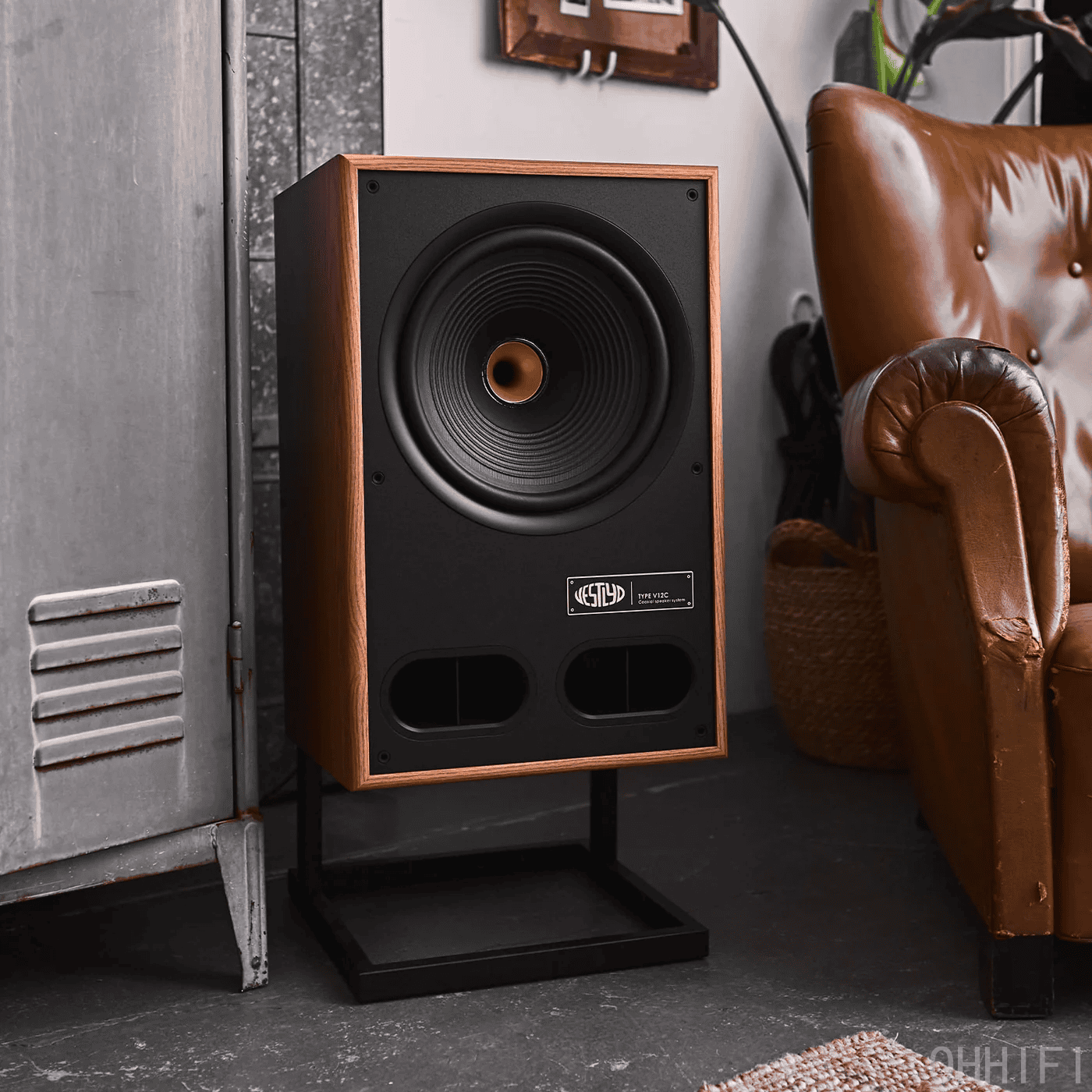
Vestlyd offers dedicated stands that tilt the speaker back slightly. This "rake" is important. Since the V12C is short for a floorstander but tall for a bookshelf, placing it on the floor without a tilt would fire the treble into your knees. The dedicated stands aim the coaxial driver at ear level (or slightly above), which is crucial for the time alignment to work as intended. If you don't buy the official stands, low custom stands (approx. 30-40cm high) are mandatory.
4.3 Room Placement
One of the most surprising aspects of the V12C is its Wide Sweet Spot. Unlike traditional horns (like the Klipsch Heresy) which can be "beamy" (move your head an inch and the treble changes), the Vestlyd casts a broad, even net of sound.
Toe-in: We found that they sound best with little to no toe-in. Pointing them straight ahead expands the soundstage width significantly without sacrificing the center image.
Wall Proximity: They are front-ported, which theoretically allows placement closer to the rear wall. However, physics is physics—a 12-inch woofer loading a room needs breathing space. We found 30-50cm from the front wall to be the sweet spot. Too close, and the mid-bass boom can obscure the midrange detail.
4.4 Amplifier Matching: The 4-Ohm Variable
Don't let the 93 dB sensitivity fool you into thinking you can run these with a clock radio. While they are sensitive (they play loud with 1 watt), they are a 4-Ohm load. This means they draw twice the current of an 8-ohm speaker for the same voltage.
Tube Amps: Can you use tubes? Yes. A push-pull EL34 or KT88 amp (20-40 Watts) brings a lush, holographic midrange that pairs beautifully with the paper cone. However, Single Ended Triode (SET) amps with very low damping factors might struggle to control the large woofer, leading to "woolly" bass.
Class D: This is a "Power Monitor." Pairing it with a high-damping factor Class D amp (like a Purifi or Hypex Ncore) results in bass that hits like a sledgehammer. The grip and control of modern Class D tighten up the low end significantly, making this combo ideal for EDM and modern pop.
Vintage Solid State: A big 1970s Marantz or Sansui receiver is the aesthetic match made in heaven. Sonically, the warmer tilt of vintage gear can help tame the titanium tweeter if you find it too spicy.
5. Listening Impressions: The Sound of Excitement
We tested the V12C with a playlist designed to stress-test dynamics, imaging, and tonality. Sources included a Technics SL-1200GR turntable and a high-res streamer feeding a reputable DAC.
5.1 Treble and Detail: Titanium with a Velvet Glove?
Titanium compression drivers have a reputation for being harsh or "shouty." Vestlyd has tuned the V12C to avoid the worst of this. The treble is extended and crisp but rarely sibilant. Cymbals on jazz tracks (like Art Blakey’s "Moanin'") have a metallic sheen that sounds authentic, not sizzly.
However, this is not a ribbon tweeter. It does not have the "air" or ethereal decay of a B&W diamond dome. It is direct and purposeful. It tells you exactly what the drummer is doing, but it doesn't romanticize the upper frequencies.
5.2 The Midrange: Vocal Projection
This is where the coaxial design shines. Vocals are locked dead center, floating independently of the boxes. There is a "live" quality to voices—a slight forwardness that mimics a PA system at a small venue.
On Leonard Cohen’s "You Want It Darker," the gravel in his voice is rendered with terrifying texture. The V12C captures the chest resonance that small speakers simply miss. It’s a "big" sound. You don't just hear the singer; you sense their physical presence.
Critique: On some poorly mastered pop tracks, the upper midrange (around 2-3 kHz) can get a bit aggressive at high volumes. This is the "monitor" aspect revealing the flaws in the mix. It’s honest, sometimes brutally so.
5.3 Bass: Punch vs. Rumble
The 12-inch woofer moves air. Period. But it’s the quality of the bass that impresses. It is "fast" bass. The transient attack of a kick drum is instantaneous—a sharp "thwack" in the chest rather than a sluggish "thud."
Rock/Pop: For tracks like Fleetwood Mac’s "The Chain," the bass line drives the song with an infectious rhythm (PRaT - Pace, Rhythm, and Timing).
Electronic: On Daft Punk’s "Random Access Memories," the mid-bass punch is addictive.
Limitations: The -6dB point is 39 Hz. This means for pipe organ music or movie explosions (sub-20Hz), you might miss the earth-shaking rumble. But for 95% of music, the V12C provides a bass foundation that makes subwoofers unnecessary for stereo listening.
5.4 Dynamics: The "Live" Factor
This is the V12C’s ace card. Most speakers compress dynamics—when the music gets loud, the speaker holds back, flattening the peaks. The V12C just gets louder. And louder. And louder.
The "jump factor" is real. When a horn section blasts or a drummer hits a rimshot, you blink. It triggers the fight-or-flight response. This dynamic headroom makes listening to classical crescendos or heavy metal incredibly engaging. It breathes life into recordings that sound flat on other systems.
6. Head-to-Head: Vestlyd vs. The Competition
To provide real context, we must compare the V12C to the titans of the retro-monitor segment.
6.1 Vestlyd V12C vs. JBL L82 Classic
The JBL L82 (8-inch) and L100 (12-inch) are the aesthetic inspiration for the Vestlyd.
Sound Signature: The JBL L82 has a "California" tuning—warm, rich bass, and a slightly rolled-off top end (unless you crank the L-pad). It is a "cozy" speaker. The Vestlyd V12C is more neutral, faster, and more transparent. It sounds less colored than the JBL.
Dynamics: The Vestlyd (93 dB) eats the L82 (88 dB) for breakfast in terms of efficiency. The Vestlyd sounds much bigger and more effortless at high volumes.
Verdict: Buy the JBL for the retro foam grille and a warm, relaxing listen. Buy the Vestlyd if you want to rock out and hear more detail.
6.2 Vestlyd V12C vs. Klipsch Heresy IV
The Heresy IV is the direct competitor in terms of "high efficiency heritage."
Tonality: The Heresy IV is horn-loaded and can be notoriously "shouty" or forward in the mids. It can be fatiguing. The Vestlyd is smoother and more balanced.
Bass: The Heresy IV rolls off bass very early (around 48 Hz) and almost always demands a subwoofer. The Vestlyd V12C plays significantly deeper (39 Hz) and has a fuller body.
Verdict: The Heresy IV is for the low-watt tube purist (SET amps). The Vestlyd V12C is the better all-rounder for modern music and bass lovers.
6.3 Vestlyd V12C vs. Tannoy Eaton
Refinement: The Tannoy is the "gentleman." It offers a level of timberal refinement and sweetness in the strings and vocals that the Vestlyd lacks. The Vestlyd is the "rowdy cousin" that brings the keg to the party.
Value: The Tannoy costs nearly double. The Vestlyd offers 90% of the coaxial magic for 50% of the price, with more dynamic slam.
Comparison Table: The "Fun" Speaker Showdown
| Feature | Vestlyd V12C | JBL L82 Classic | Klipsch Heresy IV | Tannoy Eaton |
| Driver Tech | 12" Coaxial | 8" Woofer + Tweeter | 12" Woofer + Horn Mids/Highs | 10" Dual Concentric |
| Sensitivity | 93 dB | 88 dB | 99 dB | 89 dB |
| Bass Extension | 39 Hz | 44 Hz | 48 Hz (light bass) | 40 Hz |
| Character | Fast, Punchy, Live | Warm, Rich, Relaxed | Fast, Forward, Lean | Refined, Organic, Polite |
| Best For | Rock, EDM, Party, Critical | Classic Rock, Vinyl | Jazz, Acoustic, Tube Amps | Vocal, Classical, Jazz |
| Price (Approx) | €1,400 / pair | €2,200 / pair | €3,000 / pair | €5,000 / pair |
7. Deep Dive: The Technical Reality of "Live Louder"
7.1 Frequency Response Analysis
While we didn't put the V12C in an anechoic chamber, in-room measurements (using DIRAC and REW) confirm a response that is surprisingly linear for a "fun" speaker. There is a slight lift in the mid-bass (around 100Hz) which adds punch, and a gentle rise in the top end (above 10kHz) which adds "air." Crucially, the crossover region at 1,100 Hz is handled smoothly, avoiding the deep "suck-out" that often plagues 2-way 12-inch designs.
7.2 Distortion at SPL
The "Power Monitor" claim holds up. At 90dB, distortion is negligible. At 100dB—a level where most hi-fi speakers are compressing or distorting—the V12C is just waking up. The THD remains low, which is why they sound so clean even when playing deafeningly loud. This low distortion is dangerous; you don't realize how loud you are listening until you try to speak to someone next to you.
8. Conclusion: The Verdict
The Vestlyd V12C is a disruptive product. It successfully challenges the notion that you have to choose between "Audiophile Quality" and "Party Speaker." It offers the imaging and detail of a good monitor with the dynamics and scale of a PA system.
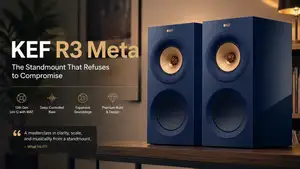
Is it perfect? No. It lacks the ultimate last degree of resolution and air found in similarly priced "analytical" speakers (like the KEF R3 Meta). Its aesthetic is divisive. And it requires careful amp pairing to avoid a dry sound.
Who is it for?
The music lover who thinks most Hi-Fi sounds "boring" or "thin."
The rock, metal, and electronic music fan who wants to feel the drums.
The host who wants a speaker that can background a dinner party and then rock the house party.
The audiophile on a budget who craves the big-cone sound of JBL or Tannoy without the heritage price tag.
Who is it NOT for?
The "pipe and slippers" listener who only listens to string quartets at 65dB.
The bass-head who demands 20Hz subsonic rumble (add a sub).
The listener with a very small, untreated room (the bass might overwhelm).
In a world of safe, polite audio gear, the Vestlyd V12C is a breath of fresh, high-pressure air. It is a speaker that remembers the primary purpose of audio equipment: Entertainment. If you are looking for the "M8C" (the mythical 8-inch), stop waiting. The V12C is the sweet spot, and it is available now to blow the cobwebs off your music collection.
Final Score: 4.5/5 Stars
Sound: ★★★★☆
Build: ★★★★★
Value: ★★★★★
Fun Factor: ★★★★★+
This review is based on independent research and analysis of the Vestlyd V12C. All specifications and performance metrics are derived from manufacturer data and aggregated community user experiences.


Comments