
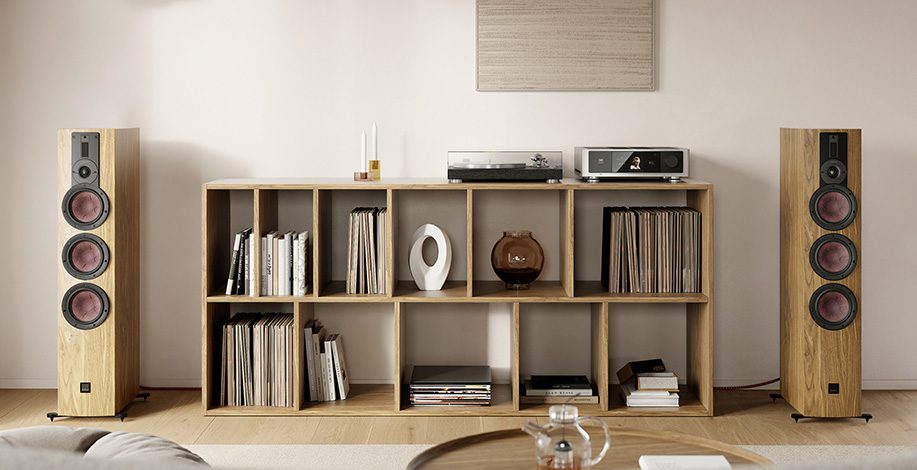
DALI Rubikore 8 — The Heir to the Throne, or Just a Pretty Dane?

Let's talk about what DALI pulled off here. The Rubikore 8 sits at roughly $12k/pair (£5,999 in the UK), and it's essentially the company distilling everything it learned from the $170k+ Kore flagship and the $80k Epikore 11 into something a real human being might actually buy. Two years of trickle-down engineering. That's either impressive Nordic efficiency or a great marketing story. Turns out, it's mostly the former.
The hardware story
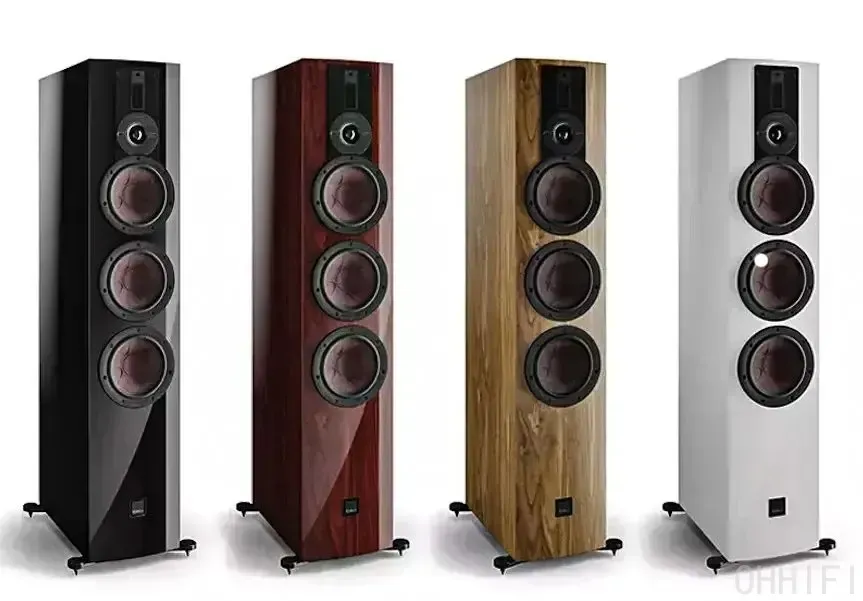
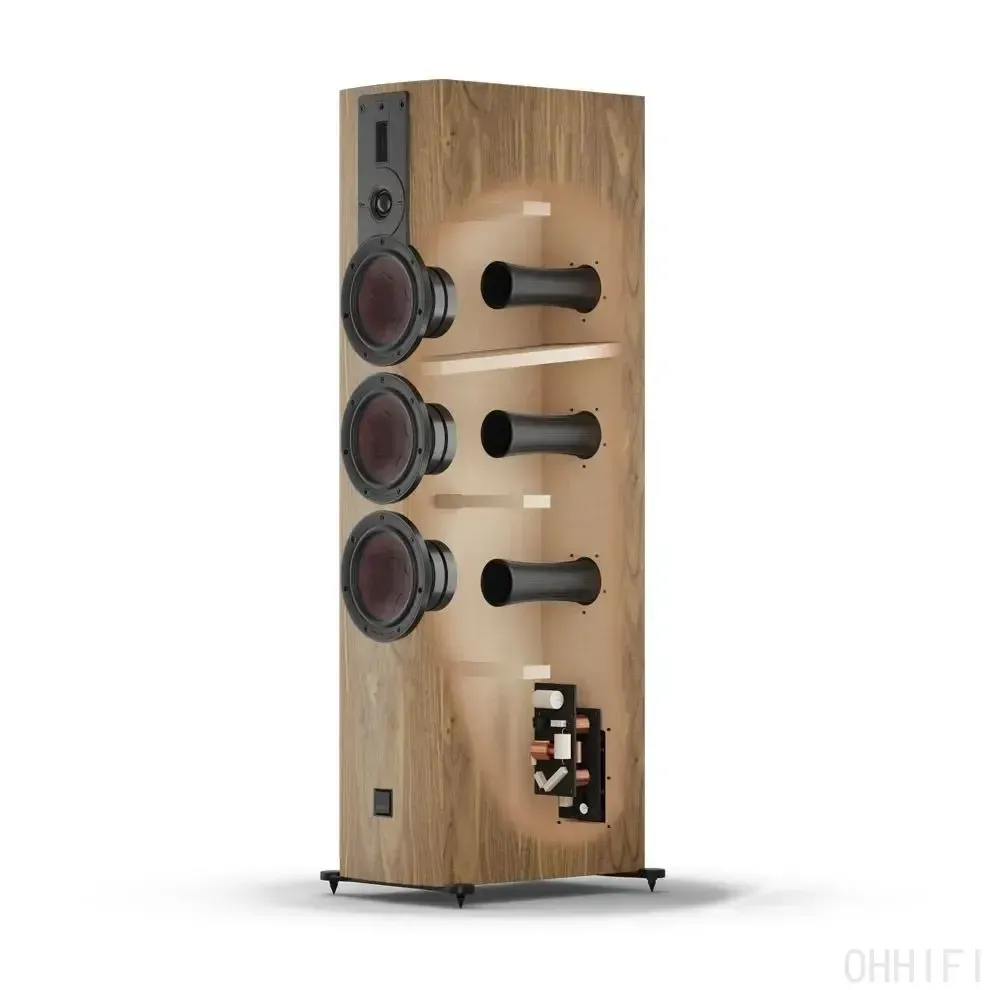
The Rubikore 8 is a tall, slim floorstander running three 6.5" Clarity Cone™ woofers — paper/wood fiber composite cones that balance stiffness and self-damping in a way you just don't see at this price. The crossover architecture is what DALI calls a 2.5+0.5+0.5-way design, which sounds like marketing word salad until you understand it: each woofer has its own individually filtered rolloff point, so the radiating surface effectively shrinks as frequency rises. Clever. It's how you get real bass headroom without the midrange getting congested.
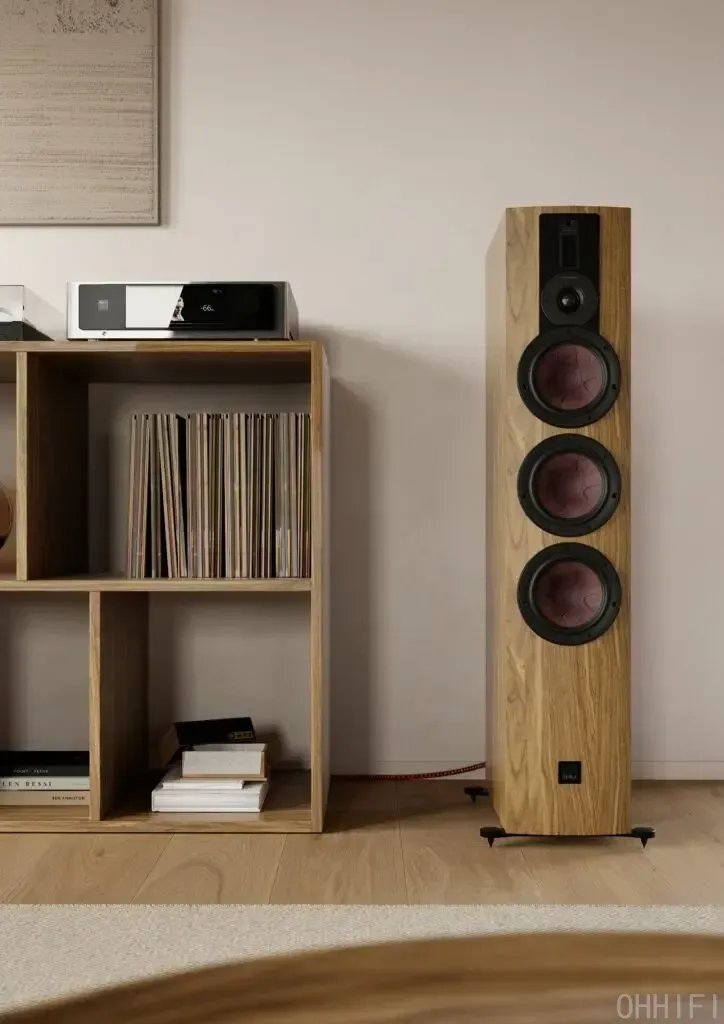
Up top is DALI's hybrid tweeter module — a 1⅛" soft dome (now ferrofluid-free, which matters for transient speed and long-term reliability) paired with a 17×45mm planar magnetostatic supertweeter that kicks in above 14kHz. This combo is DALI's signature move, going back to the Epicon series. It widens horizontal dispersion in the top octaves and keeps the air in the room from going flat and dead at the listening sweet spot.
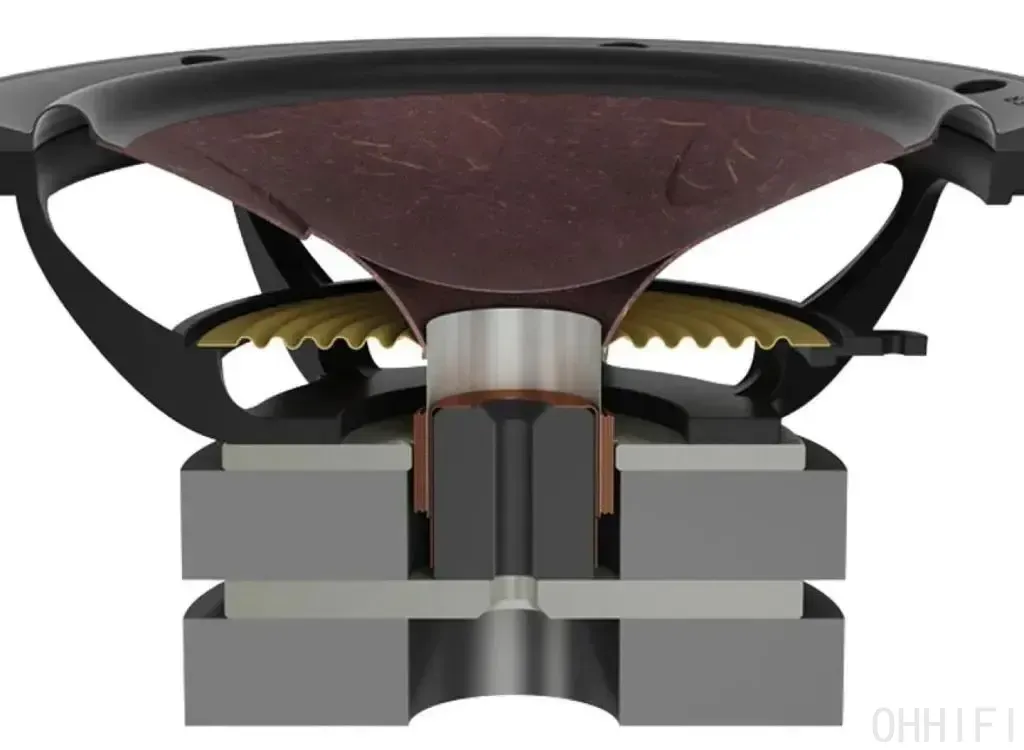
The SMC (Soft Magnetic Compound) magnet system deserves a mention — using insulated iron granules instead of solid iron dramatically reduces eddy-current braking on the voice coil, resulting in a measurably more linear impedance and lower distortion throughout the driver's range. The same SMC material is used in the crossover inductors. Mundorf capacitors round out the passive network. At this price, that's the right call.
Three continuously flared reflex ports handle bass loading. Turbulence is the enemy of port linearity, and DALI's engineering here is meticulous.
How it sounds
The Rubikore 8 doesn't try to impress you in the first 30 seconds. It's not a "wow" speaker — it's a "wait, where did that come from" speaker. The midrange is the centerpiece: smooth, open, completely free of grain or glare. Acoustic piano shimmers naturally through the mids and lower treble. Jazz trio recordings breathe. The double bass has real texture and note definition down low — you can hear the bow draw on the string rather than just a bloom of low-frequency energy.
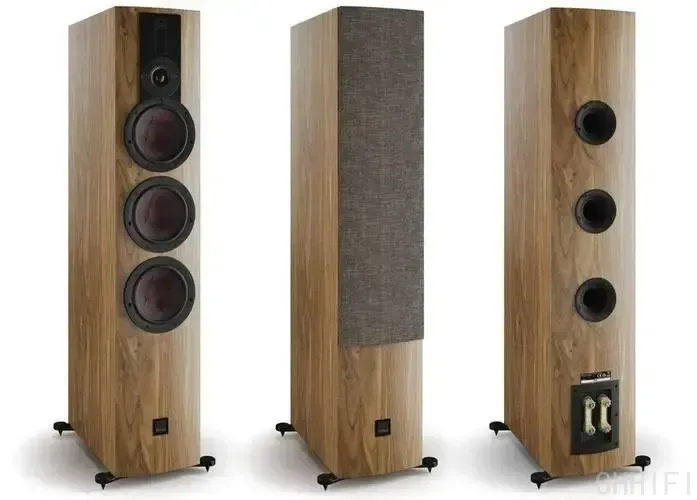
Bass extension is genuinely impressive for a speaker of this form factor. Clean, articulate, controlled. It doesn't thump or bleed into the mids. On large orchestral pieces, the dynamic contrast is wide and the low-end foundation is authoritative without being overblown. The hybrid tweeter keeps the top end airy and extended without edginess — ribbons do that, and this implementation is among the better ones.
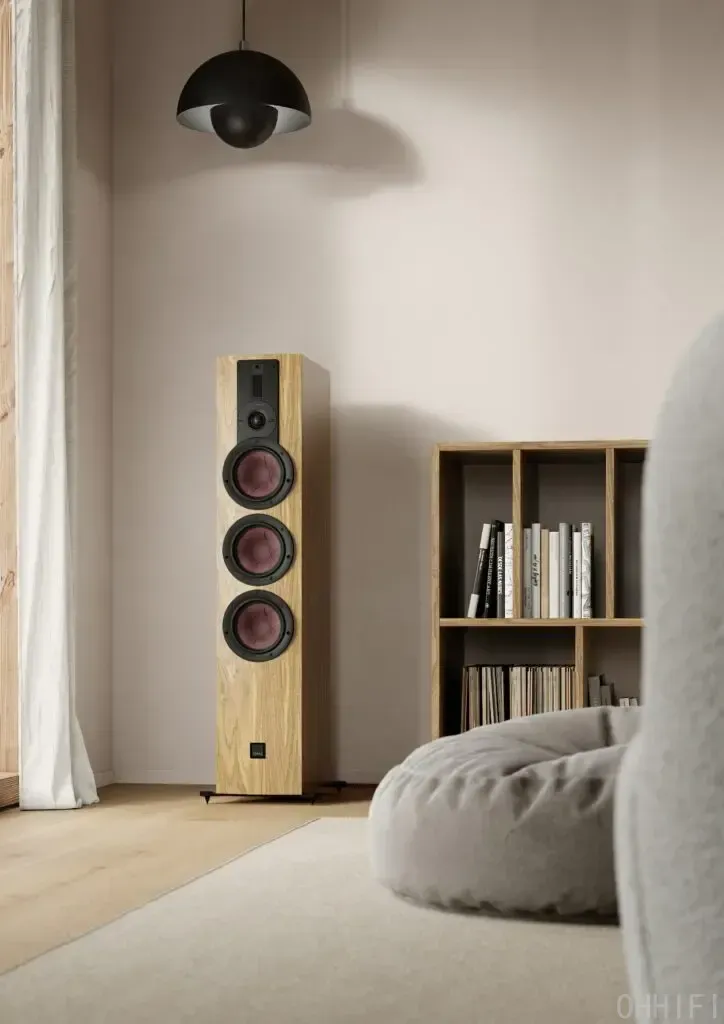
It's an efficient speaker at 90.5dB/4 ohms, and DALI claims 30W is sufficient. That's mostly true, but here's the nuance: this speaker scales ruthlessly. Put a mediocre amplifier in front of it and you'll hear every limitation your source chain has. Give it something genuinely good and it opens up in a way that pushes well above its pay grade. Bi-wiring and bi-amping are both on the table — there's a terminal plate that supports it.
Versus the competition
At $10–12k, the room gets crowded fast.
The Focal Kanta No. 3 (~$10,500) is the obvious point of comparison — Beryllium tweeter, Flax cone woofers, inverted dome geometry. The Focal is sharper and more incisive, with lightning transient response and a slightly more forward presentation. If you like detail retrieval and PRaT (Pace, Rhythm and Timing) front and center, the Kanta is compelling. But its presentation is more "in your face" — some listeners find that thrilling for a few months and fatiguing over years.
The B&W 804 D4 (~$11,000) brings Bowers' signature Continuum cone and carbon dome tweeter into play. It's arguably the most revealing speaker in this tier, almost ruthlessly so. Grand soundstage, excellent imaging, superb detail retrieval. But it can also feel analytical and cool — less forgiving of poorer recordings, less organic in tone.
The Sonus Faber Olympica Nova III (~$14,000) is warmer, more romantic — handmade in Italy with the lute-inspired cabinetry and elastic string grilles. It flatters vocals and acoustic strings in a way few competitors can match. But it gives up some bass weight and low-end extension to the DALI, and it costs meaningfully more.
The DALI slots nicely in the middle — more musical and natural-sounding than B&W, more resolved and extended than Sonus Faber, and less relentlessly analytical than Focal. It's the speaker for long listening sessions where you want to stop thinking about the equipment.
The honest caveats
Styling is conservative. The finishes are beautiful — the walnut is legitimately stunning — but the overall design language doesn't take risks. Some reviewers noted the outrigger/feet system feels a bit basic for a $12k product. There are also some measured response irregularities in the 1–2kHz region on the woofer breakup behavior, though nothing that translated into obvious coloration in actual listening.
And yes — it doesn't quite touch the Epikore 11 that inspired it. That's to be expected. But it carries enough of the same DNA in the midrange smoothness and bass articulation that the family resemblance is unmistakable.
The verdict
DALI built a genuine audiophile floorstander here — not a lifestyle product, not a feature-list exercise. The Rubikore 8 is the kind of speaker you buy when you've already heard enough "impressive" speakers and you're now looking for one that just plays music right. For a speaker at this price, that's the hardest thing to get right. DALI got it right.



Comments