
Beyond the Hype: Is the Marantz MODEL 10 Truly Worth $15,000?

Let's get the elephant out of the room first: yes, this is a Class D amplifier. Marantz's new flagship. At fifteen grand. If that sentence makes you uncomfortable, you're not alone — but stick around, because this one genuinely earns a rethink.
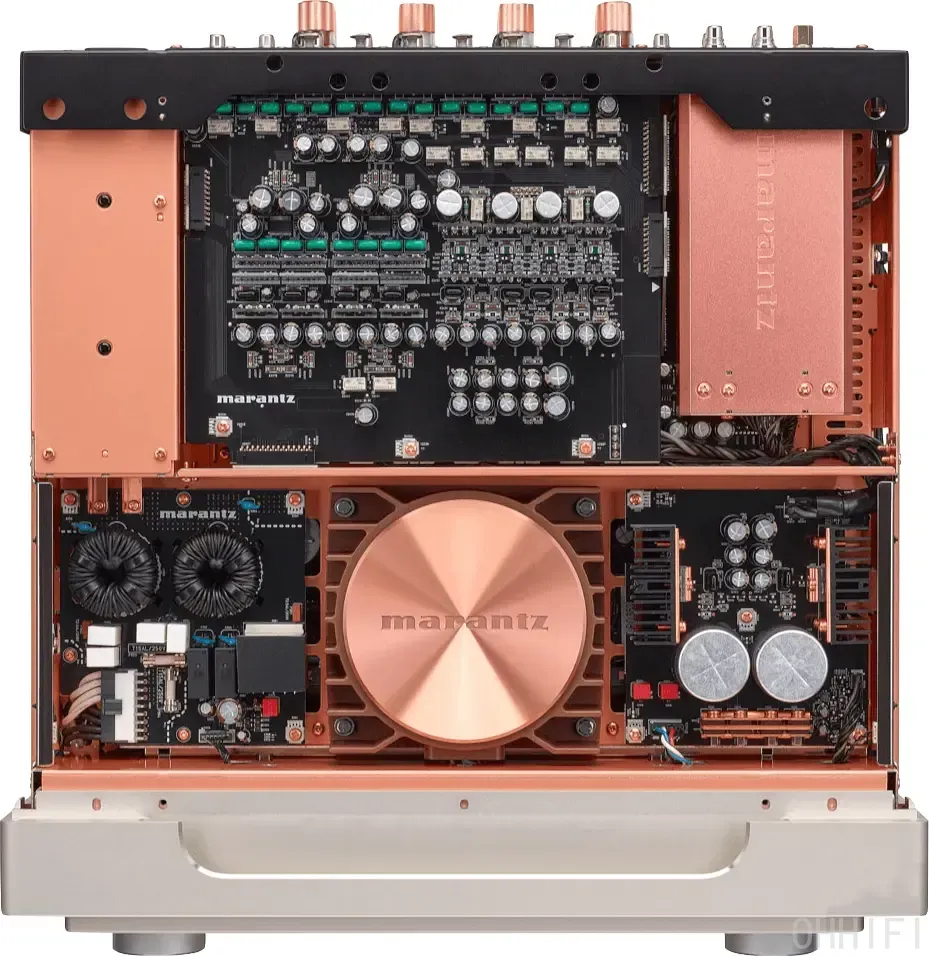
The MODEL 10 succeeds the PM-10 from 2018, itself a well-regarded Hypex NC500-based machine. The new version goes deeper. Marantz co-developed proprietary switching modules with Purifi — these aren't off-the-shelf Eigentakt boards, they're tuned in-house at the Shirakawa facility in Japan. Each channel gets its own dedicated SMPS for the amp section, while a separate toroidal transformer feeds linear power supplies for the preamp, phono stage, and headphone output. That's a level of internal architecture you don't typically see in an integrated at any price.
The power figures are serious: 250 wpc into 8 ohms, 500 wpc into 4 ohms — both channels driven, full FTC spec, 20Hz–20kHz at under 0.005% THD. When measured in independent lab conditions, the unit actually exceeded those ratings, hitting around 340 wpc and 650 wpc respectively. It also held stable into 2-ohm loads. For an integrated, that's exceptional. If you need more — and who really does — Marantz's F.C.B.S. (Floating Control Bus System) lets you link up to four units for bi-amplification.
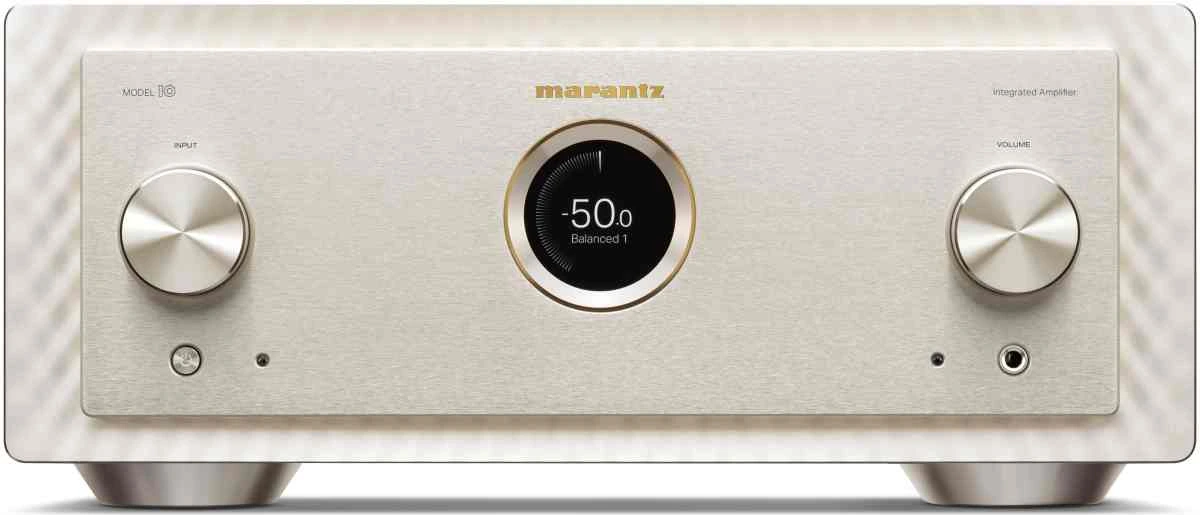
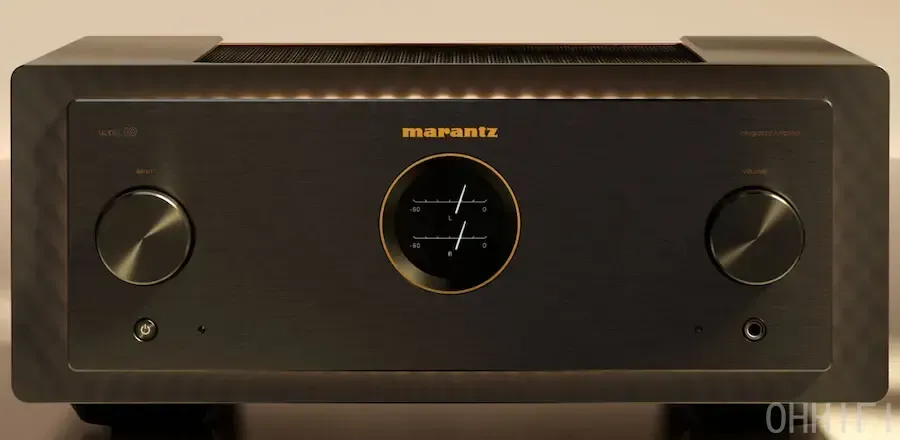
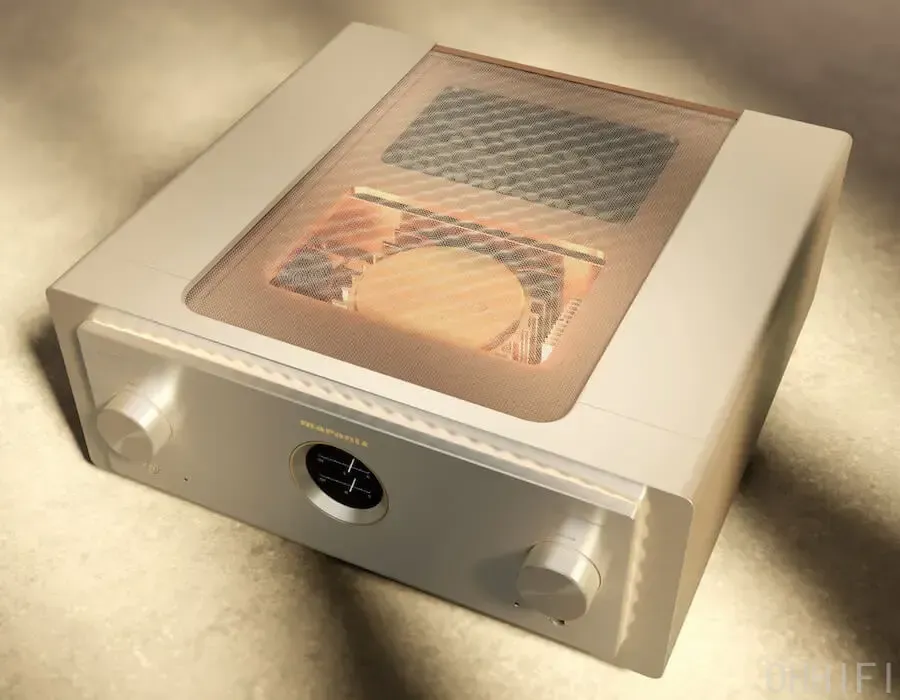
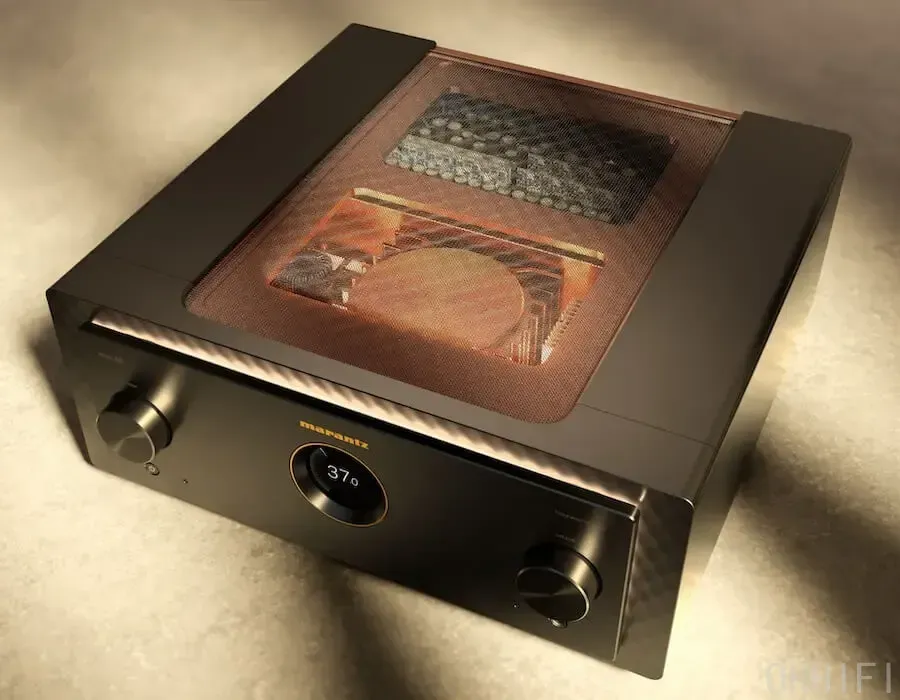
The build quality is genuinely in another league. Triple-layered chassis, copper-plated interior walls acting as both shielding and thermal mass, isolated sub-enclosures for each functional section. The top panel is an illuminated copper mesh that glows from within, reflecting off all that internal copper plating. It looks like a high-end watchmaker met a recording studio and had a very expensive child. Love it or find it excessive — but nobody calls it boring. The aluminum front panel keeps things relatively restrained, anchored by Marantz's iconic porthole, now housing an HD TFT color display with virtual VU meters. Machined aluminum volume and input knobs feel appropriately substantial.
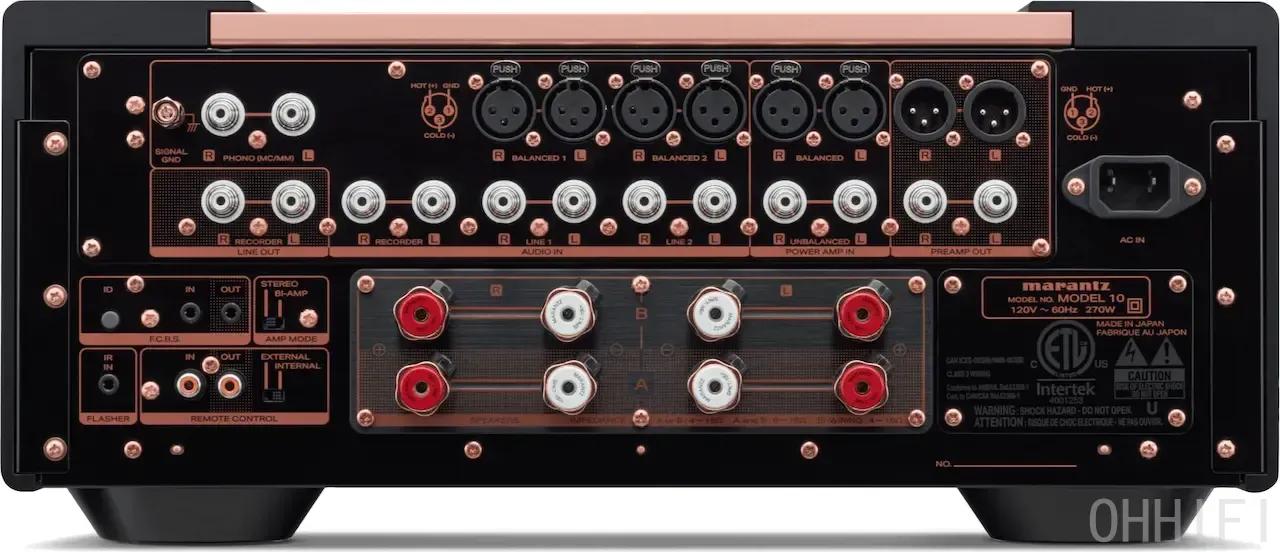
On the feature side, it's a pure analog machine — no DAC, no streaming. Four line-level inputs (two balanced XLR, two RCA), MM/MC phono with three MC impedance settings, balanced and unbalanced pre-outs, HT bypass, and two pairs of copper-plated SPKT-100+ speaker binding posts for bi-wiring. Headphone output is onboard but modest (130mW into 32 ohms — enough for sensitive cans, not a primary selling point).
Listening impressions
The bottom end is where this amp immediately separates itself. Sub-bass control and articulation at low frequencies is genuinely startling — the kind of grip you'd normally associate with a heavyweight Class A/B design. Late-night low-volume listening doesn't compress the dynamics the way many amps do; the gain-staged volume control appears to preserve SNR across the range, keeping the bass authoritative even at restrained levels.
Midrange is clean and transparent without feeling clinical. There's no artificial warmth being added — the MODEL 10 just gets out of the way and lets the music through. Upper treble is smooth and grain-free with notably good extension. Spatial retrieval is excellent, ambient cues and micro-detail are rendered with an ease that suggests a very low noise floor.
The overall sonic character sits somewhere between the analytical precision of the Hegel H590 ($11,000) and the richer tonal palette of the Technics SU-R1000 ($11,999). Compared to the Hegel H590 — a class A/B powerhouse with 303 wpc — the MODEL 10 adds more color and vibrancy to the upper frequencies while matching or exceeding it in bass authority. The Technics, with its advanced digital signal processing and sophisticated Class D architecture, is arguably more technically ambitious, but the Marantz counters with a warmer, more musical presentation that's easier to live with long-term.
Against the NAD M66/M23 separates (~$9,200 combined) — which also use Purifi-based technology — the MODEL 10 simply sounds more refined. More polished. The separates offer better value per watt and more flexibility, but if you're after a single-box solution with flagship-grade construction and a fully balanced signal path, the Marantz justifies the premium.
The caveats
At 74 lbs (34kg), this is a two-person installation job — no exaggeration. The speaker binding posts, though beautifully made, have plastic shrouding that makes thick spade connectors a genuine nuisance. Banana plugs are the way to go here. The included remote control is a shared system handset — cluttered with buttons for the LINK 10n and SACD 10 companions — small, unlit, and finished in an odd dark green that matches nothing. For a $15,000 component, it's a bit of an afterthought. The amp also demands high-quality source components to show its best; pair it with a budget streamer and you may wonder what all the fuss was about.
Bottom line
The MODEL 10 represents what happens when a heritage brand stops chasing nostalgia and commits fully to where the engineering actually is in 2025. Class D has arrived at the reference level — not as a compromise, but as the genuine article. Is it perfect? No. But as a statement piece that doubles as a serious performer, it's one of the most compelling integrated amplifiers on the market at this price. It happens to look extraordinary doing it.





Comments