
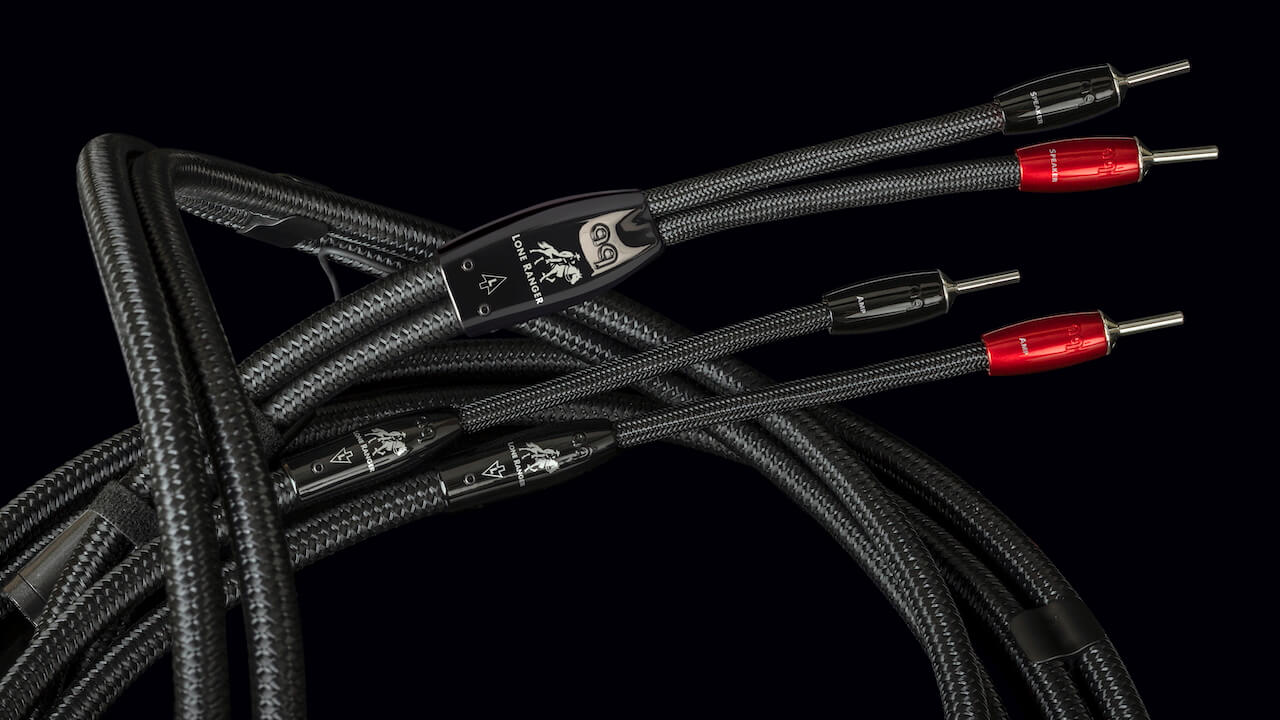
AudioQuest Lone Ranger ZERO-Tech: $3K of Speaker Cable That Actually Has Something to Say

Let's get the obvious out of the way — $2,990 for an 8-foot pair of speaker cables is a number that makes most rational people do a slow blink. And yet, here we are.
The Lone Ranger is AudioQuest's latest entry in the Folk Hero lineup, stepping in as the formal successor to the long-running Robin Hood. It slots just below the Brave Heart ($4,990) and is clearly positioned as the "sensible" choice for someone who wants meaningful proximity to AQ's upper-tier Mythical Creatures performance without fully committing to that level of financial trauma.
What's actually inside
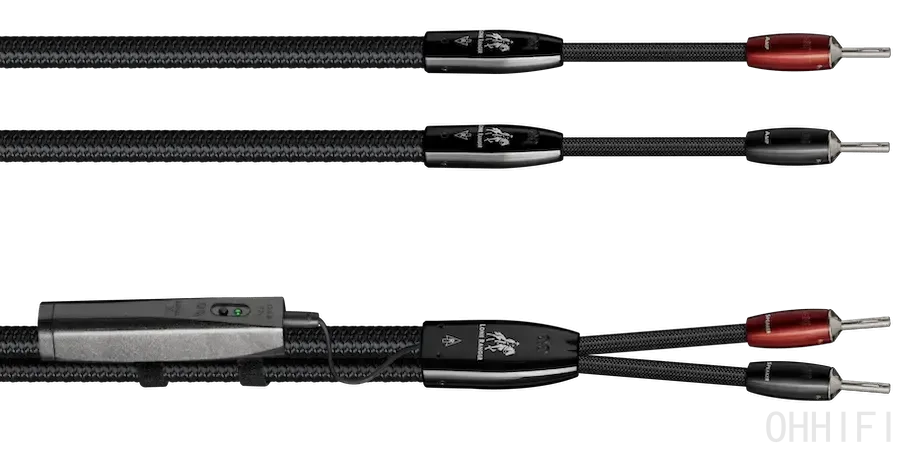
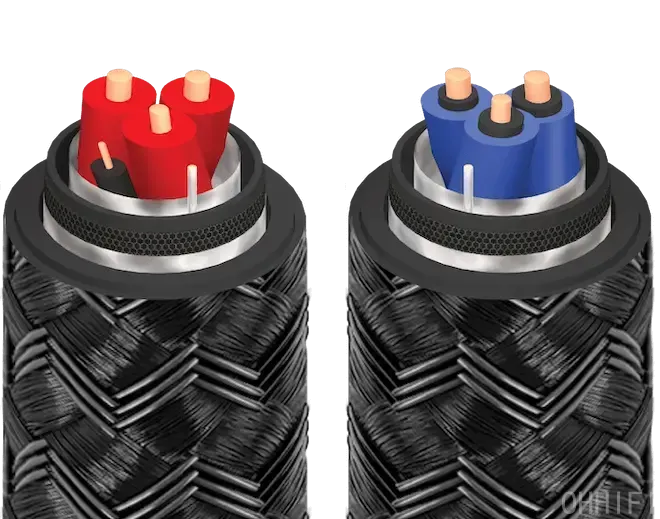
The Lone Ranger is a 12 AWG solid-core PSC+ (Perfect-Surface Copper+) cable running ZERO-Tech geometry — meaning no characteristic impedance mismatch between cable and load. On paper, that translates to fewer timing anomalies and a cleaner transfer of signal. The construction also includes AQ's 72V Dielectric-Bias System, which continuously polarizes the insulation to reduce dielectric noise — that slow, out-of-time energy release that smears transients and muddies fine detail. Add a polypropylene dielectric, a graphene layer, carbon-loaded PVC jacket, and 4% silver shield drain wires for RF noise dissipation, and you've got a cable with more engineering layered into it than most gear in the rack it's connecting.
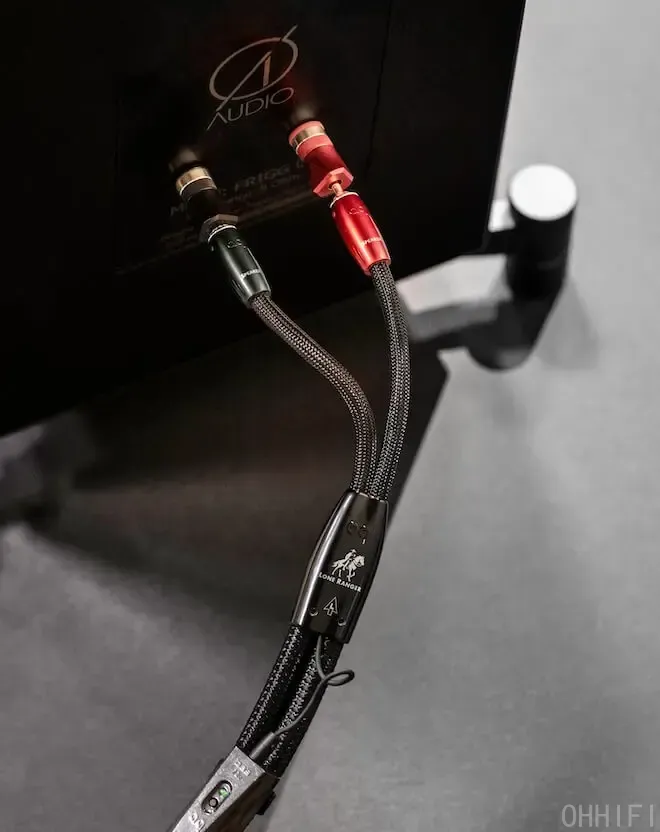
The plug barrels contain zero metal — cold-welded, gas-tight Red Copper spades or bananas only — which eliminates the RF re-radiation that plagues a lot of high-end cables' terminations. Build quality is impeccable. It's flexible, manageable, and the directional labeling on the plugs ("Amp" / "Speaker") reflects genuine listening-based optimization, not marketing theater.
How it actually sounds
Compared to the Robin Hood it replaces, the jump is genuinely not subtle. The low end is more muscular and better controlled — not just louder or rounder, but more defined. Bass lines have texture and stop when they should. The midrange is where it starts to feel different from most cables at this price: there's a presence and immediacy that doesn't feel hyped, more like the music is physically closer to you. Imaging is palpable, soundstage is expansive, and transient response feels quick without becoming sharp or etched.
The word that comes up consistently in serious listening time with this cable is immersion. It doesn't just pass signal cleanly — it seems to remove a layer of ambient disengagement from the listening experience. That "clear window" metaphor that gets recycled in cable reviews? The Lone Ranger feels less like a clean window and more like it removed the window frame entirely.
How it stacks up against the competition
At the ~$3K price point, you're in serious cable territory with real alternatives.
Cardas Clear (around $4,085 for a 2m pair, so slightly above) has a completely different flavor — warmer, more organically coherent, with a quieter background. If you want musical wholeness over analytical resolution, Cardas is the counterpoint. Cardas Clear Beyond, further up the range, adds large-scale soundstaging and micro-information that's genuinely in its own category. The AQ-versus-Cardas difference is a personality split, not a quality split: AudioQuest leans toward drama, dynamics, and transparency; Cardas pulls toward natural tone, coherence, and silence.
Transparent Audio Ultra in the same ballpark is leaner and more analytically inclined — better inner-detail retrieval in the mids and treble, excellent imaging, but less of the physical weight and bloom. It's the more "neutral" choice if your system already has warmth to spare.
Compared to its own sibling, the Brave Heart, the Lone Ranger gives up some scale and ultimate authority — the Brave Heart is physically larger (14.1mm vs 11.6mm OD per polarity) and simply does more of everything. But at $2,000 less, the Lone Ranger captures a remarkable percentage of that performance without the full penalty.
The honest take
The Lone Ranger isn't snake oil, but it also isn't magic. It's a well-engineered cable with real technical differentiation, and it sounds like one — better resolution, better dynamics, better control than cables in its class that lean on materials alone. The ZERO-Tech geometry and DBS system aren't just spec-sheet fodder; in a sufficiently resolving system, you hear the difference.
That said, the value conversation is always relative. If your amp is below $5K and your speakers aren't particularly revealing, this cable will likely do very little for you that a Cardas Iridium or an AQ Rocket 44 wouldn't also do. The Lone Ranger earns its price in the context of a high-resolution system that can actually transmit what it's doing.
For AudioQuest loyalists upgrading from Robin Hood, this isn't a marginal update — it's a legitimate step. For newcomers to the Folk Hero lineup, it's the most compelling entry point in the range today.


Comments