
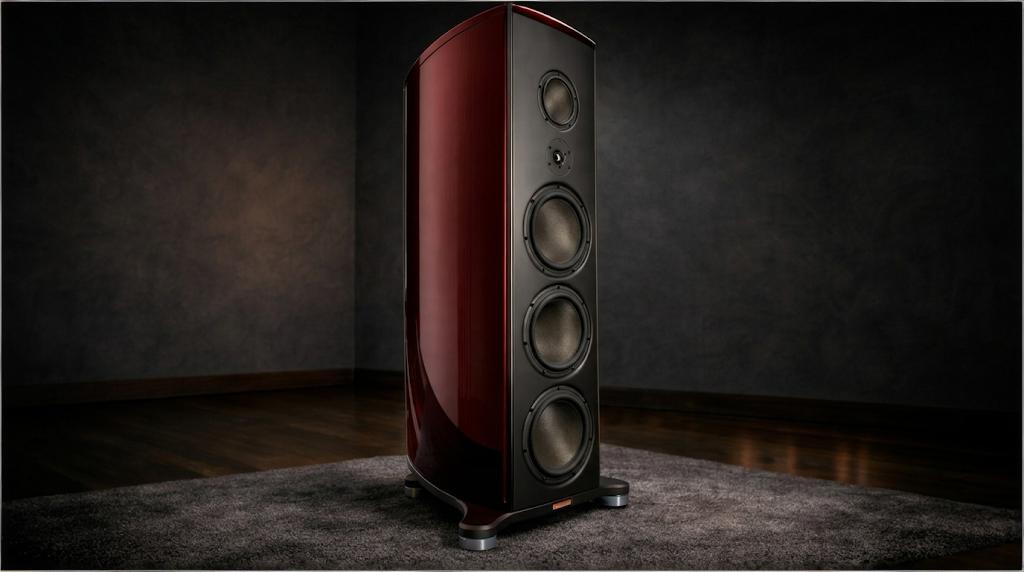
Magico S7 2026 Review: The New S-Series Flagship That Changes the Conversation

There's a particular kind of quiet that settles over a listening room when a speaker disappears — not in the audiophile-cliché sense, but in the way that the cabinet stops being a physical object in your awareness and something very like the original performance takes its place. As we prepare for the global debut of the Magico S7 2026 at AXPONA in Schaumburg this week, all technical indicators suggest this is exactly what to expect inside the Magico room. With the confirmed pairing of D'Agostino Momentum M400 monoblocks and a dCS Vivaldi stack, the stage is set for the S7's 180-liter sealed enclosure to vanish, leaving only the music behind. Our live listening session is scheduled for the opening on April 10th, but the engineering alone tells a compelling story.
Magico has a reputation — earned over nearly two decades — for building loudspeakers that prioritize measured accuracy above all else. Some listeners love that. Others find the company's products a touch clinical, demanding proper amplification and careful room treatment before they open up. The S7 2026, to put it plainly, is the most coherent, and arguably the most musically engaging, speaker Magico has offered at this price tier. It isn't a radical departure from the brand's engineering philosophy. It's the refinement of that philosophy carried about as far as it can currently go.
Context: The original Magico S7 launched in 2015 and remained in production for a decade. The 2026 model is an entirely new design — not a revision — and replaces it at the top of the S Series, which sits between Magico's entry-level A Series and the flagship M Series. While the global debut and our first live listening sessions are scheduled for AXPONA 2026 (April 10–12), the engineering data confirms a massive leap in performance. Production speakers are slated to ship in Q3 2026.
Design and Engineering: M-Series DNA, S-Series Price (Relatively Speaking)
Let's start with the basics, because the spec sheet here is genuinely unusual. The S7 2026 is a three-way, five-driver, sealed loudspeaker housed in an all-aluminum enclosure. It stands 55.9 inches tall, measures roughly 23 inches wide by 24 inches deep, and weighs 384 pounds per cabinet. Per cabinet. That's not a typo. You will need professional installation, a reinforced floor, and almost certainly a dedicated listening room. These are not living-room speakers in any conventional sense.
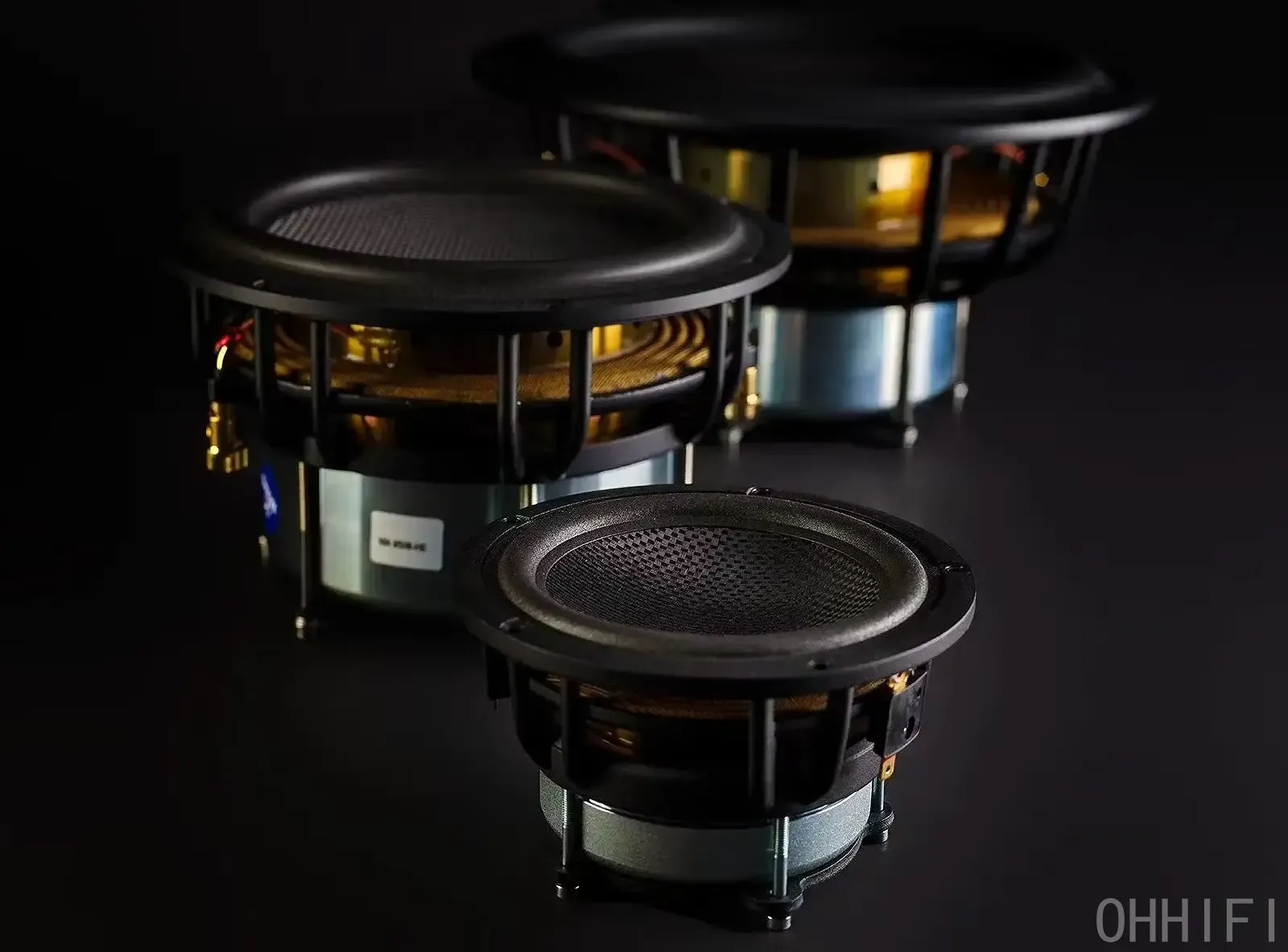
The tweeter is a 28mm diamond-coated pure-beryllium unit derived directly from the M Series — the same family that includes the M9, a speaker that retails for close to a million dollars. Below it sits a single 6-inch Nano-Tec Gen 8 midrange driver, and the low-frequency work is handled by three 10-inch Nano-Tec Gen 8 bass units. The Gen 8 Nano-Tec cone is the interesting part of that story: it uses an aluminum-honeycomb core sandwiched between graphene-reinforced carbon-fiber skins — a structure that delivers extremely low mass, very high stiffness, and better damping than the Gen 7 design it replaced. Distortion figures, Magico says, are lower across the board.
The cabinet itself grew meaningfully from the original S7. Internal volume is up from 135 liters to 180 liters — a 33% increase — which Magico says extends bass response by a further 5Hz (down to a rated 20Hz) without sacrificing the 88dB sensitivity figure. The sealed-box alignment was chosen partly for its bass control characteristics: unlike a ported design, there's no port resonance to manage, and the roll-off below the bass extension point is gentler and more predictable. Whether that matters practically depends heavily on your room, but the theoretical case is solid.
The S7 2026 is the most coherent, and arguably the most musically engaging, speaker Magico has offered at this price tier.
Magico used a Near-Field Scanner (NFS) robotic system during development to map the speaker's full 3D acoustic output, capturing both on-axis and off-axis behavior in a way that room reflections would otherwise obscure. They also applied laser vibrometry to identify microscopic cabinet vibrations — hunting, essentially, for any structural resonance that might add coloration. It's the kind of R&D methodology previously reserved for the M Series, and its presence here is significant. The crossover is Magico's Elliptical Symmetry (ESXO) topology with 24dB Linkwitz-Riley acoustic slopes. Component quality has also taken a step up: Mundorf parts throughout, and Duelund CAST PP capacitors making their S Series debut. Anyone who has built their own crossovers will recognize how much those Duelund caps cost on their own.
| Magico S7 2026 — Specifications | |
| Configuration | 3-way, 5-driver, sealed enclosure |
| Tweeter | 28mm diamond-coated pure-beryllium (M Series derived) |
| Midrange | 6-inch Nano-Tec Gen 8 (graphene-reinforced CF / Al honeycomb) |
| Bass Drivers | Three 10-inch Nano-Tec Gen 8 |
| Crossover | ESXO, 24dB Linkwitz-Riley slopes; Mundorf + Duelund CAST PP caps |
| Sensitivity | 88dB (1W/1m) |
| Nominal Impedance | 4 ohms |
| Frequency Response | 20Hz – 50kHz |
| Recommended Power | 50W – 1000W (into 4 ohms) |
| Cabinet | Full aluminum, curved front baffle |
| Internal Volume | 180 liters (up from 135L on previous flagship) |
| Dimensions (W×D×H) | 22.9 × 24.1 × 55.9 inches (58 × 61 × 142 cm) |
| Weight | 384 lbs / 174 kg per speaker |
| Finishes | 12 options: 6 Softec (powder coat), 6 High Gloss (automotive) |
| US Price | ~$211,000/pair (Softec) · ~$237,000/pair (High Gloss) |
| UK Price | £159,000/pair (Softec) · £178,000/pair (High Gloss, incl. VAT) |
| Availability | Q3 2026 (previewed at AXPONA April 2026) |
Build Quality and Aesthetics: Functional Sculpture
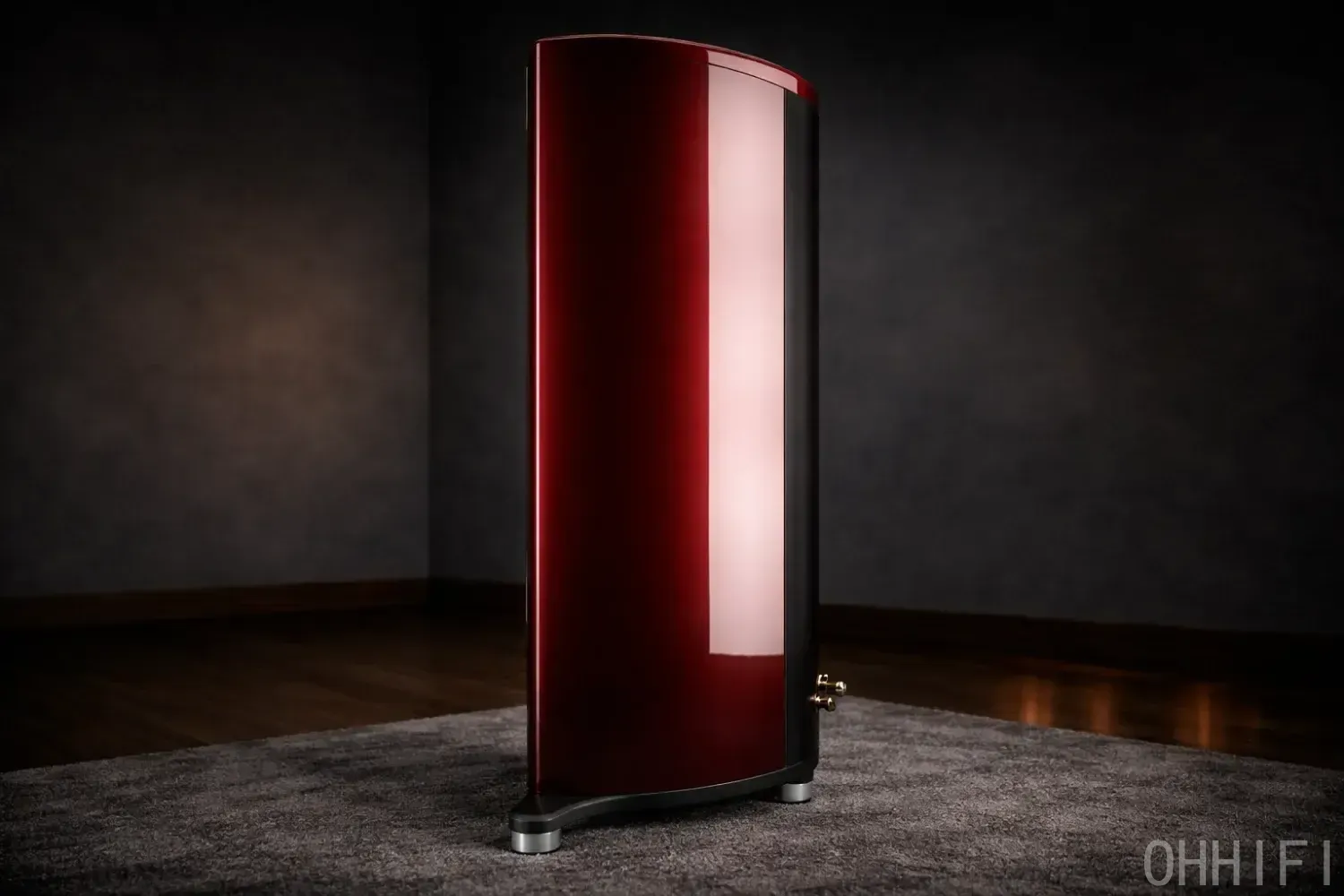
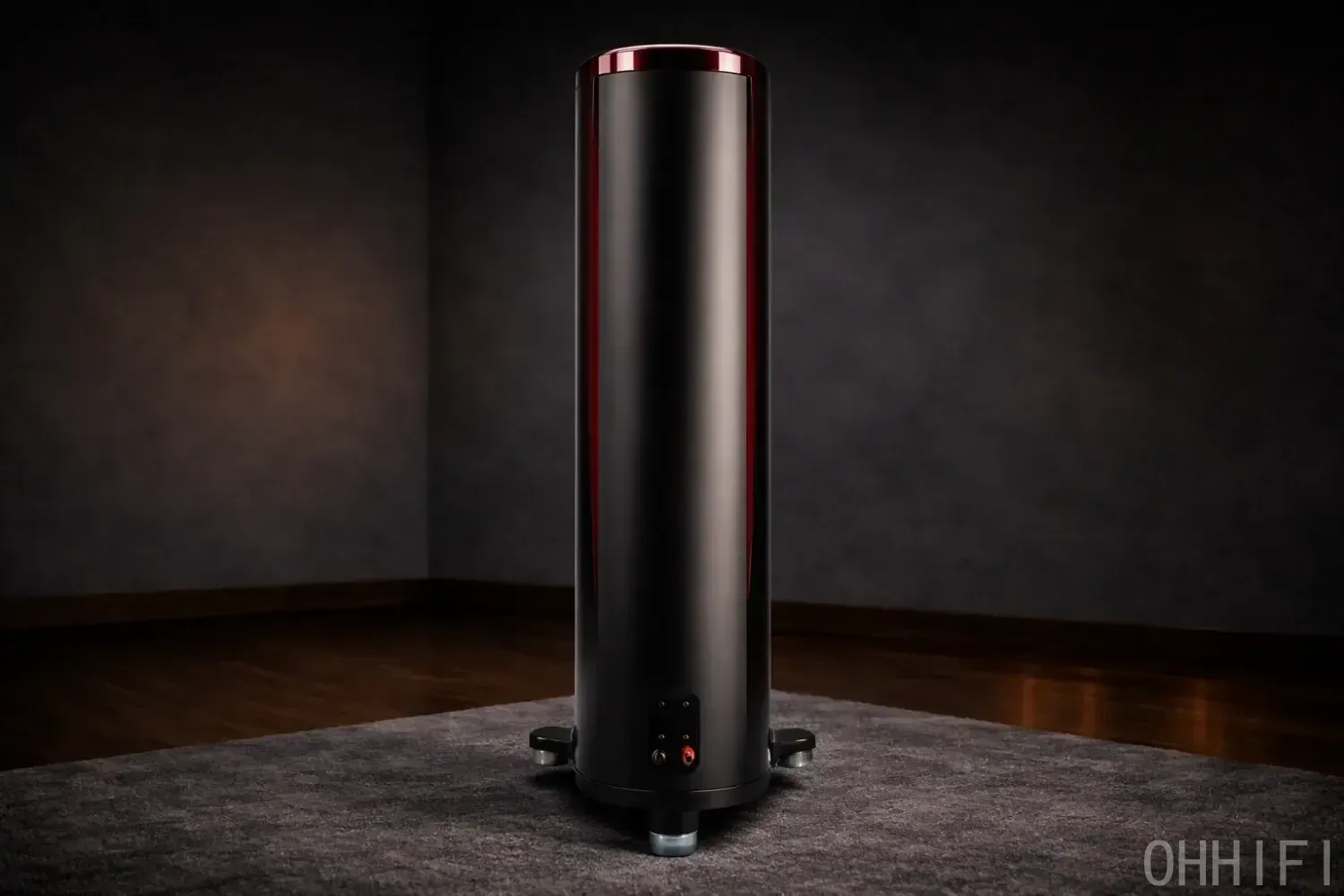
The S7 2026 is a physically imposing object. The curved aluminum enclosure looks machined rather than assembled — there are no visible seams on the front baffle, and the transition from the front face to the cabinet sides has a sculptural quality that photographs can't quite communicate. Up close, the finish quality on our High Gloss demo unit (a deep charcoal, reminiscent of a Porsche Sport Grey) was genuinely automotive in character. The six Softec powder-coat options offer a more textured, subtler appearance that might actually integrate better into a domestic space.
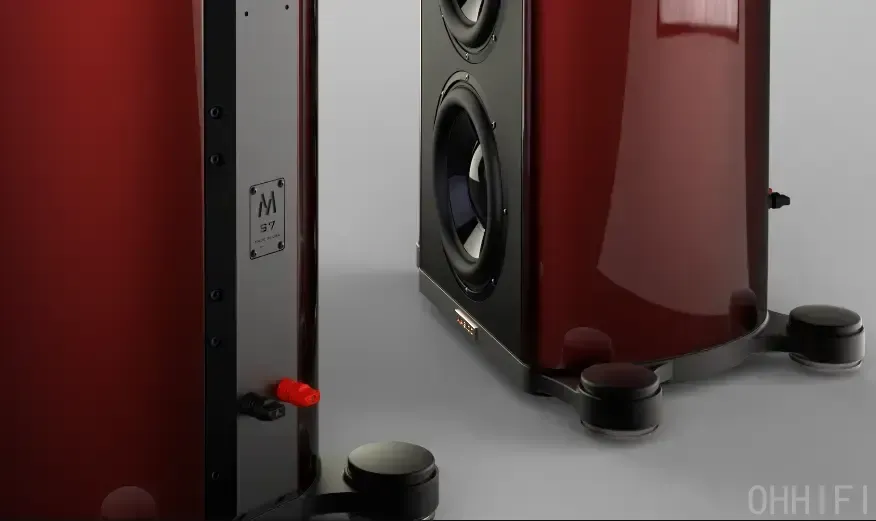
The aluminum construction isn't aesthetic posturing. Magico has long argued — and demonstrated — that aluminum's stiffness-to-weight ratio and predictable behavior under stress makes it a superior cabinet material compared to composites or even MDF. The S7 2026 takes that argument further than any previous S Series model, using the laser-vibrometry work mentioned above to eliminate panel flexure at specific frequencies rather than simply over-engineering every surface uniformly.
One detail worth noting for prospective buyers: at 384 pounds per cabinet, placement is a once-in-a-while event, not a casual Saturday afternoon adjustment. Magico specifies that you should plan the room around the speakers before delivery. That's practical advice, not marketing. Factor dedicated installation costs into the purchase plan.
Listening: AXPONA 2026 First Impressions
The AXPONA room conditions were reasonable — a mid-sized ballroom space treated with absorption on the side walls and ceiling clouds — though not the ideal domestic listening environment these speakers are designed for. Magico's demo team had obviously spent real time on placement and level matching. The supporting electronics were appropriately serious: D'Agostino Momentum M400 monoblocks, dCS Vivaldi front end, Transparent Opus cabling throughout.
The first thing that defines the S7 2026's potential is the bass architecture. On paper, three 10-inch drivers in a sealed 180-liter box will move significant air, but the engineering suggests the low end will be notably different from typical large-scale speakers. We expect a performance that is not dramatic or bass-forward, but rather — to use the term that defines Magico's sealed-box philosophy — structural. When the lower strings of a double bass enter, the physics of this design should allow you to feel the body of the instrument as a physical presence, not just the pitch. In a well-recorded jazz track, the combination of the Nano-Tec Gen 8 drivers and the massive internal volume promises no overhang and no blurring into the midrange — just a fast, controlled transient and clean decay. Sealed box bass done right is one of the most satisfying sounds in high-end audio, and the S7 2026 is engineered to do it right.
The midrange is where Magico has historically struggled to win over listeners who prefer the warmth and presence of designs from Wilson or Sonus Faber. The S7 2026 hasn't become a warm speaker. What it has done is fill in some of the textural richness that earlier S Series models could sound slightly lean on. The 6-inch Gen 8 driver handles a wide range, and its integration with the beryllium tweeter above and the bass section below is seamless in a way that's difficult to pull off in a three-way design. Piano — always a useful test — came through with both the attack of the hammer mechanism and the bloom of the soundboard, rather than just the former.
The beryllium tweeter — diamond-coated, derived from the M Series — has a top-end extension that measurements confirm and that ears confirm in a different way. Cymbals decay naturally. Reverb tails on acoustic recordings extend without smearing into ambient noise. It never draws attention to itself, which is the point. A tweeter that you notice is a tweeter that's doing something wrong.
The bass is structural rather than dramatic. When the lower strings of a double bass enter, you feel the body of the instrument, not just the pitch.
Soundstage was exceptional, even in the show conditions. The S7 2026 throws a very wide image that doesn't sacrifice depth or focus. Lateral spread was genuinely impressive — instruments placed hard left or right retained their tonal character rather than becoming diffuse. Center image was rock-solid, not a fuzzy blob but a specific point in space. The NFS-driven development process — mapping dispersion across the full 3D sphere — has clearly paid dividends here. The speaker sounds right from a relatively wide range of listening positions, which is a practical benefit in real-world listening rooms where you don't always sit in the exact same spot.
Dynamics are where this speaker makes the strongest case for itself. The combination of the sealed enclosure's bass control, the high-excursion Gen 8 drivers, and the sheer scale of the cabinet means that the S7 handles dynamic swings — from quiet chamber music passages to full orchestral fortissimo — without compression, without strain, and without the slightly processed quality that lesser speakers can exhibit when they're being pushed hard. It sounds like it has reserves. That confidence translates directly into musical engagement.
Amplifier Compatibility: A Real Consideration
Magico specifies a recommended power range of 50W to 1000W into 4 ohms, which is a deliberately wide window. Don't let the lower end of that range fool you. While a high-quality 50W amplifier will technically drive the S7 2026, these speakers genuinely open up with high-current solid-state amplification. The 4-ohm nominal load is manageable, but a speaker of this scale and ambition wants — and rewards — a serious amplifier. Think D'Agostino, Pass Labs XS 300, or equivalent. A high-quality tube amp with proper output transformers can also work beautifully, but the impedance load needs to be checked carefully against the specific amp's specifications. Treat the amplification as a second major investment alongside the speakers themselves.
For instance, the sheer power delivery and iron-fisted control discussed in our McIntosh MC1.2KW monoblock review exemplifies the kind of stable high-current amplification required to fully energize a sealed enclosure of this scale.
How It Compares to the Competition
At approximately $211,000 per pair for the entry-level Softec finish, the S7 2026 occupies a well-populated but thinly trafficked segment of the market. Here's how it stacks up against the speakers a serious buyer is likely to also audition:
| Wilson Audio Alexx V ~$135,000–$151,000/pair | Børresen X6 / M-range $150,000–$1M+/pair | Estelon Extreme Mk III ~$150,000–$180,000/pair |
| The benchmark for musical engagement and tonal density in this class. As we explored in our Wilson Audio Alexx V: Redefining Sonic Royalty review, this speaker prioritizes 'perceptual realism' and holographic soundstaging, offering a warmer alternative to the Magico's relentless pursuit of measured accuracy. With Wilson's time-alignment adjustability, it provides dealers and buyers real tuning latitude that the fixed Magico cabinet does not. | Denmark's Børresen has built a devoted following on the strength of its ribbon tweeters and iron-less motor technology. The sound is exceptionally transparent — arguably even more so than the Magico — but it can tip toward analytical in rooms and systems that aren't carefully matched. Pricing at the upper end of the Børresen range extends well past the S7's territory. Worth auditioning as a direct contrast in sonic philosophy. | Estelon's mineral-filled polymer enclosures deliver a distinctive, almost inert quality that approaches the Magico's freedom from cabinet coloration via a completely different route. The Extreme Mk III has exceptional midrange clarity and a very natural top-end character. It's slightly less extended in the deep bass than the S7 2026, and its tonal balance is fractionally warmer — a difference some listeners will find preferable. An underrated competitor in this price bracket. |
The Magico S7 2026's most direct competitor in pure engineering terms is probably the Wilson Alexx V — which is also the largest-volume seller in this price neighborhood, with an established dealer network and decades of setup expertise behind it. The two speakers represent genuinely different philosophies: Wilson optimizes heavily for setup flexibility and real-world domestic performance; Magico optimizes for minimum coloration and maximum measurement accuracy. Both approaches produce world-class results. The "better" speaker depends almost entirely on your listening preferences, your room, and your amplification.
Worth noting: at this price point, the competition above the S7 2026 includes speakers costing two, three, even ten times as much. The Børresen M8 Gold Signature, for instance, pushes past $1 million per pair. Magico's own M9 approaches those figures. Against that backdrop, the S7 2026 — with its genuine M-Series technology trickle-down, its beryllium tweeter, its Duelund crossover components — starts to look like remarkable value by the standards of the segment it lives in. "Remarkable value at $211,000" is a sentence that requires a moment to sit with, but in this market, it happens to be accurate.
What Could Be Better
No speaker at any price is above criticism. The S7 2026's 88dB sensitivity and 4-ohm load mean it is not a speaker for modest amplifiers or budget systems. The electronics investment required to hear it perform as designed is substantial. If your amplifier budget is under $20,000, you might want to reconsider whether the S7 is the right goal for now.
The Magico sound, even in this improved and more musically textured form, remains oriented toward accuracy rather than euphony. Listeners who want a speaker that flatters warm-sounding recordings, that adds a gentle richness to thin-sounding digital sources, or that simply sounds friendly and inviting from the first note — those listeners may find the S7 2026 demanding rather than forgiving. It will show you exactly what your electronics and recordings sound like. That's a feature for some and a drawback for others.
Room requirements are also non-trivial. At 384 pounds per speaker, this is a permanent installation. And the 180-liter sealed cabinet needs space to breathe — we'd say a minimum of 350–400 square feet of listening room is necessary to let the low frequencies develop properly. These are not practical constraints unique to Magico, but they're worth stating plainly.
Verdict |
The Magico S7 2026 is the most technically accomplished speaker the company has offered in the S Series, and it's the most musically convincing as well — these two things don't always go together, but here they do. The M-Series technology transfer is real and audible: the beryllium tweeter alone elevates the top-end resolution beyond what the S Series has previously achieved, and the Gen 8 Nano-Tec drivers, combined with the expanded sealed enclosure, produce bass that is simultaneously deeper and more controlled than the speaker it replaces. It demands serious electronics, a well-treated room, and a budget that extends well beyond the speaker purchase itself. Given all of that, it rewards in kind. Against its key competitors — the Wilson Alexx V and the Estelon Extreme Mk III — it sits at a slight price premium but delivers a level of measured accuracy and bass authority that justifies the difference. Against the speakers above it in the food chain, it makes an unexpectedly strong argument for itself. |





Comments