
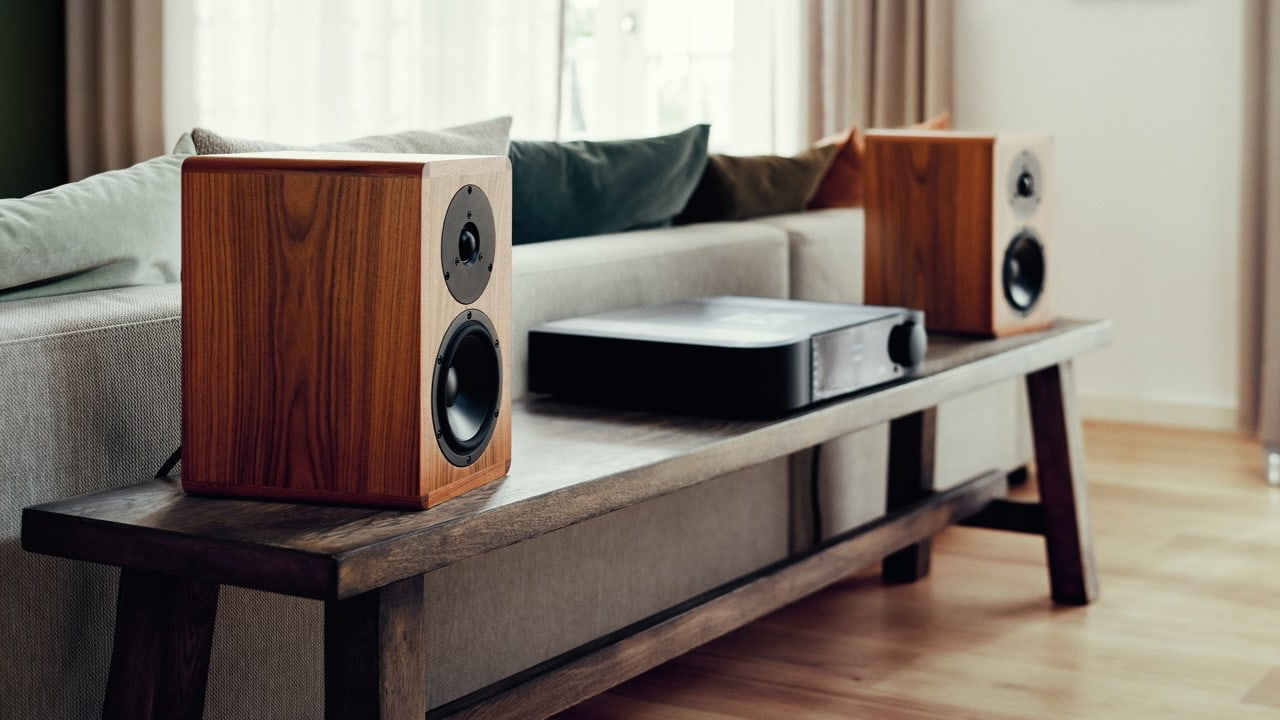
Dynaudio Legend at AXPONA 2026:The $7,000 Bookshelf That Doesn't Need to Shout About It

AXPONA 2026 had no shortage of rooms pushing six-figure systems — a few crossed $500K, a couple flirted with seven figures. Against that backdrop, the Dynaudio Legend bookshelf stopped me longer than most of them. Not because it was the loudest statement in the building. Because it was one of the few things that made immediate, unambiguous sense.
What it actually is
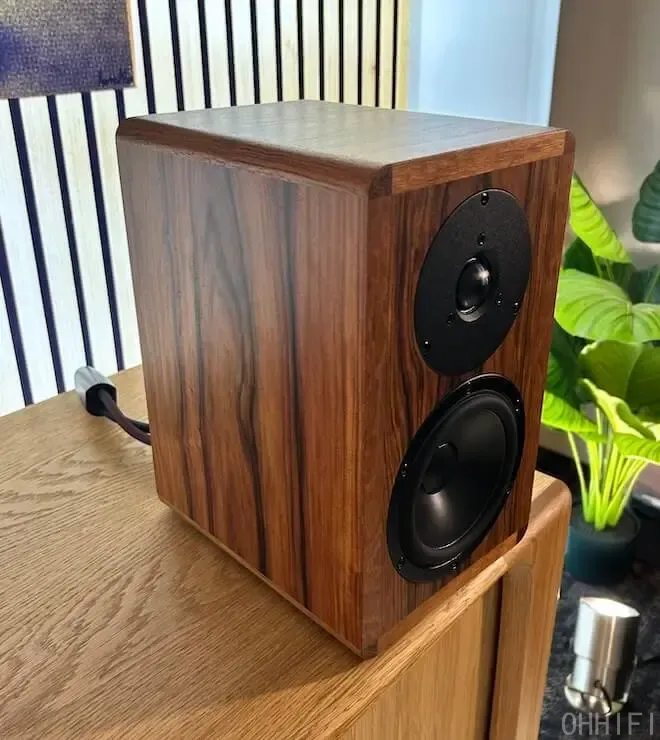
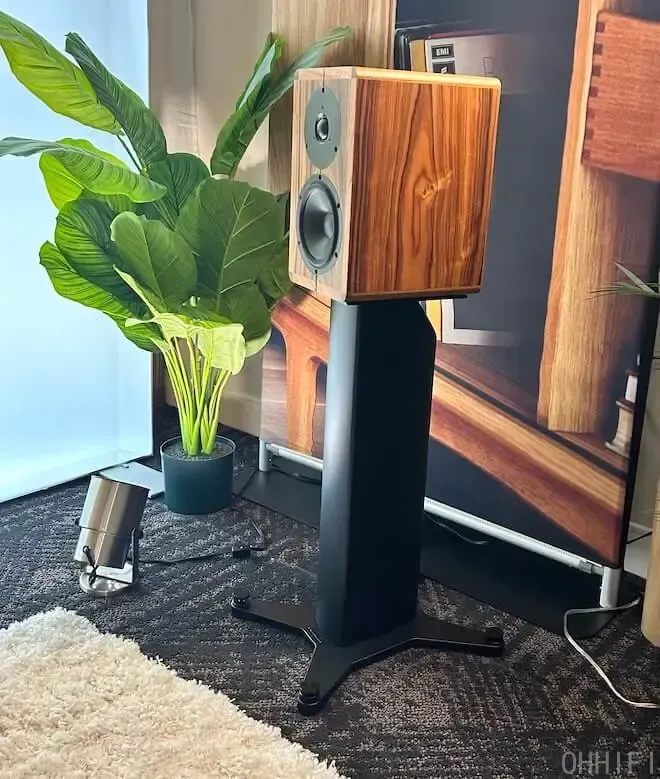
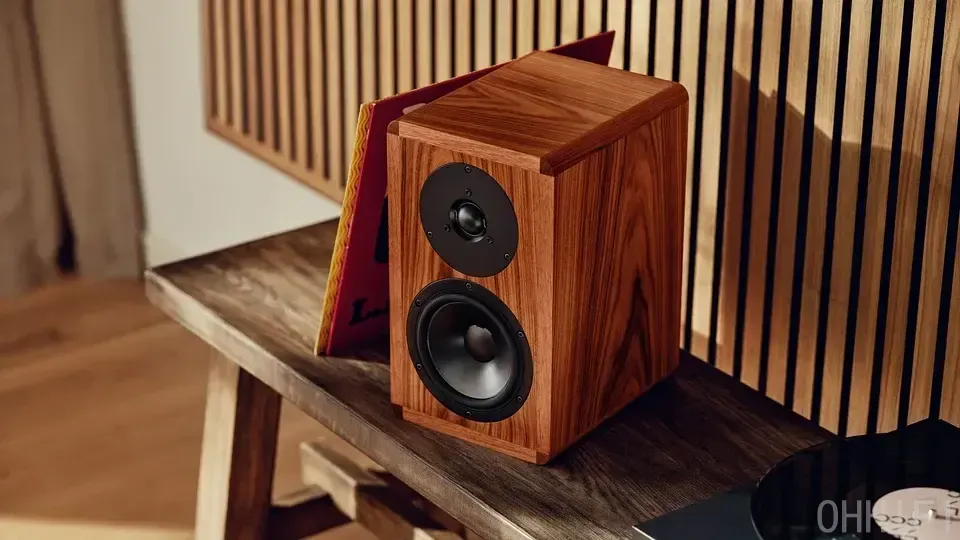
The Legend is a compact two-way, rear-ported bookshelf, handbuilt in Dynaudio's Skanderborg factory in Denmark. Each pair features hand-matched rosewood cabinets with curved corner joinery — a nod to the brand's 1984 Consequence and 1986 Compound series. The aesthetic is unapologetically retro, but the technology inside is current flagship-tier. The high-frequency driver is the 28mm Esotar 3 soft dome with Hexis inner dome — the same unit found in Dynaudio's Confidence floorstanding line and their M-series professional studio monitors. Below it sits a 15cm MSP (magnesium silicate polymer) mid/bass unit backed by a bespoke strontium carbonite ceramic magnet system. Crossover point is 3,500Hz via a second-order topology. Rated impedance is 6 ohms, sensitivity is 83 dB at 2.83V/1m, frequency response specified at 60Hz–28kHz.
That 83 dB sensitivity number will make some people nervous. It should. You'll need a capable amp — preferably one that doubles down into 4 ohms comfortably.
How it actually sounds
The first thing that registers is scale — which is not what you expect from a compact two-way. The soundstage spreads well past the cabinet boundaries, and it holds coherence even on dense, layered material. The Esotar 3 tweeter does what Dynaudio's best tweeters always do: air and extension without the brightness or grain that cheaper ribbon or beryllium competitors sometimes introduce. The MSP mid/bass unit stays composed in the upper mids where cone drivers often compress or harden under pressure. Bass doesn't go deep — 60Hz is where it starts rolling off, and that's honest — but what it does produce is defined, tuneful, and lacks the bloat that rear-porting can sometimes introduce in smaller enclosures.
It's not a speaker for wall-to-wall bass music at high volumes. It is very much a speaker for anyone who listens critically to acoustic instruments, voices, and well-recorded material and wants to hear what's actually there.
At $7,000 — who else is in the room?
This price point is genuinely contested. The KEF Reference 1 Meta sits around $8,000 and brings Uni-Q point-source imaging that the Dynaudio's conventional layout can't fully match — but the Legend's tonal weight and organic midrange are more persuasive with live recordings. Focal's Sopra No.1 is in the same neighborhood and offers more low-end reach and higher sensitivity, but the Beryllium tweeter can lean bright depending on amplification pairing. The Harbeth M30.2 XD ($5,000-ish) and Graham Audio LS5/9f deliver exceptional midrange density with a warmer BBC-school presentation — more forgiving of less-than-perfect recordings — but neither approaches the Legend's physical build quality or its top-end resolution. ProAc's Response DB1R with its ribbon tweeter is a compelling dark horse at roughly $5,000, but it's more speaker-stand dependent for placement and not nearly as visually refined. At $7,000, the Legend sits at the apex of what you'd call "real-world high-end" — not stratospheric, not a compromise.
Where it falls short
That 83 dB sensitivity isn't just a spec footnote — it narrows your amplifier options meaningfully. Low-powered SET amps are essentially off the table. A flea-watt 300B driving this is going to run out of headroom fast. You're looking at at least 50–100 clean watts, ideally with current delivery to match. Additionally, 60Hz bass extension means subwoofer integration is more or less mandatory for anyone who expects full-range performance in a larger room — the Legend is designed for smaller, focused listening spaces, and it shows.
The bottom line
The Legend doesn't try to be a full-range speaker in a small box. It doesn't pretend the laws of physics don't apply. What it does is take Dynaudio's top-shelf transducer technology, put it in the best-built cabinet the company has ever produced at this footprint, and let the engineering do the work. At a show where most products exist for a 0.1% market, this one actually has a realistic buyer — someone building a serious near-field or secondary system, who wants something that will hold up sonically and physically for decades.
It's not the most exciting pitch in the room. It doesn't need to be.


Comments