
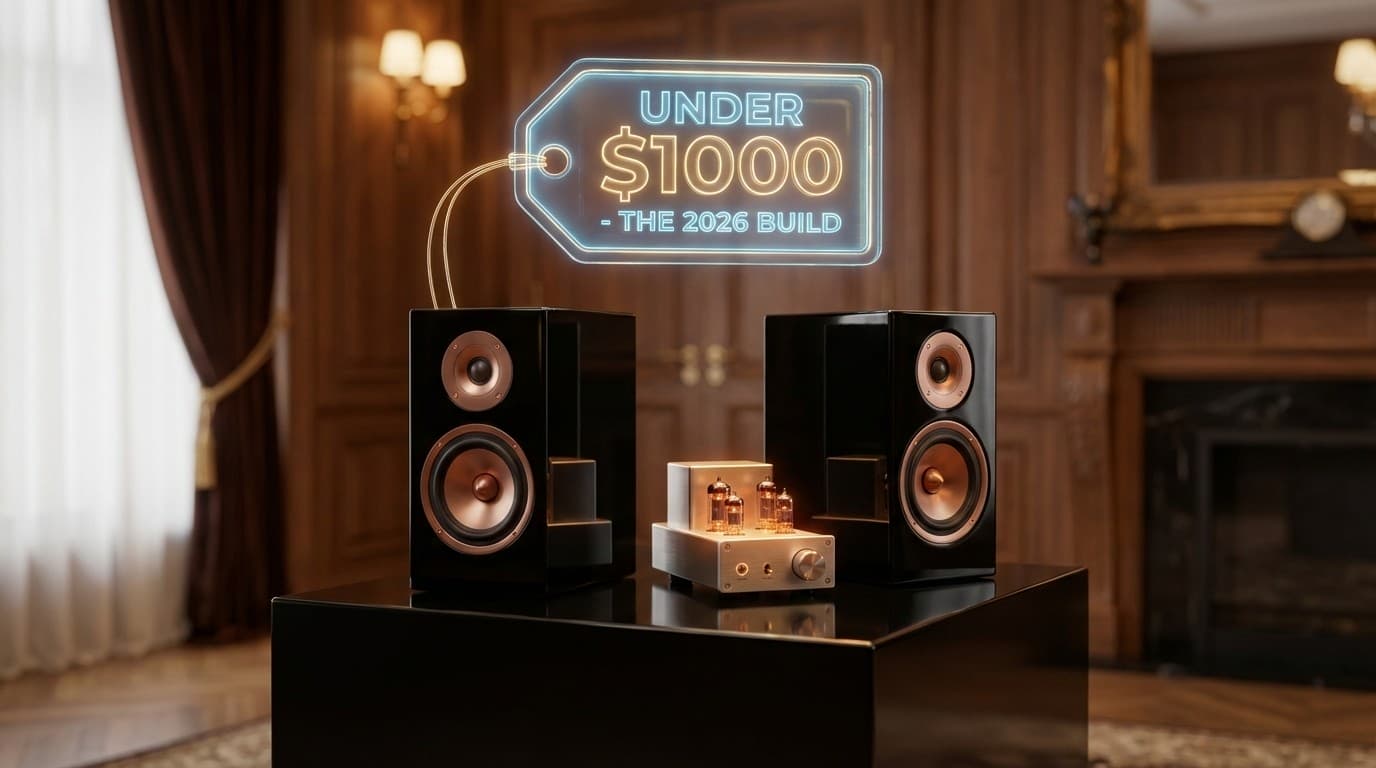
Building the Ultimate Audiophile System Under $1,000: The 2026 Buyer's Guide

In the high-end audio world, you can easily spend $1,000 on a single power cable. (Please don't.)
But here is the dirty little secret of the industry: thanks to the maturity of Class D amplification and the relentless competition from "Chi-Fi" (Chinese Hi-Fi) manufacturers, the gap between entry-level and mid-fi has never been smaller.
In 2026, a grand isn't just "starter money"—it’s enough to build a system that will genuinely embarrass a lot of vintage gear from the golden era.
The trick isn't spending more; it's spending smart. Here is how to allocate your budget to maximize performance and minimize "buyer's remorse."
The Golden Rule of Budgeting
A common rookie mistake is splitting the budget evenly: $330 for speakers, $330 for an amp, $330 for a DAC. Do not do this.
Your speakers are the transducers—the actual mechanical devices moving air. They have the biggest impact on the sound character. My recommended split for a $1,000 build is:
Speakers: 50-60% ($500 - $600)
Amplification: 25-30% ($250 - $300)
Source/DAC: 10-20% ($100 - $200)
Cables: $0 (Use what comes in the box for now, or buy generic OFC copper. Don't fall for the snake oil yet.)
Step 1: The Speakers (The Heart of the System)
For under $1,000, floorstanders (tower speakers) are usually a trap. Cheap towers often suffer from cabinet resonance and muddy bass. You are far better off with a high-quality pair of Bookshelf Speakers.
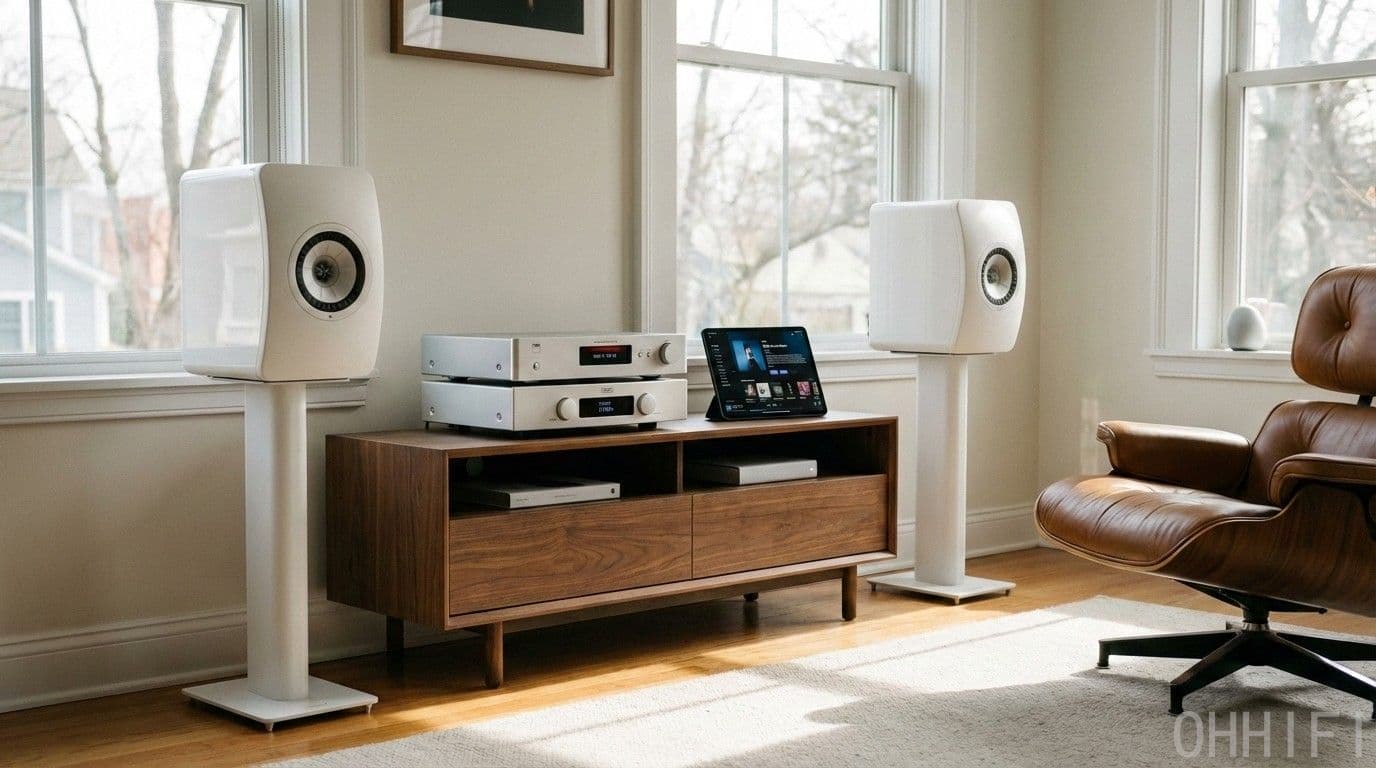
What to look for in 2026:
Neutrality: Look for brands like KEF, ELAC, or Wharfedale. In this price range, you want a speaker that "disappears" into the room, leaving just a solid soundstage.
Efficiency: If you pick a speaker with low sensitivity (under 85dB), you will need a beefy amp to drive them properly. Stick to 87dB+ to keep your amp options open.
The "Active" Alternative: If you want to simplify, consider Active Speakers (like the latest from Kanto or Audioengine). The amps are built-in and matched perfectly to the drivers. It’s less "fun" to upgrade later, but the value proposition is unbeatable.
Step 2: The Amplifier (The Muscle)
Gone are the days when you needed a heavy, heat-generating Class AB brick to get good sound.
In 2026, Class D is king of the budget sector. Chips from companies like Infineon or Texas Instruments allow brands like Fosi Audio, SMSL, and Topping to build tiny amps that measure incredibly clean with practically zero noise floor.
Key Features to Hunt:
Subwoofer Out: You will likely want to add a sub later. Make sure your amp has a dedicated output.
Integrated DACs: Many modern budget amps now include decent DAC chips (like ESS Sabres) inside. This saves you from buying a separate box.
Step 3: The Source (The Brains)
Do not connect your laptop's headphone jack to your new amp. That is the quickest way to introduce hum and jitter.
You need a Wi-Fi Streamer. Unlike Bluetooth, which compresses audio, a Wi-Fi streamer pulls the file directly from Spotify/Tidal/Qobuz ensuring bit-perfect playback.
The reigning champ: Look for devices from WiiM (or their 2026 equivalent). They offer "Gapless Playback," reliable apps, and digital outputs if you want to upgrade your DAC later.
The $1,000 "Reference" Example Setup
If I had to spend my own money today, here is the exact cart I would build. This system prioritizes synergy—components that play well together.
1. The Speakers: KEF Q Series (or equivalent) - ~$600
Why: The concentric "Uni-Q" driver array offers incredible imaging. You can pinpoint exactly where the singer is standing.
2. The Amp: A Modern Class D Integrated (e.g., Fosi/SMSL) - ~$250
Why: High power, tiny footprint, and transparent sound. Look for one with tone controls so you can dial back the treble if your room is too "bright."
3. The Source: WiiM Pro / Mini Streamer - ~$150
Why: It just works. Connect it via optical to the amp's internal DAC, and you have a modern streaming solution controllable from your phone.
Total: ~$1,000 (Give or take sales tax).
Final Advice: The "Free" Upgrade
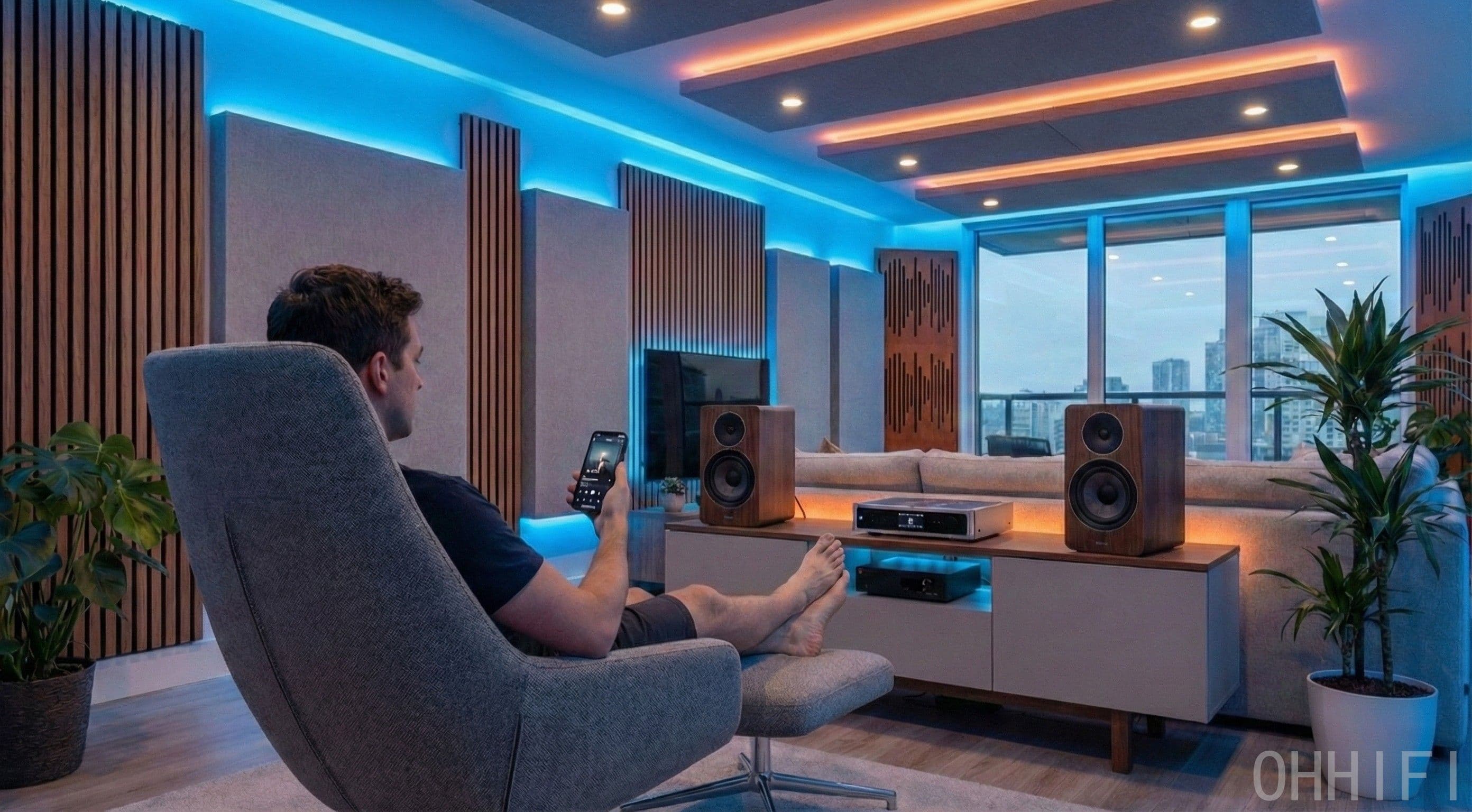
You can buy the best $1,000 gear in the world, but if you shove the speakers into a corner or put them on a hollow desk, they will sound like mud.
Speaker placement is free.
Pull them at least 1-2 feet away from the wall to tighten the bass.
Toe them in slightly towards your listening position to lock in the "phantom center" image.
If they are on a desk, use yoga blocks or foam pads to isolate them.
Welcome to the audiophile club. Your wallet may hate you eventually, but your ears will thank you immediately.


Comments