
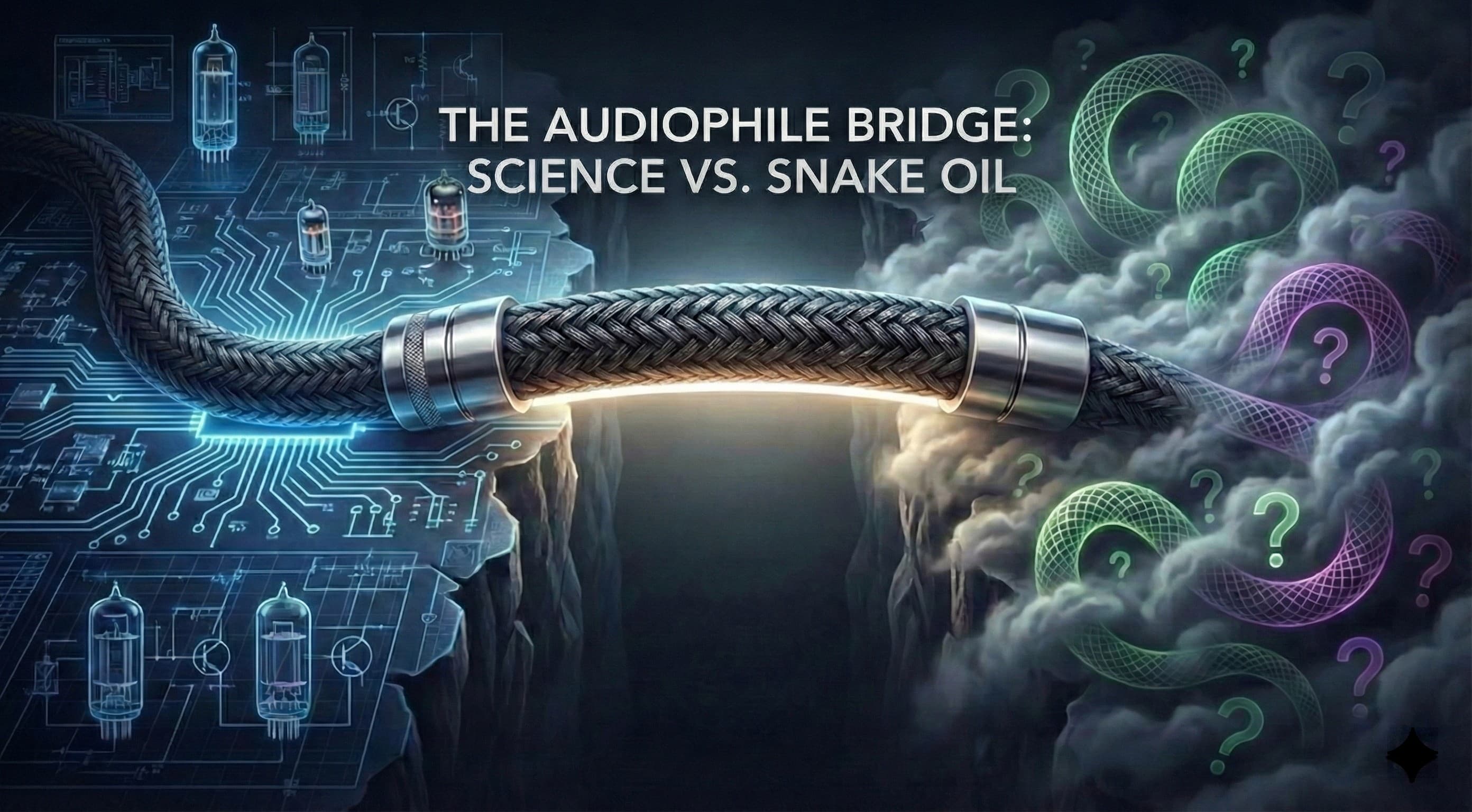
Audiophile Power Cables: Measurable Science, Snake Oil, or Subtle Improvement?

Welcome to the most dangerous topic in audio.
Mentioning loudspeakers or DACs in a forum usually leads to healthy debate. Mentioning high-end power cables? That’s how you start a digital riot. It is the ultimate battleground between "subjectivist" listeners and "objectivist" measurement engineers.
On one side, you have enthusiasts swearing that a $500 aftermarket power cord opened up their soundstage and tightened the bass. On the other side, you have engineers pointing to electrical principles and calling the whole industry "snake oil."
So, what is the reality? As usual in this hobby, the truth is likely somewhere in the messy middle. Let’s cut through the marketing fluff and look at this objectively.
The Skeptic's Case: The "Last Six Feet" Problem
The primary argument against expensive power cables is incredibly strong, and it’s based on simple logic.
Your electricity travels miles from a power plant, through industrial transformers, across aging grid infrastructure, into your home's breaker panel, and finally through dozens of feet of standard Romex copper wiring in your walls.
The skeptic asks a valid question: How can changing the last six feet of that journey possibly make a difference?
From a purely electrical engineering standpoint, the job of a power cable is boring: deliver the required current (Amps) without overheating or causing significant voltage drop. A generic, thick-gauge (like 14AWG) cord that comes in the box with your amplifier is usually perfectly capable of doing this.
If you hook up an Audio Precision analyzer to the output of an amplifier, it is notoriously difficult to measure any change in the audio signal just by swapping the power cord.
The Audiophile's Defense: It’s About Noise, Not Power
If the engineering argument is so solid, why do so many experienced listeners with great ears claim they hear a difference?
The sophisticated argument for premium cables isn't that they "add" power or magically boost the signal. It’s that they don't add noise.
Our modern listening environments are electrically dirty. They are flooded with airborne RFI (Radio Frequency Interference) from Wi-Fi and cell phones, and EMI (Electromagnetic Interference) from cheap switching power supplies plugged into every outlet.
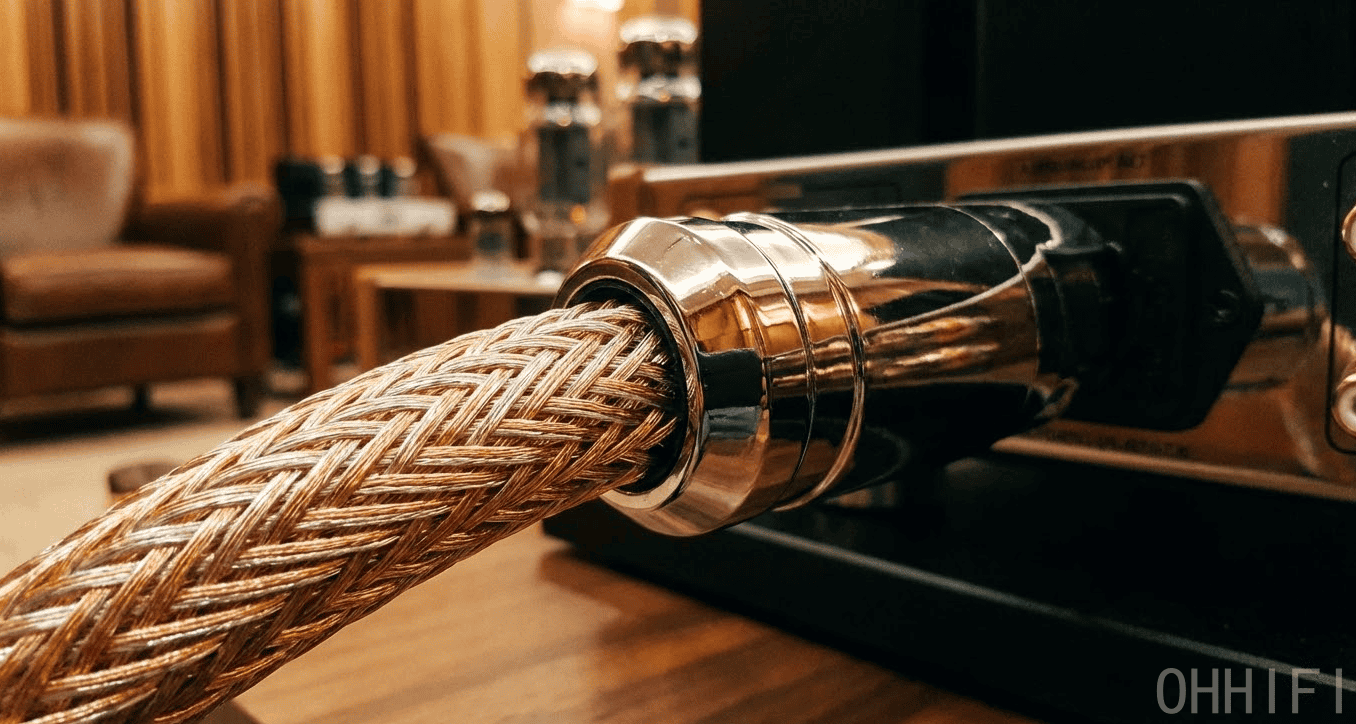
A well-engineered audiophile cable often focuses heavily on shielding and cable geometry (how the wires are braided inside the sheath). The theory is that the cable acts less like an antenna picking up garbage noise, and sometimes even acts as a mild low-pass filter.
The Goal: By rejecting noise, you lower the system's overall "noise floor."
The Result (Subjectively): You don't hear the noise itself go away; you just hear more of the music that was buried underneath it. This is often described as a "blacker background," improved "micro-dynamics," or better instrument separation.
The "Snake Oil" Reality Check
We have to be honest: this segment of the industry deserves a lot of the ridicule it gets.
When a manufacturer tries to sell you a $2,000 cable using pseudoscientific buzzwords like "quantum aligning" or "cryogenic electron treatments," my alarm bells go off. There is a massive markup in accessories, and it is very easy to take pennies' worth of copper, wrap it in a pretty braided sleeve, put heavy metal connectors on the ends, and charge a fortune for it.
That is the definition of snake oil.
However, dismissing the entire category because of a few bad actors is also shortsighted. There is a difference between a cynically marketed ripoff and a well-built, shielded cable from a reputable engineering company like Kimber, AudioQuest, or Shunyata, even if they are pricey.
The Verdict: Context is Everything
Do power cables make a difference?
If your system has poor grounding, or you live in an RFI-dense apartment building, a well-shielded cable on a sensitive piece of gear (like a phono preamp or DAC) might make a genuine, audible improvement. It won't be night-and-day, but it might be that last 5% of refinement you are looking for.
If you have clean power and a well-designed amplifier with robust internal power regulation, you might hear absolutely nothing.
My final advice for navigating this minefield:
Don't major in the minors. If you have $500 to spend, putting it into better speakers or acoustic treatment will yield far bigger results than a power cable. Cables are the last polish, not the foundation.
Try before you buy. Never drop serious cash on a cable without a return policy. If you put it in your system and don't hear a change immediately, send it back.
Trust your ears, but be skeptical of your brain. Expectation bias is real. We want the expensive new toy to sound better. A blind A/B test with a friend is the only way to know for sure.



Comments