
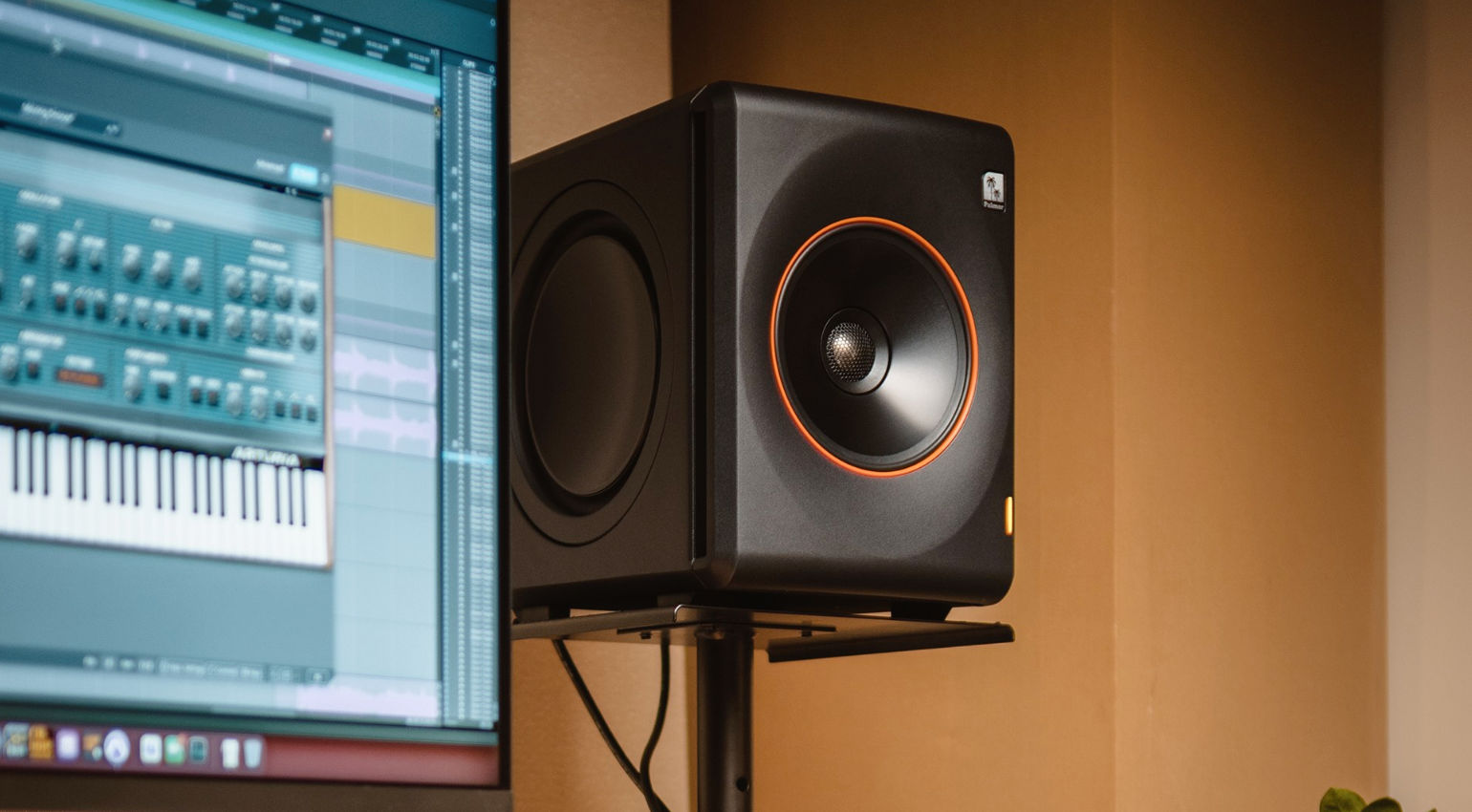
Palmer Orbit 11 Review: A £699 Coaxial Studio Monitor That Punches Up

In studio monitors, "affordable" and "cutting-edge coaxial" rarely share a sentence. Yet Palmer — the German brand better known for bulletproof DI boxes than transducers — has gone and built the Orbit 11, and on paper it reads like a spec-sheet fantasy: a coaxial three-way design, cardioid dispersion, and dual 8-inch woofers wrapped in a die-cast aluminum shell. At a UK RRP of around £699, it isn't just competing with the establishment — it's picking a fight with it.
The Build: Heavy Metal and German Logic
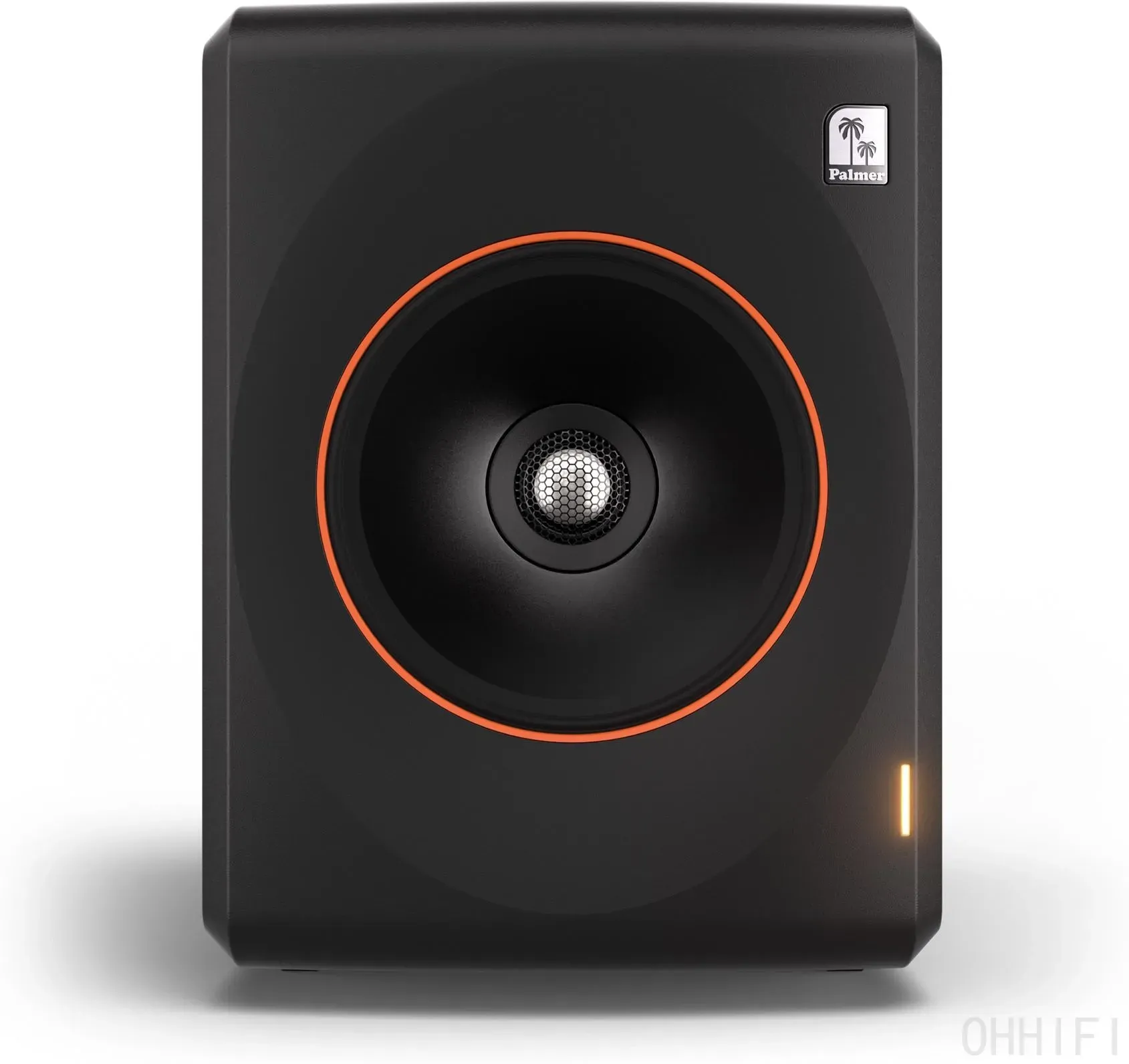
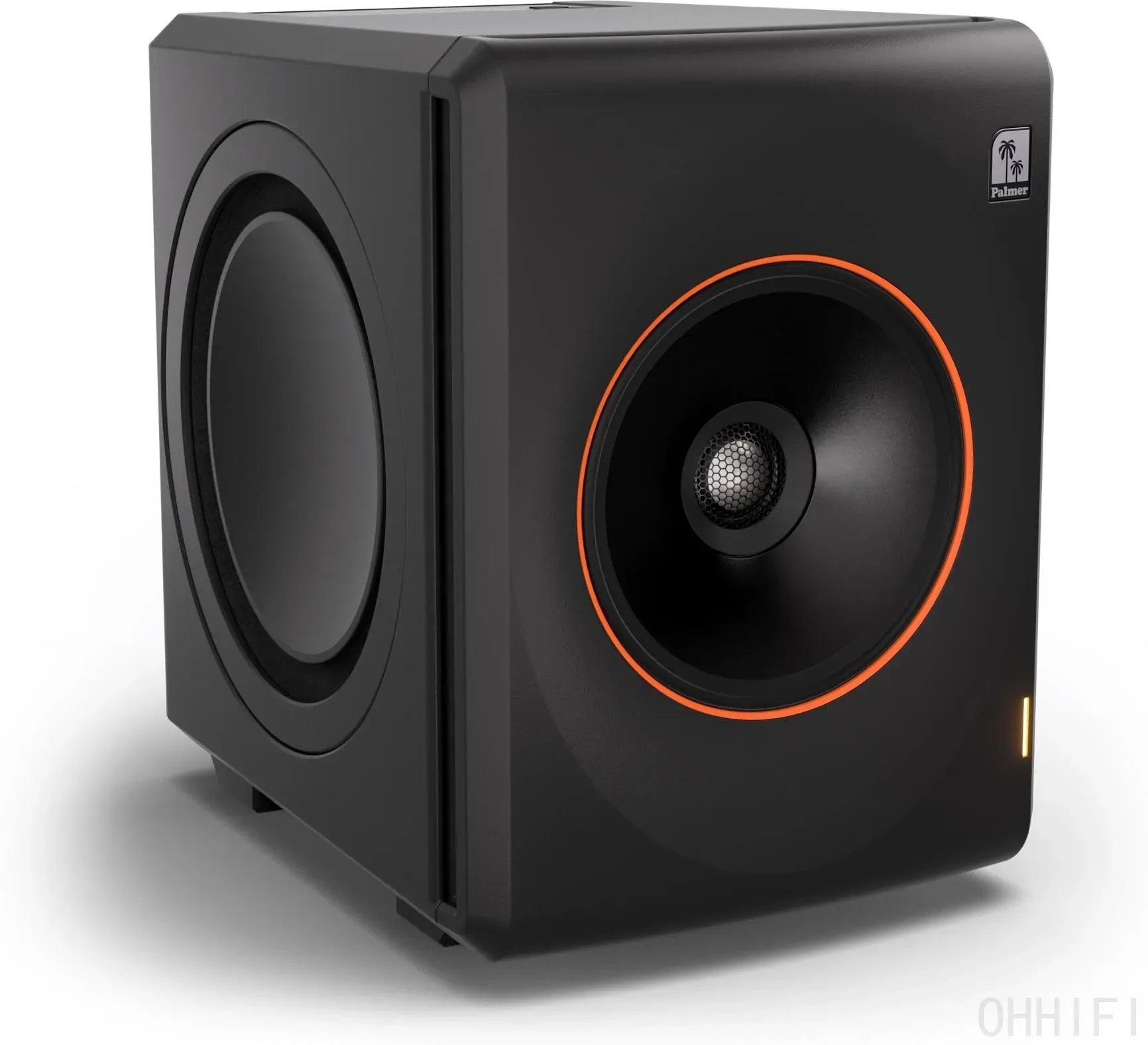
Getting the Orbit 11 out of its box looks like a two-person job. The die-cast aluminum enclosure reads more like industrial machinery than a speaker, and that is the point: the thick aluminum walls give the cabinet enormous rigidity, which goes a long way toward killing the cabinet resonance that quietly colors so many MDF-based monitors at this price.
The driver layout is just as ambitious. A 6.5-inch midrange carries a 1-inch tweeter at its center to form the coaxial array, with dual 8-inch impulse-compensated woofers mounted on the sides. This "True Point Source" approach — all frequencies radiating from a single acoustic axis — chases the kind of phase coherence that usually carries a much higher price tag.
The Tech: Cardioid Logic and Point-Source Coherence
The headline feature is the cardioid front baffle. By using carefully placed acoustic ports to control directivity above roughly 250 Hz, Palmer reduces the energy thrown out behind the speaker. The intent is practical: in an untreated or part-treated room, less rearward energy means fewer wall reflections and less of the low-mid "mud" that smears the soundstage. On paper, this is one of the more genuinely useful tricks a monitor at this price can offer, and it is exactly the kind of feature the design's early reception keeps coming back to.
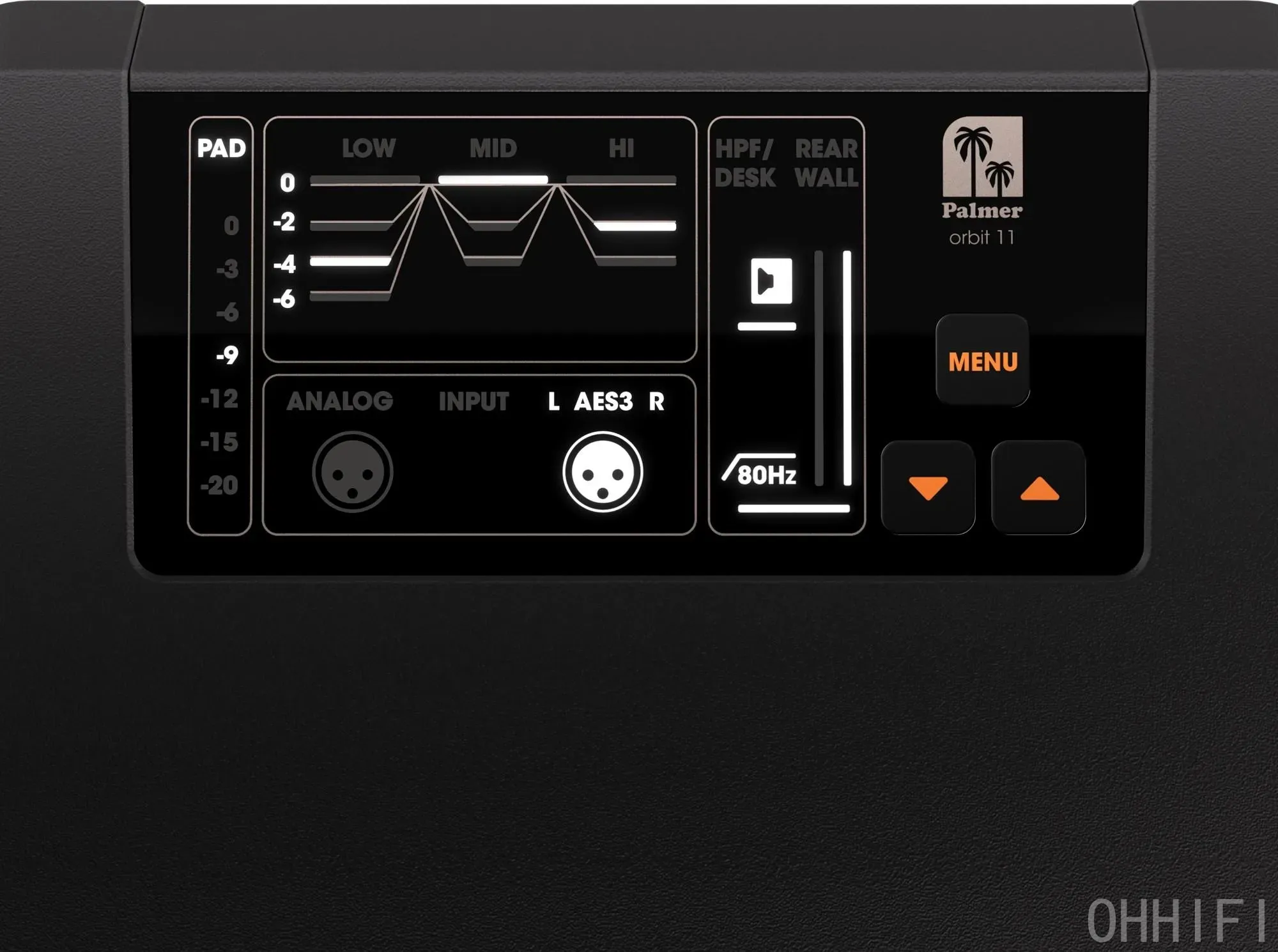
Underneath sits a 96 kHz / 24-bit FIR DSP platform with linear-phase filtering and a stated latency around 4 ms, plus desk and wall presets accessible from a top-mounted control panel. The crossover splits the work cleanly — woofers handling the deep low end up to the low hundreds of Hz, the coaxial mid and tweeter taking it from there — which is the textbook way to keep a three-way coherent. Being fully active, with amplification and DSP handling the crossover internally, follows the same studio-first principle behind far pricier active designs like the ATC EL50 Anniversary — here at a tiny fraction of the cost.
The Sound: Impact and Imaging
With a 28 Hz–28 kHz rating and two 8-inch drivers doing the heavy lifting, this is a monitor built to reach low and hit hard. The picture that emerges from early impressions matches what the design predicts: a low end that is weighty and physical but tight rather than ported-box bloated, with the dual woofers giving a near subwoofer-like sense of extension that isn't strongly tied to the listening position. For a cabinet this size, reaching toward 28 Hz is a serious claim, and it is the sort of bass that lets a lot of users leave a dedicated sub out of the equation.
The coaxial mid-high array is where the concept earns its keep. A true point source, by its nature, locks vocals dead-center and holds stereo placement steady, and the 120° × 120° dispersion makes for a wide, forgiving sweet spot — you can shift a foot or two off-axis without the phantom center collapsing. This kind of pinpoint imaging is rare at the price. The coaxial point source isn't a studio-only idea, either — it's the same principle KEF built its hi-fi speakers around, and if you've heard the way the KEF LS50 Meta images from its Uni-Q driver, the Orbit 11 is chasing that same single-source coherence on a bigger, full-range scale.
How I Assessed This
My read here pulls together Palmer's published specifications, the technical reasoning behind a coaxial cardioid design, and the early consensus that has formed since launch — rather than a personal audition. The Orbit 11 is new enough that long-term, measurement-backed verdicts are still thin on the ground, so treat the sound notes above as informed analysis of where this design should land, not a substitute for hearing a pair in your own room.
The Competition: Orbit 11 vs. The Establishment
Vs. Neumann KH 120 II: The Neumann is the more "polite," arguably flatter monitor through the mids, but it can't match the Orbit 11's scale or bass extension. For sheer physical impact and full-range reach, the Palmer has the edge.
Vs. Adam A8H: The A8H offers a more traditional three-way sound with that signature ribbon-tweeter air on top. The trade is imaging: the Orbit 11's point-source array tends to feel more "locked-in" for detailed mixing work.
The Catch: A Pro Tool from a New Name
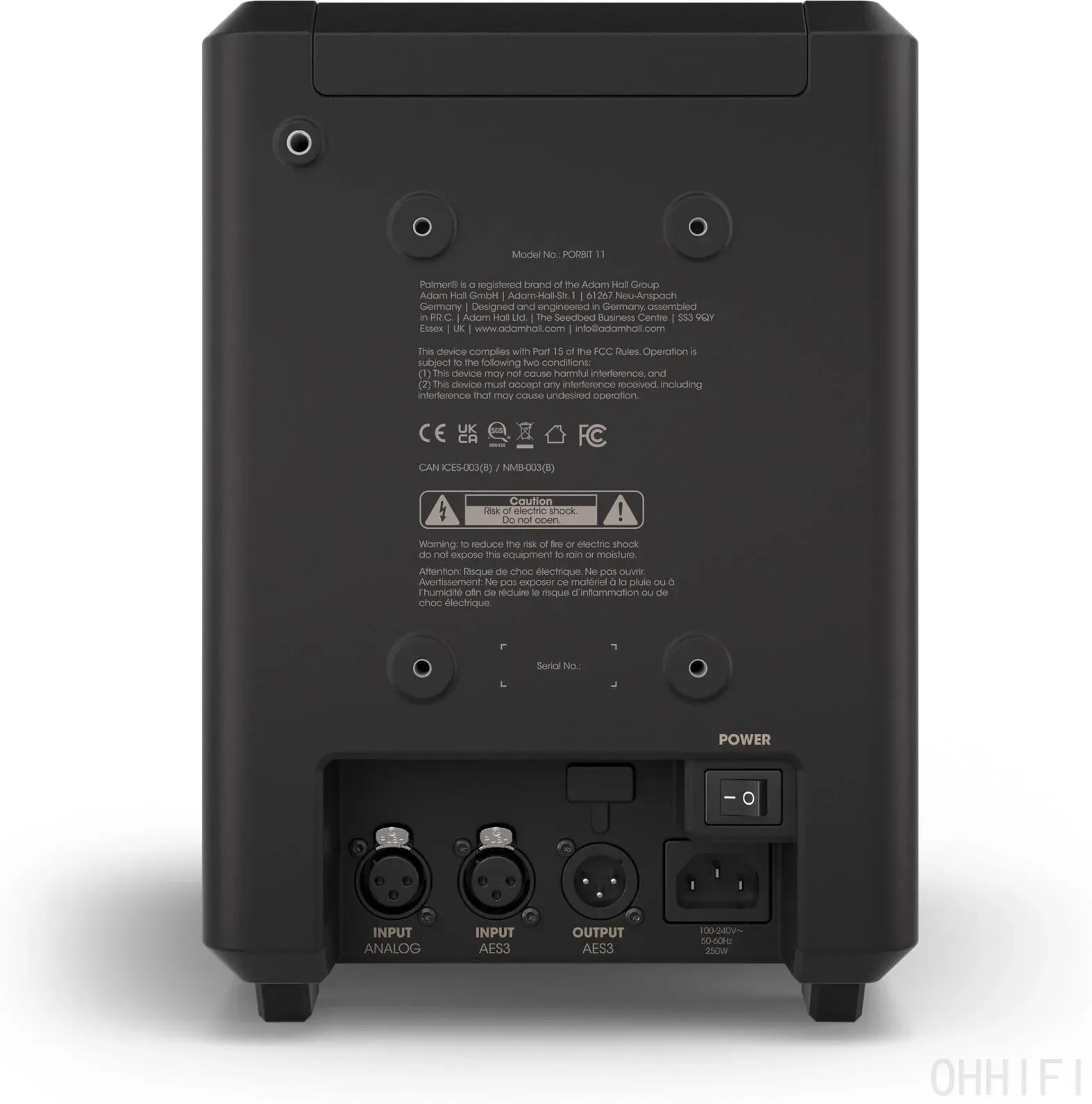
It isn't all upside, and the catch is twofold. First, this is unapologetically a professional monitor: connectivity is XLR and AES3 only, with no RCA, no Bluetooth and no consumer-friendly inputs. If you want to drop these into a hi-fi rack and plug in casually, you can't — you'll need a balanced source or interface. Second, there's the brand question. Palmer made its name on stage and DI gear, not transducers, so the Orbit 11 is a bold first serious move into monitors. The spec sheet is extraordinary for the money, but you are, to some degree, betting on a newcomer in a category ruled by names with decades of pedigree.
The Verdict
The Palmer Orbit 11 is a disruptor in the truest sense. It offers a level of technical sophistication and raw capability that, by all rights, ought to cost a great deal more than it does. If you can work within its pro-only connectivity and you're comfortable backing a brand without the prestige of the big three, this looks like one of the most genuinely interesting monitors to arrive in a while — and at this price, a remarkable amount of speaker for the outlay.
Pros:
Strong bass extension (rated to 28 Hz) from a relatively compact frame
Precise, point-source imaging with a wide sweet spot
Cardioid baffle reduces room interaction in untreated spaces
Bulletproof die-cast aluminum construction
Spec-to-price ratio that undercuts the established players
Cons:
Pro-only connectivity (XLR/AES3, no consumer inputs)
No app or network control — setup is hardware-only
Unproven track record as a monitor brand
Heavy; a genuine two-person lift
Who Should Buy / Who Should Skip
This is for you if you mix or master in a real-world room, want full-range coaxial imaging without spending three thousand on a pair, and run a balanced or AES3 signal chain.
Look elsewhere if you need plug-and-play consumer inputs, prefer the reassurance of an established monitor brand, or simply don't have the desk space and stands for a speaker this heavy. If it's specifically the coaxial point-source coherence you're after, but in a plug-and-play active package with hi-fi-friendly inputs, the active KEF Coda W is a more natural fit for a living room than a studio.
Related Reviews
If you found this useful, you may also like our other active and coaxial speaker reviews:



Comments