
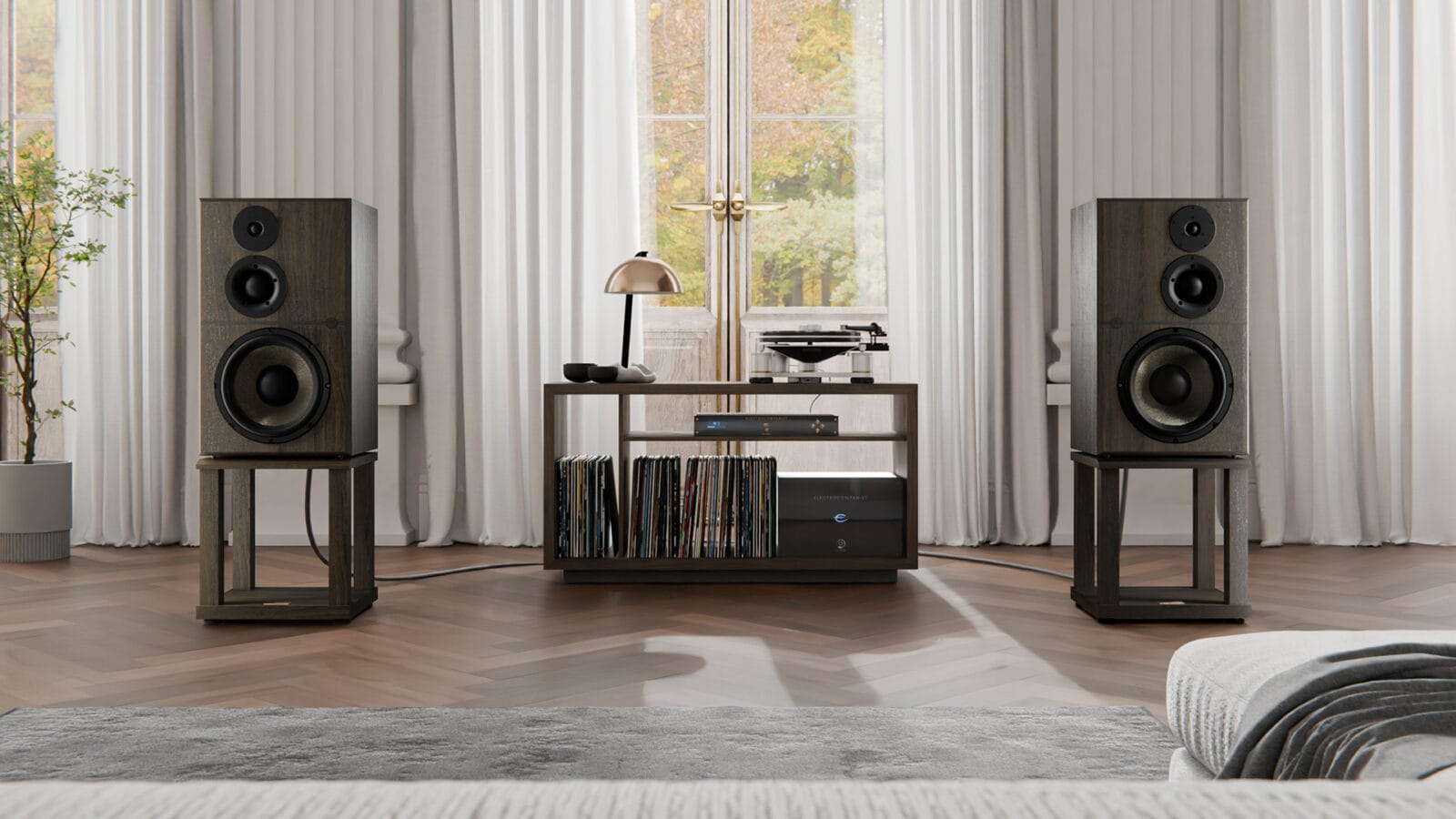
Revival Audio Atalante Grande Réserve Review: France's Most Ambitious Standmount Yet

The Grande Réserve is Revival Audio's most technically sophisticated loudspeaker to date — a limited-edition, three-way standmount that genuinely punches at the level of full-range floorstanders costing significantly more, though its 4-ohm load and room-hungry 12-inch woofer demand careful system matching.
Revival Audio has had a remarkable run since its founding. The Atalante 3 and 5 turned heads by delivering a sound that felt more expensive than it was, and the Atalante 7 Évo quietly became one of the most talked-about standmounts in the £5,000–£7,000 bracket. So when the Toulouse-based brand announced the Atalante Grande Réserve — limited to just 300 pairs worldwide, priced at £9,890 (approximately $12,500 USD) with matching stands included — the expectation was high.
The name borrows from the vocabulary of fine cognac and champagne, where "Grande Réserve" denotes the rarest and most refined expression of a house's craft. It's a bold claim. After extended listening sessions across multiple amplifiers and source components, I can say it's not an empty one.
Build Quality and Design
The first thing you notice when the crates are opened is the sheer mass of the things. Each cabinet weighs 35.5 kg without its stand, and 46.1 kg with it attached. That's not floorstander weight — that's tank weight for a standmount.
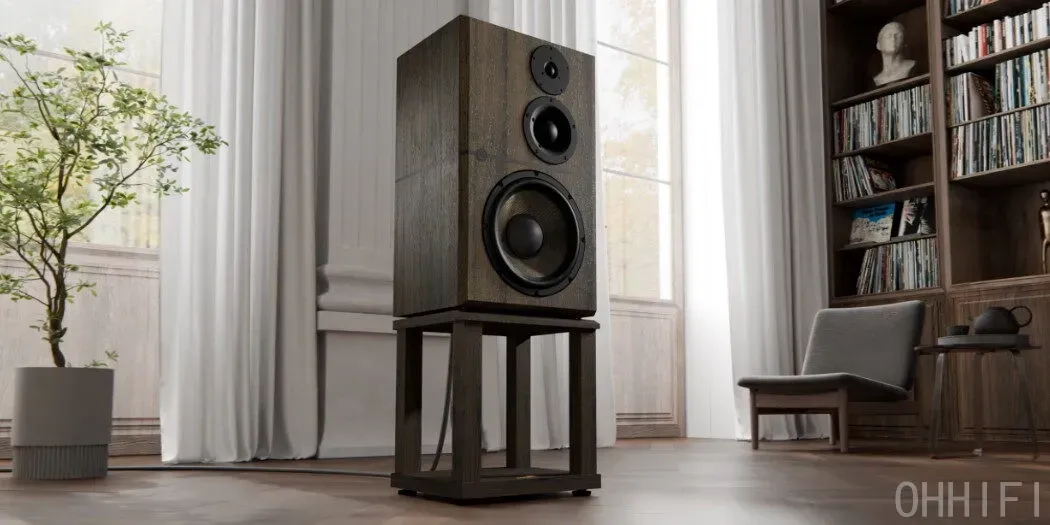
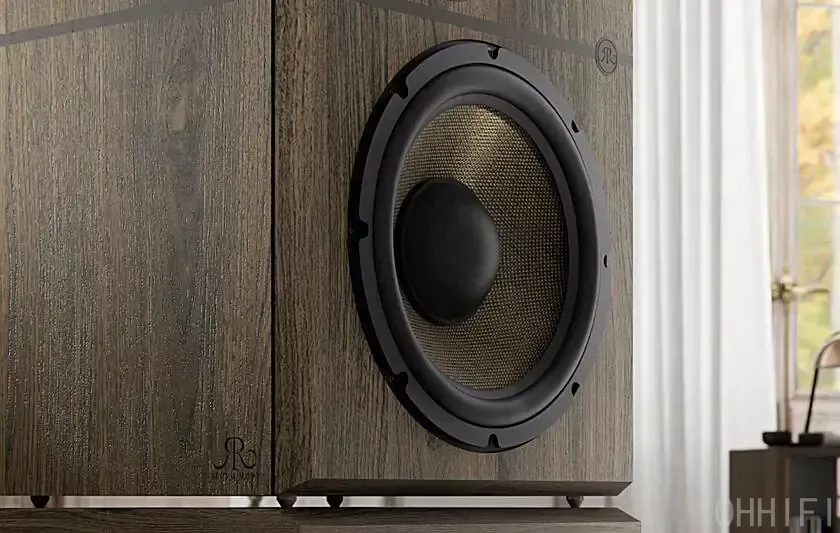
The reason becomes apparent immediately: the StrataBaffle™ front baffle is a 25mm slab of solid smoked oak bonded to an Ultra Density Fibreboard core and a precision structural backing layer, the whole assembly tipping the scales at 6 kg on its own. Chamfered edges run along both vertical sides, which reduces diffraction and gives the cabinet a visual identity that's distinctly French — warm, organic, and quietly luxurious rather than aggressively modern.
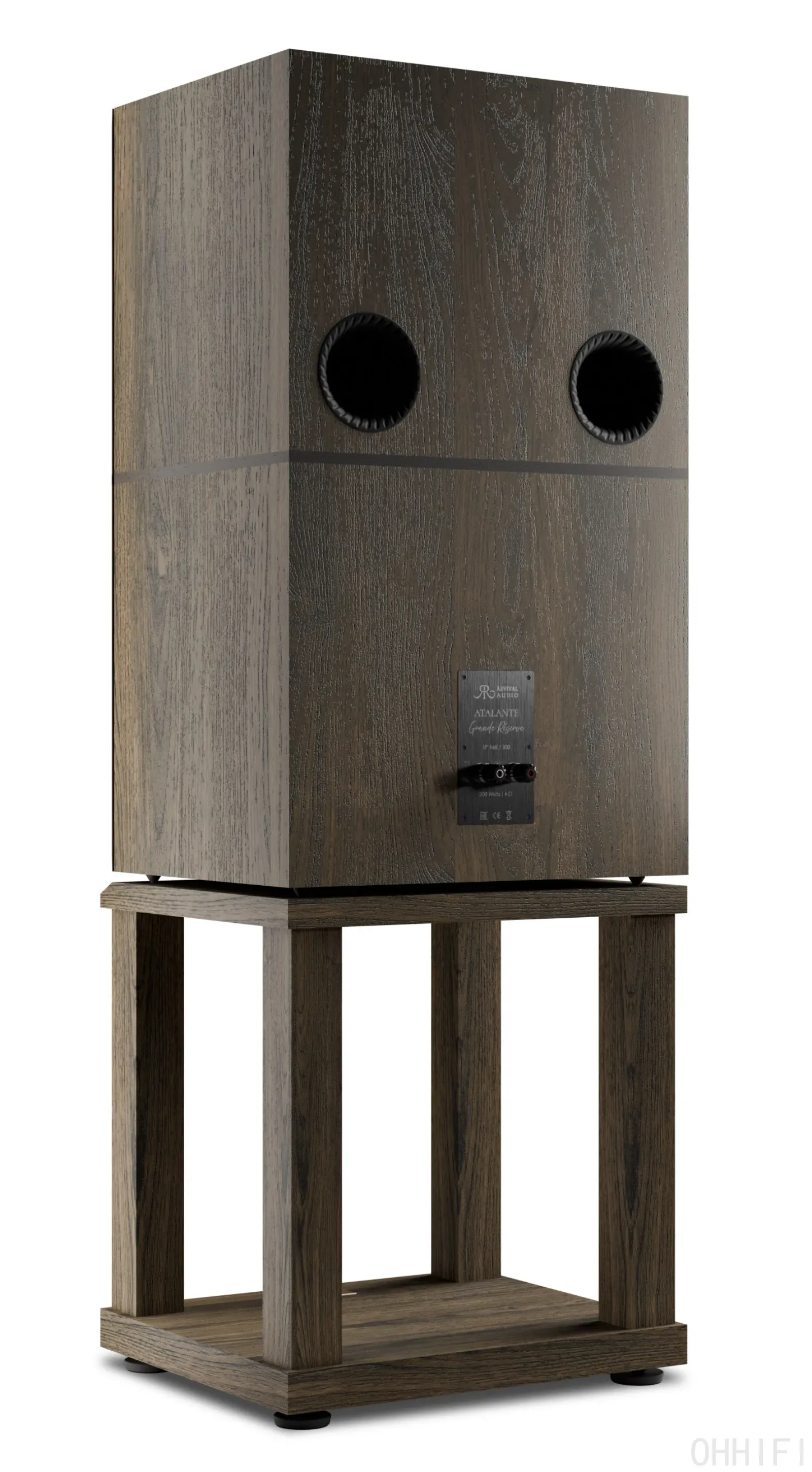
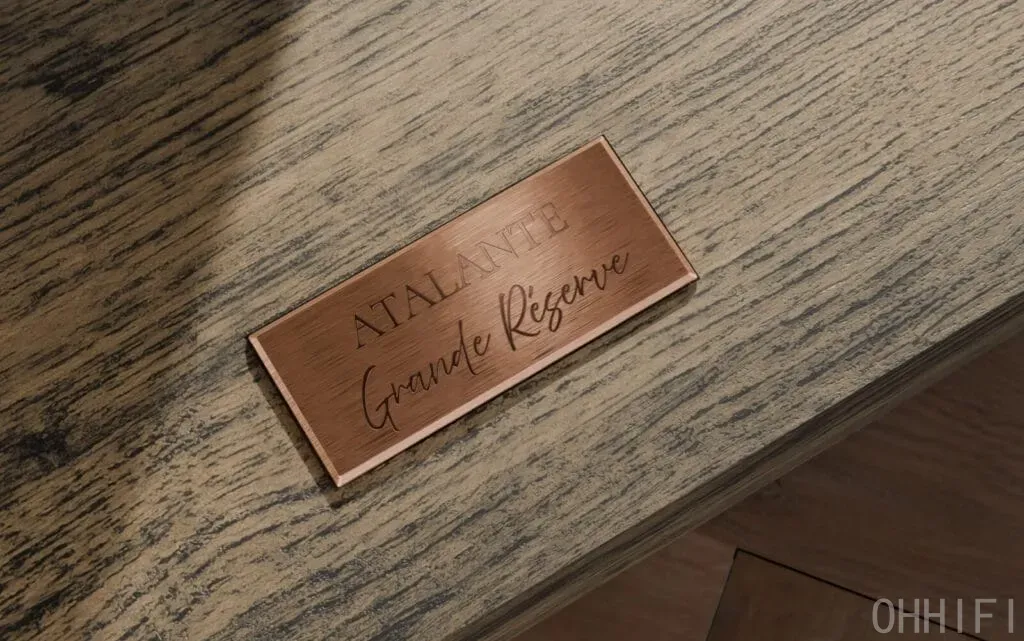
The smoked oak finish is genuinely beautiful in person, with a depth and grain that photographs struggle to capture. This isn't the thin veneer you find on most speakers; it's thick, tactile, and clearly chosen for acoustic reasons as much as aesthetic ones. The dedicated wooden stands are designed as a structural extension of the cabinet, not an afterthought, with matched chamfered edges and a laser-engraved base plate bearing the serial number of the pair. Between stand and cabinet there's a decoupling interface; the stand base uses precision spikes and isolation pads for height and tilt adjustment.
On the rear panel, a machined aluminium terminal plate carries WBT binding posts — gold-plated, well-spaced, and solid enough to grip heavy cable terminations without complaint.
Under the Hood
The Atalante Grande Réserve is a three-way design, crossing over at 400 Hz and 2 kHz. High frequencies are handled by a 28mm RASC™ Évo soft-dome tweeter, featuring Revival's ARID Évo resonance control technology, which the company claims absorbs over 97% of rear-chamber resonances. The motor uses a neodymium magnet system, and the Tetoron dome is tuned for a smooth, non-fatiguing presentation at the top end.
The midrange is a 75mm RASC™ Évo soft-dome unit — unusual in its size, and arguably the most distinctive element of the whole driver array. It employs an enhanced ARID+ scheme that targets over 96% resonance absorption, alongside a high BL factor motor, dual suspension, and a Tri Zone resonance control system in its aluminium rear chamber.
Down below, the 300mm BSC™ Grande Réserve woofer is a thoroughly reworked version of the Basalt Sandwich Construction driver found in the Atalante 5, but with a longer 10mm linear stroke, a High Roll Surround that increases one-way Xmax by 45% to ±12mm, a 2.25-inch voice coil, and a resonance frequency lowered by 5 Hz without sacrificing sensitivity. The result is a woofer capable of deeper, more controlled bass than anything Revival has built before. Two rear-firing AeroVex™ bass reflex ports manage the low-frequency loading.
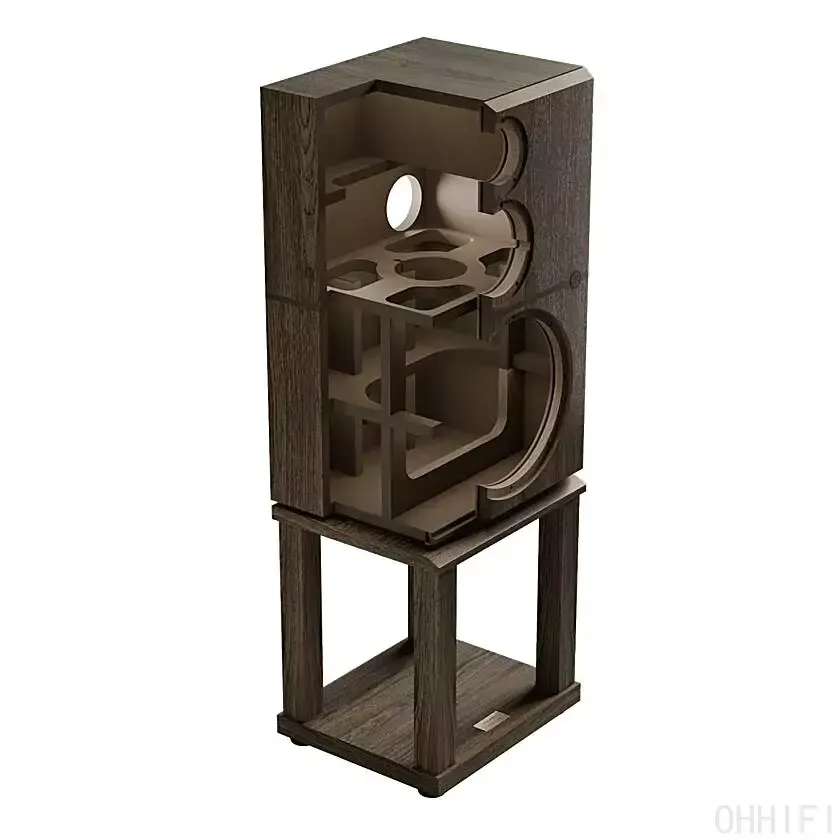
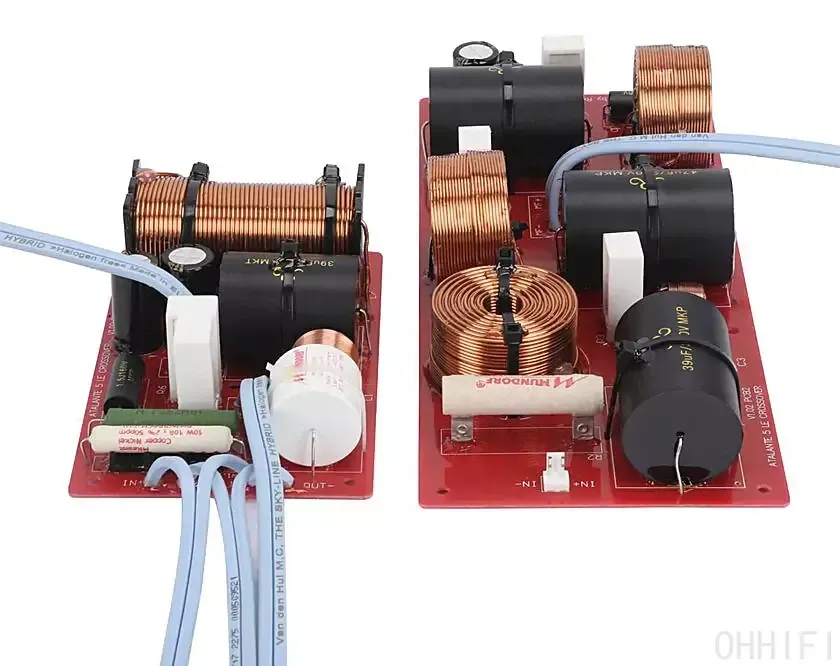
The crossover is built around Mundorf Supreme capacitors and resistors, Revival's own Supreme Air Coils, and Van den Hul Skyline internal wiring. Each crossover is individually hand-tuned, and the filter topology uses an all-pass approach intended to improve phase alignment between the three drivers.
System Setup and Listening Conditions
Our review pair was run in for approximately 80 hours before critical listening began. The primary amplification was a Pass Labs INT-60 integrated (60W Class A), with source duties split between a Chord Hugo TT 2 DAC fed by Roon and a Rega Planar 8 with Apheta 3 cartridge.
Placement matters here. The speakers need room to breathe — Revival recommends 30 to 65 square metres, and in a 20-square-metre listening room they felt congested, particularly in the bass. In a properly sized space, pulled well clear of the rear wall (we settled on approximately 80cm), with moderate toe-in, the picture changed dramatically.
Listening Impressions
Let's start with what immediately distinguishes the Grande Réserve from the Atalante 7 Évo it nominally supersedes: the bass. That 12-inch BSC woofer in its heavily damped, ultra-rigid enclosure produces low frequencies that are genuinely authoritative without being bloated. Playing Bill Evans' Waltz for Debbie — not exactly a bass workout, but a recording that reveals cabinet coloration and low-frequency smear instantly — the acoustic bass had texture and pitch definition that most standmounts simply cannot deliver. There's no wooliness, no overhang. The notes start and stop with a precision that's more reminiscent of a well-tuned transmission line than a ported box, which speaks to how effectively Revival has managed the AeroVex port geometry.
Move to something more demanding — say, Massive Attack's Teardrop or Nils Frahm's Says — and the scale becomes apparent. The Grande Réserve doesn't just play bass; it pressurizes the room in a way that makes you forget you're listening to a standmount. Sub-bass extension to 26 Hz (-6dB) is a spec that sounds like marketing until you actually experience it. It's real.
The midrange is where this speaker earns its name, though. That 75mm RASC Évo dome is a genuinely special driver. Vocal reproduction has a presence and body that's rare even in this price class. Patricia Barber's voice on Companion sits in the room with startling solidity — you get the chest resonance, the breath, the micro-dynamics of her phrasing without any of the thinness or box colorations that plague lesser designs. Strings have rosin and air; brass has bite without hardness. The critical 400 Hz to 2 kHz band, where so much musical information lives and where crossover-related phase errors can damage imaging and tonal coherence, is handled with remarkable seamlessness. You simply don't hear the handoffs.
The tweeter is smooth and extended, but not artificially so. Cymbals have shimmer and decay; the leading edge of a triangle strike is crisp without being brittle. After several hours of listening at moderate-to-loud levels, there was no fatigue — the ARID Évo technology appears to be doing exactly what Revival claims. High-frequency detail is generous but never etched.
Stereo imaging is excellent, with a wide and stable soundstage that extends convincingly beyond the speaker boundaries. Depth layering is particularly good — the Grande Réserve places instruments and voices at different distances with precision that rewards careful listening. This is partly a function of the all-pass crossover topology and its phase coherence, and partly a function of the StrataBaffle's diffraction control.
One honest caveat: with the Jadis valve amp, the 4-ohm load (minimum 3.2 ohms at 110 Hz) required careful attention to output transformer taps. The 4-ohm tap produced a slightly warmer, fuller presentation that worked well with classical and jazz, but the bass became marginally less controlled than with the Pass Labs solid-state. This is a speaker that rewards a capable, stable amplifier. The 89dB sensitivity is workable — you don't need a brute-force amplifier — but you do need one that's comfortable into low impedances.
How Does It Compare?
At approximately £9,890 / $12,500 including stands, the Grande Réserve occupies a specific and competitive space. The obvious comparators are the Sonus Faber Olympica Nova I (around $10,000/pair), the Harbeth M30.2 XD (around $7,500–$8,500), and the PMC twenty5.26i (around £9,000–£10,000).
The Sonus Faber Olympica Nova I is a beautiful speaker with that distinctly Italian tonal warmth — lush, musical, and forgiving of poor recordings. But against the Grande Réserve, it sounds somewhat less dynamically alive, and its bass extension is noticeably shallower. The Revival is more transparent, more dynamically capable, and frankly more technically accomplished. The Sonus Faber has the edge in finish and brand prestige for some buyers, but sonically the French speaker is the more complete design.
The Harbeth M30.2 XD is a different proposition entirely — a BBC-heritage monitor with a midrange of extraordinary naturalness and a tuning that prioritizes tonal accuracy above all else. It's a speaker that disappears into the music in a way few can match. The Grande Réserve doesn't quite match the Harbeth's midrange purity in isolation, but it surpasses it in bass extension, dynamics, and scale — and for most music outside of solo acoustic and chamber repertoire, the Revival is the more engaging listen.
The PMC twenty5.26i is perhaps the closest competitor in terms of ambition: a large standmount with serious bass extension via PMC's transmission line technology, and a very linear, studio-monitor-influenced presentation. The PMC is slightly more neutral and analytical; the Revival is warmer and more emotionally engaging. Neither is wrong — they're different tools for different tastes. The Grande Réserve's cabinet quality and component selection arguably justify its asking price more convincingly.
The Verdict
The Atalante Grande Réserve is not a perfect speaker — no speaker at any price is. Its 4-ohm load requires careful amplifier matching, its bass output demands a room of appropriate size, and the limited production run of 300 pairs means that by the time you read this, your nearest dealer may already have a waiting list. The first production batch reportedly sold out quickly.
But within those constraints, this is a genuinely exceptional loudspeaker. Revival Audio has taken everything that made the Atalante 7 Évo compelling and pushed it further: a more inert cabinet, better drivers, a more sophisticated crossover, and a level of finish that finally matches the sonic ambition. The result is a speaker that plays music with the authority and scale of a good floorstander, the imaging precision of a well-designed standmount, and a tonal character that's engaging without being coloured.
For audiophiles who want a speaker that can do justice to everything from a Coltrane quartet to a full orchestral recording, and who have the room and amplification to support it, the Atalante Grande Réserve deserves serious audition. The chief editor of at least one European publication heard it and reportedly bought a pair on the spot. After spending time with it ourselves, that decision is easy to understand.
| Specifications at a Glance | |
|---|---|
| Type | 3-way standmount, bass-reflex |
| Tweeter | 28mm RASC™ Évo soft dome |
| Midrange | 75mm RASC™ Évo soft dome |
| Woofer | 300mm BSC™ Grande Réserve |
| Frequency Response | 26 Hz – 24 kHz (-6dB) |
| Sensitivity | 89 dB (2.83V/1m) |
| Nominal Impedance | 4 ohms (min. 3.2 ohms) |
| Crossover Points | 400 Hz / 2 kHz |
| Power Handling | 200W continuous |
| Recommended Room | 30–65 m² |
| Weight (with stand) | 46.1 kg per speaker |
| Price (inc. stands) | £9,890 / approx. $12,500 |
| Production | Limited to 300 pairs |



Comments