
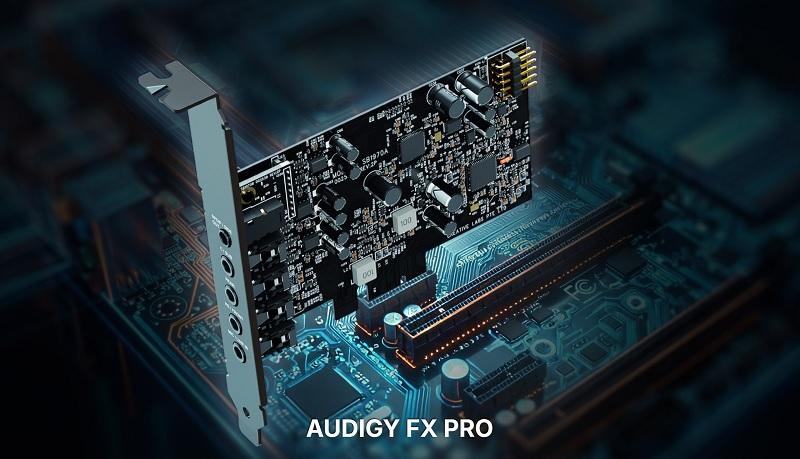
Sound Blaster Audigy Fx Pro: The New High-Res PCIe Standard

After nearly five years of silence, Creative has revived the Audigy FX line with the Sound Blaster Audigy FX Pro — a $79.99 PCIe sound card packing a 120 dB SNR DAC, 32-bit/384 kHz hi-res playback, discrete 7.1 surround, a built-in headphone amp, and the debut of the all-new Creative Nexus app.
Let's be honest: in 2026, launching a discrete internal sound card takes a certain kind of nerve. The market has spent the better part of a decade telling PC builders that onboard audio is "good enough," and for the vast majority of users running stereo headphones through a Realtek ALC1220 or similar codec, that argument isn't entirely wrong. So when Creative quietly dropped the Sound Blaster Audigy FX Pro on March 16, 2026, the response from the enthusiast community was a predictable mix of nostalgia, skepticism, and genuine curiosity. That's probably the right reaction — because this card is more interesting than it first appears, even if it's not without caveats.
What It Is and Where It Fits
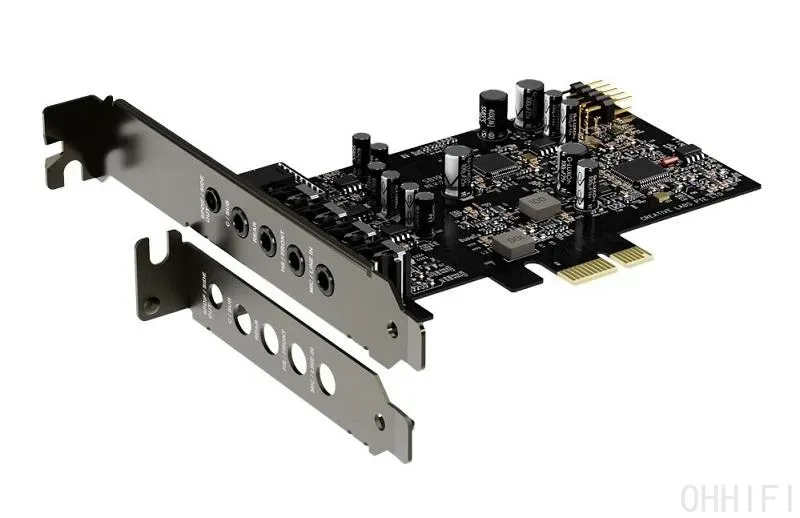
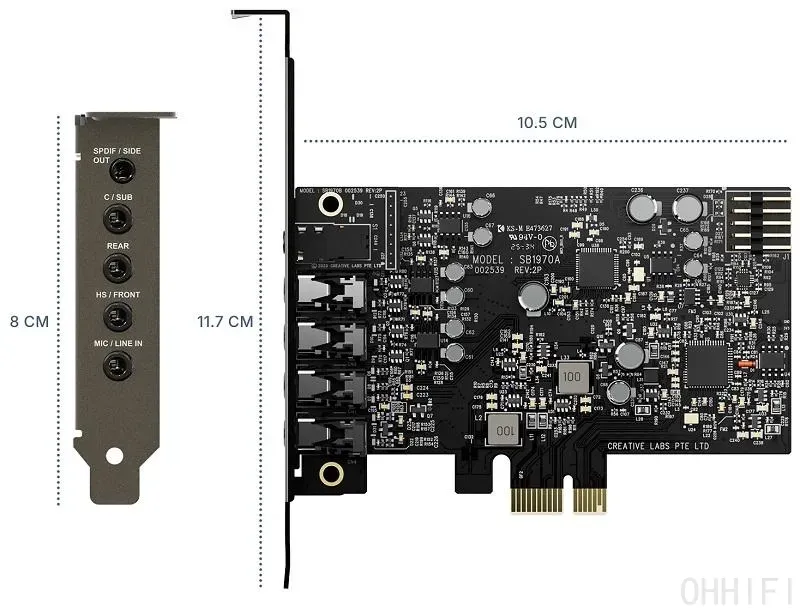
The Audigy FX Pro is a PCIe x1 internal sound card, low-profile in form factor (just 10.5 cm in length, with a half-height bracket included), and designed to slot cleanly into compact and mid-tower builds alike. It sits at the top of the current Audigy FX lineup and represents the first new Audigy-series PCIe card in roughly four and a half years — the Audigy FX V2 launched back in October 2021, and the gap between that and now has not gone unnoticed. Creative is clearly positioning this as the accessible end of the serious audio upgrade spectrum: not a ZxR replacement, not an AE-9 competitor, but a well-specified step up from whatever your motherboard is doing right now.
At $79.99, it's priced to appeal to the builder who has already invested in a decent pair of headphones or a multi-channel speaker setup and is starting to wonder whether that Realtek chip is actually holding things back.
The Specs That Matter
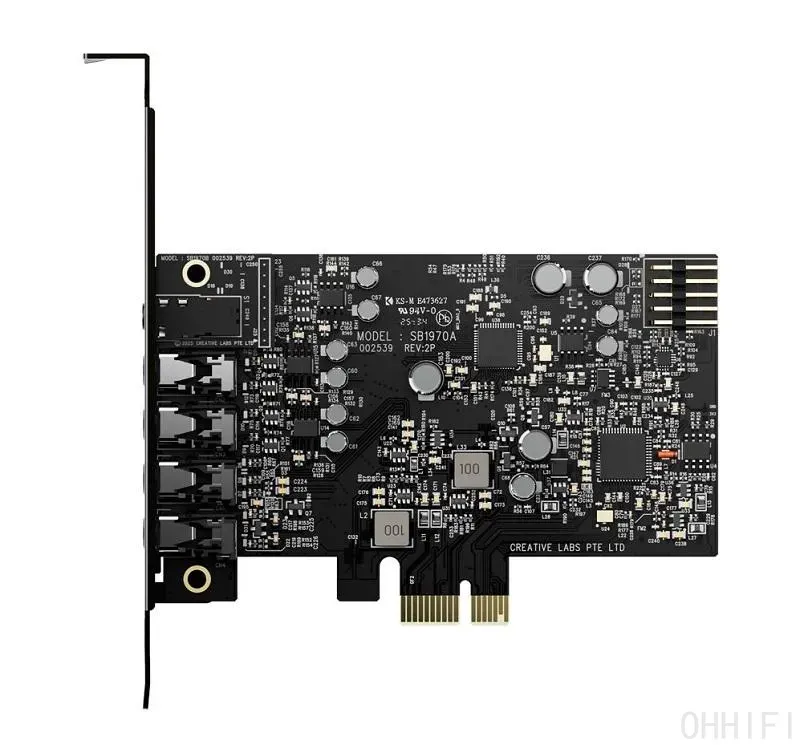
On paper, the Audigy FX Pro makes a reasonable case for itself. The headline figure is a 120 dB signal-to-noise ratio — a meaningful jump over the 106 dB rated on the older Audigy RX, and on par with what you'd expect from a respectable standalone DAC in this price bracket. Playback resolution tops out at 32-bit / 384 kHz, up from 24-bit / 192 kHz on previous Audigy models, which covers the full hi-res audio spectrum including DSD-adjacent PCM rates that most streaming services and local FLAC libraries will never even approach. Recording via line-in is rated at 24-bit / 192 kHz, also an improvement over the 96 kHz ceiling of its predecessor.
The card supports full discrete 7.1 analog output — not virtual surround processed from a stereo source, but actual eight-channel discrete output across four 3.5 mm jacks on the card bracket. That means you can run a proper 7.1 speaker system without any software upmixing in the chain, which is a meaningful distinction if you're using a physical surround setup for home theater or sim racing. The S/PDIF output also doubles as the side channel (L/R) output, giving you flexibility to feed an external AV receiver or DAC digitally if you prefer to keep the analog signal path as short as possible.
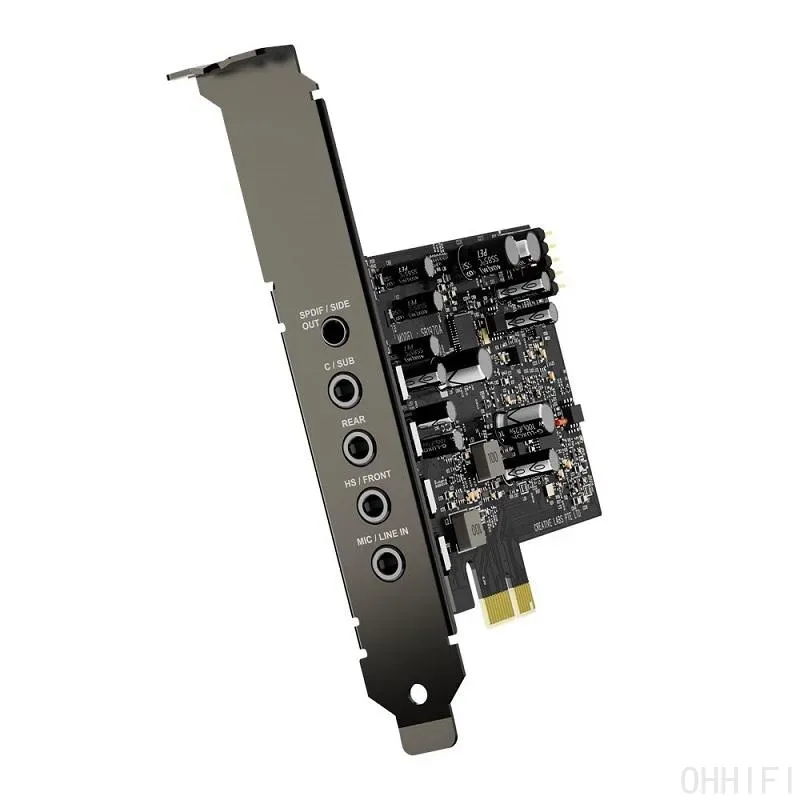
Then there's the built-in headphone amplifier, rated for impedances from 32 to 300 ohms. That's a practical range that covers everything from your everyday gaming headset to a pair of Sennheiser HD 600s, and having that amp on the card itself means you're not relying on the typically underpowered headphone stage that most motherboards phone in. Whether it's genuinely transparent at 300 ohms is something a proper bench test will need to confirm, but the intent is clear.
Creative Nexus: A Fresh Start for the Software Side
If there's one area where Creative has historically struggled to keep pace with its own hardware ambitions, it's software. The Sound Blaster Command suite had a rocky reputation — driver stability issues after Windows updates, cluttered UI, and a general sense that the software was fighting against you rather than working with you. The Audigy FX Pro debuts alongside Creative Nexus, an entirely new companion app that Creative describes as a "unified dashboard for PC audio."
Nexus brings a 10-band graphic EQ, an Auto EQ function that applies quick sound optimization based on your connected device, and access to the Sound Blaster Acoustic Engine suite — which includes CrystalVoice for microphone processing, Scout Mode for gaming (new to the Audigy line, previously exclusive to higher-tier Sound Blaster cards), and various spatial and enhancement presets. The interface is reportedly cleaner and more streamlined than Command, though whether it maintains that cleanliness after a major Windows update remains to be seen. That's not cynicism so much as institutional memory — Creative's driver history earns that scrutiny.
One thing worth noting: Nexus is currently Windows-only, and the card's system requirements make no mention of macOS or Linux support. For the target audience, that's probably a non-issue, but it's worth flagging for anyone running a dual-boot setup.
The Real Question: Does Discrete Still Make Sense?
This is where the conversation gets genuinely interesting. The argument for a discrete internal sound card in 2026 rests on a few pillars that onboard audio still hasn't fully addressed. Electrical isolation is the most fundamental: a dedicated card draws its own power regulation and keeps its analog circuitry physically separated from the noisy PCIe bus and the electromagnetic interference generated by GPUs, VRMs, and high-current power delivery components. In a modern gaming rig with a high-end graphics card pulling 300+ watts through multiple PCIe power connectors, that ground noise is real, and it can manifest as audible hiss or interference on sensitive analog outputs — particularly on line-level outputs feeding powered monitors.
That said, the Audigy FX Pro is not immune to this problem. It lives inside the same chassis, on the same motherboard, and shares the same electrical environment. The 120 dB SNR figure is a rated specification measured under controlled conditions, and real-world performance in a system with a noisy GPU and a budget PSU may tell a different story. The community has already raised this point, and it's a fair one. Creative's higher-end cards like the AE-9 addressed this more aggressively with separate analog stages and shielded output circuitry; the Audigy FX Pro is a more modest implementation.
Where the card does have a clear edge over most onboard solutions is in the headphone amplifier and the multi-channel analog output. Most modern motherboards have trimmed their rear-panel audio jacks down to two or three ports, making a full 7.1 analog setup effectively impossible without an add-in card or an external audio interface. For users running a physical surround speaker system — admittedly a shrinking demographic, but a real one — the Audigy FX Pro is one of the few sub-$100 options that handles this natively.
Context and Competition
It's worth putting this card in context. The Audigy FX Pro is not competing with the ASUS Xonar AE or the Sound Blaster AE-7 — it's cheaper and less specified than both. Its real competition is the segment of users who might otherwise spend $100–$120 on a compact USB DAC/amp like the FiiO K3 or the Topping E30. Against those options, the Audigy FX Pro trades the cleaner electrical isolation of a USB device for the convenience of an internal solution and the practical advantage of multi-channel analog output. Neither approach is universally superior — it depends entirely on your use case.
For gaming and home theater with a physical speaker setup, the Audigy FX Pro makes a coherent argument. For a two-channel audiophile headphone rig, a dedicated USB DAC will likely serve you better, purely on the grounds of electrical cleanliness and the broader ecosystem of firmware support.
Availability and Pricing
The Sound Blaster Audigy FX Pro is available now directly from creative.com and through authorized retailers at $79.99. It ships with the card itself, a half-height bracket for smaller chassis, and access to the Creative Nexus software suite. A one-year limited hardware warranty is included.
Full reviews from the major hardware outlets are expected shortly, and those bench tests — particularly SNR measurements in a real-world system environment and headphone amp output quality — will be the real verdict on whether Creative's numbers hold up outside the spec sheet. For now, the Audigy FX Pro is a genuinely interesting product in a category most people had written off, and that alone is worth paying attention to.



Comments