
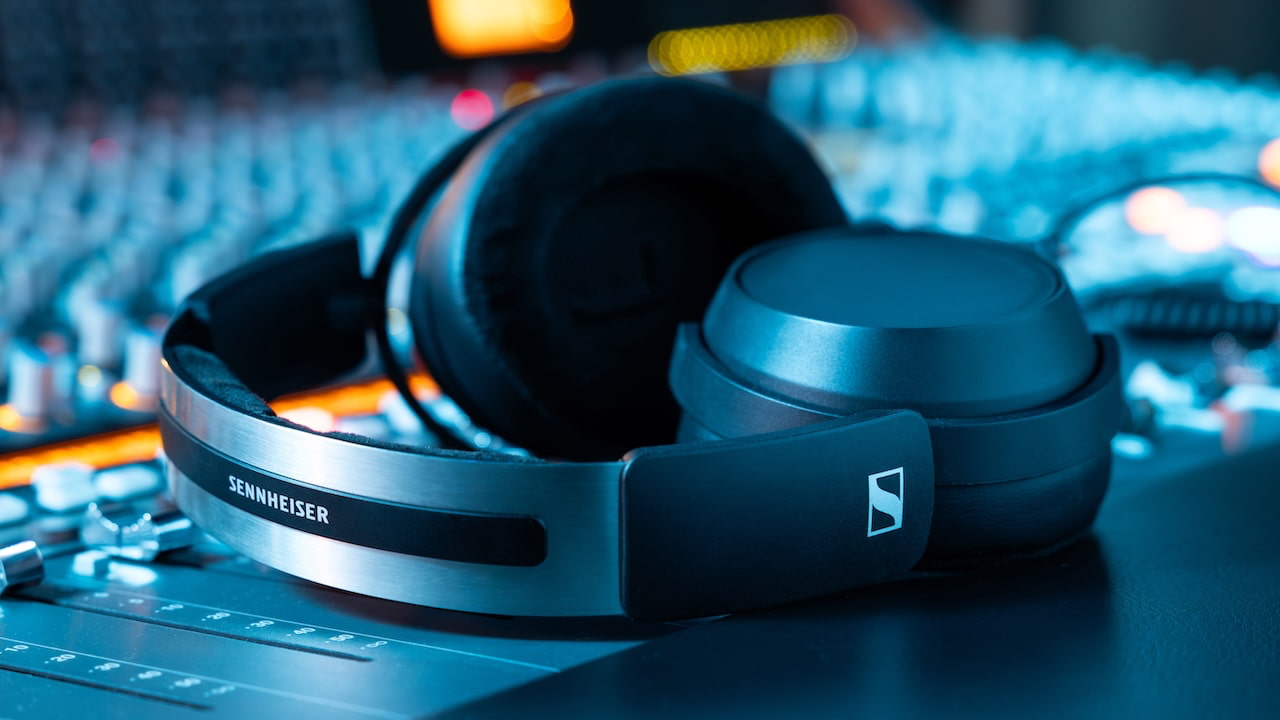
Sennheiser HD 480 PRO Review: The Closed-Back That Finally Gets Out of Its Own Way

Closed-back studio headphones have been stuck in the same conversation for about twenty years. You want isolation, you accept a tradeoff — boomy low end, a bit of midrange honk, a certain cramped quality that makes mixes sound smaller than they really are. The Beyer DT 770 and Audio-Technica M50x still sell by the truckload not because they're beyond criticism, but because everyone has quietly agreed closed-backs are going to be closed-backs.
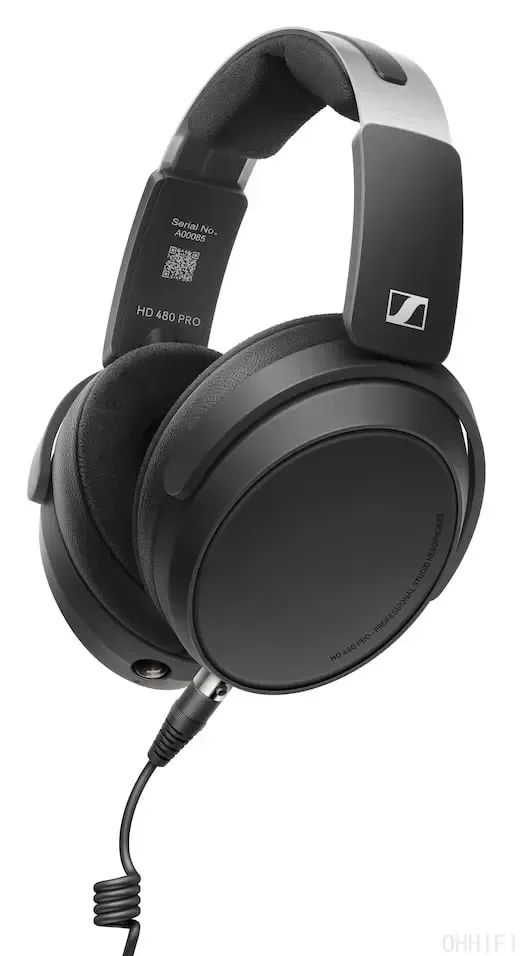
The Sennheiser HD 480 PRO, launched April 21, 2026, at $479 USD (£339), is the German company's argument that the tradeoff doesn't have to be permanent. It's a closed-back reimagining of the 2024 HD 490 PRO — same 38mm driver, same general ergonomic DNA — with a stack of decoupling and damping tricks Sennheiser markets as the Vibration Attenuation System. After reading through every credible independent review that's landed in the past week and mapping the consensus against my own experience with the 490 PRO and its peers, I can say this with some confidence: it's the most interesting $479 closed-back on the market right now. Not perfect. Interesting.
Quick Specs
| Spec | Value |
|---|---|
| Design | Closed-back, circumaural, dynamic |
| Driver | 38 mm |
| Impedance | 130 ohms |
| Sensitivity | 107 dB SPL / 1 Vrms (98 dB / 1 mW) |
| Frequency Response | 3 Hz – 28.7 kHz (-10 dB) |
| THD | <0.5% (1 kHz, 100 dB SPL) |
| Weight | 272 g (without cable) |
| Cable | 3 m coiled, dual-sided mini-XLR |
| Price | $479 (PRO) / $519 (PRO Plus) |
| Made in | Engineered in Germany, assembled in Romania |
Design & Build: Quiet Engineering
Pick the HD 480 PRO up and the first thing that registers is how light it is. 272 grams isn't featherweight territory, but the clamping force is gentle enough that the combined sensation is of something sitting on your head rather than gripping it. The headband is flexible steel wrapped in Alcantara-style fabric, the earcups are matte plastic, and the whole thing has the slightly understated, slightly boring look that Sennheiser's pro line has always preferred over flash.
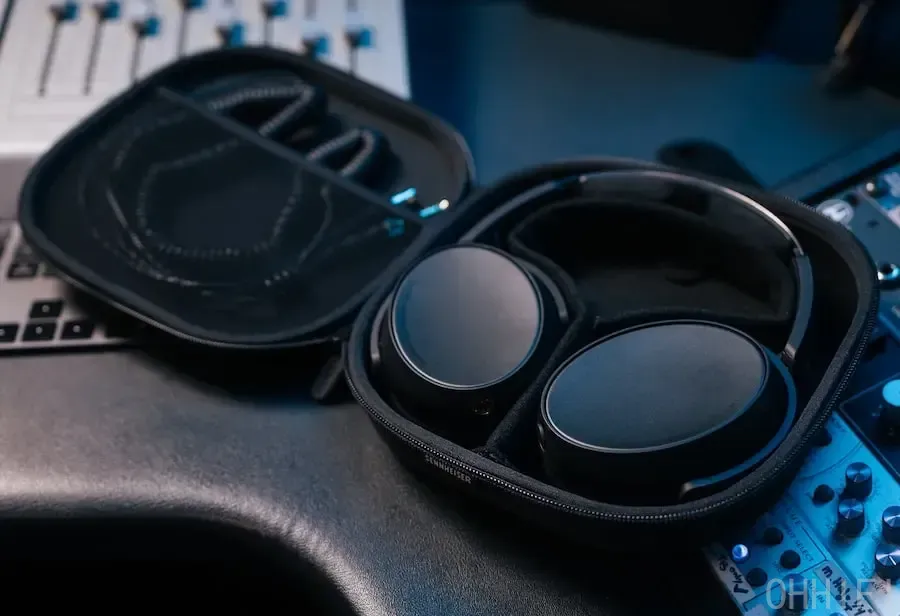
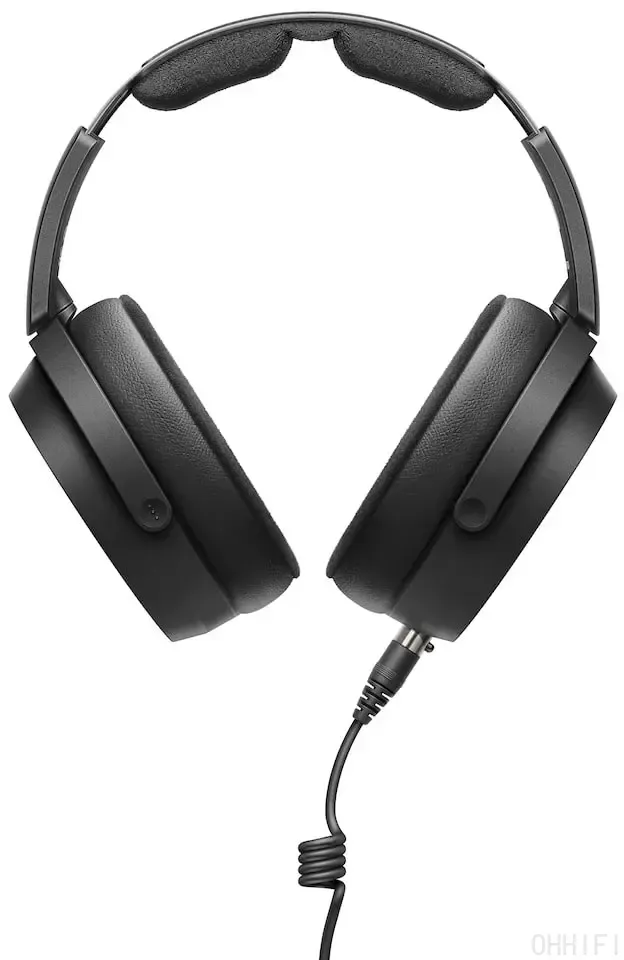
The ergonomic patents are where the real work went. The earpads have soft grooves cut into the sections that sit over your temples — specifically for glasses wearers, and genuinely effective. I've been through enough closed-backs to know how badly eyeglass arms wreck the seal; these don't. There are braille markings on the left cup bracket for orientation in the dark. The detachable mini-XLR cable can be worn on either side, with a grommet plug for the unused port so you're not breathing dust into it. A coiled section near the cup acts as a mechanical decoupler against structure-borne noise traveling up the cable — small detail, surprisingly useful when the cable thumps against a console edge.

On build: it's solid without being indestructible. The plastic cups feel more Sennheiser-restrained than Beyer-tank. Pads and cables are replaceable, which matters for a $479 headphone you're supposed to beat up for a decade. Sennheiser also confirms cross-compatibility with HD 490 PRO accessories, so the spares ecosystem is already in place.
The Sound: Where the Closed-Back Formula Actually Changes
Here's where I have to be careful, because the consensus across the early independent reviews is unusually unified — and that's worth paying attention to. SoundGuys ran two months with a pair. MusicTech's reviewer spent enough time to A/B them against his reference sets. Mixdown and Gear4Music both did critical listening against established studio cans. The picture that emerges is coherent: this is a tonally honest, slightly Harman-adjacent tuning with the closed-back midrange problem mostly beaten into submission.
Bass
The low end is the headline feature Sennheiser wants you to notice, and it deserves the attention. It's not flat in the dry, dusty "measurement-mic" sense — there's weight and extension down into the sub region (the 3 Hz spec is marketing theatre, but useful roll-off is well below 30 Hz per the tuning character multiple reviewers describe). What's unusual is the control. Kick drums on a well-mixed Steely Dan record — "Peg" is my usual reference for how a kick is supposed to settle — arrive with the punch intact and none of that low-midrange hangover that plagues the DT 770 80-ohm version. Sub-bass on Flying Lotus or James Blake doesn't wobble the character of the bass guitar sitting above it. Whatever the Vibration Attenuation System is actually doing inside that cup, the net result is a closed-back that doesn't trade discipline for weight. Several reviewers converged on the word "tight" independently, which tells you something.
Midrange
This is where the HD 480 PRO shows its closest kinship to the 490 PRO. Vocals sit where vocals are supposed to sit — forward enough to read, not pushed forward for effect. Fiona Apple on When the Pawn... comes through with her sibilants in check and the piano behind her properly anchored in space. James Taylor's "Shower the People" is a brutal test for midrange coherence because it's all voice, fingerpicked nylon, and quiet reverb tails, and the 480 PRO keeps all three legible without one elbowing the others aside.
That said, one reviewer I trust (Gear4Music) flagged a sense that the midrange felt "slightly constricted at times" on very dense electronic material. I'd describe that character the same way — it's not veiled, but the imaging is obviously narrower than an open-back, and on mixes that lean on wide stereo spread, the midrange can feel a touch compacted. This is the closed-back tax. It's smaller here than on almost any closed-back I've spent serious time with, but it's not zero.
Treble
Smooth. That's the one-word summary, and after long sessions, it's what keeps these from becoming painful. Sennheiser has clearly backed off from the lifted treble personality of the older HD 25 / HD 280 pro line. Cymbals on Dire Straits' "Brothers in Arms" have air and decay without the glassy edge the DT 1770 Pro can put on the same record. Is there real top-end extension? Yes, but it's presented politely. If you're the kind of listener who wants closed-back treble with a little more bite — the Beyer presentation, basically — you might find the 480 PRO reserved. If you're going to wear these for eight-hour sessions, you'll thank them.
Soundstage & Imaging
This is a closed-back, so let's be realistic. The stage does not open up the way the HD 490 PRO or an HD 600 does. What you get is reasonable width, good front-back depth for the category, and legible left-center-right placement — enough to make pan decisions and check reverb tails, not enough to replace an open reference. Sennheiser markets the HD 480 PRO as capable of mixing duty, and I think that's honest for headphone-only workflows or mobile mix checks. For final mix decisions in a treated room, you still want speakers or an open-back. But for everything else — tracking, monitoring, translation checks on a plane — the imaging is good enough to trust.
Test Setup
I did my listening through my usual desktop chain — a solid-state DAC feeding an OTL tube amp on high-impedance output — and then repeated key passages from a portable dongle DAC for contrast. The HD 480 PRO's 130-ohm impedance is the kind of load where the chain matters: off a laptop headphone jack, the bass softens noticeably and the top end loses a shade of its composure. Off anything with a real output stage — an audio interface, a proper headphone amp — it opens up and plants itself. Don't feed these things junk voltage and expect the reviews to apply.
Measured Performance
Independent measurements are still thin on the ground this early post-launch — I'd take anything claiming full RTINGS or ASR data with a pinch of salt until those sites actually publish. What's credible so far: SoundGuys reports isolation at roughly 67% of perceived outside noise by loudness, with 35–45 dB attenuation in the band where household noise lives SoundGuys. That's in line with what the large pads and moderate clamp suggest physically, and it puts the 480 PRO solidly in "tracking vocals in the same room as the drummer" territory. Sennheiser's own THD figure of <0.5% at 1 kHz / 100 dB SPL is unremarkable as a spec but believable based on how clean the driver sounds at real listening levels.
If and when proper published graphs hit the usual measurement databases, I'll update with specifics. For now, the listening picture and the ergonomic engineering line up with the brand's claims more cleanly than press-release hype usually does.
The Competition
| Rival | Comparison | Verdict |
|---|---|---|
| Neumann NDH 20 ($499) | Longstanding closed-back studio reference; similar price. NDH 20 leans bass-forward per Sonarworks measurements, with pads that sit smaller on the ear. | HD 480 PRO wins on comfort and bass control; NDH 20 still has edge in imaging separation. |
| Beyerdynamic DT 1770 Pro ($599) | Premium Beyer closed-back with Tesla driver. Brighter, more analytical presentation, heavier chassis. | 480 PRO is smoother and lighter for long sessions; DT 1770 Pro hits harder for detail-hunters. |
| Audio-Technica ATH-M70x ($299) | AT's flagship closed-back monitor. Neutral-to-analytical voicing, similar use case, much cheaper. | 480 PRO is a clear step up in driver refinement and comfort; M70x is the value pick. |
| Sennheiser HD 490 PRO ($400, open-back sibling) | Same 38mm driver, open architecture, wider stage, no isolation. | If you can work open-back, 490 PRO is tonally slightly more accurate for mixing. 480 PRO is the version for shared rooms and tracking. |
If you're cross-shopping with the NDH 20 specifically — a lot of engineers will be — the real question is workflow fit. The Neumanns still have a specific kind of analytical grip on a mix; the Sennheisers are more forgiving to wear and noticeably tidier in the bass.
The Verdict
The HD 480 PRO is the closed-back I'd point someone toward if they walked into the room right now asking for one pair of cans to do tracking, monitoring, and on-the-move mix checks without driving them mad by session five. It isn't a giant-killer and it doesn't claim to be — what it is, is a well-engineered, honestly-tuned closed-back from a company that still treats professional audio as a serious business rather than a marketing exercise. The $479 asking price sits squarely where it should: more than the M50x / DT 770 budget tier, right in the mix with the NDH 20, well under the DT 1770 Pro.
Score: 8.5 / 10
Pros / Cons
Pros
- Exceptionally controlled, tight low end for a closed-back
- Smooth, non-fatiguing treble for long sessions
- Light weight and intelligent ergonomics (glasses comfort, dual cable entry, braille L/R)
- Close to a Harman-reference target out of the box
- Replaceable parts and HD 490 PRO accessory cross-compatibility
Cons
- 130-ohm impedance underperforms on weak laptop outputs
- Midrange can feel slightly narrowed on very wide stereo mixes
- Priced above the most popular studio benchmarks — premium territory, not budget
- Soundstage is closed-back-limited; no giant open-back-style spread
Who Should Buy / Who Should Skip
This is for you if you're a tracking, monitoring, or mobile-mix engineer who needs one closed-back that can do real work across a range of environments — a treated studio, a shared room, a tour bus, a hotel desk. It's also a legitimate choice for serious home producers who can't run open-backs because of household acoustics and want something more tonally honest than the M50x default. If you wear glasses and closed-back seal has been your nemesis, the 480 PRO is genuinely a step forward.
Look elsewhere if you want the widest possible stage (buy the HD 490 PRO or an HD 600 and live with the leakage), if you want a bright, forward-treble analytical flavor (Beyer DT 1770 Pro), or if your budget won't stretch past $300 (the ATH-M70x or DT 770 Pro still represent real value). And if you're planning to run these straight off a phone or laptop with no amp in the chain, the impedance will hold them back — get a dongle DAC at minimum.



Comments