
The $1,000 vs. $10,000 Power Amplifier: How Deep is the Audible Divide?

1. Introduction: The Silence Before the Sound
In the intricate and often obsessive world of high-fidelity audio, the power amplifier stands as the silent engine of the musical experience. It is the final arbiter of authority, the muscle that grips the loudspeaker’s voice coil and forces it to dance. Yet, it is also the subject of the industry's most polarizing economic and philosophical debate. On one side of the showroom floor sits the competent, strictly engineered, mass-produced champion, retailing for approximately $1,000. On the other sits the monolith—a hewn block of aluminum and copper, radiating heat and exclusivity, commanding a price tag of $10,000 or more.
To the uninitiated, the specifications sheet offers little guidance. Both units may claim 150 or 250 watts of power. Both boast total harmonic distortion figures that are vanishingly low. Both amplify a signal. The question that haunts every audiophile, from the budget-conscious student to the dedicated collector, is simple yet profound: What does that extra zero actually buy you?
This report serves as an exhaustive investigation into this chasm. It is not merely a comparison of two products, but a dissection of two divergent realities. We explore the physics of "The First Watt," the economics of heavy manufacturing, the psychoacoustics of blind testing, and the tangible, sweating engineering that separates the "consumer" grade from the "reference" grade. By analyzing the Rotel RB-1552 MkII as the representative of the value tier and the Pass Labs X250.8 as the titan of the high-end, we illuminate the tangible and intangible differences that define the pursuit of the absolute sound.
1.1 The Psychoacoustic Landscape
The perception of sound is not merely a mechanical process of ear drum vibration; it is a complex cognitive event. The audio industry thrives in the gray area between measurable physics and subjective experience. The "Law of Diminishing Returns" is frequently cited, suggesting that performance plateaus rapidly after a certain price point. However, proponents of the high-end argue that the "last 5%" of performance—the texture, the air, the emotional connection—is where the magic lies, and that this refinement requires exponential increases in cost.
We must navigate the treacherous waters of expectation bias, where the sheer mass and aesthetic beauty of a $10,000 amplifier prime the brain to hear "better" sound. Simultaneously, we must respect the nuanced observations of trained listeners who claim that long-term fatigue and micro-dynamic resolution are factors that short-term measurements fail to capture.
1.2 Defining the Contenders
To ground this analysis in empirical reality, we focus on two specific, highly regarded models that exemplify their respective classes.
| Feature | The Value Standard: Rotel RB-1552 MkII | The High-End Reference: Pass Labs X250.8 |
| Approximate Price | ~$1,000 - $1,200 | ~$10,000 - $12,000 |
| Power Output (8Ω) | 130 Watts per channel | 250 Watts per channel |
| Class Topology | Class AB (Standard Bias) | Class AB (High Class A Bias) |
| Weight | 27 lbs (12.4 kg) | 100 lbs (45.4 kg) |
| Origin | Zhuhai, China (B&W Group Factory) | Auburn, California, USA |
| Design Philosophy | Balanced Design Concept (Efficiency) | Supersymmetry / Excess (Purity) |
| THD Specification | < 0.03% | 1% (at full power) |
| Damping Factor | 450 | 150 |
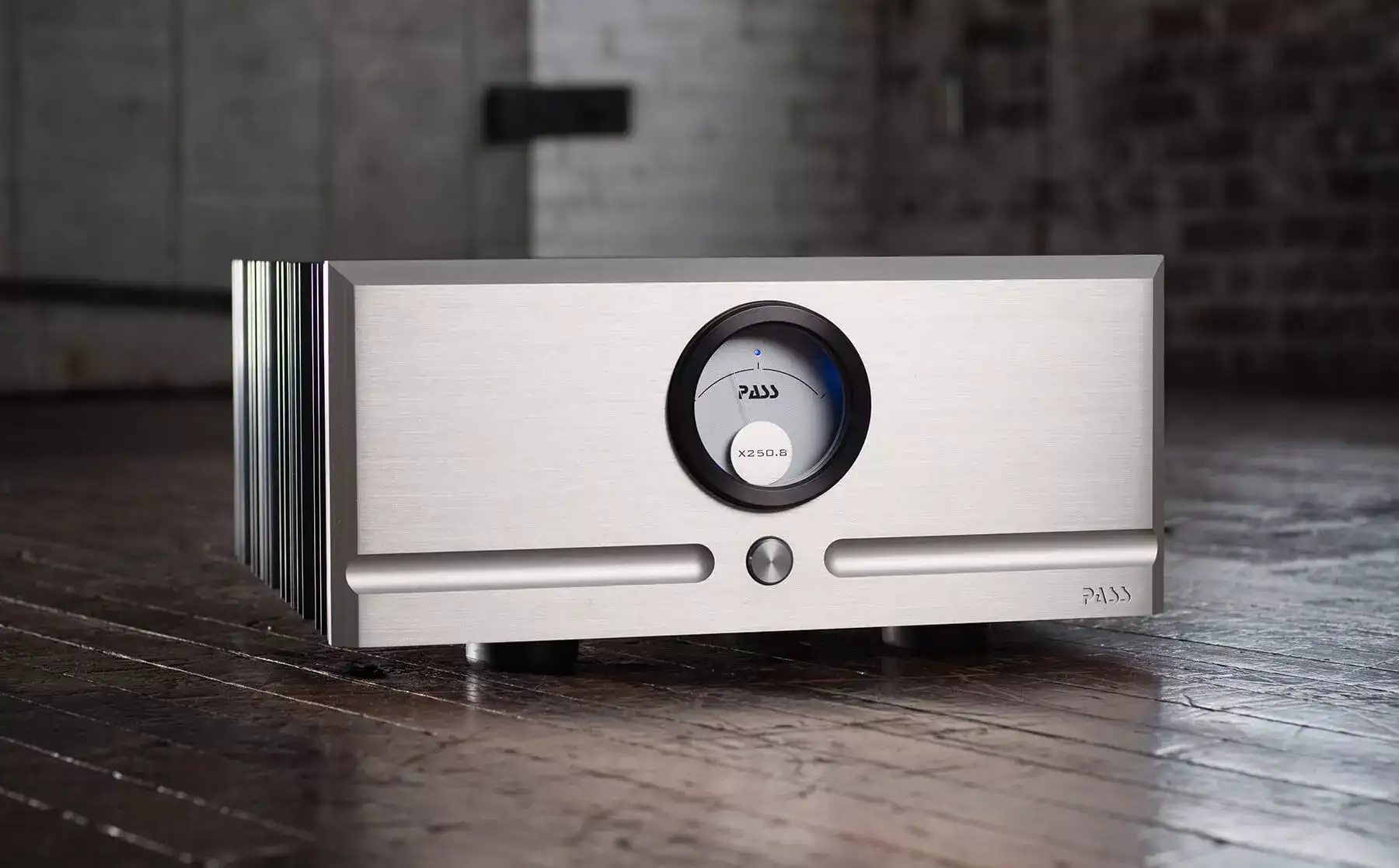
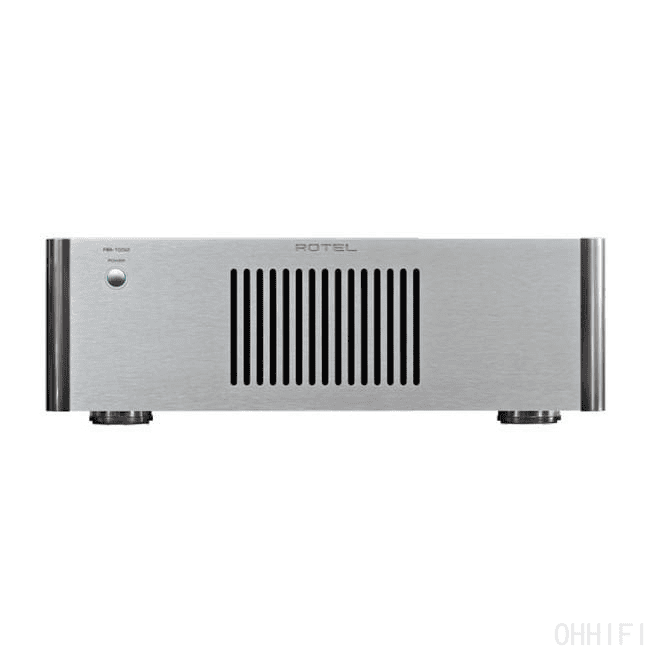
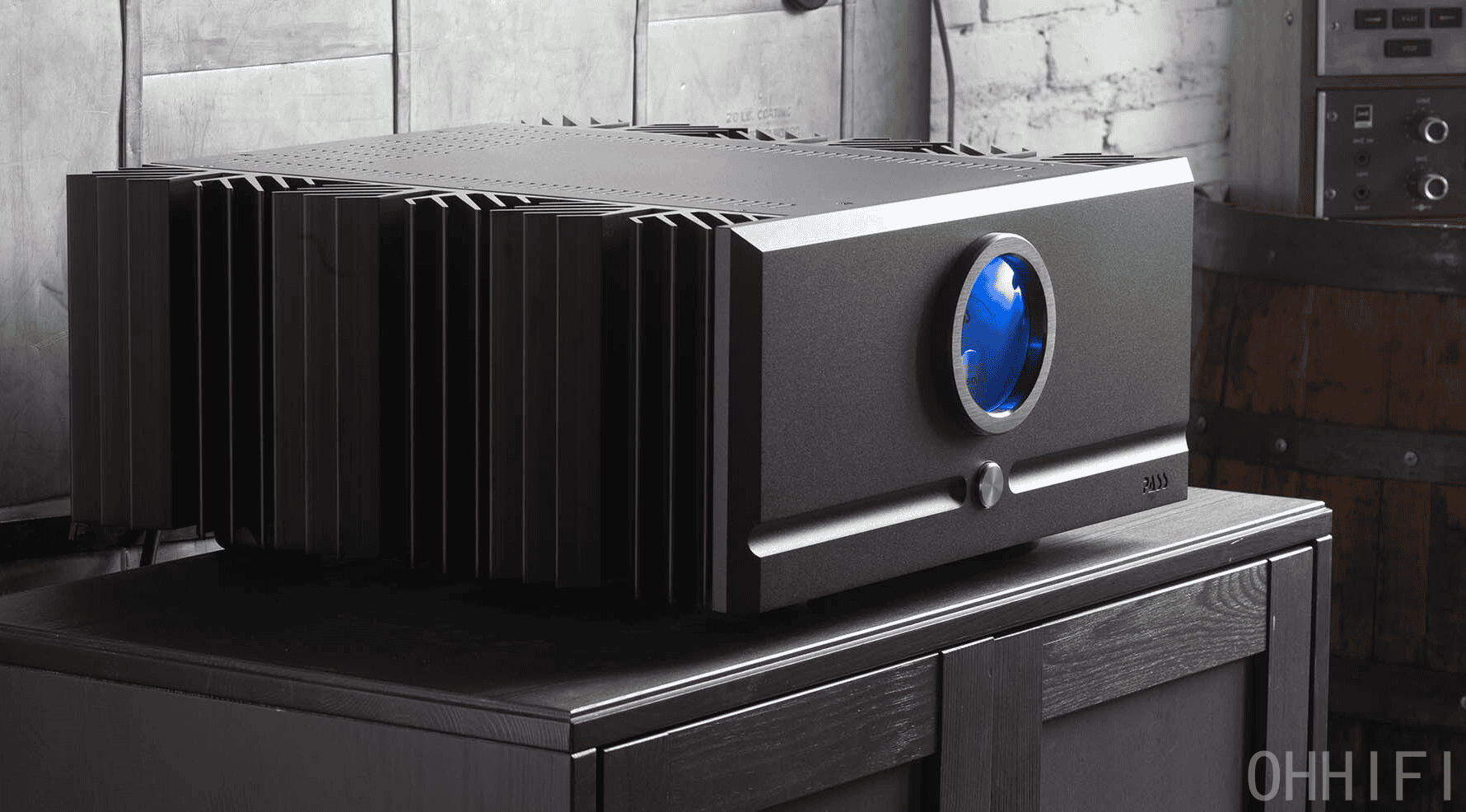
The Rotel RB-1552 MkII represents the pinnacle of "attainable" high-fidelity. It is designed to offer maximum performance per dollar, leveraging global supply chains and efficient manufacturing. The Pass Labs X250.8, designed by the legendary Nelson Pass, represents the "cost-no-object" approach (or at least, the entry point to it), prioritizing sonic character and heavy bias operation over efficiency and portability.
2. Historical Context: The Evolution of Power
To understand the modern amplifier market, one must appreciate the trajectory of audio amplification. The divide between $1,000 and $10,000 is not just about parts; it is about a lineage of design philosophy.
2.1 The Golden Age and the Wattage Wars
In the 1970s and 80s, the "Receiver Wars" dominated the audio landscape. Manufacturers like Pioneer, Sansui, and Marantz competed to offer the highest wattage at the lowest price. This era established the consumer expectation that "Watts per Dollar" was the primary metric of value. However, this race often led to amplifiers with high negative feedback and sterile sound, pushing audiophiles toward the burgeoning "High End".
It was in this environment that designers like Nelson Pass (then at Threshold) and companies like Rotel began to carve distinct paths. Rotel, originally an OEM manufacturer for Sylvania, pivoted to building "no-frills" British-voiced electronics that emphasized musicality over raw specs. Meanwhile, Nelson Pass pioneered the use of Class A topologies and "simple" circuits, arguing that complex circuitry degraded the signal.
2.2 The Rise of the Boutique Manufacturer
The $10,000 amplifier is a product of the specialized high-end industry that emerged to serve listeners unsatisfied with mass-market gear. This sector operates on a different economic model. A company like Pass Labs, founded in 1991, does not aim for ubiquitous market penetration. They aim for the "absolute" reproduction of music, utilizing heavy, inefficient designs (like the Aleph series) that a corporation like Sony would deem commercially unviable.
This historical divergence explains why a $1,000 Rotel and a $10,000 Pass Labs can exist simultaneously. They are answers to two different questions: "How do we make a great amp for everyone?" versus "How do we make the best amp possible for the few?"
3. The Physics of the Engine: Power Supply Architectures
The most literal weight difference between the two amplifiers—27 lbs versus 100 lbs—is largely found in the power supply. In the world of amplification, the power supply is the amplifier; the transistors merely modulate the power supply's energy to match the musical signal.
3.1 The Transformer: Toroidal vs. Massive Toroidal
Both amplifiers utilize toroidal transformers, a ring-shaped design superior to the older square EI-core transformers due to lower magnetic leakage and higher efficiency. However, the scale is vastly different.
The Rotel RB-1552 MkII:
Rotel manufactures its own transformers in-house, a rarity for a company of its size. The transformer in the RB-1552 MkII is custom-wound and substantial for its class, likely rated around 500VA to 800VA (Volt-Amps). It is designed to provide stable current for a 130-watt load, but within reasonable thermal and cost limits.
The Pass Labs X250.8:
The X250.8 employs a massive toroidal transformer rated for 1,200 watts continuous duty, with the ability to handle peaks of 1,800 watts. This is not just "more power"; it is "stiffer" power. A transformer of this size has incredibly low impedance, meaning that when a musical transient demands a sudden surge of current (like a kick drum), the voltage rails do not sag. The sheer mass of the iron core prevents magnetic saturation, ensuring that the amp never sounds compressed, even when driving difficult speaker loads.
3.2 The Reservoir: Capacitor Chemistry and "Slit Foil"
Capacitors act as the energy storage tanks for the amplifier. When the music demands instantaneous power, it is drawn from the capacitors before the transformer can replenish them.
Rotel's "Slit Foil" Technology:
Rotel uses specific "slit-foil" capacitors made in the United Kingdom. Standard capacitors are formed by rolling aluminum foil. This rolling creates eddy currents—loops of electrical current induced within the conductor—that can slow down the discharge speed of the capacitor. The "slit-foil" design introduces precise cuts in the conductor to break these eddy currents, theoretically improving the speed and transient response of the amplifier. This is a prime example of how the $1,000 tier uses smart engineering to maximize performance without brute force.
Pass Labs' Brute Force:
The Pass Labs X250.8 takes a different approach: massive capacity. It utilizes 20 computer-grade capacitors, totaling approximately 200,000 microfarads (µF) of storage. This is an "ocean" of energy compared to the "pool" found in typical amps. This massive capacitance ensures that the ripple voltage (noise on the power lines) is virtually non-existent and that the amplifier can sustain deep bass notes for extended durations without running out of steam. The capacitors are industrial-grade, rated for high temperatures and long life (15-20 years), contributing to the unit's longevity and cost.
4. Circuit Topology: The Heart of the Signal
The way the transistors are arranged and biased defines the sonic signature of the amplifier. This is where the philosophical divide is most apparent.
4.1 Class AB vs. High-Bias Class A
Rotel's Efficient Class AB:
The RB-1552 MkII is a traditional Class AB design. It applies a small bias voltage to the output transistors to prevent crossover distortion (the glitch that occurs when the signal passes from the positive-side transistor to the negative-side transistor). This design is efficient, running relatively cool and wasting little energy. It strikes a balance between performance and practicality, making it suitable for enclosed cabinets or standard racks.
Pass Labs' "High Bias" Strategy:
Nelson Pass is a staunch advocate of Class A operation, where transistors are always fully on. The X250.8 is technically Class AB, but it is biased so heavily that the first 25 watts of output are pure Class A.
Significance: Since average listening levels in a domestic room typically hover between 1 and 5 watts, the X250.8 operates as a pure Class A amplifier for the vast majority of listening. This eliminates switching distortion entirely during normal use.
The Cost: The cost of this is heat. The X250.8 idles at nearly 500 watts. It consumes more power doing nothing than the Rotel does at full volume. This necessitates the massive aluminum heatsinks that dominate the chassis design.
4.2 Transistor Selection: Bipolar vs. MOSFET
Rotel (Bipolar):
The RB-1552 MkII uses Bipolar Junction Transistors (BJTs) in its output stage. BJTs are known for their high current capability and grip. They are fast and provide the "slam" and tight bass control that Rotel is famous for. They are efficient and cost-effective, allowing Rotel to deliver high power specs at a reasonable price point.
Pass Labs (MOSFET):
Pass Labs utilizes Metal-Oxide-Semiconductor Field-Effect Transistors (MOSFETs). Nelson Pass prefers MOSFETs because their transfer curve (the way they amplify signal) resembles that of a vacuum tube.
Matching: The X250.8 uses 56 output transistors per channel. To make 56 transistors work as one, they must be matched with extreme precision. Pass Labs buys transistors in batches of tens of thousands and hand-matches them to within 0.5% tolerance. This labor-intensive process is a major driver of the $10,000 price. You are not just paying for the transistors in the amp; you are paying for the labor of sorting them and the cost of the rejected parts.
4.3 Supersymmetry and Feedback
Pass Labs employs a patented topology called "Supersymmetry" (Su-Sy). This circuit design balances the two halves of the amplifier (positive and negative) so perfectly that distortion and noise cancel each other out at the output. This allows the amplifier to run with very little global negative feedback.
The Feedback Debate: High negative feedback (common in cheaper amps to get low THD specs) can make an amp sound "sterile" or "hard" and can introduce Transient Intermodulation Distortion (TIM). By minimizing feedback, Pass Labs aims for a more natural, organic sound, even if the measured THD (1%) is higher than the Rotel's (<0.03%).
5. The Manufacturing Reality: Economics of Scale vs. Artisanship
The price tag is not just a reflection of parts; it is a reflection of the manufacturing ecosystem.
5.1 Rotel: The Industrial Powerhouse (Zhuhai, China)
Rotel operates a massive manufacturing facility in Zhuhai, China, often shared with its strategic partner Bowers & Wilkins.
Economies of Scale: By producing thousands of units, Rotel can negotiate bulk pricing on raw materials (copper, aluminum, capacitors) that a boutique manufacturer cannot touch.
Vertical Integration: Rotel makes its own transformers and utilizes surface-mount technology (SMT) for circuit boards. SMT allows robots to place components with high speed and precision, drastically reducing labor costs.
Labor: While skilled, the labor cost in China is lower than in the US. This efficiency allows Rotel to sell a product for $1,000 that might cost $3,000 if produced using boutique methods in the West.
5.2 Pass Labs: The American Artisan (Auburn, California)
Pass Labs is located in Auburn, California.
Hand-Built: Amplifiers are assembled by hand. Wiring is often point-to-point for high-current paths, utilizing heavy-gauge copper that cannot be handled by machines.
Chassis Cost: The faceplate of the X250.8 is machined from a solid billet of aluminum. The chassis alone, with its massive heatsinks and structural integrity, likely costs more to manufacture than the entire Bill of Materials for the Rotel amp.
Overhead: Manufacturing in California involves high labor rates, strict environmental regulations, and high facility costs. These overheads are baked into the final price.
Longevity: Pass Labs designs for a 20+ year lifespan, with the expectation that the product is an heirloom. The warranty and support infrastructure are designed to support this long-term ownership.
6. The Measurement Paradox: When Better Specs Don't Mean Better Sound
A strict objectivist looking at the data sheets might conclude the Rotel is the superior amplifier.
| Specification | Rotel RB-1552 MkII | Pass Labs X250.8 |
| THD (Distortion) | < 0.03% | 1% |
| Damping Factor | 450 | 150 |
| Noise Floor | -120 dB | Low (Microvolts) |
The Distortion Anomaly:
Why does the $10,000 amp have 1% distortion while the $1,000 amp has 0.03%?
To Nelson Pass, the nature of the distortion is more important than the amount. The Rotel's low THD is achieved through high negative feedback, which suppresses all distortion but can leave a residual "electronic" signature. The Pass Labs accepts higher distortion, but engineers it to be primarily second-order harmonic distortion.
Second-Harmonic: This is the same distortion produced by vacuum tubes. It is consonant with the music (an octave above the fundamental). The human ear tends to perceive this not as "noise," but as "warmth," "body," and "richness".
High-Order Harmonics: Cheaper amps with high feedback often suppress 2nd order harmonics but leave trace amounts of 3rd, 5th, and 7th order harmonics, which are dissonant and sound "harsh" or "fatiguing" to the ear.
Damping Factor:
The Rotel's high damping factor (450) suggests incredible control over the woofer. The Pass Labs (150) is lower. However, Pass argues that an excessively high damping factor can "over-damp" the speaker, sucking the life out of the bass and making it sound dry. A moderate damping factor allows for a more natural decay and bloom in the low frequencies.
7. The Psychoacoustics of Price: Blind Testing and Skepticism
No report on high-end audio is complete without addressing the "Elephant in the Room": can humans actually hear the difference?
7.1 The Richard Clark and Matrix HiFi Challenges
Skeptics point to the famous Richard Clark Amplifier Challenge. Clark offered $10,000 to anyone who could identify the difference between two amplifiers in a double-blind ABX test, provided both were operating within their linear limits (no clipping). Thousands took the test; no one won the money.
Similarly, the Matrix HiFi blind test compared a cheap system against a high-end reference system. 38 listeners participated; the results were statistically random. Listeners could not reliably identify the expensive gear.
7.2 The Counter-Argument: Stress and Resolution
Audiophiles and manufacturers argue that ABX testing is flawed for high-end audio:
Short-Term Memory: The brain's auditory memory is short. Rapid switching (A vs B) forces the brain into an analytical state that focuses on gross tonal balance rather than subtle spatial cues.
The "First Watt" vs. Clipping: Clark's test requires no clipping. However, in real-world listening with dynamic music, amplifiers often encounter micro-clipping during transients. A $10,000 amp with massive headroom handles these peaks effortlessly, while a smaller amp might momentarily compress. This "ease" is a key part of the subjective high-end experience.
System Synergy: An amplifier interacts with the speaker's impedance curve. A speaker like a Wilson Audio or Magico might dip to 2 ohms. The Rotel might struggle to deliver current at that dip, altering the frequency response. The Pass Labs, acting as a perfect voltage source, remains linear. In this scenario, the amps will sound different due to load interaction.
8. The Subjective Experience: Listening to the Divide
Moving away from the oscilloscope and into the listening chair, we analyze the subjective differences reported by reviewers and owners who have lived with these components.
8.1 Scenario A: The $1,000 Experience (Rotel RB-1552 MkII)
Listening to the Rotel, one is immediately struck by its competence. It is not a "budget" sound.
Bass: The bass is tight, punchy, and rhythmic. The high damping factor keeps woofers under strict control. Drum hits are fast and immediate.
Tonality: It offers a clean, neutral presentation. It lacks the "grain" or "fizz" of cheap consumer receivers. Reviews often describe it as having a "lovely round tone".
Soundstage: The lateral (left-to-right) imaging is excellent. Instruments are clearly placed. However, the depth (front-to-back) can feel somewhat flattened compared to reference gear.
Limitation: On complex orchestral crescendos or heavy electronic tracks at high volume, the sound may harden slightly. The "air" around individual instruments can collapse as the amp approaches its current limits.
8.2 Scenario B: The $10,000 Experience (Pass Labs X250.8)
Switching to the Pass Labs, the change is rarely "10 times better" in a linear sense, but it is qualitatively different.
The "Glow": There is an immediate sense of warmth and liquidity, often attributed to the Class A bias and second-harmonic profile. Vocals sound "fleshed out" and human, rather than like electronic reproductions.
Holography: The most cited difference is the soundstage. It becomes three-dimensional. You hear the "room" around the instruments. The silence between notes seems "blacker" and more profound.
Effortlessness: The massive power supply creates a sensation of limitless headroom. Even at low volumes, there is a "weight" and authority to the sound. Bass notes have texture—you hear the vibration of the string, not just the thud of the note.
Texture: The "First Watt" philosophy shines here. In quiet passages, the decay of a piano note or the breath of a singer is preserved with a delicacy that the heavier-handed Rotel might obscure.
8.3 System Synergy: The Critical Variable
The difference between these amps depends heavily on the speakers.
High Sensitivity Speakers (e.g., Klipsch, 95dB): The Rotel might actually sound noisier due to a higher noise floor (though still low). The Pass Labs' Class A purity will be very audible here.
Difficult Loads (e.g., Magnepan, 4 ohms): The Rotel may sound thin or shut down under heavy load. The Pass Labs, which doubles its power into 4 ohms (500W), will wake these speakers up, providing bass slam that the Rotel physically cannot deliver.
9. Economic Analysis: The Law of Diminishing Returns
The graph of price vs. performance in audio is asymptotic.
$0 - $1,000: The curve is steep. Going from a $200 chip-amp to the Rotel RB-1552 MkII yields a massive audible improvement. You gain real bass control, lower noise, and reliability.
$1,000 - $5,000: The curve flattens. You gain better casework, better connectors, and perhaps slightly more refined top-end.
$5,000 - $10,000+: The curve is nearly flat. You are paying exponential sums for incremental gains.
At the $10,000 tier, you are paying for:
Exclusivity and Brand: The prestige of owning a "Pass."
Visual Art: The chassis is furniture-grade.
Longevity: Components that will last decades.
The "Last 5%": The subtle spatial cues and textural nuances that only highly trained ears on highly resolving systems can detect.
9.1 The "Anchor" Effect
For a user with $2,000 speakers, the $10,000 amp is a poor investment. The speakers will be the bottleneck. The Rotel is the logical match.
However, for a user with $30,000 Wilson Audio speakers, the Rotel becomes the bottleneck. It cannot resolve the detail the speakers are capable of reproducing. In this context, the $10,000 amp is not a luxury; it is a requirement to justify the investment in the speakers.
10. Conclusion: Choosing Your Truth
So, is the difference between a $1,000 amplifier and a $10,000 amplifier audible? Yes.
Is it "night and day"? No.
The Rotel RB-1552 MkII is a triumph of industrial engineering. It delivers 90% of the audiophile experience for 10% of the price. It is the rational choice for the music lover who wants to hear their collection with clarity, power, and honesty. It is a tool that disappears, letting the music speak.
The Pass Labs X250.8 is a triumph of artistic engineering. It is designed not just to reproduce the signal, but to enhance the emotional connection to it. It adds a layer of richness, space, and "aliveness" that is intoxicating to those who crave it. It is not rational; it is emotional. It is for the listener who treats music not as a background activity, but as a dedicated ritual.
Ultimately, the choice comes down to how you listen. If you listen to the music, buy the Rotel and spend the savings on concert tickets. If you listen to the sound, and you find yourself chasing the ghost of the performance—the breath, the air, the silence—then the heavy iron from Auburn, California, awaits. The audible divide is real, but it is up to you to decide if that silence is worth the price of a small car.
Technical Appendix: Deep Data Comparison
A.1 Component Specification Breakdown
| Component Category | Rotel RB-1552 MkII | Pass Labs X250.8 | Technical Implication |
| Input Stage | Integrated Op-Amps / Discrete | JFET (Junction Field Effect Transistor) | JFETs offer high input impedance and tube-like noise characteristics. |
| Voltage Gain Stage | Bipolar Transistors | MOSFET | MOSFETs provide simpler circuit topology with desirable harmonic distortion profiles. |
| Output Stage | Bipolar (High Current) | 56 x Matched MOSFETs | Massive parallel processing in Pass reduces load per device, increasing linearity. |
| Capacitors | Slit-Foil (UK Sourced) | Computer Grade (200,000 uF) | Pass offers vastly superior energy storage for sustained dynamic peaks. |
| Heatsinking | Internal / Compact | External Massive Fins | Pass requires massive dissipation for Class A operation; Rotel relies on Class AB efficiency. |
| Wiring | PCB Traces | Point-to-Point (High Current) | Point-to-point allows for thicker gauge wire, reducing resistance in high-current paths. |
A.2 The "Watt" Quality Assessment
Rotel's Watts:
Rotel's watts are "stiff" and controlled. The high feedback and bipolar output devices create a sound that is disciplined. It grabs the speaker and forces it to comply. This is excellent for electronic music, rock, and pop where timing and punch are paramount.
Pass Labs' Watts:
Pass Labs' watts are "dense." Because of the Class A bias, the amplifier has a slippery, effortless quality. It doesn't feel like it's forcing the speaker; it feels like the speaker is an extension of the amp. This is particularly noticeable on acoustic music, jazz, and vocals, where the natural decay of instruments is preserved.
A.3 Thermal Dynamics and Lifespan
Heat as a Component:
The Pass Labs X250.8 runs at approximately 53°C (127°F) on the heatsinks. This heat is a design feature, keeping the internal components at a stable operating temperature where their electrical characteristics are most linear. However, heat is the enemy of capacitors. Pass Labs mitigates this by using industrial-grade capacitors rated for high temperatures and placing them physically away from the hottest heat sinks in the chassis layout.
Cool Efficiency:
The Rotel runs warm to the touch but never hot. This thermal stress is lower, which typically allows for the use of standard consumer-grade components while still achieving long lifespans. However, the thermal cycling (heating up when played loud, cooling down when idle) can technically cause more mechanical stress on solder joints over 20 years than the constant, steady-state heat of the Pass Labs (assuming the Pass is left on or brought up to temp).
A.4 The "Synergy" Matching Guide
When to choose Rotel ($1,000):
Speakers cost under $5,000/pair.
Listening room is a living room/shared space (low heat/size requirement).
Musical preference: Rock, Pop, Electronic (requires slam/damping).
User values value, efficiency, and "set it and forget it."
When to choose Pass Labs ($10,000):
Speakers cost over $10,000/pair (high resolution).
Dedicated listening room (space for heat/size).
Musical preference: Jazz, Classical, Vocal, Acoustic (requires texture/timbre).
User values holography, emotional connection, and owns difficult-to-drive speakers (low impedance).



Comments