

Bookshelf vs. Floorstanding: Can Small Rooms Handle Big Speakers?

The Audiophile’s Eternal Paradox
It is the question that keeps us up at night. It is the thread that refuses to die on every audio forum from Steve Hoffman to Audio Science Review. It is the battle between the heart and the head, between the craving for visceral scale and the cold, hard reality of square footage. You have the budget. You have the passion. You yearn for the effortless dynamics, the chest-crushing slam, and the architectural soundstage that only a large, multi-driver loudspeaker can deliver. But then you look around. You are not in a purpose-built listening hall in Munich or a sprawling American basement. You are in a converted spare bedroom in London, a compact apartment in Tokyo, or a shared living space in New York.
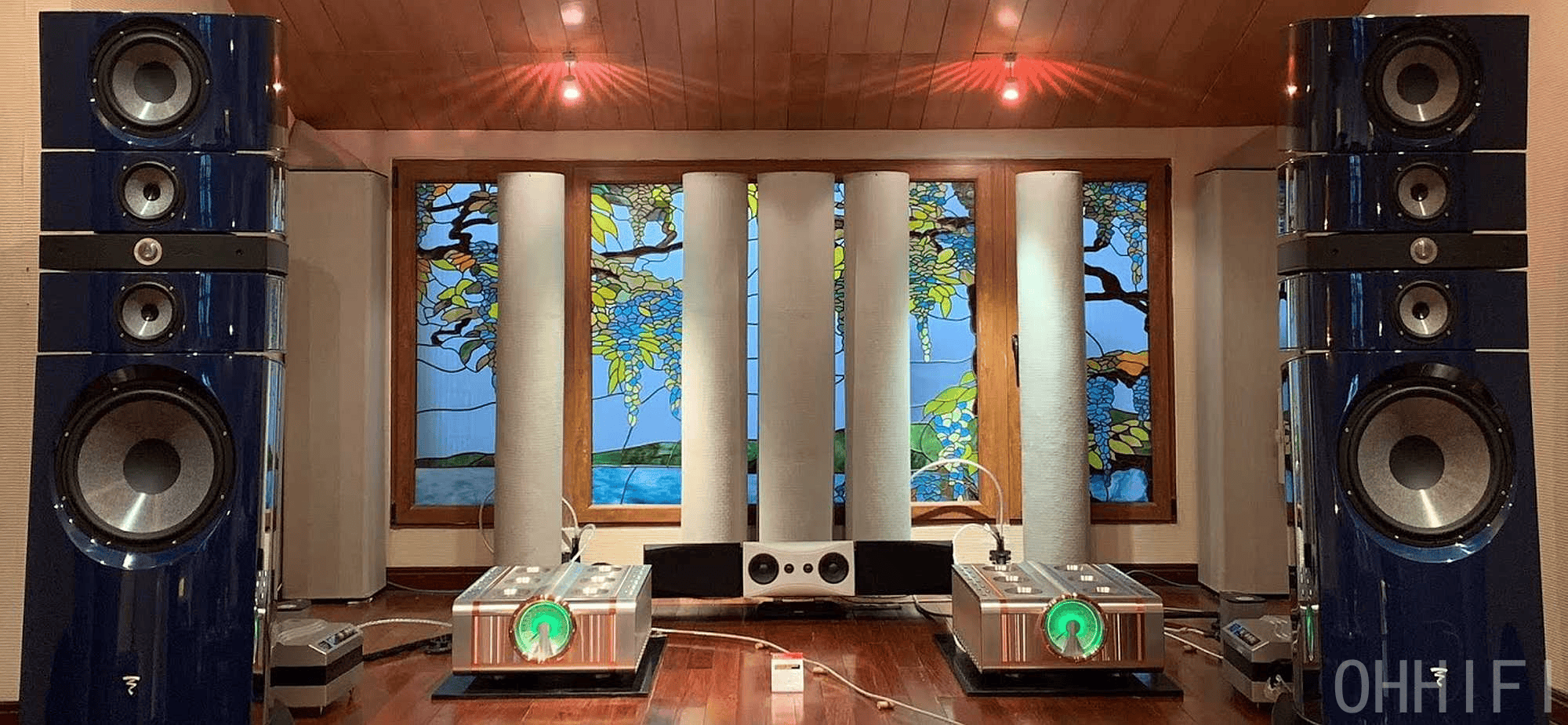
The conventional wisdom—parroted by dealers, old-school reviewers, and that one guy in the forum signature block—is absolute: "Small rooms need small speakers. Put a big tower in there, and you’ll drown in boom. You’ll excite modes you didn’t know existed. Keep it simple. Buy the monitors."
For decades, this was safe advice. It was prudent. It saved many an audiophile from the misery of "one-note bass" and the claustrophobia of a soundstage that couldn't breathe. But is it still true? In an era of advanced computer-aided cabinet design, sophisticated crossover modeling, and the democratization of Digital Signal Processing (DSP), is the "big speaker ban" merely a relic of a bygone era?
The answer is messy. It is nuanced. And frankly, it is far more interesting than a simple "yes" or "no." The reality is that you can run big speakers in small rooms. In fact, under specific acoustic circumstances, a floorstanding speaker can actually outperform a bookshelf speaker in a closet-sized space. But achieving this nirvana requires navigating a minefield of acoustics, physics, and psychoacoustics. It demands that we strip away the marketing fluff and stare directly into the mechanics of how sound waves pressurize a sealed volume.
This report is not just a comparison; it is a dissection of the small-room listening experience. We are going to break down the physics of room gain, analyze why sealed boxes might be the holy grail for tight spaces, debunk the myths surrounding rear ports, and explore how modern DSP has fundamentally rewritten the rulebook. If you have ever stared at a pair of Magico A3s or ATC SCM40s and wondered, "Can I get away with it?", read on.
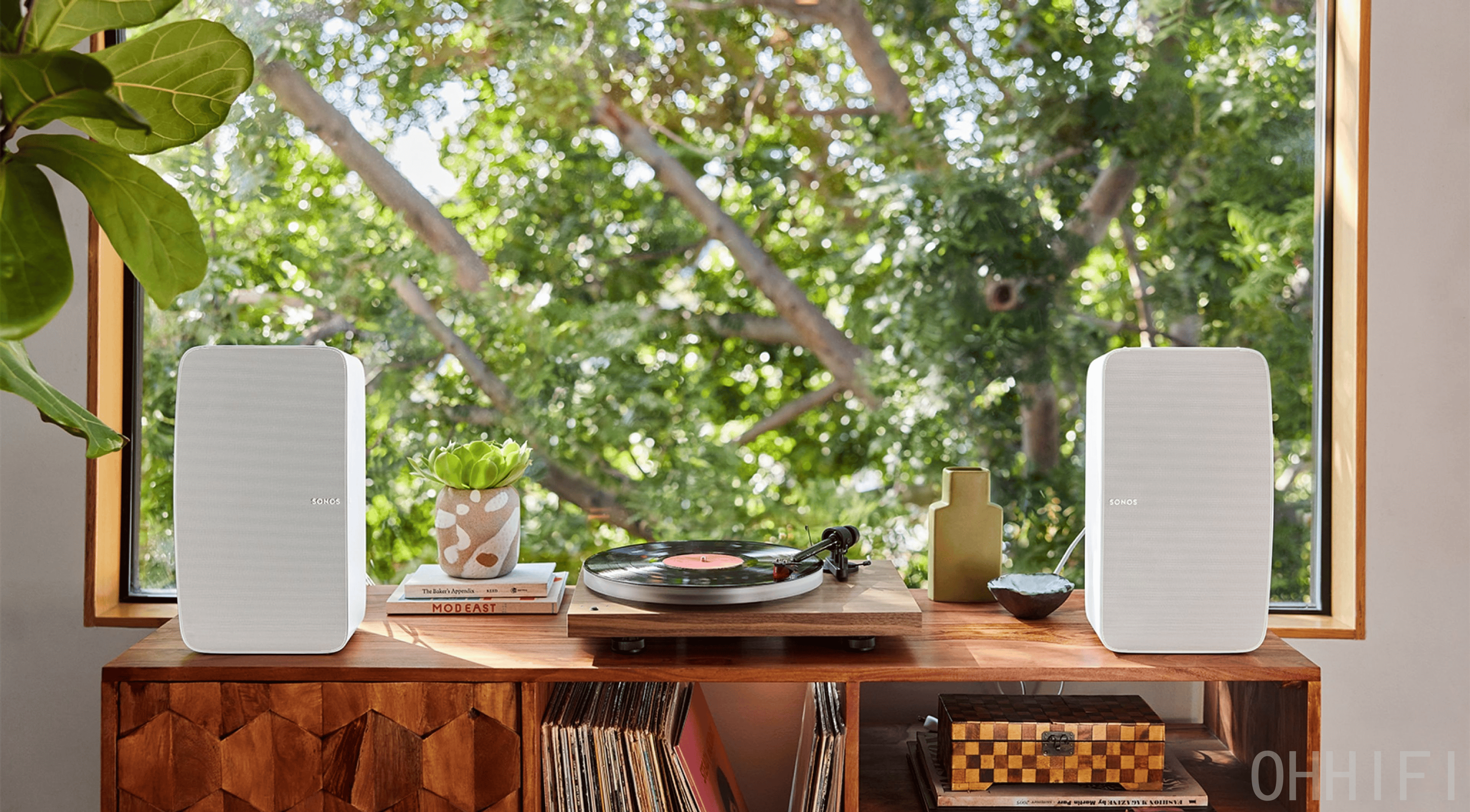
Chapter 1: Defining the Battlefield
Before we can argue about driver size or cabinet volume, we must define the terrain. What exactly makes a room "small" in the context of high-fidelity audio? It is not strictly about whether you can fit a sofa and a rug. To a sound wave, "size" is a relationship between the room's physical dimensions and the wavelengths of the frequencies being reproduced.
The Physics of Wavelengths
In the world of audio, bass is physical. It is long. A single sound wave at 20Hz—the bottom of the audible spectrum—stretches over 56.5 feet (17 meters). Even a modest 50Hz bass note, the thump of a kick drum, has a wavelength of roughly 22.5 feet (6.8 meters).
If your listening room is 12 feet by 14 feet, you are not observing these bass waves from a distance; you are living inside them. The wave literally does not fit in the room. This fundamental mismatch creates a distinct acoustic environment known as the Modal Region.
The Schroeder Frequency and the Modal Zone
Acousticians divide room behavior into specific zones based on frequency. Understanding this is critical to understanding why big speakers behave differently in small spaces.
The Ray Zone (High Frequencies): Above a certain point, sound behaves like light. It travels in rays, bouncing off walls, ceilings, and floors. In this zone, we worry about diffusion, absorption, and imaging. The room feels "large" relative to the wavelength.
The Transition Zone: Here, wavelengths start to become comparable to room dimensions. The behavior is a mix of ray and wave physics.
The Modal Zone (Low Frequencies): Below the "Schroeder Frequency" (often around 200Hz-300Hz in small domestic rooms), the room stops acting like a reflector and starts acting like a resonator. The sound doesn't travel; it pressurizes.
In a massive concert hall, the Schroeder frequency is very low. The room modes (resonant frequencies) are so closely packed together that they smooth each other out. In a small room, however, these modes are spaced far apart. You might have a massive resonant peak at 45Hz that shakes your windows, followed by a "null" (a black hole of sound) at 60Hz where the bass simply vanishes.
This is the first strike against the floorstander. Big speakers dig deeper. They put significantly more energy into the bottom octave (20Hz-40Hz). In a small room, this extra energy is pouring directly into the most problematic, uneven, and resonant part of the room's acoustic profile. A bookshelf speaker that rolls off at 50Hz might conveniently avoid exciting that nasty 35Hz room mode. A full-range tower will find it, grab it, and energize it until the room drones like a bagpipe.
The Myth of "Too Much Bass"
We often hear that a speaker has "too much bass" for a room. This is technically a misnomer. A speaker produces a certain Sound Pressure Level (SPL) at a certain frequency. The problem isn't the quantity of bass the speaker can produce—after all, you have a volume knob. The problem is the uniformity of the bass and the decay time.
In a small room, bass notes "hang" in the air. The energy bounces back and forth between walls, reinforcing itself. This is "ringing." If a bass note is supposed to stop instantly but the room keeps singing it for another 500 milliseconds, the music sounds muddy, slow, and boomy. Floorstanders, with their greater mass and air-moving capability, can saturate a small room with this lingering energy faster than a small monitor.
However, physics is a double-edged sword. While the small room creates modal chaos, it also offers a gift: Room Gain. And this gift, if understood correctly, is the key to making big speakers work.
Chapter 2: The Physics of Pressure and Room Gain
If there is one concept that separates the novice from the expert in small-room acoustics, it is Room Gain (also known as Cabin Gain). This phenomenon is the reason why a sealed floorstander can sound tight and authoritative in a closet, while a ported bookshelf can sound loose and bloated.
The Mechanism of Free Bass
When the frequency of a sound wave gets low enough that its wavelength is more than twice the longest dimension of your room, the room transitions from supporting standing waves to becoming a pressure vessel. At these frequencies, the room acts like the inside of a car or a sealed pneumatic cylinder. The speaker cones are no longer generating waves that travel; they are simply modulating the air pressure in the entire room simultaneously.
Below this transition frequency, the room naturally boosts the bass output. This is free energy. It requires no amplifier power and no cone excursion.
The Slope: This boost typically rises at a rate of roughly 7dB to 9dB per octave in typical domestic construction (drywall leaks some bass). In a perfectly sealed concrete bunker, it can approach the theoretical maximum of 12dB per octave.
The Implication: If your room naturally boosts bass at 12dB/octave below 40Hz, and your speaker is "flat" to 20Hz (anechoic), the in-room result will be a massive, bloated rise in deep bass. You will have too much bottom end.
The Alignment Miracle: Sealed vs. Ported
This is where the engineering of the speaker intersects with the physics of the room. Not all bass rolloffs are created equal.
1. The Ported (Bass Reflex) Speaker:
Most modern speakers, including the vast majority of bookshelf speakers, are ported. They use a tube to resonate and extend the bass response.
Behavior: They stay flat down to their tuning frequency (e.g., 50Hz) and then drop off a cliff. The roll-off slope is steep: 24dB per octave.
Interaction: Room gain (7-12dB boost) cannot catch up with a 24dB drop. However, above the tuning frequency, the port output adds significant energy. In a small room, this often results in a "mid-bass hump"—a distinct boominess around 50-80Hz that sounds impressive for five minutes and exhausting for five years.
2. The Sealed (Acoustic Suspension) Speaker:
Sealed speakers are rarer, often found in high-end floorstanders (Magico, ATC) or vintage designs.
Behavior: They start rolling off bass much earlier (higher frequency) but much more gently. The roll-off slope is shallow: 12dB per octave.
Interaction: Do you see the math aligning?
Speaker Roll-off: -12dB/octave.
Room Gain Boost: +12dB/octave.
Result: Flat response.
In a small room, a sealed floorstander that technically starts rolling off at 50Hz might measure perfectly flat down to 20Hz or lower. The room's pressurization compensates exactly for the speaker's natural decline. This results in bass that is deep, linear, and exceptionally tight. There is no "port overhang," no chuffing, and no artificial hump.
Key Insight: The "danger" of a big speaker in a small room is often not its size, but its alignment. A massive sealed tower can be more acoustic-friendly than a medium-sized ported bookshelf. The sealed tower works with the room's pressure; the ported speaker fights it.
Chapter 3: The Mechanical Argument for Big Iron
Let's play devil's advocate. Why bother? Even if you can make a floorstander work, why not just use a bookshelf? Why drag a 100lb coffin-sized box into a 12x12 foot den?
The answer lies in the mechanics of sound reproduction. There is a quality to the sound of large speakers that is difficult to quantify in frequency response graphs but is immediately audible to the ear: Effortlessness.
1. The Surface Area Advantage
A typical floorstander might have two or three 6.5-inch or 8-inch woofers, plus a dedicated midrange driver. A typical bookshelf has one 6-inch driver doing everything from the mid-bass up to the crossover point (usually 2.5kHz).
Physics dictates that to produce the same volume of bass, a smaller cone must move significantly further (excursion) than a larger cone (or multiple cones).
Bookshelf: The single cone is thrashing back and forth violently to reproduce a 40Hz bass line.
Floorstander: The multiple woofers are barely moving to produce the same 40Hz note.
2. The Doppler Effect (Intermodulation Distortion)
In a 2-way bookshelf speaker, that single woofer is multitasking. It is trying to vibrate 40 times a second (40Hz) to make bass, while simultaneously vibrating 1,000 times a second (1kHz) to reproduce a vocal.
Because the cone is moving physically forward and backward significantly to make the bass, the 1kHz vocal riding on top of it is subjected to the Doppler Effect. The pitch of the voice subtly shifts as the cone moves toward you and away from you. This creates Intermodulation Distortion (IMD). It muddies the midrange. It blurs the details.
A 3-way floorstander solves this. The bass drivers handle the heavy lifting. The midrange driver—often housed in its own isolated chamber—does not move to produce bass. It sits still, vibrating only for the vocals. The result is a clarity and purity in the midrange that a struggling 2-way bookshelf simply cannot match at higher volumes.
3. Thermal Compression
Voice coils heat up. As you push a small speaker to fill a room (even a small one) with dynamic peaks, the voice coil temperature rises. Hot copper has higher electrical resistance. This resistance reduces the power the driver can accept. The result is Dynamic Compression. The loud parts of the music don't get as loud as they should. The sound becomes flat, lifeless, and strained.
Big speakers with large motor structures and multiple drivers dissipate heat far better. They maintain their linearity. The "slam" of a drum kit, the sudden crescendo of an orchestra—these dynamic swings are preserved. In a small room, where you are sitting close, you hear this lack of compression as a sense of "ease." The music just flows.
4. The "Vertical" Footprint Myth
Audiophiles often reject floorstanders because they "take up too much space." Let's look at the floor.
Bookshelf: Needs a stand. The footprint of a stable stand is roughly 10x12 inches.
Floorstander: Sits on a plinth. The footprint is roughly... 10x12 inches.
Floorstanders do not take up more floor space. They take up vertical space. Unless you plan to hang shelves directly above your speakers (acoustically terrible idea), that vertical space is free. A sleek tower can actually look less cluttered visually than a box perched precariously on a metal stick. From a decor standpoint, it is often a wash.
Chapter 4: The Integration Zone and the Two-Meter Rule
If floorstanders are so mechanically superior, why does the "small room = small speaker" dogma persist? It persists because when floorstanders fail in small rooms, they fail catastrophically. The primary culprit is not bass; it is Driver Integration.
This is the single strongest technical argument against using large multi-way speakers in small spaces. It comes down to geometry.
The Problem of Vertical Lobing
In a 3-way floorstander, the tweeter might be at the top, the midrange below it, and the woofers at the bottom. The distance between the tweeter and the bottom woofer might be 2 feet or more.
These drivers are designed to "sum" together—to sound like one cohesive source—at a specific distance. This is the Far Field.
Crossover Interaction: At the crossover frequency (where two drivers are playing the same sound), the sound waves from the tweeter and midrange interact. Depending on your distance and vertical position (height), these waves can arrive in phase (constructive interference) or out of phase (cancellation).
Lobing: This interaction creates "lobes"—beams of sound where the response is flat, separated by nulls where the response dips.
The Nearfield Nightmare
In a small room, you are forced to sit close. You are likely in the Nearfield.
If you sit 1.5 meters (5 feet) away from a large tower like a Focal Aria 936 or a Wilson Audio Sasha:
Disjointed Sound: You can physically hear the treble coming from the top and the vocals coming from the middle. The illusion of a unified image breaks down. The soundstage doesn't float; it is anchored to the baffle.
The Lobing Null: If you slouch on your sofa, your ears might drop into a crossover null. The midrange sucks out. You stand up, and it returns. The listening window becomes incredibly tiny.
The Coaxial Solution
This is why speakers like the KEF R-Series (with their Uni-Q coaxial driver) or Tannoy (Dual Concentric) are often recommended for small rooms, even in their floorstanding guise. By placing the tweeter inside the midrange cone, they create a true Point Source.
With a coaxial tower, the sound comes from a single point in space. There is no vertical distance between drivers to cause lobing. You can sit 0.5 meters away, and the sound is perfectly integrated. If you are determined to have towers in a closet, a coaxial design is your safest bet.
The Two-Meter Rule of Thumb
Research and user experience suggest a "Two-Meter Rule" for non-coaxial 3-way speakers. If the distance from the tweeter to your ear is less than 2 meters (6.5 feet), a large conventional tower will struggle to integrate.
< 2 Meters: Stick to Coaxial towers, 2-way designs (where drivers are closer), or bookshelf speakers.
> 2 Meters: You are entering the safe zone for large multi-way arrays.
Chapter 5: Case Study — The Sealed Monoliths
Let's move from theory to reality. Several loudspeakers are frequently cited in the audiophile community as "The Exception"—big speakers that defy the small room rule. Almost invariably, they share one trait: Sealed Cabinets.
The Magico A3
The Magico A3 is a reference-level example of the sealed floorstander philosophy. It is a dense, sealed aluminum box with no ports.
Small Room Performance: Reviewers confirm that in small to mid-sized rooms, the A3 performs a "disappearing act" that belies its 110lb weight. The sealed alignment (rolling off at 12dB/octave) mates perfectly with room gain. Instead of the mid-bass "bloom" common in ported speakers, the A3 digs deep (down to 26Hz in-room) with a tightness and texture that is startling.
The Physics: The absence of a port means there is no group delay spike in the bass. The bass stops when the signal stops. In a small room that naturally wants to "hang onto" bass notes, this quick decay is vital for clarity.
The ATC SCM40
The ATC SCM40 is another legend of the sealed fraternity. It uses an "Infinite Baffle" (sealed) design.
The Midrange Magic: The SCM40 is famous for its soft-dome midrange driver. In a small room, where the listener is close to the speakers, the quality of the midrange is magnified. The sealed bass alignment prevents the low end from masking this critical frequency band.
Power Requirements: The trade-off for sealed designs is efficiency. They need power. In a small room, this is less of an issue because you don't need to crank the volume to ear-splitting levels to pressurize the space. However, they still crave current to control the heavy cones.
Verdict: If you have the budget and the amplification, a sealed floorstander is arguably the safest path to full-range sound in a small room. It offers the extension of a tower with the control of a monitor.
Chapter 6: Case Study — The Ported Paradox
What if you can't afford a Magico? Most affordable floorstanders are ported. Can they work?
The Myth of the Rear Port
A persistent myth in audio is that rear-ported speakers cannot be placed near a wall. Since small rooms force speakers against walls, the logic goes: "Avoid rear ports."
This is largely a misunderstanding of physics.
Omnidirectionality: Bass frequencies are omnidirectional. They wrap around the cabinet. A port firing backward and a port firing forward behave almost identically in the far field regarding room interaction.
Wavelengths: The sound wave coming out of a 50Hz port is 22 feet long. The 6 inches between the speaker and the wall is acoustically insignificant to that wave. It doesn't "bounce" off the wall in a ray-like fashion; it pressurizes the area.
The real issue with rear ports near walls is Chuffing and Midrange Leakage.
If the port is too close (less than the diameter of the port, e.g., 2-3 inches), the airflow can be restricted, changing the tuning.
Higher frequency noise (port resonance) can reflect off the hard wall and become audible.
The Spendor A7 Solution
The Spendor A7 is a classic example of a compact, rear-ported floorstander that works.
Why it works: Spendor uses a "linear flow" port design and tunes the speaker to be "lean" rather than "fat." The bass is tight and agile rather than chasing maximum output.
Placement: While rear-ported, the manual and reviews suggest it can work reasonably close to walls (20-30cm), provided it isn't suffocated. The "British Sound" tuning often prioritizes articulation over earth-shaking rumble, which is perfect for small spaces.
The Secret Weapon: Port Bungs
Almost all ported speakers come with foam plugs (bungs). Audiophiles often view these as a "downgrade." They are not.
Inserting a bung converts a ported speaker (4th order roll-off) into a sealed speaker (2nd order roll-off, though usually with a higher -3dB point and lower Q).
The Transformation: In a small room, plugging the port of a booming floorstander can instantly tame the 50Hz mode, tighten the transient response, and allow you to push the speaker closer to the wall. It is a legitimate tuning tool, not a compromise.
Chapter 7: The Standmount Strategy & "The Swarm"
We must give the monitors their due. There is a reason the KEF LS50, Harbeth P3ESR, and Falcon LS3/5a are legends of the small room.
The Imaging Advantage
Small speakers usually have narrower baffles. Less baffle area means less diffraction (sound scattering off the cabinet face). In a small room where side walls are uncomfortably close, minimizing off-axis diffraction helps "push the walls away." Small monitors are famous for disappearing holographically, leaving just the music hanging in space.
The Subwoofer Integration Challenge
The standard advice is: "Buy monitors and a sub." This theoretically gives you the best of both worlds—imaging of a monitor, bass of a tower.
In practice, it is difficult.
Phase: Aligning the phase of a sub (placed in a corner) with speakers (placed on stands) is tricky.
Localization: In a small room, if you cross the sub over too high (>80Hz), you might hear where the bass is coming from.
The Hole: A small monitor might roll off at 70Hz. If the sub isn't perfectly dialled in, you get a "hole" in the mid-bass—the region that gives music its warmth and body.
The "Swarm" Approach (Distributed Bass)
If you are serious about small room bass, the most scientifically proven method is not one big sub, but multiple small ones.
Using 2, 3, or 4 small subwoofers distributed around the room (the "Swarm" or "Distributed Bass Array" concept) smooths out the room modes. One sub excites a mode; the other, placed differently, might cancel it or excite a different frequency. The result is smooth, even bass across the room.
This is often superior to a single floorstander, but it requires significantly more floor space (footprint) and cabling—exactly what small-room dwellers are trying to avoid.
Chapter 8: The Digital Eraser — DSP
We cannot write this report in 2025 without addressing the elephant in the room: Digital Signal Processing (DSP). Tools like Dirac Live, Lyngdorf RoomPerfect, and Anthem ARC have fundamentally altered the "Big Speaker, Small Room" equation.
The "Cut Only" Rule
DSP is a miracle worker for peaks. If your massive floorstander excites a +15dB boom at 45Hz in your small room, Dirac can surgically lower the output at that specific frequency. It can flatten the response curve instantly.
Result: You get the scale and power of the tower, but the DSP removes the "room bloat." The sound tightens up. The midrange emerges from the mud.
However, DSP cannot fix nulls. If your room geometry creates a cancellation at 60Hz, no amount of DSP boost can fill it. Pumping more energy into a null just overdrives the amp and speaker. DSP is a scalpel, not a magic wand.
RoomPerfect: The Small Room Hero?
Lyngdorf's RoomPerfect is frequently cited as superior for this specific application. Unlike standard EQ, it analyzes the power response of the room.
The Strategy: Users report taking massive speakers, placing them right against the wall (to drive the SBIR frequency high), and then letting RoomPerfect linearize the bass.
The Benefit: This placement (boundary loading) increases the efficiency of the speaker and eliminates the rear-wall cancellation dip. The DSP then cuts the resulting bass boost. It is a judo move—using the room's energy and then taming it digitally.
If you are running a modern streaming amplifier with high-quality room correction (e.g., NAD M33, Arcam SA30, Lyngdorf TDAI-1120), you can be significantly braver with your speaker choice. You can buy the tower for its headroom and distortion-free playback, and let the algorithm handle the modal peaks.
Chapter 9: The Setup Protocol
You have bought the speakers. Now, how do you make them work in your 10x12 foot dungeon?
1. The SBIR Dance
Speaker Boundary Interference Response (SBIR) is the cancellation caused by the wall behind the speaker.
The "No-Man's Land": Placing speakers 1 meter (3.3 feet) from the wall often puts a cancellation dip right in the mid-bass (around 80-100Hz). This kills the "punch" of drums.
The Solution: Either pull them way out (impossible in a small room) or push them very close (less than 20cm).
Close Placement: Pushes the cancellation frequency up into the midrange (200Hz+), where acoustic panels can easily absorb it.
2. Treatment is Non-Negotiable
In a large hall, the reflected sound arrives much later than the direct sound. The brain separates them.
In a small room, the reflections from side walls arrive instantly (within 2-5 milliseconds). This confuses the brain, smearing the image and collapsing the soundstage.
Absorption: You must treat the first reflection points on the side walls. Heavy absorption (4-inch thick panels) is ideal.
Bass Traps: The only passive way to stop bass "ringing" (decay) is thick bass trapping in the corners. DSP can flatten the frequency, but only traps can stop the time-domain ringing.
3. The Triangle
Respect the geometry.
Measure the distance between speakers.
Sit exactly that distance away (Equilateral Triangle).
Use a laser measure. A difference of 1 inch can shift the center image.
Toe-in: In a small room with close side walls, aggressive toe-in (aiming speakers directly at your ears or even crossing in front of you) reduces side-wall reflections and tightens the image.
Conclusion: The New Rules of Engagement
The binary choice—"Bookshelves for small rooms, Towers for large rooms"—is dead. It has been killed by better driver engineering, the resurgence of sealed cabinets, and the democratization of digital room correction.
A large, sealed loudspeaker dominating a small room can be one of the most immersive, headphone-like, and thrilling experiences in audio. It offers a physical connection to the music—a pressurization of the air—that small monitors simply cannot replicate, no matter how many subwoofers you add.
However, it is a high-wire act. It requires:
Careful Selection: Prioritize sealed designs or well-damped ported designs with linear ports (Spendor, Fyne, ATC, Magico). Avoid "party speakers" tuned for mid-bass boom.
Respect for Physics: Check your listening distance. If you are closer than 2 meters, look for coaxial drivers or tight driver spacing.
Digital Aid: Do not be afraid of DSP. It is the tool that allows the elephant to dance in the closet.
Room Treatment: You cannot energize a small box with acoustic energy and expect it not to ring. You must dampen the container.
So, can your small room handle big speakers? Yes. In fact, once you have heard the effortless authority of a big system in a small space, you may find that the "appropriate" bookshelf speakers sound just a little bit... small.
Technical Data Appendix
Table 1: Sealed vs. Ported Roll-off in Room
| Feature | Sealed Box (Acoustic Suspension) | Ported Box (Bass Reflex) |
| Roll-off Slope | 12 dB/Octave (Shallow) | 24 dB/Octave (Steep) |
| Transient Response | Excellent (Low group delay) | Variable (Higher group delay) |
| Room Gain Match | Perfect (Inverse of room gain) | Poor (Often creates bass hump) |
| Wall Proximity | Tolerant | Intolerant (unless bunged) |
Table 2: Recommended Minimum Listening Distances
| Speaker Type | Driver Config | Min. Distance | Reason |
| Coaxial | Concentric | 0.5 meters | Point source; no lobing. |
| 2-Way Bookshelf | T-M | 1.0 meter | Drivers close; integrates fast. |
| 3-Way Tower | T-M-W | 2.0 - 2.5 meters | Vertical spacing causes lobing. |
| Line Source | Panel | 2.5+ meters | Wave launch needs distance to sum. |



Comments