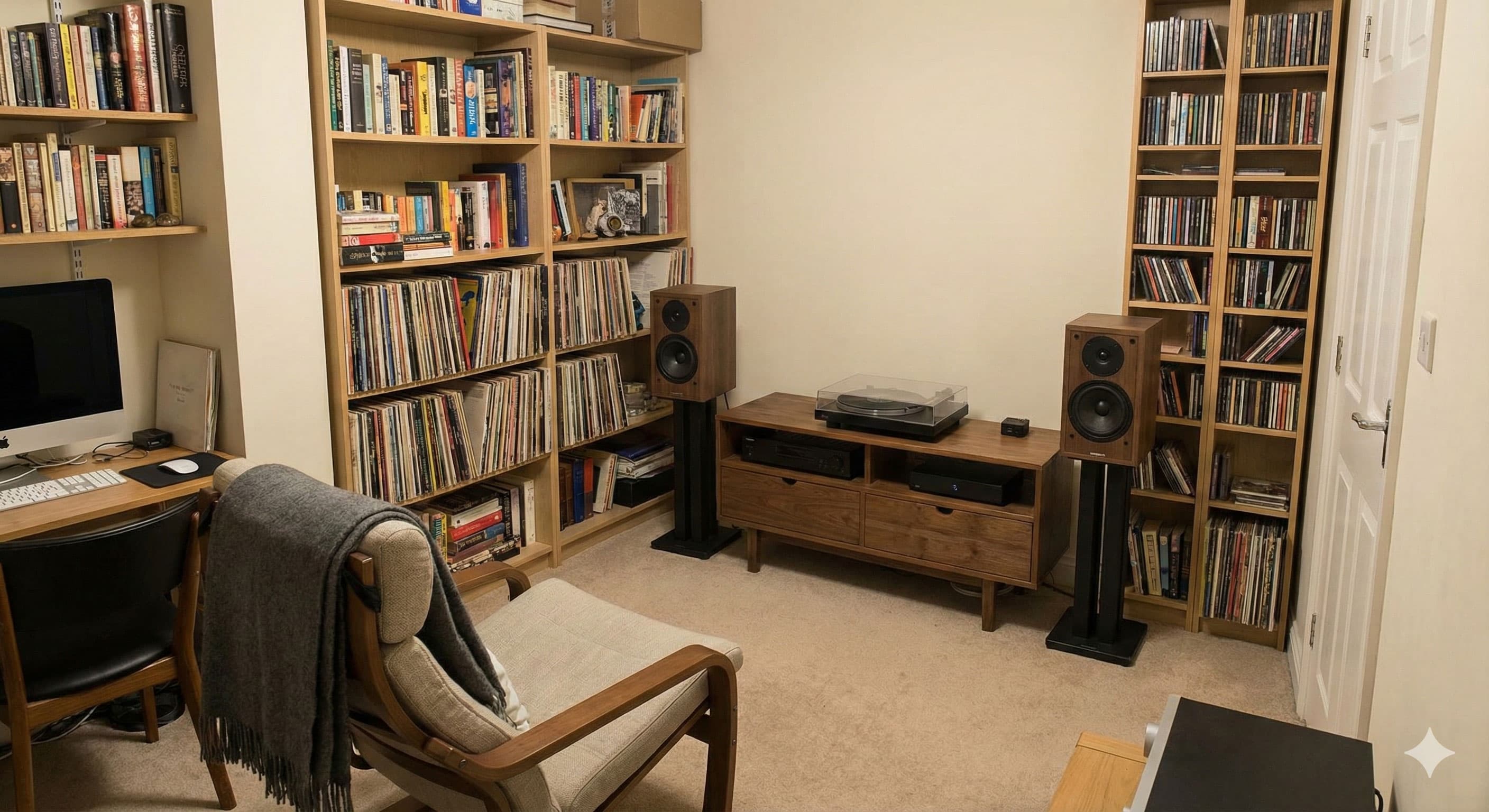
The small listening room is often dismissed as a compromise. In the glossy brochures of high-end audio, we are presented with cavernous lofts, minimalist living rooms with twenty-foot ceilings, and speakers the size of refrigerators standing proudly in free space. But let’s be real. That is not how most of us listen. For the urban audiophile, the work-from-home professional, or the student, the "listening room" is often a 10x12 foot bedroom, a cramped home office, or a cozy den.
And here is the secret that the industry often whispers but rarely shouts: the small room is not a liability. It is an opportunity.
In a massive room, you are fighting physics. You need massive displacement to pressurize the air. You need hundreds of watts to overcome the inverse square law. But in a small room, you achieve something the owners of those massive lofts often struggle to find: intimacy. You are in the nearfield. The ratio of direct sound (from the speaker) to reflected sound (from the walls) is higher. You hear the recording, not the room reverb. It’s tight. It’s personal. It’s like wearing giant headphones, but with the visceral impact of moving air.
However, the small room is ruthless. It has no patience for bloat. A speaker that sounds "rich and full" in a showroom can sound like a muddy, booming mess when shoved into a corner near a desk. A tweeter that sparkles at three meters can become an ice-pick to the eardrum at one meter.
This report is a deep dive into the current market of bookshelf speakers priced under $1,000—a fiercely competitive "golden zone" where diminishing returns have not yet kicked in, but compromise is no longer necessary. We have selected five models that dominate this space: the Wharfedale Diamond 12.1, ELAC Debut Reference DBR62, KEF Q1 Meta, Bowers & Wilkins 607 S3, and the Dali Oberon 1.
These aren't just product reviews. This is an analysis of how these distinct engineering philosophies interact with the unique acoustic physics of small spaces. We are looking for the truth of the sound. No fluff. Just the music.
2. The Physics of Nearfield Acoustics
To understand why we chose these five speakers, we first have to understand the battlefield. Small rooms behave differently than large ones. The acoustics of a space under 1,500 cubic feet are dominated by room modes—standing waves that cause massive peaks and dips in bass response.
The Bass Problem
In a small room, low frequencies are the enemy of clarity. If a speaker tries to push flat down to 30Hz, it will excite the fundamental resonant frequency of the room. The result? "One-note bass." Every bass guitar note sounds the same—a vague, pressurized hum that masks the delicate midrange details.
This is why we focus on "Bookshelf" or "Standmount" speakers. We generally want a speaker that rolls off naturally around 50Hz–60Hz. We let the "room gain" (the natural amplification of bass by boundaries) fill in the bottom end. A speaker that is "bass-light" on paper is often "bass-perfect" in a 10x10 room.
The Dispersion Dilemma
When you sit close to a speaker (nearfield), the angle between you and the drivers changes drastically if you move your head even a few inches.
Beaming: As frequencies get higher, speakers tend to shoot sound like a laser beam rather than a light bulb. If a speaker "beams," moving your head to the side makes the treble disappear.
Integration: Most speakers have a tweeter on top and a woofer on bottom. At a distance of three meters, these sounds merge into one. At one meter, you might hear the treble coming from above and the vocals from below. This destroys the illusion of a cohesive performance.
This is why technologies like waveguides (used by ELAC and B&W) and coaxial drivers (used by KEF) are critical in this segment. They ensure that the sound stage remains stable, even if you slouch in your chair.
3. The Warmth of Heritage: Wharfedale Diamond 12.1
Price: Approx. $399 – $449 / pair
The Vibe: The comfortable armchair of the audio world. Forgiving, lush, and endlessly listenable.
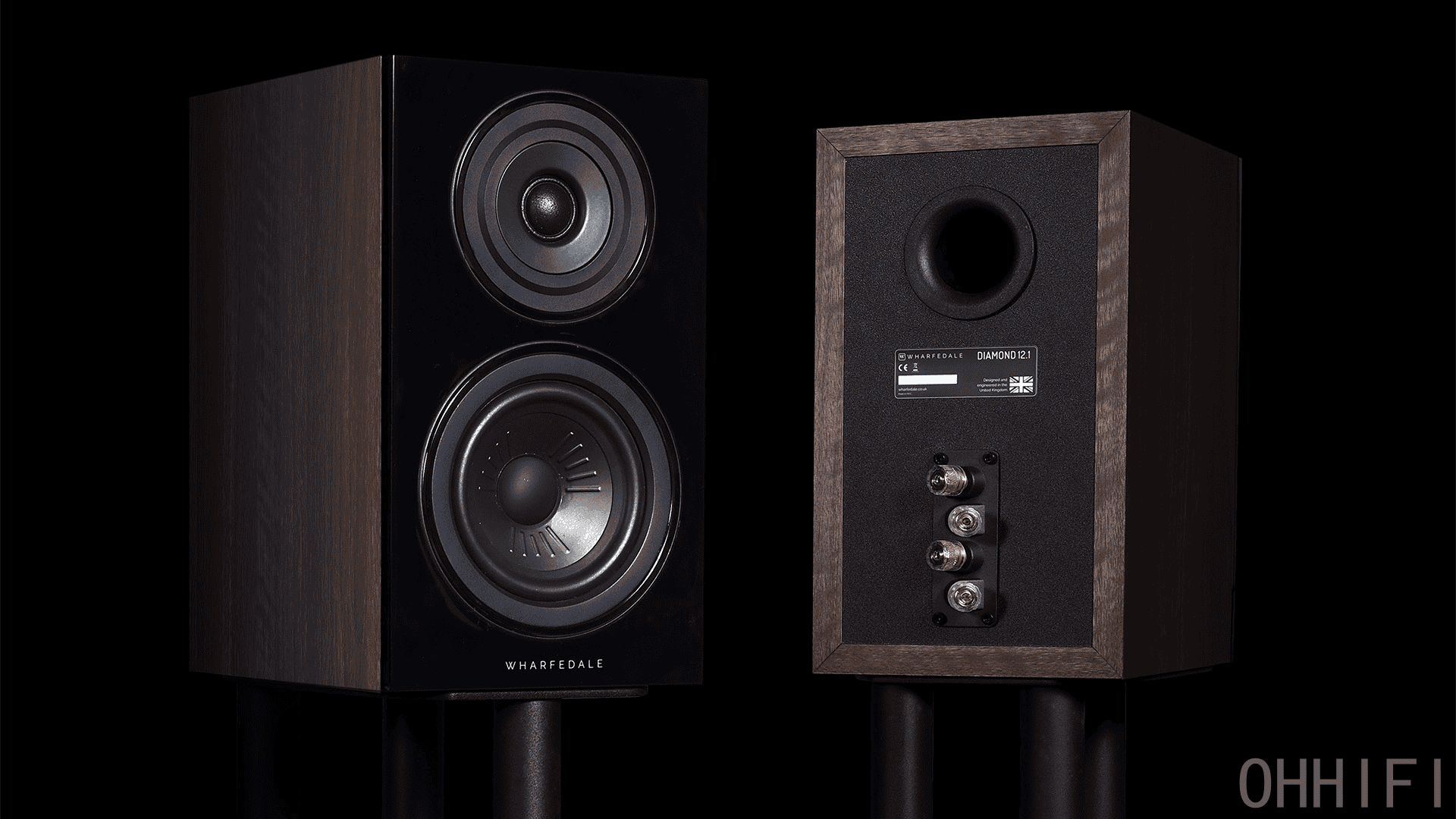
Wharfedale Diamond 12.1
The Engineering Pedigree
Wharfedale is British hi-fi royalty. Gilbert Briggs founded the company in 1932, and for decades, they have pursued a specific sound: warm, mid-centric, and non-fatiguing. The Diamond series is their "everyman" line, but the Diamond 12.1 represents a significant shift. It was designed in collaboration with Karl-Heinz Fink, one of the world's most sought-after speaker consultants.
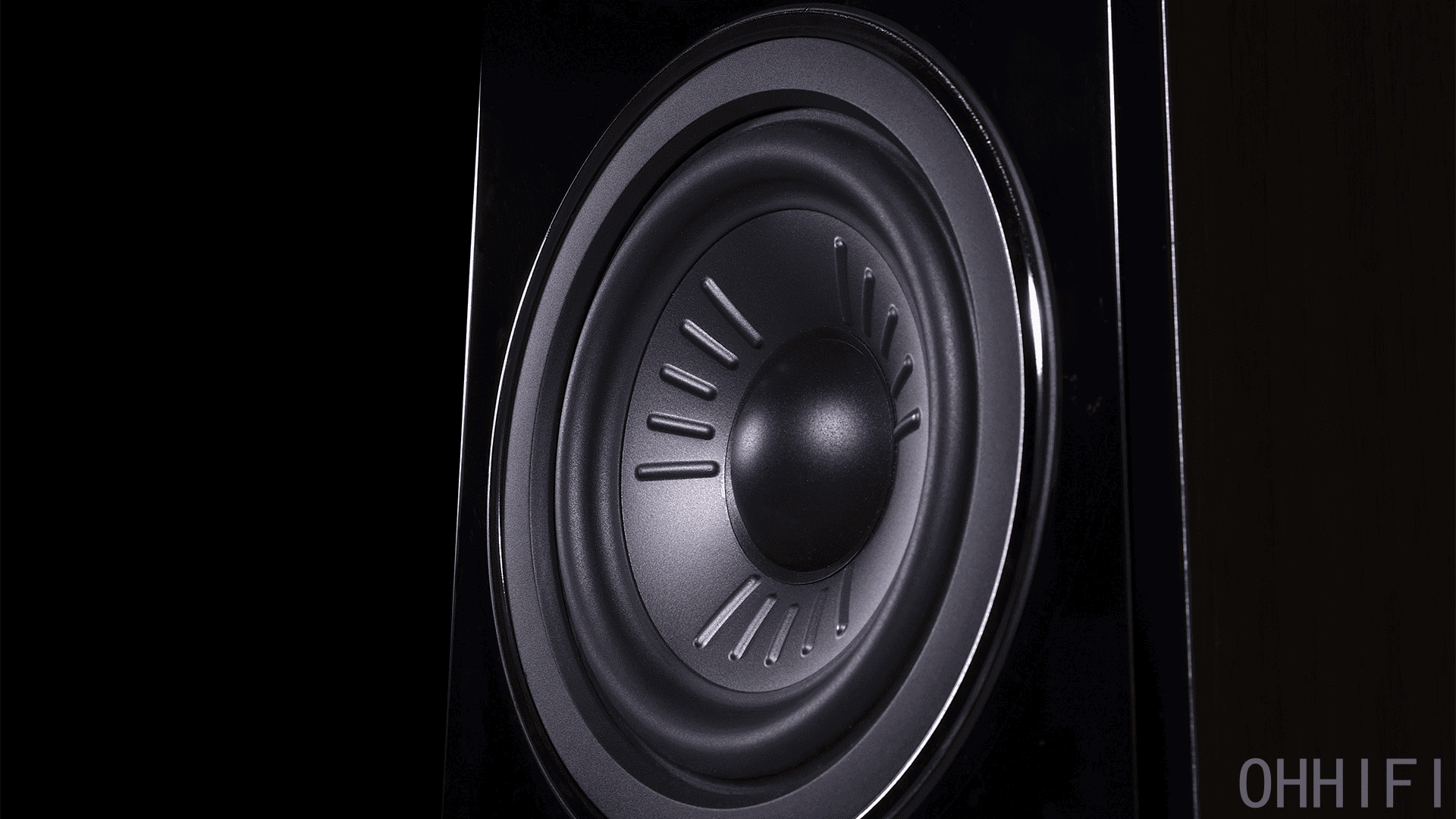
The core innovation here is the Klarity™ cone. In the past, Wharfedale used Kevlar (which has a distinct "woven" sound, sometimes a bit dry). For the 12.1, they switched to a blend of polypropylene and mica. Why? Polypropylene is self-damping—it stops ringing quickly—but it’s often too soft, leading to "mushy" sound. Mica adds stiffness. The result is a driver that is lightweight, rigid, and surprisingly low-coloration.
The cabinet is also deceptively advanced. They use Intelligent Spot Bracing. Instead of just putting random wooden braces inside the box, they used computer simulation to see exactly where the cabinet walls vibrated the most and braced only those spots. This keeps the resonant energy low without killing the "life" of the cabinet completely.
Acoustic Performance in Small Rooms
Let's talk about the sound. The Diamond 12.1 is safe. And I don't mean "boring." I mean "safe" like a Volvo—it will get you home in one piece, relaxed, no matter how bad the road (or the recording) is.
The Midrange: This is the star. In a small room, vocals are right there. When listening to tracks like Billie Eilish’s "ocean eyes", the breathiness of her voice is palpable but velvety. There is no sibilance. The "ssss" sounds don't hiss; they just exist naturally. This is crucial for small rooms where high-frequency reflections off side walls can make sibilance unbearable.
The Treble: The woven polyester dome tweeter is tuned to be smooth. It rolls off gently at the very top. If you are looking for "air"—that sense of the recording studio's ceiling height—you might find it lacking compared to the B&W. But the trade-off is zero listener fatigue. You can listen to these for eight hours while working, and your ears won't ring.
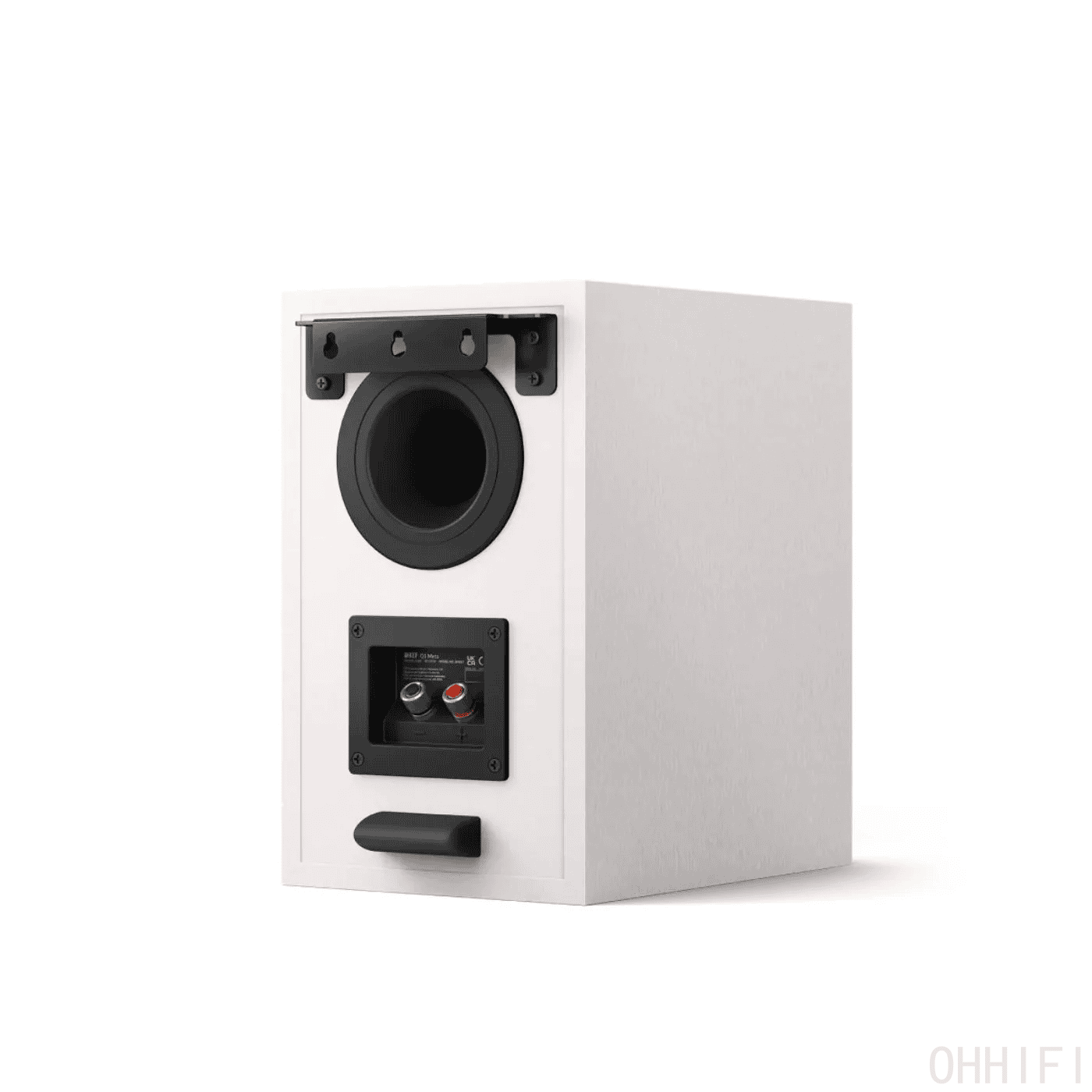
The Bass: Rear-ported. This is the one tricky part for small rooms. If you jam the 12.1s right up against a wall, the bass gets thick. It’s a "warm" thickness, not a "rattling" thickness, but it can obscure the lower mids. In our analysis, pulling them out just 10–12 inches makes a world of difference. The bass tightens up significantly. It doesn't dig deep (don't expect sub-40Hz rumbling), but it has a rhythmic "bounce" that is very pleasing for jazz and classic rock.
The "Audition" Feel
Listening to Fleetwood Mac’s "Dreams", the Diamond 12.1s focus on the cohesion of the band. Mick Fleetwood's kick drum has a soft thud rather than a hard crack. The separation is good, not surgical. You aren't analyzing the mix; you are tapping your foot. It smooths over the cracks in bad recordings. Old, compressed 90s rock albums that sound thin on other speakers sound surprisingly full here.
Verdict: The best buy for the listener who wants to relax. It’s not for the "detail freak," but for the music lover on a budget, it is unbeatable.
Metric
Rating
Notes
Fatigue Factor
Low
Extremely easy to listen to for long periods.
Placement Ease
Moderate
Rear port requires some breathing room.
Detail Retrieval
Moderate
Prioritizes tone over microscopic detail.
Best Genre
Vocal, Jazz, Rock
Loves acoustic instruments and human voices.
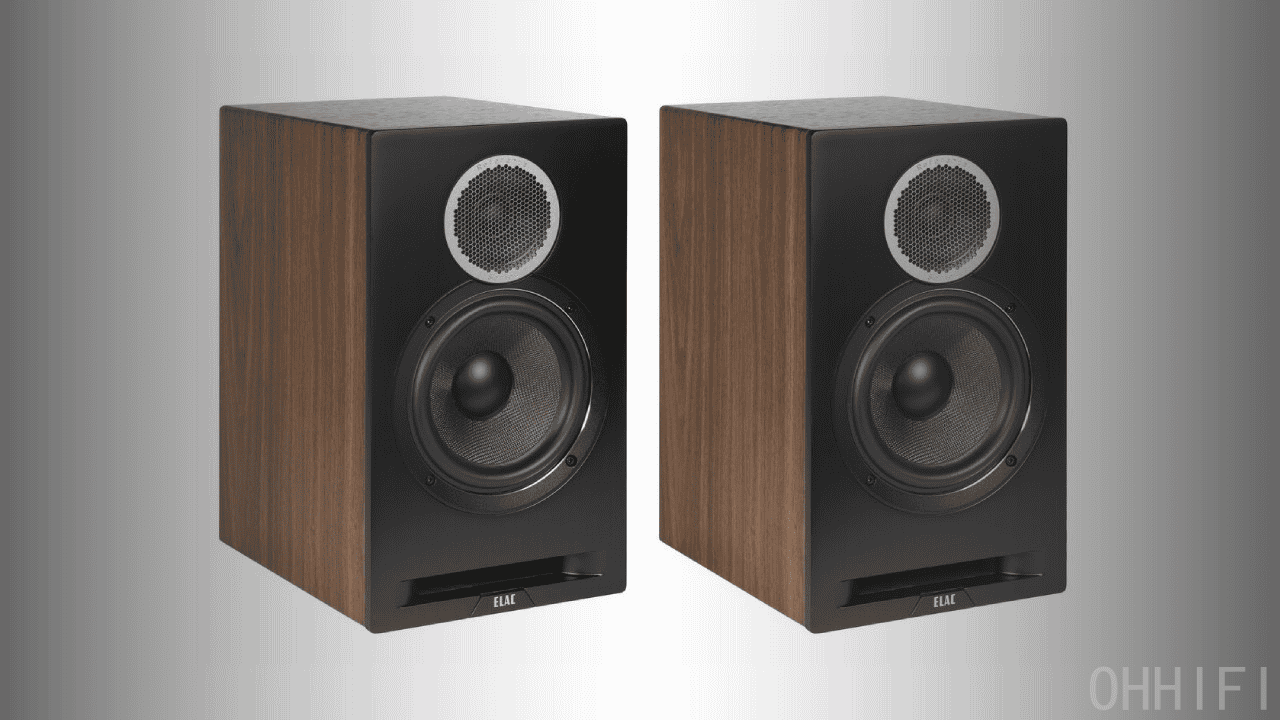
4. The Neutral Reference: ELAC Debut Reference DBR62
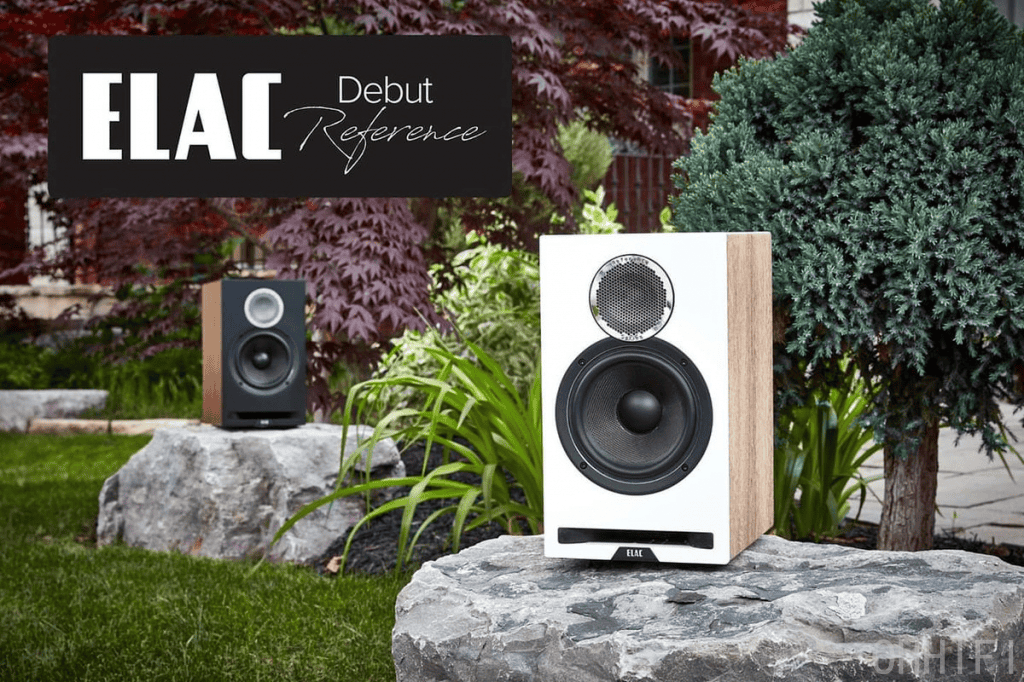
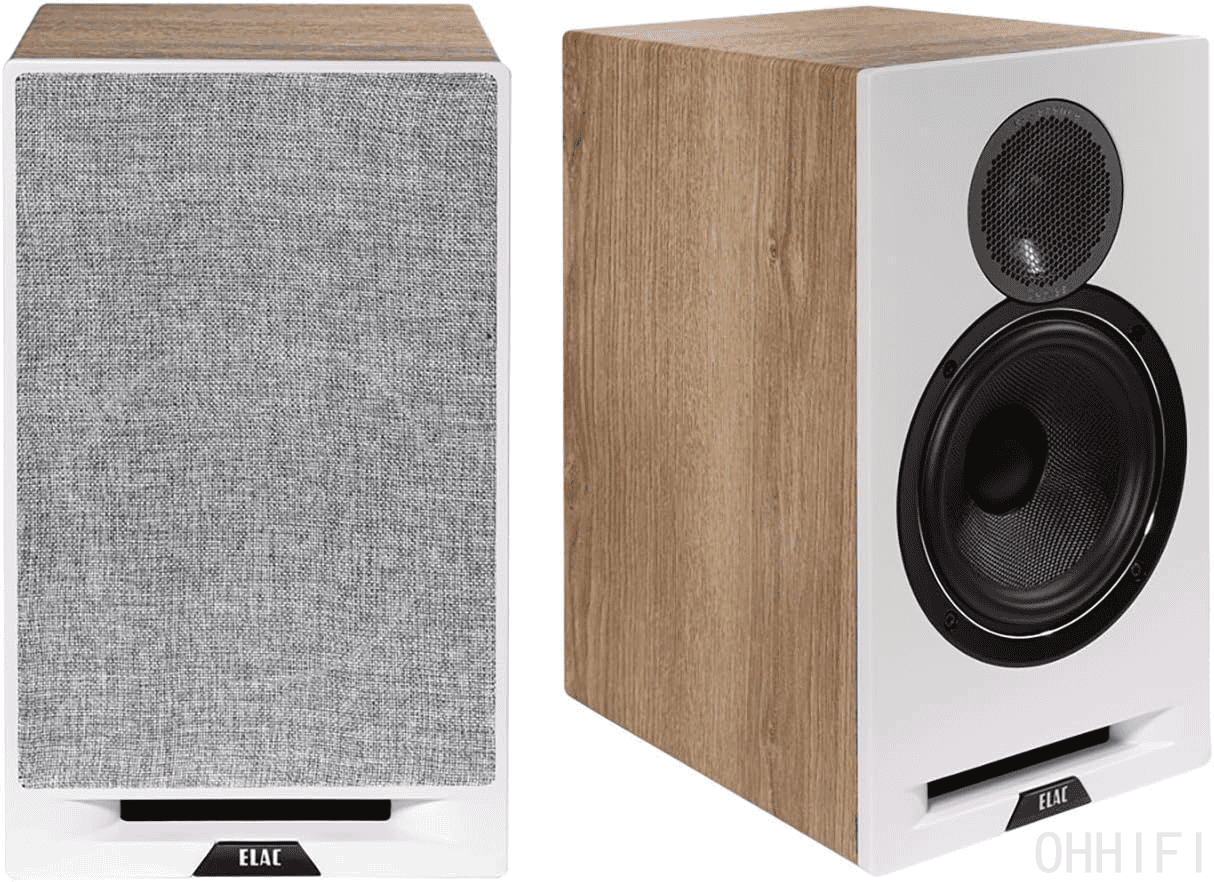
ELAC Debut Reference DBR62
Price: Approx. $699 / pair (Sales often drop to ~$525)
The Vibe: The honest broker. It tells you exactly what is on the recording, nothing more, nothing less.
The Andrew Jones Legacy
You cannot talk about ELAC without talking about Andrew Jones. He is the rock star of speaker design, having engineered $80,000 speakers for TAD before coming to the budget world. His philosophy is simple: engineering over exotic materials.
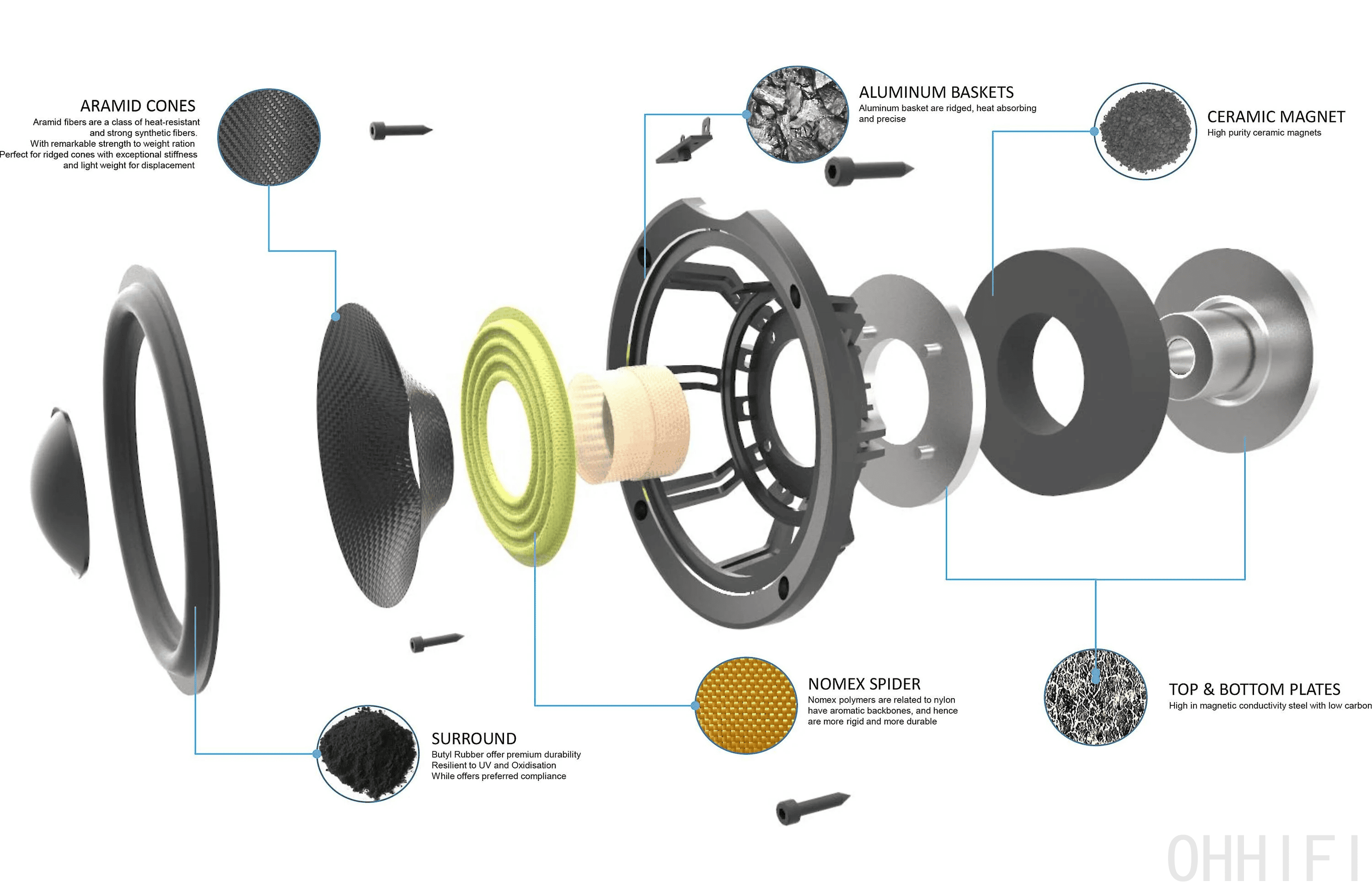
The DBR62 (Debut Reference) is the evolved form of the famous Debut 2.0 B6.2. The "Reference" isn't just marketing. The cabinet is better braced (less vibration). The woofer has a cast aluminum chassis instead of a stamped steel one. Why does this matter? Stamped steel can ring like a bell. Cast aluminum is dead. This means when the bass hits, you hear the drum, not the metal frame of the speaker rattling.
The most critical feature for our small-room purpose is the front-firing slot port. Most speakers blow air out the back. The DBR62 blows it out the front, through a wide, thin slot at the bottom.
Acoustic Performance in Small Rooms
The front port changes the game. You can place the DBR62s almost flush against a wall—maybe 2 or 3 inches away—and the bass remains composed. In a small home office where the desk is pushed against the wall, this is a lifesaver.
Tonal Balance: Neutral. Painfully neutral. If the Wharfedale is a warm blanket, the ELAC is a clear glass window. It doesn't add warmth. It doesn't add sparkle. It just plays the file.
The Waveguide: The tweeter sits inside a deeply dished mesh waveguide. This controls the dispersion, ensuring that the sound sprays wide and evenly. In a small room, this means the "sweet spot" is massive. You can lean over to grab your coffee and the stereo image doesn't collapse.
Bass Performance: The 6.5-inch Aramid fiber woofer moves a lot of air. In a small room, these speakers can genuinely pressurize the space. The bass is punchy and tight, thanks to that cast chassis. It stops on a dime. On electronic tracks like Daft Punk’s "Giorgio by Moroder", the synth bass lines are articulate. You can hear the texture of the synthesizer, not just a low-end blur.
The "Audition" Feel
The DBR62 demands a mental shift. At first listen, they might sound "boring" compared to the B&W or Klipsch. There is no "wow" factor in the treble. But give it twenty minutes. You realize you are hearing everything. On complex orchestral tracks, the separation is superb. The violins don't mush together.
However, they are revealing. If you play a low-quality MP3 or a harsh YouTube rip, the ELAC will show you exactly how bad it is. It doesn't hide the flaws. It’s a tool.
Verdict: The perfect speaker for the listener who values honesty and needs flexible placement. If your room forces you to put speakers near a wall, this is the one to get.
Metric
Rating
Notes
Fatigue Factor
Low-Med
Smooth, but reveals harshness in recordings.
Placement Ease
High
Front port allows near-wall placement.
Detail Retrieval
High
Excellent transparency for the price.
Best Genre
All-Rounder
Handles everything from Classical to EDM equally well.
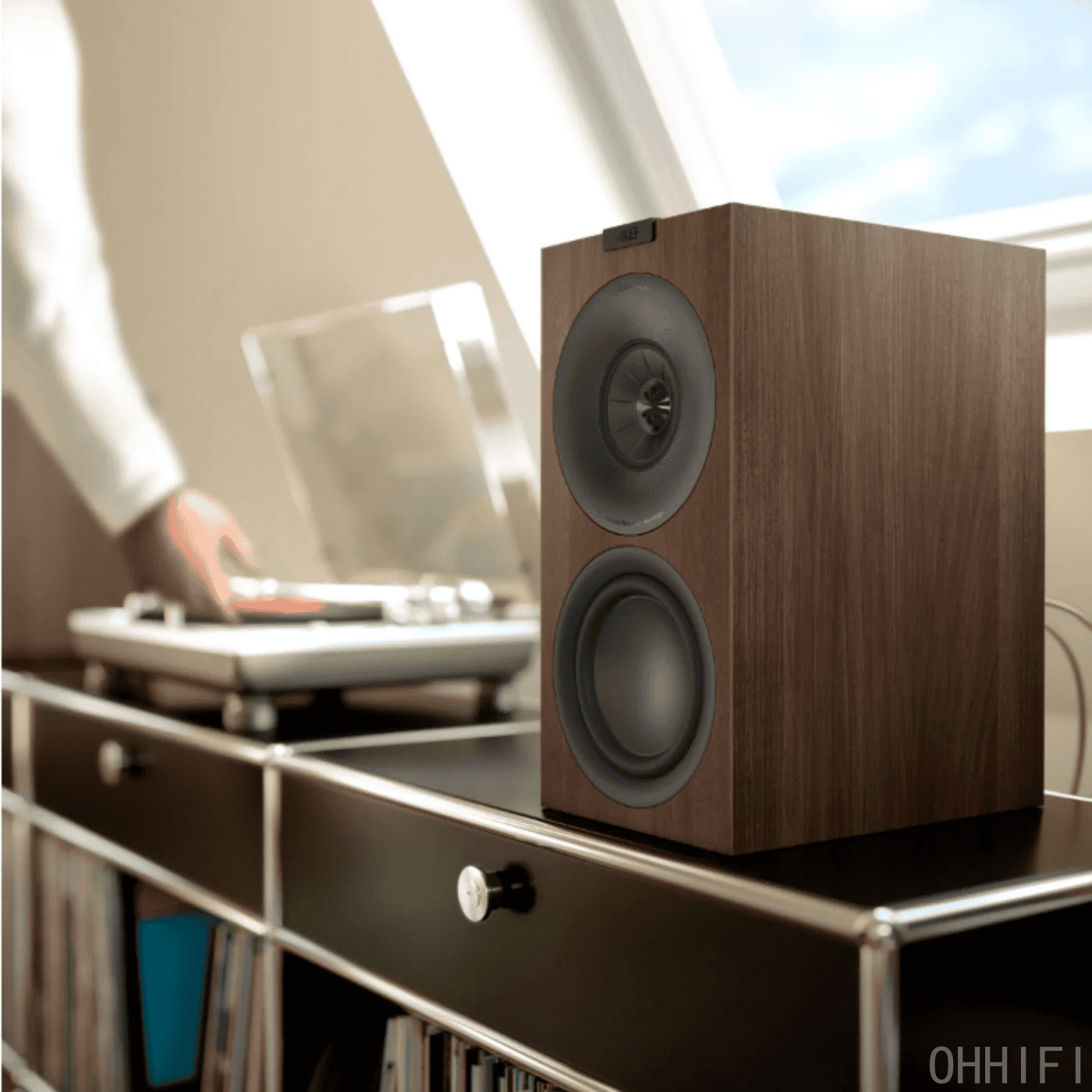
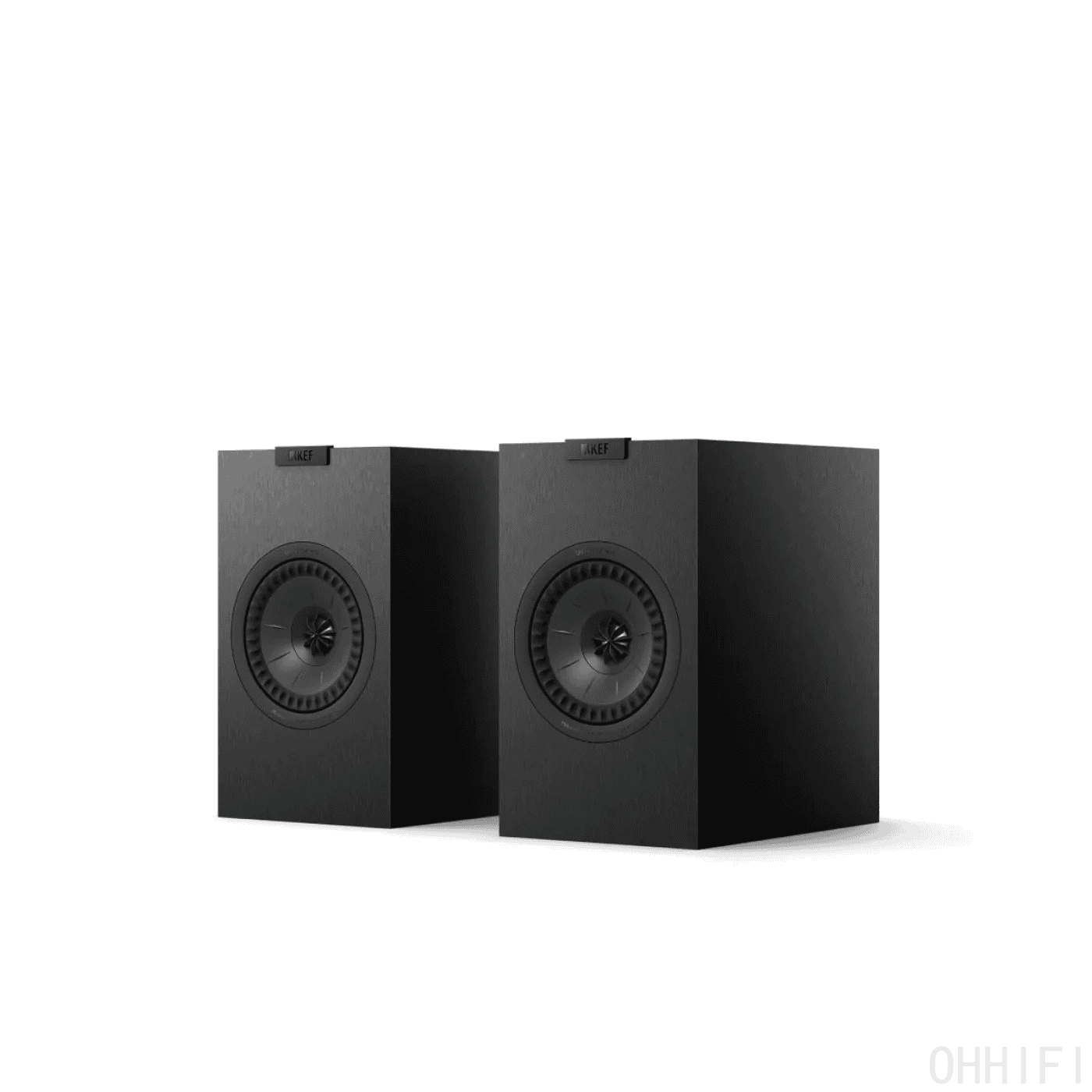
5. The Coaxial Marvel: KEF Q1 Meta
Price: Approx. $599 – $699 / pair
The Vibe: The holographic projector. High-tech, futuristic, and scarily precise.
KEF Q1 Meta
The Uni-Q and the Metamaterial Revolution
KEF doesn't do "normal." Their Uni-Q driver places the tweeter inside the center of the woofer. This is technically a "coaxial" or "coincident" driver.
In a standard speaker (tweeter on top, woofer on bottom), the sound comes from two different places. In the nearfield (sitting 3 feet away), your ears can tell. The sound feels disjointed. With Uni-Q, all frequencies radiate from a single point in space. This mimics how sound occurs in nature (a voice comes from a mouth, not a mouth and a forehead).
The "Meta" in the name refers to Metamaterial Absorption Technology (MAT). This is the cool science part. Behind the tweeter, KEF has installed a small disc with a maze-like structure. This maze is calculated to absorb 99% of the sound that comes off the back of the tweeter. Without this, that back-wave would bounce around inside the cabinet and interfere with the front-wave, causing distortion. MAT kills that noise dead. The result? A treble that is incredibly pure.
Acoustic Performance in Small Rooms
The Q1 Meta dominates the desktop and nearfield environment. Because of the single-point source, you can sit 20 inches away, and the sound is perfectly cohesive.
Imaging: It’s spooky. On a track like Yosi Horikawa’s "Bubbles", you can hear the ping-pong balls bouncing not just left to right, but front to back. The 3D soundstage is superior to every other speaker on this list. In a small room, this effect is magnified. The speakers disappear completely.
The Treble: The MAT works. The high frequencies are crisp but lack the metallic "zing" that older KEF Q-series speakers sometimes had. It’s a dry, fast, clean treble.
The Bass Limit: Physics catches up here. The Q1 Meta is a compact box. It does not have the bass weight of the ELAC or the warmth of the Wharfedale. It rolls off relatively early. In a small room, this is actually a benefit—it rarely booms. But for hip-hop or movies, you will likely feel the need for a subwoofer (like the KEF KC62 or SVS SB-1000) eventually.
The "Audition" Feel
Listening to Radiohead’s "In Rainbows", the layering is exquisite. You hear the decay of the cymbals, the pick on the guitar strings. It is an analytical listen, but in a musical way. It draws you into the performance.
Warning: The Q1 Meta is power-hungry. Its sensitivity is low (86dB). Do not try to drive these with a cheap $50 puck amplifier. They need current. A solid 50-80 watts (like a Yamaha A-S501 or a clean Class D amp like the WiiM Amp) is necessary to wake them up.
Verdict: The King of the Desktop. If you sit close and value imaging above all else, buy these. Just budget for a subwoofer later.
Metric
Rating
Notes
Fatigue Factor
Low
MAT tech removes high-frequency harshness.
Placement Ease
High
Coaxial driver works great in nearfield/corners.
Detail Retrieval
Very High
Laser-focused imaging and clarity.
Best Genre
Electronic, acoustic
Amazing for spatial music; light on heavy bass.
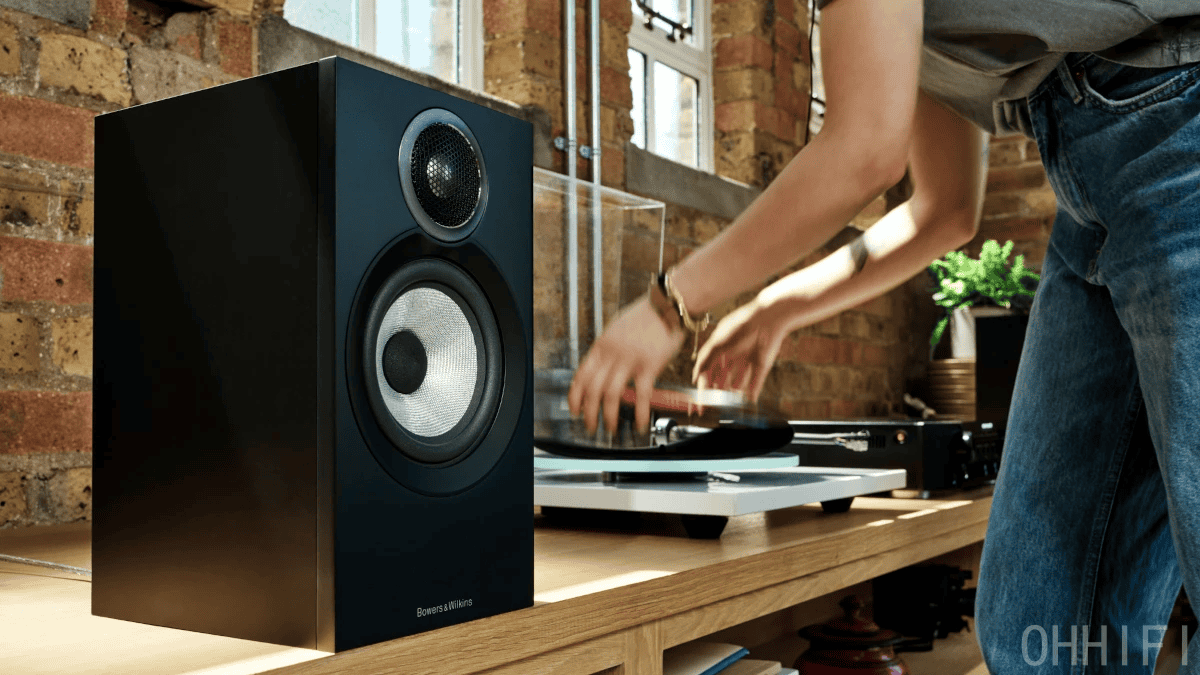
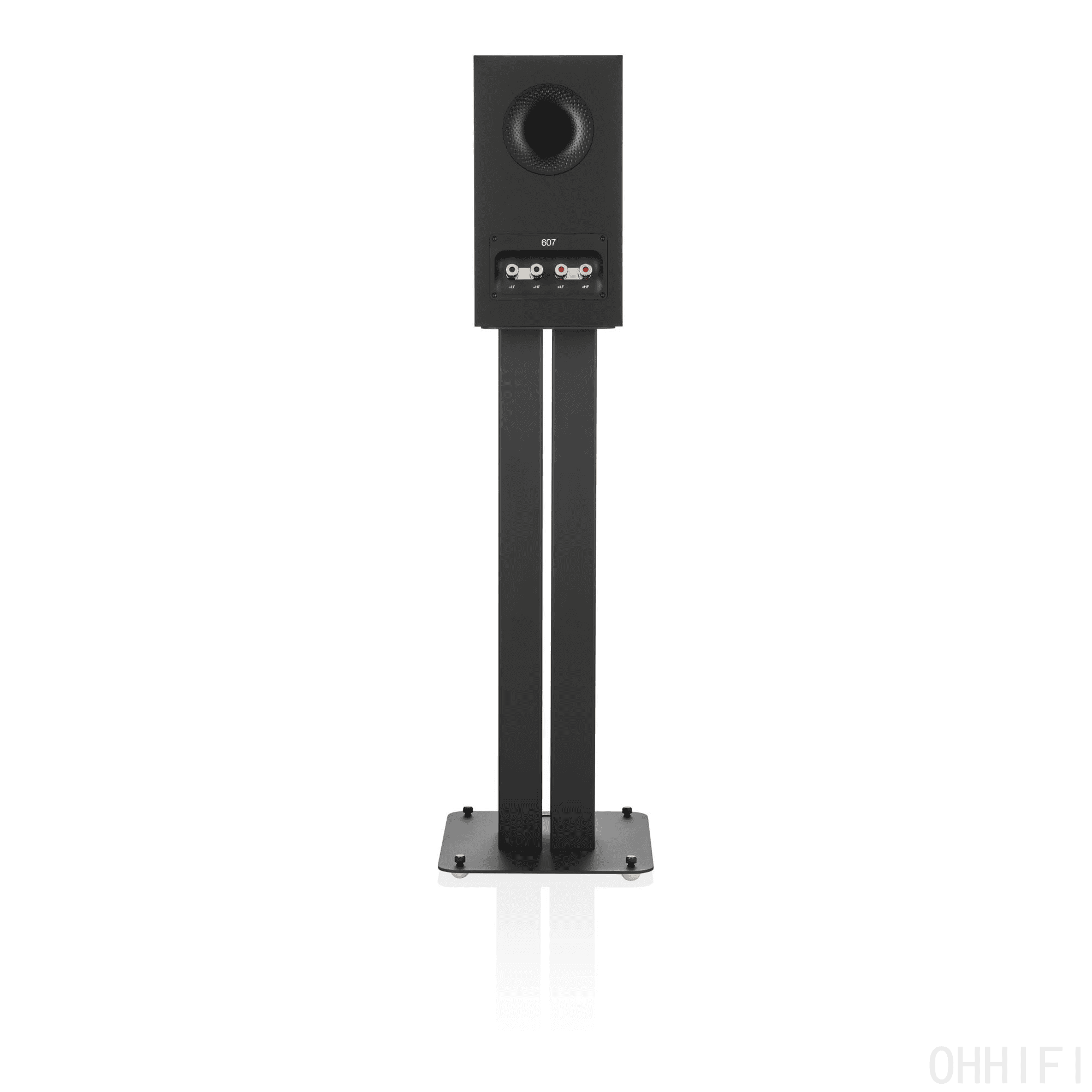
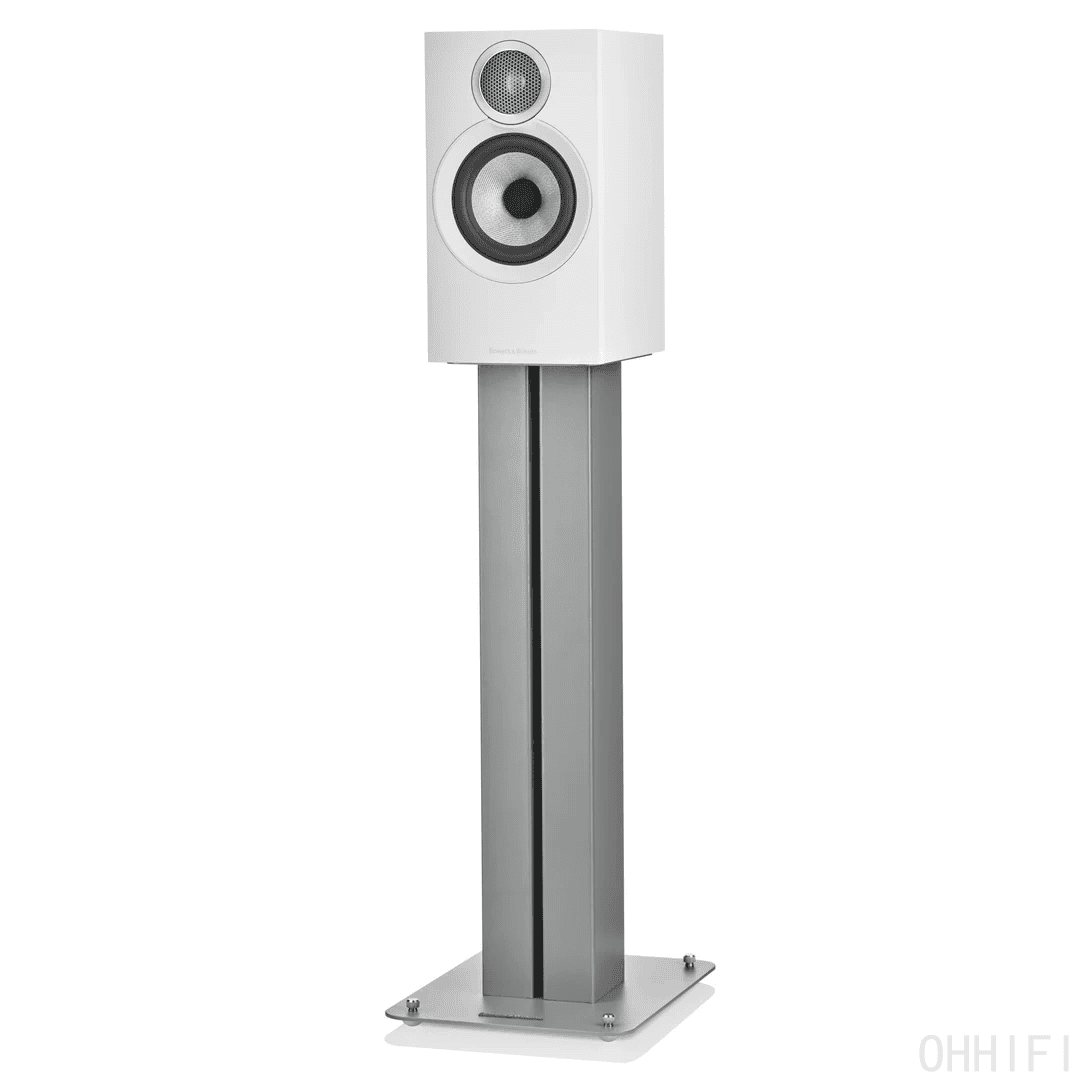
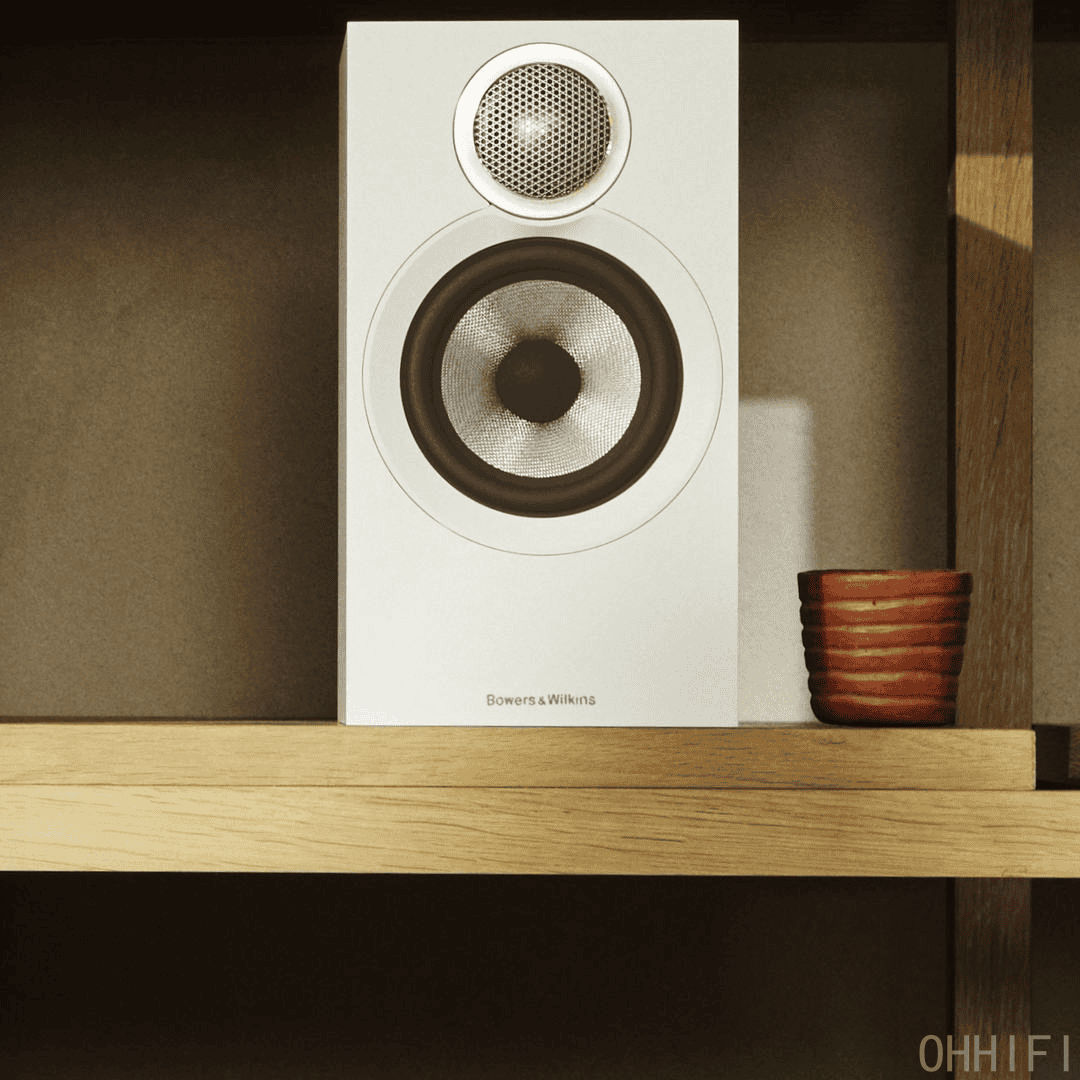
6. The Energetic Performer: Bowers & Wilkins 607 S3
Price: Approx. $900 / pair
The Vibe: The adrenaline shot. Exciting, fast, and relentlessly detailed.
Bowers & Wilkins 607 S3
The Titanium Upgrade
Bowers & Wilkins (B&W) is the sound of Abbey Road Studios. Their "house sound" is famous: punchy bass and extended, sparkling treble. The 607 S3 is the newest iteration of their entry-level standmounter.
The big news for the S3 is the switch to a Titanium Dome tweeter. Previous generations used aluminum. Titanium is stiffer and breaks up at a higher frequency. This pushes distortion further out of the audible range. They also moved the tweeter and woofer closer together to improve integration (a nod to the small room/nearfield listener).
The woofer uses their proprietary Continuum Cone—that silver, woven material that replaced their iconic yellow Kevlar. It’s designed to stop motion instantly, leading to very fast transients.
Acoustic Performance in Small Rooms
This speaker is not for relaxing. It is for engaging.
The "Air": The B&W 607 S3 has more treble energy than the Wharfedale or ELAC. It lights up the room. You hear the reverb tails, the "air" around the instruments. In a dead room (lots of carpets, curtains), this is fantastic—it brings the music to life. In a live room (bare glass, concrete), it can be too much. It requires care.
The Dynamics: Despite being tiny, these speakers slam. B&W knows how to tune a port. The bass isn't deep, but it hits hard. Kick drums have a physical impact that belies the cabinet size. It’s an exciting, "forward" sound.
Resolution: This speaker digs deep into the mix. If the guitarist moves their hand on the fretboard, you hear it. If the singer licks their lips, you hear it.
The "Audition" Feel
Playing The Weeknd’s "Blinding Lights", the 607 S3s are infectious. The synthesizer leads cut through the mix with razor sharpness. The beat snaps. It makes you want to turn the volume up.
However, this is a double-edged sword. On a poorly recorded rock track with harsh guitars, the 607 S3 won't save you. It will scream the harshness at you. It respects the signal, sometimes to a fault.
System Matching Note: Do not pair these with a "bright" amplifier (like some cheaper Onkyo or Rotel models) in a small room. They love "warm" power. A Marantz or NAD amplifier is the perfect partner to tame that titanium tweeter.
Verdict: The Audiophile’s Choice. If you love detail and want to hear what high-end audio sounds like, this is the gateway drug. Just treat your room or pick your amp carefully.
Metric
Rating
Notes
Fatigue Factor
Medium-High
Can be bright in untreated rooms.
Placement Ease
Moderate
Rear port needs space; tweeter needs careful aiming.
Detail Retrieval
Extreme
Reveals details others miss.
Best Genre
Pop, Classical, Rock
Loves dynamic, well-recorded music.
7. The Wide Dispersion Specialist: Dali Oberon 1
Price: Approx. $599 – $600 / pair
The Vibe: The lifestyle audiophile. Easy to place, easy to drive, easy to love.
Dali Oberon 1
The SMC Breakthrough
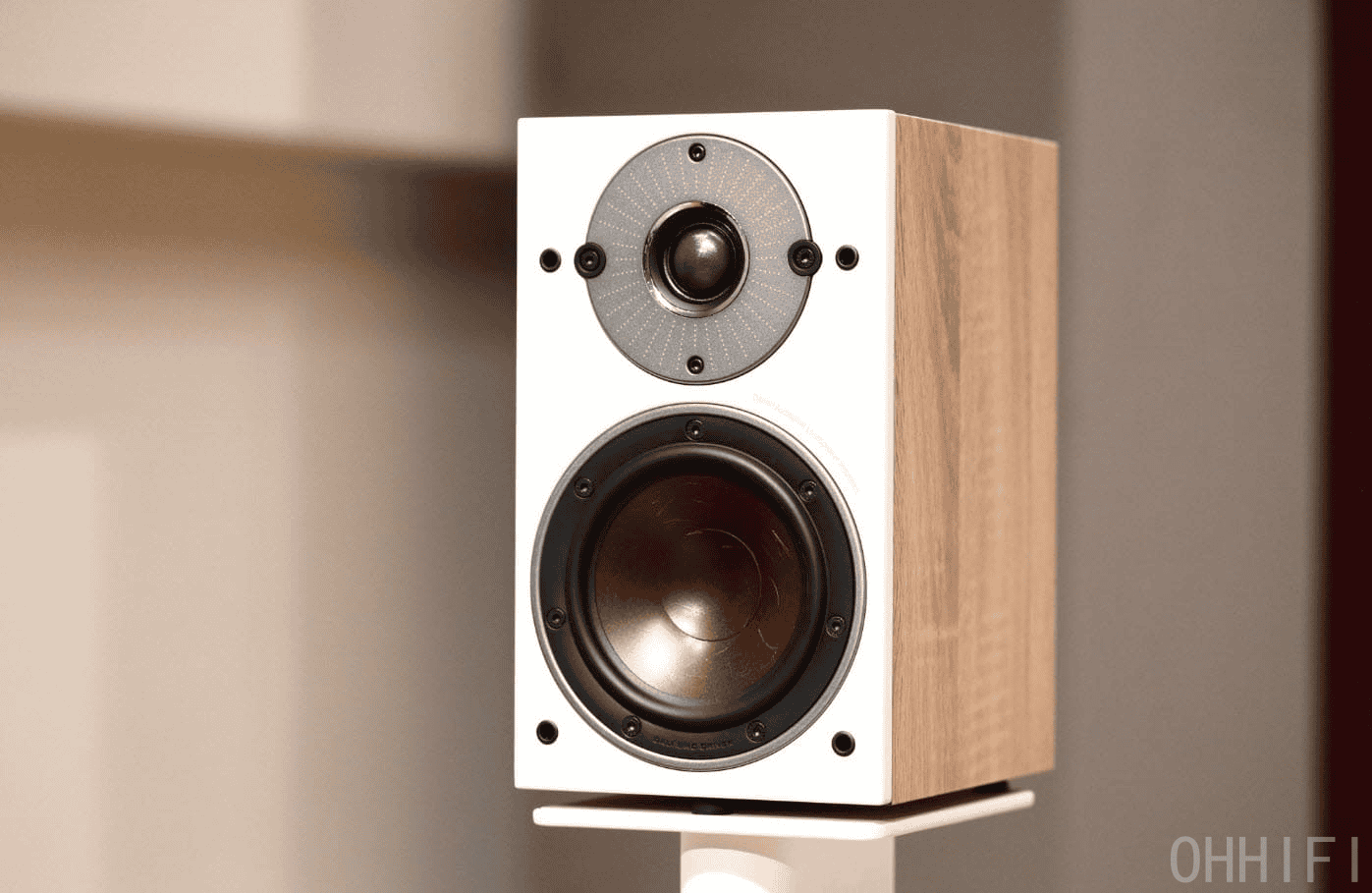
Dali (Danish Audiophile Loudspeaker Industries) has a unique approach. Most speaker magnets suffer from a phenomenon called hysteresis—magnetic resistance that causes distortion as the voice coil moves back and forth. Dali invented a material called SMC (Soft Magnetic Compound). It’s a granule-based magnet system that drastically reduces this distortion. The result is a midrange that is eerily clear and relaxed.
The woofer is their trademark Wood Fibre Cone. It looks rough and uneven (reddish-brown with streaks). That unevenness is intentional—it breaks up resonances on the surface of the cone.
But the real superpower of the Dali Oberon 1 is the Oversized Soft Dome Tweeter. At 29mm (larger than the standard 25mm), it can handle lower frequencies, blending seamlessly with the woofer.
Acoustic Performance in Small Rooms
Dali designs their speakers for Wide Dispersion.
The "No Toe-In" Rule: Every other speaker on this list tells you to create an "equilateral triangle" and point the speakers at your ears. Dali explicitly tells you not to. You point them straight ahead. The soundstage is designed to be wide and enveloping.
Room Filling: In a small room, this is a massive advantage. You don't have to sit in the one "magic chair" to get good sound. You can be sitting on the floor, lying on the bed, or standing at the door, and the treble balance remains remarkably consistent. It fills the space effortlessly.
The Sound: It sits between the Wharfedale and the B&W. It has the warmth and organic texture of the Wharfedale (thanks to the wood fiber) but with more treble extension and air. It’s "sweet" rather than "sharp."
The "Audition" Feel
On Norah Jones’ "Come Away With You", the Oberon 1s render the piano with a lovely wooden timbre. It sounds like a real instrument, not a recording of one. The voice is projected well into the room.
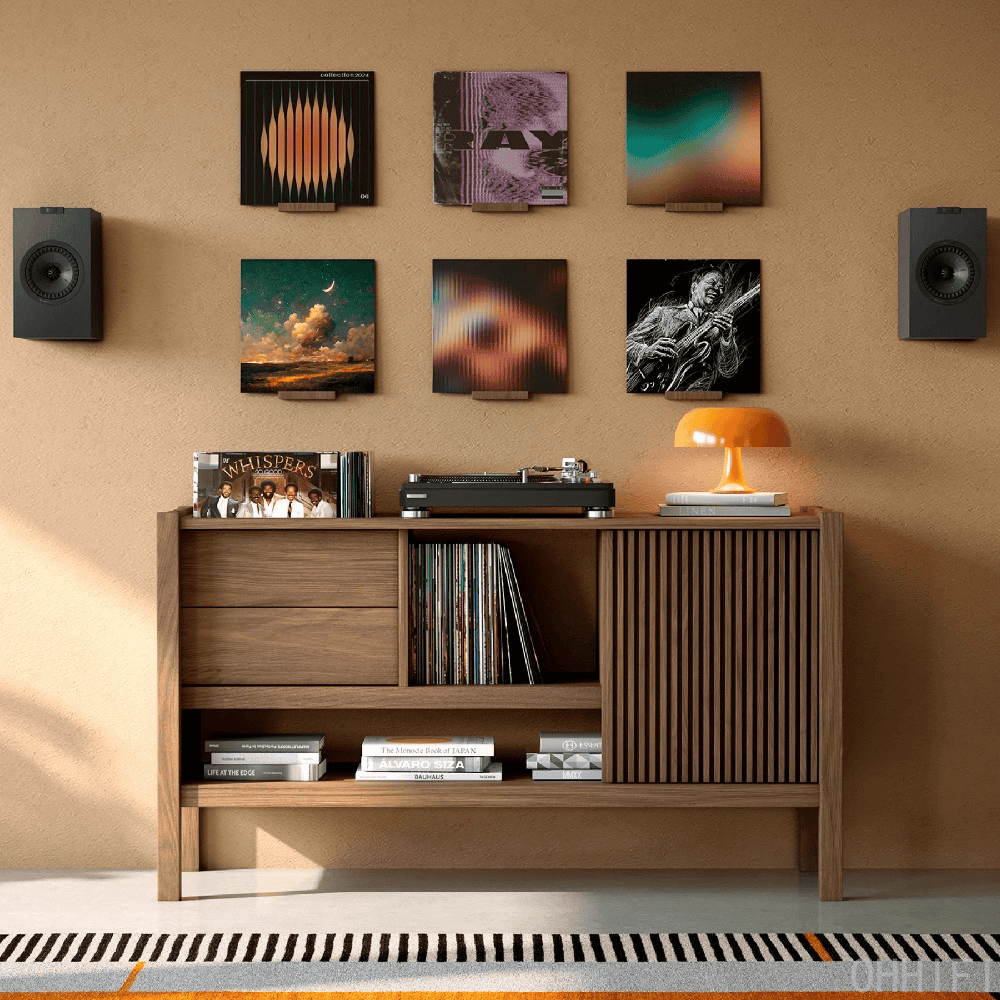
Bass-wise, it’s similar to the KEF—light but tuneful. Because you can place them straight against the wall (Dali even puts keyhole mounts on the back for wall hanging), you can use the wall reinforcement to boost the bass significantly without ruining the stereo image.
Comparison Note: While the new Dali Kupid is making waves as a "fun" lifestyle speaker in vibrant colors, the Oberon 1 remains the superior choice for serious listening. The Oberon cabinet is more inert, and the SMC driver tech is more advanced than what is found in the entry-level Kupid. For a long-term investment under $1000, the Oberon holds the crown.
Verdict: The Zero-Fuss Champion. Best for shared spaces, living rooms, or anyone who doesn't want to obsess over millimeter-perfect speaker placement.
Metric
Rating
Notes
Fatigue Factor
Low
Very smooth, sweet treble.
Placement Ease
Very High
No toe-in required; wall-mountable.
Detail Retrieval
High
Organic and natural rather than "hyper-real."
Best Genre
Acoustic, Pop, Jazz
Great for "live" feeling music.
8. The Art of Comparison: Which One Fits You?
Let’s simplify this. The $1,000 limit is a psychological barrier, but these five speakers prove you don't need to spend more to get "high-end" sound. You just need to pick the right flavor.
Comparison Table: At a Glance
Feature
Wharfedale 12.1
ELAC DBR62
KEF Q1 Meta
B&W 607 S3
Dali Oberon 1
Current Street Price
~$399
~$525 - $699
~$599
~$900
~$599
Sound Signature
Warm, Thick, Forgiving
Neutral, Transparent, Dry
Precise, Holographic
Bright, Fast, Intense
Wide, Organic, Sweet
Tweeter Type
Polyester Dome
Cloth Dome + Waveguide
Aluminum Dome + MAT
Titanium Dome
Oversized Soft Dome
Placement
Needs space (Rear Port)
Easy (Front Port)
Very Easy (Coaxial)
Fussy (Rear Port)
Very Easy (No Toe-In)
Best Use Case
Relaxing / Background
Mixing / Critical Listening
Desktop / Nearfield
Active Listening
Room Filling / Casual
Bass Quantity
Medium
High (for size)
Low
Medium-Low
Low-Medium
The "Use Case" Scenarios
Scenario A: The Home Office Desktop
Winner:KEF Q1 Meta.
Why: You are sitting 2-3 feet away. The coaxial driver is the only one that sums perfectly at this distance. The imaging will make your work day fly by.
Runner Up: Dali Oberon 1 (because you can mount them on the wall behind the desk).
Scenario B: The Small Bedroom / Den (Relaxation)
Winner:Wharfedale Diamond 12.1.
Why: You want to lie down and listen to lo-fi beats, jazz, or podcasts. You don't want to be analyzed; you want to be comforted. The warm sound signature is perfect for winding down.
Scenario C: The "Mini Studio" (Production/Mixing)
Winner:ELAC DBR62.
Why: You need neutrality. You need to know if your mix is too bright or too bass-heavy. The ELAC won't lie to you. The front port allows you to push them back on your console/desk.
Scenario D: The Audiophile Starter Kit
Winner:B&W 607 S3.
Why: You want to hear what the fuss is about. You want to hear the spit in the trumpet and the scratch of the rosin. You are willing to sit in the sweet spot and really listen.
9. System Matching: The Final 10%
You’ve picked your speaker. Now, don't ruin it with the wrong gear. In a small room system under $1,000 for speakers, you are likely looking at amplifiers in the $300–$600 range.
1. The Modern Streamer: WiiM Amp ($299)
This is the breakout product of the year. Class D power, decent wattage (60W), and built-in streaming (Spotify, Tidal, AirPlay).
Pairs best with: Wharfedale 12.1, ELAC DBR62.
Avoid with: B&W 607 S3 (might be a bit dry/bright combo).
2. The Classic Integrated: Yamaha A-S301 ($350)
Old-school cool. knobs, rugged build, Class AB power. Neutral sound with good current.
Pairs best with: KEF Q1 Meta, ELAC DBR62.
3. The Warmth Master: NAD C 316BEE V2 ($499)
Minimalist, warm, punchy. It doesn't have a million watts, but it has "high current" grip.
Pairs best with: B&W 607 S3 (tames the brightness), Dali Oberon 1 (adds body).
The Importance of Stands
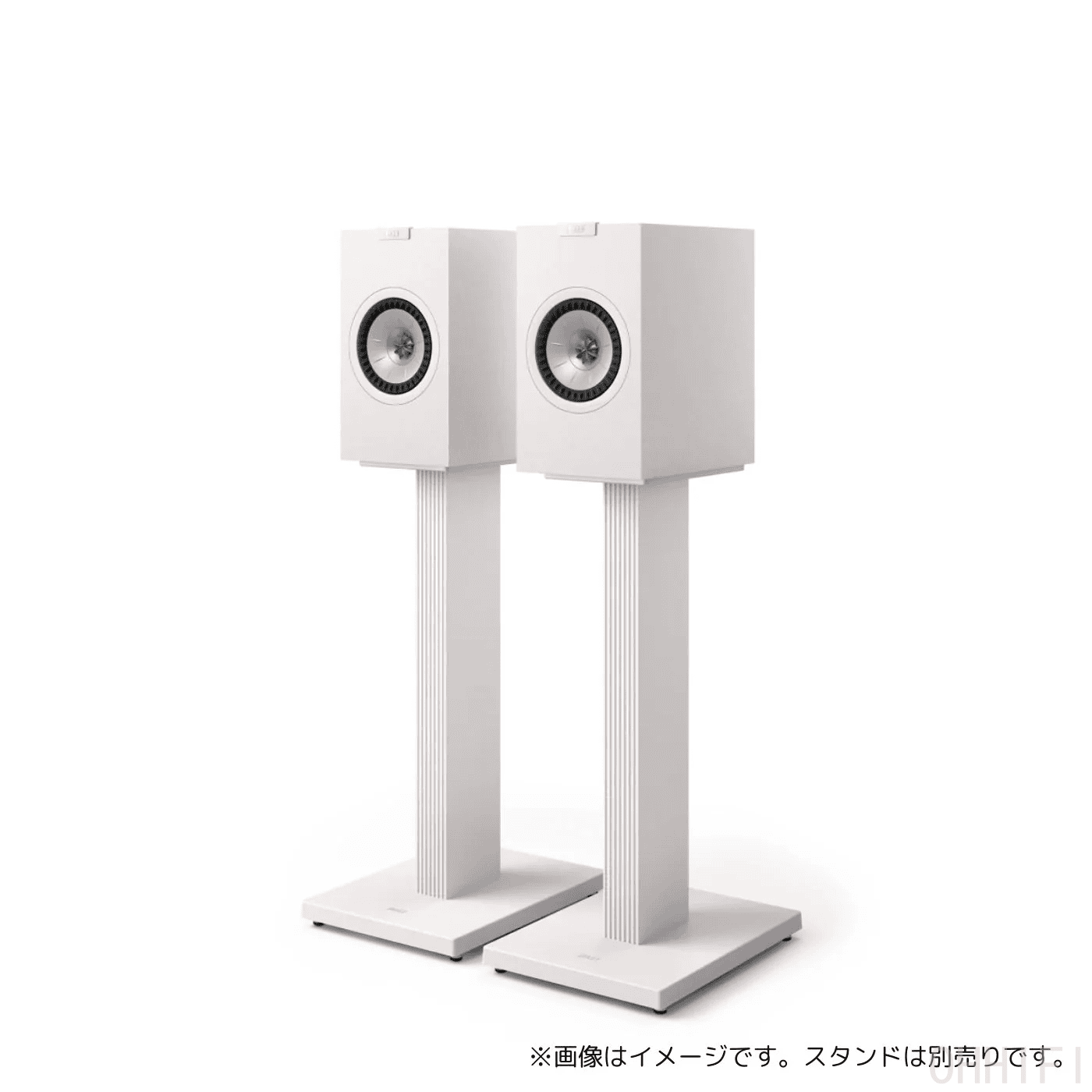
In a small room, you might be tempted to put these on a dresser or desk. Don't. Or if you must, isolate them.
When a speaker sits directly on a desk, the desk vibrates. This muddies the bass and smears the midrange.
Solution: Use isolation pucks (like IsoAcoustics) or foam wedges. Lifting the tweeter to ear level and decoupling the bass vibration will upgrade the sound more than buying a new cable ever will.
10. Conclusion
The notion that you need a massive room and a second mortgage to enjoy high-fidelity audio is a myth. The constraints of a small room—the nearfield listening position, the boundary gain, the intimacy—are actually strengths if you choose the right tool.
If you crave technological precision and sit close, the KEF Q1 Meta is a revelation of engineering.
If you want honest, balanced sound that fits tight against a wall, the ELAC DBR62 is the reference standard.
If you seek excitement and detail, the B&W 607 S3 brings the studio energy home.
If you want warmth and value, the Wharfedale Diamond 12.1 is the comfort food of hi-fi.
If you want effortless, room-filling sound, the Dali Oberon 1 is the easy-living choice.
The best speaker isn't the one with the highest price tag or the fanciest graph. It’s the one that makes you forget you are in a small room, staring at a wall, and transports you to the venue. In the sub-$1000 bracket, these five are the transport ships. Choose your vessel, and enjoy the ride.





Comments