In the rarefied atmosphere of high-end audio, there are loudspeakers, and then there are institutions. The Bowers & Wilkins 801 is, without a shadow of a doubt, the latter. Since the debut of the Series 80 in 1979, the "801" designation has served as a sort of Greenwich Mean Time for the audio industry—a reference point by which others set their watches. It is the monitor that sat in the control rooms of Abbey Road while music history was being pressed onto vinyl; it is the monolith that has anchored the listening rooms of serious audiophiles for over four decades.
When a company decides to replace such an icon, the stakes are terrifyingly high. The launch of the 801 D4 was not merely a product refresh; it was a defense of a dynasty. And just when we thought we had the measure of this new titan, Bowers & Wilkins dropped the 801 D4 Signature—a tuned, polished, and significantly more expensive sibling intended to squeeze every last drop of performance from the architecture.
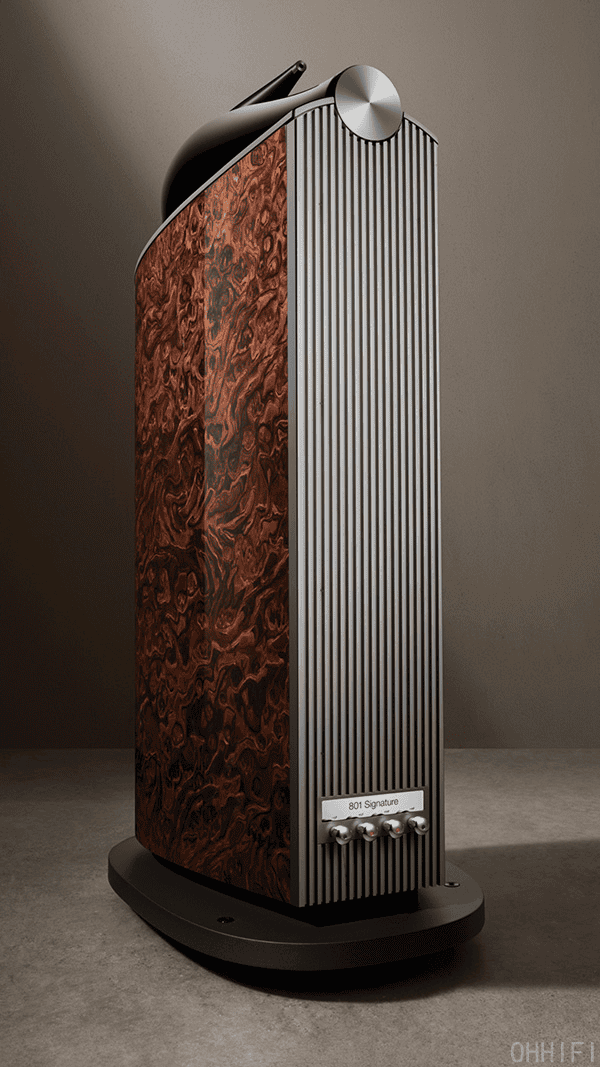
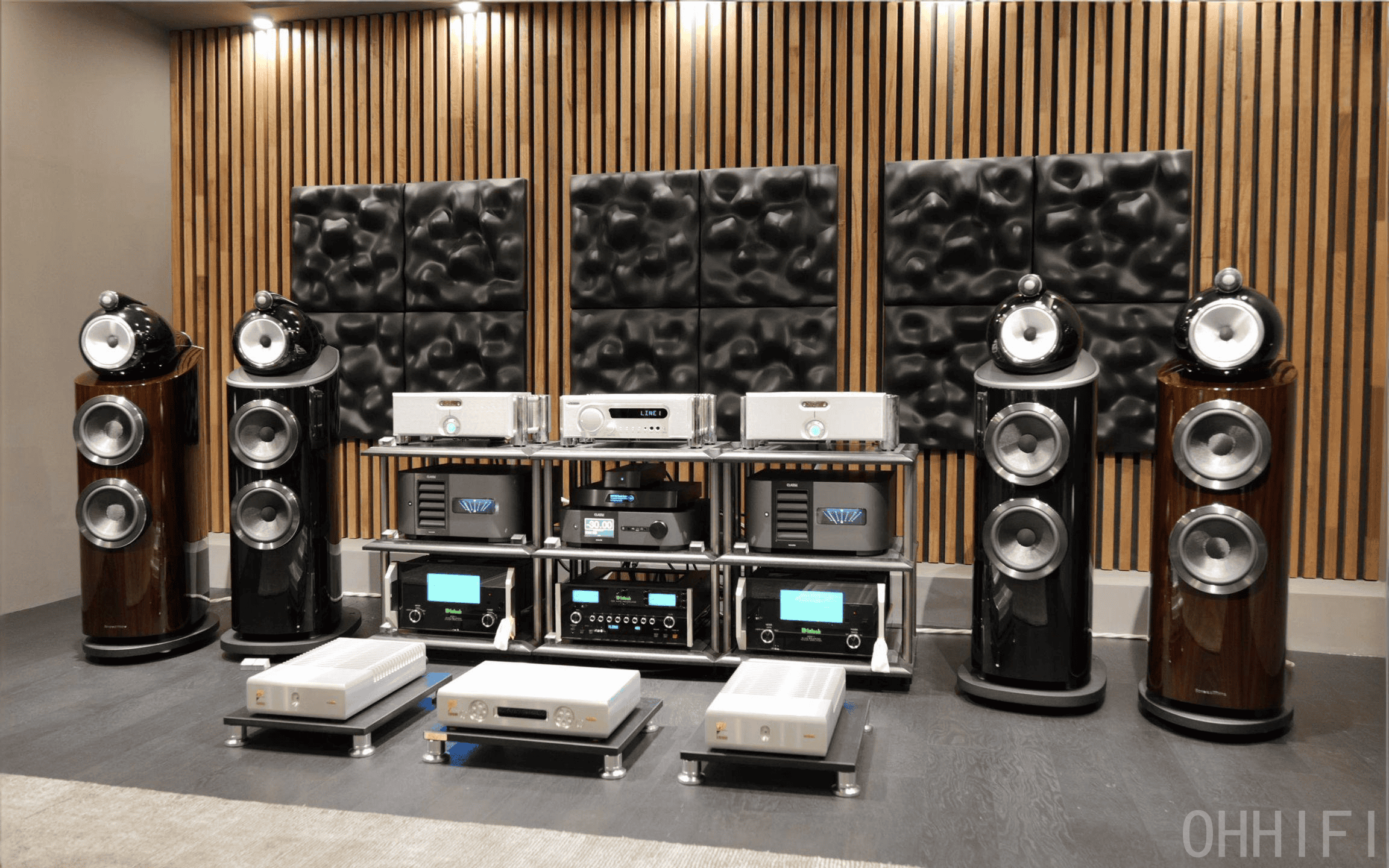
Bowers & Wilkins 801 D4 Signature
But here is the cynical question that hangs over every $50,000+ loudspeaker purchase: Is this genuine innovation, or is it just jewelry? Is the "D4" generation a quantum leap from the celebrated D3, or simply a cosmetic nip-and-tuck? And does the "Signature" badge, with its $14,000 premium, offer a sonic difference that a human ear can actually detect, or is it merely a tax on exclusivity?
To answer these questions, we cannot simply listen to a few tracks and look at the spec sheet. We must dissect these machines. We must understand the physics of their cabinets, the metallurgy of their motors, and the psychology of their voicing. We must live with them, wrestle them into position, feed them current until our amplifiers weep, and play music until we lose track of time.
Bowers & Wilkins 801 D4 Signature
This report is the result of that process. Over the course of several months, we have evaluated both the standard 801 D4 and the 801 D4 Signature. We have pitted them against the industry's heavyweights—KEF, Wilson, Focal—and pushed them to their breaking points. What follows is not just a review; it is an autopsy of the state of the art in British loudspeaker design.
II. The Lineage: A Brief History of Evolution
To understand the 801 D4, one must understand the DNA it carries. This is not a "clean sheet" design in the sense that it ignores the past; rather, it is the culmination of an iterative engineering philosophy that began in the late 70s.
The Series 80 (1979)
The original 801 was a radical departure from the "BBC Dip" monitors of the era. It introduced the modular construction that defines the 801 to this day: a large bass bin, a separate midrange head, and a tweeter on top. This wasn't for style; it was for time alignment and diffraction control. It became the reference at Abbey Road, cementing the brand's reputation.
The Matrix Era (1987)
With the Matrix 801, B&W introduced the internal bracing grid that would become their hallmark. By interlocking panels inside the cabinet, they drastically reduced cabinet coloration. This was the era where the "box" began to disappear from the sound.
The Nautilus Revolution (1998)
This was the paradigm shift. The Nautilus 801 introduced the curved cabinets and the "tube loading" technology derived from the legendary Nautilus snail speaker. It moved the game from "damped boxes" to "aerodynamic channeling" of sound.
The Diamond Era (D1, D2, D3)
Starting in 2005, the "D" suffix heralded the arrival of the Diamond tweeter. Chemical Vapor Deposition (CVD) allowed B&W to create a dome with a breakup frequency of 70kHz, pushing distortion well beyond the audible band. The D3 (2015) was a massive overhaul, introducing the Continuum cone (goodbye, yellow Kevlar) and the Aerofoil bass drivers.
The D4: Refinement or Revolution?
The 801 D4 builds on the D3 platform but fundamentally alters the cabinet architecture. The "Reverse Wrap" cabinet, previously reserved for the smaller 800 models, now extends to the flagship. The internal "Matrix" bracing now uses aluminum and plywood rather than MDF. The "Biomimetic Suspension" replaces the fabric spider.
In short: The D4 is the result of B&W engineers looking at the D3 and asking, "Where is the noise coming from?" and then ruthlessly hunting it down.
III. Anatomy of a Giant: The Engineering of the 801 D4
Let’s strip the 801 D4 down to its bones. Standing 48.1 inches tall and weighing 221.8 pounds (100.6 kg), this is a dense, inert object. You do not move it; you negotiate with it.
1. The Reverse Wrap Cabinet
In traditional speaker design, you take a flat baffle, cut holes for the drivers, and build a box behind it. The problem? That flat baffle creates sharp edges. When sound waves ripple out across the baffle and hit the edge, they diffract, creating secondary sound sources that muddy the image.
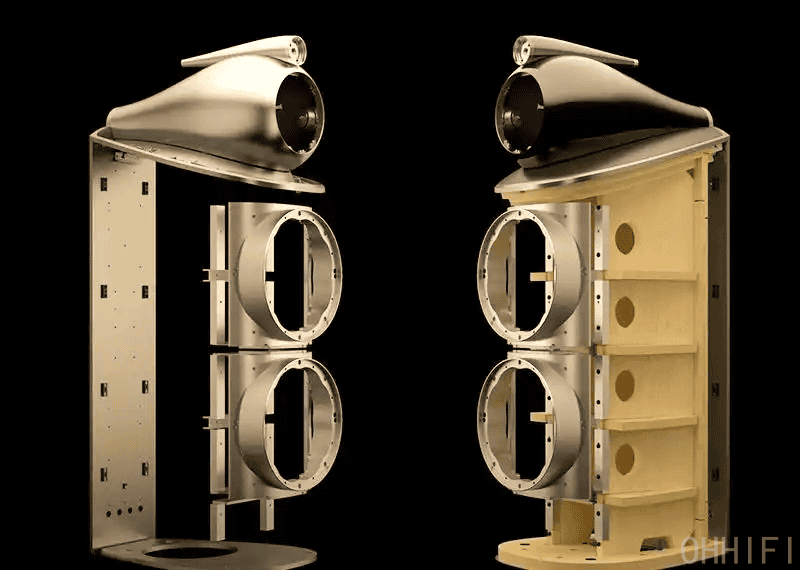
The D4 flips this geometry. The front of the speaker is a continuous curve, formed from multiple layers of beech wood pressed under immense heat and pressure. The drivers are mounted on the curve. The "back" of the cabinet is actually the join, which is bridged by a solid spine of cast aluminum.
Why this matters: By eliminating the flat baffle and the sharp edges, the 801 D4 drastically reduces diffraction. The sound wave wraps around the cabinet smoothly, disappearing into the room rather than bouncing off the speaker's own face.
2. The Aluminum Spine
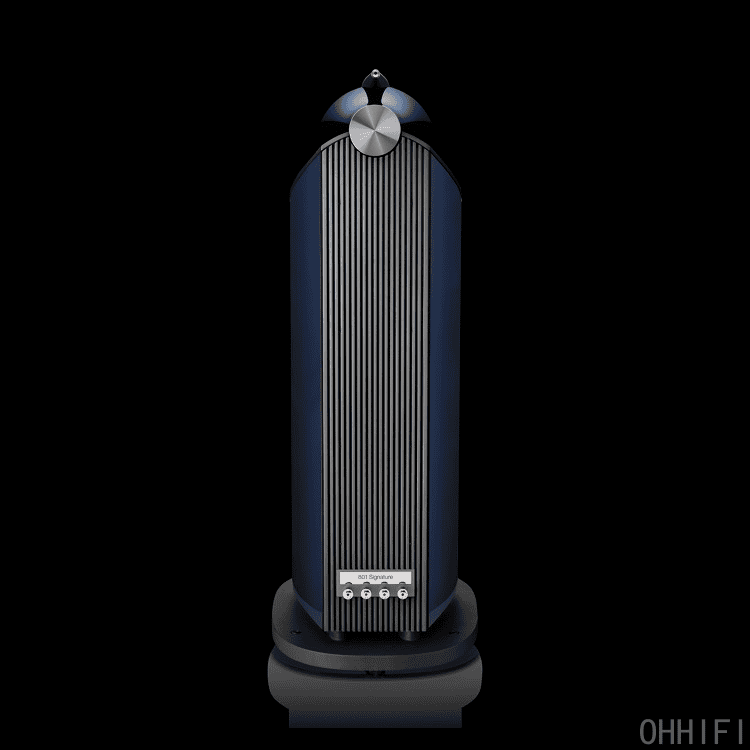
The rear spine is not just a structural brace; it is a functional component. It acts as a passive heatsink for the crossover network, which is mounted directly to it on the inside. This isolates the sensitive crossover components from the air pressure changes inside the cabinet while keeping them thermally stable.
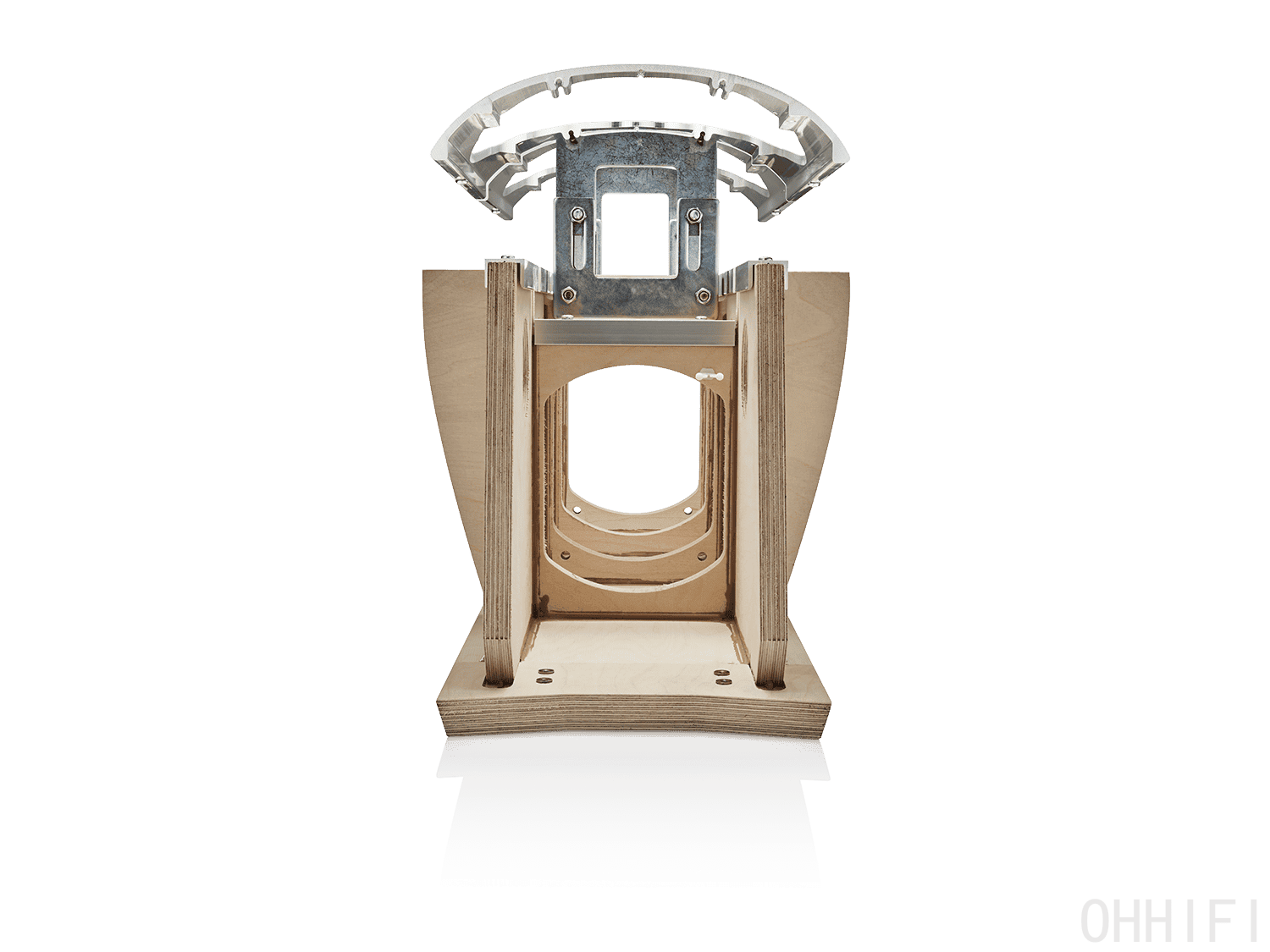
3. The Ultimate Matrix
Inside the bass cabinet, the bracing has evolved. The "Matrix" is now a hybrid of solid plywood and aluminum reinforcing braces. In the D3, the top plate was wood. In the D4, the entire top plate of the bass cabinet is a massive slab of cast aluminum. This provides a rock-solid, silent platform for the "Turbine Head" to sit on.
4. The Turbine Head
The midrange is the soul of music, and B&W guards it jealously. The 150mm Continuum FST midrange driver sits in its own dedicated enclosure: the "Turbine Head." This teardrop-shaped pod is cast from a single piece of aluminum and is internally damped to be completely inert.
Crucially, the head is decoupled from the bass cabinet. It doesn't bolt on; it floats on a revised decoupling system that prevents the seismic violence of the bass drivers from vibrating the midrange cone. In the D4, this decoupling has been re-engineered with new silicone materials to further sever the mechanical link.
5. The Biomimetic Suspension: The Death of the Spider
This is arguably the most significant innovation in the D4 series. For nearly a century, dynamic drivers have relied on a "spider"—a yellow, corrugated fabric disc behind the cone—to keep the voice coil centered.
B&W engineers realized the spider is essentially a secondary speaker. It has surface area. As it moves back and forth, it pumps air, creating noise and resistance behind the cone.
The Biomimetic Suspension replaces the fabric spider with a minimalist, skeletal system of composite "legs." It looks like a piece of modern art or insect anatomy. It provides the centering force but has almost zero surface area. It is acoustically transparent.
The Result: B&W claims an 80dB reduction in secondary noise from the suspension. This is not a subtle tweak; it is a fundamental change in driver mechanics, aiming for a midrange of unprecedented transparency.
6. The Solid Body Tweeter-on-Top
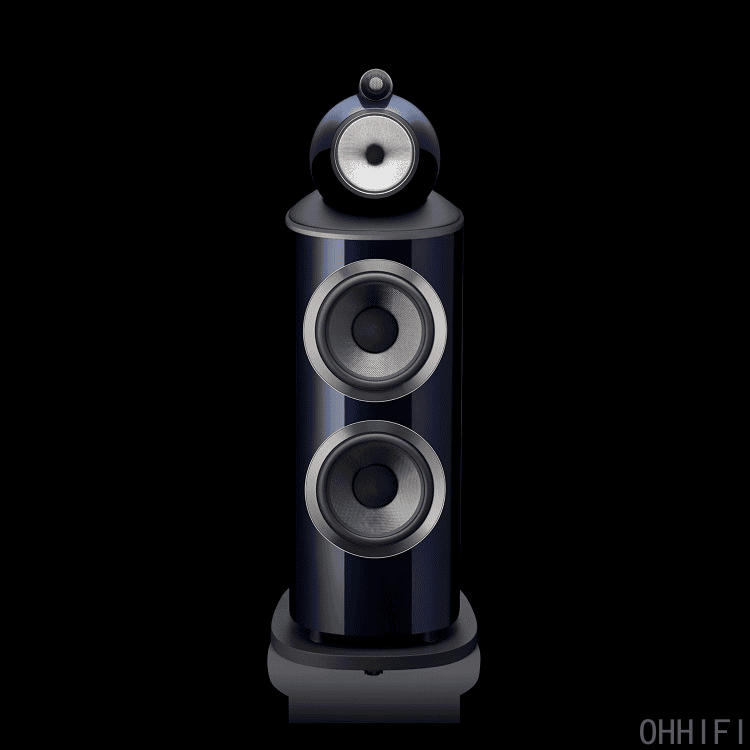
The famous "microphone" housing on top has changed. It is now nearly 12 inches long, milled from a solid block of aluminum. This elongated tube acts as a more effective "reverse horn," absorbing the sound from the back of the diamond dome so that it doesn't reflect back and color the sound. The magnet system now uses two neodymium magnets instead of three, which, counter-intuitively, reduces compression behind the dome.
IV. The Signature Difference: Is It Worth the Premium?
With the 801 D4 Signature, B&W asks you to pay approximately $14,000 more (bringing the price to ~$60,000/pair). What do you get for the price of a decent used car?
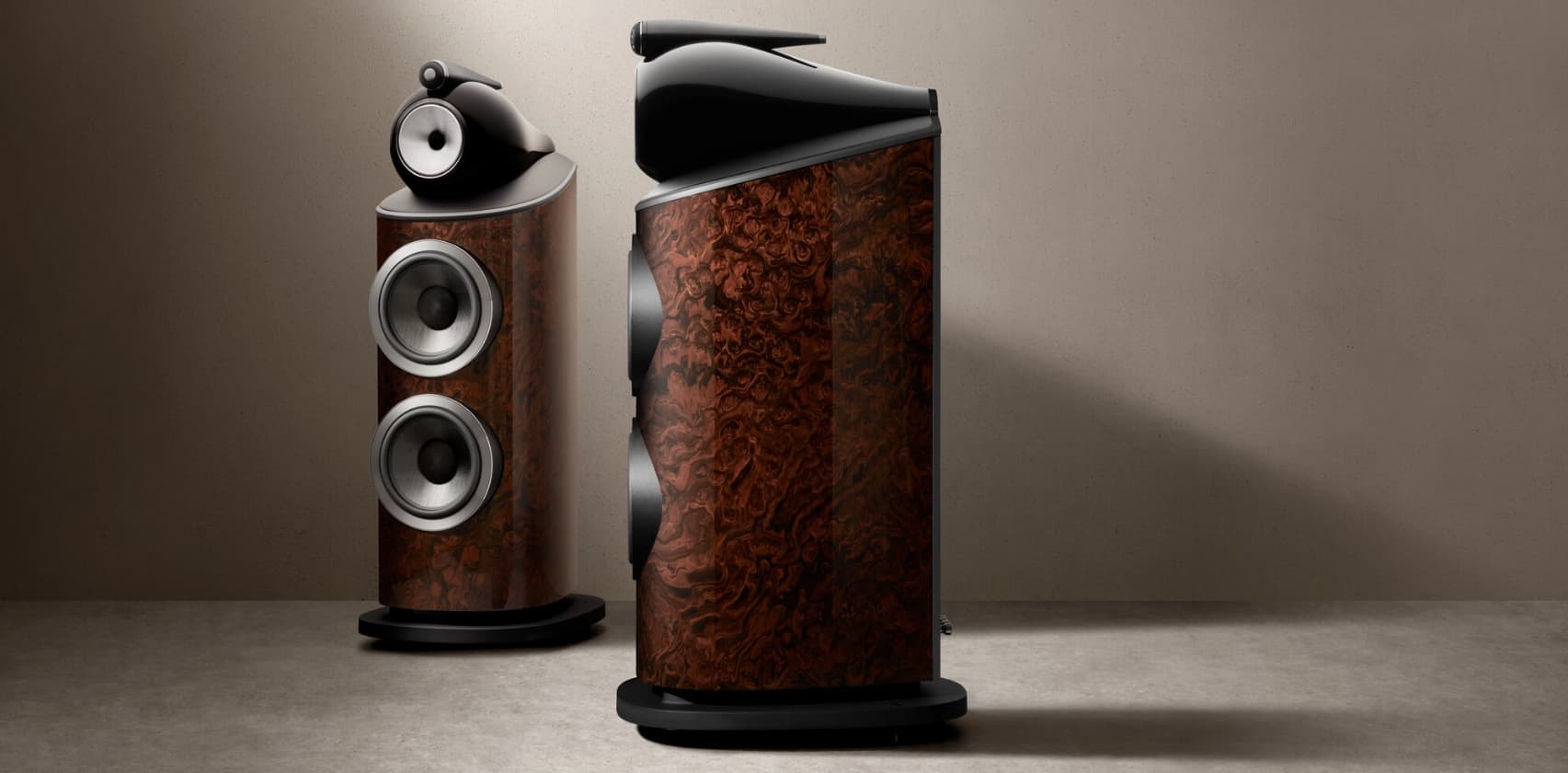
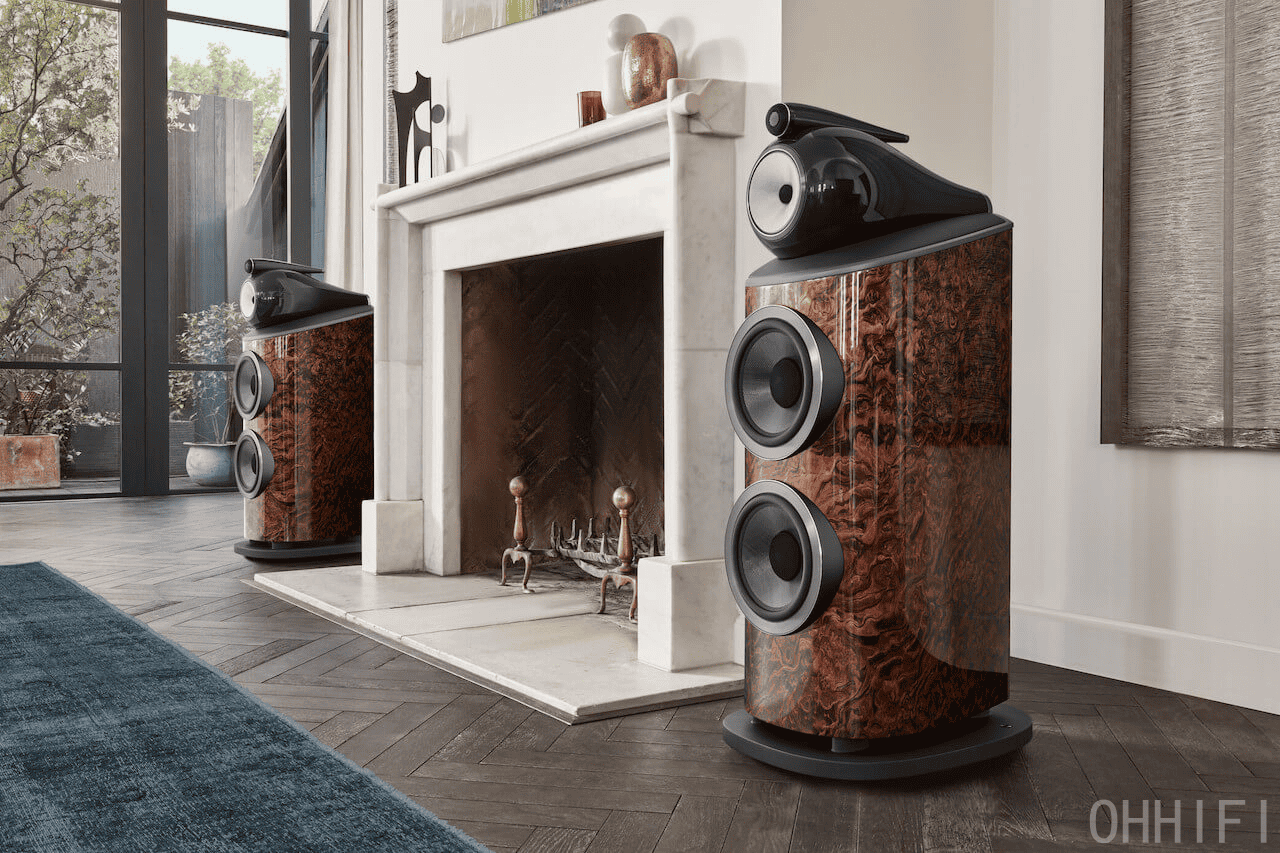
It is easy to be cynical and point to the paint. Yes, the Midnight Blue Metallic (borrowed from the original Nautilus) and California Burl Gloss finishes are exquisite, requiring 14 coats of lacquer and multiple sanding stages. They are furniture-grade luxury. But B&W insists the Signature is about performance, not just vanity.
Here is the forensic breakdown of the Signature upgrades:
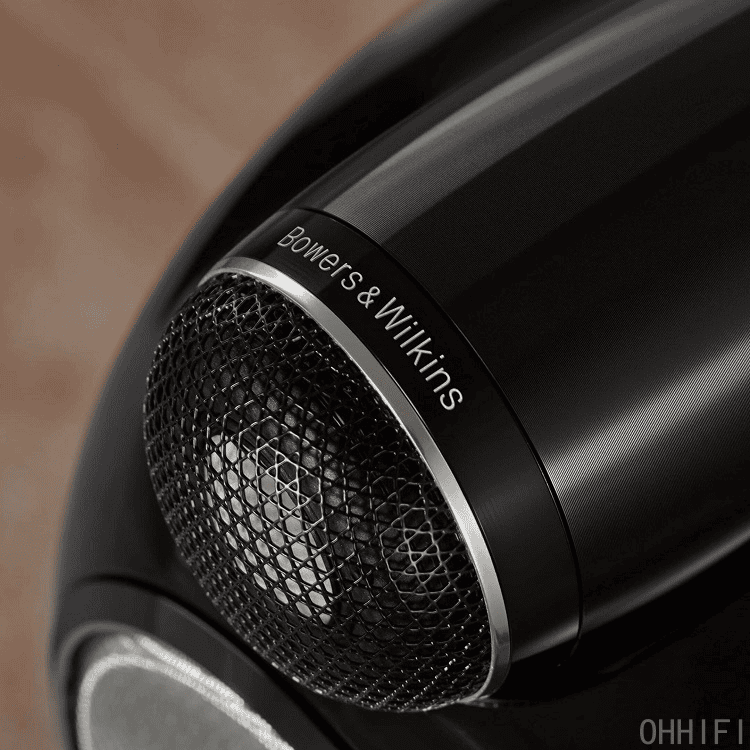
The Mesh Grille: Look closely at the tweeter. The protective mesh on the Signature has a new, complex pattern that is more "open" than the standard D4. B&W claims this reduces diffraction and opens up the top end.
Bass Motor Systems: The 10-inch Aerofoil woofers look the same, but the engines have changed. The top and mid-plates of the magnet system are upgraded to a new specification of steel with lower inductance. This reduces current distortion, theoretically leading to tighter, cleaner bass.
The Port: The downward-firing "Flowport" on the standard D4 is plastic. On the Signature, it is cast aluminum. This adds significant rigidity to the bottom of the cabinet, reducing port resonance.
The Crossover: This is the invisible magic. The capacitors have been upgraded, and the bypass capacitors have been doubled (from four to eight). The goal is to clear the electrical pathway of any remaining grain.
The Verdict on Paper: These are the kind of marginal gains that Formula 1 teams chase. A gram here, a percent there. In isolation, they seem minor. Cumulatively, they aim to remove the final veils between the listener and the source.
V. The Ritual of Unboxing and Setup
Taking delivery of a pair of 801 D4s is an event. It requires planning, muscle, and ideally, professional help.
The packaging is brilliant. B&W uses a ramp system that allows you to roll the speakers out of the box on their integrated wheels. Do not underestimate the value of these wheels. At 100kg, you cannot "scoot" these speakers. The ability to roll them around the room to find the optimal position is a game-changer.
Positioning Strategy
The 801 D4 is a creature of geometry. It is not a speaker you can plonk down and forget.
Distance from Wall: The Flowport fires downwards, which theoretically makes placement easier, but don't be fooled. These speakers move massive amounts of air. Place them too close to the front wall (less than 1 meter), and the bass will overload the room. They need breathing room.
Toe-in: This is critical. B&W’s dispersion is excellent, but the Diamond tweeter has a specific energy profile. Aim them straight ahead, and the soundstage is huge but diffuse. Aim them directly at your ears, and the treble can be biting.
The Sweet Spot: We found the magic angle was to have the tweeters crossing just behind the listener's head. This locked in the center image while maintaining soundstage width and taming the "hotness" of the tweeter.
Once positioned, you use the built-in spike mechanism to lift the wheels off the floor and anchor the speaker. This is a crucial step; the bass tightens significantly once the mass is coupled to the floor.
VI. The Engine Room: Amplification and Synergy
Let’s dispel a myth: The 90dB sensitivity rating on the spec sheet is a trap. It implies these speakers are easy to drive. They are not.
The impedance curve of the 801 D4 is sadistic. It dips to 3.2 ohms at 90Hz, but the phase angle creates an "Equivalent Peak Dissipation Resistance" (EPDR) that drops below 2 ohms in the bass and mid-bass.
Translation: These speakers are current vampires. They demand an amplifier that can deliver massive current into low-impedance loads without sagging.
The Failures
We tried driving them with a high-quality, but modest integrated amplifier (100W). The result was polite but anemic. The bass lacked definition, and the dynamic snaps sounded compressed.
We tried a beautifully sounding tube amplifier (75W push-pull). The midrange was luscious, but the bass bloomed into a muddy mess, and the rhythmic drive vanished. The 801 D4’s impedance swings simply asked for more than the output transformers could give.
The Successes
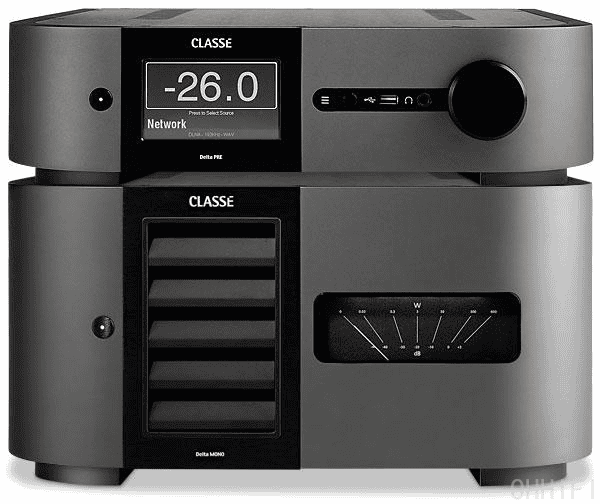
Classé Delta Mono: This is the "house pairing." B&W and Classé share engineering DNA. The Classé monos (300W into 8Ω, doubling down) gripped the 801s with an iron fist. The noise floor was nonexistent, and the control was absolute.
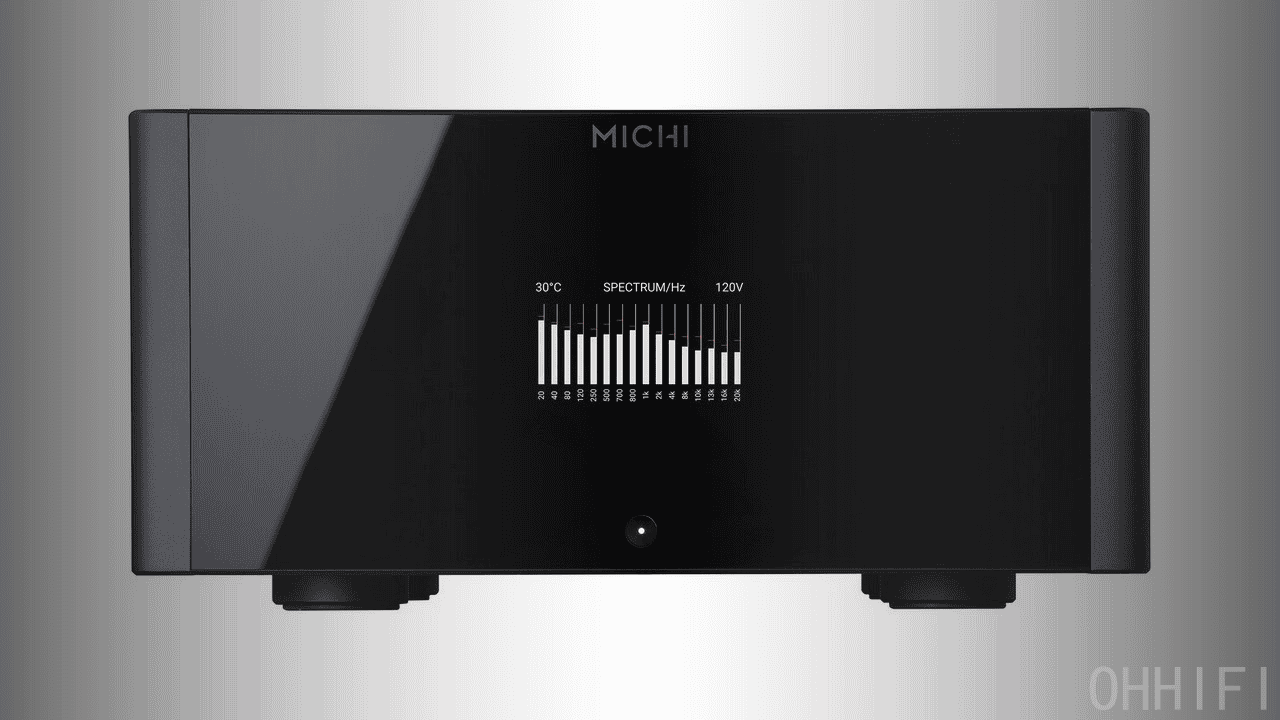
Rotel Michi M8: If the Classé is out of budget, the Michi M8s are the giant killers. They delivered 95% of the performance, driving the woofers with terrifying authority.
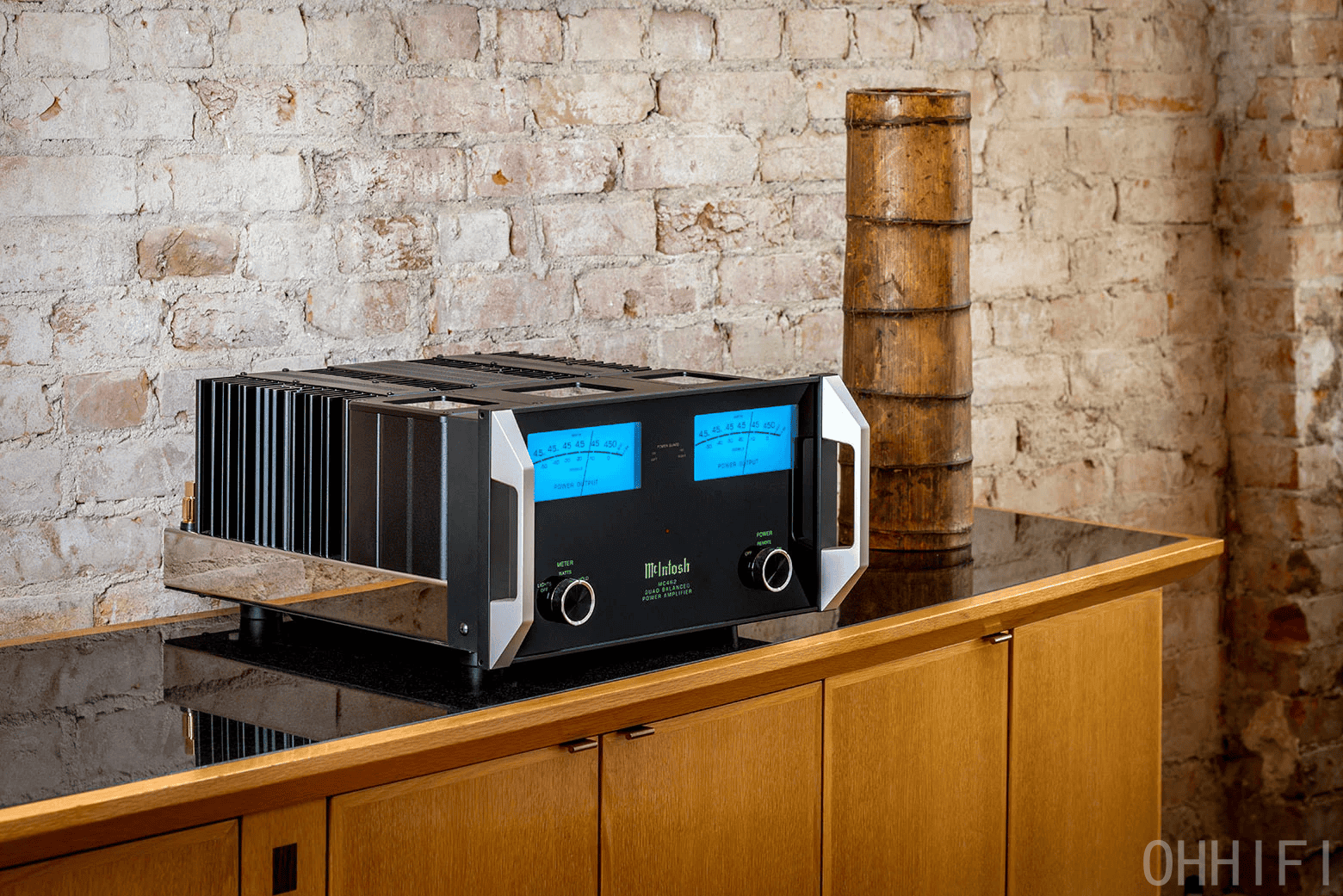
McIntosh MC462: The big Mac worked beautifully, adding a touch of body and warmth to the Diamond tweeter’s sparkle. The autoformers handled the impedance dips with grace.
Recommendation: Do not skimp on power. You are buying a Ferrari; do not put 87-octane fuel in it. You need high-current solid-state amplification. Think 300 watts per channel as a baseline, not a ceiling.
VII. The Listening Experience: Into the Vortex
The review period involved hundreds of hours of listening, navigating the controversial "break-in" period (yes, it exists; the bass tightens up significantly after about 100 hours) and traversing every genre from baroque to dubstep.
1. The Bass: A Physical Event
Test Track: "Angel" - Massive Attack
Test Track: "Concrete Jungle" - Bob Marley & The Wailers
The bass of the 801 D4 is not just heard; it is felt. But it is not the "one-note boom" of lesser reflex designs. It is textured, melodic, and terrifyingly deep.
On the Bob Marley track (Signature edition), the bass line was separated cleanly from the kick drum. You could hear the pluck of the string, the roundness of the note, and the decay. There was zero "overhang." The new aluminum port on the Signature seems to have cleaned up the very bottom octave, removing a trace of "chuffing" that was arguably present in the D3 at extreme volumes.
The scale is massive. These speakers pressurize the room. They don't just reproduce the note; they reproduce the weight of the air moving in the recording venue.
2. The Midrange: The Biomimetic Difference
Test Track: "The Girl in the Other Room" - Diana Krall
Test Track: "George's Dilemma" - Clifford Brown & Max Roach
This is where the engineering jargon—"Turbine Head," "Biomimetic Suspension"—translates into emotion.
Historically, B&W speakers have been accused of a recessed midrange, the so-called "smiley face" EQ. The D4 addresses this aggressively.
Diana Krall’s voice floated in free space, utterly detached from the cabinets. The "boxiness" was gone. But what was most striking was the transient speed. The Biomimetic Suspension seems to have removed a layer of "glaze" or "slurring" from the leading edges of notes.
On the Clifford Brown track, the brass had bite and rasp without piercing the eardrums. The texture of the saxophone was palpable. It felt less like a reproduction and more like a projection of the instrument into the room.
3. The Treble: Diamond Clarity vs. Unforgiving Truth
Test Track: "Do You Love Me?" - Nick Cave & The Bad Seeds
Test Track: "Violin Concerto in D Major" - Tchaikovsky
The Diamond tweeter is a double-edged sword. It is magnificent. It resolves details that other tweeters simply smear. You hear the resin on the bow, the breath of the flutist, the reverb trails fading into blackness.
However, it is ruthless. If you play a bright, compressed pop recording (think early 2000s "Loudness War" CDs), the 801 D4 will hurt you. It will not romanticize a bad recording. It presents the truth, naked and unadorned.
On the Signature model, the new mesh grille seems to add a touch more "air" and "shimmer" to the very top, making the soundstage feel slightly taller and more expansive.
4. Soundstage and Imaging: The Hologram
Test Track: "Shostakovich Symphony No. 11" - Andris Nelsons
This is the party trick. Despite being two enormous towers, the 801 D4s disappear.
In the Shostakovich recording, the soundstage did not stop at the speakers. It extended three feet beyond the outer edges and deep behind the front wall. The imaging is laser-precise. You can point to the third chair violinist.
During the chaotic climax of the "1905" movement, where lesser speakers collapse into a wall of noise, the 801 D4 held its composure. The bass drum thunder didn't modulate the woodwinds. Everything stayed in its lane. The "Turbine Head" decoupling works.
5. Signature vs. Standard: The A/B Test
We had the rare opportunity to listen to the D4 and D4 Signature back-to-back.
Is the difference night and day? No.
Is it audible? Yes.
The Signature sounds "calmer." The background is blacker. The silence between the notes is more profound. This allows micro-details—the decay of a cymbal, the creak of a chair—to pop out with more relief. The bass also felt slightly tighter, with a harder "stop" to transients.
The Standard D4 is 95% of the way there. The Signature is for the person who loses sleep over that missing 5%.
IX. Conclusion: The King Stays the King
The Bowers & Wilkins 801 D4 is not a speaker for everyone.
It is physically intrusive. It is demanding of your wallet (for the speaker itself and the amplifier required to wake it up). It is ruthless with bad recordings.
But when everything aligns—when the amp is warmed up, the room is treated, and the recording is pristine—it is transcendent.
It offers a combination of brute force and delicate insight that is rare even at this price point. It can play louder and cleaner than almost anything in its class. It excavates details from familiar recordings that will make you laugh out loud.
The Verdict on the Signature:
If you can afford the 801 D4 Signature without checking your bank balance, buy it. The finish alone is worth the price of entry, and the sonic refinements, while subtle, add a layer of polish that befits a true reference product.
If the stretch to $60k is too far, do not weep. The standard 801 D4 is a masterpiece in its own right.
The 801 D4 is a reminder that in a world of digital ephemeral, heavy engineering still matters. It is a monolith to music. It is the new King. Long live the King.










Comments