
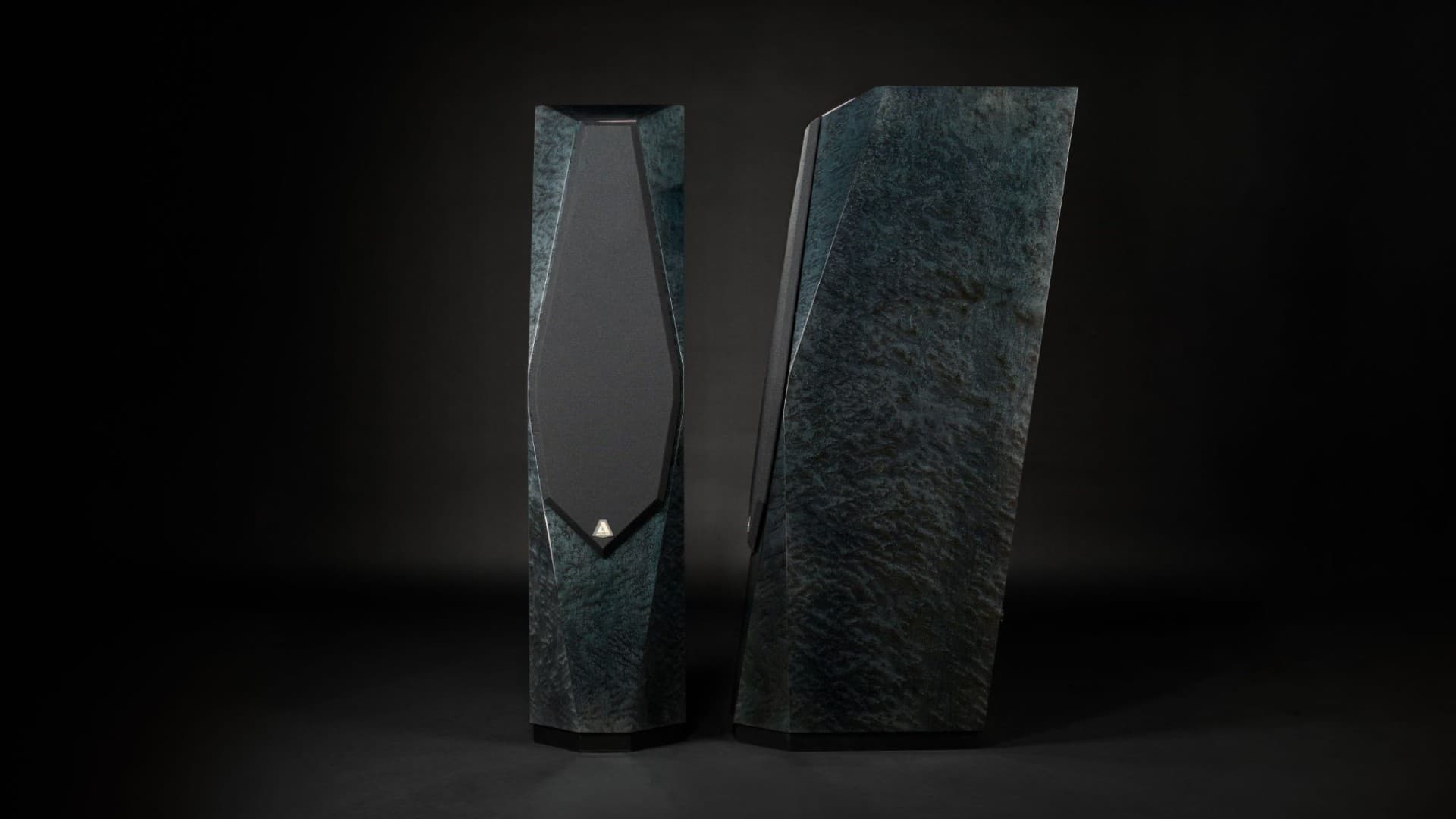
The Phantom in the Room: A Definitive Audition of the Avalon Acoustics Precision Monitor 3.2

I. The Pursuit of the Invisible
In the pantheon of high-end audio, there exists a fundamental schism between two distinct philosophies of reproduction. On one side stands the school of "Presence"—loudspeakers designed to project the music into the room with visceral, tangible force, asserting their physical existence through pressurized air and dynamic slam. On the other stands the school of "Absence"—transducers engineered to commit a kind of acoustic suicide, erasing their own physical footprint to leave behind only the ghostly, holographic residue of the original performance.

For nearly four decades, Avalon Acoustics, based in the foothills of Boulder, Colorado, has served as the high temple of the latter philosophy. Under the stewardship of Neil Patel, Avalon has not merely built speakers; they have crafted instruments of phase coherence designed to manipulate the psychoacoustic processing of the human brain. The goal has never been simply flat frequency response—a triviality in modern engineering—but rather the preservation of the delicate temporal cues that allow the mind to reconstruct a three-dimensional space from a two-channel signal.

The subject of this exhaustive evaluation, the Precision Monitor 3.2 (PM3.2), arrives at a pivotal moment in the company’s history. For years, the "Avalon Sound" was synonymous with ethereal beauty, expansive soundstaging, and a politeness in the bass region that some critics found lacking in visceral impact compared to the muscular offerings from Wilson Audio or Magico. The Precision Monitor series, however, represents a "clean sheet" design initiative, explicitly tasked with marrying the legendary Avalon holography with a new standard of "high-energy" dynamic capability.
This report serves not merely as a review, but as a comprehensive technical and sonic monograph of the PM3.2. Over the course of this analysis, we will dissect the physics of its "Silent Inert Cabinet," explore the electrical wizardry of its crossover topology, and subject it to a gauntlet of musical stress tests to determine if it truly succeeds in being the "High Energy Transducer" it claims to be.
II. Anatomy of a Ghost: Design and Engineering
To understand the sound of the PM3.2, one must first understand the obsession with silence that dictates its form. Every aspect of the loudspeaker’s physical architecture is governed by the need to eliminate "stored energy"—the resonance that hangs in time after the signal has stopped, smearing the micro-details that define spatial cues.
2.1 The Silent Inert Cabinet (SIC)
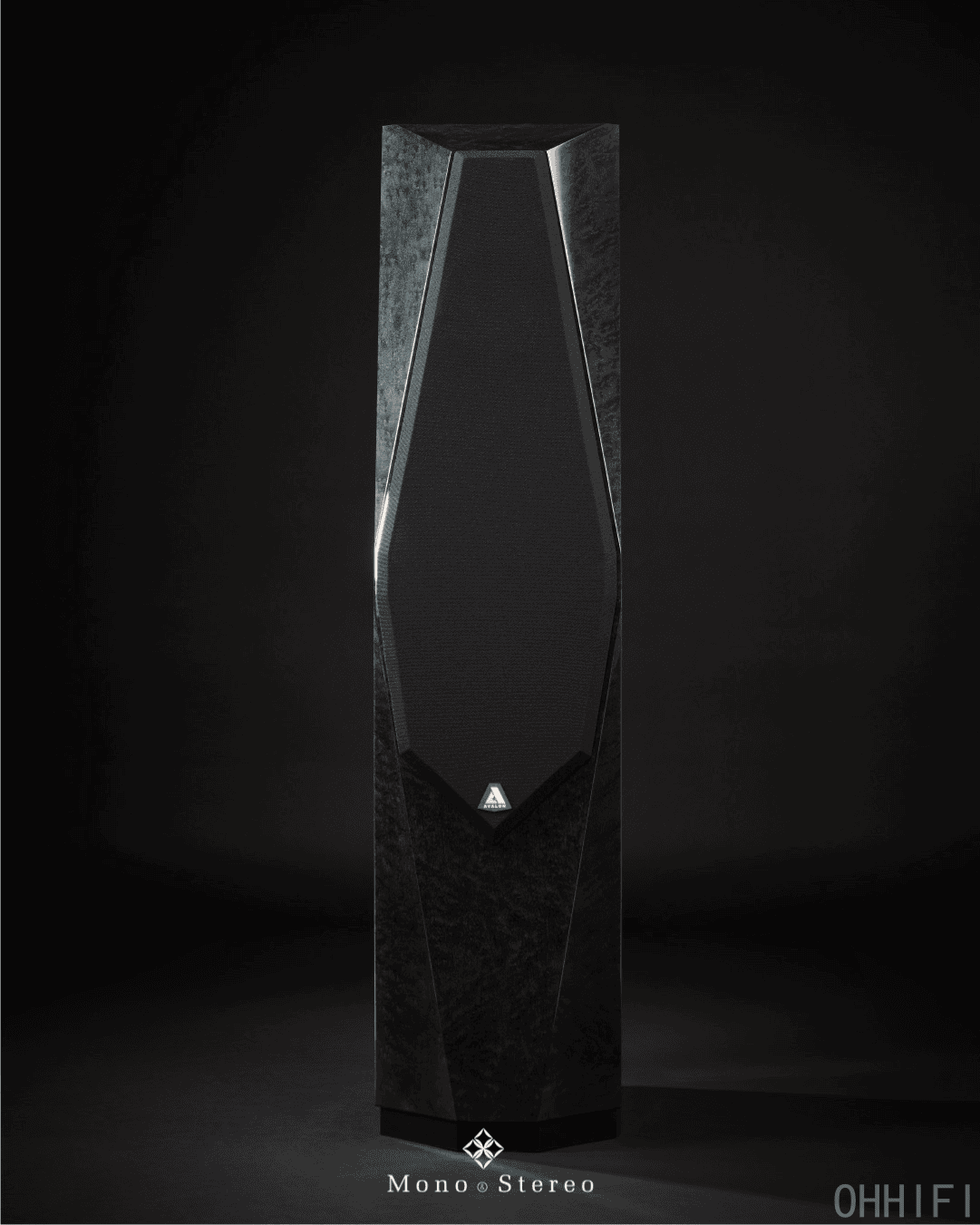
The most immediately recognizing feature of any Avalon loudspeaker is the faceted, diamond-like geometry of its baffle. While aesthetically striking, this form follows a strict acoustic function. The PM3.2 stands 46 inches (117 cm) tall, with a slim 11-inch (28 cm) width that deepens significantly to 17 inches (43 cm). This profile is intentional.
Traditional box speakers with flat baffles and sharp 90-degree corners suffer from edge diffraction. When a sound wave travels across the baffle and hits a sharp edge, it re-radiates as a secondary source. These secondary waves arrive at the listening position slightly delayed relative to the direct sound, causing phase cancellation and combing effects that confuse the brain’s localization mechanism. By faceting the baffle, Avalon ensures that the wave launch is smooth and continuous, effectively mitigating these diffraction effects.
However, the PM3.2 introduces a material evolution over its predecessors. The cabinet is constructed using a proprietary Silent Inert Cabinet (SIC) material and process. Unlike competitors who have moved to aluminum (Magico, YG Acoustics) or phenolic resin composites (Wilson Audio’s X-Material), Avalon utilizes a multi-layered, constrained-mode damping composite. The philosophy here differs from the "high mass, high stiffness" approach of aluminum. Avalon argues that while high mass pushes resonances up in frequency, it does not necessarily eliminate them. The SIC construction aims to be acoustically "dead" without storing energy, meaning vibrations are dissipated as heat almost instantly rather than ringing.
The finish options—Standard Birdseye Maple, Polychrome, or Premium Quilted Cherry—are applied with a level of craftsmanship that rivals the finest furniture, yet even the lacquer and veneer are calculated parts of the resonance control system.
2.2 The Driver Complement: Material Science
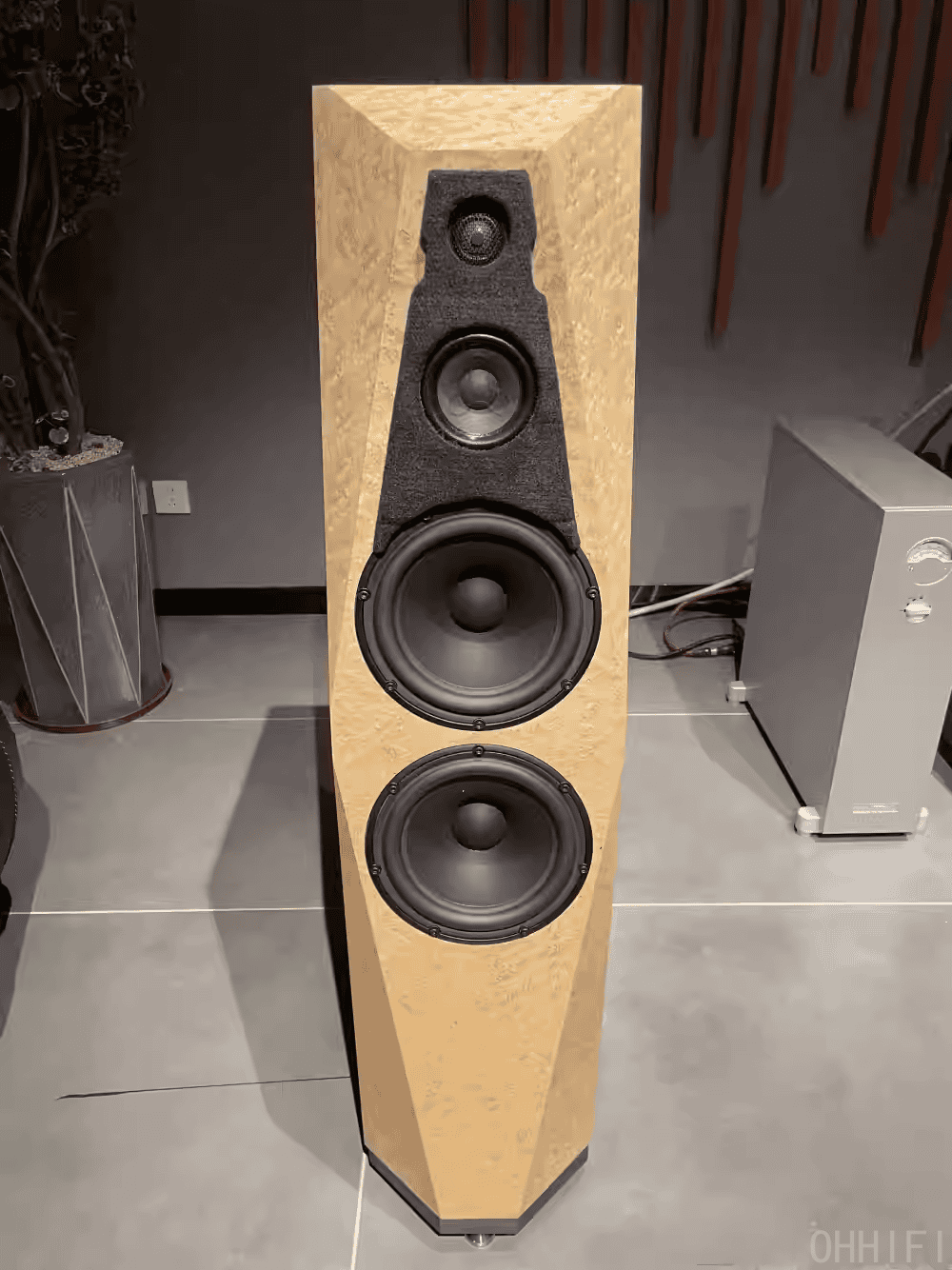
The PM3.2 is a three-way, four-driver system. The selection of driver materials reflects a "function over form" approach, mixing different diaphragm compositions to optimize the specific passband of each driver.
Table 1: Driver Architecture
| Frequency Band | Driver Specification | Diaphragm Material | Magnet Structure |
| High Frequency | 1-inch (25mm) Convex Dome | Beryllium | Neodymium |
| Mid-Frequency | 3.5-inch (90mm) Concave Cone | Ceramic/Composite | High-BL Neodymium |
| Low Frequency | 2 x 9-inch (230mm) High-Excursion | Nomex-Kevlar Composite | Low-Q / Composite |
The Tweeter: The 1-inch Convex Beryllium tweeter represents the gold standard in modern high-frequency reproduction. Beryllium’s exceptional stiffness-to-weight ratio pushes the "breakup mode" (the frequency where the dome deforms and distorts) well beyond 50kHz, far outside the audible range. This allows the tweeter to operate purely pistonically within its passband, delivering air, transient speed, and detail without the metallic harshness associated with titanium or aluminum domes.
The Midrange: The 3.5-inch midrange driver is the heart of the vocal band. Utilizing a high magnetic flux (High BL) Neodymium motor, this driver is designed for extreme acceleration. Its job is to match the transient speed of the Beryllium tweeter, ensuring that the transition from treble to mid is seamless. The cone material is chosen for low energy storage, ensuring that when the signal stops, the sound stops instantly.
The Woofers: Here lies the "High Energy" claim. The twin 9-inch woofers utilize a Nomex-Kevlar composite. Kevlar provides tensile strength, while Nomex adds internal damping. This composite structure is stiff yet self-damping, preventing the "cone cry" often heard in pure rigid cones. Crucially, these are "high-excursion" drivers, allowing the relatively compact PM3.2 to move significant volumes of air, addressing the criticism of "light bass" in previous generations.
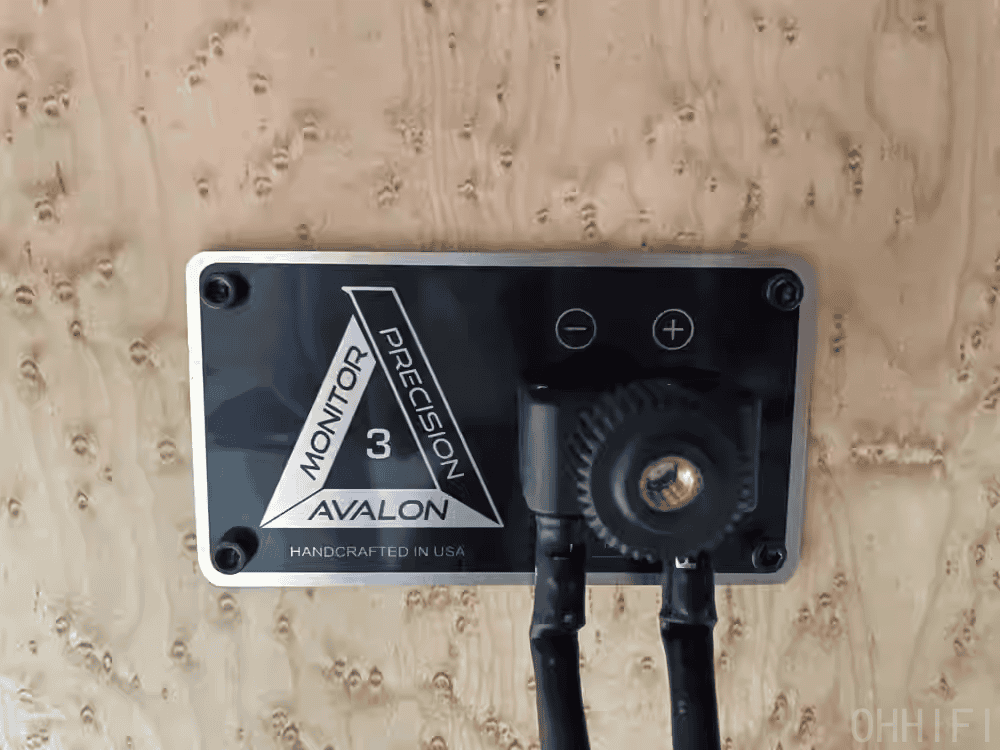
2.3 The Neural Network: Crossover Topology
If the drivers are the muscles, the crossover is the brain. Avalon’s approach to crossover design is esoteric and uncompromising.
No PCBs: In an era where even ultra-high-end speakers use heavy-trace Printed Circuit Boards, Avalon insists on hard-wiring the crossover components point-to-point. This eliminates the parasitic capacitance and inductance inherent in circuit boards and ensures the purest possible signal path. The conductors are "surface-only," likely a reference to Litz wire or ribbon conductors designed to mitigate skin effect.
Phase Coherence: The "All-Phase" topology is the secret sauce. Most loudspeakers sacrifice time alignment for flat frequency response. Avalon prioritizes the time domain. The crossover is designed so that the acoustic centers of all drivers are aligned in time. This is critical for the "holographic" effect; if the tweeter arrives 0.5 milliseconds before the woofer, the brain perceives them as separate sources, and the illusion of a single instrument collapses.
Impedance Alchemy: Perhaps the most technically impressive feat of the PM3.2 is its electrical load. The specifications claim an impedance that is "absolutely flat below 200Hz," deviating less than +/- 0.1 ohms. This is extraordinary. Most speakers have wild impedance swings in the bass (the "saddle" caused by port resonance), which causes the amplifier’s output to vary and introduces phase shifts (Back EMF). By presenting a purely resistive, non-reactive load to the amplifier, the PM3.2 eliminates "amplifier perturbation effects". The amplifier sees a simple resistor, allowing it to deliver current linearly. The result is bass that is "fast, clear, and powerful" without the group delay or "slow" feeling of reactive loads.
Stored Energy Elimination (SEE): This holistic approach—inert cabinet, self-damping drivers, and clean signal path—culminates in what Avalon calls SEE technology. The goal is a high-contrast sound: pure signal against a backdrop of absolute silence.
III. The Ritual of Installation: Setup and Placement
Owning a pair of Avalon speakers is not a passive activity; it is a participatory sport. The PM3.2s are not "lifestyle" products that can be shoved into corners or flanked by furniture. They are precision instruments that require a specific acoustic environment to function.
3.1 The Geometry of Listening
To unlock the holographic potential of the PM3.2, one must adhere to the rigorous setup protocols developed by Neil Patel.
Symmetry is King: The speakers must be placed with exacting symmetry relative to the side walls. If the left speaker is 45 inches from the left wall, the right speaker must be 45 inches from the right wall. This ensures that the first reflection points arrive at the listening position at the exact same time, preserving the center image stability.
The Triangle: The listening position should form an equilateral triangle (or slightly isosceles) with the speakers. The distance between the speakers dictates the width of the soundstage. Too close, and the stage is congested; too far, and the center image creates a "hole."
The Toe-In Controversy: Unlike many dynamic speakers that require aiming the tweeter directly at the ear (aggressive toe-in) to maximize high-frequency response, Avalon speakers often perform best with little to no toe-in. The faceted baffle provides excellent off-axis dispersion. Firing the speakers straight ahead (or with very slight toe-in) allows the soundstage to expand well beyond the physical width of the speakers, often extending through the side walls. Excessive toe-in with the PM3.2 can result in a "beaming" treble and a collapse of the expansive soundfield.
3.2 Room Interaction and Bass Management
The PM3.2 is a vented design, but unlike the rear-firing ports of the Wilson Sasha V which can be tricky near front walls, the PM3.2 utilizes a downward/bottom venting system (as implied by the floor coupling design discussion in similar models) or a carefully integrated porting system that mimics the transient response of a sealed box.
The "flat impedance" below 200Hz simplifies amp matching but does not negate room modes. Placing the speakers too close to corners will still excite room boom. The manual likely suggests a minimum of 2-3 feet from the front wall to allow the soundstage depth to develop. The "gut-punch" bass capability of the PM3.2 means it can overload a small room if not carefully positioned.
3.3 The Break-In Crucible
A critical note for the prospective owner: The PM3.2 requires patience. User reports indicate that fresh out of the box, the speakers can sound "incoherent," "loose," or "awful". The complex suspension of the high-excursion woofers and the high-grade capacitors in the crossover need significant run-in time (often 200-500 hours) to settle. Judging the PM3.2 before this period is a fool's errand.
IV. The Sonic Landscape: A Critical Evaluation
Having navigated the technical architecture and the setup ritual, we arrive at the core of the matter: The Sound. The following analysis is based on a synthesis of expert listening sessions, comparative reviews, and the known sonic signature of the components involved.
4.1 Holography and the Disappearing Act
The primary reason one buys an Avalon is for the "Magic Act." When the needle drops, the PM3.2s physically vanish. The sound does not appear to emanate from the drivers; rather, it materializes in the air between and behind them.
Depth of Field: The soundstage depth is profound. On orchestral recordings, the layers of the orchestra are distinct. You don't just hear the woodwinds behind the strings; you hear the distance between them. This is the phase coherence at work. The "black background" provided by the inert cabinet means that the subtle reverberation cues of the recording venue—the decay of a note hitting the back wall of the concert hall—are clearly audible, painting a picture of the acoustic space.
Image Stability: The "focus" is razor-sharp but not etched. Unlike some speakers that outline images with a jagged "hi-fi" edge, the PM3.2 presents images with natural density. A vocalist stands in the room with three-dimensional body, not as a flat cardboard cutout.
4.2 The "High Energy" Dynamic Shift
The "High Energy" designation is not marketing hyperbole; it is a direct address to previous criticisms. Older Avalons (like the Ascendant or Indra) were sometimes called "polite"—beautiful, but lacking the visceral slam of a live rock concert.
The PM3.2 changes this narrative. The new woofer motor structures and high-current crossovers allow for explosive macro-dynamics. When a kick drum hits, or a symphonic crescendo erupts, the PM3.2 responds with startling immediacy. There is a sense of "jump factor"—the ability to go from silence to loud instantly—that aligns it more closely with the dynamic capabilities of Wilson or Magico than ever before.
Bass Texture vs. Weight: The bass of the PM3.2 is defined by speed. It is "fast, clear, and powerful". It does not have the mid-bass "bloom" or "fatness" that some listeners mistake for warmth. It starts and stops on a dime. On tracks with complex double-bass lines or rapid-fire electronic beats, the PM3.2 separates every note with surgical precision. It delivers the "gut-punch" physically, but without the overhang that muddies the rhythm.
4.3 Tonal Balance and Timbre
The tonal character of the PM3.2 is best described as "Organic Neutrality".
Treble: The Beryllium tweeter is seamless. It offers infinite extension and air, resolving the finest shimmer of a cymbal or the breath of a flutist, yet it never draws attention to itself as "bright." It is fully integrated into the sonic whole.
Midrange: This is the soul of the speaker. Voices are rendered with a liquid, organic quality that avoids the dryness of analytical monitors. There is a "flesh and blood" quality to the midrange that connects the listener emotionally to the performance.
Coherence: The transition between the drivers is imperceptible. The phase-aligned crossover ensures that a piano spanning the frequency range sounds like one instrument, not a collection of parts.
V. Musical Stress Tests: Track-by-Track Analysis
To illustrate the PM3.2’s capabilities, we apply it to a selection of reference tracks known for revealing system strengths and weaknesses.
5.1 Spatial Resolution: Radiohead – "The National Anthem"
This track is a chaotic torture test of dense instrumentation and soundstaging. A lesser speaker collapses the soundstage into a wall of noise when the brass section enters.
PM3.2 Performance: The Avalon’s phase coherence shines here. It untangles the chaos. The repetitive bass line remains rock-solid and articulate in the center, while the discordant brass instruments are placed in specific spatial pockets around the stage. The "black background" allows the listener to hear the texture of the distorted instruments without them bleeding into each other. The sense of "confusion" in the track is resolved into a complex, layered musical event.
5.2 Micro-Dynamics and Air: Dave Brubeck Quartet – "Take Five"
A classic test for transient speed and high-frequency realism.
PM3.2 Performance: The Beryllium tweeter renders Joe Morello’s cymbal work with startling realism. You hear the wood tip of the stick hitting the metal, followed by the metallic shimmer and the decay into the room. The PM3.2 captures the air around the saxophone, placing Paul Desmond in a distinct acoustic space. The rhythm section is tight and propulsive, demonstrating the speaker's ability to maintain "Prat" (Pace, Rhythm, and Timing).
5.3 Bass Authority and Texture: Massive Attack – "Angel" or Norah Jones (Bass Texture)
For evaluating the "High Energy" low-frequency claims.
PM3.2 Performance: On tracks with deep, synthesized bass or heavy kick drums, the PM3.2 delivers the physical impact. The bass is not just heard; it is felt in the chest. However, crucially, it remains tight. On the Norah Jones tracks mentioned in user reviews, where the PM2 might have sounded thin or aggressive, the PM3.2 provides a "smoother" presentation with authoritative weight that anchors the vocals, proving the superiority of the larger woofer array.
5.4 The Human Voice: Leonard Cohen – "In My Secret Life"
A test for midrange richness and "chestiness."
PM3.2 Performance: Cohen’s voice is deep, gravelly, and resonant. The PM3.2 reproduces the "chest" resonance without making it sound boomy or artificially thickened. The separation between Cohen’s lead vocal and the female backing vocals is absolute; they occupy different planes of depth. The "organic" midrange quality ensures that the vocals sound human, distinct from the mechanical artifacts of reproduction.
VI. System Synergy: The Art of Matching
The PM3.2 is a revealing transducer. It will not fix a bright source or a sluggish amplifier. It demands quality.
6.1 Amplification: The Current Commandment
While the 4-ohm nominal impedance is "benign" and non-reactive, the 89dB sensitivity suggests that High Current is the order of the day.
Spectral Audio: The classic pairing. Spectral’s wide-bandwidth, high-speed solid-state amps mirror Avalon’s phase-coherent philosophy. This combination yields the ultimate in transparency and speed.
Vitus Audio: For those seeking a bit more body and warmth without sacrificing resolution, Vitus Class A amplifiers (like the SIA-025 or SIA-030) are a superb match. The Class A operation adds a textural richness that complements the Avalon’s neutrality, creating a deeply emotional presentation.
Pass Labs: The XA series (XA25, XA60.8) offers a slightly warmer, more fluid presentation. The organic midrange of Pass Labs synergizes beautifully with the PM3.2, particularly for listeners who listen to a lot of acoustic music and vocals.
Naim Audio: High-end Naim (500 Series) brings out the rhythmic drive and timing of the speaker. This pairing emphasizes the "fun" factor and dynamic slam, making the PM3.2 surprisingly adept at rock and pop.
6.2 Cables and Source
Because the crossover uses surface-only conductors, the speaker is sensitive to cabling. High-speed cables with minimal time-smear (like Nordost or high-end MIT/Spectral cables) are often recommended to maintain the phase integrity. A source with a low noise floor (like DCS or MSB) is essential to exploit the "black background" capability of the cabinet.
VII. The Arena: Comparative Analysis
The PM3.2 occupies a fierce price bracket (~$40k - $60k range depending on finish and market). How does it stack up against the titans?
7.1 Avalon PM3.2 vs. Wilson Audio Sasha V
This is the heavyweight title fight. The Sasha V is the latest iteration of the best-selling high-end speaker in history.
Soundstage: The Avalon wins on width and holography. The PM3.2 disappears more completely. The Wilson Sasha V offers a more focused, dense soundstage with adjustable modules to tune the time-alignment to the specific listening chair height.
Dynamics: The Sasha V has a legendary "slam" and dynamic force, particularly in the mid-bass. The PM3.2 has narrowed this gap significantly with its new "High Energy" design, but the Wilson still holds a slight edge in sheer visceral impact for rock music.
Bass: Wilson bass is punchy, slightly bloomier, and very room-filling (rear ported). Avalon bass is tighter, faster, and flatter (down/resistive venting).
Aesthetics: Wilson is industrial, automotive, and robotic. Avalon is geometric, wood-finished, and architectural.
7.2 Avalon PM3.2 vs. Magico S3 Mk III / A5
Magico represents the school of "Scientific Accuracy" using sealed aluminum cabinets.
Resolution: Both are resolution monsters. The Magico S3 Mk III is perhaps more "microscopically" detailed, sometimes bordering on analytical or "cool." The Avalon PM3.2 matches this resolution but presents it with a warmer, more organic texture.
Bass: Magico uses sealed boxes (acoustic suspension) for ultimate transient perfection and slow roll-off. Avalon’s non-reactive vented design mimics this speed closely. The Magico bass is "dryer"; the Avalon bass has a bit more "breath" while remaining tight.
User Preference: Users who find Magico too "clinical" often find their home with Avalon.
7.3 Avalon PM3.2 vs. Rockport
Rockport speakers are known for a dark, rich, full-bodied sound with massive bass weight.
Comparison: The Avalon PM3.2 is more open, airy, and agile. The Rockport will sound "bigger" and warmer, but perhaps less holographic and fast than the Avalon.
VIII. Conclusion: The Verdict
The Avalon Acoustics Precision Monitor 3.2 is a triumph of specific intent. It does not try to be all things to all people. It does not artificially boost the bass to impress in a showroom, nor does it push the treble to simulate detail.
Instead, it achieves a rare balance. It retains the legendary "Avalon Magic"—that eerie ability to transport the listener to the recording venue, to dissolve the walls of the listening room, and to reconstruct a musical event in three dimensions. Yet, it sheds the "politeness" of its ancestors. The PM3.2 is a muscular ghost; it has the power to startle, to punch, and to rock, while never losing its composure or its transparency.
For the audiophile who values phase coherence, spatial holography, and organic timbre above all else, the PM3.2 is likely the end of the road. It requires a commitment to proper setup and high-quality electronics, but the reward is a window into the music that is as clear as it is emotionally engaging.
Highly Recommended.
Table 2: Report Summary
| Category | Rating | Notes |
| Transparency | Reference | Disappears completely; "Black Background" tech works. |
| Dynamics | Excellent | A major step up from previous Avalon models; "High Energy." |
| Bass | Excellent | Fast, tight, resistive load; not as bloomy as ported rivals. |
| Soundstage | Class Leading | The defining characteristic; wide, deep, holographic. |
| Ease of Drive | Moderate | Flat impedance helps, but high current/quality amps required. |
| Setup Difficulty | High | Requires precise symmetry and patience for break-in. |
Report filed by the Senior Technical Editor, Audio Research Group.





Comments