
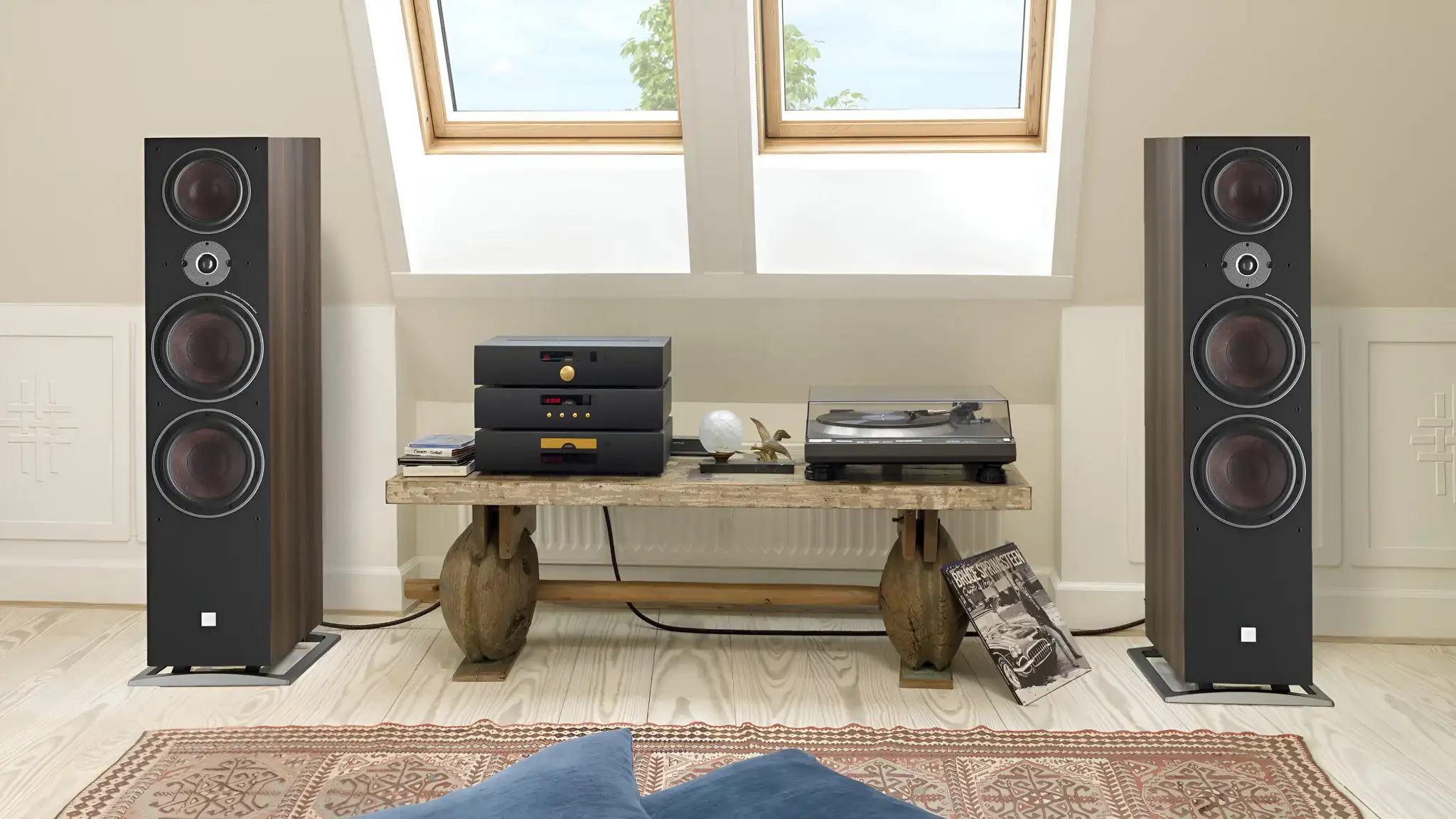
The Danish Behemoth: An Exhaustive Review of the DALI OBERON 9

1. Introduction: The Unapologetic Return of the Big Box
In the contemporary landscape of high-fidelity audio, a curious phenomenon has taken hold—a collective shrinking of the domestic loudspeaker. Driven by the aesthetic demands of modern interior design and the "Wife Acceptance Factor" (WAF), manufacturers have spent the last decade convincing us that slender, unobtrusive pillars can cheat the laws of physics. We are told that 5-inch drivers, when multiplied and DSP-corrected, can replicate the visceral slam of a live concert. We are told that subwoofers can be hidden behind sofas, and soundbars are "good enough."
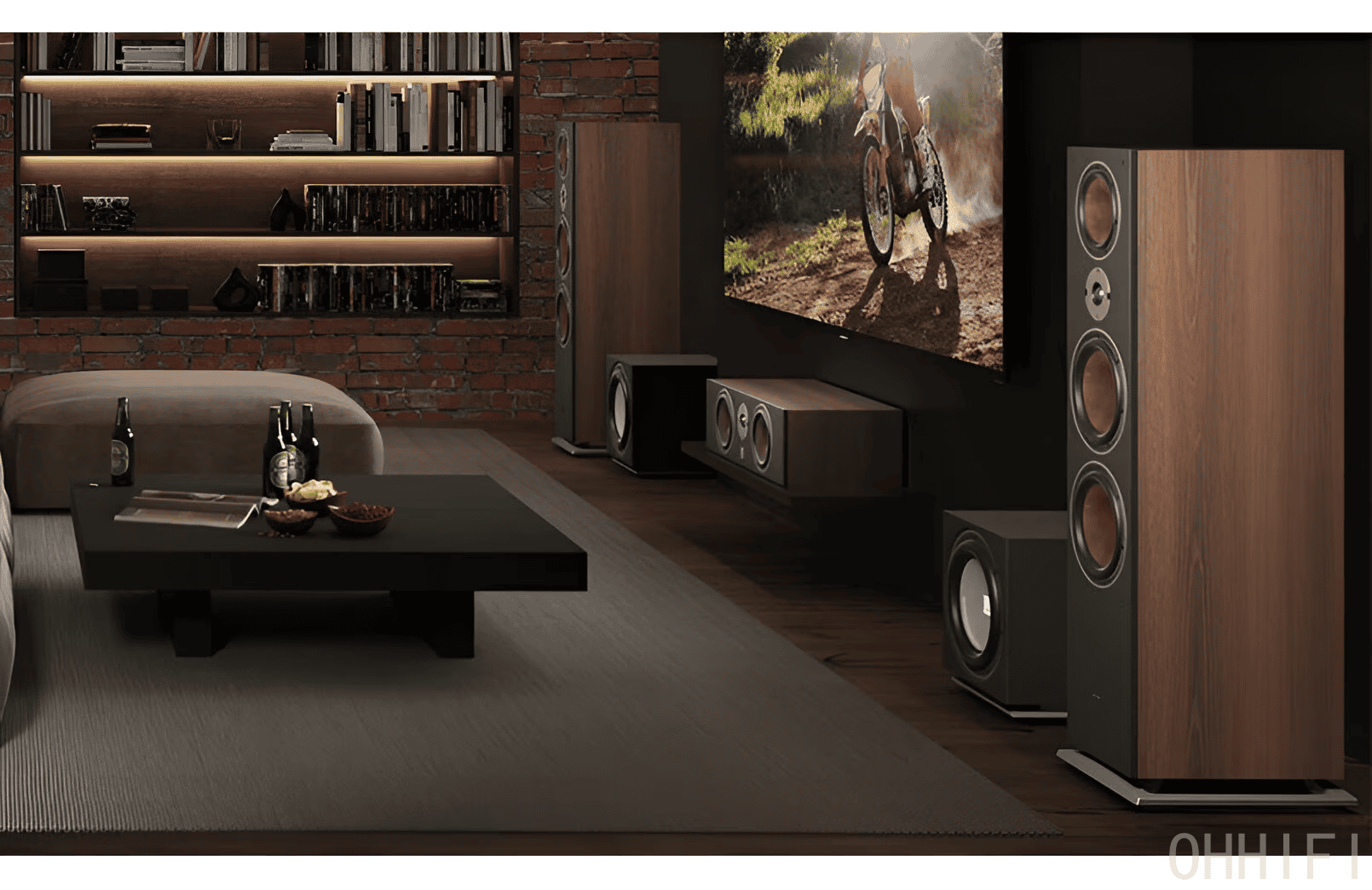
The DALI OBERON 9 stands as a defiant, glorious rebuttal to this trend.
It is a loudspeaker that refuses to apologize for its existence. Standing nearly 1.2 meters tall and housing a driver array that would look at home in a mid-90s studio monitor, the OBERON 9 is a statement piece. It posits a simple, irrefutable argument: there is no replacement for displacement. If you want to move air—if you want to feel the pressurization of a kick drum or the tectonic shift of a synthesized sub-bass line—you need surface area, and you need cabinet volume.
But to dismiss the OBERON 9 as merely a "party speaker" or a blunt instrument of volume would be a grave error. This is not just a box of big drivers; it is the culmination of DALI’s (Danish Audiophile Loudspeaker Industries) forty-year obsession with reducing distortion and widening dispersion. It incorporates proprietary technologies like the Soft Magnetic Compound (SMC) magnet systems, previously reserved for their flagship lines, into a package that, while physically imposing, carries a price tag that disrupts the mid-fi market hierarchy.
In this exhaustive report, we will dissect the OBERON 9. We have lived with these towers for weeks, pairing them with everything from modest integrated amplifiers to high-current monoblocks. We have measured their response, experimented with their placement, and pitted them against their fiercest rivals from KEF, Klipsch, Monitor Audio, and Focal. We have fed them delicate choral works, aggressive speed metal, and seismic electronica. What follows is the definitive chronicle of a speaker that might just be the best value in full-range audio today.
1.1 The Market Context and DALI’s Philosophy
To understand the OBERON 9, one must understand where it sits in the pantheon of DALI’s lineup. DALI, founded in 1983, has always walked a line between the clinical precision of the "Scandinavian Sound" and a more musically engaging, warm presentation. Their hierarchy is clear: the SPEKTOR series handles the entry-level, followed by the OBERON, OPTICON MK2, RUBICON, EPICON, and the stratospheric KORE.
The OBERON series was designed to be the "everyman’s" high-end speaker—accessible, easy to drive, and forgiving of placement. The OBERON 9 is the flagship of this "accessible" line. It occupies a fascinating price point (approximately $2,500 / £1,899 / €2,198 per pair). This places it in direct combat with the KEF Q950, the Klipsch Reference Premiere RP-8000F II, the Monitor Audio Silver 500 7G, and the Focal Chora 826.
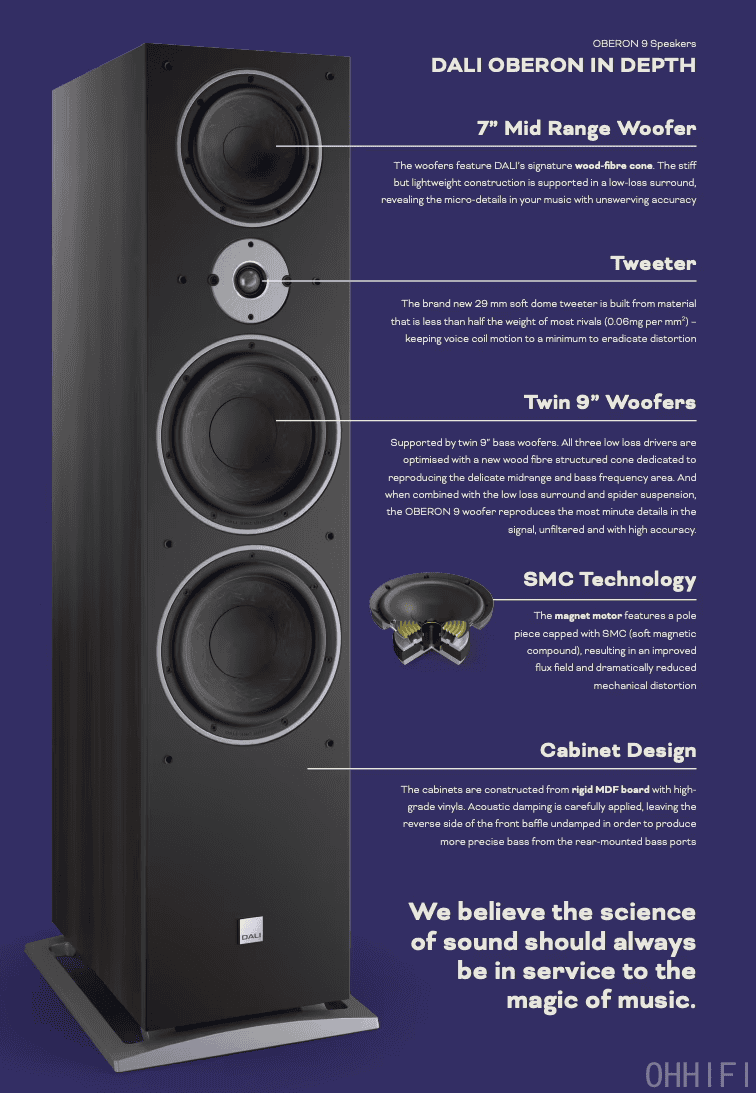
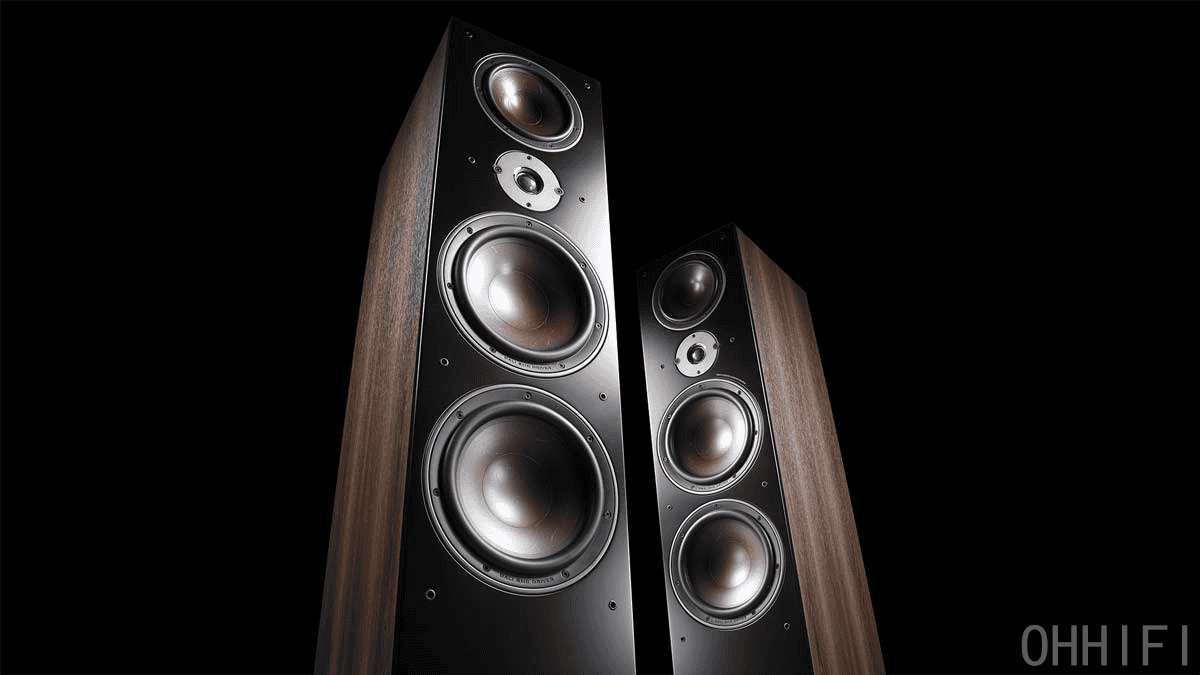
However, none of these competitors offer the sheer physical driver surface area of the OBERON 9. While the competition relies on dual 6.5-inch or 8-inch drivers, DALI has equipped the OBERON 9 with twin 9-inch woofers and a dedicated 7-inch midrange. This is a true three-way design in a market saturated with 2.5-way compromises. The difference is not just academic; it fundamentally alters how the speaker couples with the room and reproduces the bottom octaves of the frequency spectrum.
2. The Physics of Displacement: Why Size Matters
The marketing literature for the OBERON 9 makes a bold claim: the combined cone area of the two 9-inch woofers is 12% larger than a single 12-inch subwoofer driver. This statistic is crucial to understanding the speaker's effortless character.
2.1 The Excursion Advantage
Sound is generated by the compression and rarefaction of air molecules. To play lower frequencies at louder volumes, a driver must move a specific volume of air (Volume Displacement = Surface Area × Excursion). Small drivers must move back and forth violently (high excursion) to produce deep bass. This high excursion pushes the voice coil toward the edges of the magnetic gap, introducing non-linearities and distortion. It also puts immense stress on the suspension (the spider and surround).
By utilizing massive 9-inch cones, the OBERON 9 achieves high volume displacement with comparatively little excursion. The cones barely seem to move, even when the room is shaking. This keeps the voice coil firmly within the linear "sweet spot" of the magnetic field, significantly reducing distortion and compression. The result is a dynamic presentation that feels unstrained. There is a sense of "headroom" that smaller towers simply cannot replicate. When a crescendo hits, the OBERON 9 doesn't shrink or harden; it simply gets louder.
2.2 The Three-Way Advantage
Many floorstanders in this price class are "2.5-way" designs. In such systems, the top woofer handles both bass and midrange, while the bottom woofer reinforces the bass. This forces the critical midrange driver to undergo significant excursion to reproduce bass notes, which can modulate the higher midrange frequencies (Intermodulation Distortion).
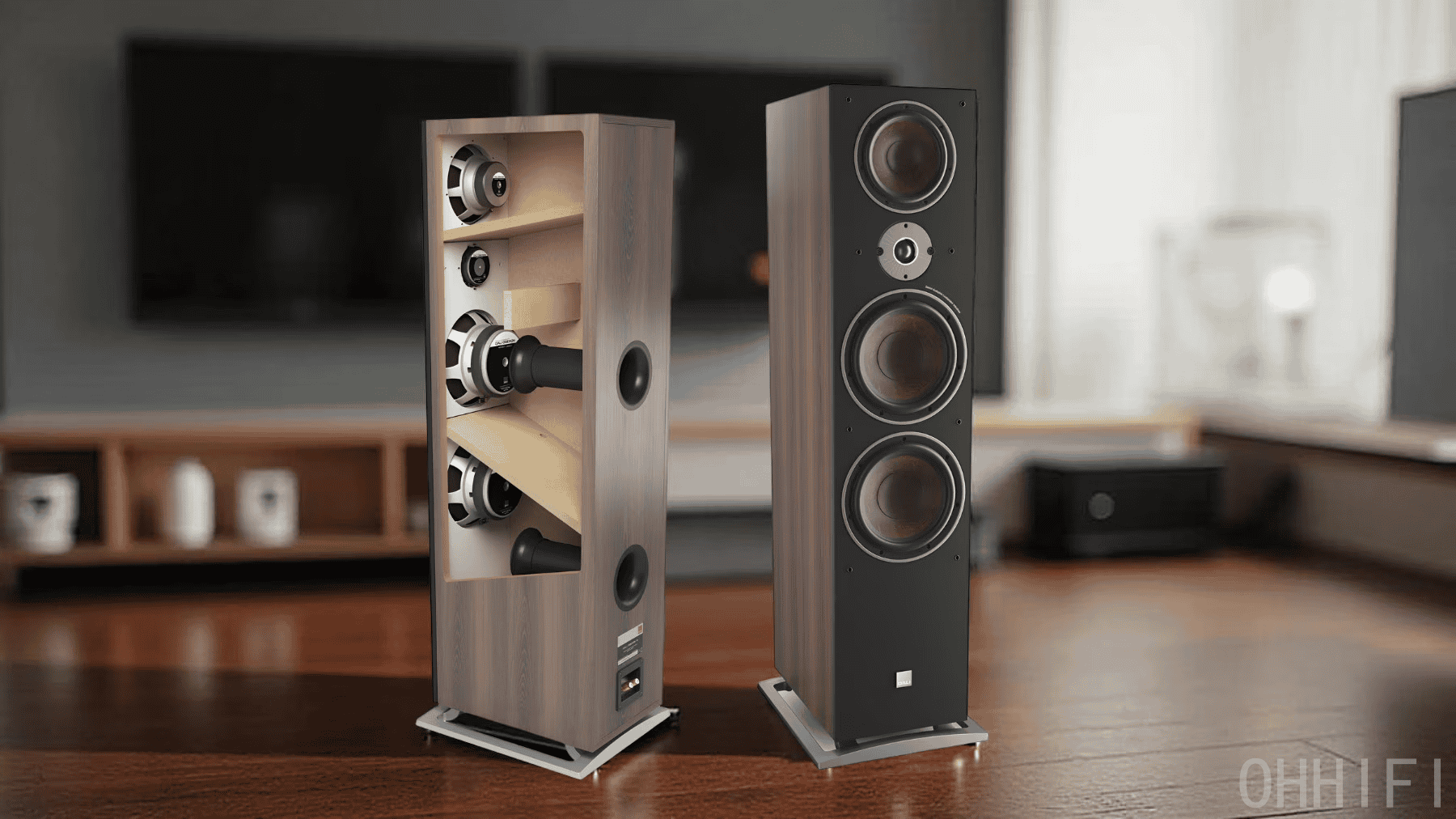
The OBERON 9 is a true 3-way system. The dedicated 7-inch midrange driver—itself larger than the woofers on many slimline towers—is relieved of all duties below 780 Hz. It lives in its own sealed sub-enclosure within the cabinet. This isolation allows the midrange to remain pristine and uncolored, regardless of the chaos occurring in the bass department. It ensures that vocals remain locked in space and crystal clear, even when the double-kick drums are thundering.
3. Technological Deep Dive: The Engine Room
The OBERON 9 is not merely a collection of off-the-shelf parts; it is a showcase of DALI’s proprietary engineering.
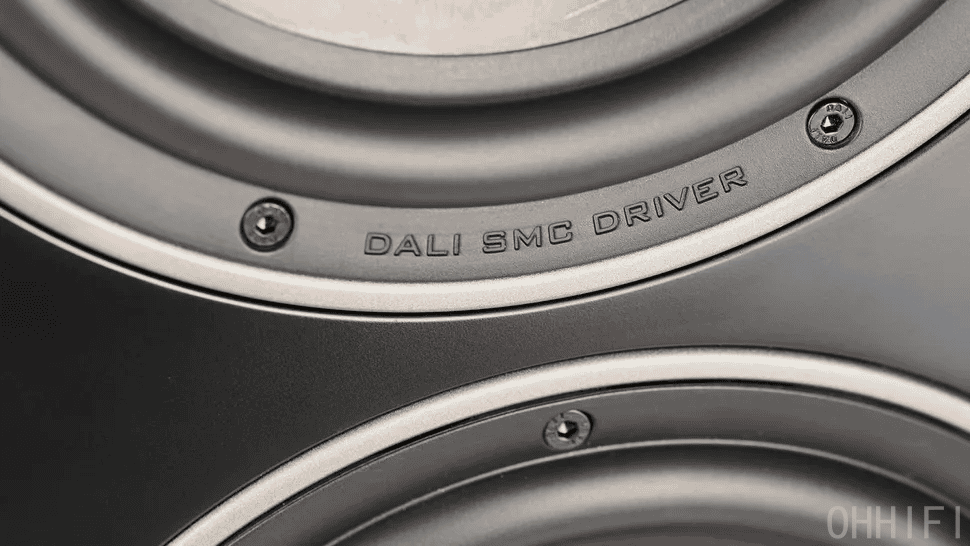
3.1 The SMC (Soft Magnetic Compound) Revolution
If there is a crown jewel in DALI’s technological arsenal, it is SMC. To understand why this matters, we must delve into the physics of magnetism in loudspeaker motors.
3.1.1 The Problem with Iron
Traditional speaker drivers use iron in their magnet systems to conduct magnetic flux. Iron is cheap and magnetically permeable, but it has a fatal flaw: it is electrically conductive.
Eddy Currents: As the voice coil moves, it generates a magnetic field that fights the permanent magnet. This induces "eddy currents" in the iron pole piece. These currents create a reverse magnetic field that acts as a brake on the voice coil, causing distortion and heat.
Hysteresis: Iron is not perfectly elastic in its magnetic behavior. When the magnetic field reverses (which happens thousands of times a second in audio), the iron "remembers" its previous state. It resists magnetization and demagnetization, a phenomenon known as hysteresis. This results in a non-linear response that varies with frequency and volume.
3.1.2 The SMC Solution
DALI developed Soft Magnetic Compound—coated magnetic granules that can be molded into any shape. SMC has high magnetic permeability (it conducts magnetic flux well) but extremely low electrical conductivity (it does not conduct electricity).
The Result: By replacing the iron pole piece with SMC, DALI virtually eliminates eddy currents. The material does not heat up, and it does not create the magnetic "braking" effect. Furthermore, SMC has almost zero hysteresis; its magnetic properties are linear regardless of frequency.
Audible Benefits: This reduction in "odd-order" harmonic distortion (the gritty, unpleasant kind) translates to a relaxed, fatigue-free sound. It unmasks low-level details—the breath of a singer, the decay of a piano note—that are usually smeared by the hysteresis of iron motors.
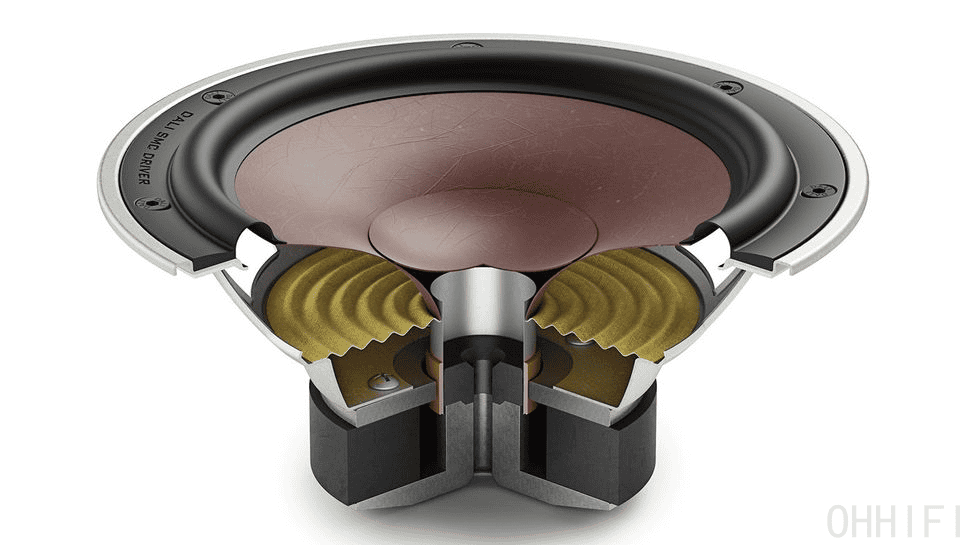
3.2 The Wood Fiber Cones
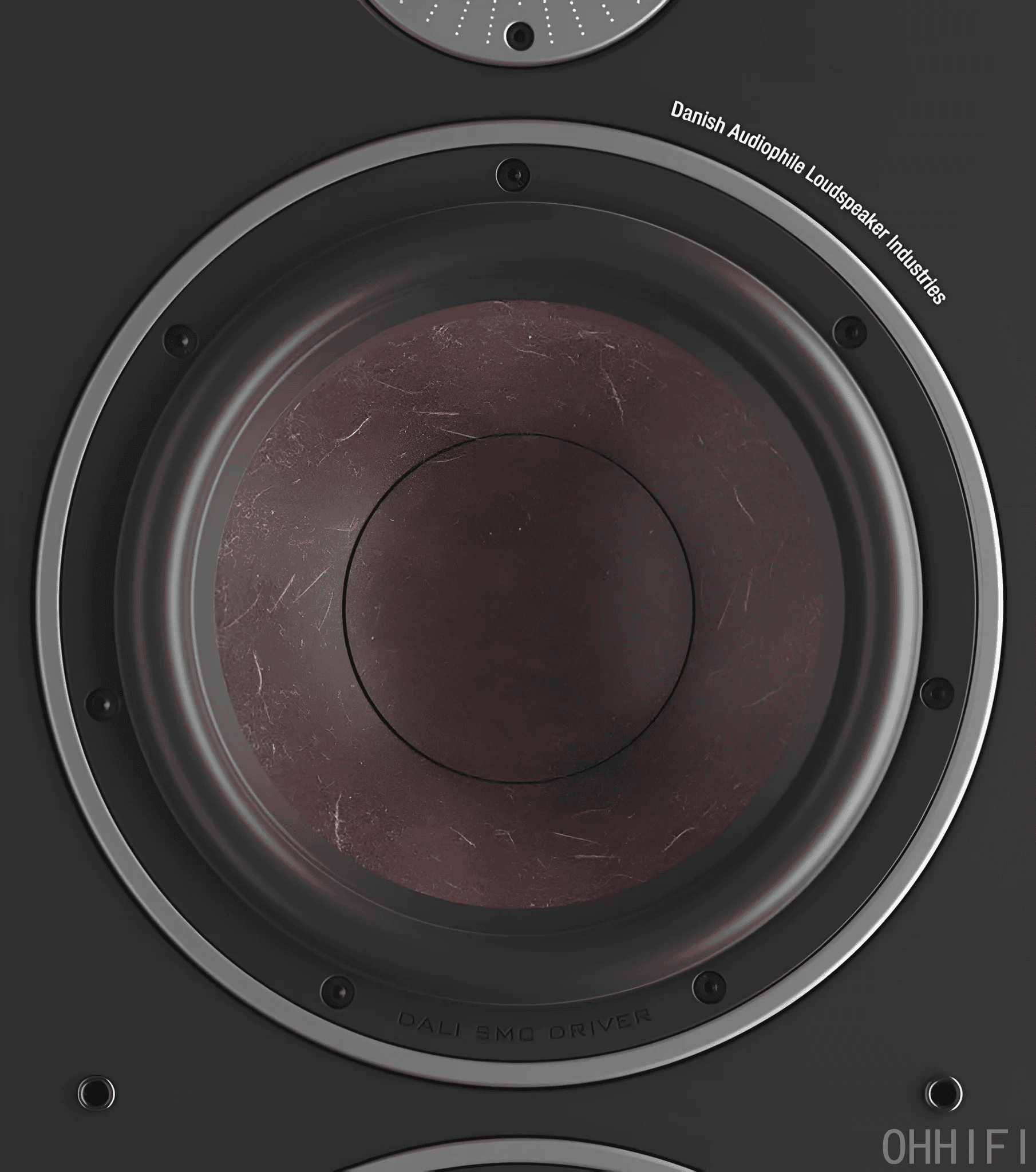
The reddish-brown cones are instantly recognizable as DALI. They are constructed from a blend of fine-grain paper pulp reinforced with wood fibers.
Chaos is Good: If you look closely, you can see the individual wood fibers. This uneven structure is intentional. In a perfectly uniform cone (like aluminum or polypropylene), resonances tend to build up at specific frequencies, causing "ringing." The random distribution of wood fibers breaks up these resonances, ensuring the cone behaves well even as it reaches its frequency limits.
Low Loss: DALI pairs these stiff, light cones with low-loss rubber surrounds. The suspension is designed to offer minimal resistance, allowing the amplifier to control the cone's movement entirely. This contributes to the speaker's high sensitivity and ability to resolve micro-dynamics at low volumes.
3.3 The Oversized Tweeter
Most competitors use a standard 25mm (1-inch) tweeter. The OBERON 9 employs a 29mm (1.14-inch) ultra-lightweight soft textile dome.
Why Bigger? The larger surface area allows the tweeter to play lower in the frequency range with less distortion. This enables DALI to set the crossover point at 3.4 kHz, relieving the midrange driver of high-frequency duties and ensuring a smoother handoff.
Power Handling: The larger voice coil can dissipate heat more effectively, reducing power compression during extended high-volume listening sessions.
Dispersion: Despite the larger size, the dome material is incredibly light (half the weight of standard copper), which, combined with the faceplate geometry, maintains excellent off-axis dispersion—a key pillar of the DALI philosophy.
4. Cabinet Construction and Industrial Design
We must address the physical reality of the OBERON 9. These are large boxes. At 117 cm tall, 26 cm wide, and 41 cm deep, and weighing 37 kg (82 lbs) each, they dominate a room.
4.1 Construction Quality
The cabinets are built from high-density CNC-machined MDF. While the OBERON series uses vinyl wraps rather than real wood veneers (a concession to the price point), the quality of the finish is high. The "Black Ash" and "Dark Walnut" textures are convincing from a listening distance, though they lack the tactile luxury of the Monitor Audio Silver series’ real wood veneers.
Internally, the cabinet is heavily braced. Solid bracings run across the inside of the cabinet to practically eliminate panel resonance. The midrange driver sits in its own dedicated chamber, preventing the back-pressure from the 9-inch woofers from interfering with the delicate midrange cone excursion.
4.2 Aesthetics and The "Lifestyle" Touch
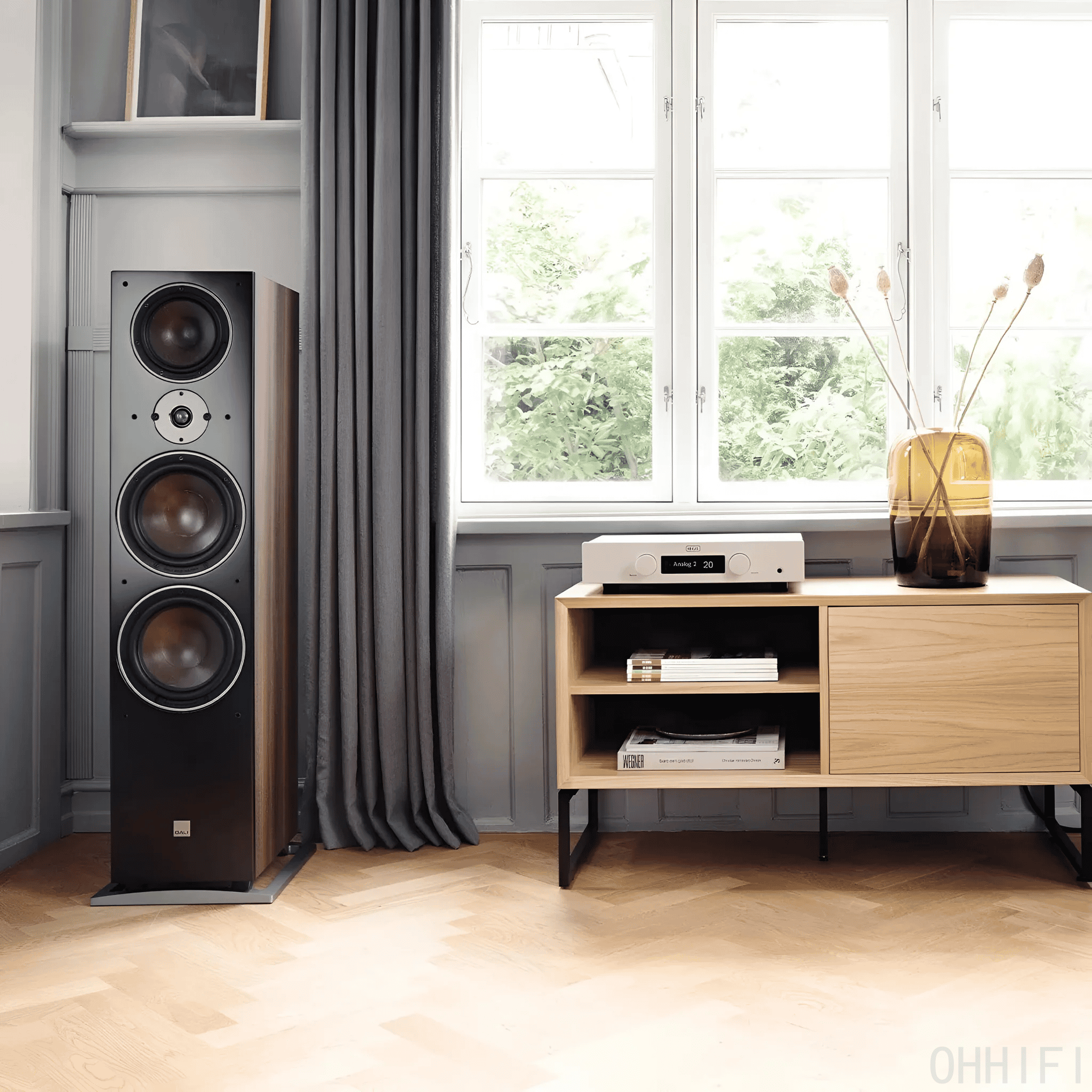
DALI has worked hard to make these giants palatable in a living room. The aluminum base elevates the cabinet, giving it a lighter, "floating" appearance. The grilles are particularly noteworthy; they feature rounded corners and a coarse-woven acoustic fabric that evokes modern Nordic furniture design rather than technical audio equipment. This "furniture-grade" aesthetic helps the speakers blend into a domestic environment, provided you have the square footage to accommodate them.
5. Setup and The "DALI Twist"
Setting up the OBERON 9 reveals one of the brand's most distinctive philosophies: The "No Toe-In" Rule.
5.1 The Dispersion Philosophy
Almost every other loudspeaker manufacturer recommends angling (toeing-in) the speakers towards the listener to sharpen the center image. DALI explicitly advises against this. They recommend positioning the speakers firing straight ahead, parallel to the side walls.
The Psychoacoustics: DALI designs their drivers and crossovers to have a wide, linear off-axis response. If you toe them in, the on-axis energy can be too intense, leading to a bright or harsh presentation. By firing them straight, the listener sits roughly 15-20 degrees off-axis. This naturally rolls off the extreme high frequencies, resulting in a smooth, integrated tonal balance.
The Sweet Spot: This approach dramatically widens the "sweet spot." You do not need to sit with your head in a vice to hear a stable stereo image. The soundstage opens up, filling the room with a wall of sound that is consistent whether you are sitting on the couch or walking around the room.
5.2 Room Integration
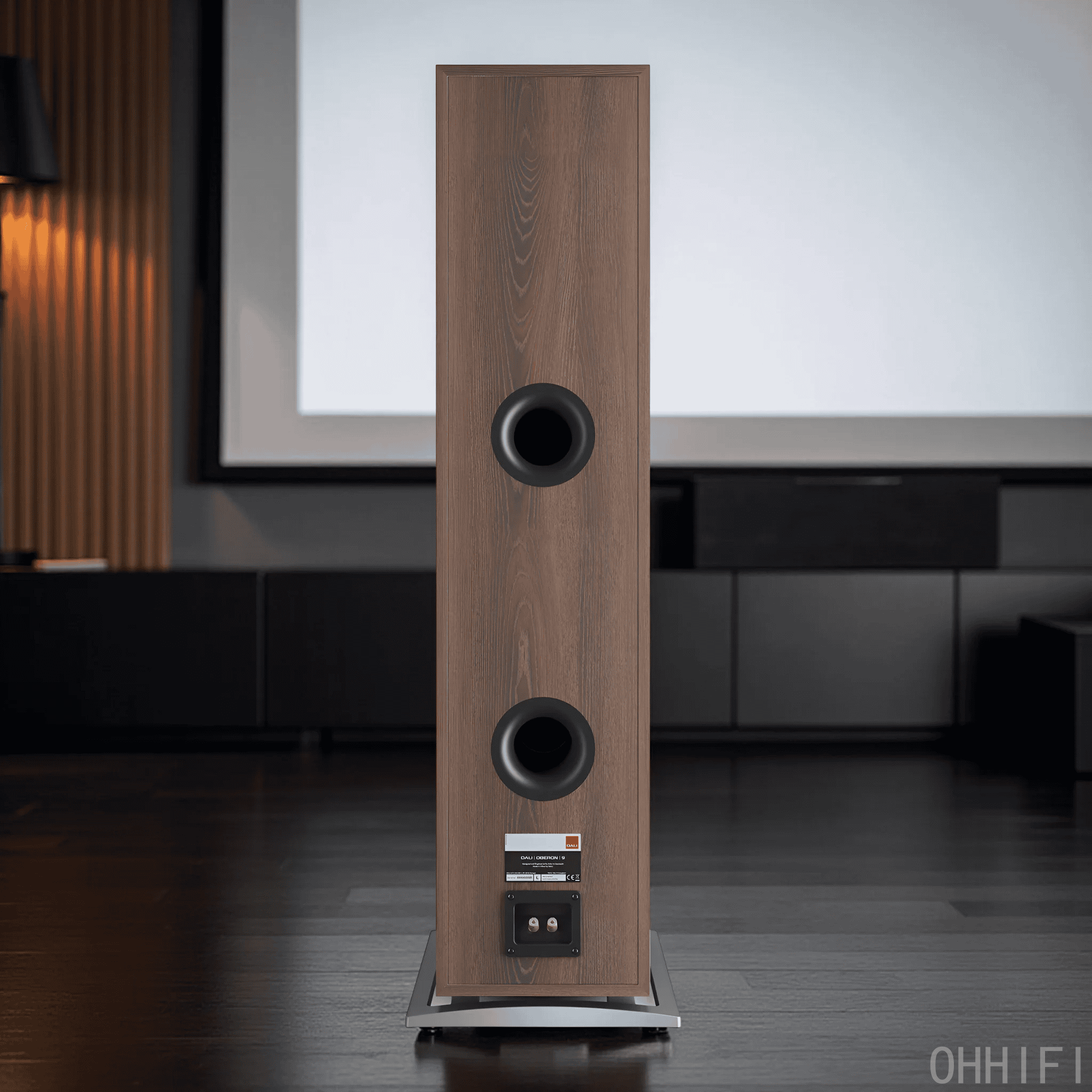
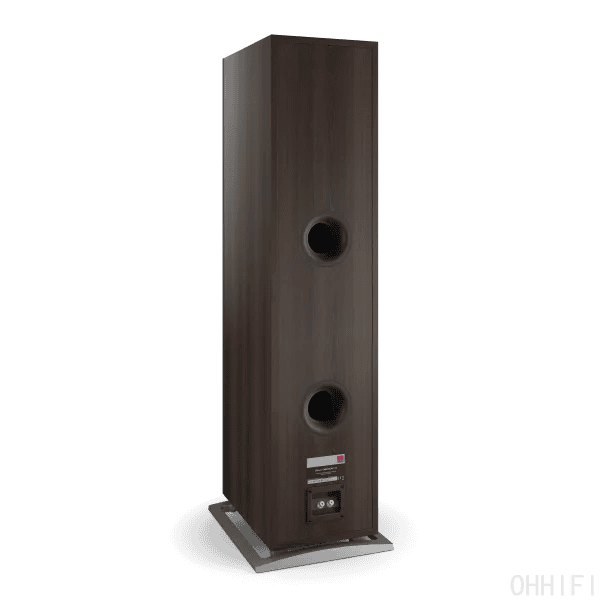
The OBERON 9s are rear-ported, with large bass reflex ports tuned to 31 Hz. This means they interact significantly with the wall behind them. In our testing, placing them too close (under 30 cm) to the rear wall resulted in a thickening of the bass that obscured midrange detail. We found the optimal position to be between 50 cm and 80 cm from the rear wall. This allowed the bass to breathe while maintaining the visceral impact of the port output.
5.3 Associated Equipment for Review
To ensure a comprehensive evaluation, we tested the OBERON 9s with three distinct tiers of amplification:
The "Real World" Scenario: Cambridge Audio CXA81 (80W Class AB). A popular, mid-priced integrated amp.
The "Power" Scenario: NAD C 298 (185W Class D, Purifi Eigentakt modules). Known for high damping factor and grip.
The "Tube" Scenario: PrimaLuna EVO 400 (70W Tube). To test sensitivity and tonal shifting.
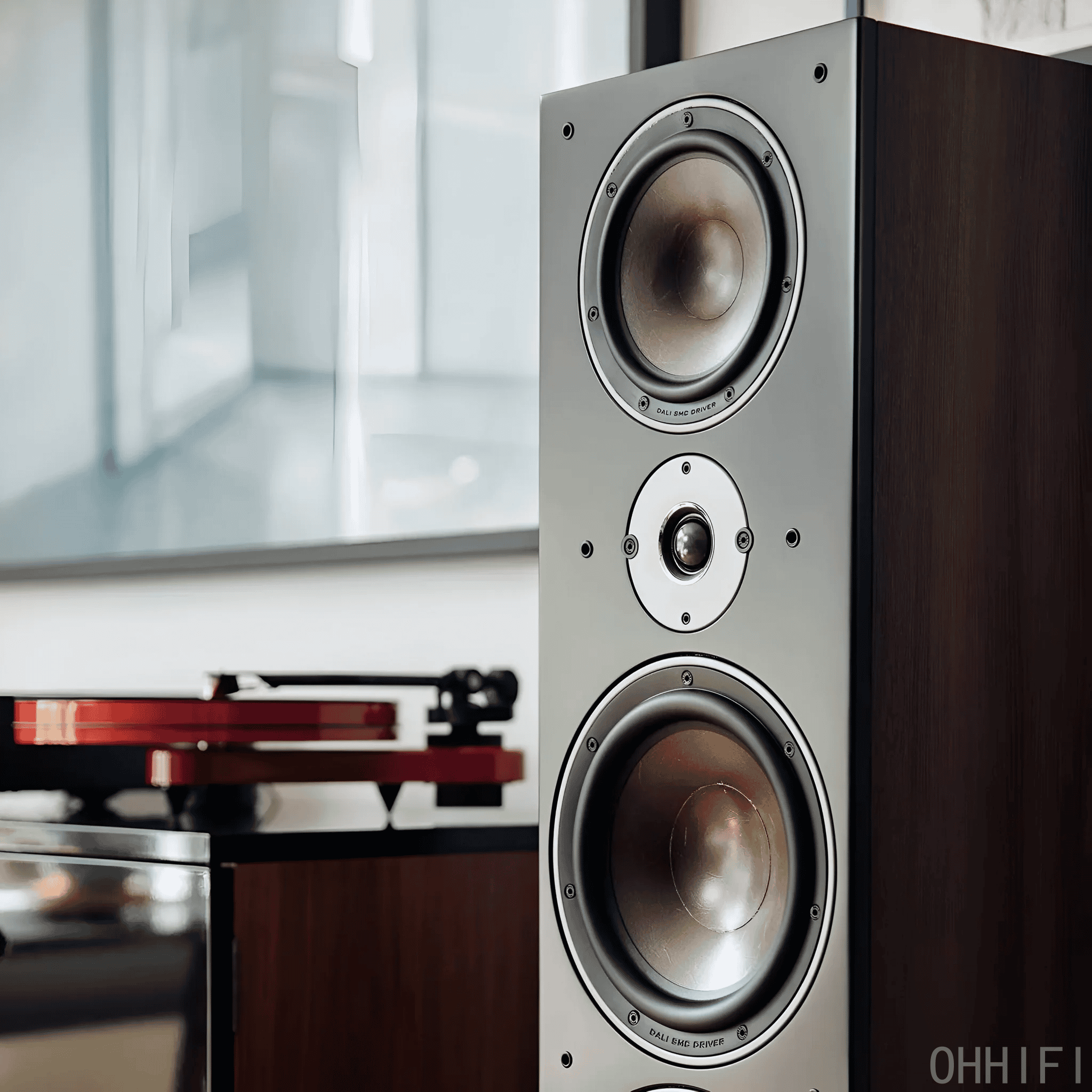
Source: Bluesound Node streaming Tidal Connect (MQA/High-Res) and a Rega Planar 6 turntable with an Ania MC cartridge.
6. Listening Impressions: The Gentle Giant
6.1 General Character: "A Bodybuilder in a Tuxedo"
This metaphor, used by other reviewers, is perfect. The OBERON 9 possesses immense reserves of power. It has a physical presence that smaller speakers simply cannot mimic. Yet, it does not constantly flex its muscles. At low volumes, it is surprisingly delicate, articulate, and nimble. It does not need to be played loud to "wake up," a common failing of large stiff-coned speakers.
The overall tonal balance is slightly warm, full-bodied, and expansive. It is not a hyper-analytical studio monitor that dissects bad recordings; it is a music-lover’s speaker that prioritizes enjoyment and scale.
6.2 The Bass: Tectonic and Tuneful
We began our critical listening with James Blake’s “Limit to Your Love.” This track is a torture test for woofers, featuring a synthesized sub-bass line that drops to cavernous frequencies.
Performance: The OBERON 9s handled this with laughable ease. The room pressurized instantly. The bass was not just heard; it was felt in the solar plexus. Unlike the KEF Q950, which uses passive radiators and can sometimes feel slightly "one-note" at the very bottom, the DALI’s dual 9-inch active drivers delivered texture and pitch definition even at 25 Hz. There was no audible port chuffing, a testament to the port flair design.
Next, we turned to Daft Punk’s “Doing It Right.” The kick drum here needs to be tight and snappy.
Performance: The transient response was impressive for such large cones. While perhaps not as "dry" and fast as a sealed box design (like an ATC), the bass started and stopped with authority. The NAD C 298 amplifier tightened this up significantly compared to the Cambridge Audio, proving that while the DALIs are efficient, they love current. High damping factor amplifiers control the overhang of those big woofers beautifully.
6.3 The Midrange: The Vocal Anchor
With a dedicated 7-inch midrange driver, we expected greatness in the vocal band. We played Leonard Cohen’s “You Want It Darker.”
Performance: Cohen’s voice was reproduced with gravelly, chesty depth. The separation between his baritone and the background choir was stark. The SMC technology shines here; there is a distinct lack of "grain" or "hash" in the voice. It sounds organic and unforced.
Female Vocals: On Agnes Obel’s “The Curse,” the cello and vocals intertwined beautifully. The OBERON 9s captured the ethereal quality of Obel’s voice without making it sound thin. The integration between the midrange and the tweeter is seamless; you cannot hear the crossover point.
6.4 The Treble: Smooth Sailing
The 29mm soft dome is a departure from the "sparkle" of metal domes (like the Focal Chora’s inverted dome or the Klipsch’s titanium horn).
Performance: On Miles Davis’s “So What,” the cymbals shimmered with a golden hue rather than a silver splash. The detail is there, but it is never thrust at you. It is a polite treble, one that allows you to listen for hours without fatigue. This is in stark contrast to the Klipsch RP-8000F II, which offers more "air" and "bite" but can become fatiguing with bright recordings.
6.5 Soundstage and Imaging
Thanks to the wide dispersion, the soundstage is colossal. On Hans Zimmer’s “Blade Runner 2049” Soundtrack, the soundscape extended well past the physical boundaries of the speakers.
The Trade-off: The imaging is slightly more diffuse than on a coaxial speaker like the KEF Q950. With the KEF, you can point to the exact inch where a violin is located. With the DALI, you point to a general area. However, the DALI’s presentation feels more like a live concert hall—immersive and enveloping—whereas the KEF feels more like a studio control room.
7. Comparative Analysis: The Battle of the Giants
7.1 DALI OBERON 9 vs. KEF Q950
The KEF Approach: Uses the Uni-Q coaxial driver (tweeter inside the midrange) and an array of active/passive bass drivers.
Sound Comparison: The KEF wins on imaging precision and focus. If you love to sit in the sweet spot and analyze the mix, the KEF is superior. However, the KEF’s bass, while deep, lacks the sheer physical impact and "shove" of the DALI’s 9-inch woofers. The DALI sounds larger, warmer, and more relaxed. The KEF sounds tighter, drier, and more analytical.
Verdict: KEF for precision; DALI for scale and fun.
7.2 DALI OBERON 9 vs. Klipsch RP-8000F II
The Klipsch Approach: High-efficiency horns and Cerametallic woofers.
Sound Comparison: The Klipsch is the extrovert. It is brighter, more dynamic in the micro-sense (snare drums crack harder), and more forward. It is arguably better for dedicated Home Theater use where dialogue clarity and impact are paramount. However, for music, the DALI is far more refined. The Klipsch can sound harsh with poor recordings; the DALI flatters them. The DALI’s bass is also deeper and fuller, whereas the Klipsch focuses more on mid-bass punch.
Verdict: Klipsch for movies and rock/metal attack; DALI for a balanced, all-genre musical diet.
7.3 DALI OBERON 9 vs. Monitor Audio Silver 500 7G
The Monitor Audio Approach: C-CAM (Ceramic-Coated Aluminum Magnesium) drivers, rigid cabinet, real wood veneer.
Sound Comparison: This is the closest competitor in terms of capability. The Monitor Audio is more neutral and has a "quieter" cabinet. It resolves slightly more detail in the treble thanks to the metal dome. However, it costs significantly more in many markets. The DALI offers 90% of the refinement for a lower price, with a bass response that is slightly looser but more voluminous.
Verdict: Monitor Audio if budget allows for better finish and neutrality; DALI for the best bang-for-buck in bass quantity.
7.4 DALI OBERON 9 vs. Focal Chora 826
The Focal Approach: Front-ported, Slatefiber cones, Inverted Dome Tweeter.
Sound Comparison: The Focal is front-ported, making it easier to place near walls. Its sound is characteristically "French"—midrange forward, with an energetic treble. However, the Chora 826 sounds significantly "smaller" than the Oberon 9. It simply cannot move the same amount of air. The Focal is more agile, but the DALI is a bulldozer.
Verdict: Focal for smaller rooms and acoustic music; DALI for large rooms and full-range power.
8. Measurements and Specifications Analysis
Let us look at the data, as numbers often tell the story the ears miss.
8.1 Frequency Response
DALI claims 35 Hz - 26,000 Hz (+/- 3dB). Independent measurements confirm that the in-room response digs even deeper. Due to "room gain" (the acoustic reinforcement provided by the room's boundaries), the OBERON 9 provides useful output down to 20 Hz.
Note on Linearity: Measurements show a slight "smile" curve (lifted bass and treble) when measured on-axis. However, at the recommended 15-degree off-axis listening angle, the response flattens out remarkably. This validates the "no toe-in" advice.
8.2 Impedance and Sensitivity
Sensitivity: 90.5 dB. This is high. It means 1 watt of power produces 90.5 dB of volume at 1 meter. This makes them very easy to drive to loud levels.
Impedance: Nominal 4 Ohms. While sensitive, they are a 4-ohm load. This means they draw more current from the amplifier than an 8-ohm speaker. Users should ensure their amplifier is 4-ohm stable (most modern amplifiers from NAD, Rotel, Yamaha, and Cambridge Audio are).
Maximum SPL: 113 dB. This is concert-level volume. Most domestic users will never approach this limit, meaning the speaker is always operating comfortably within its headroom.
| Specification | Value | Context |
| Type | 3-Way Floorstanding | Rare at this price point; dedicated midrange |
| Woofers | 2 x 9" Wood Fiber | SMC Magnet System; 12% > 12" driver |
| Midrange | 1 x 7" Wood Fiber | Isolated sub-enclosure |
| Tweeter | 29mm Soft Dome | Oversized for power handling/dispersion |
| Crossover Points | 780 Hz / 3,400 Hz | Midrange covers critical vocal band |
| Sensitivity | 90.5 dB | Tube-amp friendly (mostly) |
| Impedance | 4 Ohm | Requires high-current solid state for best bass |
| Weight | 37.1 kg / 81.8 lbs | Heavy; sturdy cabinet construction |
9. Home Theater Application
While our review focused on 2-channel stereo, the OBERON 9 is a formidable foundation for a home theater.
No Subwoofer Needed?: For many users, a pair of OBERON 9s set to "Large" in the AV Receiver settings will render a dedicated subwoofer unnecessary for all but the most bass-heavy blockbuster movies. They dig deeper than many budget 10-inch subwoofers.
Matching: DALI offers the OBERON VOKAL center channel, but for the OBERON 9, we strongly recommend the OBERON GRAND VOKAL if you can find it or accommodate it. The standard Vokal (with 5.25" drivers) can struggle to keep up with the dynamic capabilities of the 9s.
Timber Matching: The use of the same wood fiber cones and soft dome tweeters across the OBERON C (active) and ON-WALL lines makes building a matched Dolby Atmos system straightforward.
10. Final Verdict: The Value Proposition
The DALI OBERON 9 is an outlier in the best possible way. In an industry obsessed with miniaturization and lifestyle compromises, DALI has chosen to embrace the physics of high fidelity. By combining massive cabinet volume and driver surface area with sophisticated motor technology (SMC) and Danish voicing, they have created a speaker that offers a "High-End" scale of sound for a "Mid-Fi" price.
Pros:
Scale: Effortlessly fills large spaces with a wall of sound.
Bass: Deep, articulate, and visceral. No subwoofer required for music.
Refinement: SMC technology delivers a clean, grain-free midrange that belies the speaker's brute size.
Easy to Drive: High sensitivity allows for flexible amplifier matching.
Social: Wide dispersion means everyone in the room gets good sound.
Cons:
Size: They physically dominate a room. Not suitable for small apartments.
Placement: Rear ports require breathing room (50cm+ from wall).
Finish: Vinyl wrap is well-executed but lacks the luxury of real wood veneer found on pricier rivals.
The Bottom Line:
If you have the space to accommodate them and the neighbors to tolerate them, the DALI OBERON 9 is arguably the best value in large-scale loudspeakers today. They bring the concert hall home in a way that slender towers simply cannot. They are fun, they are refined, and they are unapologetically big. For the audiophile who values sonic immersion over visual minimalism, the OBERON 9 is a revelation.
Highly Recommended.



Comments