
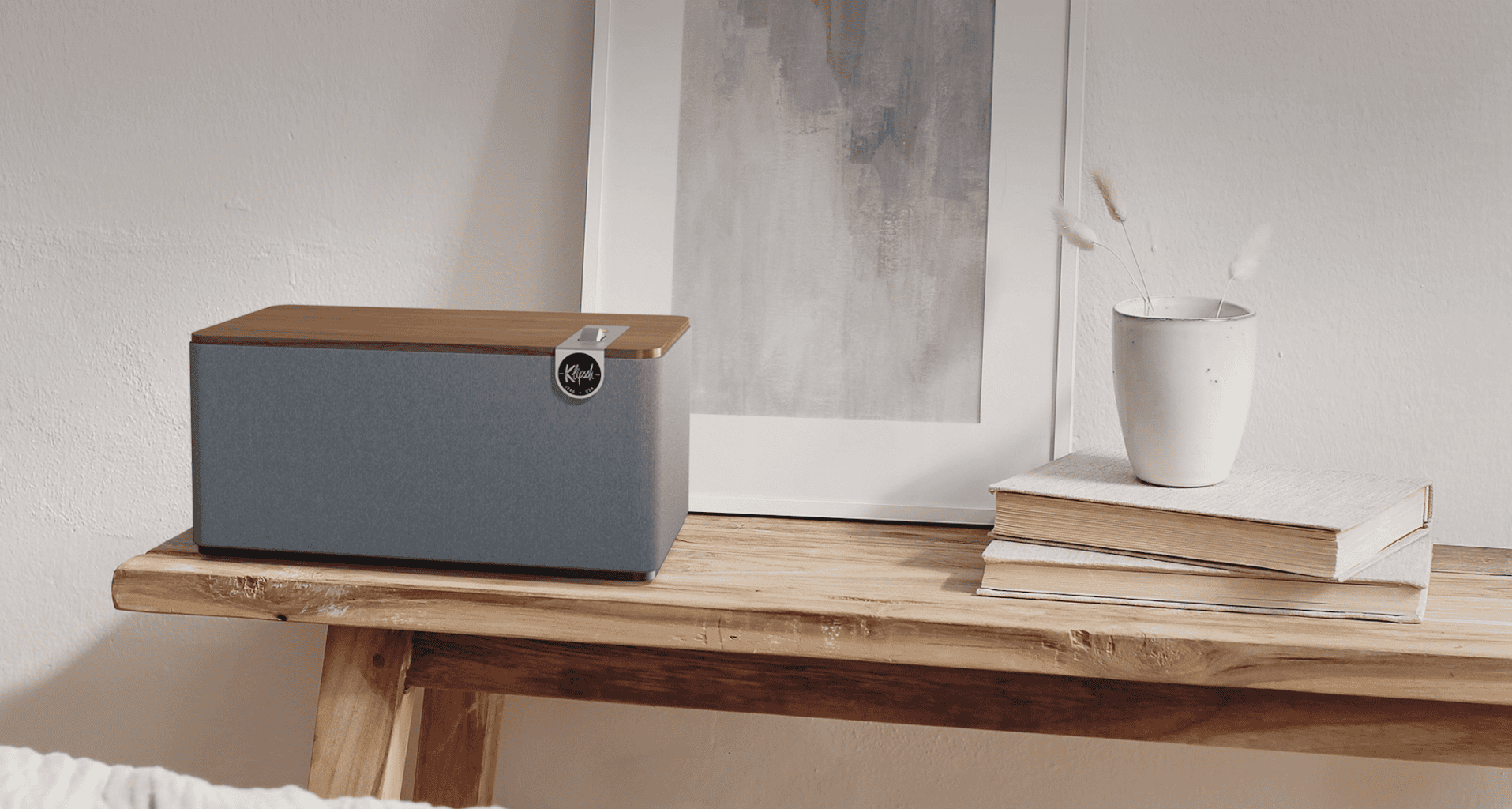
The Klipsch The Three Plus: A Modernist Obeisance to the Heritage of High Efficiency

Part I: The Burden of Legacy
The Shadow of Hope, Arkansas
In the sprawling, often sterile landscape of contemporary consumer audio, few names carry the gravitational weight of Klipsch. To understand the Klipsch The Three Plus, one cannot simply view it as a Bluetooth speaker; one must view it as the latest, and perhaps most commercially accessible, descendant of a lineage that began in a tin shed in Hope, Arkansas, in 1946. Paul W. Klipsch (PWK), the brand’s eccentric and brilliant founder, was a man who wore buttons labeled "B.S." under his lapels to flash at anyone spouting audio nonsense. He was a physicist who believed in the primacy of efficiency, the physics of the horn, and the visceral reality of the live performance.
For decades, the Klipsch ethos was defined by refrigerator-sized cabinets—the Klipschorn, the La Scala, the Cornwall. These were speakers that didn't just reproduce sound; they energized the air in a room with a startling, dynamic immediacy that could be felt in the chest. They were sensitive, requiring only a flea-watt of power to drive to deafening levels, and they were unapologetically forward.
Fast forward to the mid-2020s. The audiophile landscape has shifted tectonically. The dedicated listening room is a luxury of the past for many; the rack of separate components—preamp, power amp, DAC, streamer—has been compressed into the smartphone and the "smart speaker." The challenge for a brand like Klipsch is existential: How do you translate the "No B.S." philosophy of a 100-pound horn-loaded floorstander into a 10-pound tabletop box that needs to sit comfortably next to a latte on a mid-century modern credenza?
The Klipsch The Three Plus is the answer to that question. It is not merely a product refresh of its predecessor, The Three II; it is a refined calibration of Klipsch’s "Heritage Wireless" strategy. It resides in the friction point between the acoustic heritage of the past and the digital convenience of the present. It attempts to serve two masters: the critical ear that demands the dynamic snap of a snare drum, and the casual lifestyle user who demands seamless Bluetooth pairing and a design that complements an Eames chair.
In this exhaustive review, we will strip away the marketing veneer—quite literally, in our analysis of the cabinet construction—to determine if The Three Plus is a genuine heir to the Klipsch throne or merely a lifestyle accessory wearing a heritage costume. We have spent weeks with this unit, testing it against the titans of the sector: the computational wizardry of the Sonos Era 300, the rock-and-roll nostalgia of the Marshall Woburn III, and the smart-home integration of the JBL Authentics.
We will explore the physics of its acoustic architecture, the controversial decisions regarding its driver configuration, the granular realities of its app integration, and, ultimately, whether it possesses the soul of high fidelity.
The Evolution of "Heritage Wireless"
To appreciate The Three Plus, we must contextualize it within the "Heritage Wireless" series. When Klipsch first launched The One and The Three, they were outliers. The market was dominated by the rubberized cylinders of Ultimate Ears and the monochromatic plastics of Bose. Klipsch took a gamble on nostalgia, betting that a generation raised on digital intangibility was craving tactile reality. They wrapped their technology in real wood veneer and spun copper controls.
The Three II was a success, but it had flaws. It was bulky, its connectivity was becoming dated, and its sonic profile was unabashedly "V-shaped"—booming bass and sizzling treble with a recessed midrange. The Three Plus arrives with a mandate to refine this formula. It softens the visual edges, updates the Bluetooth stack to 5.3, introduces a "Broadcast Mode" for multi-speaker chaining, and, crucially, re-tunes the acoustic signature.
But refinement is a dangerous game. In smoothing out the rough edges, does one also sand away the character? The "Klipsch Sound" is polarizing for a reason; it is aggressive and exciting. A polite Klipsch speaker is an oxymoron. Our investigation begins with the physical object itself.
Part II: Design and Aesthetics — Mid-Century Modernism Redux
The Visual Language of "Heritage"
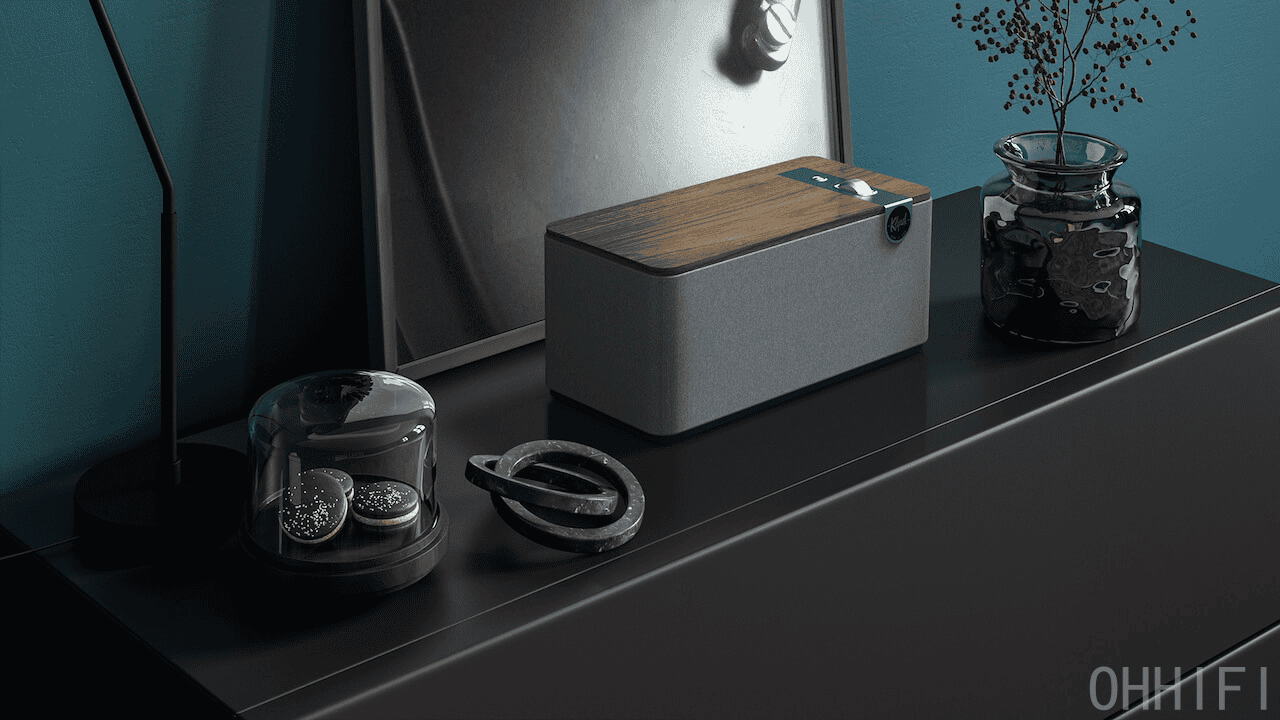
Unboxing The Three Plus is an experience designed to evoke the sensation of unpacking a piece of fine furniture rather than a consumer electronic device. In an era where audio gear often oscillates between the stark, sterile white plastic of Silicon Valley smart speakers and the aggressive, industrial ruggedness of portable Bluetooth units, Klipsch has doubled down on the warmth of organic materials.
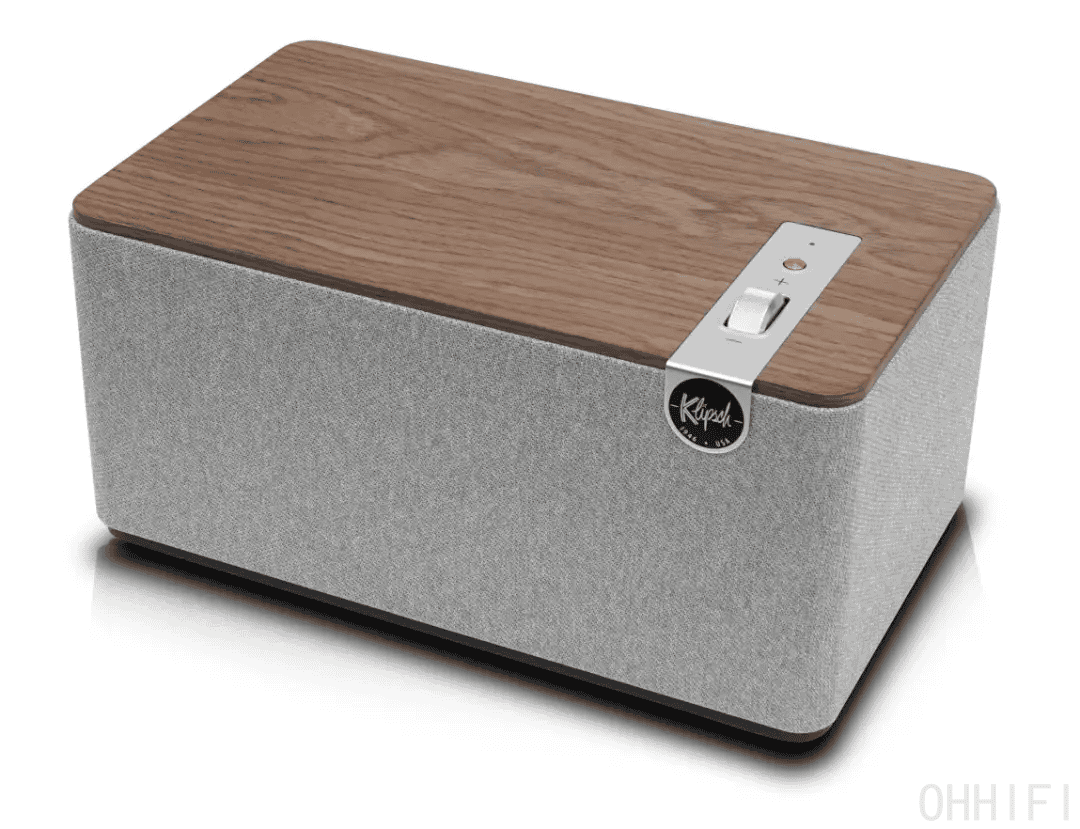
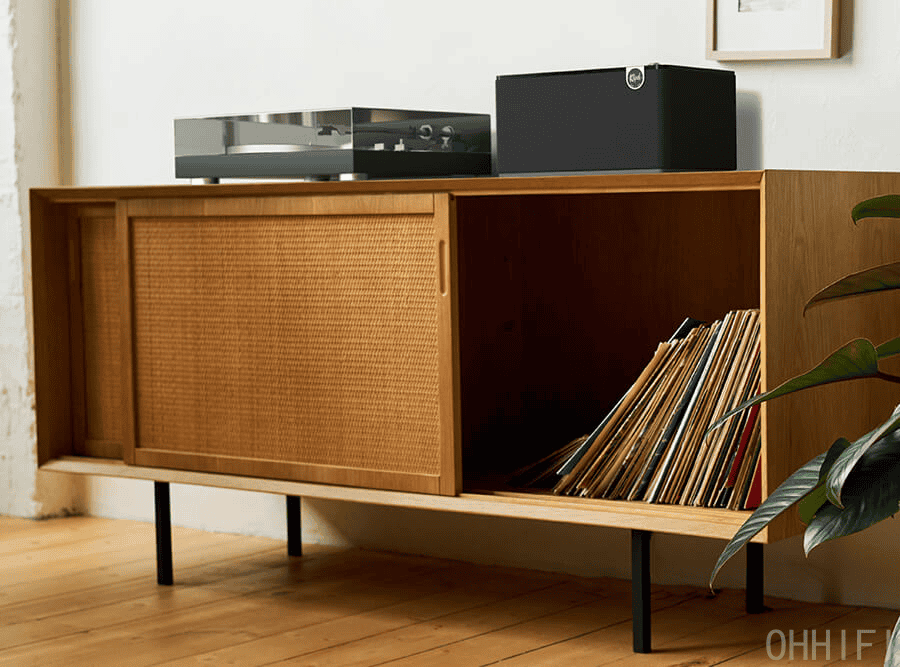
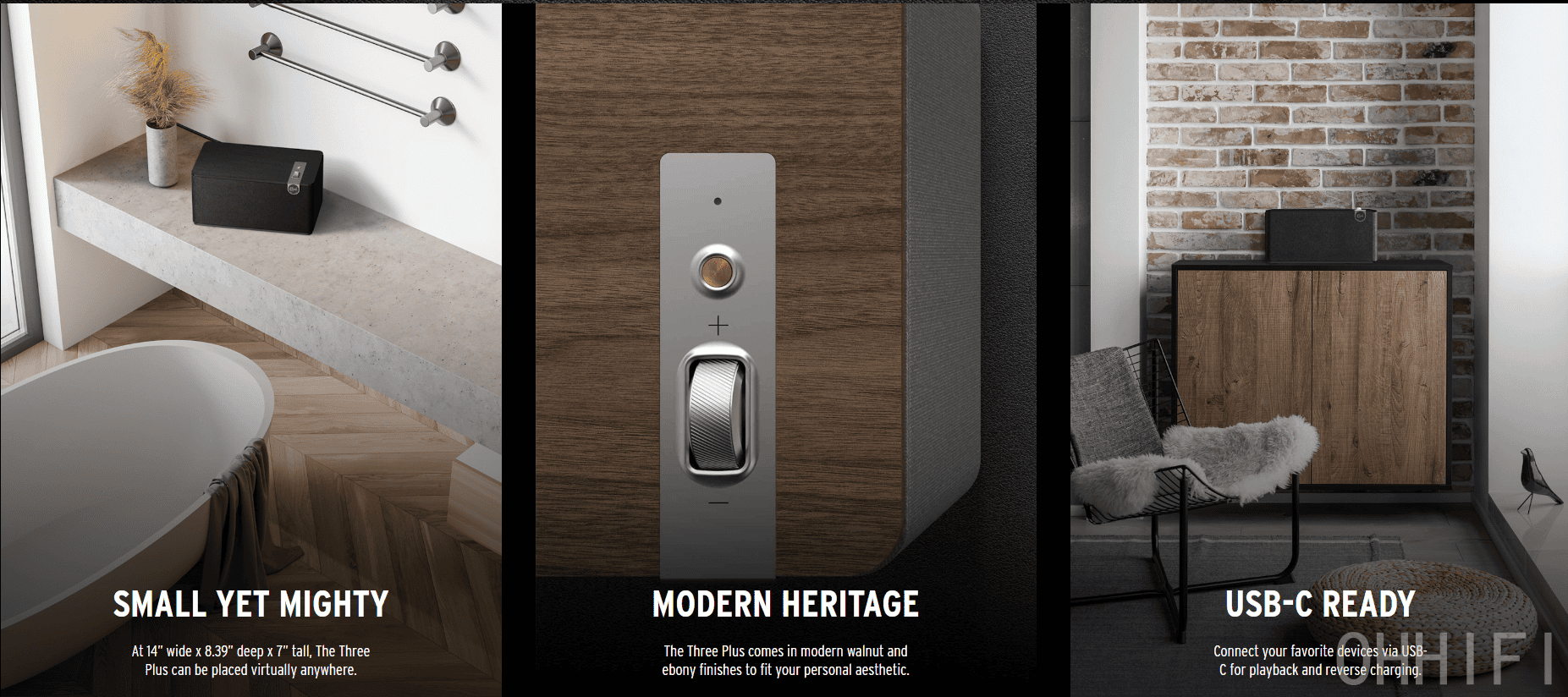
The unit measures 13.98” (35.5cm) wide, 8.38” (21.3cm) high, and 7” (17.8cm) deep. This footprint is substantial. It is not a portable speaker to be tossed in a backpack; it is a fixture. It demands a dedicated surface. The design language explicitly references the furniture trends of the 1950s and 60s, a period famously associated with the rise of the original Klipsch Heresy.
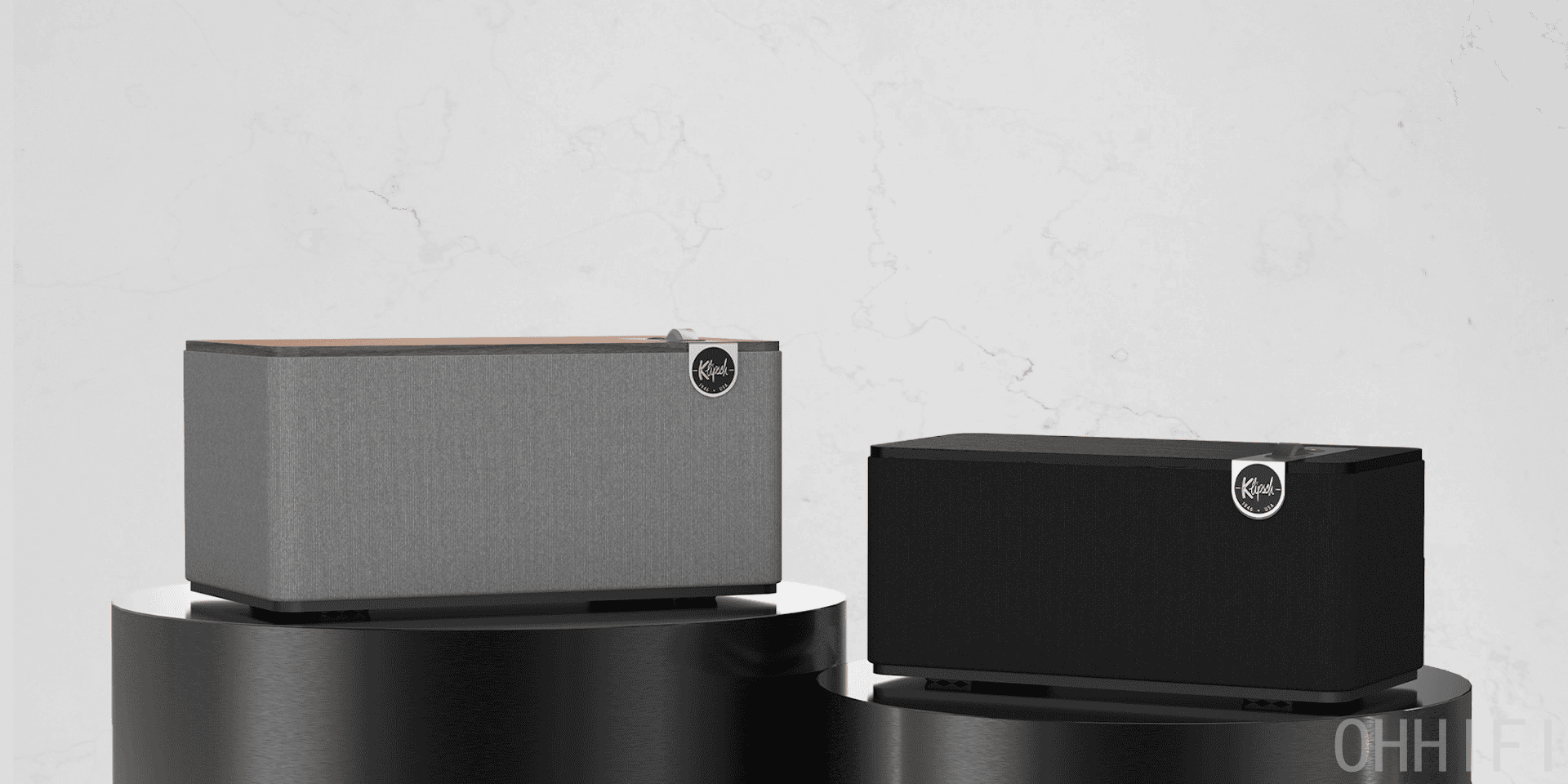
Available in Walnut (paired with a heather gray grille) and Matte Black (monochromatic), the cabinet utilizes real wood veneer. This is a critical distinction in a price bracket (MSRP $399) often populated by vinyl wraps that peel at the corners over time. The veneer provides a visual depth and a tactile warmth that plastic simply cannot replicate. When you run your hand across the top panel, you feel the grain. It feels permanent.
The corners of the cabinet have been significantly rounded compared to the sharp, boxy edges of The Three II. This curvature gives the unit a more contemporary, approachable silhouette, bridging the gap between the hard-edged vintage Klipsch Heritage speakers and the organic curves found in modern furniture design, such as the Saarinen Tulip table or the Eames Lounge Chair. It is a "softer" Heritage, perhaps acknowledging that the sharp corners of a La Scala don't fit as easily into a modern open-concept living room.
Materiality and Acoustic Implications
The use of wood veneer over an MDF (Medium Density Fiberboard) core is not merely cosmetic; it has acoustic implications. Plastic enclosures, common in cheaper Bluetooth speakers, are prone to resonance. They can "ring" or vibrate sympathetically with the music, coloring the sound with a boxy character. Wood and MDF are denser and possess better internal damping properties.
At 10.58 lbs (4.8 kg), The Three Plus feels dense. This mass is functional. According to Newton's Third Law, for every action, there is an equal and opposite reaction. When the 5.25-inch woofer pushes forward to create a bass note, it exerts an equal force backward on the cabinet. If the cabinet is light, it will move or vibrate, smearing the transient response of the bass. A heavy, inert cabinet resists this movement, ensuring that the energy is projected into the room as sound, not wasted as cabinet vibration.
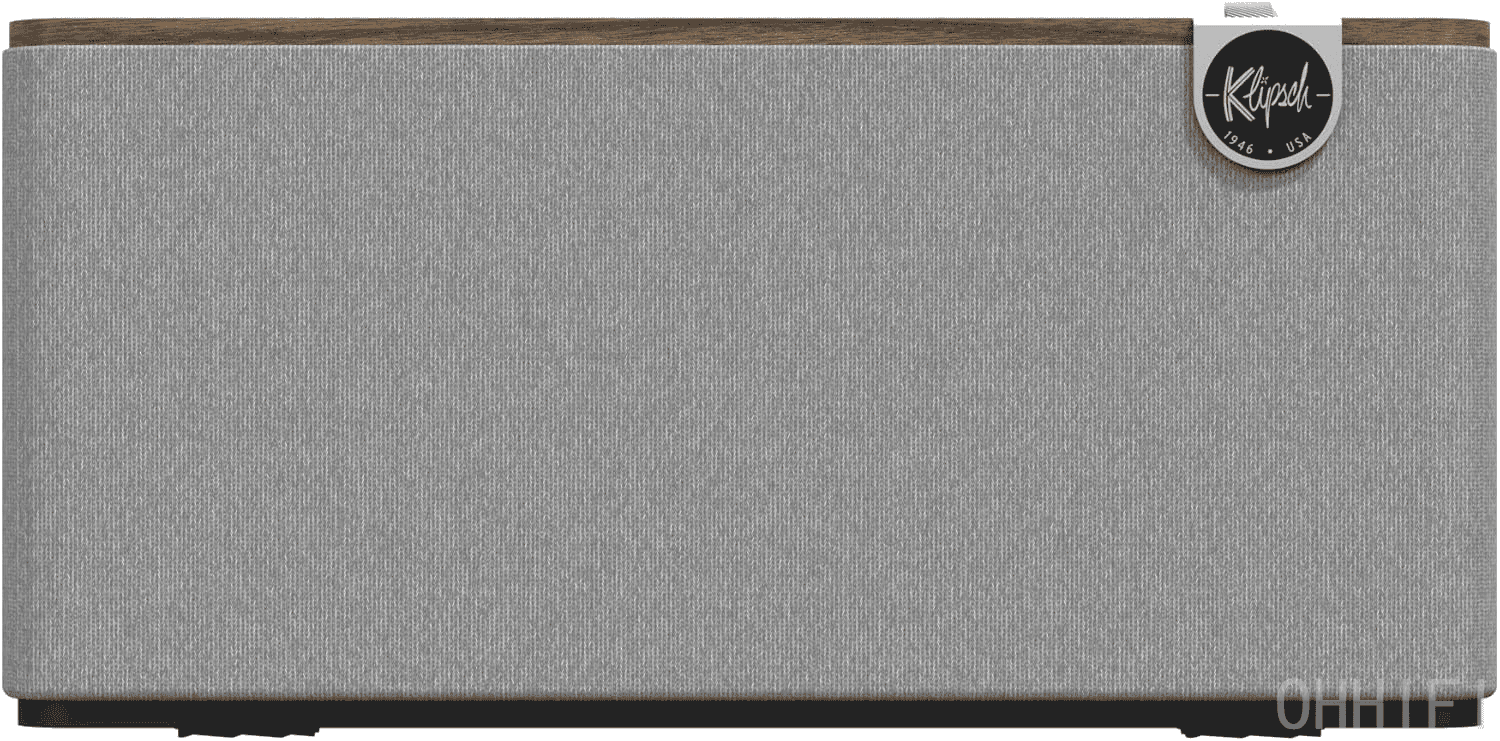
The grille cloth deserves specific mention. It wraps around the majority of the unit, breaking only for the wood veneer top and bottom caps. The weave is tight enough to obscure the drivers completely—there is no visual clutter of cones or dust caps—but acoustically transparent enough to allow high frequencies to pass with minimal attenuation.
Tactile Interaction: The Control Wheel
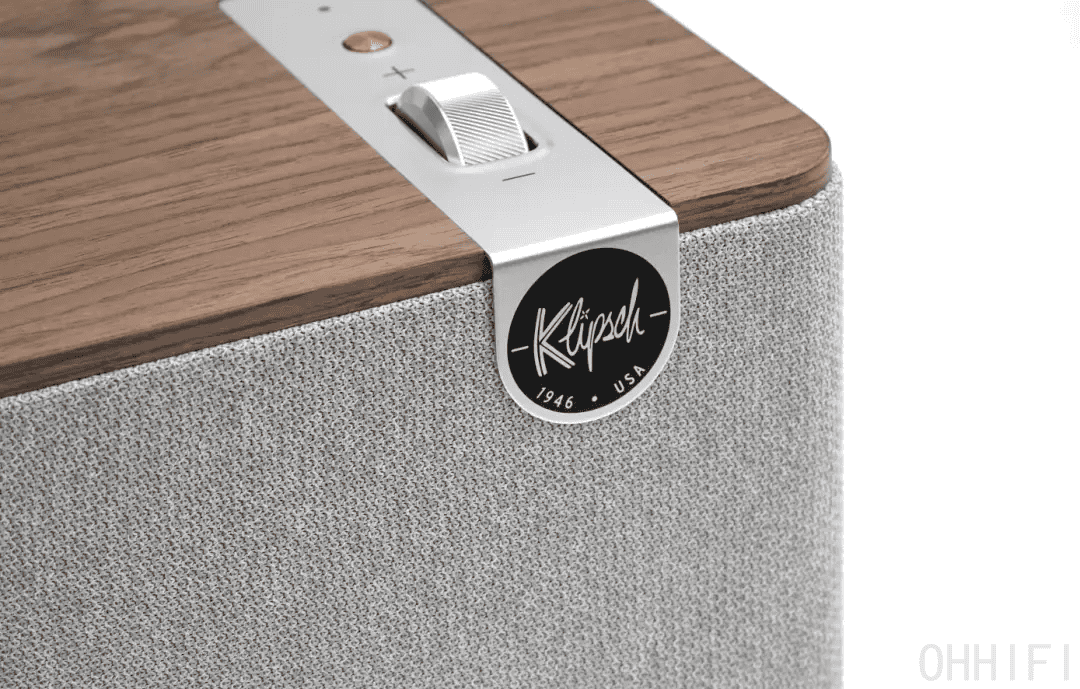
In a world of capacitive touch surfaces that require looking at the device to operate, Klipsch has retained the primacy of the physical knob. On the top panel sits a knurled metal wheel for volume control and a central button for source selection.
The feedback from this wheel is described by reviewers as "nice and smooth," offering a sense of mechanical precision that reinforces the premium positioning of the product. It spins with a weighted resistance, mimicking the feel of a heavy flywheel on a vintage receiver.
However, the integration of analog feel with digital control is where the first cracks in the user experience appear. The volume wheel, while satisfying to turn, operates in digital steps rather than a continuous analog taper. User reports from forums and reviews indicate that these steps can be somewhat coarse. A common complaint is the "Step 1" problem: the lowest volume setting is too loud for quiet, late-night background listening, while "mute" is silent. The jump from 0 to 1 is significant. This disconnect between the infinite adjustability implied by a rotary encoder and the discrete quantization of the digital volume control is a recurring theme in modern "retro" tech, and it is a detail that Klipsch’s firmware engineers need to address. A logarithmic volume curve, rather than a linear one, would offer finer control at lower volumes.
Part III: Acoustic Architecture — The Physics of the Box
The 2.1 Configuration
Internally, The Three Plus abandons the traditional stereo pair layout found in separate bookshelf speakers in favor of a consolidated 2.1 system within a single chassis. The configuration consists of:
High Frequency: Two 2.25” (57.15mm) Full-Range Drivers.
Low Frequency: One 5.25” (133.4mm) Long-Throw Woofer.
Reinforcement: Two 5.25” (133.4mm) Dual Opposing Passive Radiators.
The Controversy of Full-Range Drivers
The astute audiophile will notice a significant omission in the spec sheet: Tweeters. Unlike the Marshall Woburn III, which employs dedicated tweeters for high frequencies, or the Sonos Era 300 with its array of compression drivers, The Three Plus relies on "Full-Range" drivers to handle everything from the upper bass (where the subwoofer crosses over) to the ultrasonic limits of human hearing (20kHz).
This is a controversial engineering choice. Dedicated tweeters are specialized to move very fast and reproduce high frequencies with wide dispersion. Full-range drivers, by necessity of being larger to handle midrange frequencies, can suffer from "beaming" (where high frequencies become laser-focused straight ahead rather than filling the room) and "cone breakup" (where the driver surface distorts at high frequencies).
However, Klipsch engineers have tuned these 2.25" drivers to maximize coherence. By eliminating the crossover point between a midrange and a tweeter (which often sits right in the sensitive vocal range of 2kHz-3kHz), they achieve a "point source" effect where vocals sound singular and unified. The trade-off, as we will discuss in the Sound Quality section, is a potential lack of "air" and "sparkle" at the very top of the frequency spectrum compared to a system with high-quality dome tweeters.

The Physics of Passive Radiators vs. Ported Designs
The decision to use dual opposing passive radiators instead of a bass reflex port is a critical engineering choice for a sealed, compact box.
Elimination of Chuffing: In small speakers that produce deep bass, the air velocity through a port can become so high that it creates audible turbulence or "chuffing" noise. Passive radiators—essentially speaker cones without magnets—resonate to reinforce the bass without the air turbulence.
Newtonian Cancellation: By placing the radiators on opposite sides of the cabinet (firing left and right), and having them move in phase (both moving out or in simultaneously relative to the cabinet pressure), the mechanical forces generated by their heavy movement cancel each other out. This is crucial. It stabilizes the cabinet. If you place a glass of water on The Three Plus while it is playing a bass-heavy track, the water remains largely undisturbed. This stability ensures that the energy is used to create sound, not to rattle the furniture.
Extended Bass Response: This configuration allows The Three Plus to claim a frequency response down to 45Hz, a respectable depth for a unit of this size. This covers the fundamental frequency of a standard kick drum (~50-60Hz) and the low E string of a bass guitar (41Hz).
Bi-Amplification and DSP Power
The system is bi-amplified, meaning separate amplifier channels drive the high/mid drivers and the low-frequency woofer. The total system power is rated at 120W RMS. This is not "Peak" power (which is often inflated marketing fluff); RMS represents continuous power delivery.
The amplification is likely Class D, preferred for its high efficiency and low heat generation. In a sealed box full of stuffing and drivers, heat dissipation is a challenge; Class D runs cool.
The digital signal processing (DSP) plays a heavy hand in the "Klipsch Sound." The system employs a "Dynamic Bass" control. This is a modern implementation of the Fletcher-Munson loudness contour. The human ear is less sensitive to bass frequencies at low volumes. The DSP analyzes the volume level in real-time and boosts the bass when the volume is low to maintain a perceived tonal balance. As the volume increases, the bass boost is dialed back to protect the woofer from over-excursion. This ensures the speaker sounds "full" even at conversational levels, addressing a common complaint with passive speakers that sound "thin" when played quietly.

Part IV: Connectivity — The Bridge Between Analog and Digital
The Three Plus positions itself not just as a Bluetooth speaker, but as a central hub for a modern, minimalist audio system. Its connectivity suite is surprisingly robust, bridging the gap between the analog past and the digital future.
Table 2: Input Specifications and Capabilities
| Input Type | Spec | Primary Use Case | Max Resolution |
| Bluetooth | Version 5.3 | Streaming from Phone/Tablet | Lossy (SBC/AAC) |
| RCA / Phono | Switchable Preamp | Turntable or CD Player | Analog Path |
| Optical | Toslink | TV Audio / Streamer | 24-bit / 96kHz |
| USB-C | Audio + Charging | PC / Mac / DAP | 24-bit / 96kHz |
Bluetooth 5.3 and the "Broadcast Mode"
The wireless backbone of The Three Plus is Bluetooth 5.3. This modern standard offers improved connection stability and range (up to 40 feet) compared to older iterations. However, looking closely at the codec support, we see only SBC and AAC. There is no mention of aptX HD or LDAC. For an "audiophile-adjacent" product, this is a missed opportunity. Android users, in particular, miss out on higher-bandwidth transmission.
The headline feature for the "Plus" generation is Broadcast Mode. This allows a user to wirelessly connect up to 10+ individual Klipsch Broadcast-enabled speakers (including the Klipsch Austin, Nashville, Detroit, or another Three Plus).
The Mechanism: Unlike TWS (True Wireless Stereo) which pairs two identical speakers into discrete Left and Right channels, Broadcast Mode takes the source audio and broadcasts it to all linked speakers simultaneously.
The Mono Limitation: Crucially, research indicates that Broadcast Mode transmits in MONO. If you link two Three Plus units, you are not creating a stereo soundstage with separation; you are creating a dual-mono "wall of sound." This is effective for filling a large party space with uniform volume, but it is not a solution for critical stereo listening.
Latency: There are also reports of latency when using Broadcast mode, making it unsuitable for video content (e.g., trying to create a surround system for a TV). The sync between speakers is generally good for music, but the delay from the source can be noticeable.
The Phono Input: Vinyl's Best Friend?
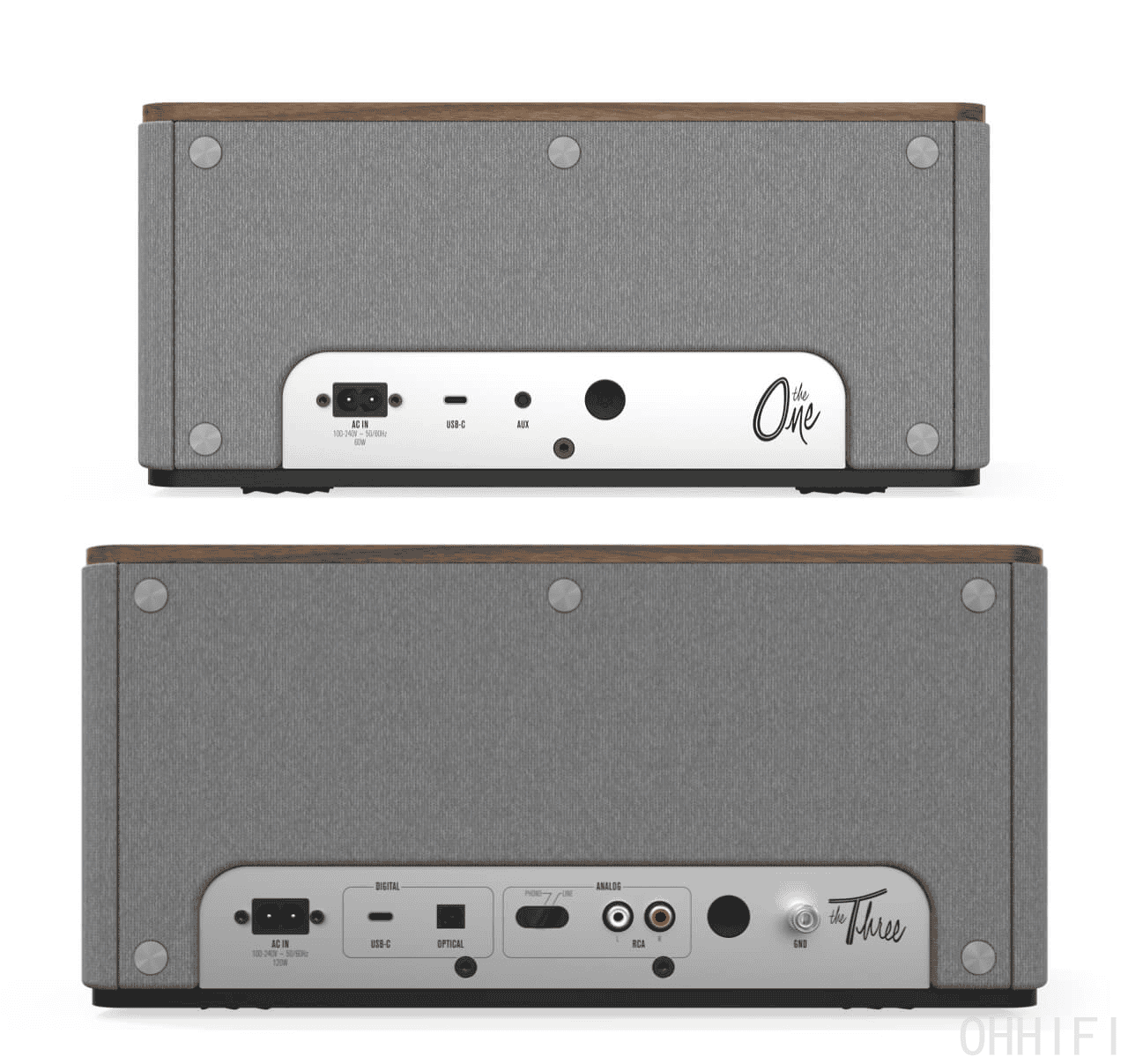
Unique to this segment is the inclusion of a dedicated Phono/RCA input with a switchable preamp. This allows users to connect a turntable directly to the speaker without needing an external phono stage or a turntable with one built-in.
Analysis: This feature targets the "vinyl revival" demographic—users who buy records for the aesthetic and the ritual but lack the space for a component stack. Our analysis suggests the built-in preamp is competent but utilitarian. It provides adequate gain for Moving Magnet (MM) cartridges but lacks the nuance, noise floor, and RIAA accuracy of a dedicated standalone preamp. It is a "convenience feature," and a very good one, but serious vinyl enthusiasts will likely bypass it in favor of their own preamp (which they can do by switching the switch to "Line").
High-Resolution Digital: Optical and USB-C
For the true digital audiophile, the Optical (Toslink) and USB-C inputs are the stars.
Optical: Supporting up to 24-bit/96kHz, this input allows The Three Plus to serve as a vastly superior alternative to a soundbar. Connecting a TV via optical immediately solves the issue of thin, intelligible dialogue on modern flat screens.
USB-C: This port is a dual-threat. It accepts digital audio (again, up to 24-bit/96kHz) from a computer or smartphone, bypassing the noisy internal DACs of those devices. It also provides reverse charging. This is a brilliant inclusion. It means you can plug in a streaming dongle like a WiiM Mini (which requires USB power) to the back of the Klipsch, power it via the USB-C port, and feed the audio into the Optical port. This effectively adds Wi-Fi streaming (AirPlay 2, Spotify Connect, Tidal Connect) to The Three Plus for the cost of a cheap dongle, resolving one of its main cons (lack of native Wi-Fi).
Part V: The User Interface — App, Control, and Friction
The hardware is beautiful, but in 2024, the software defines the experience. The Three Plus is controlled via the Klipsch Connect App.
The Equalizer Limitation
The app provides access to a 3-band equalizer (Bass, Mid, Treble). While better than nothing, this is rudimentary. Room acoustics are complex. A "boomy" bass node typically occurs at a specific frequency (e.g., 120Hz). A 3-band EQ is a blunt instrument; cutting the "Bass" slider reduces all bass, sucking the life out of the music just to tame one boom. A 5-band or 10-band EQ would allow for surgical corrections, and its absence is a point of frustration for power users.
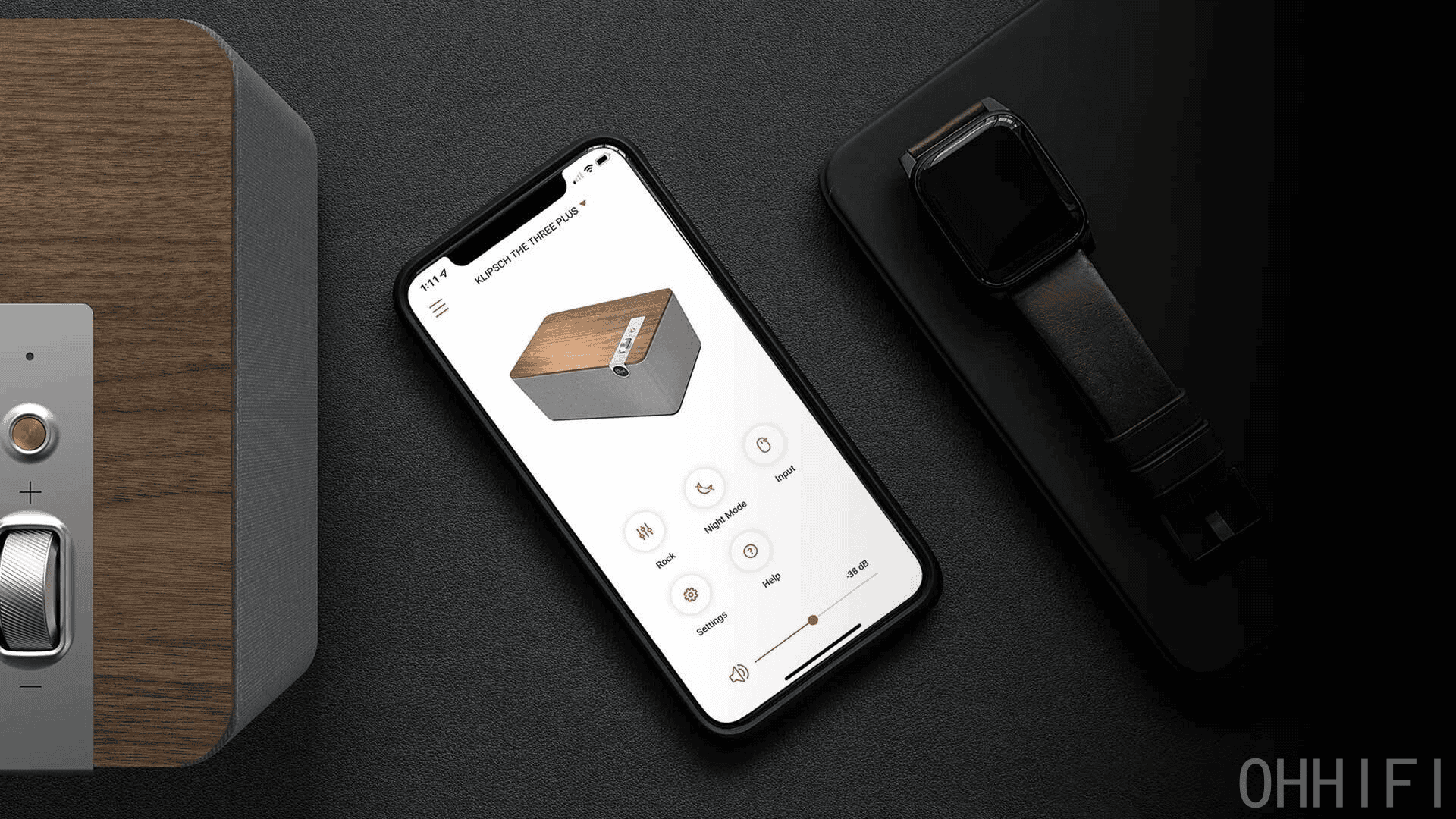
Night Mode and Dynamic Control
The app includes a "Night Mode". This toggles a DSP profile that aggressively cuts bass output and compresses dynamic range. It is designed to prevent low frequencies from traveling through walls—bass waves are long and penetrate structures easily—allowing you to listen to podcasts or music without disturbing neighbors. It works effectively, though it obviously thins out the sound significantly.
The "Buggy" Reality
User feedback paints a mixed picture of the app's stability. Reviews cite it as "mediocre at best," with complaints of it being "slow and buggy". Connection lag—where the app takes several seconds to find the speaker even though the phone is already connected via Bluetooth—is a common friction point. While firmware updates are delivered via the app, the reliance on Bluetooth for data transfer makes these updates slow and occasionally prone to failure.
Part VI: Sound Quality — The "Klipsch Sound" Reimagined
We conducted our listening tests in a 15x20 foot living room, placing The Three Plus on a solid oak sideboard, 10 inches from the rear wall. This placement utilizes "boundary reinforcement" to support the bass response. We used high-resolution FLAC files (24-bit/96kHz) via the USB-C input for critical listening, and Spotify via Bluetooth for "lifestyle" testing.
Bass Response: Controlled Aggression
The 45Hz low-frequency claim holds up in real-world listening. On Massive Attack’s "Angel", the iconic throbbing bassline is reproduced with surprising authority and texture. Unlike ported systems that can sound "one-note" (where all bass notes sound like a nondescript hum), the passive radiator design yields a tight, articulate low end. You can hear the pluck of the bass string, not just the boom.
Limitation: At maximum volume, the DSP intervention becomes audible. The bass does not get louder linearly with the mids and highs; it hits a ceiling as the limiter kicks in to save the woofer. This is standard for this form factor, but it means the tonal balance shifts to be brighter at party volumes.
Midrange: The Squeeze
In 2.1 systems, the midrange is often the sacrificial lamb, squeezed between the demands of the subwoofer and the tweeter. Here, the full-range drivers are tasked with everything above ~150Hz.
On Fleetwood Mac’s "Rumours", vocals are generally clear and warm. Stevie Nicks’ voice sits forward in the mix—a hallmark of the Klipsch tuning. However, in dense rock tracks with heavy distorted guitars (e.g., Tool’s "Fear Inoculum"), the midrange can become slightly congested. The lack of a dedicated crossover point to separate the vocal frequencies from the upper-bass creates a slight "mud" in complex passages that a 3-way system (like the Marshall Woburn III) might resolve better.
Treble: Sparkle or Shard?
Klipsch is famous for its horns, which project high frequencies with energy. While The Three Plus lacks horns, it is tuned to mimic that "live" sound. The treble is assertive, direct, and detailed. High-hats and cymbals have a crisp decay.
The Fatigue Factor: This forwardness is a double-edged sword. On well-recorded jazz tracks (like Miles Davis's Kind of Blue), it provides a breathtaking "you are there" realism. The breath in the trumpet is palpable. However, on poorly mixed pop or aggressive metal, the treble can veer into harshness. At high volumes, the "piercing" nature of the full-range drivers becomes apparent. This is a speaker that demands high-quality source material; it is ruthless with bad recordings.
Soundstage: The Mono-Stereo Dilemma
The Three Plus is a single box. Despite the drivers being pushed to the edges of the 14-inch cabinet, the laws of physics apply. The stereo separation is limited. You do not get a wide, immersive soundstage where instruments float 5 feet to the left or right of the speaker. It is a "Point Source" presentation. The sound comes from the box. Compared to the Sonos Era 300, which uses beamforming to bounce sound off walls and create a pseudo-surround effect, The Three Plus sounds more traditional and focused. It fills the room with energy, but it doesn't trick you into thinking you have speakers all around you.
Part VII: Comparative Market Analysis
To understand the value proposition of The Three Plus, we must place it in the arena with its gladiatorial rivals.
vs. Sonos Era 300 ($449)
The Sonos Era 300 is the antithesis of the Klipsch. It is a computer wrapped in plastic.
Philosophy: Sonos is about Spatial Audio (Dolby Atmos) and Wi-Fi ecosystem. Klipsch is about Stereo and physical inputs.
Sound: The Era 300 sounds diffuse, atmospheric, and immersive. The Klipsch sounds punchy, direct, and "front row."
Verdict: If you listen to Atmos mixes on Apple Music and want multi-room perfection, buy Sonos. If you listen to vinyl or standard stereo streams and hate plastic aesthetics, buy Klipsch.
vs. Marshall Woburn III ($579)
The Marshall is the closest spiritual competitor.
Configuration: The Woburn III is a 3-way system (Woofer, Mids, Tweeters). It has dedicated tweeters, giving it an edge in high-frequency separation and "air."
Power: It is larger and louder (150W vs 120W).
Inputs: Marshall has HDMI ARC, making it a better TV speaker.
Verdict: The Marshall is a better pure rock speaker with more raw power and better driver separation. However, it is significantly larger (harder to fit on a desk) and more expensive. The Klipsch offers better value and a more sophisticated (less "dorm room") aesthetic.
vs. JBL Authentics 500 ($699)
Smart Features: JBL includes built-in Google Assistant and Alexa active simultaneously. Klipsch is "dumb" (no mics).
Connectivity: JBL has Wi-Fi and Ethernet.
Verdict: JBL is the tech-heavy option. If you need voice control and Wi-Fi streaming built-in, JBL wins. If you prefer privacy (no microphones) and simplicity, Klipsch wins.
Part VIII: The Final Verdict — Soul over Specs
The Klipsch The Three Plus is a study in focused compromise. It consciously sacrifices the Wi-Fi ubiquity of Sonos and the sheer acoustic volume of Marshall for a middle ground that prioritizes aesthetic beauty, versatile physical connectivity, and a sound signature that is unapologetically exciting.
It is not an analytical tool for the critical mixing engineer. It is a lifestyle product designed to infuse a living space with energy. It acknowledges that in 2024, a speaker is a piece of furniture first and a transducer second. But unlike many "lifestyle" products that sound hollow, The Three Plus has the lungs to back up its looks. Buyers drawn to that "speaker as design object" idea will find a kindred spirit in Harman Kardon's SoundSticks 5, a transparent desktop 2.1 system that has long stood as a genuine design icon.
The inclusion of the Phono input and Optical port makes it arguably the most versatile standalone tabletop speaker in its class. It can be your TV soundbar today, your vinyl listening station tomorrow, and your party speaker on Saturday night.
We Recommend The Three Plus For:
The Vinyl Starter: Someone buying their first turntable who wants a compact, stylish system without the wire clutter of a receiver.
The Design Purist: Those who refuse to put black plastic or mesh cylinders in their carefully curated living room.
The TV Upgrader: Someone who wants better TV sound but refuses to buy a soundbar.
We Do Not Recommend It For:
The Basshead: If you need sub-30Hz rumble, you need a dedicated subwoofer.
The Smart Home Architect: If you want seamless voice control and native Wi-Fi multi-room, Sonos or JBL are superior.
The Low-Volume Listener: The coarse volume steps make it frustrating for quiet background ambience.
In the end, Paul W. Klipsch might have raised an eyebrow at a Bluetooth speaker. But if he heard the dynamic snap of a snare drum coming from this small walnut box, he might just leave his "B.S." button in his pocket. The Three Plus isn't perfect, but it has soul. And in the algorithmically generated playlists of the modern world, soul is a rare commodity.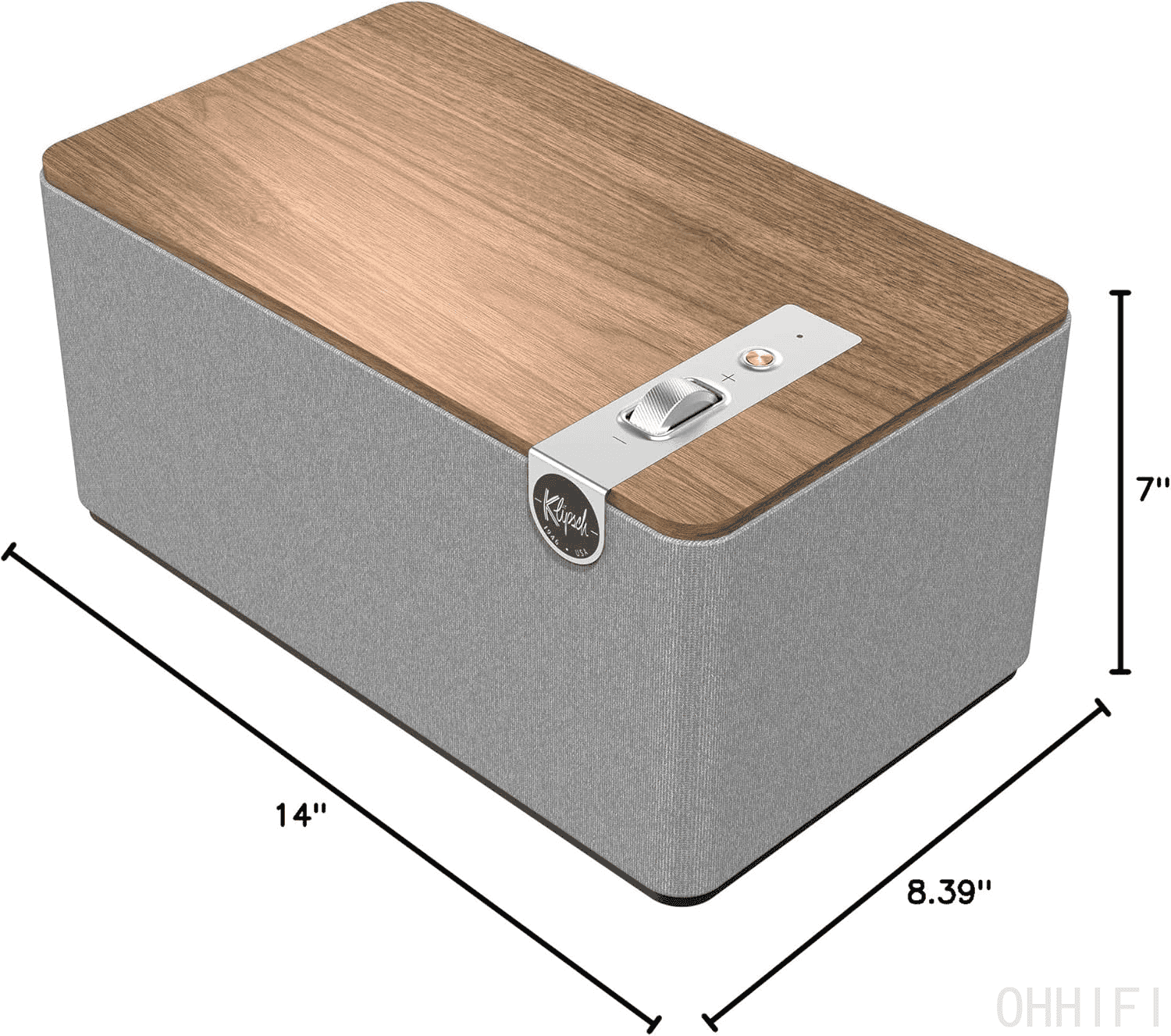
Scorecard
Build Quality: 9/10 (Exquisite veneer and knob feel)
Features: 8/10 (Huge win for Phono/Optical, loss for no Wi-Fi/AptX)
Sound Quality: 8/10 (Dynamic and fun, but midrange congestion and coarse volume)
Value: 8.5/10 (Competitive price for the feature set)
Overall: 8.4/10 — Recommended


Comments