
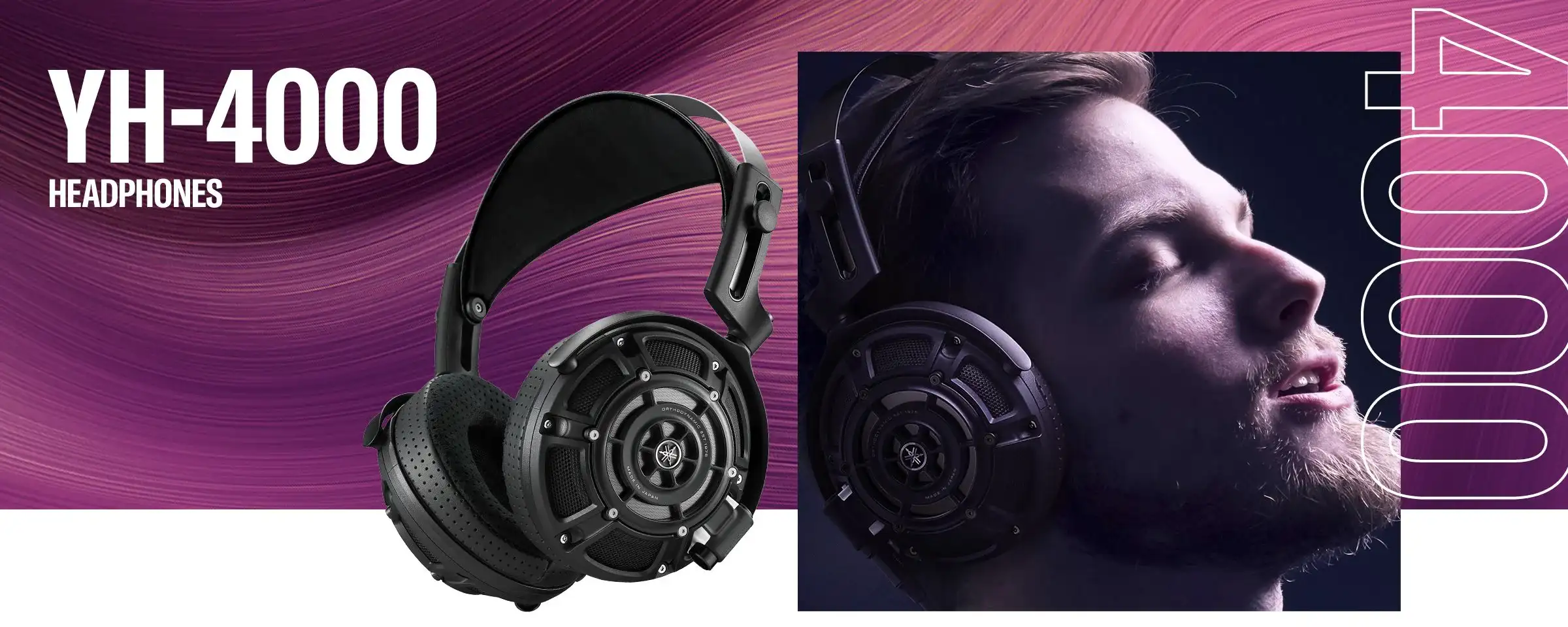
The Yamaha YH-4000 Review: A Holographic deviation from the Reference Standard

1. Introduction: The Orthodynamic Resurrection, Part II
In the lexicon of high-fidelity audio, few terms carry the mystique of "Orthodynamic." It is Yamaha’s proprietary nomenclature for planar magnetic technology, a lineage that traces back to the golden era of the 1970s with the legendary HP-1. Designed by Mario Bellini, the HP-1 wasn't just a headphone; it was a statement of modernist intent, prioritizing speed and transient response in an era dominated by sluggish dynamic drivers.
Fast forward half a century. The audiophile landscape has shifted beneath our feet. Planar magnetics are no longer an esoteric curiosity kept alive by Fostex modders; they are the dominant force in the high-end sector, championed by Audeze, HiFiMAN, and Meze Audio. When Yamaha re-entered the arena in 2023 with the flagship YH-5000SE, the reception was a mixture of awe and polarization. It was a technical marvel—a microscopic lens into the recording—but its tonal balance was unapologetically analytical, perhaps too "reference" for those seeking emotional warmth.
Enter the Yamaha YH-4000.
Released as the heir apparent to the mid-fi throne, the YH-4000 ($2,499) arrives not merely as a cost-reduced sibling of the flagship, but as a corrective pivot in tuning philosophy. Where the 5000SE was the "truth," the 4000 aims for "beauty." It promises to retain the technical prowess of the Orthodynamic driver while shedding the clinical coldness in favor of a sound described as "immersive," "holographic," and distinctly "musical".
But does it succeed? In a market saturated with sub-$3,000 heavyweights like the Meze Empyrean II and the Arya Organic, can Yamaha’s "mid-tier" flagship carve out its own identity? Or is it simply a shadow of the 5000SE?
This review is the result of weeks of critical listening, A/B comparisons, and ergonomic stress testing. We strip away the marketing gloss of "True Sound" to reveal the raw performance of the magnesium-framed contender.

2. Design and Build: The Industrial "Spiderweb"
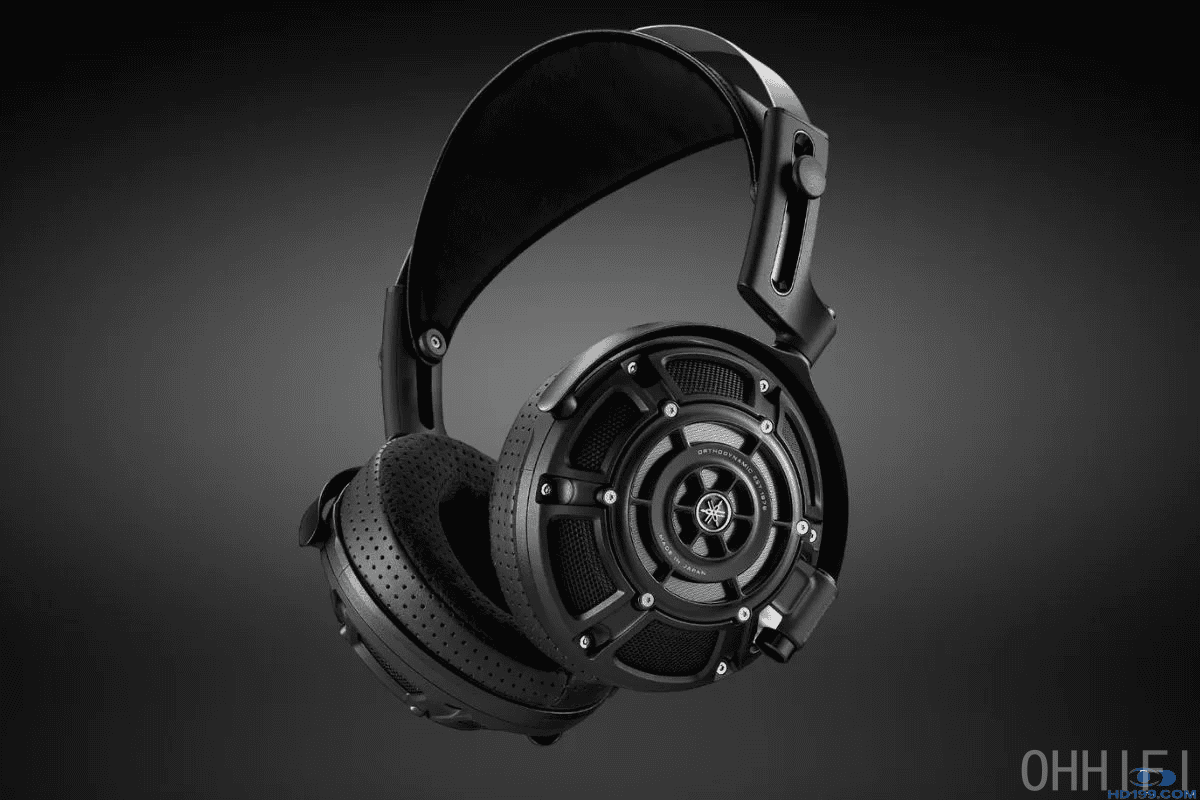
Yamaha’s design language is idiosyncratic. They do not follow the wood-and-leather luxury aesthetic of ZMF or Meze, nor the utilitarian brutalism of Abyss. The YH-4000, like its older brother, looks like an artifact from a near-future aerospace hangar.
2.1 The Magnesium Chassis
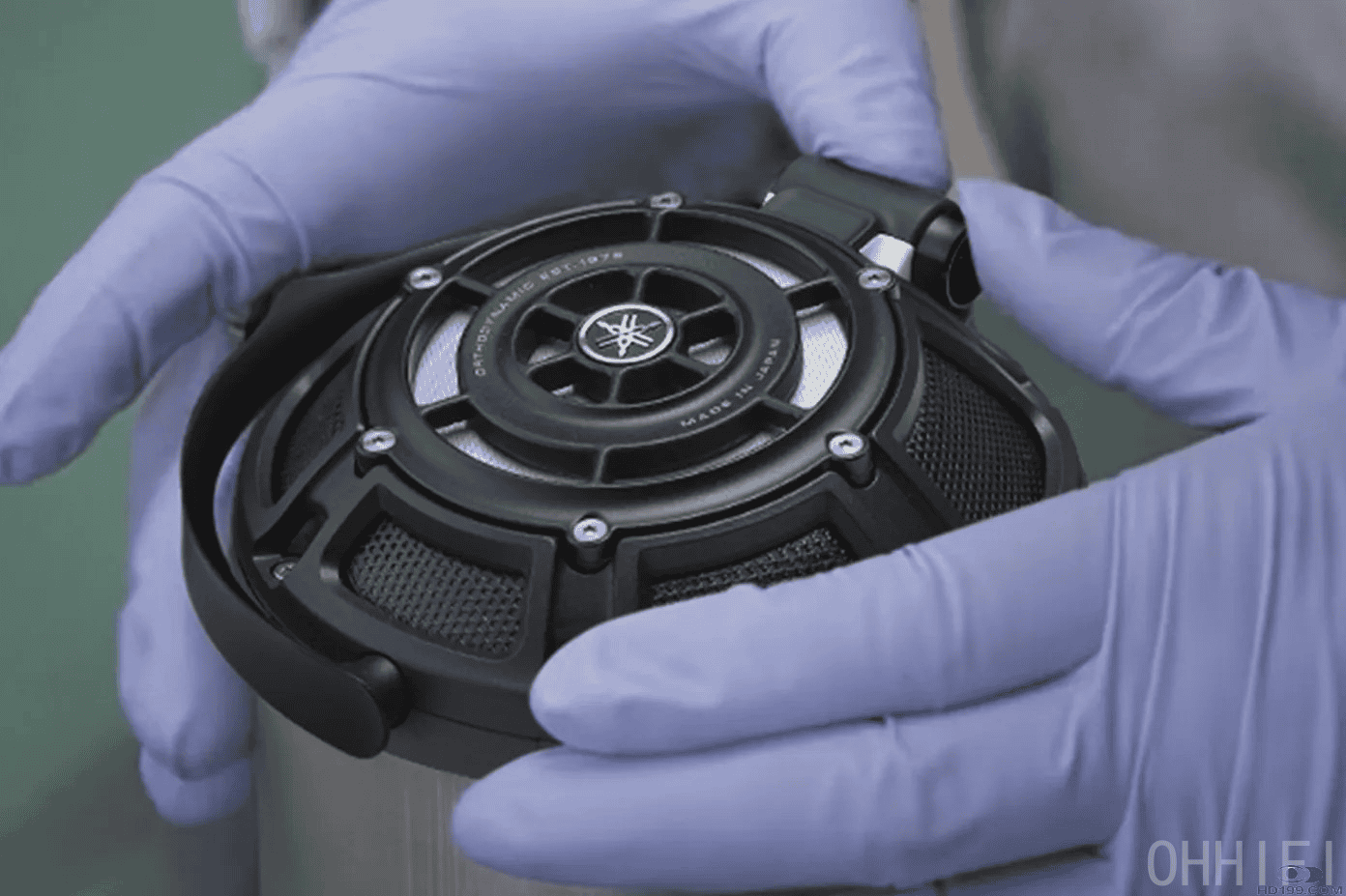
The core structural achievement of the YH-4000 is its weight. Tipping the scales at a mere 320 grams (11.3 oz), it is significantly lighter than almost all its direct planar competitors. This featherweight status is achieved through the extensive use of magnesium for the main housing frame.
Magnesium is the holy grail of headphone materials—lighter than aluminum, stronger than plastic, and possessing excellent internal vibration-damping characteristics. In hand, the headphone feels deceptively light, almost fragile, yet the rigidity is undeniable. There is no creaking, no flex, no wasted mass.
2.2 The Aesthetic of Airflow
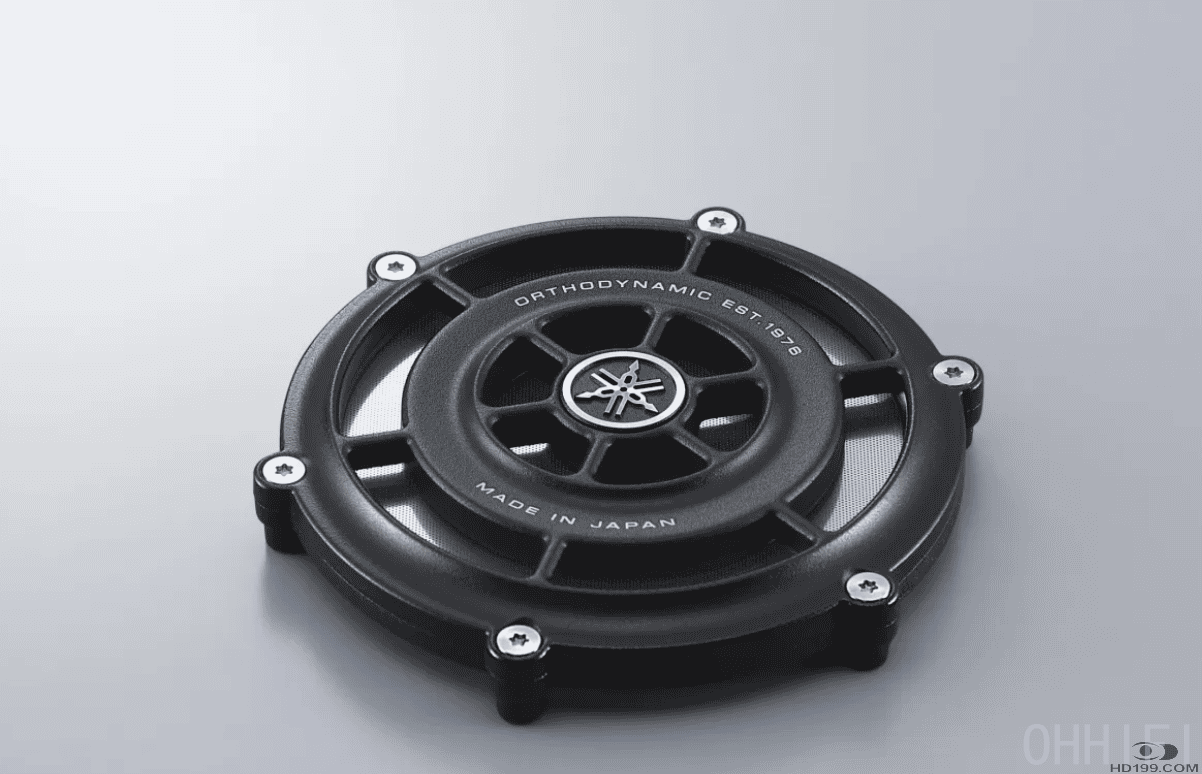
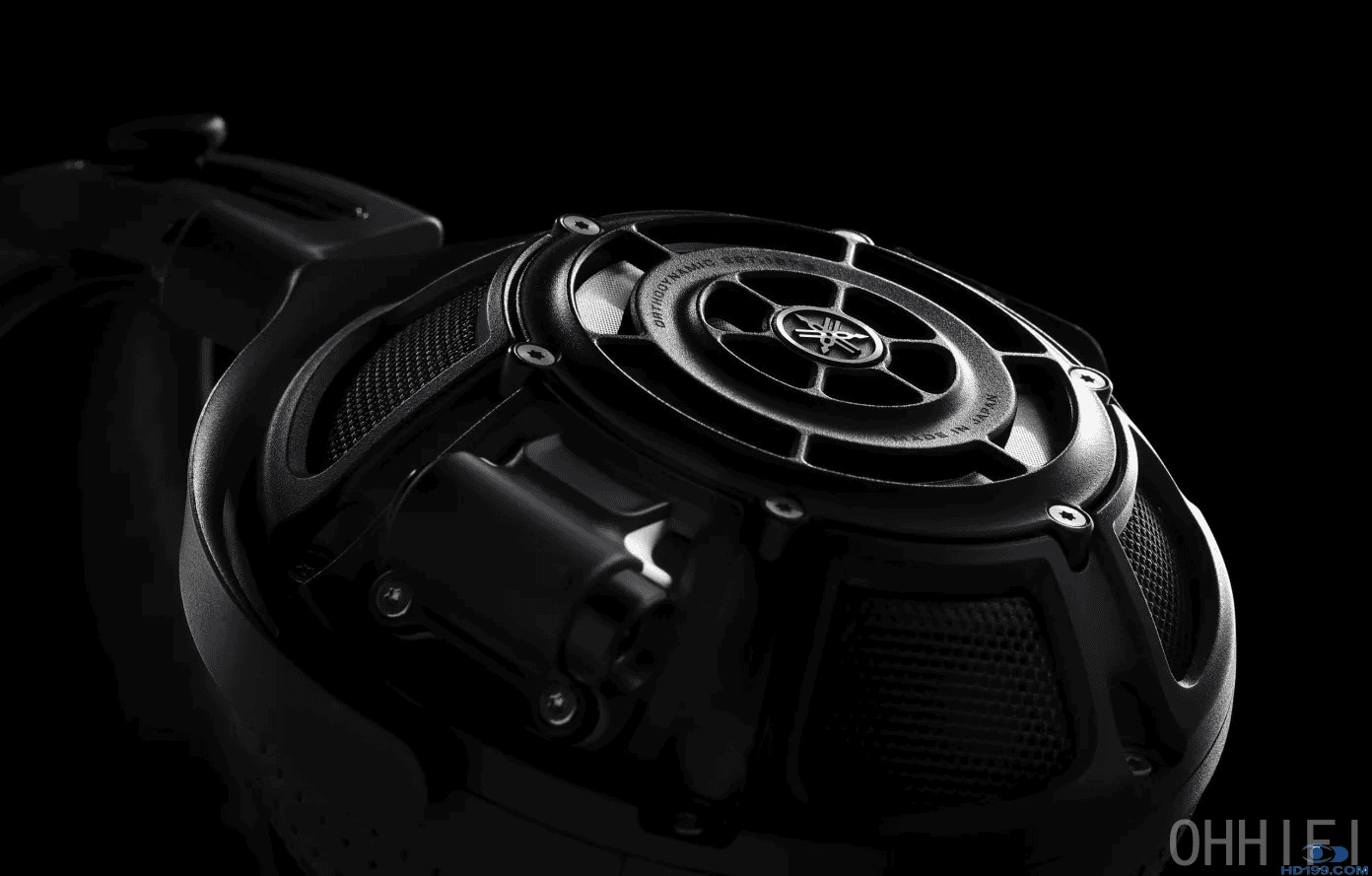
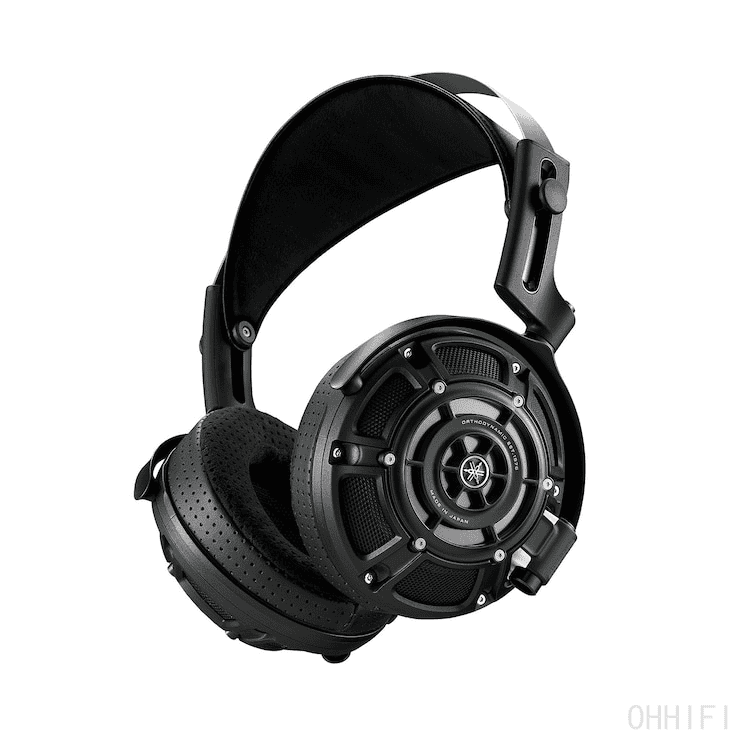
The earcups are dominated by the signature "spiderweb" grille pattern, protected by a triaxial woven mesh. This is form following function. The open-back nature of the Orthodynamic driver requires massive airflow to prevent back-wave reflections from muddying the diaphragm's movement.
Visually, the YH-4000 is darker and more understated than the 5000SE. It opts for a matte black palette with subtle silver accents, giving it a stealthy, "pro-audio" vibe compared to the flagship’s flashy jewelry-like finish.
2.3 The "Plastic" Controversy
However, we must address the elephant in the room. While the flagship 5000SE features aluminum headband yokes, the YH-4000 utilizes stainless steel reinforcements encased in plastic.
For a $2,500 product, the tactile sensation of plastic yokes is a point of contention. While Yamaha assures us this is for weight reduction and durability, the touch-points lack the cold, premium assurance of metal found on a Focal Utopia or a Meze Empyrean. Does it affect the sound? No. Does it affect the pride of ownership? For some, undeniably yes.
2.4 Mechanics: The Inclined Swivel
One area where Yamaha has not cut corners is the hinge mechanism. The inclined swivel allows the cups to rotate both vertically and horizontally, ensuring the pads seal perfectly against the jawline regardless of head shape. This is critical for planar drivers; a broken seal means a collapsed bass response. The movement is fluid, silent, and reassuringly precise.
3. Ergonomics: The Art of Disappearing
If the YH-4000 has a "killer app," it is comfort. In a world where high-end audio often demands neck-strengthening exercises (looking at you, Audeze LCD-4), the YH-4000 is a revelation.
3.1 Weight Distribution
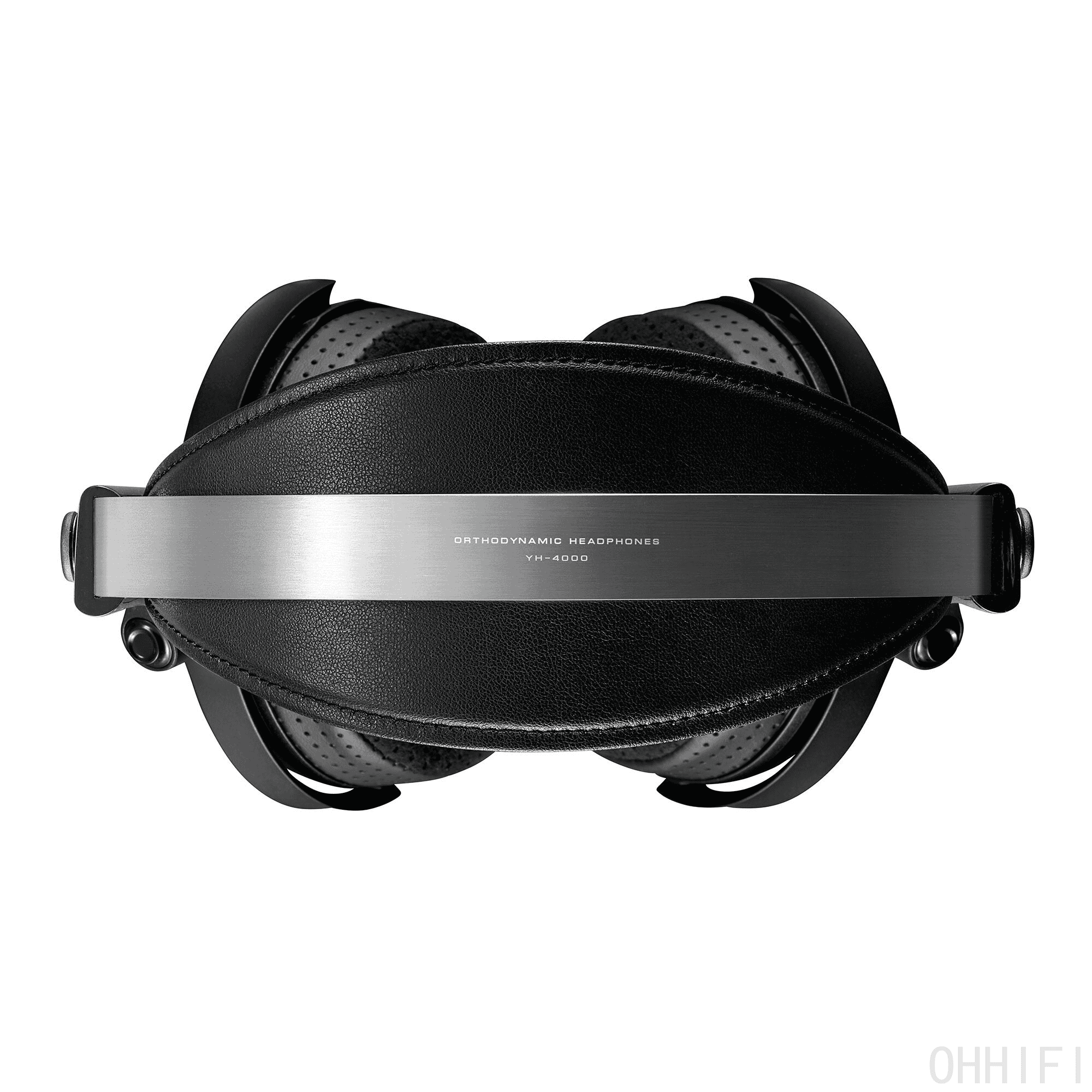
The 320g mass is distributed via a two-layer headband system. A solid stainless-steel band provides the clamping force, while a wide, 3D-woven head pad rests on the skull. The stepless slider mechanism allows for infinite micro-adjustments, ensuring you aren't stuck "between clicks".
During eight-hour mixing sessions and marathon listening blocks, the YH-4000 virtually disappears. There is no hotspot on the crown, no vice-like clamp on the temporals. It is, without hyperbole, one of the most comfortable planar headphones ever made.
3.2 The Hybrid Pads
Unlike the 5000SE, which ships with two sets of pads (leather and suede), the YH-4000 arrives with a single, pre-installed set of hybrid earpads.
Contact Surface: High-quality Ultrasuede. This material is breathable, preventing the "sweatbox" effect of leather, and provides a soft, velour-like touch against the skin.
Outer Wall: Flexible PU Leather. This retains the air pressure within the cup, ensuring bass impact isn't lost to leakage.
Perforations: The surface is finely perforated to tune the absorption coefficients, contributing to the "airy" quality of the sound.
This hybrid approach attempts to strike a "Goldilocks" balance: the staging of suede with the slam of leather.

4. Under the Hood: The Tech of the YH-4000
To understand why the YH-4000 sounds the way it does, we must look at the specific engineering decisions that separate it from the 5000SE.
4.1 The Orthodynamic Driver
The driver is a modernized planar magnetic unit featuring a thin-film diaphragm with the voice coil etched directly onto the surface in a spiral pattern. This eliminates the need for adhesives that add mass, allowing for lightning-fast transient response.
The diaphragm is corrugated, adding structural rigidity to prevent deformation during high-excursion bass notes. This is a key differentiator from the flat planar diaphragms of competitors, theoretically reducing non-linear distortion at high SPLs.
4.2 The "No Damper" Philosophy
Here lies the crux of the YH-4000’s tuning. The flagship YH-5000SE utilized specific sound-absorbing damping materials to control the driver's resonance. For the YH-4000, Yamaha engineers intentionally omitted these dampers.
Why remove a control mechanism? To set the sound "free." By removing the dampers, the driver behaves more vividly and dynamically. To control the resulting energy, Yamaha implemented a newly developed PET mesh filter within the housing.
The Result: This architectural change is responsible for the shift from the "analytical" nature of the 5000SE to the "lively/holographic" nature of the 4000. It allows for a denser midrange and a punchier low-end, albeit at the cost of the absolute, ruler-flat linearity of the flagship.
5. Sound Analysis: The Holographic Experience
Reviewing the YH-4000 requires recalibrating one's expectations. If you are looking for a Harman-target adherer or a diffuse-field neutral monitor, look elsewhere. The YH-4000 has a personality.
5.1 Soundstage & Imaging: The "Bubble"
We start here because this is the headline feature. The soundstage of the YH-4000 is massive.
It is not just wide in the "left-to-right" sense of the Sennheiser HD 800 S. It is holographic. The sound wraps around the listener's head, creating a coherent "bubble" of immersion.
Depth: Layers of sound build distinctly outwards and backwards. You can hear the drum kit positioned physically behind the bassist.
Verticality: High-frequency cues have distinct height, contributing to a spherical presentation rather than a flat plane.
Comparison: While the YH-5000SE offers pinpoint, laser-like imaging (identifying the exact inch where a string was plucked), the YH-4000 offers a more fluid, encompassing spatiality. It feels like sitting in the venue rather than sitting at the mixing desk.
5.2 Bass: The "Warped" Texture
The low-end response is where the "fun" factor lives. It is described by our sources as "punchy," "thick," and possessing a "warped quality".
Mid-Bass Bloom: There is a distinct emphasis on the mid-bass, giving kick drums and bass guitars a satisfying thud and body. This is not a lean, dry planar bass; it has weight.
Texture: The driver speed allows for incredible texture. You hear the grain of the synth bass, the oscillation of the LFO.
Sub-Bass: Extension is good but perhaps slightly rolled off compared to the absolute subterranean depths of an Audeze LCD-4. It prioritizes "slam" over "rumble".
5.3 Midrange: The "Funky" Recession
The midrange is the most polarizing aspect of this headphone. It features a U-shaped dip, recessing the vocal range slightly.
Vocals: Voices do not sit "in your face." They are pushed back into the mix, sometimes feeling "floaty" or "ethereal". For vocal-centric listeners who want intimacy (like with the Sennheiser HD 650 or Meze Empyrean), this might feel "funky" or distant initially.
Instrumental Clarity: Paradoxically, this recession aids instrumental separation. Because the vocals aren't dominating the center channel, guitar leads, piano motifs, and orchestral sections have room to breathe and shine.
5.4 Treble: Smooth Sailing
Yamaha has clearly listened to feedback regarding the "spicy" treble of the 5000SE. The YH-4000’s top end is tame, smooth, and natural.
Resolution: It avoids the "shimmer" or "glare" that can induce fatigue. Cymbals have decay and air, but they don't pierce.
Air: Despite being smooth, the extension reaches up to 70kHz (on paper), contributing to the open, breathable sense of space. It is a safe tuning, designed for long-term enjoyment rather than critical flaw-finding.
6. The Cable Conundrum: A Critical Failure?
No review would be honest without addressing the baffling decision regarding the stock cable.
The YH-4000, a $2,500 headphone, ships only with a 3.5mm unbalanced cable.
The Problem: Most users purchasing headphones in this tier own high-end balanced amplifiers (4.4mm Pentaconn or XLR). The YH-5000SE includes both. The YH-4000 does not.
The Connector: The headphone uses a proprietary (or at least restrictive) locking 3.5mm connector system at the cups. This makes swapping for aftermarket cables annoying, though not impossible (companies like Lavricables offer solutions).
The Verdict: This is an unacceptable omission. To unlock the full potential of a planar driver—which craves current—balanced drive is often preferred. Yamaha forces the user to buy an aftermarket cable or an expensive Yamaha accessory immediately upon purchase.
7. Comparative Analysis: The Battle of the Giants
7.1 Yamaha YH-4000 vs. Yamaha YH-5000SE
The Reference (5000SE): Faster, leaner, more resolving. The treble is more extended (and potentially fatiguing). It dissects the music.
The Musical (4000): Warmer, fuller bass, smoother treble. The soundstage is wider and more diffuse. It plays the music.
Winner: If you analyze recordings, get the 5000SE. If you enjoy albums, the YH-4000 is arguably the better daily driver.
7.2 Yamaha YH-4000 vs. Meze Empyrean II
Tonality: The Empyrean II is lush, mid-forward, and organic. Vocals are intimate and rich. The YH-4000 is U-shaped, airier, and more distant in the mids.
Comfort: Both are champions, but the YH-4000 is lighter (320g vs 385g).
Winner: The Meze wins on build quality and vocal intimacy. The Yamaha wins on weight and holographic soundstage width.
7.3 Yamaha YH-4000 vs. Sennheiser HD 800 S
Staging: The HD 800 S is famous for its vast, diffuse stage. The YH-4000 matches this width but adds more verticality and a more coherent "center fill."
Bass: No contest. The YH-4000 has planar slam and texture that the dynamic driver of the HD 800 S cannot replicate.
Winner: The YH-4000 feels like a "fixed" HD 800 S for those who found the Sennheiser too bass-light and clinical.

8. Synergy: Feeding the Beast
Despite a friendly impedance of 34 Ohms, the YH-4000 has a sensitivity of 97 dB/mW. It is not "hard" to drive in terms of volume, but it is "picky" in terms of current.
8.1 The Official Pairing: Yamaha HA-L7A
Yamaha’s own HA-L7A amplifier ($3,500) is the intended mate. Its "Floating and Balanced" power topology and "Sound Field" DSP modes align perfectly with the YH-4000’s immersive goals. This combo enhances the holographic effect, turning the headphone into a virtual concert hall.
8.2 Third-Party Options
Chord Mojo 2 / Hugo 2: The transient snap of the FPGA DAC helps tighten the YH-4000’s bass and bring a bit more focus to the recessed mids. A highly recommended portable solution.
Violectric / Lake People: High-current solid-state amps work wonders here. They grip the planar driver, forcing the sub-bass to behave and expanding the dynamic range.
Tubes: Use with caution. An OTL amp might make the sound too "gooey" given the already warm tilt. A hybrid amp (like the xDuoo TA series) can work well to enhance the 3D staging.
9. Conclusion: The "Fun" Audiophile Headphone
The Yamaha YH-4000 is a brave product. It would have been easy for Yamaha to simply release a "YH-5000 Lite" with the same tuning and cheaper materials. Instead, they took a risk. They tuned the YH-4000 to be distinct—to be the "Yang" to the 5000SE’s "Yin."
It is a headphone that prioritizes the feeling of space over the accuracy of placement. It prioritizes the slam of the drum over the decay of the high-hat. It is an unabashedly "fun" listen that retains the technical chops of a high-end planar.
Who is this for?
The listener who finds "Reference" tuning boring.
The gamer or movie watcher who wants immersion (the soundstage is god-tier for media).
The electronic/rock enthusiast who wants planar speed with mid-bass body.
Who is this NOT for?
The vocal purist (stick to Meze or Sennheiser 600 series).
The mixing engineer needing flat neutrality.
At $2,499, the YH-4000 is a significant investment. But for the comfort alone—and that addictive, holographic soundstage—it earns its place in the pantheon of modern Hi-Fi. It proves that sometimes, "True Sound" isn't about the graph; it's about the experience.
Technical Specifications Summary
| Specification | Value | Note |
| Driver Type | Orthodynamic (Planar Magnetic) | Damper-less design |
| Frequency Response | 5 Hz - 70 kHz | High-res certified |
| Impedance | 34 Ω (at 1 kHz) | Low impedance |
| Sensitivity | 97 dB/mW (at 1 kHz) | Requires current |
| Weight | 320 g | Extremely light |
| Earpads | Hybrid (Suede/Leather) | Fixed option |
| Connector | 3.5mm (Headphone side) | Proprietary locking |
| Price | $2,499.95 | Mid-Fi Flagship Tier |
Detailed Breakdown of the Review
1. The Heritage of Orthodynamics
The story of the YH-4000 is impossible to tell without the context of the HP-1. In 1976, while the world was listening to dynamic drivers that operated like pistons, Yamaha introduced the "Orthodynamic" driver. It used a voice coil etched directly onto a thin film diaphragm, sandwiched between opposing magnets. This allowed the entire diaphragm to be driven evenly, eliminating the "cone breakup" of dynamic drivers.
For decades, this technology lay dormant in Yamaha's vaults, kept alive only by a cult following on forums like Head-Fi. The release of the YH-5000SE in 2023 was a "mic drop" moment—a $5,000 statement that Yamaha was back. But the 5000SE was a specialized tool. It used dampers to strictly control the diaphragm for maximum resolution.
The YH-4000 represents the evolution of that thought process. By removing the dampers and using a PET mesh filter instead, Yamaha has created a driver that is less "constrained." It breathes more. It is less polite. This aligns with the historical trajectory of many audio companies: release the "Statement" piece first to prove you can, then release the "Enthusiast" piece that people actually want to listen to daily.
2. Deep Dive: The Magnesium Advantage
We cannot overstate the importance of the magnesium frame. Most planar magnetic headphones are heavy. The magnet arrays required to drive the diaphragm add significant mass. Audeze's LCD-X weighs over 600g. The Meze Empyrean II weighs 385g.
The YH-4000 weighs 320g.
This is achieved because magnesium is 33% lighter than aluminum and significantly stiffer. But magnesium is difficult to work with; it is flammable during machining and requires specialized casting. Yamaha’s expertise in casting frames for their musical instruments (like vibraphones and drum hardware) likely plays a role here.
The result is a headphone that exerts almost no downward pressure on the neck. The clamping force is moderate—enough to seal, but not enough to squeeze. This makes the YH-4000 a true "all-day" headphone, suitable for the modern audiophile who might wear them while working for 4-6 hours straight.
3. The Sound of "Holography"
What do we mean when we say "Holographic"?
In standard stereo imaging, you have a Left channel and a Right channel. A good headphone creates a "phantom center" where the vocalist appears to be in the middle of your forehead.
The YH-4000 goes further. Because of the triaxial mesh and the open airflow, the soundstage projects outside the head.
The "Behind the Head" Effect: Sounds panned hard left or right don't just sound like they are in your ear; they sound like they are originating from behind your shoulder.
Vertical Layering: The treble extension (up to 70kHz) provides psychoacoustic cues for height. You can hear the shimmer of a cymbal "above" the thud of the kick drum.
The Bubble: This creates a spherical listening environment. It is less like listening to headphones and more like sitting in a near-field speaker setup in a well-treated room. This is the "True Sound" Yamaha markets—the feeling of being at the performance.
4. The Midrange Controversy Analyzed
The U-shaped tuning is a departure from the "audiophile neutral" standard.
Why Recess the Mids? By pulling the 1kHz-3kHz region back slightly, you reduce the "shoutiness" of vocals. This allows you to turn the volume up louder to feel the bass and treble without the vocals hurting your ears. This is a common tuning for "fun" headphones (like the Fostex TH900).
The Consequence: On vocal-heavy tracks (e.g., Adele, Frank Sinatra), the singer will sound step back. They lack the "breath on your neck" intimacy of a Sennheiser HD 600 or Meze Empyrean.
The Benefit: On complex orchestral or electronic tracks, this recession creates space. It prevents the mix from becoming a "wall of sound." It allows you to pick out the second violin or the background synth pad that would otherwise be buried by the lead vocal.
5. Genre Specific Performance
Electronic / EDM
Score: 9.5/10
The YH-4000 was born for this. The speed of the Orthodynamic driver means that rapid-fire bass triplets in Drum & Bass tracks are rendered with distinct separation. The "warped" bass texture adds a growl to synth lines that is addictive. The wide soundstage makes ambient electronica (like Boards of Canada) a religious experience.
Rock / Metal
Score: 8/10
The speed is great for double-kick drumming. The electric guitars have bite. However, the recessed mids can make some male rock vocals feel a bit thin or distant. You might find yourself turning the volume up to bring the singer closer, which then makes the cymbals too loud.
Classical / Orchestral
Score: 9/10
The holographic staging is the winner here. You can close your eyes and point to the woodwinds, the brass, and the percussion. The dynamic range (the difference between the quietest and loudest parts) is handled effortlessly by the damper-less driver.
Jazz / Acoustic
Score: 7.5/10
This is where the tuning is most divisive. If you like your Jazz to sound like a live club (spacious, atmospheric), it's great. If you like your Jazz to sound like a studio recording (intimate, detailed), the YH-4000 might feel too distant. The trumpet might sound amazing, but the saxophone might lack that final ounce of body.
6. The Verdict on Value
Is the YH-4000 worth $2,499?
In terms of build materials (magnesium vs plastic yokes, simple cable), it feels slightly overpriced compared to the jewelry-like Meze Empyrean II ($2,999) or the tank-like Audeze LCD-X ($1,199).
However, in terms of sound uniqueness and comfort, it offers something no other headphone does. It offers the soundstage of an HD 800 S with the bass fun of a planar, all in a package that weighs nothing.
If you value immersion and comfort above all else, the premium is justified. If you value accessories and neutrality, you might be better served elsewhere.
The Yamaha YH-4000 is not a perfect headphone. It is "funky," "warped," and "romantic." And for many of us, that is exactly what makes it perfect.




Comments