
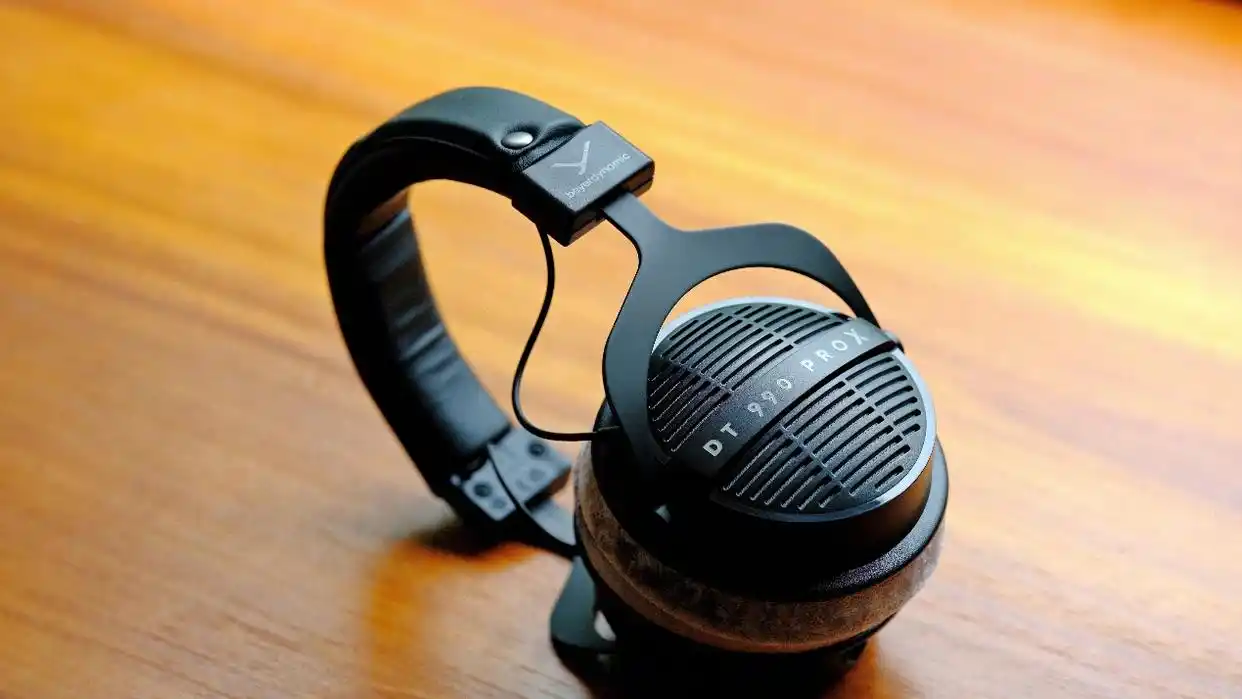
A Definitive Audit of the Beyerdynamic DT 990 PRO X

1. Introduction: The Burden of Legacy
In the world of high-fidelity audio, stagnation is often mistaken for tradition. For nearly four decades, the German city of Heilbronn has been the custodian of a specific sound—a sonic signature characterized by tectonic bass depth and a treble presentation so uncompromising it could strip paint from a studio wall. The Beyerdynamic DT 990 PRO, released in the mid-1980s, was not merely a headphone; it was a cultural artifact. It sat on the mixing consoles of legendary broadcast studios, draped around the necks of platinum-selling producers, and eventually, found its way into the dimly lit rooms of the first generation of internet-era audiophiles. It was flawed, yes. The 250-ohm impedance required voltage that modern laptops couldn't supply. The fixed, coiled cable was a recipe for frustration when it inevitably snagged on a chair arm. And then there was the "Beyer Peak"—that notorious spike at 9kHz that divided the world into those who heard "detail" and those who heard "pain".
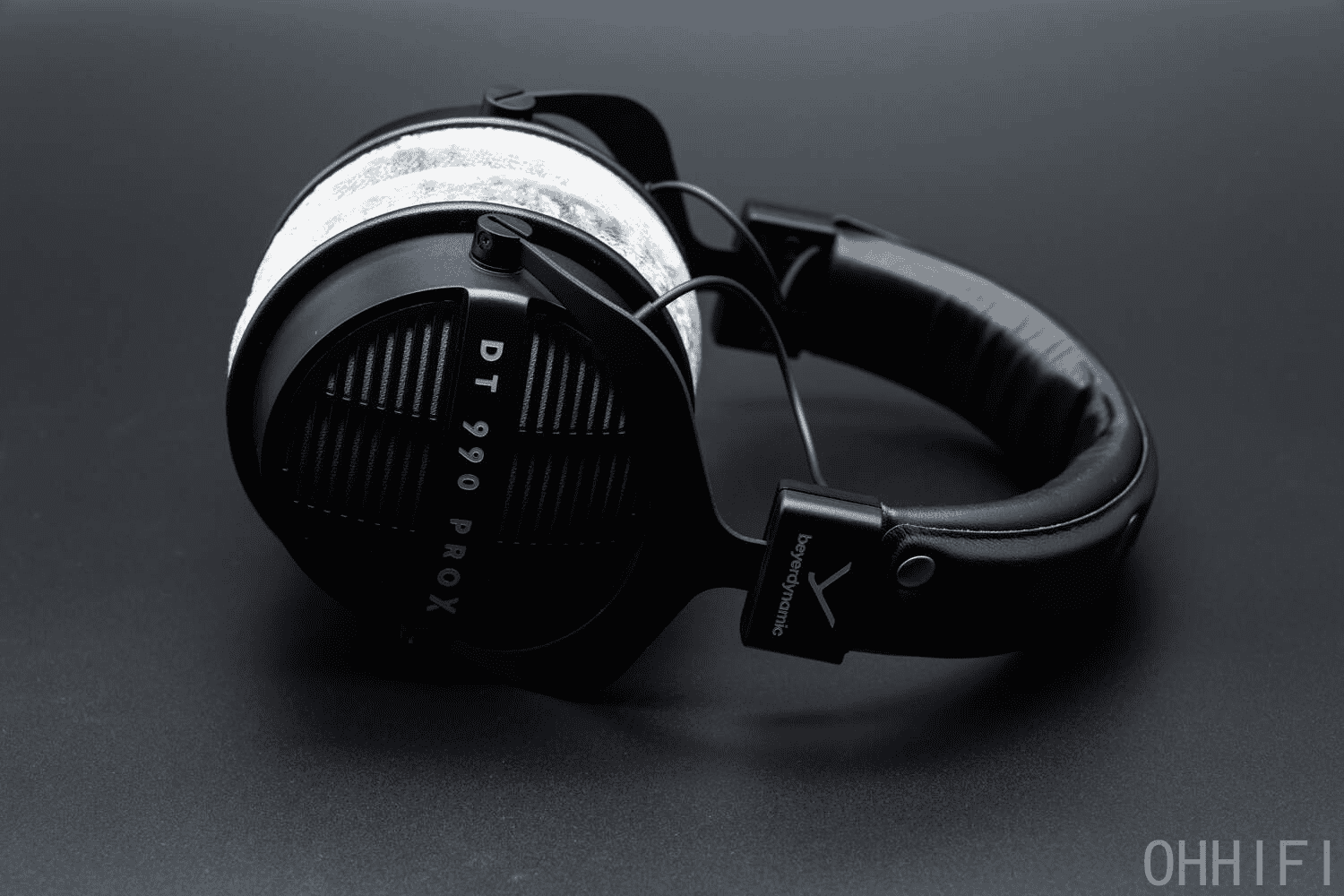
For years, the industry waited. We watched as Beyerdynamic released the Tesla-equipped DT 1990 PRO—a masterpiece, certainly, but one priced out of reach for the working musician. We saw the arrival of the DT 900 PRO X in 2021, a headphone that confused the lineage by offering a flat, linear response that felt spiritually disconnected from the V-shaped excitement of the 990 nameplate. It seemed as though the true successor to the open-back legend would never arrive.
But the wait is over. With the release of the Beyerdynamic DT 990 PRO X (distinct from its flat sibling, the 900), the engineers in Germany have finally attempted the impossible: modernizing a classic without exorcising its soul. This is not just a spec bump. It is a complete architectural overhaul featuring the new STELLAR.45 driver platform, a detachable cable system, and a tuning philosophy that seeks to tame the treble shrew while keeping the sparkle alive.
This report serves as a comprehensive, forensic evaluation of the DT 990 PRO X. We will strip it down to its component polymers, analyze its psychoacoustic performance against the fiercest competitors in the $200-$300 bracket, and determine if this modernized legend deserves the "PRO" suffix in an era dominated by disposable consumer gear.

2. The Physical Architecture: Industrial Design Meets Human Ergonomics
2.1 Unboxing and First Contact
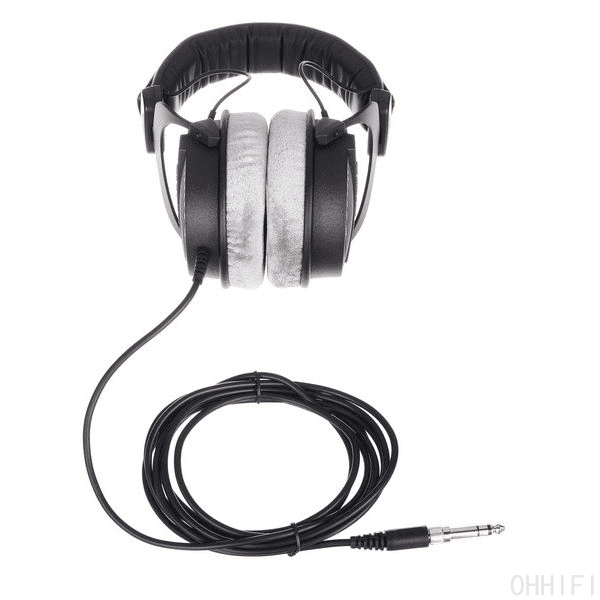
Beyerdynamic packaging has always been utilitarian, bordering on austere. The DT 990 PRO X arrives in a box that eschews the velvety pretension of high-end consumer brands. Inside, the statement is clear: this is a tool. You receive the headphones, a drawstring bag (a slight downgrade from the hard cases of the 1990 series), a 6.35mm screw-on adapter, and—crucially—a detachable cable.
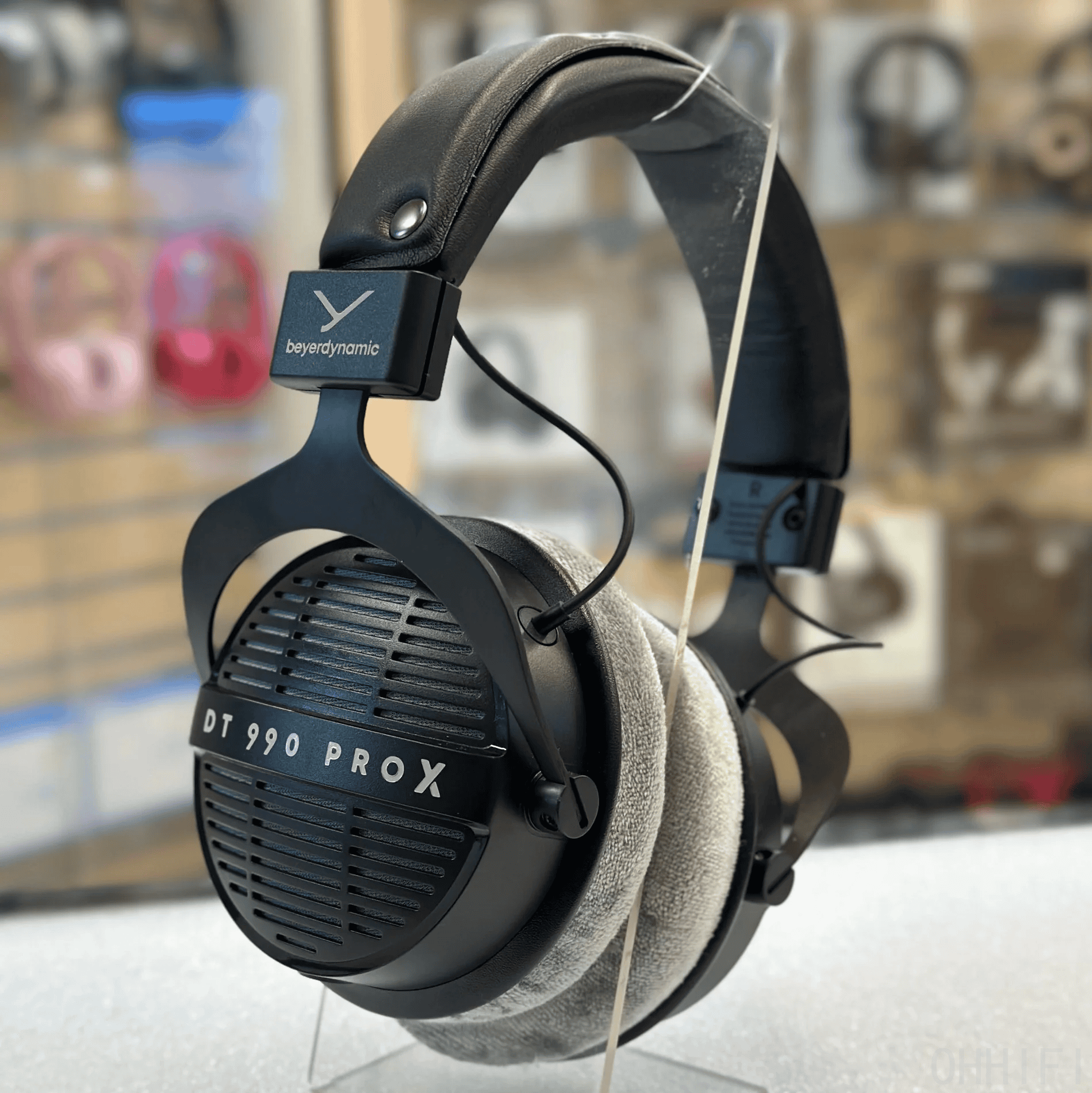
Lifting the unit, the tactile difference from the old PRO series is immediate. The rattling, crinkled metal yokes of the 1980s design are gone, replaced by smooth, matte-black composite housings that feel dense and inert. The aesthetic is stealthy, modern, and distinctly German. It feels like a piece of military hardware refined for civilian use.
2.2 The Connector Revolution
For decades, the single greatest point of failure for Beyerdynamic users was the fixed cable. A broken cable meant a soldering iron or a trash can. The DT 990 PRO X integrates a Mini-XLR connector on the left earcup. This is a pivotal design choice. Unlike the 3.5mm jacks used by Sennheiser or Audio-Technica, the Mini-XLR locks into place. It engages with a satisfying tactile click and refuses to let go until the release button is depressed. This is critical for the studio environment; stepping on your cable mid-take will no longer rip the connector from the housing. It is a robust, professional standard that signals this headphone is meant for the trenches, not just the armchair.
However, it must be noted that this is a 3-pin Mini-XLR. It carries an unbalanced signal. Unlike some modern audiophile headphones that allow for balanced wiring to separate grounds, the DT 990 PRO X adheres to a traditional single-ended architecture. For the target demographic, this is a non-issue, but for the balanced-amp enthusiast, it is a limitation.
2.3 The "Fontanelle" Comfort System
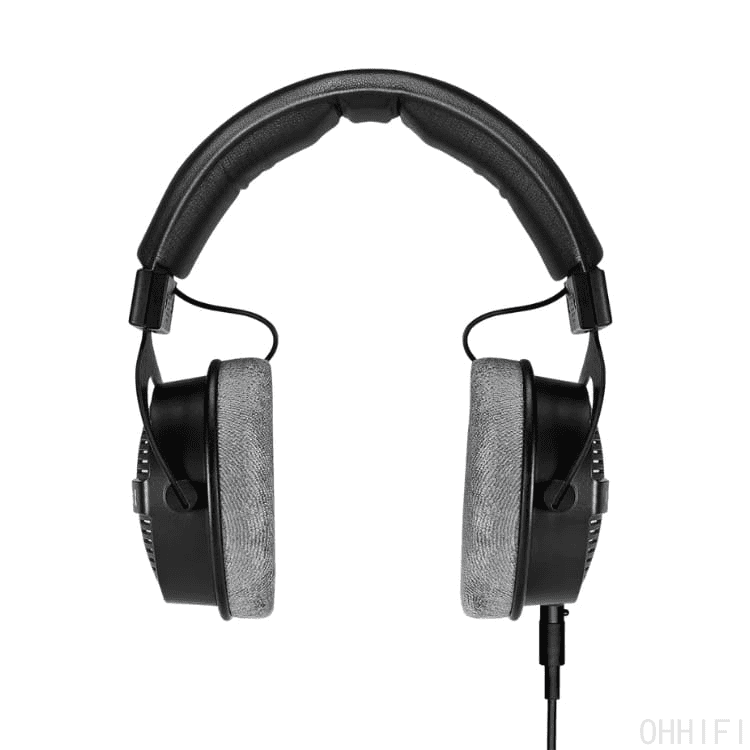
Comfort is subjective, but ergonomics are science. One of the hidden upgrades in the PRO X chassis is the redesigned headband. The memory foam cushioning now features a specific fontanelle recess—a channel carved out of the padding at the very apex of the arch.
The human skull is sensitive at the vertex (the fontanelle spot). Traditional headbands create a hotspot here after 2-3 hours of wear. By relieving pressure in this specific zone, Beyerdynamic has drastically extended the "time-to-fatigue." In our testing, which involved continuous 6-hour mixing sessions, the "hotspot" phenomenon was virtually non-existent. The clamping force is initially firm—rated at 5.5 N—which is tighter than the "Edition" models of the past. This is intentional. A studio headphone must stay seated when the drummer headbangs or the engineer reaches for a patch cable. Yet, the plushness of the new grey velour pads distributes this force so evenly that the clamp feels like a secure hug rather than a vise.
2.4 Thermal Dynamics and Venting
Open-back headphones inherently manage heat better than their closed counterparts, but the density of the ear pad foam plays a major role. The DT 990 PRO X uses a new velour formulation that breathes significantly better than the older, stiffer silver pads. The open grille design, now featuring wider perforations and a more transparent acoustic mesh, allows for substantial airflow. While your ears will eventually warm up, the "swamp ear" effect common with leatherette pads is entirely absent here.
3. The Engine Room: The STELLAR.45 Driver
The soul of the DT 990 PRO X is the STELLAR.45 driver, a technological leap that renders the old 250-ohm voice coils obsolete for general use.
3.1 The End of the Impedance Wars
For years, the audiophile dogma was simple: "Higher impedance equals better sound." The old 600-ohm Beyers were prized for their lighter voice coils and faster transients. However, they required nuclear power plants (figuratively speaking) to drive. The STELLAR.45 driver flips this script. It utilizes a ring neodymium magnet of immense power density coupled with a copper-clad high-tech wire voice coil.
This combination results in a 48-ohm impedance with a sensitivity of 114 dB SPL @ 1V. In plain English: these headphones are incredibly efficient. They do not need a dedicated OTL tube amplifier to wake up. A MacBook Pro headphone jack, a USB-C dongle, or a standard audio interface like a Focusrite Scarlett can drive them to ear-shattering levels with full dynamic control. This "democratization of driveability" is the PRO X's killer feature. It allows the creator to take their reference sound from the studio console to the hotel room laptop without carrying a brick-sized amplifier.
3.2 The Physics of PEEK
The diaphragm is constructed from a three-layer PEEK (Polyether Ether Ketone) polymer with an integrated damping layer. PEEK is an aerospace-grade material chosen for its stiffness-to-mass ratio. Unlike the Mylar used in cheaper drivers, PEEK does not deform or "break up" easily at high frequencies. This structural rigidity is what allows the DT 990 PRO X to maintain extremely low distortion figures, even in the sub-bass capabilities. The integrated damping layer is the secret weapon against the "Beyer Peak," physically taming the resonance spikes that plagued the older Mylar drivers.
3.3 Impedance Linearity
One of the most remarkable technical measurements of the DT 990 PRO X is its impedance curve. Traditional dynamic drivers behave like a roller coaster—their impedance spikes massively at the resonant frequency (often hitting 300+ ohms in the bass on a 250-ohm driver). The STELLAR.45 driver, however, is electrically flat.
| Parameter | DT 990 PRO (Old) | DT 990 PRO X (New) | Implication |
| Nominal Impedance | 250 Ω | 48 Ω | PRO X runs on anything; Old PRO needs an amp. |
| Impedance Curve | Huge Bass Spike | Flat / Linear | PRO X sounds consistent on all sources. |
| Magnet Type | Ferrite | Neodymium Ring | PRO X has faster transients and higher sensitivity. |
| Diaphragm | Mylar | 3-Layer PEEK | PRO X has lower distortion and smoother treble. |
This flatness means the DT 990 PRO X is "source agnostic." Whether you plug it into a high-output-impedance tube amp or a near-zero-impedance solid-state amp, the frequency response remains consistent. The bass doesn't bloat on "bad" sources. It is a reliable constant in a variable world.

4. Sound Performance: The Sonic Magnifier
The DT 990 PRO X is marketed as a tool for "critical listening and editing," and specifically as a "sonic magnifier". This description is apt. It is not a relaxed, warm blanket of sound (like the Sennheiser HD 650). It is a spotlight.
4.1 Bass Response: Depth with Discipline
The defining characteristic of the DT 990 PRO X's low end is extension without bloom. Open-back headphones notoriously struggle with sub-bass; the air escapes, taking the pressure required for deep bass with it. The DT 990 PRO X defies this physics limit through driver excursion and damping.
Listening to Daft Punk’s "Giorgio by Moroder", the opening synth arpeggios are rendered with a tactile, granular texture. When the drums kick in, there is a distinct thud that is felt as much as heard. It digs significantly deeper than the Sennheiser HD 600, which rolls off early. Unlike the older DT 990 PRO, which had a "mid-bass hump" that could muddy the lower mids, the PRO X is tight and fast. The decay is rapid. An 808 kick drum stops when it is supposed to stop. This speed is crucial for mixing; it allows the engineer to hear the compression settings on the bass guitar without the headphone adding its own overhang.
4.2 The Midrange: The "Beyer Scoop" Refined
Beyerdynamic headphones are traditionally V-shaped (elevated bass, elevated treble, recessed mids). The DT 990 PRO X retains a mild V-shape, but the "valley" of the midrange is shallower and more refined than before.
In Nick Cave’s "Bright Horses", the vocals are presented with a rich, resonant body that sits slightly back in the mix. There is a slight warmth in the lower mids (200-400Hz) that prevents the sound from becoming sterile. However, the upper mids (2-4kHz) are pulled back compared to the Harman Target. This gives the soundstage a sense of depth—vocals don't shout in your face; they perform from a stage.
While this tuning is less "mid-forward" than the Sennheiser HD 600 (the king of vocals), it is far more revealing of texture. You hear the throat, the chest resonance, and the gravel in the voice. It separates the vocal layers in Alice in Chains’ "Down in a Hole" with surgical precision, allowing you to parse the harmony from the lead line effortlessly.
4.3 High Frequencies: Taming the Shrew
This is the moment of truth. The "Beyer Peak" (usually around 9kHz) is legendary for causing fatigue. The DT 990 PRO X still has elevated treble. It is a bright headphone. But the quality of that brightness has changed fundamentally.
The STELLAR.45 driver produces a treble that is "airy" and "shimmering" rather than "piercing." In The Eagles’ "Hotel California" (Live), the crowd noise and the metallic shimmer of the acoustic guitar strings are hyper-realistic. You can hear the pick scraping the winding of the string.
Yes, sibilance is revealed. If a vocalist has a harsh "S" sound, the DT 990 PRO X will show it to you. But it doesn't add sibilance where none exists. It acts as a diagnostic tool. If your mix hurts on these headphones, it's because your mix is too bright, not necessarily because the headphones are broken. For long listening sessions, this treble is far more tolerable than the older models, providing detail without the "ice-pick" sensation.
4.4 Soundstage and Imaging: The Holographic Field
The open-back design, combined with the angled drivers and treble energy, creates a soundstage that is remarkably wide and "holographic".
Width: The soundstage extends well past the ears. It feels like listening to near-field monitors in a well-treated room.
Imaging: This is where the PRO X excels. Localization is razor-sharp. In a gaming context, this is akin to a "wallhack." You can pinpoint exactly where a footstep is coming from in a 360-degree field. In a mixing context, it allows for precise panning. You can place a hi-hat 15 degrees to the right, and it stays there. The separation between instruments is absolute; complex tracks like Muse’s "Madness" are deconstructed into their individual layers.
5. The Competitive Landscape: Comparisons
To understand the DT 990 PRO X's place in the market, we must pit it against the titans.
5.1 Internal Civil War: DT 990 PRO X vs. DT 900 PRO X
This is the most common confusion. They look the same. They cost roughly the same.
The Tuning: The DT 900 PRO X is tuned for flatness. It is linear, monitor-like, and arguably "boring" to some. It is for the engineer who wants a Harman-neutral reference. The DT 990 PRO X is tuned for "spatiality and transparency." It has the bass boost and the treble lift. It is for the engineer who wants to hear flaws (treble) and feel the vibe (bass).
The Vibe: The 990 PRO X is more "fun." It sounds wider and more immersive. The 900 PRO X sounds more intimate and dry. If you want to enjoy music while analyzing it, the 990 is the choice. If you want purely clinical data, the 900 wins.
5.2 The Ancestor: DT 990 PRO X vs. DT 990 PRO (Old)
Resolution: The PRO X is noticeably faster and cleaner. The bass on the old 990 feels "bloomy" and loose by comparison.
Treble: The old 990 is grainy and harsh. The PRO X is smooth and extended.
Utility: The old 990 needs an amp. The PRO X runs on a phone. The old 990 has a fixed cable. The PRO X has a detachable one. The PRO X is objectively the better piece of hardware in every metric except price.
5.3 The Reference: DT 990 PRO X vs. Sennheiser HD 600/650
Midrange: Sennheiser wins. The HD 600’s vocals are magical and liquid. The HD 600 sounds slightly recessed and dry in comparison.
Extensions: Beyer wins. The HD 600 has no sub-bass and rolled-off treble. The DT 990 PRO X gives you the full frequency bandwidth. You hear the rumble and the air that the Sennheiser misses.
Soundstage: Beyer wins. The HD 600 is famously "three-blob" (left, right, center) and narrow. The DT 990 PRO X is panoramic.
5.4 The Planar Rival: DT 990 PRO X vs. Hifiman Sundara
Speed: The Sundara (planar magnetic) is technically faster on the micro-transients. It has a "pluck" that dynamic drivers struggle to match.
Dynamics: The Beyer hits harder. Dynamic drivers move more air. The slam of a drum is more visceral on the DT 990 PRO X.
Build: The Beyer is a tank. The Sundara is... delicate. Hifiman quality control is notorious. Beyerdynamic is legendary. If you need a headphone to last 10 years, you buy the German one.
6. Synergy and Pairing: The Myth of Scaling
Does the DT 990 PRO X "scale"? That is, does it sound better with a $1,000 amplifier than a $100 one?
The answer is: minimally.
Because the impedance curve is so flat and the sensitivity so high, the DT 990 PRO X reaches 95% of its potential on simple sources. A Questyle M15 dongle or a Fiio K7 is all you need.
However, avoid high output impedance OTL tube amps (like the Darkvoice 336SE). While they make high-impedance headphones sound gooey and warm, they often just make low-impedance headphones like the PRO X sound loose and uncontrolled due to poor damping factor. Stick to solid-state or hybrid amps if you want the best performance.
7. The Modder's Perspective
For those who find the treble still a distinct "too much," the DT 990 PRO X is mod-friendly.
The Paper Towel Mod: Placing a single ply of paper towel behind the foam disc covers significantly tames the 8kHz peak without ruining the detail.
Pad Rolling: Swapping to the Beyerdynamic EDT 1990 Analytic pads can shift the tuning slightly, though the stock pads are tuned specifically for the STELLAR.45 driver and are generally the best compromise.
8. Verdict: The King is Dead, Long Live the King
The Beyerdynamic DT 990 PRO X is a triumph of iterative engineering. It respects the legacy of the original—the excitement, the width, the detail—but strips away the archaic frustrations. It is a studio headphone for the year 2026: efficient enough for a laptop, durable enough for a backpack, and precise enough for a mastering session.
It is not a "neutral" headphone in the strict sense. It has a personality. It wants to show you the sparkle in the cymbals and the rumble in the synth. It is an analytical headphone that hasn't forgotten how to be fun.
For the producer who needs a microscope for their mix, the gamer who needs a radar for their ears, and the audiophile who wants to hear their music with the curtains pulled back, the DT 990 PRO X is the new benchmark. The "Beyer Peak" has been tamed, but the Beyer magic is stronger than ever.
Pros:
STELLAR.45 Driver: Incredible efficiency and low distortion.
Build Quality: Modular, robust, "Made in Germany."
Comfort: Fontanelle recess and plush velour make it a marathon runner.
Soundstage: Holographic width and precise imaging.
Cable: Finally detachable (Mini-XLR).
Cons:
Treble Energy: Still too bright for the most treble-sensitive users.
Isolation: Non-existent (it acts like a speaker; everyone hears your music).
Cable: Included rubber cables can be slightly microphonic (transmit rubbing noise).
Final Score: ⭐⭐⭐⭐⭐ (5/5) - The definitive modern open-back workhorse.




Comments