
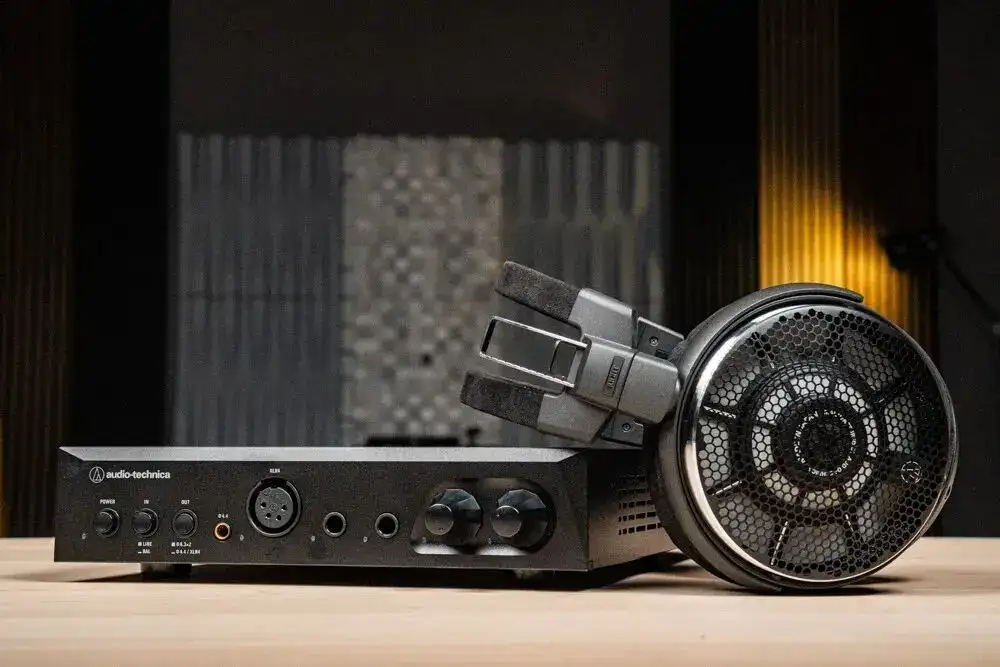
The Weight of Air: A Definitive Auditory Audit of the Audio-Technica ATH-ADX7000

Prologue: The Dynamic Driver in the Age of Planar Dominance
In the high-fidelity personal audio landscape of late 2025, the narrative of technological progress has largely been written in the language of magnetic planar traces and electrostatic stators. The audiophile community, driven by a relentless pursuit of transient speed and vanishingly low distortion, has frequently relegated the traditional dynamic driver—the moving coil transducer that has powered the vast majority of loudspeakers and headphones for a century—to a position of nostalgic reverence rather than cutting-edge supremacy. With the rise of heavy, magnet-laden planar flagships pushing the boundaries of weight and price, the concept of a lightweight, dynamic open-back headphone has often been viewed as a relic of a bygone era.
Yet, there exists a persistent philosophy, particularly within the storied halls of Japanese audio engineering, that the moving coil has not yet sung its final aria. This philosophy posits that the natural decay, the organic timbre, and the sheer physical impact of air movement generated by a piston-like dynamic driver possess a musicality that exotic technologies struggle to replicate. It is into this polarized atmosphere that Audio-Technica releases the ATH-ADX7000, a headphone that does not merely iterate on its predecessors but seeks to redefine the capabilities of the open-air dynamic topology.
Priced at $3,499, the ADX7000 enters the "summit-fi" arena not as a technological curiosity, but as a direct challenger to the established order. It carries the weight of Audio-Technica's sixty-year legacy, a history punctuated by iconic "Air Dynamic" models that have garnered cult followings for their ethereal presentation and vocal intimacy. However, the ADX7000 promises something elusive: the airy spaciousness of its lineage combined with a bass authority and tonal body that has historically evaded the open-back form factor.
This report serves as an exhaustive examination of the ATH-ADX7000. We will dissect its industrial design, explore the physics of its proprietary HXDT driver technology, analyze its electrical behavior across varied amplification chains, and subject it to a rigorous suite of musical stress tests. Our objective is to determine whether the ADX7000 is simply a nostalgic tribute to the past or a forward-looking reference tool that establishes a new benchmark for natural sound reproduction.
Chapter 1: The Lineage of "Air" – Contextualizing the ADX7000
1.1 The Evolution of the "AD" Series
To fully appreciate the engineering choices manifest in the ADX7000, one must first traverse the history of Audio-Technica’s "Air Dynamic" (AD) series. For decades, models such as the ATH-AD2000, ATH-AD1000, and their "X" revisions represented a specific, arguably niche, tuning philosophy. These headphones were characterized by their featherweight chassis, the idiosyncratic "3D Wing" support system, and a sound signature that prioritized upper-midrange sweetness and an expansive, diffuse soundstage over sub-bass extension or impact.
The AD2000, in particular, became a legend among connoisseurs of female vocals and acoustic strings. Its coloration was undeniable—a forward, almost aggressive midrange intimacy paired with a distinct roll-off in the lower octaves. For many, this was a feature, not a bug; it offered a "listen-through" quality to the midrange that few competitors could match. However, as the market evolved towards more linear, Harman-target-adjacent tunings, the classic "AD" sound began to feel specialized, lacking the all-rounder versatility required of a modern flagship.
1.2 The ADX5000: The First Flagship Attempt
In 2017, Audio-Technica launched the ATH-ADX5000, a headphone that signaled a departure from the mid-fi roots of the AD series. With its tungsten-coated drivers and magnesium frame, the ADX5000 was a technological tour de force. It achieved a level of resolution and speed that rivaled the Sennheiser HD 800, yet it remained a polarizing product. Its tuning was often described as hyper-analytical, with a treble presentation that could veer into harshness on poorly mastered tracks and a bass response that, while fast, lacked the visceral weight desired by many listeners.
The ADX7000 arrives eight years later as a direct response to the lessons learned from the ADX5000. It is not merely an aesthetic refresh; it is a fundamental re-tuning and re-engineering effort. The goal was clear: retain the legendary speed and air of the ADX5000 while injecting the tonal density, bass authority, and "analog" warmth that listeners felt was missing. It is an attempt to synthesize the technical prowess of modern flagship engineering with the musical soul of the vintage AD2000.
1.3 The "True Open-Air" Philosophy
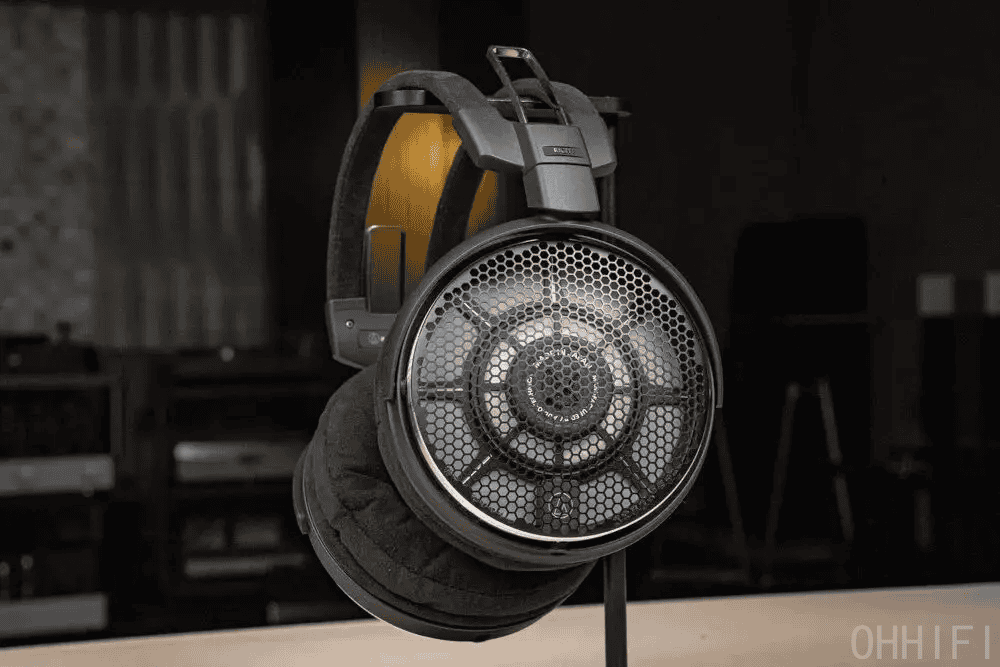
Central to the identity of the ADX7000 is the concept of "True Open-Air" audio. In the parlance of headphone engineering, "open-back" is a spectrum. Many open headphones still employ significant damping materials—felt rings, foam discs, or restrictive grilles—behind the driver to tune the frequency response and control resonance. Audio-Technica’s approach with the ADX7000 is one of minimalism. The housing is a honeycomb-punched aluminum mesh that offers virtually zero acoustic impedance to the driver's back-wave.
This design philosophy introduces significant engineering challenges. Without damping materials to smooth out the response, the driver itself must be mechanically perfect. Any resonance in the diaphragm or the frame is laid bare, audible as distortion or coloration. Thus, the "True Open-Air" design is not just a housing choice; it is a mandate for extreme precision in transducer manufacturing, necessitating the development of the HXDT driver technology that defines this headphone.

Chapter 2: Industrial Design & Ergonomics – The Physical Form
2.1 The Materials of Weightlessness: Magnesium vs. The World
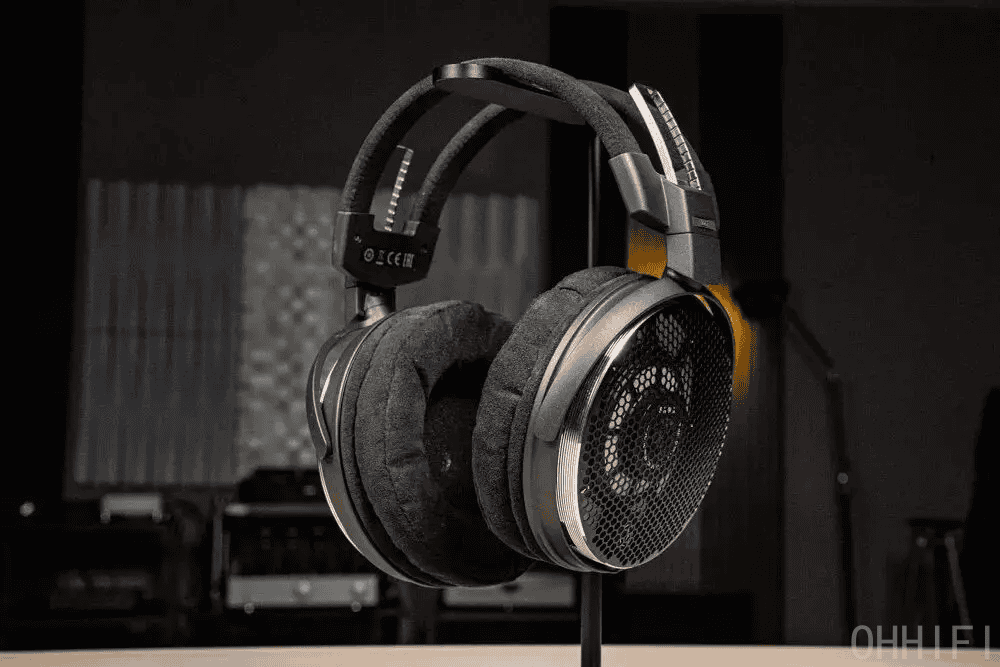
In a market segment where luxury is often equated with heavy machined aluminum, polished wood, and lambswool (exemplified by the focal Utopia’s 490g mass or the Audeze LCD-4’s nearly 600g weight), the ATH-ADX7000 makes a radical statement through subtraction. Weighing in at approximately 275 grams (varying slightly depending on the earpad selection), it is one of the lightest production flagships in existence.
This featherweight status is achieved through the extensive use of magnesium alloy for the frame and structural components. Magnesium is roughly 33% lighter than aluminum by volume, yet it possesses a high strength-to-weight ratio. More importantly for audio applications, magnesium has significantly higher internal damping capacity than aluminum or steel. When a metallic structure is excited by vibration (such as the recoil of a powerful driver), it tends to "ring" at a resonant frequency. Magnesium’s crystalline structure dissipates this mechanical energy as heat more effectively than other structural metals, reducing the "metallic" coloration that can bleed into the audio signal.
The tactile experience of the ADX7000 is one of focused utilitarianism. The finish is a matte, textured black that feels cool to the touch but lacks the glossy ostentation of some competitors. It is a tool-like aesthetic, reminiscent of professional broadcast equipment rather than lifestyle luxury goods. This "form follows function" approach is distinctly Japanese, prioritizing the reduction of mass and the elimination of resonance over visual flair.
2.2 The Evolution of the Wing: Headband Mechanics
Long-time Audio-Technica users will note the absence of the "3D Wing Support" system, a floating paddle design that was the hallmark of the AD series for decades. While the Wing system was innovative, it often suffered from stability issues, with headphones sliding down the user's head over time. The ADX7000, following the precedent set by the ADX5000, utilizes a more traditional slider mechanism integrated into the magnesium arch.
The headband consists of two slender magnesium rods, covered in Alcantara (or a similar high-quality textile), with minimal padding. This design choice has drawn criticism for creating "hotspots" on the scalp due to the small surface area of contact. The physics are unforgiving: even a light load, when concentrated on two narrow points, can exert higher pressure per square inch than a heavier load distributed across a wide suspension strap.
However, the clamping force is calibrated to be exceptionally low. The headphones rely on the friction of the large earpads and the gentle inward pressure of the magnesium arch to stay in place. For most users, the sheer lack of mass makes the ADX7000 "disappear" after a few minutes of wear. It avoids the neck strain associated with planar magnetics, allowing for marathon listening sessions that would be physically exhausting with a Rosson Audio or Audeze flagship.
2.3 The Connector System: A2DC
Audio-Technica persists with its proprietary A2DC (Audio Designed Detachable Coaxial) connector system. Unlike the ubiquitous 3.5mm jacks or the fragile MMCX connectors used in IEMs, the A2DC is designed specifically for high-fidelity headphones. It features a locking mechanism that prevents rotation—a common source of signal intermittency and noise in standard coaxial connectors.
While technically superior in terms of mechanical stability and contact integrity, the A2DC connector presents a hurdle for the enthusiast aftermarket. Cable rolling is a significant aspect of the audiophile hobby, and the proprietary nature of A2DC limits the immediate availability of third-party options compared to mini-XLR or 3.5mm standards. However, the connector's durability is notable; anecdotal evidence and manufacturer data suggest a "vanishingly small failure rate" compared to competing standards.
2.4 Unboxing and Accessories
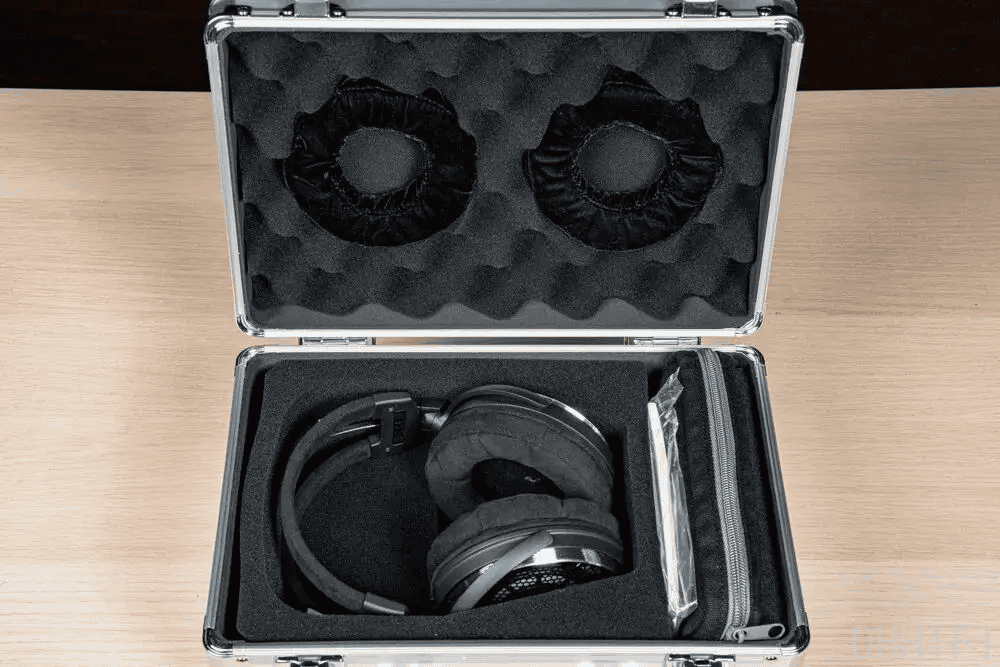
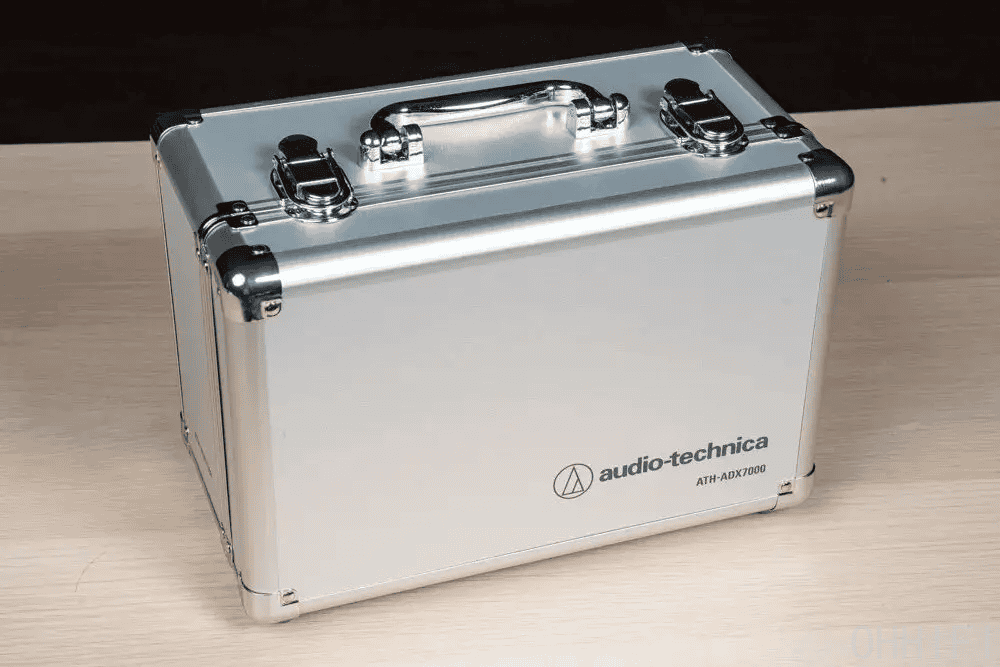
The presentation of the ADX7000 aligns with its flagship status. The headphones arrive in a custom-designed hard-shell carrying case, often described as a "suitcase". This case is robust, lined with impact-absorbing foam, and exudes a sense of permanence. It is not merely packaging; it is a functional transport solution.
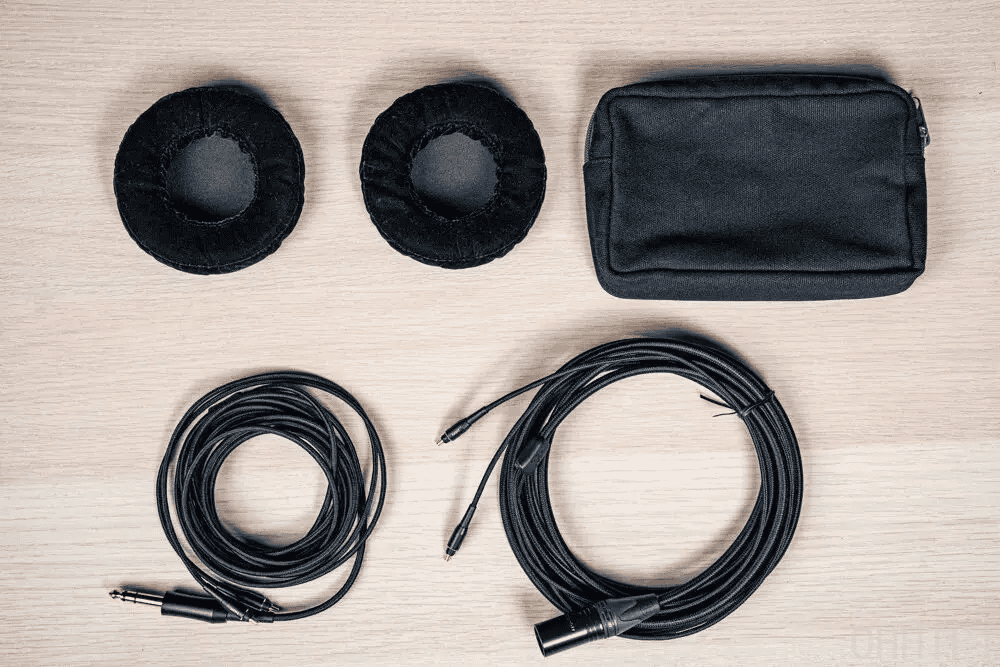
Inside, the user finds two cables: a 3.0m unbalanced cable terminated in a 6.3mm gold-plated stereo plug, and a 3.0m balanced cable terminated in a 4-pin XLRM connector. The inclusion of a balanced cable as standard is a welcome acknowledgment of the target demographic, who likely possess balanced amplification chains. Additionally, the package includes a small leather pouch for cable storage and, crucially, two sets of earpads—Velvet and Alcantara—which we will discuss in depth in the acoustic analysis sections.

Chapter 3: Acoustical Engineering – The HXDT Driver & Core Mount
3.1 The HXDT Paradigm: High-Concentricity X Transfer
The defining technological innovation of the ADX7000 is the HXDT (High-Concentricity X Transfer) driver system. To understand the significance of this, we must examine the failure modes of traditional dynamic drivers. In a standard assembly, the voice coil, magnet, and diaphragm are separate components that are glued or clamped together. Minute misalignments—offsets in the micrometer range—can cause the voice coil to rub against the magnetic gap or cause the diaphragm to rock (tilt) during excursion rather than moving as a perfect piston. This "rocking mode" introduces non-linear distortion, particularly at high volumes or low frequencies where excursion is greatest.
Audio-Technica’s HXDT process involves a precision molding and alignment technique that integrates the diaphragm, voice coil, baffle, and magnet into a single unit with tolerances tightened to ±0.02 mm. This is an order of magnitude more precise than conventional manufacturing.
The Benefit: By ensuring perfect concentricity, the voice coil moves through the magnetic gap with zero lateral deviation. This maximizes the efficiency of energy transfer (hence "X Transfer") from the magnetic motor to the air. The result is a transient response that is startlingly fast—the driver starts and stops with the immediacy of a planar magnetic, yet retains the dynamic punch of a moving coil.
The Diaphragm: The 58mm diaphragm is coated in tungsten, a metal chosen for its high stiffness and internal damping. This coating raises the breakup frequency of the diaphragm well outside the audible range, ensuring that the driver behaves linearly up to its 50 kHz theoretical limit.
3.2 Core Mount Technology: Optimizing the Baffle
The ADX7000 utilizes a refined version of the Core Mount Technology (CMT) introduced in the ADX5000. Traditional headphones mount the driver to the chassis, which is then mounted to the headband. In CMT, the driver unit is positioned optimally within the housing to create a direct airflow path. The driver is essentially "suspended" in the baffle structure, which allows air to flow freely around both the front and rear of the diaphragm.
This architecture serves two purposes:
Airflow Transparency: It minimizes the acoustic impedance seen by the driver, allowing it to move without fighting against air pockets or pressure differentials.
Vibration Isolation: By optimizing the mounting point, mechanical vibrations from the driver are directed into the magnesium frame where they are damped, rather than reflecting back into the diaphragm or resonating the earcup.
3.3 Ventilation Control: The Secret to Bass
While the ADX7000 is an "Open-Air" headphone, it is not completely sealed from engineering intervention. A critical detail in the housing design is the blocking of side ventilation. While the face of the honeycomb grille is open, the radial sides of the earcup are sealed.
This decision is pivotal for low-frequency performance. In a completely open dipole radiator (like a driver hanging in free air), the positive pressure wave from the front of the driver can cancel out with the negative pressure wave from the rear (phase cancellation), leading to significant bass roll-off. By sealing the sides, Audio-Technica’s engineers force the rear wave to exit strictly through the back grille, increasing the path length between the front and rear radiation. This delay reduces phase cancellation in the lower frequencies, allowing the ADX7000 to produce the "uncommonly full and powerful" bass response that distinguishes it from its predecessors.
Chapter 4: The Electrical Load – Impedance & Amplification
4.1 The Specification Paradox
On paper, the ATH-ADX7000 presents a confusing set of numbers:
Impedance: 490 ohms
Sensitivity: 100 dB/mW
A novice might look at the 100 dB sensitivity and assume the headphone is easy to drive. Indeed, one could plug the ADX7000 into a smartphone dongle and achieve reasonable volume levels. However, this is a deceptive metric. The high impedance of 490 ohms means that the driver requires significant voltage swing to reach that power level. Most portable devices are current-limited and voltage-capped; they simply cannot swing the voltage rails necessary to drive high-impedance loads without clipping or compressing dynamics.
4.2 The 81 Hz Resonance Spike
Deep technical analysis reveals a critical characteristic of the ADX7000’s electrical behavior: the impedance is not constant across the frequency spectrum. As is typical for dynamic drivers, there is a massive impedance rise at the driver's resonant frequency. Measurements indicate a spike to approximately 1,348 ohms at 81 Hz.
This spike is the key to understanding the headphone's synergy with amplifiers.
Scenario A: Solid State Amplification (Low Output Impedance): An amplifier with an output impedance near zero (e.g., Topping A90, Benchmark HPA4) acts as a perfect voltage source. It will maintain flat voltage output regardless of the load's impedance. Consequently, the amplifier exerts strict control (high damping factor) over the driver at the 81 Hz resonance. The result is a bass response that is tight, fast, and linear—perhaps perceived as "lean" by bassheads.
Scenario B: OTL Tube Amplification (High Output Impedance): Output Transformerless (OTL) tube amplifiers (e.g., Bottlehead Crack, Feliks Audio Envy) typically have high output impedance (often 80-120 ohms or more). When paired with the ADX7000, the amplifier and the headphone form a voltage divider. The frequency response of the amplifier will effectively track the impedance curve of the headphone.
The Result: At 81 Hz, where the headphone impedance rockets to 1,348 ohms, the amplifier delivers significantly more voltage relative to the rest of the spectrum. This creates a physical boost in the mid-bass response—potentially 2-3 dB or more.
Sonic Consequence: This interaction adds warmth, bloom, and body to the low end. It transforms the ADX7000 from a reference tool into a lush, musical enjoyment machine. This explains the divergence in reviews; one reviewer using a solid-state amp calls it "neutral," while another using a tube amp praises its "rich, powerful bass."
4.3 Power Requirements
To truly wake up the ADX7000, "big iron" is recommended. While it doesn't need the wattage of a Susvara, it craves voltage. Desktop amplifiers with high rail voltages (typically +/- 15V or higher) are ideal. Portable amplifiers like the Chord Hugo 2 or FiiO K13 R2R are capable, but users often report that the soundstage collapses and the bass loses texture when under-powered. The recommendation is clear: treat the ADX7000 like a 600-ohm Beyerdynamic or a Sennheiser HD 800—feed it quality voltage.
Chapter 5: Sound Analysis – The Low Frequencies
5.1 Defying the Open-Back Stereotype
The historical weakness of the "Air Dynamic" series—and indeed, many open-back dynamic headphones—has been the bass. It rolls off early, lacks physical slam, and can sound "papery." The ADX7000 shatters this stereotype. Listeners describe the bass as "punchy," "strong," and "uncommonly full".
The focus of the ADX7000's low end is the mid-bass (60 Hz - 150 Hz). This is the region where the fundamental frequencies of kick drums, snare bodies, and bass guitars live. The HXDT driver renders this region with a tactile solidity that is rare for an open design. There is a sense of "moving air"—a physical thud against the ear that gives rock and electronic music a propulsive drive.
5.2 Sub-Bass Extension vs. Texture
In terms of sub-bass (20 Hz - 60 Hz), the ADX7000 performs admirably but bows to the laws of physics. There is a gentle roll-off starting around 50 Hz. It does not produce the pressurized, tectonic rumble of a sealed-front planar magnetic headphone like the Audeze LCD-5. On tracks with deep synthesized sub-bass, the tone is audible and textured, but the physical pressure is lighter.
However, the quality of the bass is exceptional. The tungsten-coated diaphragm stops on a dime. Bass notes have distinct leading edges and natural decay tails. There is no "one-note" bloat where different pitches of bass drums sound identical. The texture of a bowed double bass string is palpable—you can hear the rosin gripping the string, the vibration of the wooden body, and the fundamental note all as distinct elements.
5.3 The "Core Mount" Effect on Bass
The structural rigidity provided by the Core Mount Technology ensures that the bass impact is delivered by the diaphragm, not by the rattling of the earcup. This cleanliness allows the ADX7000 to take EQ well. If a user desires more sub-bass, a low-shelf filter can be applied (e.g., +4dB at 100Hz) without inducing distortion, thanks to the high excursion capabilities of the HXDT driver.
Chapter 6: Sound Analysis – The Midrange
6.1 The Soul of Audio-Technica
If the bass is the surprise, the midrange is the homecoming. Audio-Technica has built its reputation on midrange purity, and the ADX7000 represents the apex of this craft. The tuning here is "natural" rather than strictly "neutral".
There is a slight elevation in the lower midrange (200 Hz - 500 Hz) that imparts a sense of body and warmth to the sound. This prevents the "thinness" that plagued the ADX5000. Male vocals have chest resonance; they sound authoritative and present. Guitars, both acoustic and electric, have a woody richness that feels organic.
6.2 Vocal Intimacy
The presentation of vocals is forward and intimate. The ADX7000 places the singer "dead center" and slightly in front of the mix. This is in contrast to headphones like the Sennheiser HD 800 S, which can push vocals back into the mix, making them sound distant. On the ADX7000, the connection with the vocalist is emotional and direct.
Female vocals, a traditional strong suit for AT, are handled with grace. The upper midrange (2 kHz - 4 kHz) is smooth and linear, avoiding the "shoutiness" or glare that can make soprano voices fatigue the ear. Whether it's the breathy whisper of a jazz singer or the belt of a pop star, the ADX7000 renders the human voice with a lifelike presence that is arguably its strongest attribute.
6.3 Resolution and Micro-Detail
The HXDT driver's concentricity pays dividends in midrange resolution. Complex passages, such as a choir with multiple overlapping vocal lines, are unraveled with ease. The listener can distinguish individual voices within the harmony. This is not achieved through artificial treble boosting (fake detail) but through the sheer speed and low distortion of the driver in the critical vocal range.
Chapter 7: Sound Analysis – The High Frequencies
7.1 The "Air" Dynamic
The treble response of the ADX7000 is tuned to justify its "Air Dynamic" moniker. Extension is phenomenal, reaching theoretically to 50 kHz. In the audible band, the treble is characterized by a sense of openness and refinement.
There is a deliberate tuning choices in the highs:
The Presence Dip: There is a slight dip in the lower treble (around 6-8 kHz). This reduces sibilance—the harsh "ssss" and "tttt" sounds in vocals—making the headphone forgiving of less-than-perfect recordings.
The 10 kHz Sparkle: Following the dip, there is a peak around 10-11 kHz. This adds "sparkle" and definition to cymbals, hi-hats, and the upper harmonics of strings. It gives the sound a crisp, defined edge.
7.2 Sibilance and Fatigue
For the vast majority of listeners, this treble tuning strikes a perfect balance between detail and comfort. It is "poised". However, on tracks that are already mixed brightly, or with DACs that are clinically sharp, the 10 kHz peak can occasionally present as "wispy" or "papery". This is a minor coloration, but one that purists should be aware of. It avoids the metallic harshness often associated with metal drivers, offering instead a delicate, crystalline quality.
7.3 Room Ambience
The true magic of the ADX7000's treble lies in its retrieval of low-level ambient cues. The decay trails of instruments, the reverb of the recording room, the subtle shifting of feet on a stage—these micro-details live in the upper frequencies. The ADX7000 resolves them effortlessly, creating the illusion of space and atmosphere that surrounds the music.
Chapter 8: Spatial Presentation – Soundstage & Imaging
8.1 The Sphere of Sound
While the Sennheiser HD 800 S is often cited as the "soundstage king" for its immense horizontal width, the ADX7000 offers a different, perhaps more realistic, spatial presentation. The soundstage is not as aggressively wide, but it is deeper and more spherical.
The "True Open-Air" design eliminates the back-wave reflections that often muddy the spatial cues in closed or semi-open headphones. The result is a sound field that feels boundless. Sounds appear to emerge from the air around the listener, rather than from point sources on the ears.
8.2 Imaging Precision
Imaging—the ability to pinpoint the location of an instrument in space—is laser-precise. The concentric alignment of the HXDT driver ensures that phase coherence is maintained between the left and right channels. When a drummer pans across the toms, the sound moves smoothly across the stage, with no gaps or blurring.
This precise imaging, combined with the intimate midrange, creates a holographic effect. Instruments are layered from front to back. You can hear the singer in front, the guitar amp slightly behind and to the left, and the drums further back in the room. This "3D" layering is a hallmark of flagship performance and is where the ADX7000 justifies its price tag.
Chapter 9: The Variable Factor – Earpad Rolling
Audio-Technica includes two sets of earpads with the ADX7000, and they are not merely for comfort—they are essential tuning tools.
| Feature | Velvet Earpads (Stock) | Alcantara Earpads |
| Material Density | High Density | Medium Density / Breathable |
| Bass Response | Fuller, Warmer, More Impact | Leaner, Faster, Tighter |
| Treble Response | Smoother, darker background | More extended, airier, potentially sharper |
| Soundstage | Intimate, Focused | Wider, Diffuse |
| Best For | Rock, Pop, Vocals, Jazz | Classical, Orchestral, Critical Analysis |
9.1 The Velvet Experience
The Velvet pads are the default, and for good reason. Their higher density creates a better seal against the skin, which is crucial for coupling low frequencies to the ear. With these pads, the ADX7000 has its "uncommonly full" bass and warm midrange. They suppress resonances and offer a darker, more relaxing background. This is the "musical" configuration.
9.2 The Alcantara Experience
Switching to the Alcantara pads transforms the ADX7000 into a scalpel. The breathable material leaks slightly more bass pressure, reducing the mid-bass hump. This unmasks the upper midrange and treble, bringing micro-details to the forefront. The soundstage expands as the seal is less hermetic. For mastering engineers or classical music aficionados who want to hear every chair squeak, the Alcantara pads are the choice. However, some reviewers find this configuration disrupts the tonal balance, making the headphone sound too lean.
Chapter 10: Musical Case Studies – Track-by-Track Analysis
To illustrate the ADX7000's capabilities, we subject it to a diverse playlist of reference tracks.
10.1 Slightly Stoopid - "No Cocaine"
The Test: Mid-bass impact and vocal separation.
The Experience: The track opens with a rhythmic bass line and percussion. The ADX7000 (Velvet pads) renders the bass guitar with a thick, syrupy texture that drives the rhythm. The kick drum has a satisfying "thump." The vocals are distinct, floating above the heavy bass line without being muddied. The ADX7000 captures the "live concert" vibe of the recording, making the instruments feel present and palpable in the room.
10.2 Tame Impala - "Obsolete" (from Deadbeat)
The Test: Psychedelic layering and synth textures.
The Experience: This track is a dense mix of swirling synths and processed vocals. The ADX7000's imaging capabilities shine here. The synths swirl around the head in a 360-degree field. The HXDT driver separates the layers, allowing the listener to follow individual synth lines that would blur together on lesser headphones. The "air" of the headphone gives the track a vast, cosmic scale.
10.3 Glass Animals - "Tokyo Drifting"
The Test: Transient speed and deep bass.
The Experience: The track features hard-hitting trap beats and rapid-fire vocals. The ADX7000 proves it can handle modern pop/hip-hop production. The transients of the snare snaps are instantaneous—there is no overhang. While the sub-bass drops don't rattle the skull like a closed-back, the tone is clean and pitch-perfect. The aggressive production is smoothed slightly by the 8kHz dip, preventing listening fatigue at high volumes.
10.4 Mahler - Symphony No. 2 (Resurrection)
The Test: Dynamic range and scale.
The Experience: The quietest passages are rendered with pitch-black backgrounds (system dependent). When the full orchestra erupts, the ADX7000 scales effortlessly. The magnesium frame holds firm, with no audible chassis resonance even at fortissimo levels. The separation of the string sections is exquisite; you can hear the difference between the violins and violas. The soundstage depth places the percussion section clearly at the rear of the hall.
10.5 Bill Evans Trio - "Sunday at the Village Vanguard"
The Test: Timbre and atmosphere.
The Experience: This is where the ADX7000 earns its "Natural" badge. The piano sounds woody and resonant, with the hammer strikes clearly audible. The upright bass has the correct decay—it sounds like a large wooden box vibrating, not a synthesizer. The clinking of glasses and audience chatter in the background are resolved with such clarity that one instinctively turns their head, thinking someone is in the room.
Chapter 11: Competitive Landscape – Comparisons
11.1 ADX7000 vs. Sennheiser HD 800 S ($1,799)
The HD 800 S is the elephant in the room.
Soundstage: HD 800 S is wider; ADX7000 is deeper and more spherical.
Tonality: HD 800 S is dryer, leaner, and more clinical. ADX7000 is warmer, fuller, and more organic.
Bass: ADX7000 has significantly more mid-bass impact and body. The HD 800 S bass is often described as "polite."
Verdict: The HD 800 S remains the king for classical music analysis. The ADX7000 is the superior all-rounder, offering a more enjoyable listen for rock, pop, jazz, and modern genres while retaining 95% of the technical performance.
11.2 ADX7000 vs. Focal Utopia 2022 ($4,999)
Dynamics: The Utopia is famous for its "slam"—macro-dynamics that hit hard. The ADX7000 is punchy but softer than the Utopia.
Timbre: The Utopia has a slight metallic sheen due to the Beryllium driver. The ADX7000 sounds more analog and "soft" (in a positive way).
Comfort: The ADX7000 (275g) destroys the Utopia (490g) in comfort.
Verdict: The Utopia is a more aggressive, exciting listen. The ADX7000 is a more relaxing, "disappear on your head" listen. For long sessions, the ADX7000 wins. For a 30-minute adrenaline rush, the Utopia wins.
11.3 ADX7000 vs. HiFiMan Susvara Unveiled ($8,000)
Resolution: The Susvara Unveiled is in a higher league of resolution. It reveals details the ADX7000 hints at.
Bass: The Susvara has linear extension to 10 Hz. The ADX7000 rolls off.
Driveability: The Susvara requires a nuclear reactor to drive. The ADX7000 is picky but manageable.
Verdict: The Susvara is the "better" headphone technically, but at more than double the price. The ADX7000 offers a different flavor—dynamic driver naturalism vs. planar magnetic precision.
Chapter 12: System Synergy & Cable Upgrades
12.1 Amplification Strategy
As discussed, the 490-ohm impedance is the key variable.
Tube Magic: The ADX7000 is arguably best heard on a high-end OTL tube amp like the Feliks Audio Envy or Woo Audio WA2. The impedance interaction fills out the lower mids and bass, creating a lush, holographic sound that plays to the headphone's strengths.
Solid State Precision: For those who prefer the Alcantara pads and analytical listening, a Chord Hugo 2 or Ferrum OOR provides the grip and speed necessary to extract maximum detail.
12.2 The Cable Conundrum
The stock cables are the weakest link—stiff and microphonic. Upgrading is highly recommended.
Moon Audio Blue Dragon: A popular pairing. The Blue Dragon copper cable adds body and warmth, smoothing out the 10kHz peak and enhancing the bass even further. It removes the microphonics of the stock cable.
Silver Cables: Generally avoided unless the user wants to lean into the analytical nature of the driver, as silver can accentuate the treble peak.
Epilogue: Value Proposition & Verdict
The Audio-Technica ATH-ADX7000 is a bold statement. At $3,499, it commands a price that demands perfection. Does it achieve it?
Technically, it is a marvel of manufacturing. The HXDT driver is a triumph of precision, and the magnesium chassis is a masterclass in weight reduction. Sonically, it successfully bridges the gap between the "Air" of the past and the "Body" required of the present. It offers a listening experience that is incredibly spacious yet physically grounding.
It is not a "wow" headphone in the sense of shaking your jaw with bass or piercing your soul with treble detail. It is a "slow burn" headphone. Its magic lies in its comfort—both physical and sonic. It is a headphone you puts on and forgets, leaving only the music.
For the audiophile who has grown tired of the weight of planar magnetics and the clinical dryness of other flagships, the ADX7000 offers a sanctuary. It is the weight of air, finally given substance.
Verdict: A Masterpiece of Naturalism.
| Metric | Rating | Notes |
| Tonal Balance | 9.5/10 | Near perfect "Natural" tuning with Velvet pads. |
| Bass Quality | 9.0/10 | Exceptional for a dynamic open-back; punchy but rolls off sub-bass. |
| Resolution | 9.0/10 | Excellent, though trails the absolute top-tier planars. |
| Soundstage | 9.5/10 | Deep, spherical, and holographic. |
| Comfort | 9.5/10 | Featherweight, though headband hotspots vary by user. |
| Build Quality | 9.0/10 | Precision Japanese manufacturing; utilitarian aesthetic. |
| Value | 8.0/10 | Expensive, but unique in its class. |




Comments