
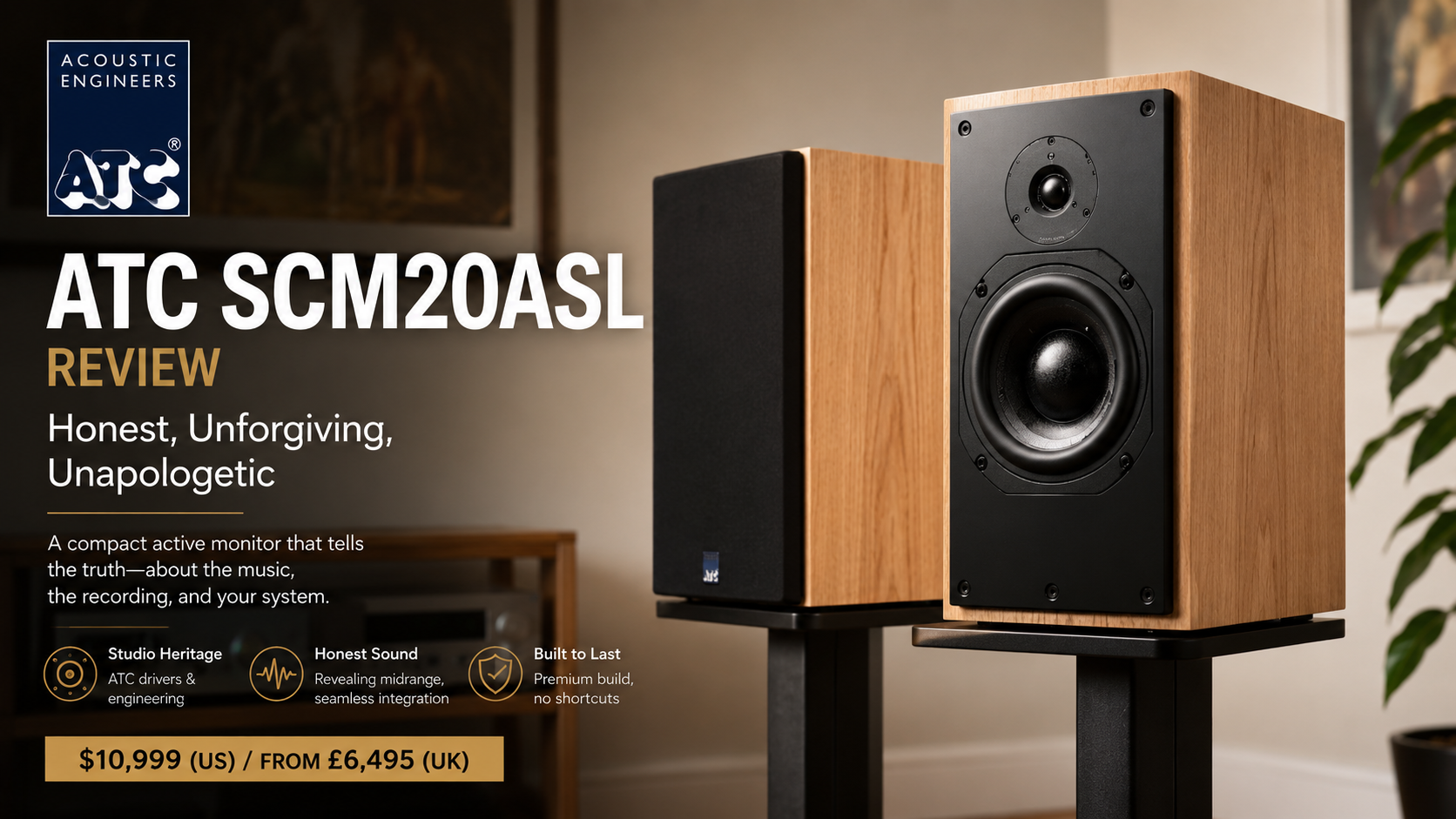
ATC SCM20ASL Review: Active Honesty That Doesn't Come Cheap

There's a particular kind of speaker that doesn't want to be your friend. It doesn't flatter the music, doesn't paper over a bad master, doesn't do the audiophile equivalent of good lighting. It just tells you what's on the recording and lets you sort out your feelings afterward. ATC has built a fifty-year company on that idea, and the SCM20ASL — the new compact active version of the long-running passive SCM20 — is the cheapest ticket into the fully active end of that catalogue.
"Cheapest" is doing some work in that sentence. In the US it lands at $10,999 a pair, or $11,999 in the premium finishes. In the UK it starts at £6,495, with the prettier veneers (the Pippy Oak option, for one) adding around £800. Hold that gap in your head — we'll come back to it, because it changes the verdict depending on which side of the Atlantic your wallet lives on.
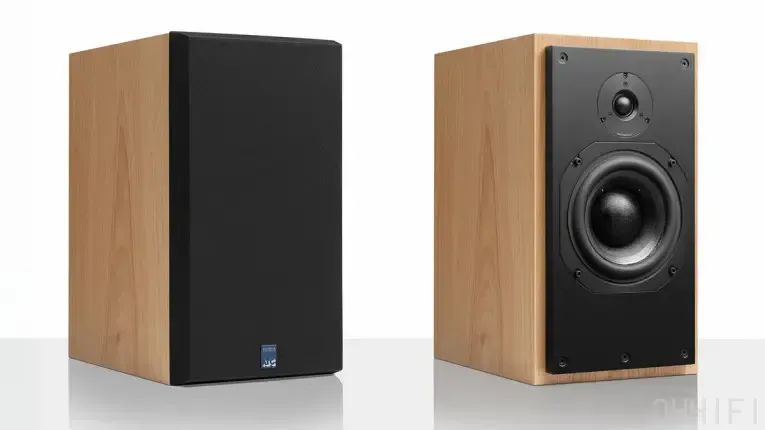
Full disclosure before we go further: I haven't had a pair of these in my room. What follows is built from ATC's published engineering, the manufacturer's measured spec, and the consensus of reviewers who have lived with them — cross-checked against a lot of hours with ATC's house sound over the years. Where the people who've heard them agree, I'll tell you. Where they don't, I'll say that too. I'm not going to pretend I A/B'd this against my own speakers last weekend.
Quick Specs
| ATC SCM20ASL | |
|---|---|
| Type | Two-way active standmount, sealed (acoustic suspension) |
| Tweeter | 25mm ATC SH25-76S soft dome (dual-suspension, no ferrofluid) |
| Mid/bass | 150mm/6" ATC SB75-150SL "Super Linear," 75mm/3" voice coil |
| Amplification | 250W "Amp Pack": 200W mid/bass + 50W tweeter, Class A/B MOSFET |
| Crossover | 2nd-order active Linkwitz-Riley + all-pass phase filter |
| Input | Balanced XLR only |
| Frequency response | 55Hz–25kHz (-6dB, free-standing, ATC anechoic spec); ±2dB 80Hz–20kHz |
| Dimensions (HWD) | 45 × 25 × 41 cm |
| Weight | ~24.3 kg (53.6 lb) each |
| Controls | Input sensitivity; LF shelf cut/boost |
| Price | $10,999 (US) / from £6,495 (UK) |
Design & Build: Engineering First, Charm Optional
You can tell a lot about a speaker company by where it spends money, and ATC spends it on the parts you can't see. The cabinet is heavily-braced, damped, and sealed — no port — because a sealed box gives tighter, better-controlled low end at the cost of outright extension and sensitivity. That's not a compromise ATC stumbled into; it's the whole thesis.
Both drivers are made in-house, down to the voice coil windings. The mid/bass is the Super Linear unit with a 3-inch voice coil running in a short-coil/long-gap motor, ATC's longstanding trick for keeping distortion down where the ear is most sensitive. The tweeter is more interesting: ATC's own 25mm dual-suspension soft dome, which drops the ferrofluid most tweeters rely on — and which dries out and changes character over years — in the name of long-term consistency. For a speaker likely to outlive several amplifiers, that's a sensible bit of paranoia.
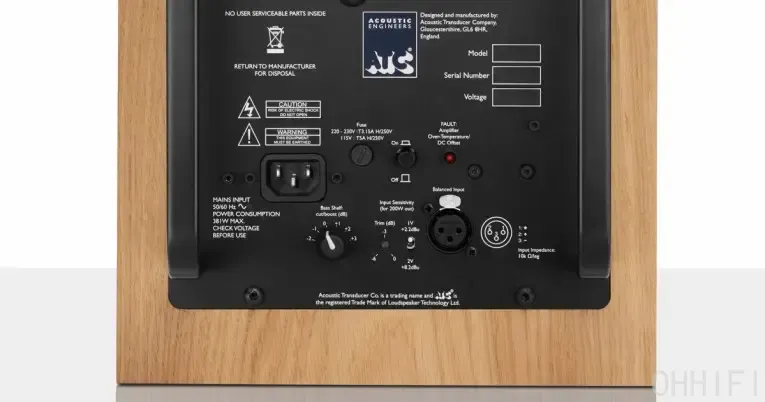
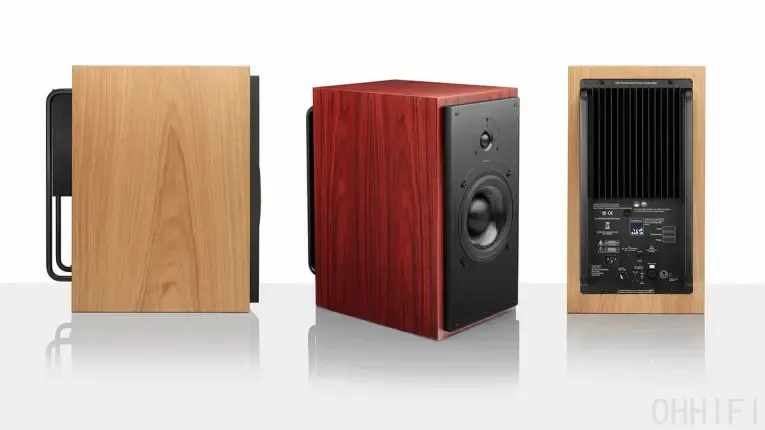
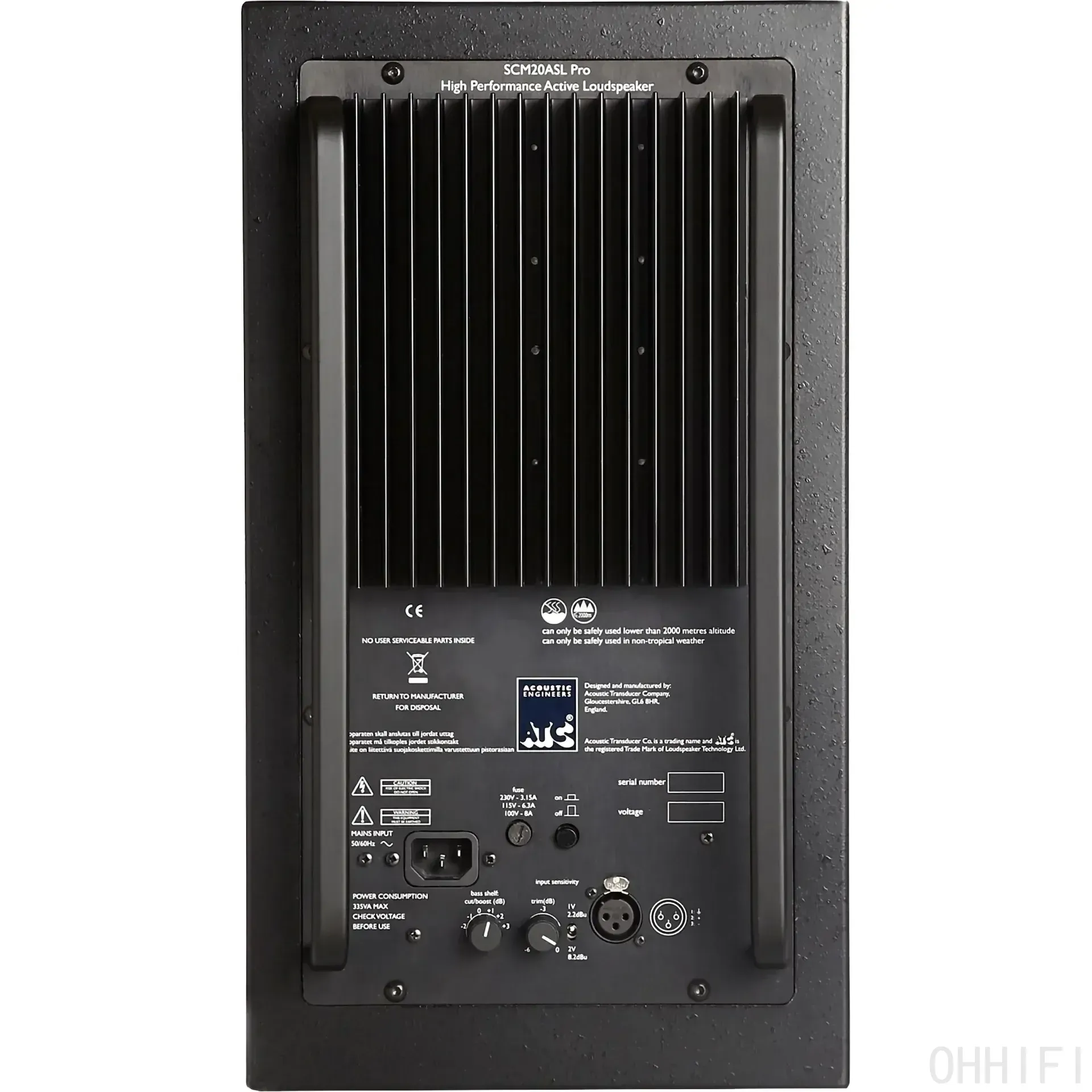
Flip it around and the active version reveals itself. Where the passive SCM20P has binding posts, the ASL has a single balanced XLR, a pair of grab handles, and the heatsink fins of the internal amplifier. There's no standby mode and no power light — it's on or it's off. Reviewers consistently describe the build as rock-solid and the finish as immaculate; one called the Pippy Oak as well-presented as any speaker they'd handled. What you don't get is gloss-and-glamour showroom flash. This is a tool that happens to be beautiful in the way good tools are.
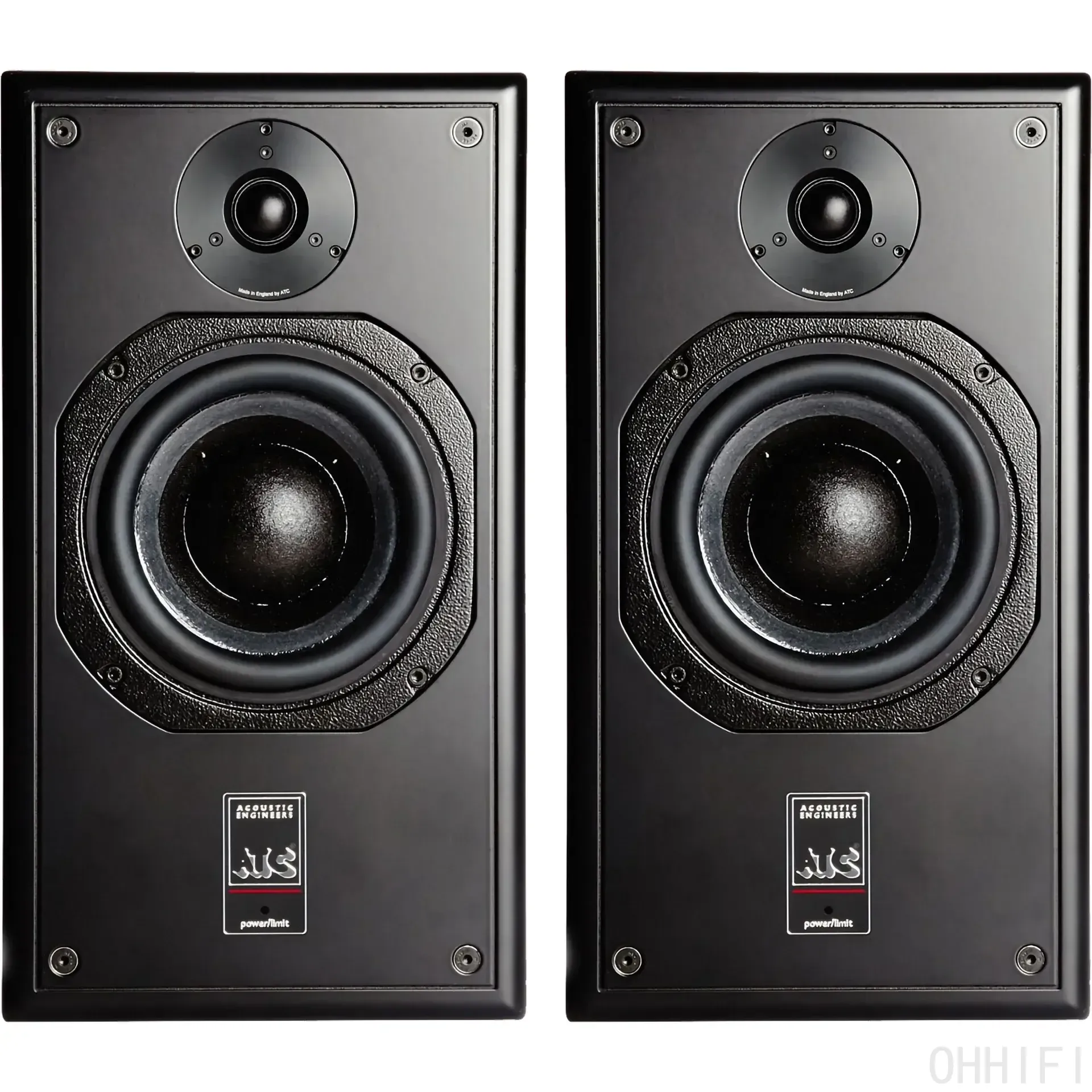
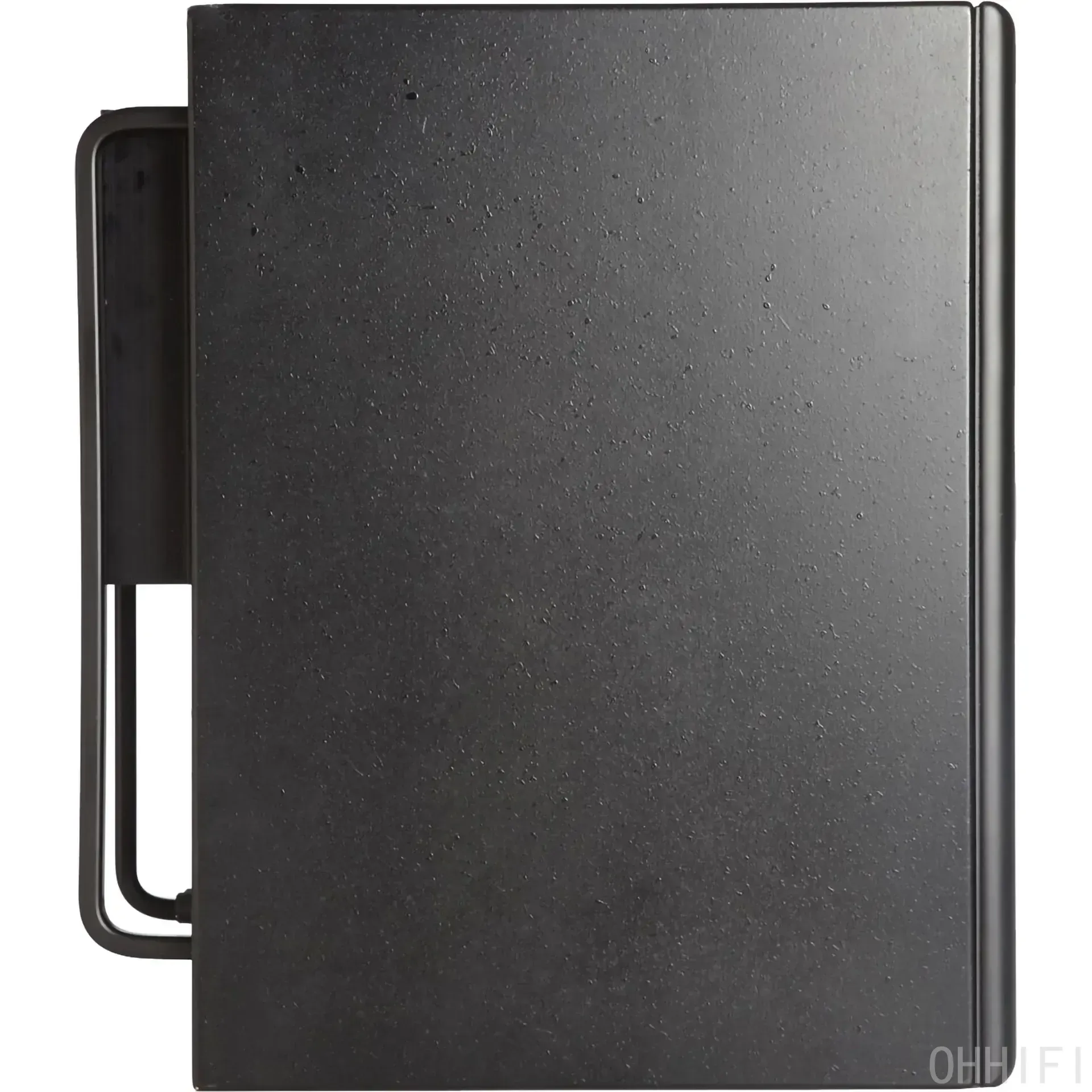
A note on weight: most sources put it around 24.3 kg each, though at least one lists 27 kg. Either way, these are dense little bricks, and ATC isn't kidding about needing rigid, heavy stands.
The Sound: What the People Who've Heard It Actually Say
Here's where I stay honest about my sourcing. I'm synthesizing the points where independent reviewers converge, not narrating a listening session I didn't have. The good news for you is that the consensus on ATC is unusually tight — these speakers provoke very similar reactions from very different ears.
Midrange and Vocals
This is the part nobody argues about. The recurring word across reviews is "honest," and the recurring praise is for the midrange. ATC's mid/bass driver and that 3-inch dome are the same lineage that's earned the brand its studio reputation, and reviewers describe vocals and acoustic instruments as revealing, focused, and dimensionally precise — the kind of presentation that puts a singer in front of you rather than spread across the wall. The sealed-box, active-crossover combination is repeatedly credited with seamless driver integration. If you value the human voice rendered without editorial, this is the speaker's core argument, and it's a strong one.
The flip side is just as consistent: this is an unforgiving speaker. Reviewers who use studio language put it plainly — the SCM20ASL will show you a bad mix as readily as a great one. Mixing engineers consider that a feature. If your library is full of loud, compressed pop masters, take it as fair warning.
Bass
ATC quotes a -6dB point of 55Hz, anechoic, free-standing — and ATC is famously conservative, quoting genuine anechoic figures rather than the optimistic in-room numbers some rivals lean on. So the real-world bottom end tends to outperform the spec sheet. But let's not oversell it: this is a sealed two-way, and reviewers are unanimous that it is not a bass monster. ATC itself suggests pairing with a subwoofer if you want low-end weight. What you get instead is tautness, pitch definition, and speed — the active bi-amping (200 watts on the mid/bass, amplifier matched precisely to the driver) is the part most reviewers single out as the active version's real upgrade over the passive: more grip, more control, more authority at low volumes.
That's consistent with how active ATC has always behaved, and it's the trade I'd take in a small-to-medium room every time. A tight, tuneful 55Hz beats a flabby 40Hz in a box that's fighting its own port.
Treble and Imaging
The new soft-dome tweeter draws calm, consistent praise: extended without hype, clean, free of edge. Several reviewers reach for "holographic" when describing imaging on well-recorded material, and that lines up with ATC's tight dispersion control (a quoted ±80° horizontal, coherent). Set them up properly — ATC wants a near-equilateral triangle and a bit of toe-in — and the reward is precise, stable image placement. This is not a sparkly, hi-fi-store treble designed to dazzle in a thirty-second demo. It's the treble of a monitor, which is a different and, to my ear, more durable thing.
On Measurements: A Gap Worth Flagging
I'll say the skeptical part out loud, because it's the kind of thing OHHIFI readers care about: there's no independent bench data on this exact consumer model. No ASR sweep, no Stereophile John Atkinson teardown of the SCM20ASL that I could find. What we have is ATC's own published anechoic spec — 55Hz/25kHz at -6dB, ±2dB from 80Hz to 20kHz, the passive variant rated around 84–85dB sensitivity, and the architecture capable of high SPL thanks to the 250W on board. Those are manufacturer figures, clearly labeled as such.
ATC has earned more trust than most on this front — they quote anechoic, not in-room, and they don't "round up." But trust isn't measurement. If hard, third-party data matters to your purchase, know that you're buying partly on the brand's reputation for honest numbers rather than on a published independent graph.
The Competition
| Rival | Comparison | Verdict |
|---|---|---|
| ATC SCM40A (active floorstander) | The in-house "go bigger" move. Real bass extension and scale the standmount can't touch, for similar-to-more money and a lot more floor. | If the room is large or you refuse to add a sub, the family upgrade makes more sense. |
| Dutch & Dutch 8c (~$16,500/pair) | Three-way active with cardioid bass and onboard room correction — it actively tames the room the ATC leaves entirely to you. Pricier, more features. | Choose if room interaction is your enemy and you want DSP to fight it. |
| KEF LS60 Wireless (~$5,999.99/pair) | All-in-one: streaming, DACs, multiple digital and analog inputs, no separate source needed. The opposite design philosophy. | Choose for convenience and a full system in two boxes; the ATC is purer but barer. |
| Kii Three (~$15,585) | DSP-driven active monitor in the same studio-accuracy school, with deeper extension and room control built in. | Choose if you want the monitor ethos plus modern DSP — and have the budget. |
The honest framing: the SCM20ASL is the most analog, most no-frills, most "just feed me a balanced signal and get out of the way" option of that group. No DSP, no streaming, no room correction, no digital inputs. For some buyers that purity is the appeal. For others it's a list of missing features at a premium price. Both readings are correct.
The Verdict
Treat this score as a consensus-informed placement, not a number I arrived at after testing: 8.5 / 10.
The SCM20ASL does the hard, unglamorous thing extremely well. It's a genuine studio-grade monitor you can live with at home, with a midrange and a sense of honesty that reviewers near-uniformly admire and that matches everything I know about ATC's house sound. The active bi-amping is a real, not cosmetic, upgrade over the passive box.
What keeps it off a higher number isn't sound — it's value and breadth, and it depends heavily on geography. In the UK at £6,495, this is a seriously compelling active monitor; once you'd have spent on a comparable passive speaker plus a capable power amp (or two for bi-amping), the active route starts to look like a bargain. In the US at $10,999, that same logic gets harder. £6,495 is roughly $8,200 at current rates, so American buyers are paying a real premium for the same speaker, against rivals that throw in DSP, streaming, or deeper bass for the money. That's not ATC's character changing across a border; it's the math changing, and it should change your verdict too.
Pros
- Studio-grade honesty and a reference-class midrange, by broad reviewer consensus
- Active bi-amping delivers real grip and control, especially at lower volumes
- Sealed-box bass is tight, tuneful, and well-defined within its limits
- Beautifully built, properly finished, and engineered to age well (no ferrofluid tweeter)
- Useful input-sensitivity and LF shelf controls for matching system and room
Cons
- Not a bass monster — sealed two-way; ATC itself suggests a sub for low-end weight
- Unforgiving of poor recordings (a feature to engineers, a warning to everyone else)
- Bare-bones: XLR analog only, no DSP, streaming, room correction, or digital input
- US pricing is steep next to UK pricing and feature-rich rivals
- No independent third-party measurements published on this exact model
Who Should Buy / Who Should Skip
This is for you if you want the truth from your recordings more than you want flattery, you have a small-to-medium treated-ish room (or you're happy to add a sub), and you already own a clean balanced source with a decent volume control. UK buyers especially: the value case here is strong once you factor in the amplification you're not buying separately.
Look elsewhere if you want bass that fills a big room unassisted, you need streaming or digital inputs in the box, your library leans on loud modern masters you'd rather not hear dissected — or you're a US buyer who'd rather put the price premium toward a rival that offers room correction or deeper extension for the money.



Comments