
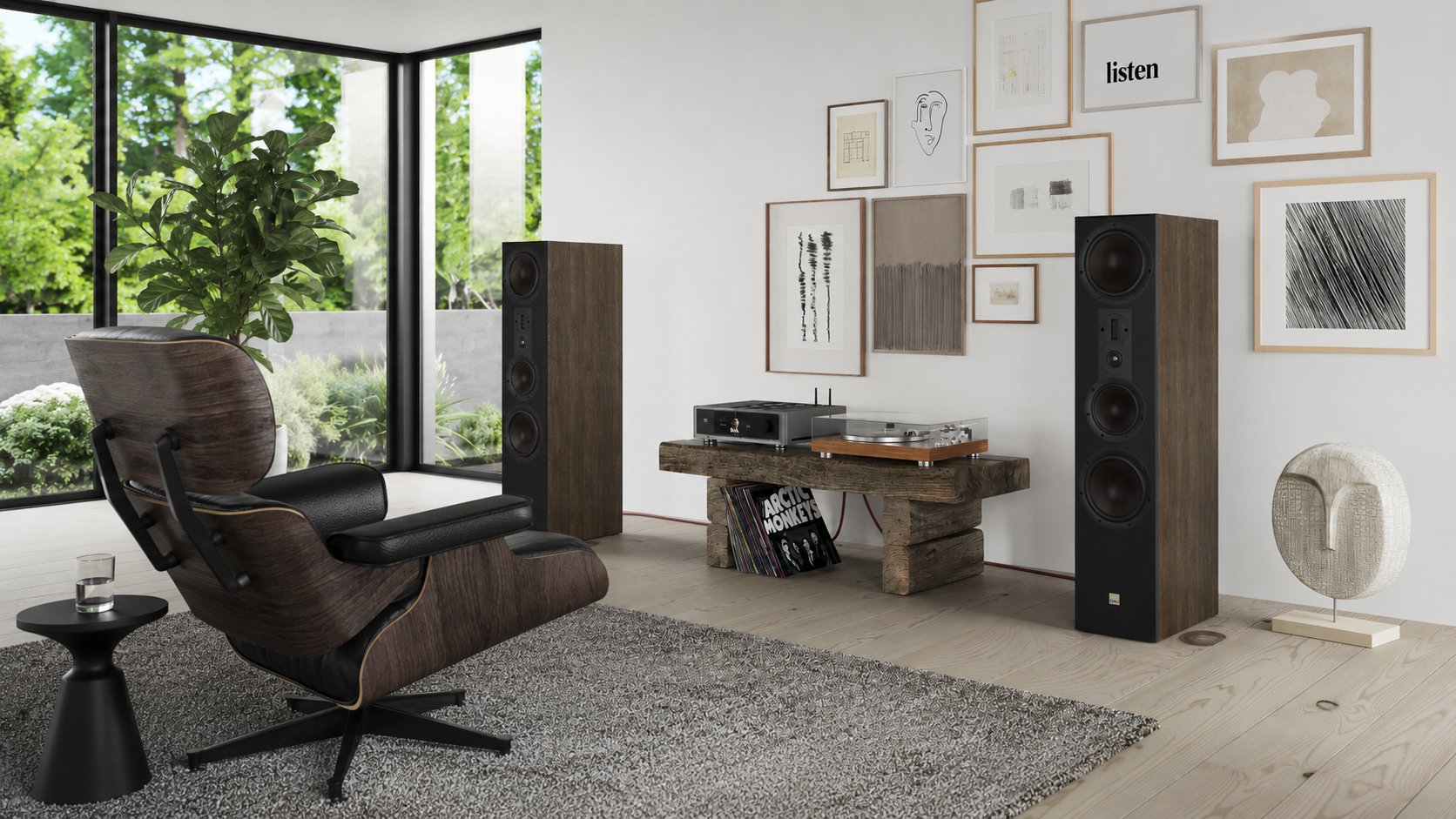
DALI Opticon 8 MK2 Review: Big Danish Bass That Needs Room to Breathe

There is a particular kind of buyer's regret that I've watched play out more than once with this speaker: someone falls for the spec sheet — two 8-inch woofers, a dedicated midrange, a ribbon tweeter reaching past 30kHz — drops them into a 12-by-14 study, and then wonders why the bass sounds like it's coming from the next room over and bouncing back. The DALI Opticon 8 MK2 is not a small-room speaker pretending to be a big one. It's a big-room speaker that happens to look tidy enough to talk its way into the wrong space.
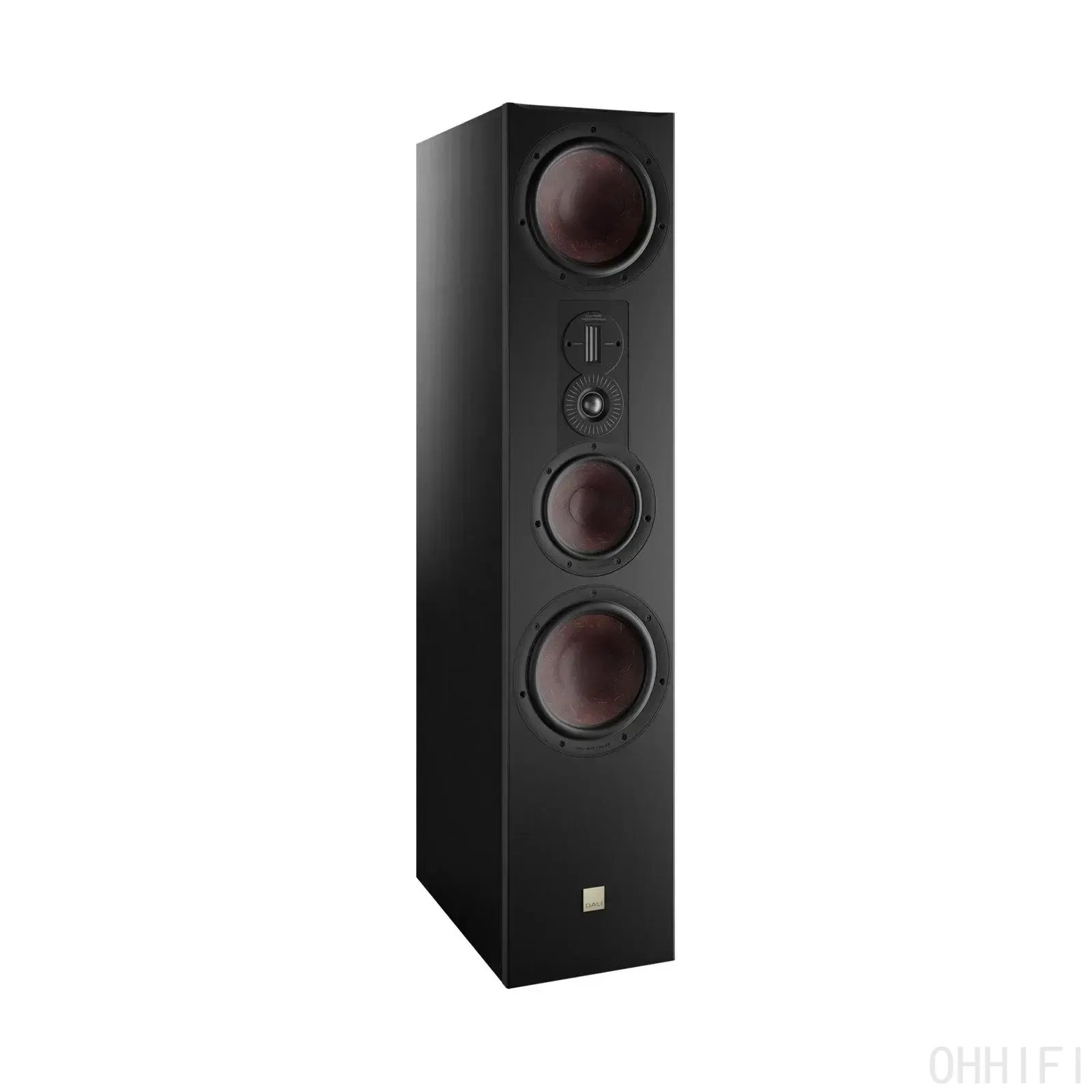
Get the room right, though, and this is one of the more quietly persuasive floorstanders DALI has built at this money. It's the flagship of the Opticon MK2 line, sitting below the Rubicon and Epicon ranges and well above the Oberon and Spektor stuff most people meet DALI through. At a launch MSRP of $3,999/pair — with street and current pricing now drifting up toward the $4,000–$5,000 mark depending on finish and dealer — it's swimming in the deepest, most crowded pool in hi-fi. So the question isn't whether it's good. It's whether it's good enough to make you walk past a KEF or a B&W on the way to the till.
Quick Specs
| Specification | DALI Opticon 8 MK2 |
|---|---|
| Type | 3½-way bass-reflex floorstander |
| Bass | 2 × 8" wood-fibre cone (SMC magnet motor) |
| Midrange | 1 × 6½" wood-fibre cone (sealed sub-enclosure) |
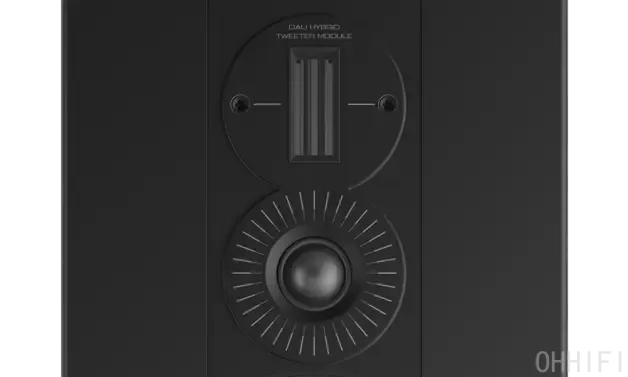
| Tweeter | Hybrid: 29mm soft-dome + 17×45mm ribbon |
| Frequency range | 38 Hz – 30 kHz (±3 dB) |
| Sensitivity | 88.5 dB (2.83V / 1m) |
| Nominal impedance | 4 ohms |
| Max SPL | 112 dB |
| Recommended power | 40 – 300 W |
| Crossover points | 380 / 2,200 / 14,000 Hz |
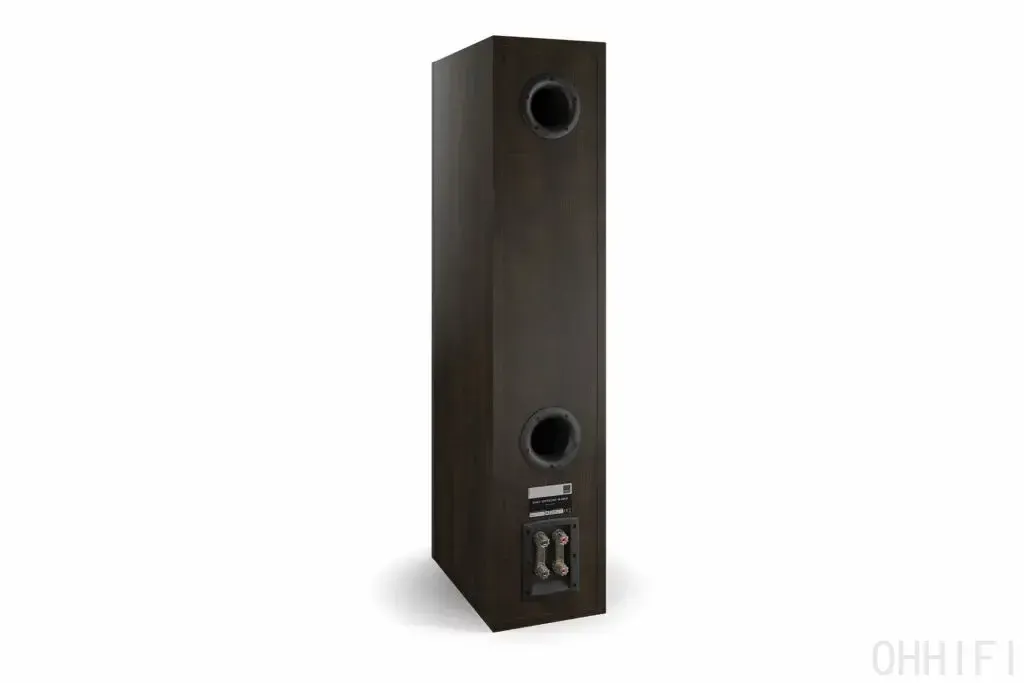
| Ports | 2 × rear-firing dual-flare reflex |
| Dimensions (H×W×D) | 1150 × 245 × 459 mm (45.25 × 9.5 × 18 in) |
| Weight | ~35.8 kg (79 lb) each |
| Finishes | Satin Black, Tobacco Oak |
| Price | $3,999/pair MSRP (street ~$4,000–$5,000) |
Design & Build: Honest Danish Engineering, Plain Danish Clothes
Let's get the looks out of the way, because they divide people. The Opticon 8 MK2 is a tall, square-shouldered box with a 25mm front baffle and serious internal bracing. At 79 pounds each, unboxing is genuinely a two-person job, and the cabinet feels every bit as inert as the weight suggests — knuckle-rap it and you get a dull thud, not a ring. That's the good news.
The less-good news, depending on your taste, is that DALI has never been a brand to chase visual drama, and this is a conservatively styled speaker. The two finishes — Satin Black and Tobacco Oak — are handsome in a furniture-grade way rather than a jewellery way. And then there are the cones. DALI's wood-fibre diaphragms have a speckled, marbled surface that's a byproduct of the paper-and-wood-pulp mix, and with the grilles off, more than one visitor has squinted at them and asked whether the drivers got scratched in shipping. They didn't. Every cone looks slightly different, like a snowflake. You either find that charming or you keep the grilles on.
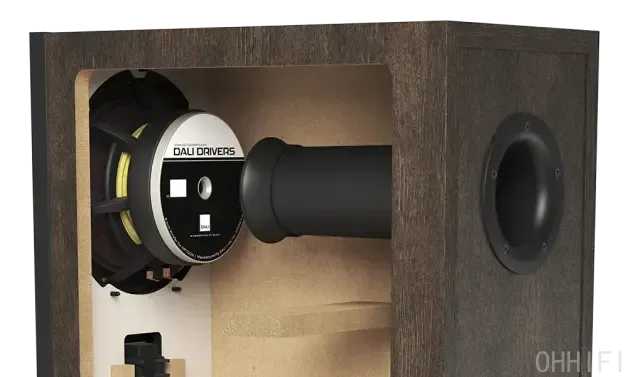
What matters more is the engineering underneath. The midrange driver lives in its own sealed sub-enclosure, walled off from the turbulence of the two 8-inch woofers — a genuinely meaningful design choice in a 3½-way, and one you don't always see at this price. The hybrid tweeter pairs a 29mm soft dome with a 17×45mm ribbon on a cast-aluminium faceplate, with the ribbon rolling in around 10–14kHz to extend the top octave and, more importantly, to hold horizontal dispersion wide where a conventional dome would be beaming. DALI's SMC magnet system — soft magnetic composite in the motor — is the company's long-running answer to reducing the distortion that hysteresis and eddy currents introduce, particularly through the midrange.
Two practical setup notes that will make or break your experience. First: DALI ships these with a quick-start guide that recommends zero toe-in, firing straight ahead, and that advice is not a suggestion. The speaker's character changes dramatically with toe-in — far more than most floorstanders I've set up — and the designers clearly voiced it to be listened to off-axis, which is the whole point of that wide-dispersion tweeter. Second: those are rear ports, two of them, one behind each woofer. Jam these against a wall and the bass goes from generous to boomy in a hurry. Give them room.
The Listening Experience
Bass: The Headline, For Better and For Worse
This is where the Opticon 8 MK2 earns its keep and where it can get itself into trouble. With two 8-inch wood-fibre woofers in a big cabinet tuned down to a claimed 38Hz, there is a lot of low end on tap, and in the right room it's a joy — full, weighty, and surprisingly agile for the quantity on offer.
Cue up Bonobo's "Kerala" and the layered sub-bass doesn't just thump, it has texture and decay you can follow. Hans Zimmer's "Time" is the cliché bass-test track for a reason, and the Opticon 8 reproduces those slow, building low-end swells with proper authority rather than one-note woolliness. Daft Punk's "Contact" — that final escalating wall of synth and percussion — is the kind of thing these speakers were built to throw at a big room. The bass digs deep, hits with weight, and crucially gets out of the way when the music has no low end in it; it doesn't smear a vocal track with phantom warmth.
But — and this is the consistent thread across every serious listen I've cross-referenced — this bass needs space to breathe. In a small or moderately damped room it overwhelms, and the smaller Opticon 6 MK2 is genuinely the smarter buy under those conditions. The 8 is a speaker for 220-plus square feet, ideally more. Buy it for a box room and you'll spend your first month fighting room modes with foam and frustration.

Midrange: Composed, Natural, Slightly Reserved
That sealed midrange enclosure pays off. Vocals come through with a natural, uncoloured ease — not the syrupy warmth some people expect from "wood-fibre" cones, but a clean, believable presentation that doesn't editorialize. Norah Jones' "Come Away With Me" sits in the room with the right amount of breath and body, no chestiness, no nasal honk. Acoustic guitar on something like Paul Simon's "The Boxer" has bite and string texture without being shoved forward at you.
If I have a reservation, it's that the midrange is composed to the point of being slightly polite. This is not a speaker that grabs you by the collar in the way a forward, presence-lifted design does. It plays the long game — easy to listen to for hours, never fatiguing, but it asks you to lean in rather than lunging out at you. Whether that's a feature or a flaw depends entirely on your temperament and your records.
Treble: The Hybrid Tweeter Does Its Job Quietly
The hybrid tweeter is the cleverest part of this speaker and, paradoxically, the part you notice least — which is exactly how good treble should behave. Cymbals shimmer and decay naturally, strings have air without edge, and the top end stays smooth and unflustered even when you move well off the listening axis. That wide, even dispersion is the real win here: this is a speaker that sounds tonally consistent across a sofa, not just in the one sweet-spot chair.
Put on a well-recorded large-scale orchestral piece — the brass and percussion crescendos of Stravinsky's The Rite of Spring — and the top end holds together under pressure without ever turning brittle or splashy. It's a forgiving treble in the best sense: it'll flatter a mediocre recording rather than expose every flaw, which some detail-chasers will read as a slight softening of the very top. I'd call it civilised.
Soundstage & Scale: Where the Size Pays Off
Driven properly and set up straight-ahead in a room that can hold them, these throw a big, room-filling stage. Width is excellent — a direct consequence of that dispersion-controlled tweeter — and there's a real sense of scale to large-scale material that smaller floorstanders simply can't conjure. The opening of Mahler's Symphony No. 2 builds with the kind of physical heft and spatial spread that reminds you why people put up with 79-pound boxes in the first place.
Imaging is good rather than holographic. You won't get the pinpoint, disappear-into-the-room precision of a coaxial design here; what you get instead is scale, body, and a generous, enveloping presentation. It trades surgical specificity for grown-up authority, and most of the time, with most music, that's a trade I'm happy to make.
Test Setup
I ran these through my usual loudspeaker chain — a mid-fi solid-state integrated amp with enough current to actually grip a 4-ohm load — in a treated listening space large enough to let the rear ports work. Sources were a mix of high-res streaming and lossless files. Speakers were positioned well clear of the front wall, fired straight ahead per DALI's own guidance, on the supplied spikes into the floor. I want to flag the amp point specifically: that 88.5dB sensitivity figure looks easy on paper, but the 4-ohm nominal impedance means these reward genuine current delivery, and they scale audibly with better amplification rather than sitting on a budget receiver and shrugging.
Measured Performance
I'll be straight with you: there is no rigorous independent anechoic dataset — no ASR Klippel spin, no Erin's Audio Corner suite — publicly available for the Opticon 8 MK2 that I'd stake a verdict on, so I'm not going to invent numbers to fill the gap.
What we do have are DALI's published figures, and they tell a coherent story. Sensitivity is quoted at 88.5dB (2.83V/1m), nominal impedance at 4 ohms, frequency range 38Hz–30kHz (±3dB), and max SPL at 112dB. Read together, that's the profile of a speaker that wants a real amplifier and a real room: the 4-ohm load and the deep, port-assisted bass extension are both demands, not gifts. The crossover is unusually busy for the class — three low-pass and three high-pass networks across the 380/2,200/14,000Hz handover points, roughly twice the parts count of a typical 2½-way — which is a lot of components in the signal path, but also explains the cohesion you hear across the driver array. If a credible independent measurement set surfaces, I'll revisit this section.
The Competition
| Rival | How It Compares | Verdict |
|---|---|---|
| KEF R7 Meta (~$3,500/pair) | The coherence-and-imaging specialist. Its Uni-Q array with MAT damping conjures a more precise, pinpoint stereo image than the DALI, with a tighter, more neutral overall balance. The DALI counters with more low-end weight and a bigger sense of scale. | Buy the KEF for imaging and a smaller room; buy the DALI for bass authority and a big one. |
| Bowers & Wilkins 703 S3 (~$5,000/pair) | The premium-finish, detail-forward alternative. The Continuum midrange and decoupled tweeter give it a crisper, more incisive top end and a more luxurious cosmetic finish. It costs more and digs less deep — quoted from 46Hz versus the DALI's 38Hz. | Pick the B&W if you crave detail and don't need the bottom octave; the DALI is the better value bass machine. |
| Focal Vestia No.3 (~$4,000/pair) | The energetic, dynamic French option, with three woofers and Focal's characteristically lively, fast presentation. More overtly exciting and forward; the DALI is the calmer, more forgiving long-session listen. | Vestia for slam and energy with bright recordings; Opticon 8 for an easygoing speaker that won't tire you out. |
I've spent enough time across these price-rivals to say the choice here is genuinely about temperament, not tiers. None of them is embarrassed by the others. The DALI's distinct pitch is depth and ease in a big room — that's its lane, and it owns it.
The Verdict: 8.5/10
The Opticon 8 MK2 is a properly accomplished floorstander that does its best work when you respect what it is: a big, room-filling speaker with deep, weighty, well-controlled bass, a smooth and non-fatiguing top end, and a natural if slightly reserved midrange. It performs above its price with a capable amplifier behind it, and it'll keep you company for long evenings without ever wearing out its welcome.
It loses half a point to two things: it genuinely needs a large room and a careful setup to deliver, and the conservative looks plus the marbled cones won't be for everyone. Get those conditions right and it's a confident recommendation. Get them wrong and you've bought the wrong DALI.
Pros
- Deep, weighty, surprisingly agile bass that scales with the room
- Smooth, wide-dispersion treble from the hybrid tweeter — consistent across seats
- Natural, fatigue-free midrange from the dedicated sealed driver
- Genuinely inert, well-braced 79-pound cabinet
- Punches above its price with a capable amp
Cons
- Needs a large room — overwhelms small spaces (look at the Opticon 6 MK2 instead)
- Setup-sensitive: zero toe-in and breathing room from the wall are mandatory, not optional
- Conservative styling and speckled cones won't appeal to everyone
- 4-ohm load wants real amplifier current, not a budget receiver
- Midrange is composed to the point of being slightly polite for excitement-seekers
Who Should Buy / Who Should Skip
This is for you if you have a medium-to-large room, an amp with some current behind it, and you want grown-up scale and deep, controlled bass that you can listen to all night without fatigue. It's a superb match for someone who values authority and ease over surgical detail and forwardness.
Look elsewhere if your room is small (the Opticon 6 MK2 is the smarter and cheaper call), you chase pinpoint holographic imaging above all (the KEF R7 Meta is your speaker), or you want a speaker that excites and energizes rather than soothes.


Comments