
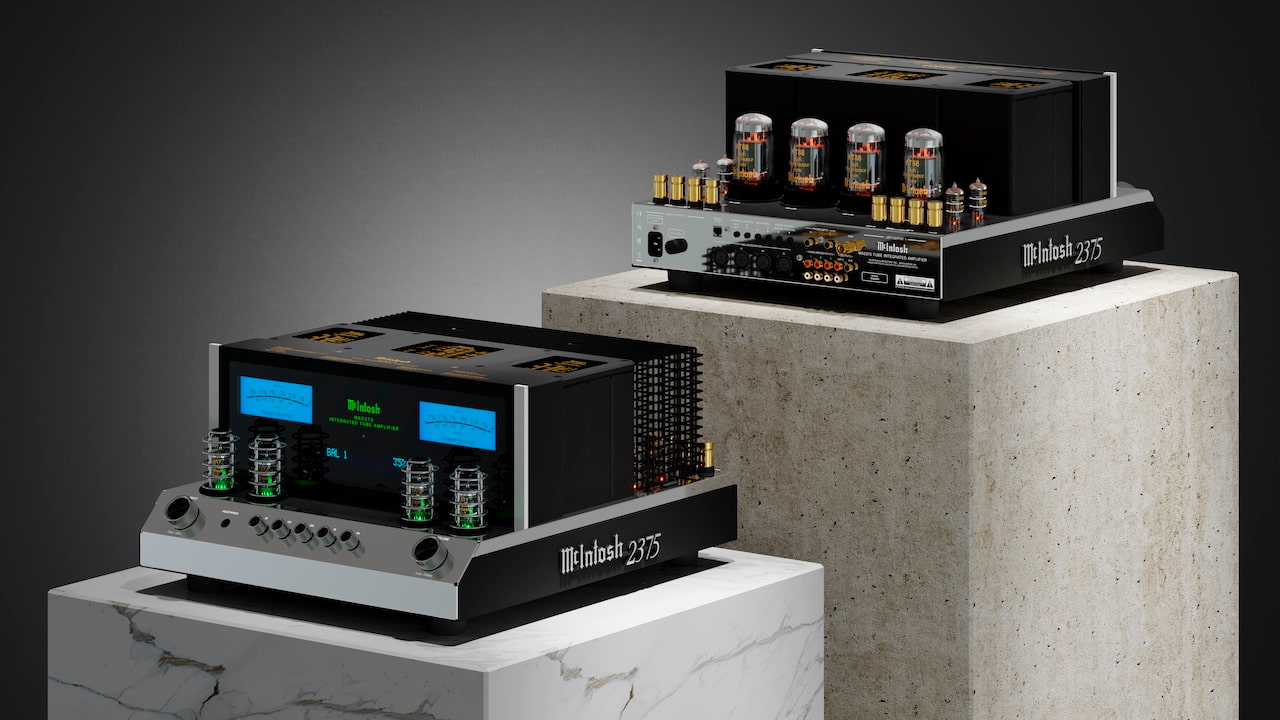
McIntosh MA2375: A $15,000 All-Tube Integrated With No Digital and No Apologies

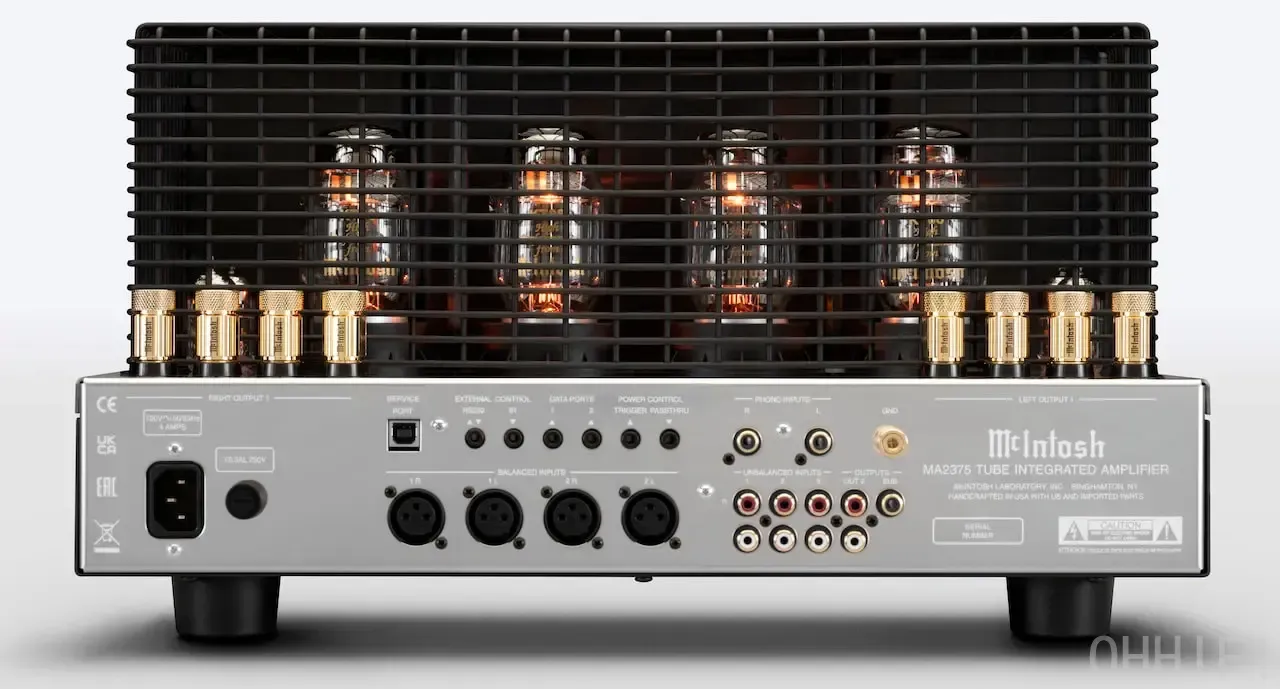
There's a particular kind of product that walks into 2026 acting like the last fifteen years of streaming, room correction and Bluetooth never happened. The McIntosh MA2375 is that product, and it does it on purpose. Priced at $15,000 and available now through authorized McIntosh dealers, the MA2375 is the company's first all-tube integrated amplifier in over a decade — and the first new one built under Bose ownership. It is also, pointedly, an amplifier with no DAC, no network streaming, no Bluetooth, no HDMI eARC and no room correction. Twelve glowing tubes, two blue meters, and a phono stage. That's the pitch.
What You're Actually Buying
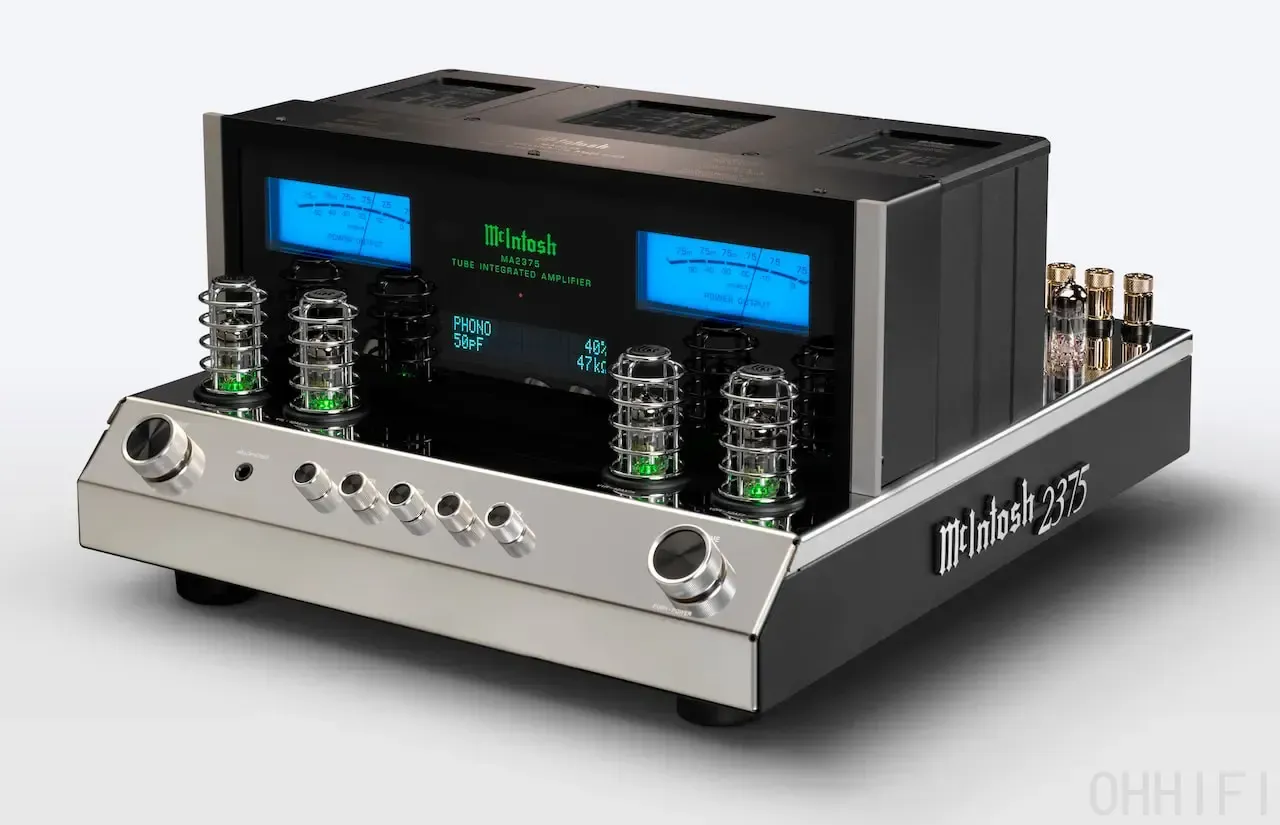
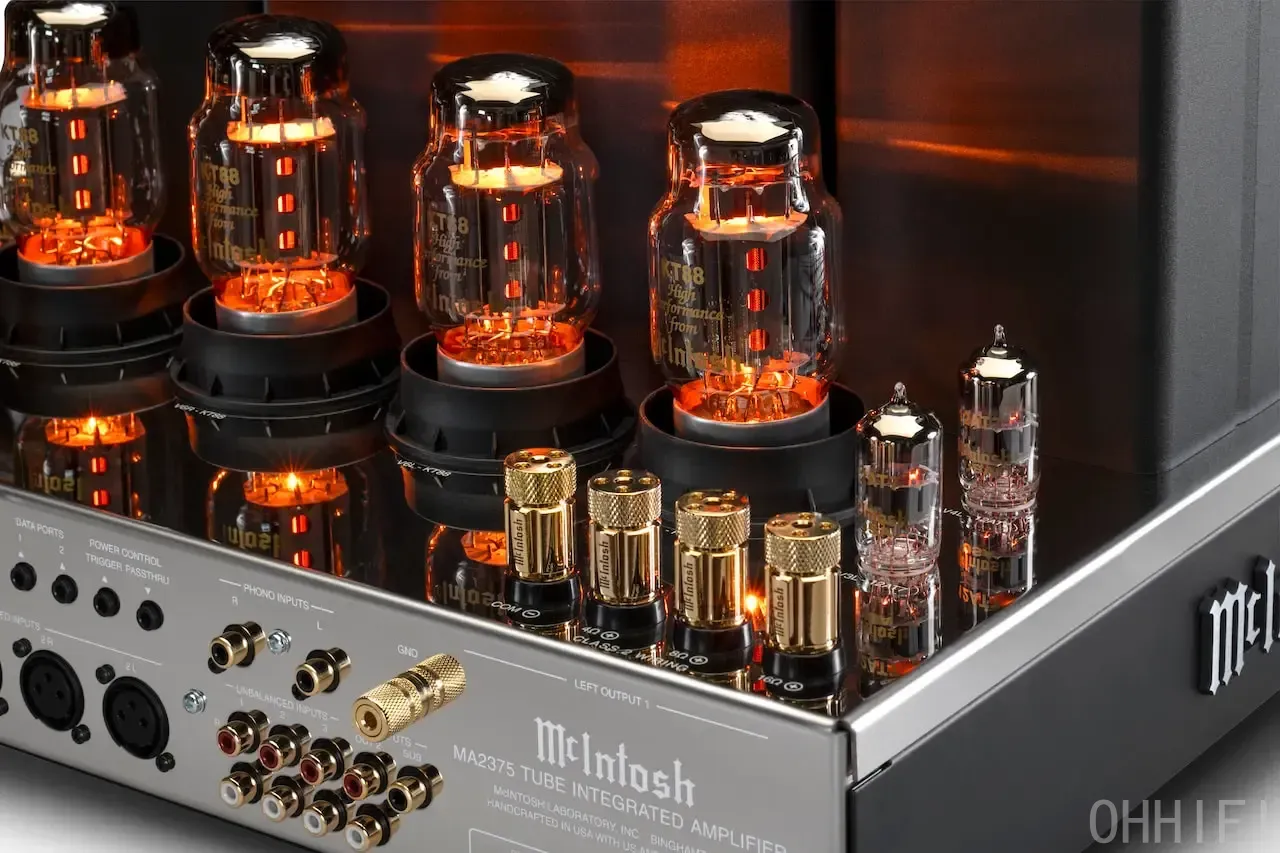
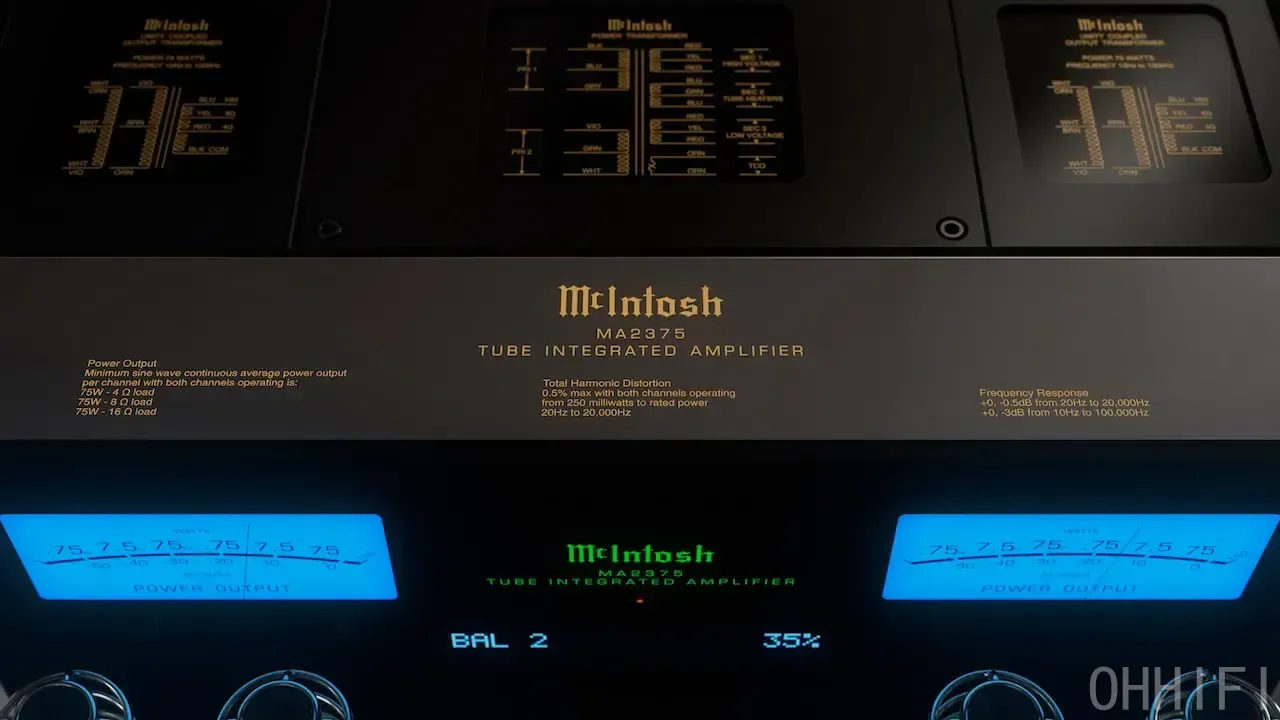
Under the tube cage, the MA2375 runs a fully analog signal path from input to speaker terminals. The power section uses four KT88 output tubes and four 12AT7 drivers to deliver 75 watts per channel, with the preamplifier handled by two 12AX7A and two more 12AT7 tubes — twelve bottles in total. The clever bit, as always with McIntosh, is the Unity Coupled Circuit Output Transformer, which lets the amp put out its full rated 75 watts into 4-, 8- or 16-ohm loads. Most tube amps make you pick a tap and lose power along the way; McIntosh's transformer design sidesteps that, which is a real engineering advantage and not just spec-sheet decoration.
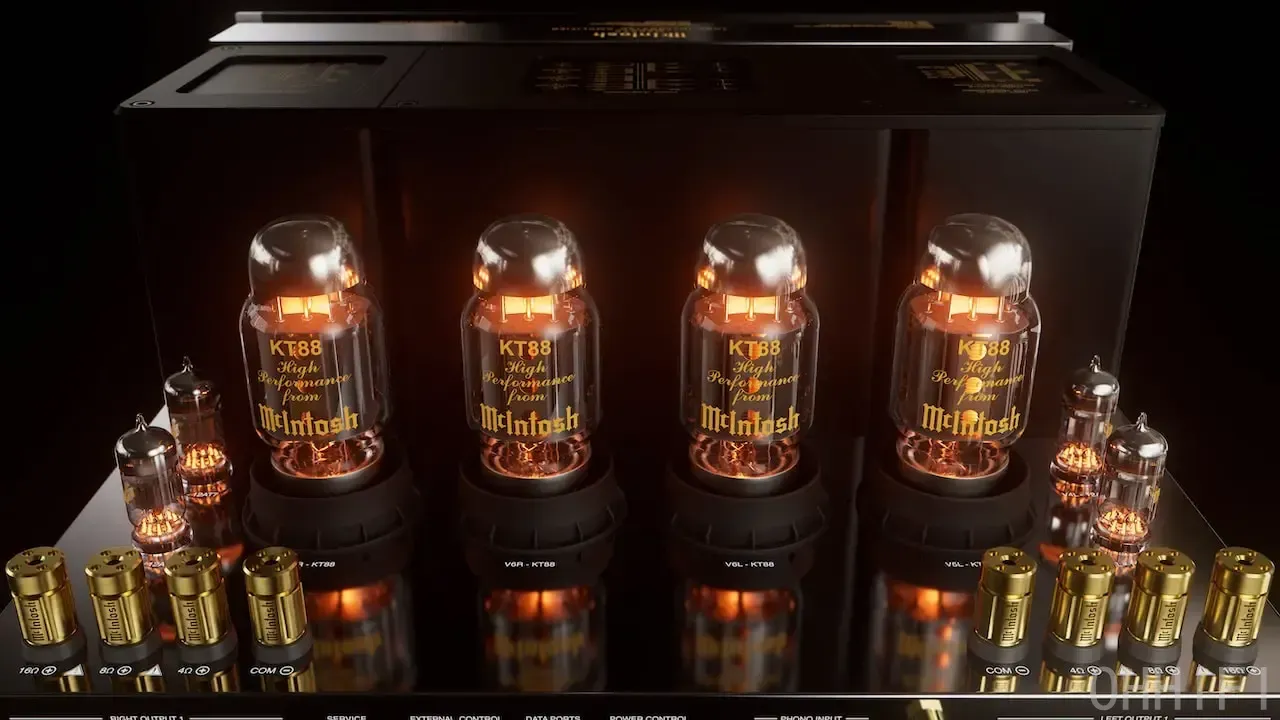
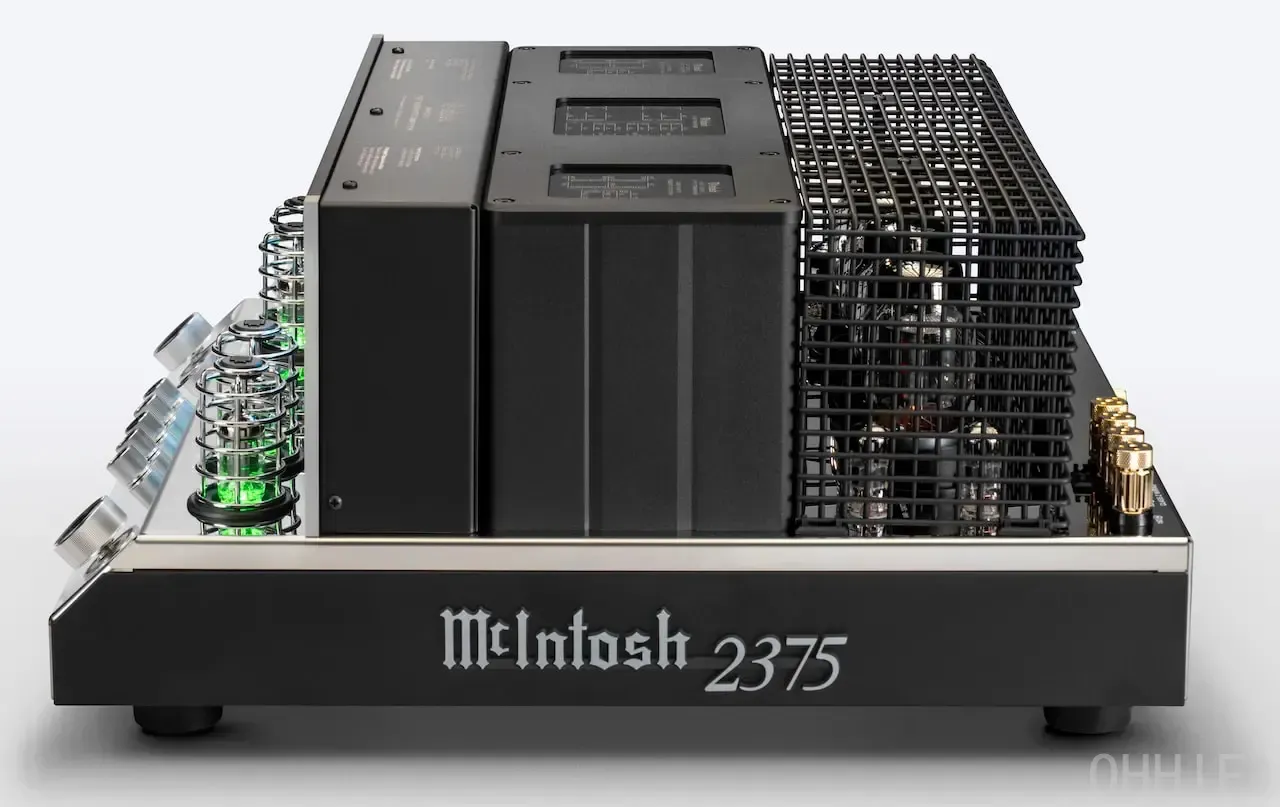
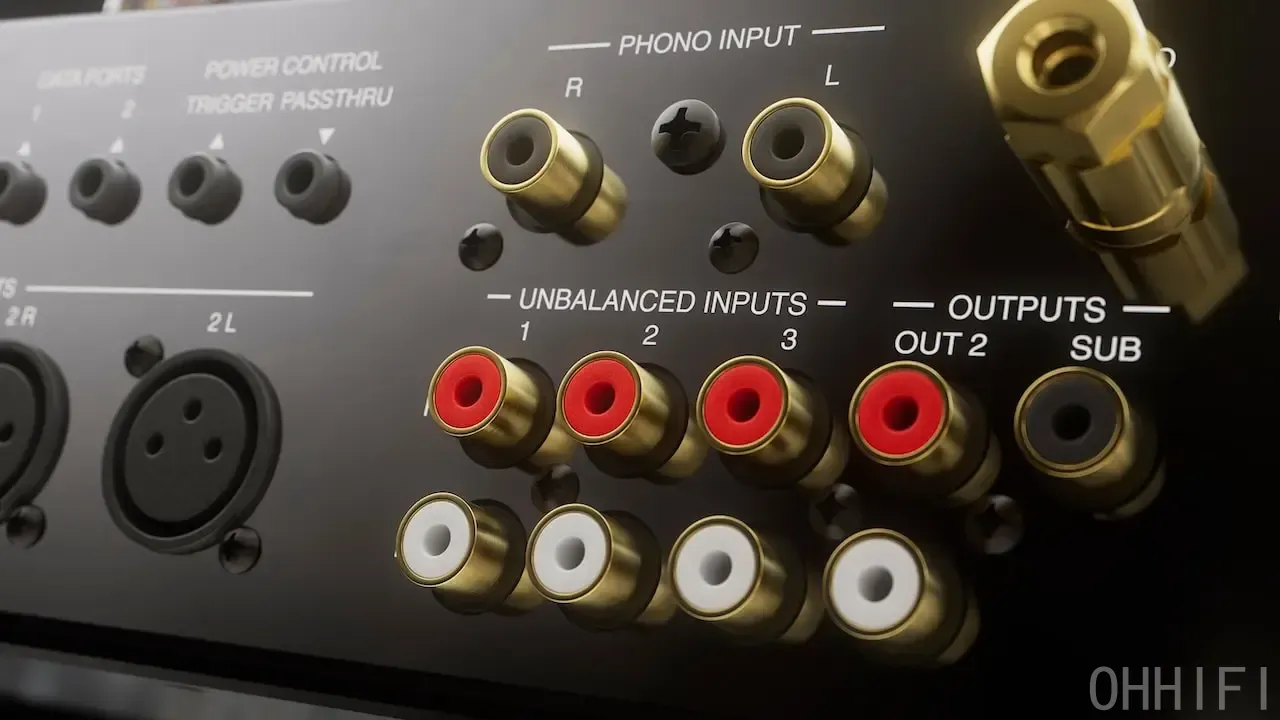
The rest of the feature set is built for people who take analog seriously. There's a configurable MM/MC phono input, balanced and unbalanced line inputs, a subwoofer output, a 5-band analog equalizer with tone bypass, and a tubed High Drive headphone amp with McIntosh's HXD crossfeed for private listening. Tube minders get Power Guard SGS and the fuse-less Sentry Monitor protection looking after the KT88s. Everything sits in a polished stainless-steel chassis that weighs 93 pounds. This is not a thing you nudge around the rack casually.
| McIntosh MA2375 | Spec |
|---|---|
| Type | All-tube integrated amplifier |
| Price | $15,000 (US) |
| Power | 75 W/ch into 4, 8, or 16 ohms |
| Output tubes | 4 × KT88 (+ 4 × 12AT7 drivers) |
| Preamp tubes | 2 × 12AX7A, 2 × 12AT7 |
| Output stage | Unity Coupled Circuit transformer |
| THD | 0.5% max, 20Hz–20kHz (McIntosh spec) |
| S/N ratio | 95 dB high-level / 75 dB phono (McIntosh spec) |
| Damping factor | >22 (McIntosh spec) |
| Phono | MM/MC configurable |
| Headphone | Tubed High Drive + HXD crossfeed |
| Digital | None — by design |
| Weight | 93 lb (42.2 kg) |
Context: Tubes, Binghamton, and the Bose Question
You can't talk about this amp without talking about who owns McIntosh now. Bose acquired the McIntosh Group — McIntosh and Sonus faber both — back in November 2024, and the audiophile world reacted the way audiophiles always do, which is to assume the worst. The fear was simple: would the Binghamton plant keep making serious, unapologetic American tube gear, or would the blue meters slowly get replaced by conference-room voice assistants?
The MA2375 reads, fairly clearly, as McIntosh answering that question. Tube amplification has been part of the brand's identity since the legendary MC275 power amp, and an all-tube integrated that refuses to so much as acknowledge digital is about as loud a statement of intent as the company could make. The lights in Binghamton are still on, the family crest is still on the chassis, and nobody's bolted a streaming module to the back panel.
How It Stacks Up: The MA2275 and the Field
Long-time McIntosh watchers will recognize the formula here, because we've seen it once before. The MA2275 — built around 2007, sold mostly into the Asian market, and a genuine rarity on the used scene today — was McIntosh's only previous all-tube integrated. Same 75-watt rating, same quartet of KT88s, same MC275 DNA. It launched at roughly $7,500. The MA2375 essentially revives that idea at double the price, while adding MM/MC phono (the old one was moving-magnet only), balanced inputs, the HXD headphone stage, the 5-band EQ and modern protection circuits. The bones are familiar; the price is not.
At $15,000, the MA2375 isn't really competing with value tube amps. Here's the field it's walking into:
| Rival | How it stacks up | Verdict |
|---|---|---|
| PrimaLuna EVO 400 (~$5,000) | KT88-capable, point-to-point wired, adaptive auto-bias, a headphone amp reviewers rave about, and it'll roll almost any tube you throw at it | The value benchmark — most of the tube experience for a third of the money |
| Audio Research (I/50 / VSi75 lineage) | The other great American tube house; a leaner, less-euphonic voicing, but ARC has weathered its own ownership turbulence in recent years | Pick ARC for a more neutral tube sound; McIntosh for the warm house voice and Bose's deep pockets behind support |
| Octave (German tube integrateds) | Superb engineering and protection, a more controlled, modern presentation, and pricing that creeps toward McIntosh territory | For buyers who want tube musicality with Germanic precision over warmth |
| Pass Labs INT-60 (~$9,000) | Solid-state Class A, far more grip and damping, no tube maintenance, runs cooler | The "what else could this money buy" alternative for people who want richness without bottles |
My Take
I've had McIntosh tube gear pass through the listening room over the years, and the MC275 lineage is written all over this thing — so I have a reasonable idea of what to expect from the house voice even before anyone fires one up.
On paper, this looks promising for one specific reason: the Unity Coupled transformer is the part that has always let McIntosh tube amps drive real-world speakers without the usual valve-amp drama, and pairing that with a KT88 output stage and a built-in tubed phono is a coherent, focused product. There's no hedging here. It does one thing.
What concerns me is the math and the matching. Fifteen thousand dollars buys 75 watts, and the published damping factor is greater than 22 — healthy by tube standards, but still a fraction of what a muscular solid-state amp puts out. Translation: speaker pairing will make or break this amp, and it is not the thing to bolt onto a brutal low-impedance load and expect bench-press control. The all-analog purity is defensible — digital front ends age badly, and McIntosh is betting you've already sorted yours — but at this price, some buyers will balk at getting zero digital flexibility. The flip side, and it's a real one: with Bose's resources behind it, parts and service longevity look more secure than they have for some rivals.
Who Should Watch This
This is for you if your digital front end is already handled, you listen to a lot of vinyl, you run reasonably sensitive speakers, and you want one beautiful all-analog box that'll likely outlive your turntable. It's also for the McIntosh faithful who've wanted a true all-tube integrated to come back, and waited out the Bose acquisition to see what would happen.
Look elsewhere if you need streaming or a DAC built in, if you're driving hard 2-ohm loads or low-sensitivity towers, or if you measure value strictly in watts-per-dollar. For that crowd, the PrimaLuna and Pass Labs alternatives above will make a lot more financial sense — and neither will make your room glow blue at 2 a.m.





Comments