
Klipsch Rebellion: Heritage Finally Gets a Proper Bookshelf at $2,599

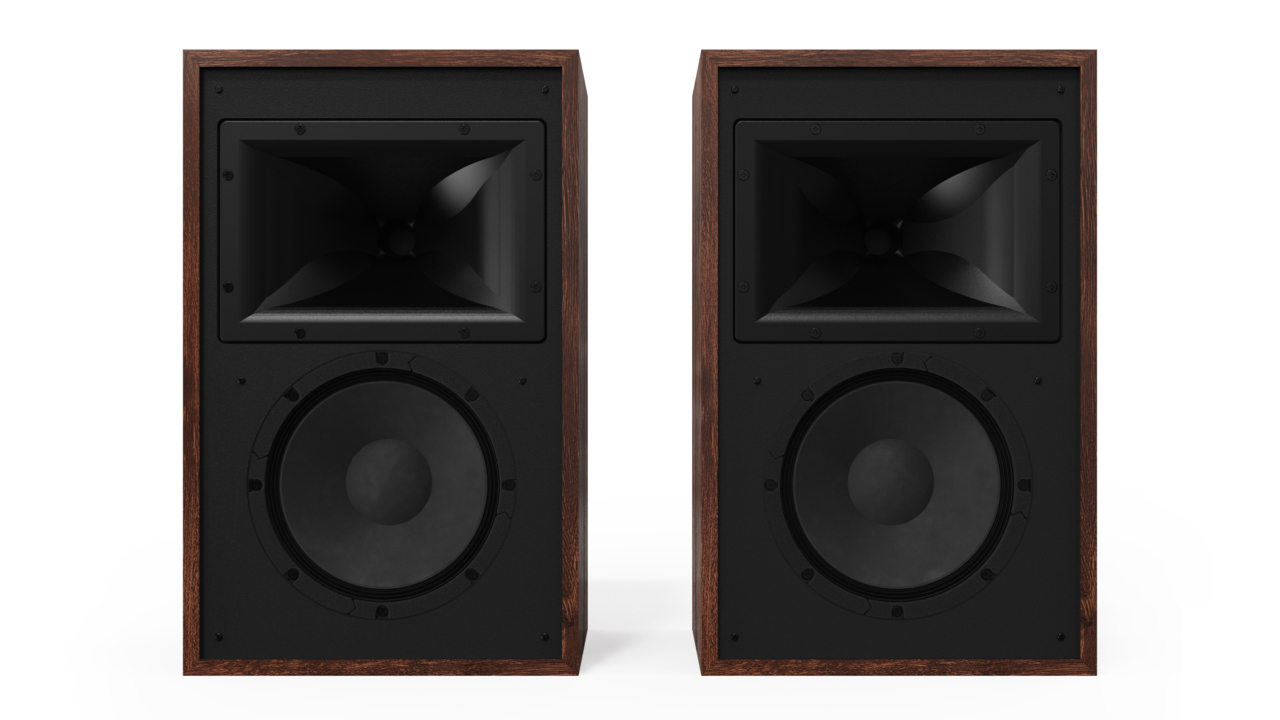
Klipsch has done something at High End Vienna 2026 that it managed to avoid for nearly seventy years: it built a genuine compact standmount and stamped a Heritage badge on the back. The Klipsch Rebellion is a two-way, horn-loaded bookshelf speaker priced at $2,599 per pair, hand-built in Hope, Arkansas, and shipping in July 2026 (Europe waits until Fall 2026, at a steeper $2,999 equivalent). The hook here isn't the small box — plenty of brands make those. It's the bloodline. Klipsch says the Rebellion descends from Paul W. Klipsch's 1958 H8, a one-off curiosity of which only sixteen were ever built.
That's a good story. Whether it's a good speaker is a question nobody can answer yet, because Klipsch showed up to Vienna with the cabinet, the lineage, and a price — and almost none of the numbers that actually tell you what you're buying.
What's Actually New Here
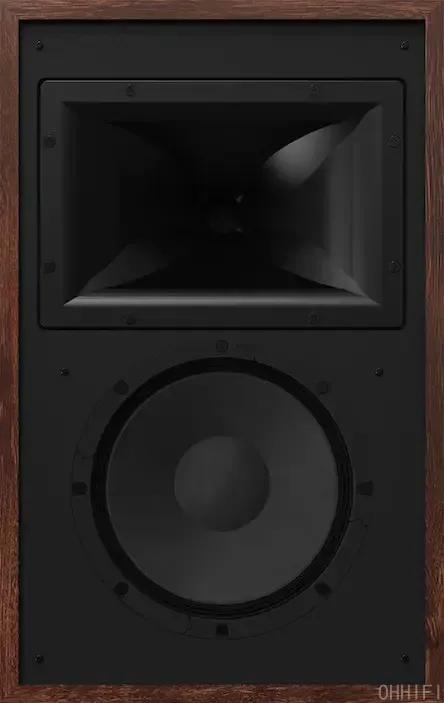
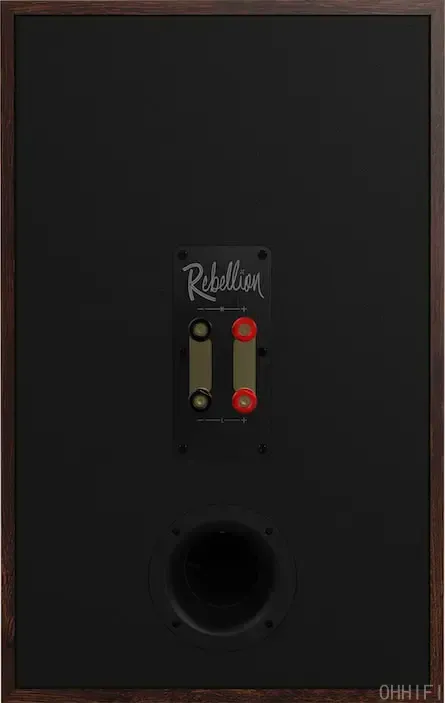
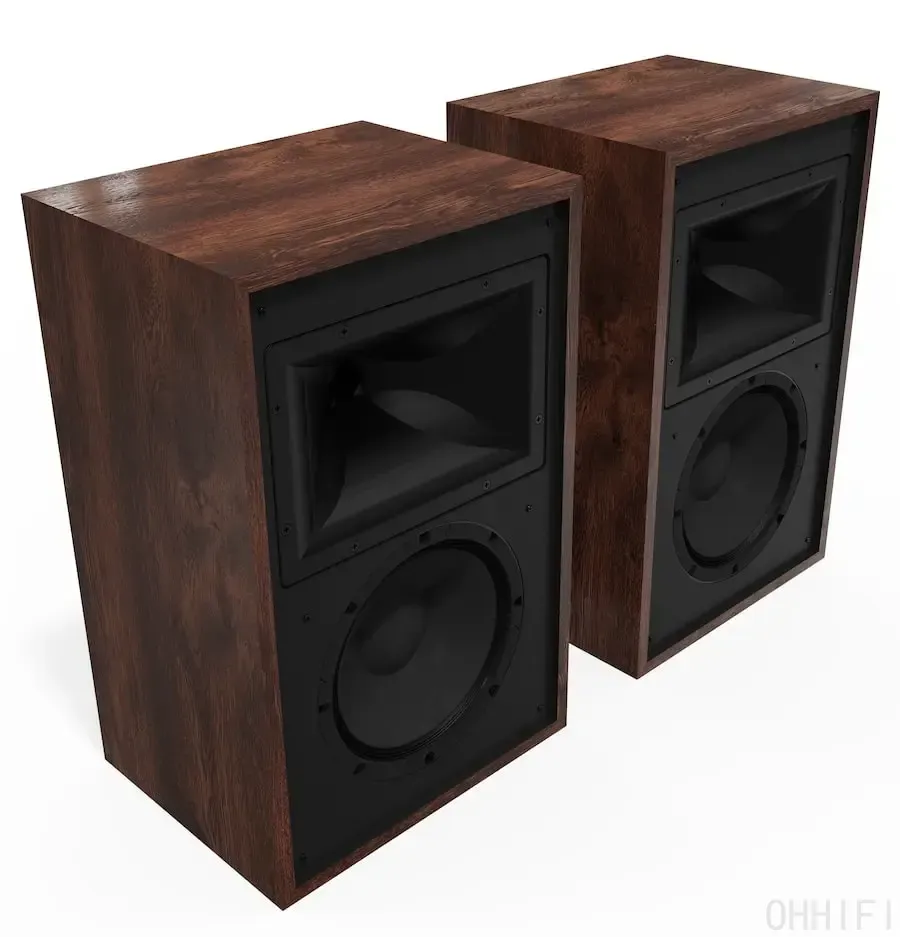
The Rebellion is a two-way design built around the K-81-EP tweeter mounted to a K-703 Tractrix horn, carrying Klipsch's patented Mumps tech, which is meant to widen high-frequency dispersion while holding distortion in check. Bass comes from a new K-702 driver vented through a rear Tractrix flare port — the same airflow-shaping trick Klipsch has used across the Heritage line to cut port chuffing and tidy up the low end.
One small thing the Klipsch faithful will clock: Klipsch calls the bass unit a K-702, which is the exact code it hangs on the midrange compression driver in the Heresy IV. That tells you these are internal part numbers, not a window into what's physically in the box — so don't read too much into the badge.
Here's what's missing, and it matters at this price: sensitivity, impedance, frequency response, crossover point, cabinet dimensions, weight. Klipsch has published none of it. For a brand whose entire identity is high efficiency, the sensitivity figure being absent is a strange omission. You're being asked to pre-order a $2,599 idea.
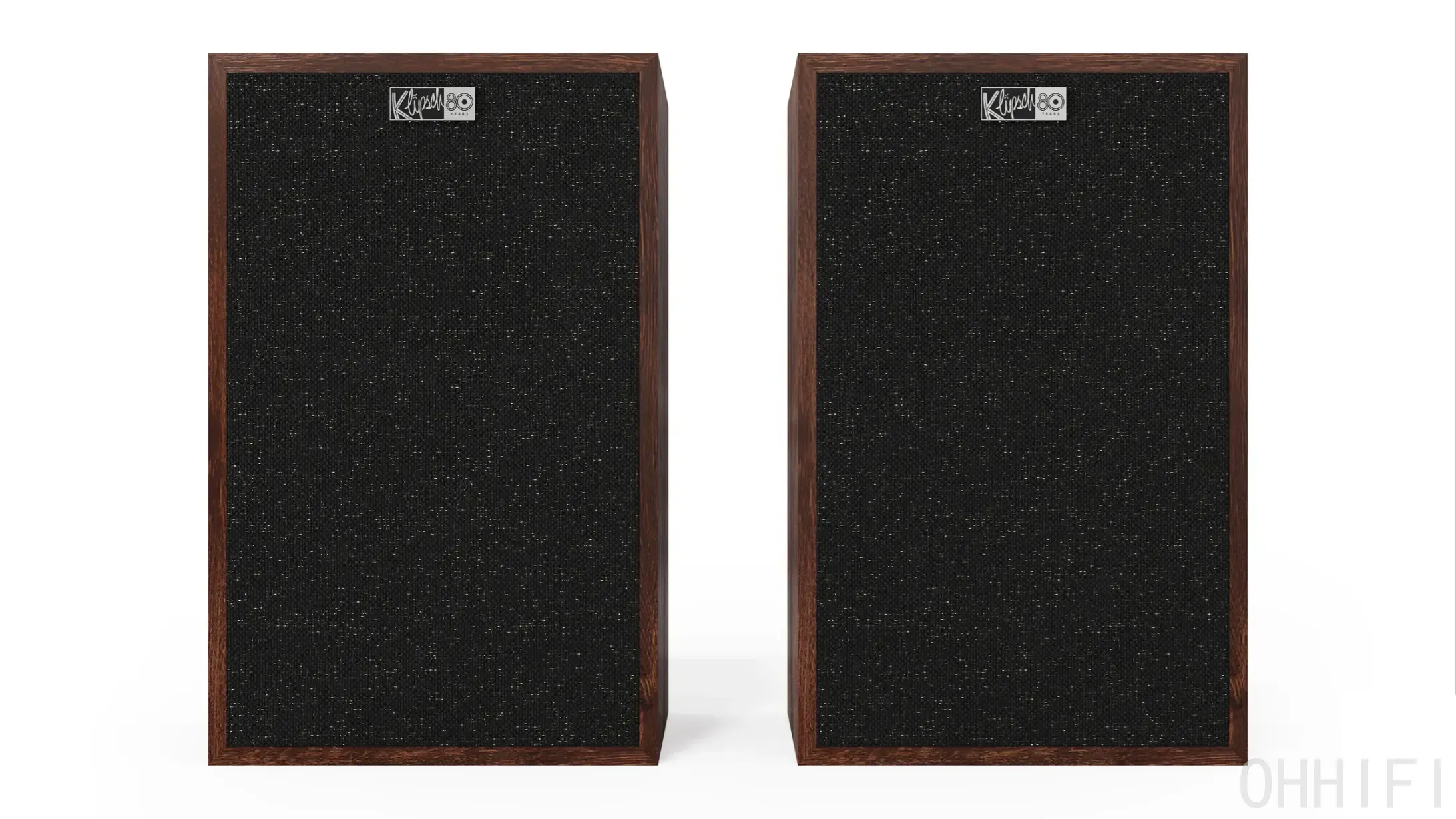
On the parts that are confirmed, Klipsch is on firmer ground. The cabinet uses grain-matched real wood veneer, so each pair carries its own natural variation. Standard finishes are American Walnut, American Auburn, Black Ash, and Red Oak, with a limited Tigerwood option marking the company's 80th anniversary. It rides Klipsch's KS-24 stands and is pitched for both two-channel and Heritage-based home theater. And it's built in Hope, Arkansas, like every other Heritage speaker — which is a genuine selling point in a category increasingly assembled overseas.
 |  |
Where It Fits in the Klipsch Story
Context matters here, because Klipsch is leaning hard on it. The company turns 80 in 2026, and Vienna is one long birthday party: a limited-edition Klipschorn, the Onkyo-powered Fives II / Sevens II / Nines II, the Atlas headphones, and the OJAS collaboration are all sharing the booth.
The Rebellion's real significance is structural. The Heritage line has never had a true bookshelf. People point to the Heresy as the "compact" one, but a 24-inch-tall box with a 12-inch woofer riding a slant riser is not a standmount in any honest sense — it's a small floorstander that happens to be short. A genuine two-way standmount wearing the Heritage name is new ground, and Heritage owners have been asking for exactly this for years. Klipsch's product team has openly said as much.
How It Stacks Up Against the Field
This is the part that should give buyers pause. At $2,599, the Rebellion isn't landing in some uncontested gap — it's walking into one of the most ruthless price brackets in hi-fi, against rivals with full spec sheets and years of measured data behind them.
| Rival | How It Compares | Verdict |
|---|---|---|
| Klipsch Heresy IV (~$3,200/pair) | The in-house sibling. Three-way horn-loaded, 99dB sensitivity, 12-inch woofer, bigger scale and effortless dynamics. The Rebellion is smaller and cheaper, but the Heresy is the known quantity. | If you have the space and $600 more, the Heresy is the safer Heritage bet today. |
| B&W 705 S3 (~$3,800/pair, stands extra) | The refined two-way standmount benchmark — carbon dome tweeter, Continuum woofer, wall-to-wall imaging and a polished top end. Pricier, and a totally different sonic philosophy. | The choice for soundstage and finesse over horn-loaded slam. |
| KEF R3 Meta (~$2,200/pair) | The spec-sheet value killer. Three-way Uni-Q coaxial with MAT, even response, point-source imaging, and a stack of published measurements. Costs less than the Rebellion. | The rational head-says-yes pick at the price. |
| JBL 4309 (~$2,000/pair) | The closest thing to a direct rival: retro-styled, horn-loaded two-way with a compression tweeter and real wood veneer. 87dB sensitivity, 4 ohms. ASR's measurements flagged a response bump near 1kHz, but it's the obvious "vintage horn looks, modern guts" alternative — and it's $600 cheaper. | The Rebellion's most direct competition, and the one Klipsch has to beat on sound, not story. |
My Take
On paper, the Rebellion is the most interesting Klipsch announcement of the year — and the hardest to actually evaluate. The good news is real: hand-built American cabinets, grain-matched veneers, the horn-loaded dynamics that make a small Klipsch punch like a bigger speaker, and a backstory that, for once, isn't invented by a marketing department. Klipsch's own bulletins admit the original H8's specs are hard to verify, which is at least refreshingly honest.
What concerns me is everything that wasn't said. I've spent enough time around horn-loaded Klipsch to know that a compact two-way crossing a small woofer to a horn tweeter is an integration tightrope — get the crossover and the off-axis behavior right and it sings; get it wrong and you get a forward, shouty midrange and a presence-region glare. Without a sensitivity figure, an impedance curve, or a single frequency response graph, nobody can say which way this one falls. And the price isn't doing it any favors: $2,599 brushes up against the Heresy IV and undercuts the 705 S3 only slightly, while sitting above the better-documented KEF R3 Meta and the JBL 4309 it most resembles. The European $2,999 equivalent stings harder still.
This is paper analysis, nothing more. The Rebellion could be a small triumph or a finish-first, sound-second anniversary piece — and the only thing that settles it is a listening session with measurements to back it up. Until then, the smart money keeps its wallet closed and its ears open.
Who Should Watch This
This is for you if you're already deep in the Klipsch Heritage world, you love horn dynamics in a small room, and a hand-built American cabinet with real wood veneer is worth a premium to you. Put it on your radar.
Look elsewhere, at least for now, if you buy on data. If you want a spec sheet, a measured response, and a track record before $2,599 leaves your account, wait for the review units to land — or take a hard look at the KEF R3 Meta and JBL 4309, which give you most of the budget and all of the numbers today.



Comments