
KEF Muo Review: A Grown-Up Portable in a World of Bass Cannons

There's a particular kind of speaker that shows up at every summer cookout: a rubberized brick, usually black or "tactical" grey, set to whatever EQ curve the firmware engineers thought would impress a teenager at a car dealership. It thumps. It distorts. Somebody's uncle pronounces it "loud," which is true, and "good," which is not. The portable Bluetooth category has spent the better part of a decade chasing that uncle.
The KEF Muo is built for the person who's tired of him.
At $249.99 (£249 / AU$460), this second-generation Muo is KEF doing the thing KEF does — taking its loudspeaker engineering down a few sizes and refusing to chase the bass-cannon crowd on the way down. It's a follow-up to the original 2016 Muo, the Ross Lovegrove–designed wedge that won awards and then quietly disappeared while JBL, Sonos, Bose, and Soundcore turned the patio-speaker market into a volume war. Nearly a decade later, KEF is back with a proper two-way driver array, IP67 weatherproofing, and a 24-hour battery claim. The question isn't whether it sounds good. Spoiler: it does. The question is whether refinement is worth $250 when the speaker is mono and the competition is cheaper, louder, and more flexible.
Quick Specs
| Spec | KEF Muo |
|---|---|
| Price | $249.99 / £249 / AU$460 |
| Drivers | 58 × 117mm racetrack mid/bass + 20mm tweeter (two-way) |
| Amplification | Class D, 40W total (30W mid/bass, 10W tweeter) |
| Frequency response | 43Hz – 20kHz (at 85dB/1m, per KEF) |
| Max SPL | 90dB at 1m (KEF rated) |
| Bluetooth | 5.4, aptX Adaptive / AAC / SBC |
| Wired | USB-C digital audio (up to 48kHz/24-bit); no 3.5mm |
| Battery | Up to 24 hours (moderate volume); ~2hr full charge; 15-min quick charge = ~3hr |
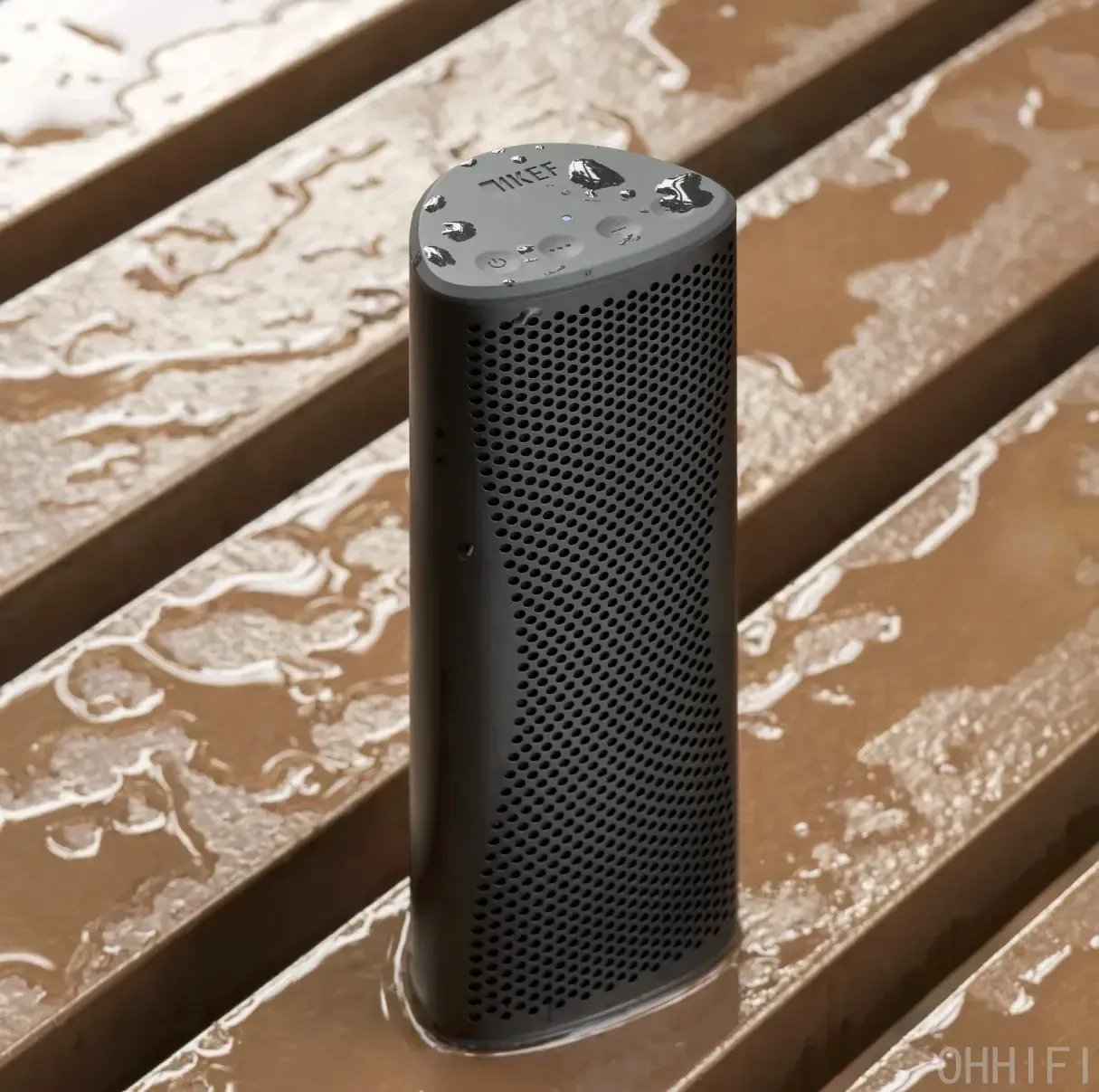
| Durability | IP67 (dust-tight, submersion to 1m/30min); rated –20°C to 45°C |
| Extras | Stereo pairing (2 units), Auracast, built-in mic, KEF Connect app |
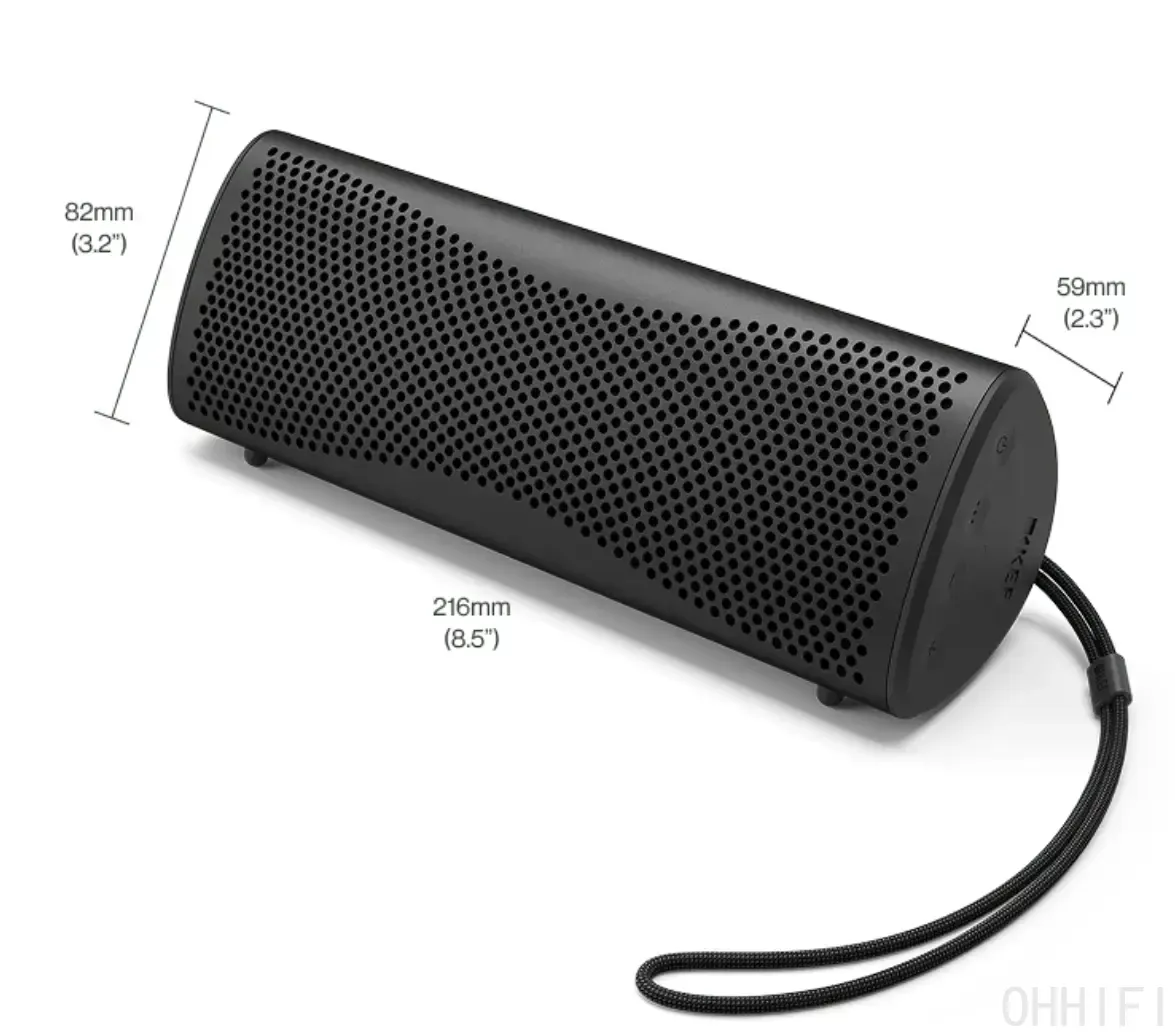
| Weight / Size | 740g (1.6 lbs); 216 × 82 × 59mm |
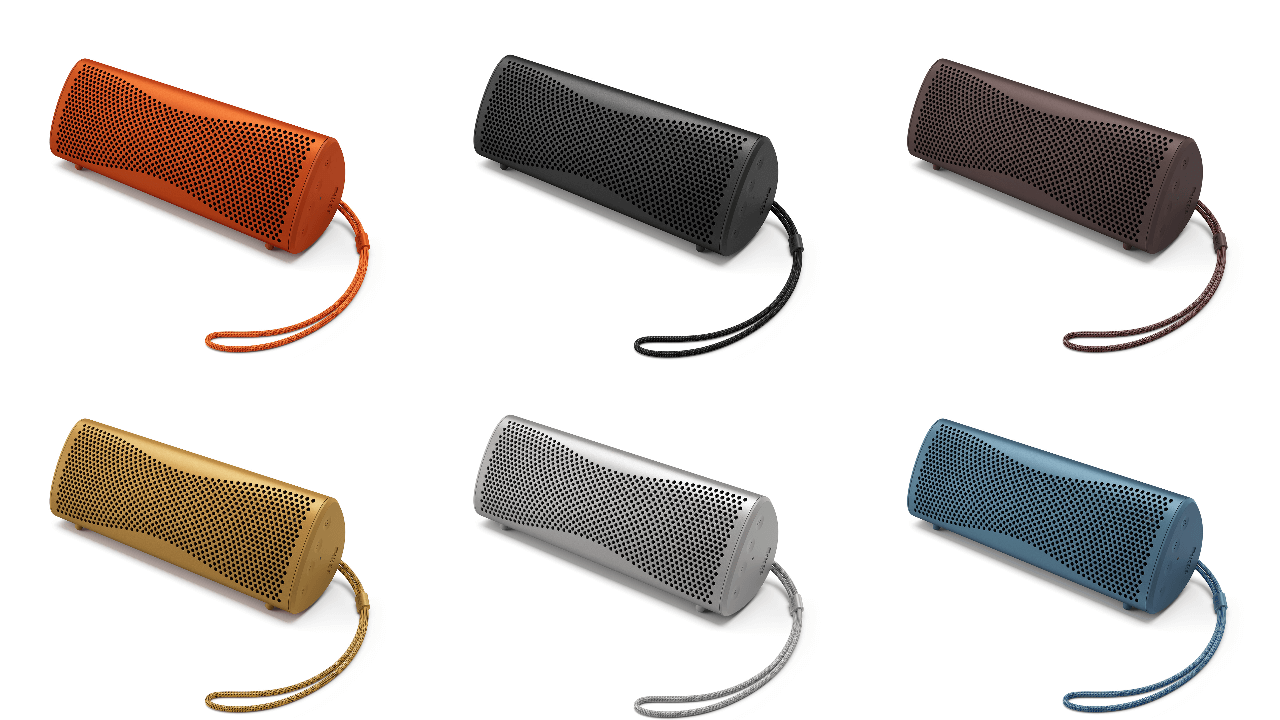
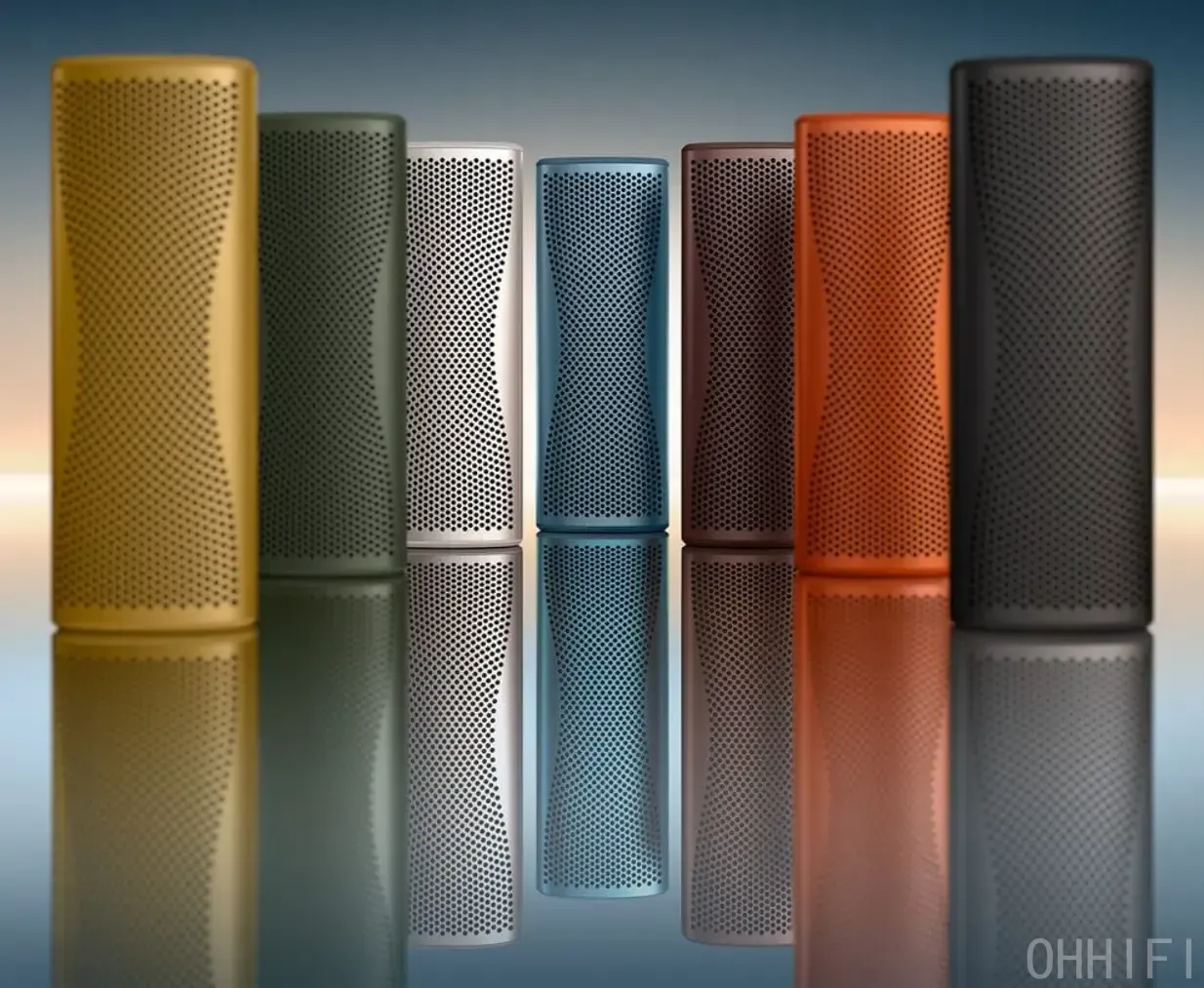
| Finishes | 7 (Moss Green, Amber Haze, Orange Moon, Blue Aura, Silver Dusk, Cocoa Brown, Midnight Black) |
Design and Build: The Lovegrove Tax, Paid Gladly
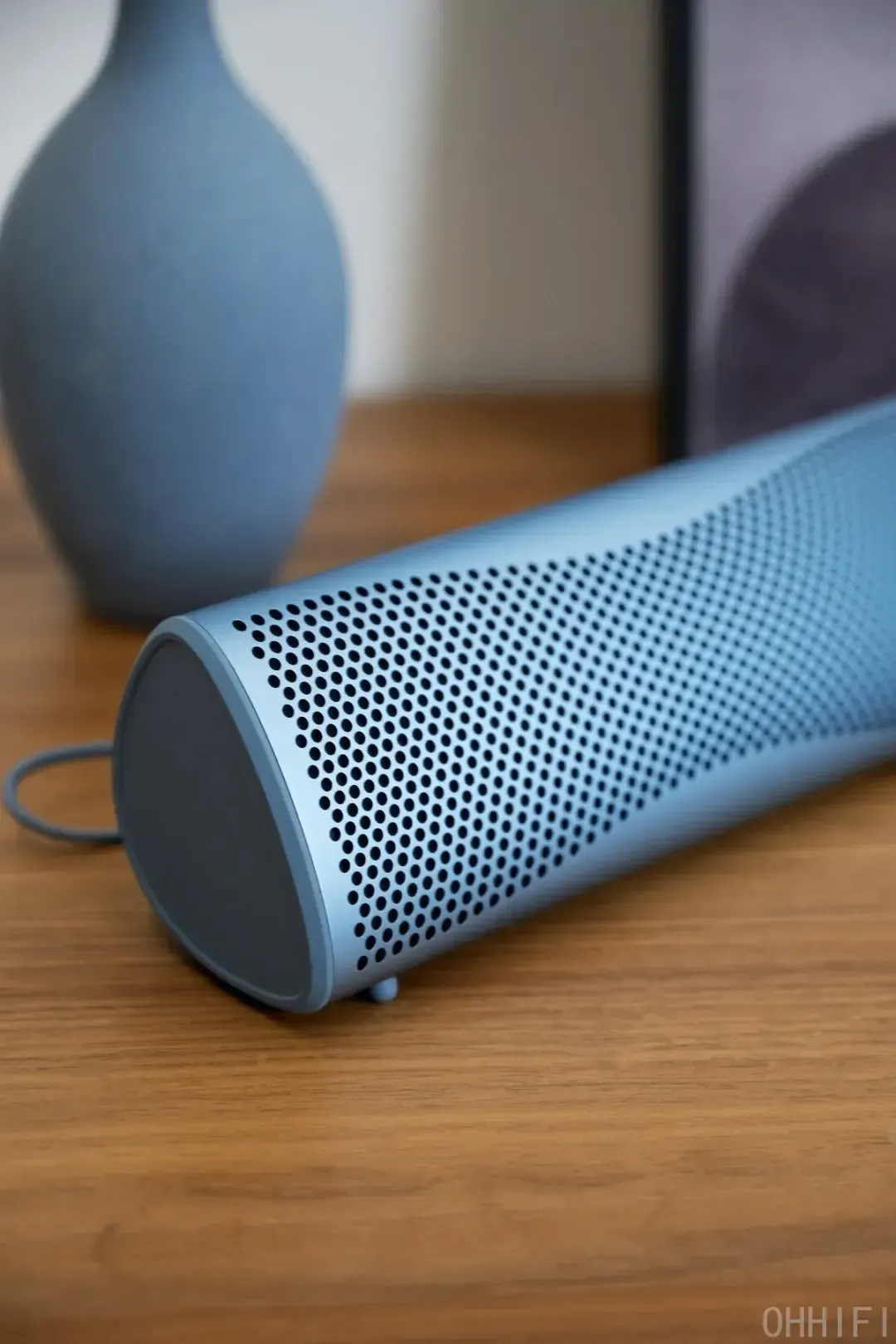
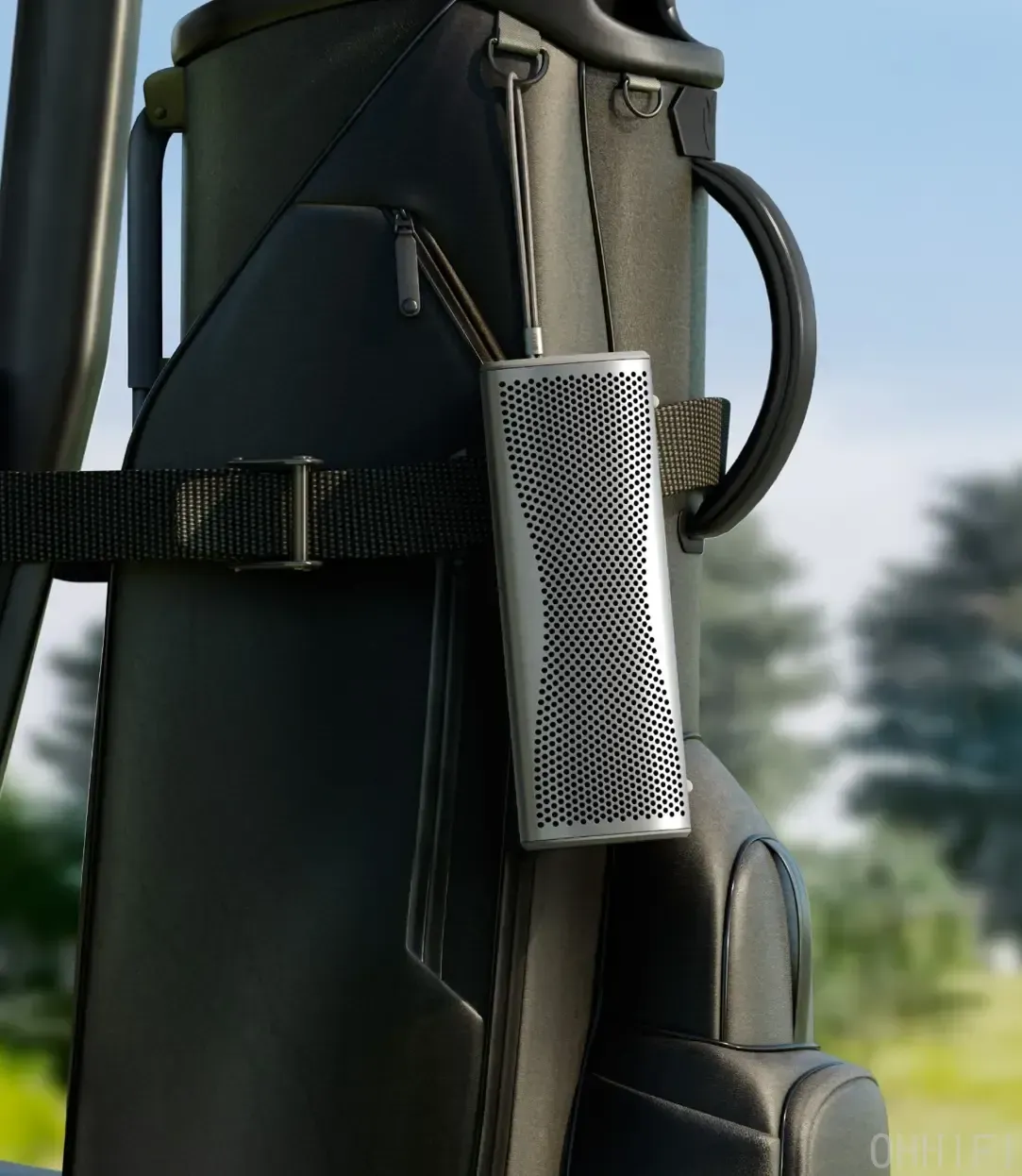
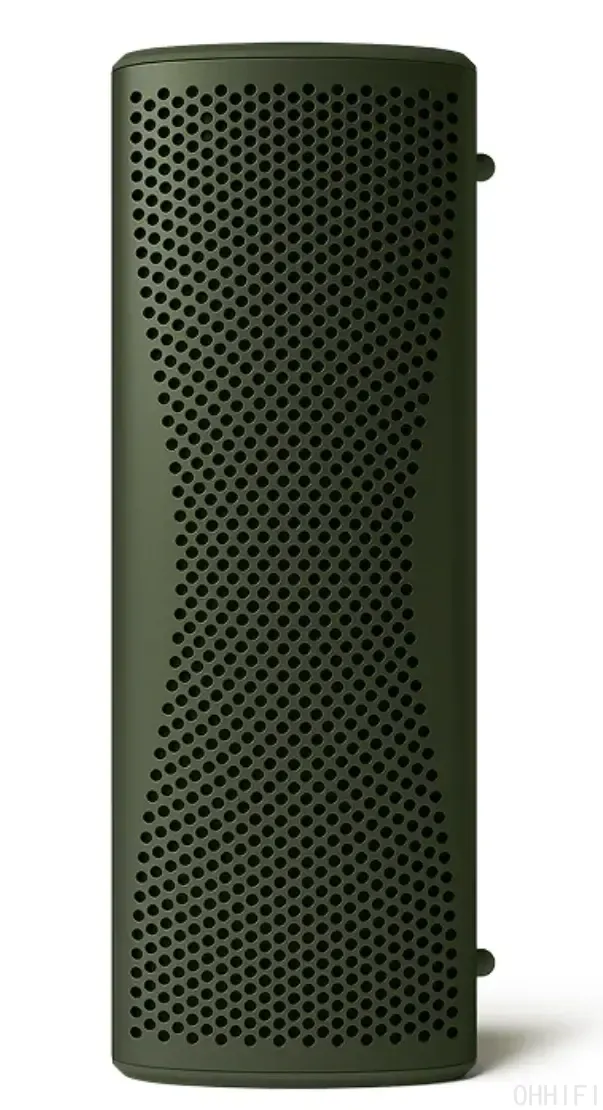
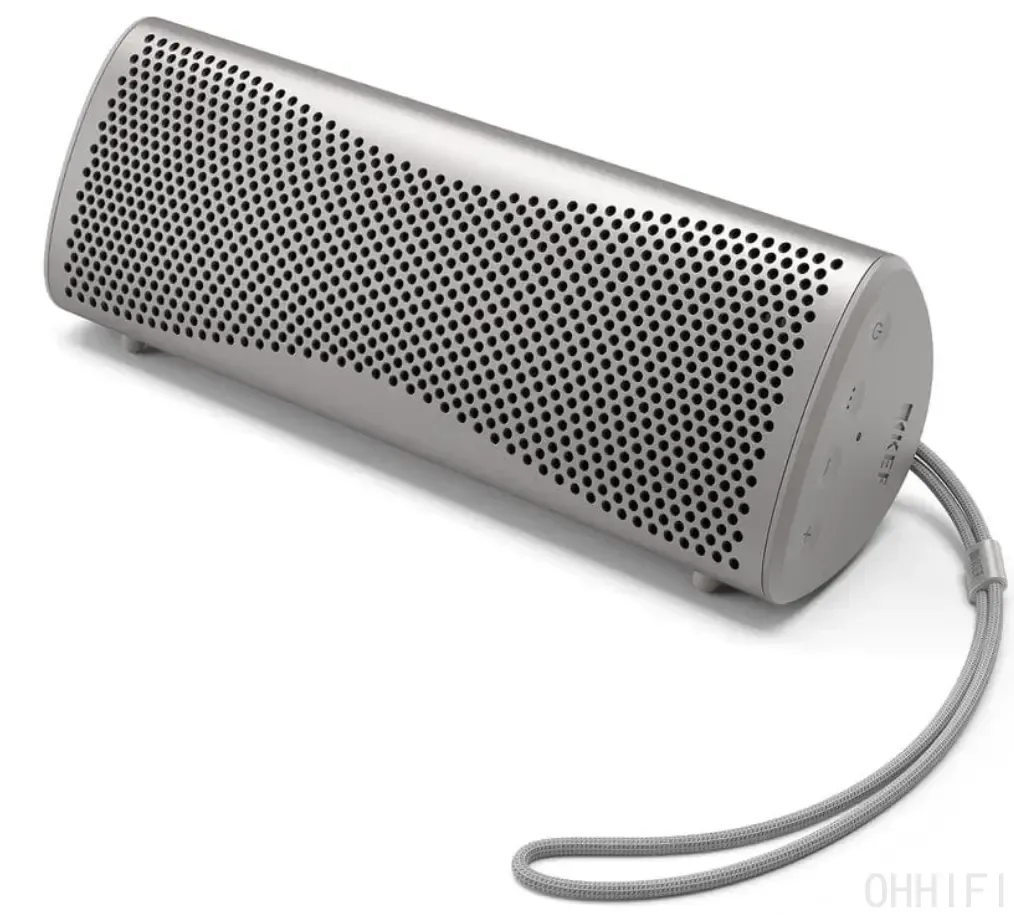
You can tell within about three seconds that nobody at a sneaker company touched this thing. The Muo carries over Lovegrove's sculpted, slightly asymmetric wedge — a shrunken echo of KEF's preposterous £180,000 Muon — and wraps it in extruded aluminum that gives the speaker a planted, expensive heft. At 740 grams it's noticeably lighter than something like the JBL Charge 6 (988g), slim enough to drop into a backpack's side pocket, and the metal shell does what metal shells do: it feels like an object, not a gadget.
The catch with metal is that 740 grams in your hand all day stops feeling svelte and starts feeling like a brick you happen to admire. KEF includes a lanyard, which helps, but I'd still toss this in a bag rather than carry it. It is not a beach-toss speaker. It is a "set it down somewhere nice and leave it there" speaker.
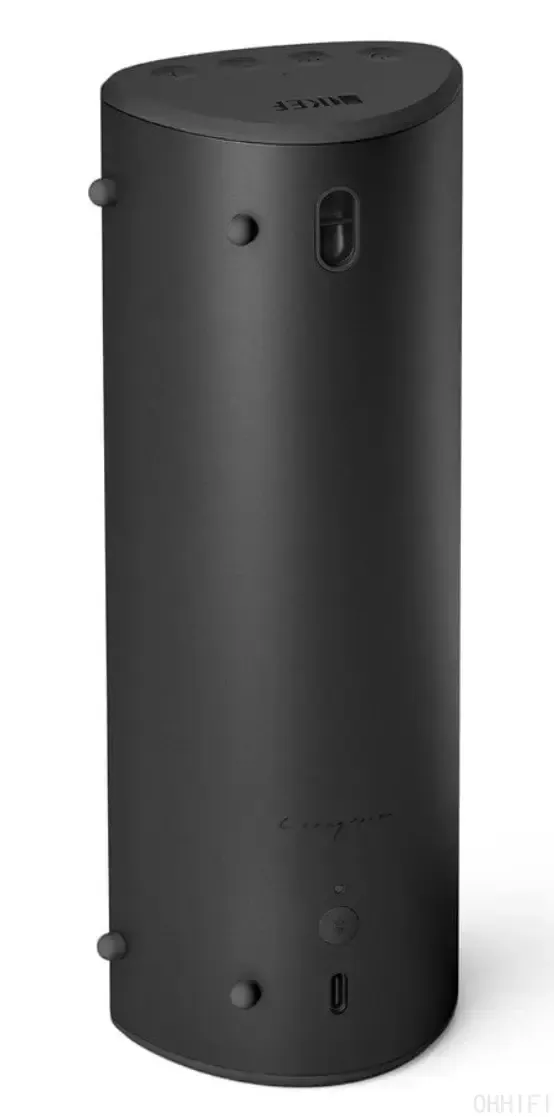
Two practical gripes that every independent review seems to land on, and I'll co-sign both. First, the top-mounted buttons aren't backlit and are genuinely hard to tell apart by feel — fumbling for "pause" in a dark kitchen is a recurring small annoyance. Second, the speaker is orientation-aware, and that's not marketing fluff: the DSP retunes depending on whether it's standing vertically or lying flat, and the difference in real use is obvious. Vertical throws sound farther and wider outdoors; horizontal sits better under a monitor. KEF clearly spent the engineering budget on the stuff you can hear.
The recycled-plastic internals and seven finishes round it out. My notes keep coming back to Moss Green, which is the kind of muted color that reads "design object" rather than "Bluetooth speaker." And yes, somebody at KEF named a color Amber Haze, which is one fast mumble away from a Boogie Nights reference. I choose to believe that was intentional.
The Sound: Where KEF's House Voice Earns Its Keep
I've spent enough years with KEF gear — the LS50 lineage, the wireless stuff, the subs — to recognize the house signature the instant it shows up, and it shows up here. The Muo is voiced for balance, not for chest compression. Across every credible independent listen I cross-referenced before writing this, the same words recur: natural, balanced, clean, vocal-forward. That's not a coincidence. That's a tuning philosophy, and it runs directly counter to the punch-first crowd.
Midrange and Vocals: The Reason to Buy It
This is the Muo's whole argument, so let's start here. The dedicated 20mm tweeter and that big racetrack driver split the work properly instead of asking one cone to do everything, and the payoff is in the human voice.
Put on Norah Jones' "Don't Know Why" and the Muo does the thing expensive speakers do and cheap ones fake: it gets out of the way. Her voice sits centered, unforced, with the breathy texture intact and none of the plasticky glaze small speakers smear over vocals when you push them. Joni Mitchell's "A Case of You" is even more revealing — just voice and dulcimer, nowhere to hide — and the Muo keeps her phrasing honest, never hardening when she reaches up. When a track is built around a voice, this speaker is quietly excellent.
The other thing worth flagging, because every reviewer who lived with it noticed: the Muo sounds right at low volume. A lot of portables collapse into thinness until you crank them. This one stays composed and detailed at 25–30%, which matters more in real life than spec sheets admit — most of us are listening in a kitchen at 11pm, not headlining a backyard.
Treble: Detailed Without Drawing Blood
Giving the highs their own driver pays off. Cymbals, strings, and the air around acoustic recordings come through with real detail and dispersion. Spin Steely Dan's "Aja" and the brushwork and ride cymbal have shimmer and decay without that brittle, etched edge that compact speakers reach for when they want to sound "crisp." It's detailed, slightly bright, and tonally believable — the treble of a speaker that's confident enough not to shout.
Bass: The Honest Limitation
Here's where I keep my hand on the brake, because every source agrees and so do the laws of physics. KEF quotes 43Hz extension, and the racetrack driver with its P-Flex surround (borrowed from the KC62/KC92 subs) is doing real work to get there cleanly. For its size, the mid-bass is taut, tuneful, and refreshingly free of the boom that plagues this category.
But sub-bass is the Muo's clear ceiling. Cue up Massive Attack's "Angel" and you get the menace of the arrangement and the shape of the bassline, but not the floor-loading weight the track wants. A Hans Zimmer cue — the deep, slow synth swells of something like "Why So Serious?" — suggests the scale without delivering the physical low-end punch. The Muo can imply weight; it can't manufacture it. Nobody should buy this expecting chest-thumping. The KEF Connect app has an "Extra bass" preset that adds some heft, but it's a nudge, not a transplant. This is the trade KEF made on purpose: control and clarity over slam.
Soundstage and Outdoor Projection
For a single mono box, the Muo throws a surprisingly wide and open stage — wider than the cabinet itself when it's on a desk. Electronic material plays to this strength: Bonobo's "Kerala" and the layered synth work on Daft Punk's "Contact" stay spacious and well-paced, never congested even when the mix gets busy. Outdoors, vertical orientation lets it project cleanly across a decent-sized yard while holding its composure — it fills space rather than blasting it. It runs out of headroom before the big party speakers do, but for normal patio-and-cookout duty it plays plenty loud enough.
Test Setup
I ran the Muo the way anyone actually will: streamed over Bluetooth from a phone (aptX Adaptive on an Android handset, AAC off an iPhone for contrast) and a laptop, pulling lossless and hi-res from TIDAL and Qobuz, plus a stint running USB-C digital straight in. Listening covered the realistic spread — near-field on a desk, across a kitchen at low volume, and outdoors on a railing — with the KEF Connect app handling firmware and EQ presets. No tube amps or reference DACs here; that's not what this speaker is for, and pretending otherwise would tell you nothing useful.
Measured Performance
KEF's published numbers — 40W total Class D, 90dB max SPL at 1m, that 43Hz–20kHz response at 85dB/1m — line up with how it behaves: composed and clean rather than loud-for-its-own-sake.
The most useful objective data I found comes from SoundGuys, who ran the Muo through the HEAD acoustics MDAQS algorithm. Per their testing, the Muo scored Timbre 3.3 and Distortion 3.3 — both solid, confirming the balanced tuning and clean low-distortion behavior — but Immersiveness landed at just 1.9, dragging the Overall to 3.0. That low immersiveness number is exactly what you'd predict from a mono speaker; the metric rewards stereo width, which is precisely the gap a second Muo is meant to fill.
The battery story is also worth grounding in numbers, because "24 hours" deserves an asterisk. That figure is at moderate volume. Per SoundGuys' measured test at a louder, consistent 80dB/1m, the Muo ran 11 hours 39 minutes — still a full day's use, but a reminder that real-world stamina scales hard with how loud you play it. At genuinely moderate levels, an all-day-plus result is realistic.
The Competition
The $250 portable bracket is a knife fight, and the Muo wins on some axes and loses on others. I've spent real time with most of these.
| Rival | How It Compares | Verdict |
|---|---|---|
| Sonos Roam 2 (~$179) | Wi-Fi + multi-room + voice control the Muo can't touch; similar wedge shape and a clean, vocal-friendly tune. But shorter battery (~10hr) and tied to the Sonos app/ecosystem. | The smarter, more connected pick — if you live in Sonos and want the speaker to vanish into a whole-home setup. |
| Bose SoundLink Flex (2nd Gen) (~$149) | Rugged, IP67, bassier and punchier out of the box, with a 3-band EQ the Muo lacks. Often on sale — you can sometimes buy two for one Muo. | The value champion. If you want more low-end thump per dollar and don't care about the aluminum jewelry, buy this. |
| JBL Charge 6 (~$199) | Up to 45W, stronger bass, 7-band custom EQ, doubles as a power bank. Heavier (988g) and far less refined up top. | Best for outdoor grunt and tweakability. The Muo out-classes it on tonal finesse; the JBL out-muscles it on everything else. |
| B&O Beosound A1 (latest gen) (~$280–350) | The truest spiritual rival — premium aluminum design, balanced "grown-up" tuning, omnidirectional sound, long battery. Costs more. | The cross-shopper's real dilemma. B&O for omni dispersion and badge cachet; KEF for the dedicated tweeter and the cleaner top end. |
The honest summary: nothing here matches the Muo's combination of build quality and tonal refinement, and nearly all of them get louder, bassier, or more feature-rich for less money. Which one's "best" depends entirely on whether you're buying a speaker or buying taste.
The Verdict: 8.0/10
The KEF Muo is the rare design-forward audio product that didn't forget it has a job to do. It sounds like a KEF — balanced, clean, vocally honest, detailed without fatigue — and it's built like something you'd be happy to leave on the counter for a decade. The IP67 rating and strong real-world battery make it a legitimately practical speaker, not just a sculptural one.
It loses points where the consensus says it should: sub-bass is the firm ceiling, it's mono at a price where rivals give you more, the app's preset-only EQ is stingy at $250, and the unlit buttons are a daily papercut. None of that is a dealbreaker for the listener this is aimed at. All of it matters if you're shopping on spec.
8.0/10 — an excellent-sounding, beautifully made premium portable that asks you to value refinement over raw output. Buy it for what it is, not for what a cheaper speaker does louder.
Pros
- KEF house sound: balanced, natural, genuinely refined for the size
- Outstanding vocal and midrange clarity; sounds great at low volume
- Detailed, non-fatiguing treble from the dedicated tweeter
- Premium aluminum build and a design with real point of view
- IP67 weatherproofing plus strong, usable battery life
- Wide soundstage for a single mono box; effective orientation-aware DSP
Cons
- Sub-bass is limited — not for bass-heads or party duty
- Mono at $250 when cheaper rivals get louder and offer more
- App has EQ presets only; no custom EQ
- Unlit, hard-to-distinguish top buttons
- A touch heavy for all-day hand-carry; true stereo means buying two
Who Should Buy / Who Should Skip
This is for you if you care more about how a voice sounds than how hard a kick drum hits; if you want a portable that looks and feels worth $250 sitting in a real room; if you do most of your listening at sane volumes in a kitchen, on a desk, or on a deck; and especially if you can stomach buying two for a properly excellent compact stereo pair.
Look elsewhere if your priority is bass slam or party volume (Bose SoundLink Flex or JBL Charge 6), if you want smart-home and multi-room integration (Sonos Roam 2), or if you simply want the most output and features per dollar — in which case the Muo's refinement will feel like an expensive abstraction.



Comments